
The 2026 Ultimate Guide to Digital Pomodoro Timer OEM: How to Source and Scale Your Productivity Brand
A comprehensive 2026 guide for brands sourcing Digital Pomodoro Timers. Covers OEM vs ODM, 2026 market trends (digital detox), essential features, compliance (FCC/CE), and a step-by-step sourcing strategy for scaling your productivity brand.
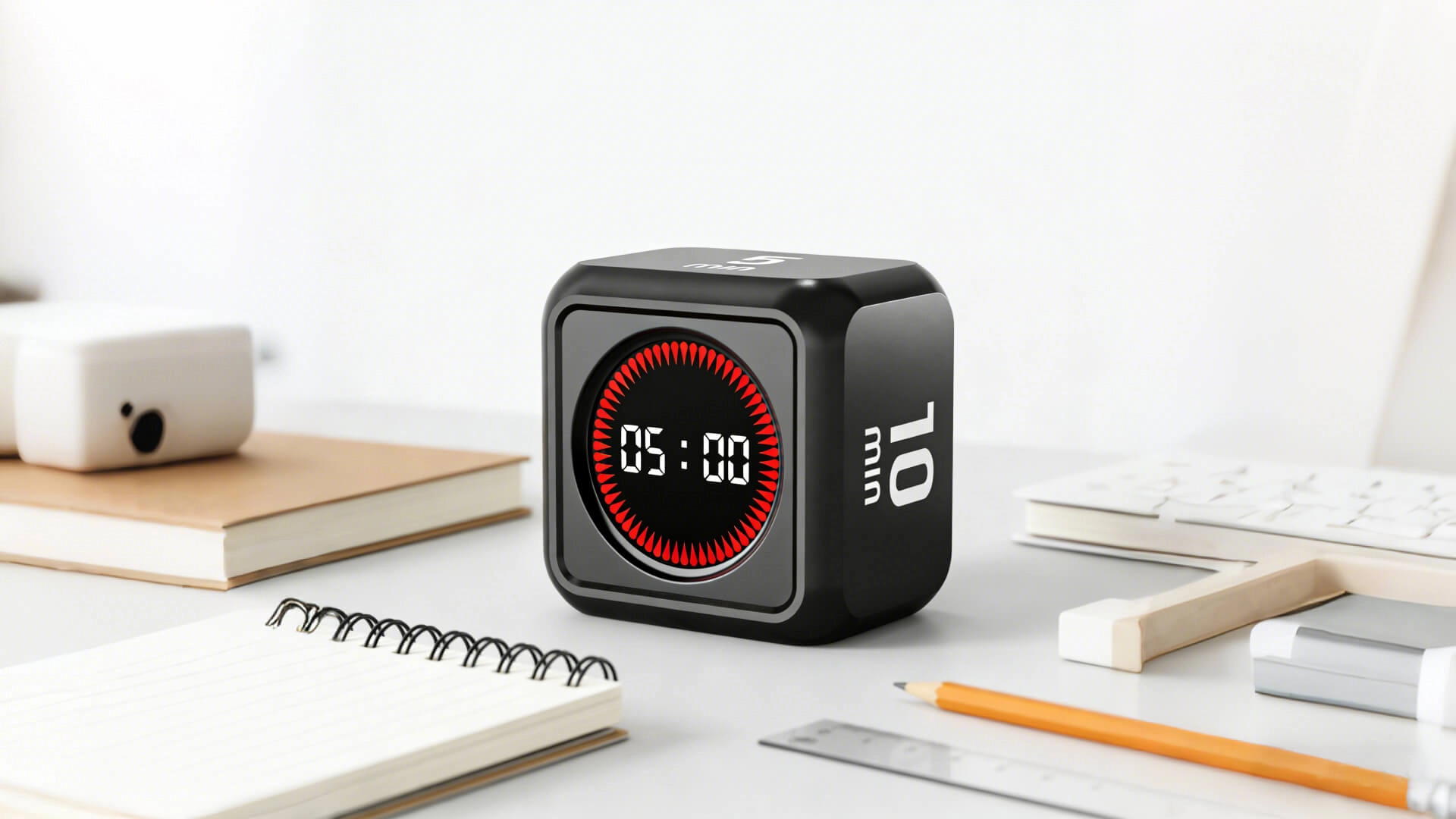
- Key Takeaways: The State of Productivity Hardware in 2026
- What is Digital Pomodoro Timer OEM?
- Why Choose OEM Over ODM?
- 2026 Market Trends: Why Invest in Physical Focus Tools?
- Key Drivers for 2026
- Essential Features for Your Private Label Timer
- Must-Have Specifications
- Step-by-Step Sourcing Strategy for 2026
- 1. Identifying Suppliers
- 2. Vetting Manufacturers
- 3. Negotiating MOQs
- 4. Sample Validation
- Compliance & Certifications: Selling Globally
- Required Certifications
- Expert Tips: Common Mistakes to Avoid in OEM Production
- Avoid These Errors
- Frequently Asked Questions (FAQ)
- What is the minimum order quantity (MOQ) for custom Pomodoro timers?
- How much does it cost to manufacture a digital Pomodoro timer in 2026?
- What is the difference between OEM and ODM for digital timers?
- Which certifications are required for selling digital timers in the USA and EU?
- Can I integrate AI voice assistants into OEM Pomodoro timers?
- How long is the lead time for custom-branded digital timers?
- What are the trending features for productivity timers in 2026?
- How do I verify a timer manufacturer's quality control?
- References
Private Label Productivity Tools are no longer just niche accessories; they are essential combatants in the war against digital distraction. With "tool fatigue" cited as a primary productivity killer in 2025 and search interest in "digital detox" tripling over the last year, the demand for offline, tactile focus tools is exploding. This guide details how to leverage Digital Pomodoro Timer OEM manufacturing to launch a scalable, high-margin brand in 2026.
Key Takeaways: The State of Productivity Hardware in 2026
- Shift to Tactile: A move away from cheap plastics toward weighted, matte-finish, and wood-grain aesthetics.
- Rise of "Phygital": Hardware that operates offline but syncs data to apps via Bluetooth.
- Supply Chain Resilience: The critical need to diversify manufacturing partners beyond single-source factories.
What is Digital Pomodoro Timer OEM?
Digital Pomodoro Timer OEM (Original Equipment Manufacturer) is the manufacturing process where a factory produces productivity hardware based on existing tooling and designs, which are then rebranded and sold by a separate company.
This model allows entrepreneurs to enter the Smart Timer Supply Chain rapidly without the prohibitive costs of Research & Development (R&D) or mold creation. Unlike ODM (Original Design Manufacturer)—where the factory owns the intellectual property and design rights—OEM implies you are licensing their hardware platform to build your brand identity.
Why Choose OEM Over ODM?
- Speed to Market: Launch in 30-45 days versus 6-9 months for custom designs.
- Lower Risk: Validated hardware with proven circuitry reduces the chance of technical failure.
- Cost Efficiency: Avoid mold opening fees ($2,000–$10,000) by utilizing existing factory housing.
2026 Market Trends: Why Invest in Physical Focus Tools?
The market for physical focus tools is driven by a massive consumer shift toward "Digital Detox" and offline workflows to combat screen fatigue.
Data from ElectroIQ indicates that search volumes for "digital detox" tripled in 2024, while Phoenix Research forecasts the global digital detox market to grow at a CAGR of over 15% through 2033. Users are actively seeking Custom Pomodoro Hardware Manufacturing solutions that decouple their workflow from the smartphone.
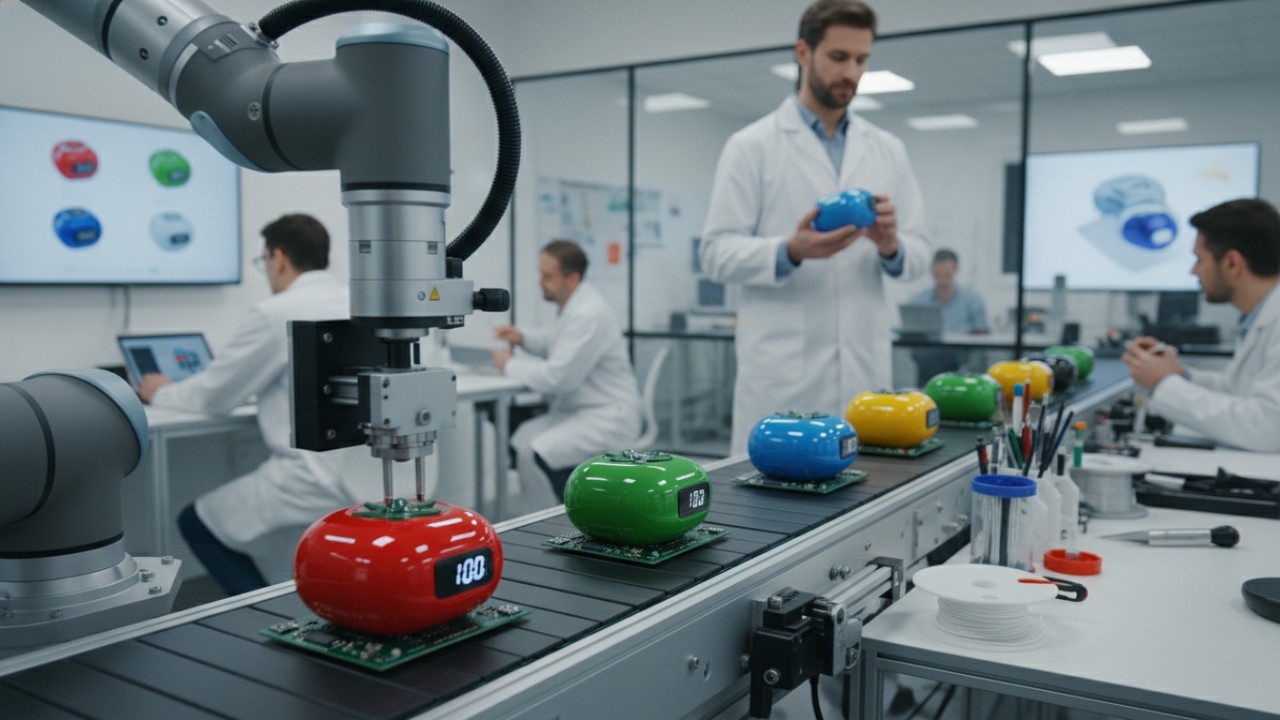
Key Drivers for 2026
- Digital Detox Demand: 80% of smartphone users now attempt to limit screen time, creating a vacuum for offline timing tools.
- The Aesthetic Desk Setup: The "Instagrammable" workspace drives demand for minimalist, matte, and E-Ink electronics.
- Corporate Wellness: B2B buyers are bulk-sourcing branded timers to prevent employee burnout in hybrid work models.
Essential Features for Your Private Label Timer
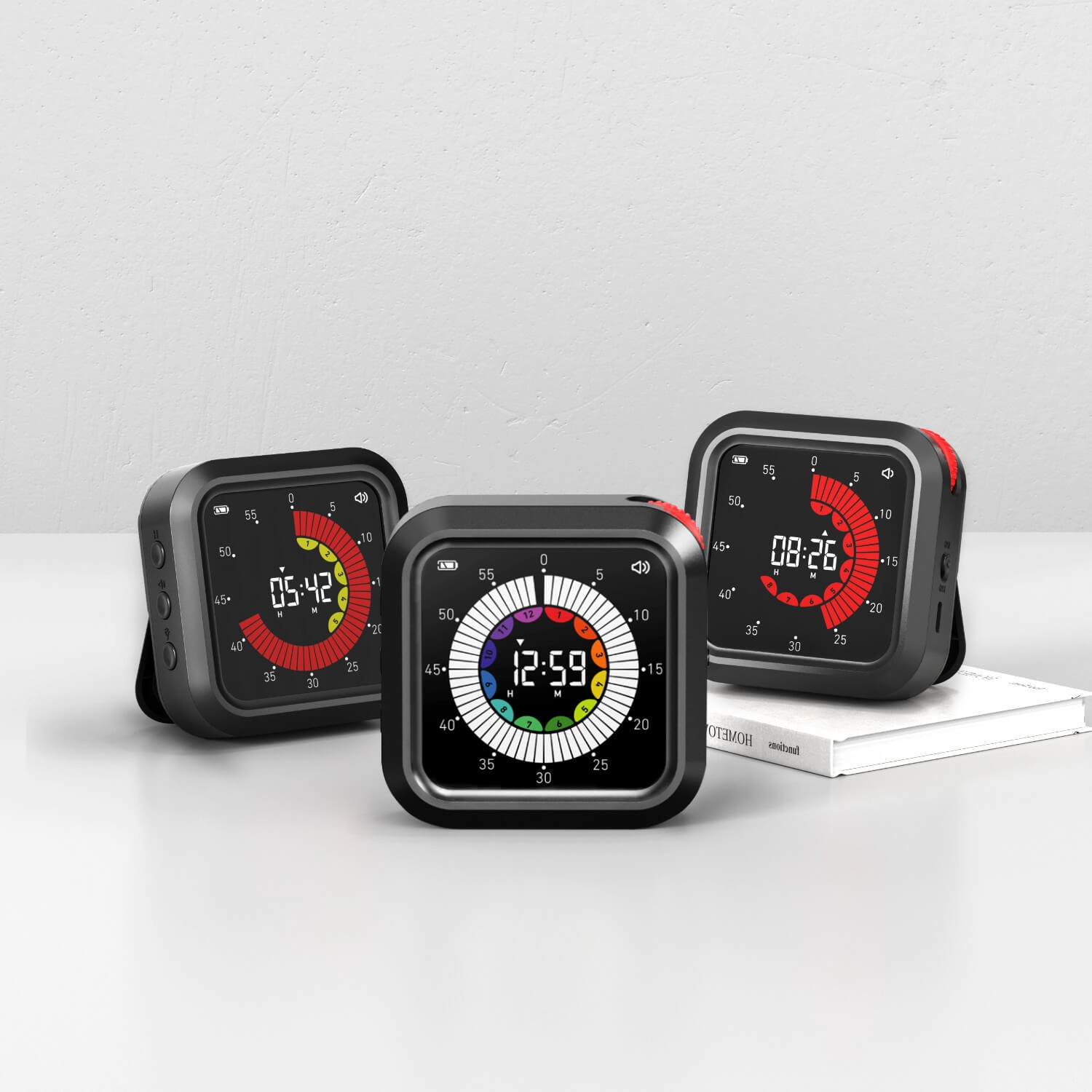
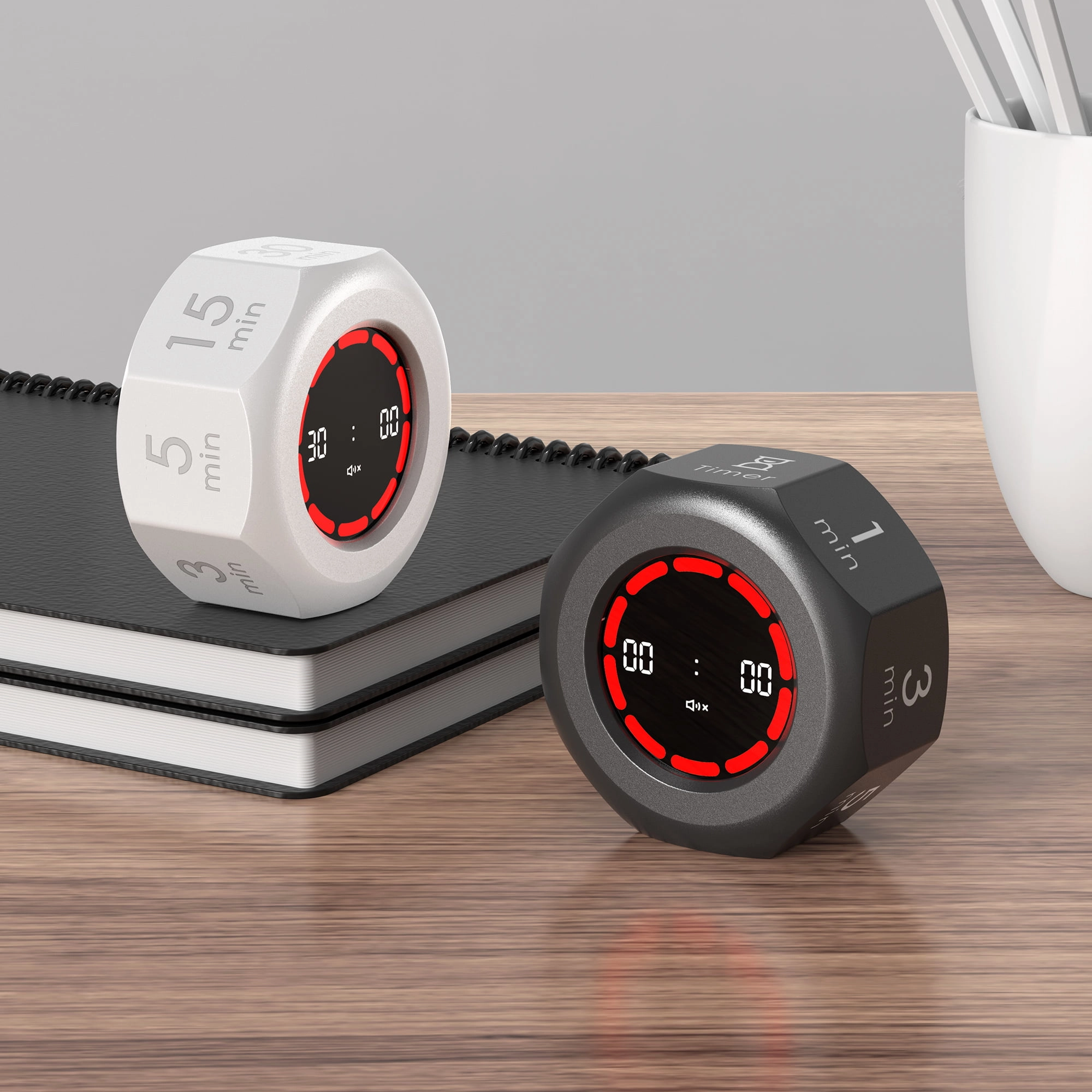
To compete in 2026, a timer must possess Gravity Sensing Technology (flip-to-start), USB-C charging, and a silent haptic feedback mode for office environments.
Selecting the right feature set is critical for your B2B Timer Sourcing Strategy. Avoid generic kitchen timers; focus on features that scream "productivity."
Must-Have Specifications
- Gravity Sensing: The timer automatically starts a countdown (e.g., 25 minutes) when flipped. This reduces friction and builds habit.
- Display Technology:
- LED: Bright, high contrast, consumes more battery.
- E-Ink: Ultra-low power, paper-like readability, premium price point.
- Connectivity: Bluetooth 5.4 is the standard for 2026, allowing "Phygital" syncing without draining the battery.
- Haptic Feedback: Silent vibration motors are non-negotiable for library or open-office use.
Step-by-Step Sourcing Strategy for 2026
A successful sourcing strategy involves a four-stage process: Supplier Identification, Vetting, Negotiation, and Sample Validation.
Sourcing OEM Electronics Manufacturing China requires diligence to avoid "middleman" trading companies posing as factories.
1. Identifying Suppliers
- Alibaba & Global Sources: Filter for "Verified Manufacturer" and look for 3+ years of history.
- Direct Factory Connections: Attend Canton Fair (Phase 1) or HK Electronics Fair for direct relationships.
2. Vetting Manufacturers
- ISO 9001: Ensure they have quality management systems in place.
- Export History: Ask for redacted Bills of Lading to verify they have shipped to Western markets (USA/EU) before.
3. Negotiating MOQs
- Trial Runs: Negotiate a lower MOQ (e.g., 300 units) by offering to pay a 10-15% premium on the unit price for the first batch.
- Standard Colors: Stick to black/white housing initially to lower thresholds.
4. Sample Validation
- Accuracy Test: Run the timer alongside a calibrated phone stopwatch for 60 minutes.
- Button Durability: Check for "mushy" buttons; tactile clickiness is a marker of quality.
- Finish Quality: Scratch test the housing to ensure the matte coating adheres well.
Compliance & Certifications: Selling Globally
For legal export to the USA and EU, digital timers must comply with FCC Part 15 (interference), CE (safety), and RoHS (hazardous substances) standards.
Ignoring compliance is the fastest way to get your Private Label Productivity Tools seized by customs.
Required Certifications
- FCC Part 15 (USA): Mandatory for all digital devices oscillating above 9 kHz. Ensures your timer doesn't jam radio signals.
- CE & RoHS (Europe): CE proves safety conformity; RoHS ensures no lead or mercury is used in the PCB soldering.
- UN38.3 & MSDS: Critical for shipping products with internal lithium-ion batteries via air freight.
Expert Tips: Common Mistakes to Avoid in OEM Production
The most common pitfalls in OEM production are ignoring firmware drift, underestimating packaging costs, and over-customizing the mold too early.
Avoid These Errors
- Ignoring Firmware QC: Cheap quartz crystals can cause timers to drift by seconds per day. Specify "high-precision quartz" in your contract.
- Cheap Packaging: For a productivity tool selling at $30+, the unboxing experience matters. Use rigid boxes, not blister packs.
- Over-customization: Changing the physical shape (tooling) costs thousands. Focus on logo placement (pad printing) and custom packaging for your first 5,000 units.
Frequently Asked Questions (FAQ)
What is the minimum order quantity (MOQ) for custom Pomodoro timers?
- Logo Printing: Typically 500–1,000 units.
- Custom Color/Housing: 3,000+ units.
- Negotiation Tip: You can often lower this if you agree to use "neutral packaging" (no custom box) for the first run.
How much does it cost to manufacture a digital Pomodoro timer in 2026?
- Basic LCD: $1.50 – $3.00 USD.
- Gravity/LED: $4.50 – $8.00 USD.
- Smart/Bluetooth: $10.00+ USD (dependent on chipset prices).
What is the difference between OEM and ODM for digital timers?
- OEM: You buy their existing timer model and apply your brand/logo.
- ODM: You work with engineers to create a brand new shape, function, or PCB design from scratch (requires R&D fees).
Which certifications are required for selling digital timers in the USA and EU?
- USA: FCC certification.
- EU: CE marking and RoHS compliance.
- Disposal: WEEE directive (waste electronics).
Can I integrate AI voice assistants into OEM Pomodoro timers?
- Feasibility: Yes, but this shifts the project to ODM.
- Cost: Increases unit cost significantly due to microphone arrays and Wi-Fi chips.
- Trend: High-end 2026 models are beginning to explore this.
How long is the lead time for custom-branded digital timers?
- Samples: 7–14 days.
- Mass Production: 30–45 days after artwork approval.
- Shipping: 25–40 days via sea freight (China to US/EU).
What are the trending features for productivity timers in 2026?
- E-Ink Displays: For reduced eye strain.
- MagSafe: Magnetic attachment to phones or stands.
- Biometric: Touch-sensitive start/stop controls.
How do I verify a timer manufacturer's quality control?
- Reports: Demand a detailed internal QC report before final payment.
- Third-Party: Hire an inspection agency (e.g., V-Trust, SGS) to inspect the batch.
- Aging Test: Ask for video proof of timers running for 24+ hours to check for battery failure.
References
Contacts
Sofia
WhatsApp/Phone
All
Do you offer OEM & ODM clock services?
Yes, we provide both OEM & ODM solutions, allowing clients to customize clock design, materials, packaging, and branding.
What types of clocks can you manufacture?
We manufacture a wide range of clocks, including wall clocks, desk clocks, digital clocks, and smart clocks.
Can I customize the clock design and logo?
Absolutely. We offer customization for clock appearance, structure, materials, and logo printing to perfectly match your brand.
What is the minimum order quantity (MOQ)?
Our standard MOQ varies depending on the model, usually starting from 200–500 pieces. Custom designs may require different quantities.
How do you ensure product quality?
All clocks undergo strict quality control, including time accuracy tests, durability checks, and packaging inspections before shipment.
Interested in this article?
Let’s talk.
Need specifications, pricing, or customization options? We’ll provide everything you need.
By clicking “Submit,” you agree to share your information with our authorized team to process your request.
Your data will only be used for necessary communication and support.

Youben life
Youben life
Youben life
Youben life