
How to Source Components for Pomodoro Timers (PCB, IC, LEDs)
- Understanding product requirements and user needs
- Define target use cases and features
- Power budget and battery life
- Regulatory & safety requirements
- Selecting core components (PCB, ICs, LEDs)
- PCB type, stack-up and manufacturing considerations
- Choosing the microcontroller or ICs
- LEDs, indicators and human interface parts
- Where and how to source components
- Authorized distributors vs marketplaces
- PCB fabs and assembly partners
- Custom parts and private-label options
- Supply chain risks, quality control and cost optimization
- Manage lead time, MOQ and alternatives
- Quality control: incoming inspection and testing
- Cost optimization and component selection trade-offs
- Component choice comparison
- Procurement workflow and practical checklist
- BOM preparation and part selection
- Request for Quote (RFQ) and supplier evaluation
- Prototyping, DFM and pilot runs
- Youben Life: manufacturing partner profile and OEM/ODM services
- FAQ
- Q1: What are the most common MCUs used in pomodoro timers?
- Q2: Should I use addressable RGB LEDs or simple single-color LEDs?
- Q3: How do I ensure RoHS and CE compliance for my timer?
- Q4: What are realistic lead times for components and PCBA assembly?
- Q5: Is it better to buy components from local distributors or directly from Chinese suppliers?
- Q6: How do I handle obsolete or long lead-time components in my BOM?
- Contact and next steps
This article explains how to source components for a pomodoro timer—covering PCB fabrication, integrated circuits (MCU and power ICs), LEDs, switches, and related parts. It focuses on practical selection criteria, reliable supplier channels, lead time and cost trade-offs, quality control, and regulatory compliance so product teams and hobbyists can move from prototype to volume production with confidence. The guidance is optimized for search and geolocation-aware systems and is suitable for OEM/ODM projects and private-label products.
Understanding product requirements and user needs
Define target use cases and features
Before selecting any components, document the pomodoro timer's desired features: single-button or multi-button control, LED ring or single indicator, display type (7-seg, LCD, or OLED), power source (coin cell, AA, or USB), sound/vibration alerts, and connectivity (Bluetooth/none). User needs drive component choices—e.g., a compact desktop timer with a bright LED ring favors surface-mount LEDs and a low-power microcontroller with PWM LED drive.
Power budget and battery life
Estimate average and peak current draw to size batteries and choose power ICs. Example elements affecting power: microcontroller sleep modes, LED brightness and duty cycle, buzzer current, and backlight/display consumption. For a typical battery-based pomodoro timer (3V coin or 2×AA): target standby current < 10 µA (deep sleep), active average 5–30 mA depending on LED duty and alerts. That helps choose regulators or direct battery powering, and whether step-up/step-down converters are necessary.
Regulatory & safety requirements
Plan for CE mark, RoHS and, if selling in the US, FCC (for devices with intentional radio or certain emissions profiles). Early compliance planning impacts PCB material choices (lead-free solder, RoHS-compliant finishes) and enclosure materials. Official references: European Commission CE marking guidance (ec.europa.eu), RoHS directive summary (ec.europa.eu), and FCC overview (fcc.gov).
Selecting core components (PCB, ICs, LEDs)
PCB type, stack-up and manufacturing considerations
Decide between rigid single- or double-layer PCBs for cost-sensitive timers, or 4-layer if you need tighter EMI management or finer routing density. Use standard FR-4 material for most consumer timers. For prototypes and low-volume runs, board houses like JLCPCB and PCBWay provide fast turn and low cost; for larger runs select contract manufacturers (CMs) with IPC-compliant processes (see IPC).
Choosing the microcontroller or ICs
A microcontroller with ultra-low-power sleep and sufficient GPIO/PWM channels is the core of a timer. Typical choices: 8-bit MCUs (e.g., Microchip PIC or Atmel AVR/AVR-based) for simple timers; 32-bit ARM Cortex-M0/M0+ (e.g., NXP/LPC, STMicroelectronics STM32) for richer UI, BLE connectivity, or complex display control. When selecting an MCU, prioritize: availability (avoid end-of-life parts), supply chain longevity, built-in peripherals (RTC, PWM, ADC), and development ecosystem.
LEDs, indicators and human interface parts
Select LEDs by color, luminous intensity (mcd), viewing angle and forward voltage. For a visible pomodoro indicator consider mid-power SMD LEDs (1206/0805 packages) or addressable RGB LEDs (WS2812B/APA102) if you need color patterns. For simple single-color indicators, choose LEDs with 20 mA rating but drive them with current-limiting resistors or constant-current drivers to match battery and MCU constraints.
Where and how to source components
Authorized distributors vs marketplaces
For reliable supply and warranties, source critical ICs and passive components from authorized distributors: Digi-Key, Mouser, Arrow, Avnet. These distributors provide datasheets, lifecycle status, and traceability. Avoid unknown brokers for critical semiconductor parts unless you perform rigorous incoming inspection and traceability checks.
PCB fabs and assembly partners
Use established PCB manufacturers or contract manufacturers (CMs) for turnkey assembly (PCBA). For prototypes and small runs, online fabs like JLCPCB and PCBWay offer PCB + assembly options. For scale, select CMs with ISO 9001 / IPC-A-610 experience to ensure solder quality and assembly yield. Verify their capabilities: SMT/through-hole mix, stencil quality, and inspection (AOI/X-ray).
Custom parts and private-label options
When designing a commercial pomodoro timer and seeking a differentiated product, partner with OEM/ODM manufacturers that provide industrial design, enclosure tooling and private labeling. They can source custom buttons, molded enclosures, and packaging. Compare quotes not only on unit cost but also on tooling amortization, MOQ, and lead times.
Supply chain risks, quality control and cost optimization
Manage lead time, MOQ and alternatives
Build a Bill of Materials (BOM) with primary and approved alternate parts (second sources) for key components like MCUs, voltage regulators and key passives. Track lead times from distributors and factor in component lifecycle. Maintain safety stock for parts with long lead times or single-source risk.
Quality control: incoming inspection and testing
Implement incoming inspection for critical parts: visual inspection, sample electrical testing for ICs, and XRF or material certificates for RoHS compliance. At PCBA level, require solderability and functional testing. Use boundary-scan or automated test jigs for mass testing. Follow IPC-A-610 acceptance criteria for solder and assembly quality (see IPC).
Cost optimization and component selection trade-offs
Balance cost vs performance: choose SMD components and automated assembly to reduce per-unit cost at scale, but be mindful of tooling and machine setup costs. For small volumes, through-hole or hand-assembly might be cheaper despite higher per-unit price. Consider integrating multiple functions into a single IC (e.g., MCU with built-in RTC and low-power timers) to save BOM cost and board area.
Component choice comparison
| Criterion | SMD (recommended for volume) | Through-hole (prototype/low volume) |
|---|---|---|
| Assembly cost at scale | Lower (automated SMT) | Higher (manual or selective soldering) |
| Mechanical robustness | Good for enclosed designs | Better for mechanical stress/repair |
| Availability | Broad availability, many package options | Some legacy parts only in through-hole |
| Prototype convenience | Requires reflow; may need services | Easy to hand-assemble |
Procurement workflow and practical checklist
BOM preparation and part selection
Create a BOM with manufacturer part number (MPN), footprint, manufacturer, unit cost, lead time, and lifecycle status. Mark critical components and specify approved alternates. Use consistent part numbering to avoid wrong parts on assembly.
Request for Quote (RFQ) and supplier evaluation
Issue RFQs to at least three suppliers or CMs. Evaluate them on price, lead time, MOQ, quality certifications (ISO 9001, IPC, UL if relevant) and communication responsiveness. Ask for references and sample builds.
Prototyping, DFM and pilot runs
Run a prototype and a small pilot (e.g., 100–500 units) to validate designs, BOM choices, assembly processes and test fixtures. Use Design for Manufacturability (DFM) feedback from your chosen CM to adjust footprints, spacing, and assembly tolerances before volume production.
Youben Life: manufacturing partner profile and OEM/ODM services
Youben Life, founded in 2010, is a leading home electronics manufacturer and supplier specializing in customized digital products. Our main product lines include digital timers, smart alarm clocks, digital thermometers, and hygrometers. Headquartered in Guangzhou, China, Youben Life provides complete OEM, ODM, and private label solutions, covering product functionality, industrial design, appearance customization, packaging design, and logo personalization.
All our products comply with CE, FCC, and RoHS standards and are exported to global markets. With strong manufacturing capabilities and deep industry experience, Youben Life helps brands develop differentiated home electronic products that align with their target customers and strengthen brand identity. Typical services that benefit pomodoro timer projects include:
- End-to-end PCB and PCBA procurement and assembly, including SMD and through-hole processes.
- Component sourcing with authorized distributors and vetted second sources to reduce supply risk.
- Industrial design, enclosure tooling, and packaging for private label products.
- Quality systems and certification support (CE/FCC/RoHS) to accelerate market entry.
Visit Youben Life or contact info@youbenlife.com for tailored OEM/ODM proposals for digital timer products including Digital Timer, Digital Alarm Clock, and Household Thermometer.
FAQ
Q1: What are the most common MCUs used in pomodoro timers?
A1: For simple timers, 8-bit MCUs (AVR, PIC) are common due to low cost and simplicity. For richer features (display, BLE), 32-bit ARM Cortex-M chips (STM32, NXP LPC, Nordic nRF52 for BLE) are popular. Choose based on required peripherals, power consumption, and supply availability.
Q2: Should I use addressable RGB LEDs or simple single-color LEDs?
A2: Use addressable RGB LEDs (e.g., WS2812B) if you need color patterns and animations; they simplify wiring but consume more power and cost. Use single-color SMD LEDs for simple status indications and lower power draw.
Q3: How do I ensure RoHS and CE compliance for my timer?
A3: Work with suppliers who provide material certificates and RoHS declarations. Design with lead-free solder processes and compliant materials. For CE, identify applicable directives (e.g., EMC) and perform required testing or use a Notified Body when necessary. Official guidance: European Commission CE Marking.
Q4: What are realistic lead times for components and PCBA assembly?
A4: For common passives and standard LEDs, lead times are days to weeks. For MCUs and specialized ICs, lead times can be several weeks to months depending on market conditions. PCBA assembly lead times (prototype) are typically 1–4 weeks; volume runs 4–12 weeks depending on capacity and tooling.
Q5: Is it better to buy components from local distributors or directly from Chinese suppliers?
A5: Authorized local distributors (Digi-Key, Mouser) provide traceability and fast shipping but may cost more. Chinese suppliers and brokers can offer lower cost but carry higher risk. For critical components, prefer authorized distributors or reputable CMs who handle sourcing and warranty. Balance cost vs risk and always request certificates and sample verification.
Q6: How do I handle obsolete or long lead-time components in my BOM?
A6: Maintain approved alternates, consider redesign to use more available parts, and work with your CM to qualify substitutes. Monitor manufacturer lifecycle data via distributor alerts and plan redesigns if a component is end-of-life.
Contact and next steps
If you need supplier introductions, OEM/ODM quotes, or help finalizing BOM and DFM for a pomodoro timer, contact Youben Life: https://www.youbenlife.com/ or email info@youbenlife.com. Youben Life specializes in Digital Timer, Digital Alarm Clock and Household Thermometer product lines and supports CE/FCC/RoHS compliance, custom design and private-label manufacturing.
References and further reading: Wikipedia Pomodoro Technique (en.wikipedia.org), IPC standards overview (ipc.org), Digi-Key distributor site (digikey.com), European Commission CE mark guidance (ec.europa.eu).
MOQ and Pricing Strategies for Bulk Pomodoro Timer Orders
Case Studies: Successful Timer OEM & ODM Partnerships
How to Choose the Digital Timer manufacturer and supplier ?
Comparing Bulk Pricing Strategies for Digital Timer Clock Orders
Private Label
What’s the MOQ for private label orders?
Usually 200–1000 units depending on the product type.
What if I want exclusive distribution with my brand?
We can discuss exclusive deals for select regions or markets.
Food Thermometer
What is your minimum order quantity (MOQ)?
MOQ depends on customization requirements. Standard orders usually start from low quantities for testing.
X-JSQ016
Can the Digital Study Timer be customized with specific functions?
Absolutely. Leveraging ODM (Original Design Manufacturing) expertise, we tailor timers to your exact needs—from classroom intervals to ADHD study sessions. Outline functional requirements (countdown modes, interval settings, materials, etc.), and our engineers will redesign prototypes to bring your vision to life, serving businesses of all sizes.
Products
Do you have product certifications?
CE, RoHS, and ISO-based production are available for most models.
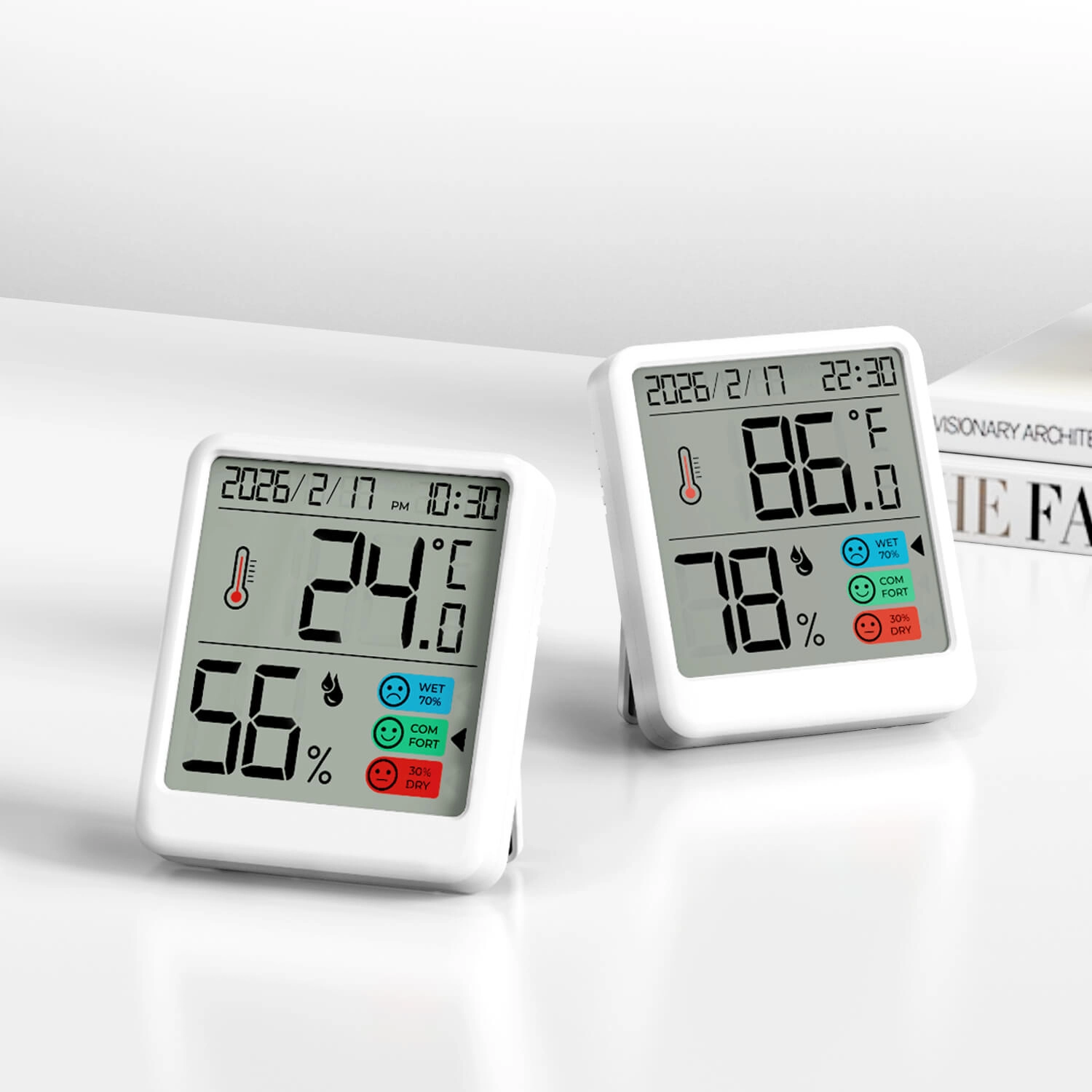
Digital Indoor Thermometer Hygrometer Temperature Humidity Monitor With Calendar Clock
The X-WSDJ312 Indoor Thermometer Hygrometer is a compact and multifunctional temperature and humidity monitor designed for home and office environments. It features a clear LCD screen displaying temperature, humidity, time, calendar, and comfort level at a glance.
Equipped with a high-sensitivity sensor, the device provides accurate real-time environmental monitoring to help maintain a comfortable indoor climate. The thermometer hygrometer supports 12/24-hour time format and ℃/℉ switching, making it convenient for global users.
Designed for flexible placement, it comes with a foldable desktop stand, magnetic back, and wall hanging hole, allowing installation on desks, refrigerators, or walls.
Powered by one AAA battery, the device operates with low power consumption and is ideal for homes, offices, greenhouses, classrooms, and storage environments.
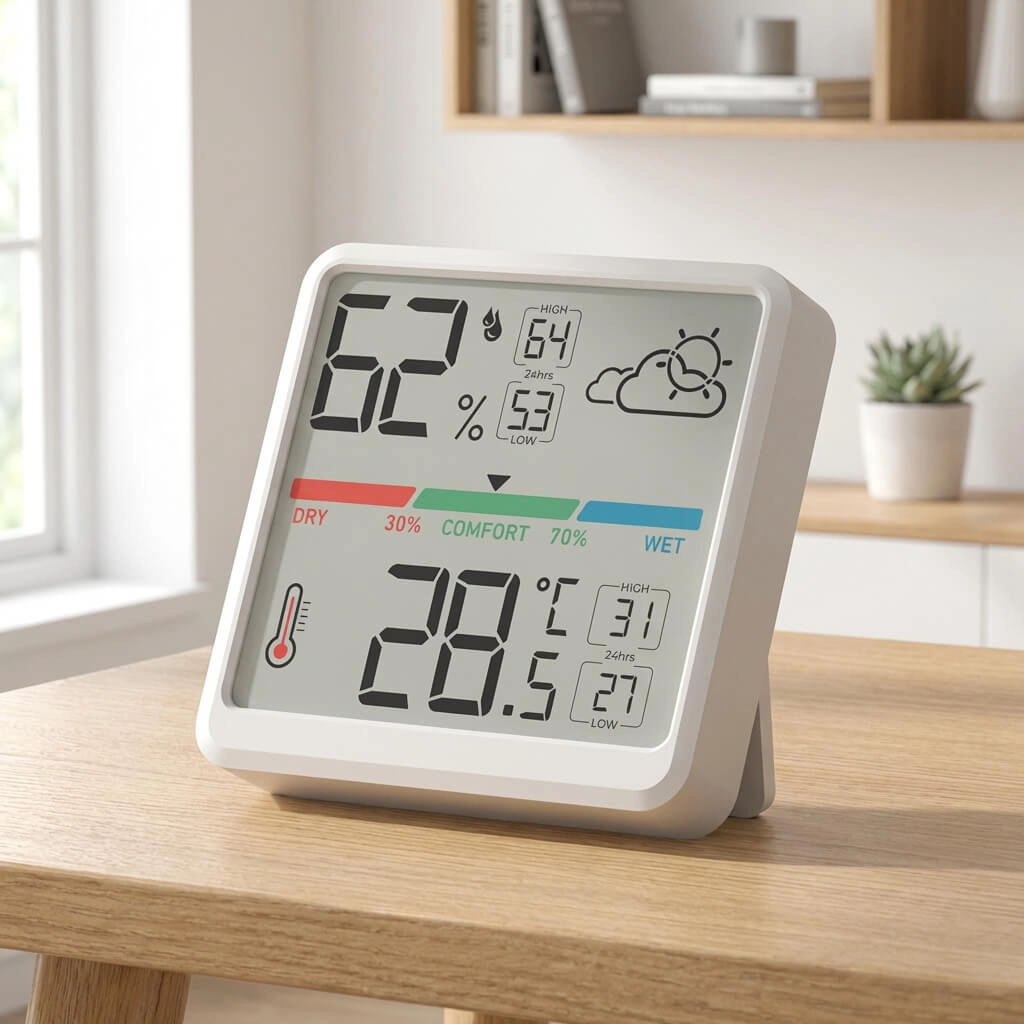
Digital Indoor Thermometer Hygrometer LCD Temperature Humidity Monitor
The Digital Indoor Thermometer Hygrometer is designed for accurate and reliable monitoring of indoor temperature and humidity. Featuring a clear LCD display, it provides real-time readings along with 24-hour maximum and minimum records for both temperature and humidity. The built-in comfort indicator clearly shows dry, comfortable, or humid conditions, helping users maintain a healthier indoor environment.
With a temperature measurement range from -20°C to 60°C (-4°F to 140°F) and humidity range from 10%RH to 99%RH, this device ensures consistent performance with high accuracy. The sensor updates every 10 seconds for real-time monitoring, while manual reset and unit switching (°C/°F) offer added convenience. Compact and versatile, it includes a foldable stand and magnetic back for flexible placement in homes, kitchens, offices, or warehouses.
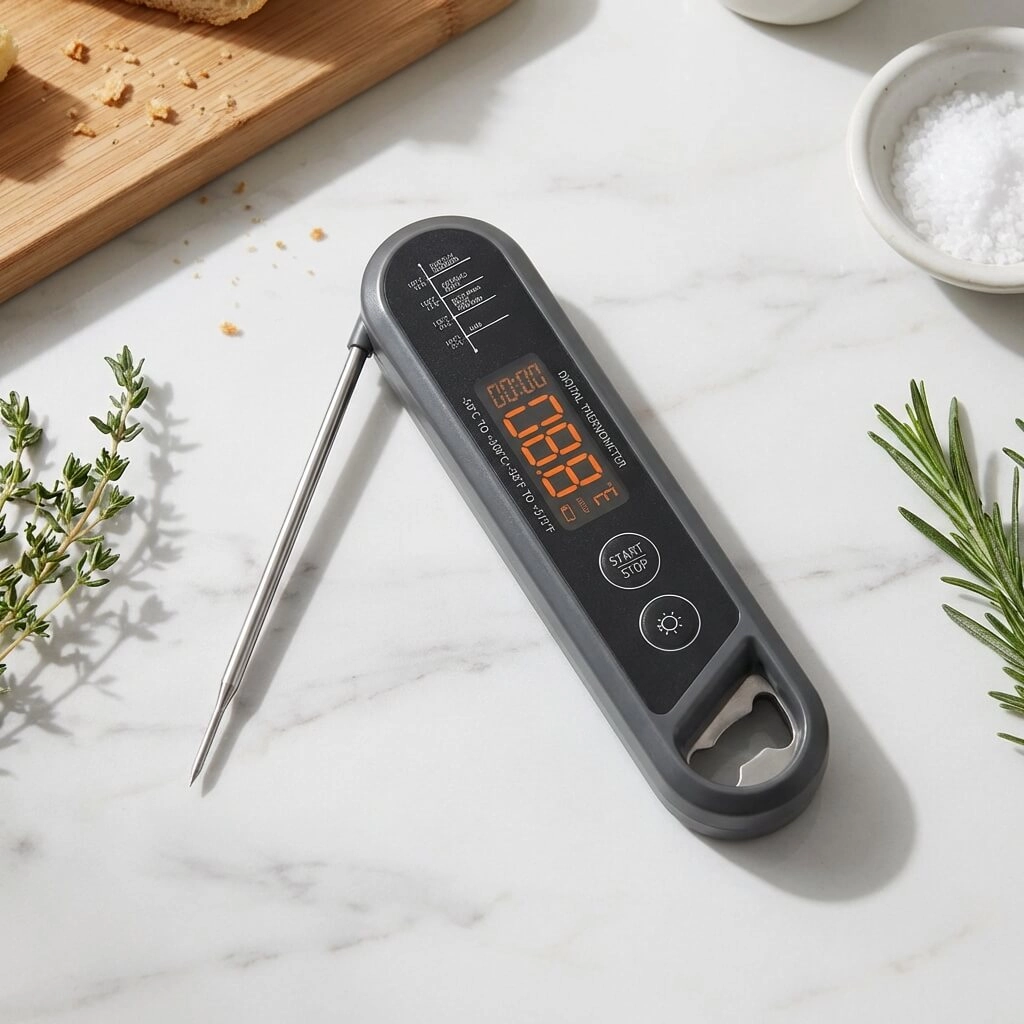
Instant Read Digital Meat Thermometer Food Thermometers With Count Up Timer Grill Oven
X-SPWDJ315-1 is a professional digital meat thermometer designed for B2B buyers such as e-commerce sellers, wholesalers, and OEM clients. Its foldable stainless steel probe ensures safe and compact storage while measuring temperatures from -50°C to 300°C with ±0.1°C accuracy. The thermometer features an integrated countdown timer (up to 59:59) and START/STOP control for precise cooking. An ergonomic handle with a built-in bottle opener adds multifunctional convenience. Powered by a single CR2450 battery, it is ideal for grilling, baking, restaurant kitchens, catering, and bulk supply, providing reliable performance and customization options for commercial customers.
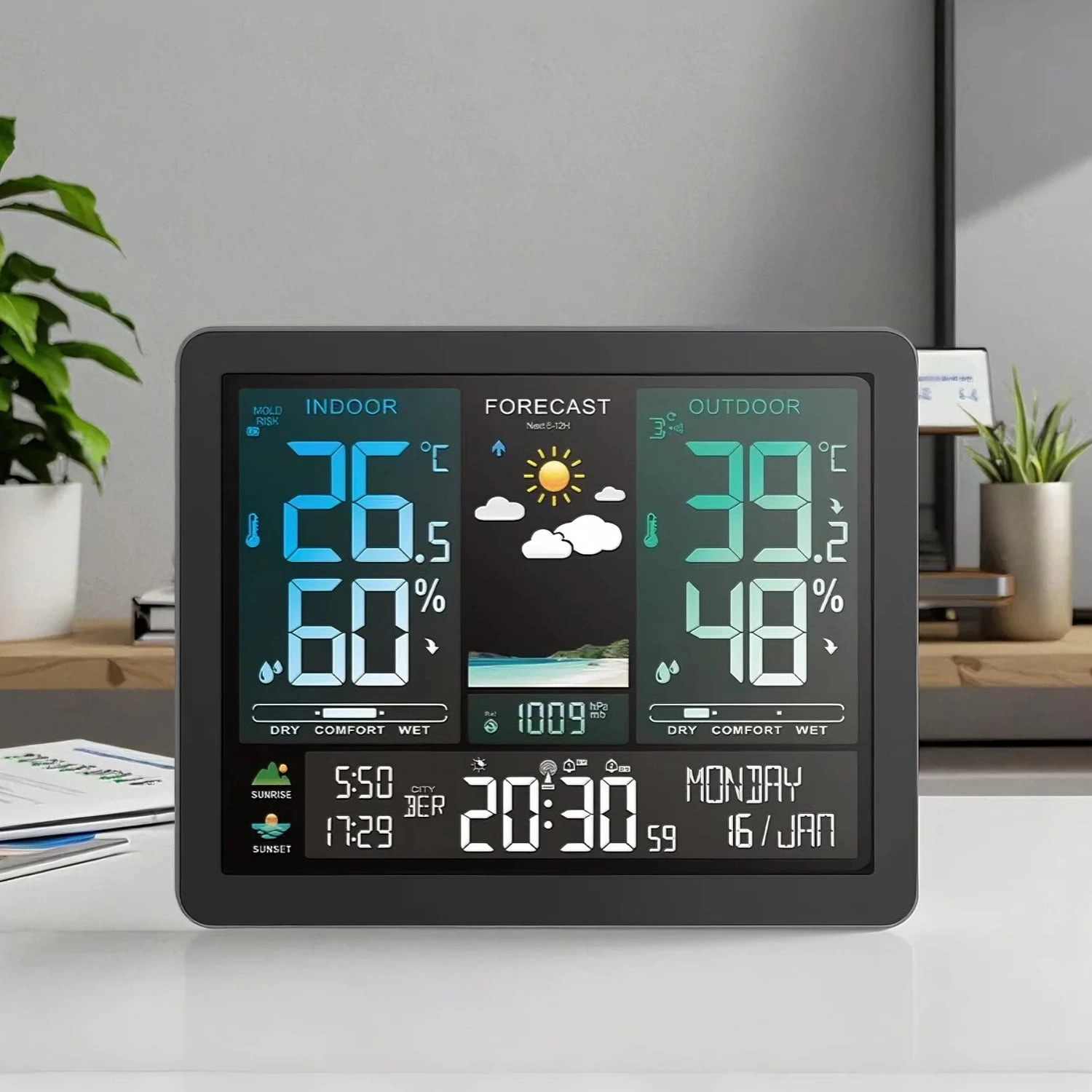
Custom USB Powered Daylight Savings Desktop Wall Alarm Clock Indoor and Outdoor Sensor Calendar Weather Thermometer Hygrometer Barometer
The X-WSDJ012 Smart Digital LED Alarm Clock is a multi-functional home device combining timekeeping with environmental monitoring.
It features a large LED display for time (12/24H), week, and date and integrates indoor/outdoor sensors to track temperature, humidity, atmospheric pressure, and weather trends.
Powered by USB (for a bright, always-on display) or batteries, it includes a waterproof outdoor sensor and offers customizable alarms, backlight control, and 8 language options.
Designed with a foldable stand or hanging hole, it fits desks, walls, or nightstands—ideal for home, garden, or office use.

Youben life
Youben life