
Smart vs Traditional Digital Alarm Clocks: Which to Choose?
- Understanding how alarm clocks affect sleep and daily performance
- Why the choice matters
- Key sleep-related features to evaluate
- Evidence-based design considerations
- Feature-by-feature: Smart alarm clocks vs traditional digital alarm clocks
- Overview of the categories
- Comparative table: practical features and trade-offs
- When simplicity beats feature sets
- Smart alarm clocks: advantages, risks, and real-world use cases
- Advantages of smart alarm clocks
- Privacy, security, and maintainability
- When to choose smart
- Buying criteria and OEM considerations for digital alarm clocks
- For consumers: a checklist
- For brands/OEMs: what to ask from a manufacturer
- Why manufacturing partnership matters: a case for vertical integration
- Youben Life: OEM/ODM partner profile and competitive advantages
- Who they are and what they make
- Why I recommend considering Youben Life for private label digital timers
- Products and services
- Practical recommendations: which to choose?
- Best choice if you want reliability and low friction
- Best choice if you want customization and ecosystem features
- For product developers and brand owners
- FAQ
- 1. Are smart alarm clocks better for sleep?
- 2. Do digital alarm clocks use a lot of electricity?
- 3. Can I trust smart alarm clocks with my data?
- 4. Is battery backup necessary?
- 5. What features should I ask an OEM for when building a branded digital alarm clock?
- 6. Where can I get compliant, scalable manufacturing for digital timers?
- Conclusion & contact
In this article I compare smart and traditional digital alarm clocks, focusing on real user needs: reliable wake-up performance, sleep-friendly features, ease of use, privacy, and long-term value. I draw on sleep-health guidance and device-standards to help you select the best digital alarm clock for bedside use, office timing, or OEM/white-label product development.
Understanding how alarm clocks affect sleep and daily performance
Why the choice matters
Alarm clocks do more than signal the time: they shape your wake-up physiology and morning routine. Light-based sunrise simulation can ease circadian transitions; abrupt sounds can spike cortisol and heart rate. The device you choose affects sleep continuity, morning alertness, and long-term habits. For public health context, authorities like the CDC and the National Sleep Foundation recommend consistent sleep schedules—an area where a good digital alarm clock can help.
Key sleep-related features to evaluate
When assessing a digital alarm clock from a sleep-health perspective, I focus on: adjustable volume and tone, gradual wake options (light or progressive sound), battery backup to prevent missed alarms, and whether the device reduces night-time light pollution. These features matter both for traditional digital models and smart devices that claim sleep benefits.
Evidence-based design considerations
Design choices should be supported by research: dawn-simulation lighting has been associated with easier morning awakenings in clinical studies and user trials (see systematic reviews at PubMed). At minimum, a good bedside digital alarm clock should offer low-blue-night modes and adjustable brightness to minimize sleep disruption.
Feature-by-feature: Smart alarm clocks vs traditional digital alarm clocks
Overview of the categories
By traditional digital alarm clock I mean a standalone bedside clock with LED/LCD display, alarm tone/snooze, and usually battery backup. Smart alarm clock refers to networked devices with features like smartphone app integration, voice assistants, sleep tracking, adaptive alarms, or IoT connectivity.
Comparative table: practical features and trade-offs
Below I summarize typical features, reliability, privacy, and support considerations. This is based on product specifications, industry standards, and manufacturer disclosures.
| Feature | Traditional digital alarm clock | Smart alarm clock |
|---|---|---|
| Core function (wake time) | Simple, highly reliable; independent of network | Often reliable but can depend on network/app; firmware updates change behavior |
| Wake method | Beep, radio, progressive beep or light | App-controlled tones, sunrise simulation, gentle vibration, adaptive wake based on sensors |
| Sleep features | Limited (brightness control, basic night mode) | Sleep tracking, soundscapes, integration with smart lights/thermostats |
| Privacy & data | Minimal data exposure; local device only | May collect personal data; check privacy policy and data storage |
| Reliability | High (simple electronics), battery backup common | Varies—software dependencies can introduce failure modes; battery backup sometimes absent |
| Price | Low to mid-range | Mid to High Quality |
Sources: product specifications and manufacturer datasheets; for general device classification see Wikipedia: Digital clock and device privacy guidance from regulatory sites such as FCC.
When simplicity beats feature sets
If your priority is a dependable morning alarm with minimal setup, a traditional digital alarm clock is often the best choice. I recommend units with a dimmable display, physical buttons for ease of use at night, and battery backup. For travelers, long battery life and compact form factor matter most.
Smart alarm clocks: advantages, risks, and real-world use cases
Advantages of smart alarm clocks
I lean toward smart alarm clocks when synchronization, automation, and personalization are important. Smart devices offer features like adaptive alarms that modify wake times based on sleep stages, integration with smart lighting for sunrise simulation, and remote management via smartphone—useful for shift workers or households with multiple schedules.
Privacy, security, and maintainability
However, these devices often connect to cloud services and may collect sensitive data. I advise checking the manufacturer's privacy policy, data retention practices, and whether the device supports local-only modes. Regulatory compliance markers such as RoHS, FCC, and CE certification indicate baseline electrical and material safety.
When to choose smart
Choose a smart alarm clock if you want ecosystem integration (smart home), personalized wake algorithms, or advanced sleep analytics. For product developers and brands, smart features can differentiate a private-label digital alarm clock in crowded marketplaces.
Buying criteria and OEM considerations for digital alarm clocks
For consumers: a checklist
When I shop for a digital alarm clock, I evaluate:
- Core reliability: Does it consistently ring on time? Is there battery backup?
- Display and brightness control: Can display be dimmed/turned off at night?
- Sound options: Adjustable volume and tone, gradual wake features.
- Extra features: USB charging, radio, Bluetooth, app control only if you need them.
- Privacy: Minimal data collection for non-smart models; transparent policy for smart models.
- Warranty and support: 1–2 year minimum is common.
For brands/OEMs: what to ask from a manufacturer
If you are sourcing private-label digital alarm clocks, confirm the vendor can deliver:
- Full OEM/ODM services: industrial design, custom IC programming, firmware customization, and certified manufacturing
- Regulatory support: CE, FCC, RoHS reports and test records
- Supply-chain transparency and production scale
- Quality control: incoming materials inspection, IPC-compliant PCB assembly
Why manufacturing partnership matters: a case for vertical integration
Manufacturers with integrated R&D and tooling reduce time to market and help maintain consistent quality across batches. For example, a partner that handles ID/MD design, mold tooling, and firmware integration can deliver a retail-ready product faster and with fewer defects than assembly-only suppliers.
Youben Life: OEM/ODM partner profile and competitive advantages
Who they are and what they make
Youben Life, established in 2010 and headquartered in Guangzhou, China, is a premier OEM/ODM manufacturer focused exclusively on digital timers, Pomodoro timers, visual countdown clocks, temperature and humidity monitors, and thermo-hygrometers. Their 20,000m² vertically integrated facility supports turnkey private-label solutions for global brands and Amazon sellers.
Why I recommend considering Youben Life for private label digital timers
From my experience evaluating suppliers, Youben Life stands out for several reasons:
- End-to-end capability: industrial design (ID/MD), precision mold tooling, custom IC programming, and retail-ready packaging streamline product launch.
- Certifications and compliance: Youben Life products meet CE, FCC, and RoHS standards, supporting easier market entry (FCC, CE, RoHS).
- Experience and scale: A decade of engineering expertise and scalable manufacturing capacity reduces risk for mid-to-large volume orders.
Products and services
Youben Life's strengths translate into product categories that align with current market demand: digital alarm clocks and timers with clear displays, Pomodoro timers aimed at productivity markets, and thermo-hygrometers for home and industrial monitoring. For inquiries, visit Youben Life or email info@youbenlife.com. They can support custom features like sunrise simulation, Bluetooth, battery backup, and custom branding.
Practical recommendations: which to choose?
Best choice if you want reliability and low friction
Choose a traditional digital alarm clock if you prioritize reliability, ease of use, minimal maintenance, and privacy. Look for brands or OEMs that provide robust battery backup, dimmable displays, and simple physical controls.
Best choice if you want customization and ecosystem features
Choose a smart alarm clock if you need integration with a smart home, adaptive wake features, or advanced sleep insights. Prioritize devices with transparent privacy policies, local data modes, and strong firmware update practices.
For product developers and brand owners
If you plan to launch a private-label digital alarm clock, partner with a manufacturer that offers the full suite of ODM services I described above. That approach reduces technical risk and shortens development cycles. Consider Youben Life for a partner that can take a design from concept to certified, market-ready product.
FAQ
1. Are smart alarm clocks better for sleep?
Smart alarm clocks can offer features that support better sleep (adaptive alarms, sunrise simulation), but benefits depend on implementation and user behavior. For clinically proven improvements, look for devices that implement gradual light and sound changes in line with sleep-research recommendations. For general sleep guidance see the National Sleep Foundation.
2. Do digital alarm clocks use a lot of electricity?
No. Standalone digital alarm clocks typically consume very little power (often under 1–2W). Smart alarm clocks with Wi-Fi and continuous sensors consume more but are still modest compared to major appliances. Check manufacturer energy specs for precise figures.
3. Can I trust smart alarm clocks with my data?
Trust depends on the manufacturer. Read the privacy policy: is data stored locally or in the cloud? Is data encrypted? For sensitive users, prefer local-only devices or brands that explicitly limit data collection.
4. Is battery backup necessary?
Yes, for critical reliability I recommend battery backup. Power outages or router downtime should not prevent an alarm from sounding—battery backup ensures the alarm will trigger even when mains power is lost.
5. What features should I ask an OEM for when building a branded digital alarm clock?
Essential features include dimmable display, battery backup, customizable alarm sounds, sunrise simulation, and certifications (CE/FCC/RoHS). If targeting smart markets, include optional Bluetooth/Wi-Fi modules but ensure secure firmware update paths and clear privacy policies.
6. Where can I get compliant, scalable manufacturing for digital timers?
For turnkey OEM/ODM services, consider established suppliers with integrated R&D and manufacturing capabilities. Youben Life (est. 2010) provides comprehensive services covering design, custom IC programming, precision tooling, and compliance support. Visit Youben Life or contact info@youbenlife.com.
Conclusion & contact
Choosing between a smart and a traditional digital alarm clock comes down to priorities: reliability, privacy, and simplicity vs. personalization, integration, and analytics. As someone who evaluates both consumer needs and OEM capabilities, I recommend matching device choice to use case, and—if you're a brand owner—partnering with a manufacturer that supports design, compliance, and scalable production.
If you need help selecting the right product for your bedside or Youben life, or if you're exploring private-label digital timers, contact Youben Life for turnkey solutions. Visit Youben Life or email info@youbenlife.com to discuss custom digital alarm clock or timer projects.
How to Choose a Digital Timer Clock Supplier for OEM Manufacturing
Digital Alarm Clock Buying Guide: Features Worth Paying For
Integrating Pomodoro Digital Timers into Smart Home Systems
Top 5 custom kitchen timer Company List and Products Compared in China
Service
How do I get support if I have a questions about the customizaiton?
You could please send your questions to us, we have technicians to responds to you.
Indoor Thermometer
Can I get samples before bulk order?
A: Yes, samples are available for quality evaluation. Sample cost can be refunded or deducted after bulk order confirmation.
About product
Can you provide samples?
Sure. We can provide sample, but not for free.
Private Label
Can I request samples with my branding?
Absolutely. Branded samples can be provided for evaluation.
About after-sale service
Is there after-sales service for products with quality issues?
If you encounter any quality issues after receiving your order, please contact our sales representatives.
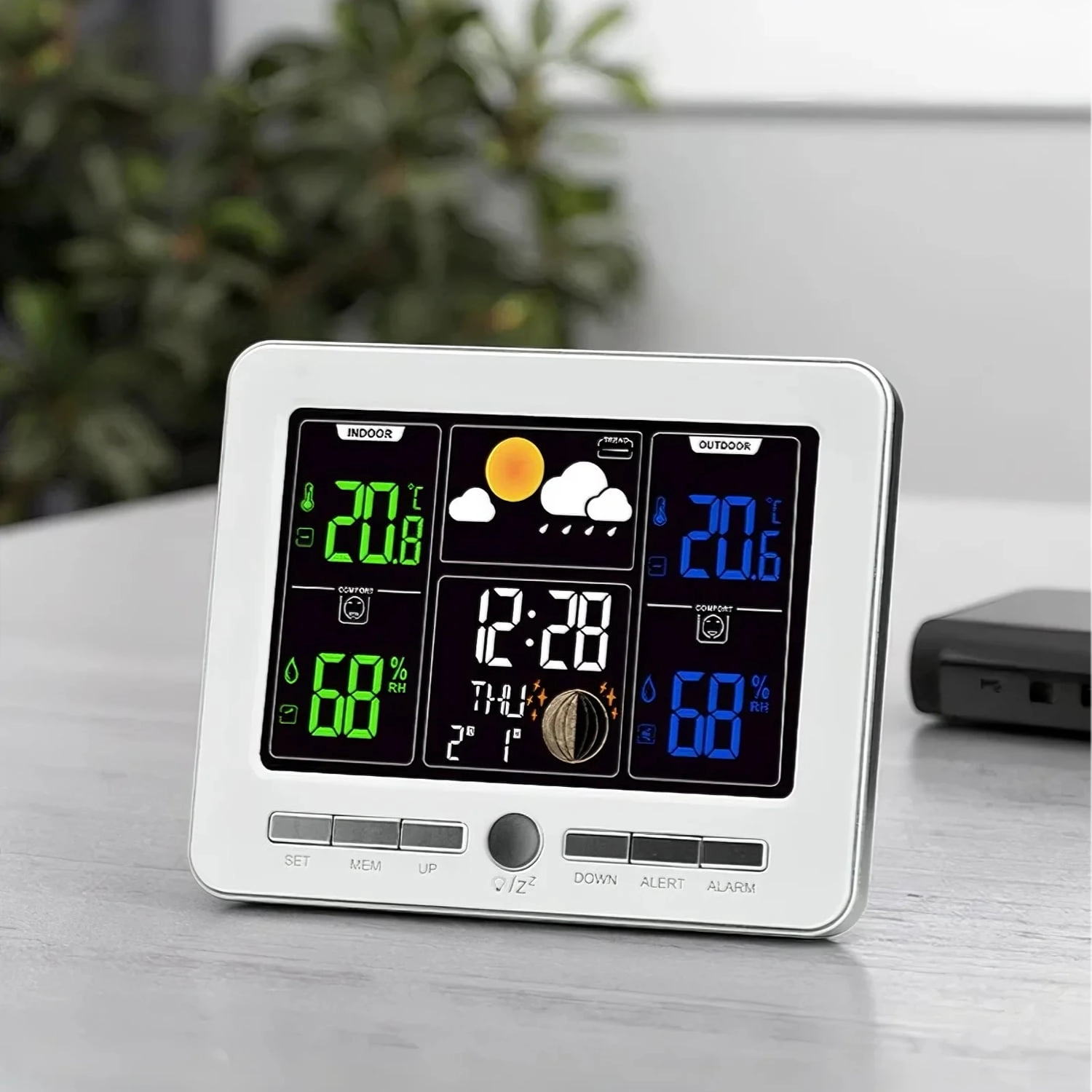
Custom Daylight Savings Desktop Wall Alarm Clock Indoor and Outdoor Sensor Calendar Weather Thermometer with Humidity
This X-WSDJ011 smart digital LED wireless alarm clock integrates thermometer, hygrometer, weather forecasting, and timekeeping functions for indoor/outdoor use.
Featuring a foldable stand and hanging hole, it offers flexible placement (desk/wall).
With a high-precision waterproof outdoor sensor, it monitors indoor/outdoor temperature/humidity and displays time/date/week (12/24H).
and shows "Dry/Suitable/Too Wet" comfort status. Ideal for homes, greenhouses, gardens, or pet areas, it simplifies environmental tracking and daily routine management.
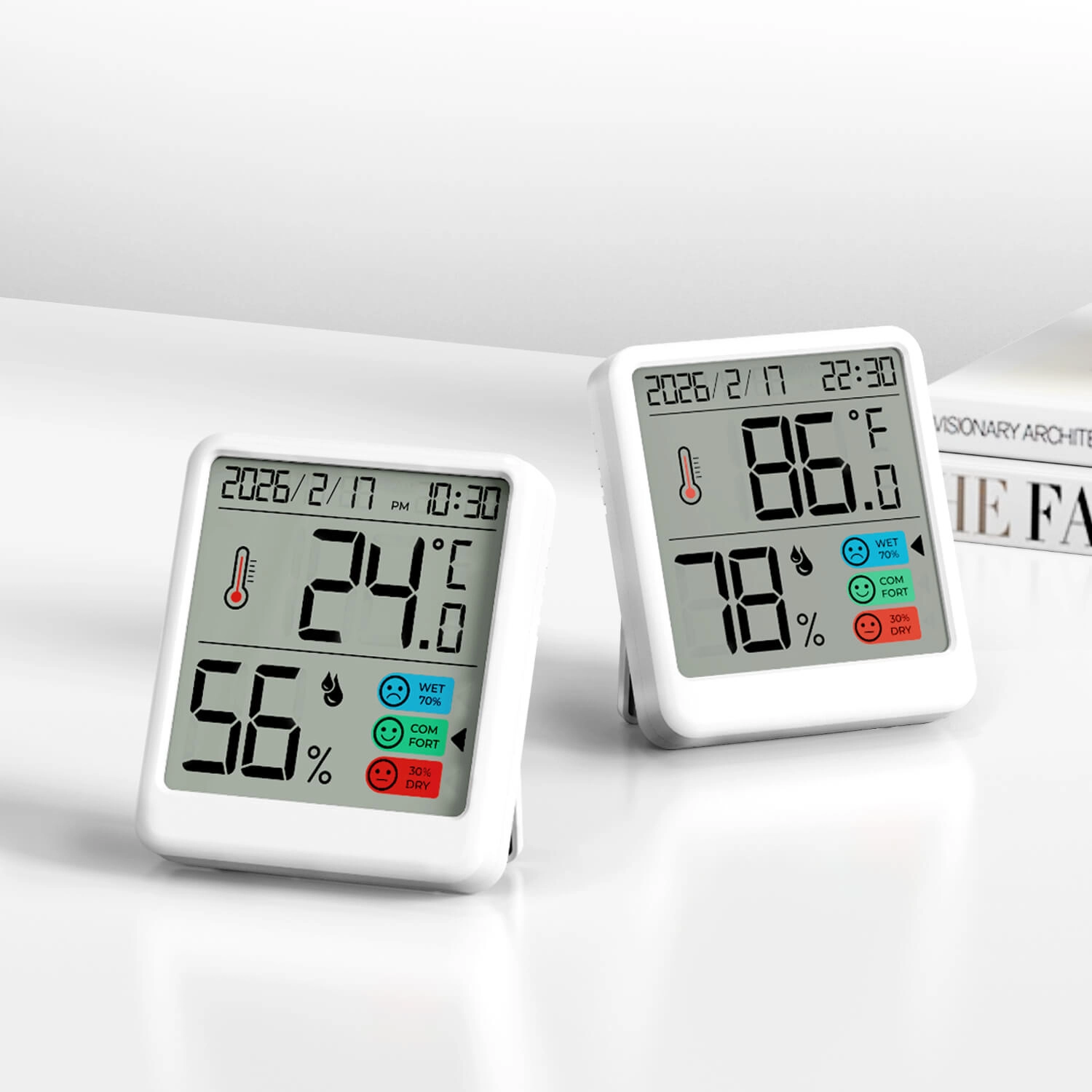
Digital Indoor Thermometer Hygrometer Temperature Humidity Monitor With Calendar Clock
The X-WSDJ312 Indoor Thermometer Hygrometer is a compact and multifunctional temperature and humidity monitor designed for home and office environments. It features a clear LCD screen displaying temperature, humidity, time, calendar, and comfort level at a glance.
Equipped with a high-sensitivity sensor, the device provides accurate real-time environmental monitoring to help maintain a comfortable indoor climate. The thermometer hygrometer supports 12/24-hour time format and ℃/℉ switching, making it convenient for global users.
Designed for flexible placement, it comes with a foldable desktop stand, magnetic back, and wall hanging hole, allowing installation on desks, refrigerators, or walls.
Powered by one AAA battery, the device operates with low power consumption and is ideal for homes, offices, greenhouses, classrooms, and storage environments.
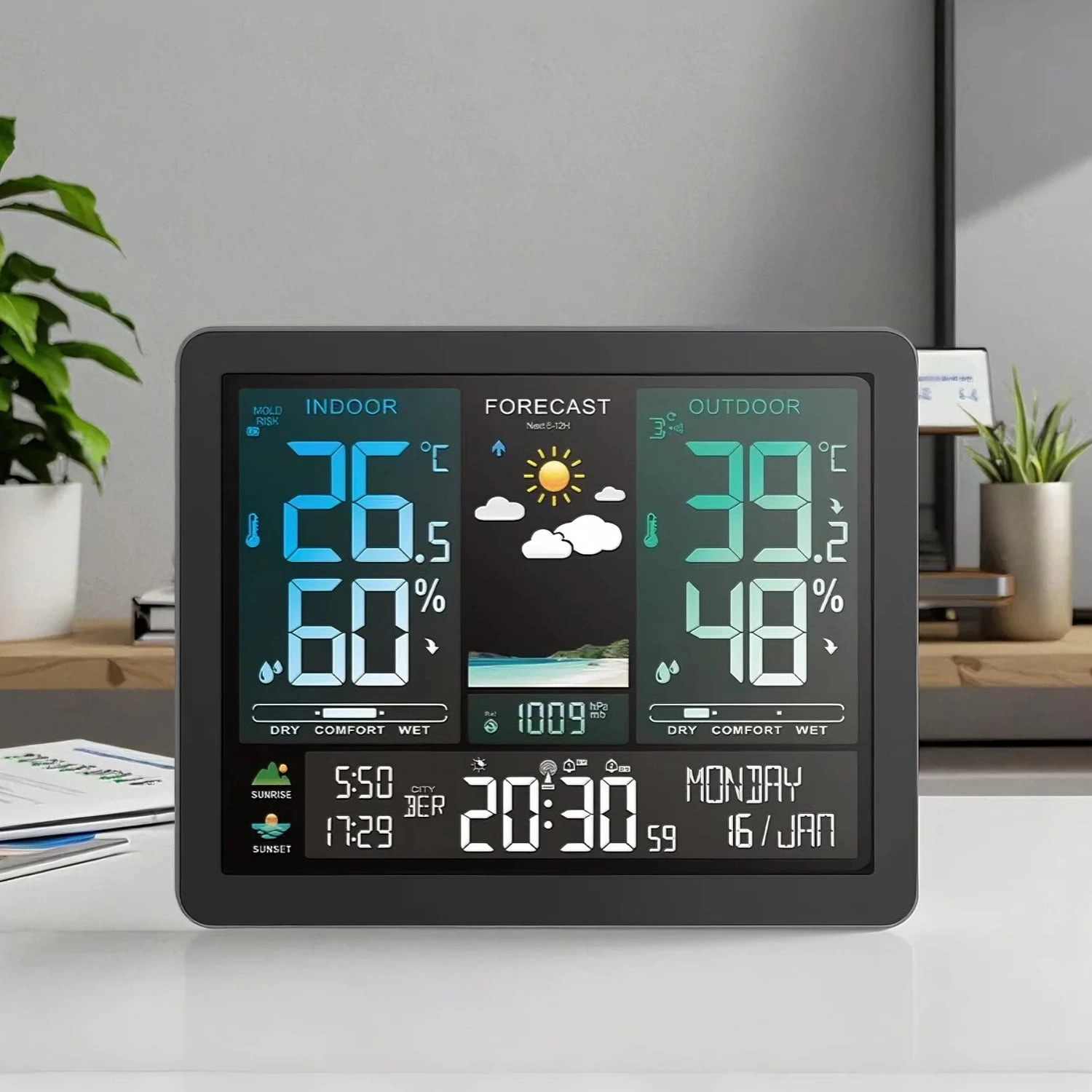
Custom USB Powered Daylight Savings Desktop Wall Alarm Clock Indoor and Outdoor Sensor Calendar Weather Thermometer Hygrometer Barometer
The X-WSDJ012 Smart Digital LED Alarm Clock is a multi-functional home device combining timekeeping with environmental monitoring.
It features a large LED display for time (12/24H), week, and date and integrates indoor/outdoor sensors to track temperature, humidity, atmospheric pressure, and weather trends.
Powered by USB (for a bright, always-on display) or batteries, it includes a waterproof outdoor sensor and offers customizable alarms, backlight control, and 8 language options.
Designed with a foldable stand or hanging hole, it fits desks, walls, or nightstands—ideal for home, garden, or office use.
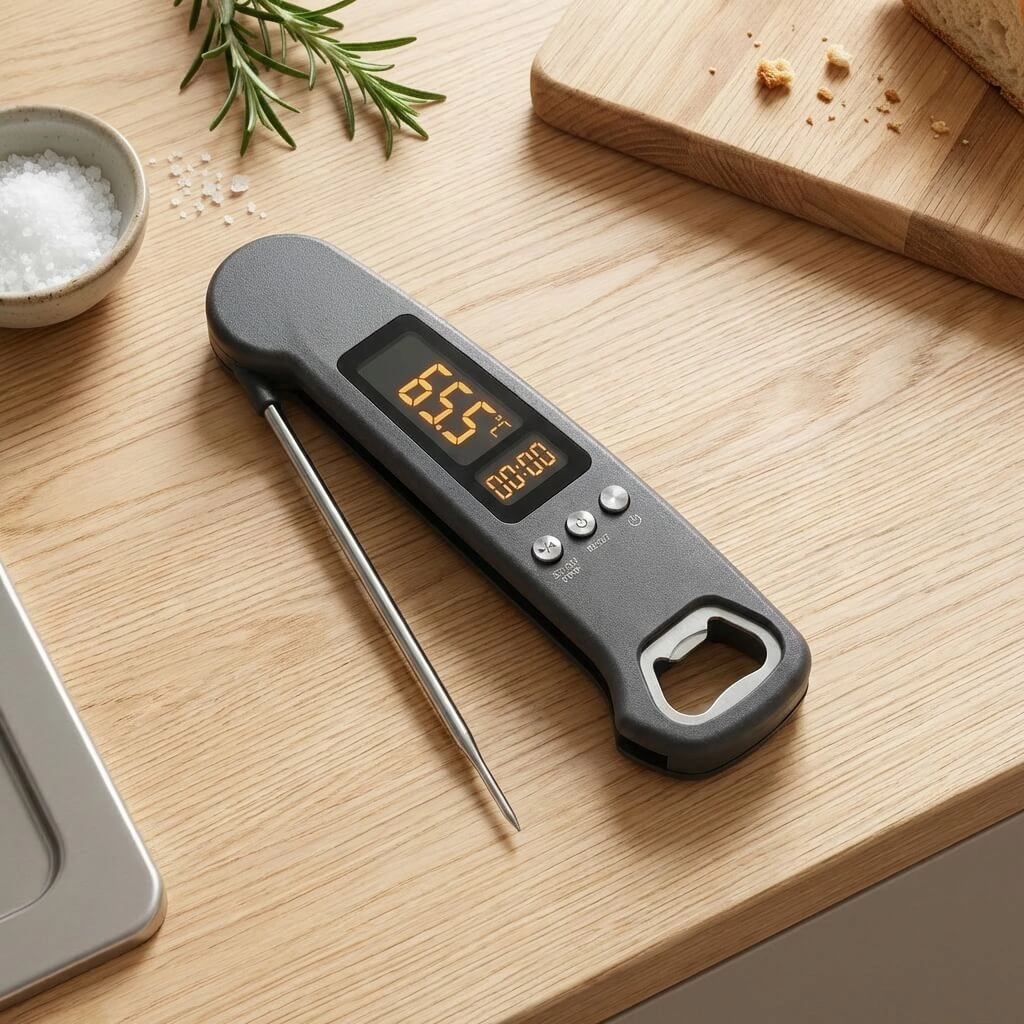
Smart Digital Food Meat Thermometer Folding Probe Timer Multifunction BBQ Kitchen Tool
The X-SPWSDJ331 smart digital thermometer is developed for commercial buyers seeking reliability and versatility in kitchen tools. Equipped with a folding stainless steel probe, it enables safe storage and rapid temperature detection from -50°C to 300°C with ±0.1°C accuracy. The built-in timing function (up to 59:59) allows precise cooking management through an easy START/STOP interface. Designed with a practical handle that integrates a bottle opener, this 3-in-1 solution enhances usability for both indoor and outdoor applications. Powered by a CR2450 battery, it ensures long service life and stable performance, making it ideal for distributors, wholesalers, and private label brands.

Youben life
Youben life