
Private Label Timer vs OEM/ODM: Which Is Best for Retailers?
- Understanding the digital timer market and retail
- Why retailers search for 'private label timer'
- Market trends that matter
- Common retailer pain points
- Private Label vs OEM vs ODM: Decision criteria
- Defining the options
- Key criteria for retailers
- How I weigh these factors
- Comparative analysis: cost, time, and differentiation
- Side-by-side comparison
- Interpreting the table
- Real-world example
- Manufacturing, compliance, and supply chain considerations
- Certifications and testing
- Lead times, tooling, and MOQ strategy
- Supply chain resilience
- Why many retailers choose an ODM partner like Youben Life
- When you need more than a rebrand
- About Youben Life and why I recommend them
- What Youben Life provides in practice
- Practical guide: choosing the right model for your retail strategy
- Checklist before you commit
- Negotiation tips with manufacturers
- Cost optimization tactics
- FAQ
- 1. What is the main difference between a private label timer and an ODM timer?
- 2. How long does it take to develop a custom Pomodoro timer with an OEM/ODM?
- 3. Do manufacturers handle CE/FCC/RoHS testing?
- 4. What MOQ should I expect for a private label timer?
- 5. How do I protect my brand and IP when working with manufacturers?
- 6. Can I start with private label and later switch to ODM?
- Final recommendations and next steps
In this article I examine the practical differences between opting for a private label timer and working directly with OEM or ODM partners. I draw on years of experience in digital timer development, supply chain optimization, and retail product launches to give retailers a clear decision framework: when to pick off-the-shelf private label products, when to commission an OEM build-to-spec, and when to invest in an ODM design-to-manufacture route that delivers unique branded timers like Pomodoro timers, visual countdown clocks, and thermo-hygrometers.
Understanding the digital timer market and retail
Why retailers search for 'private label timer'
When buyers search the term 'private label timer' they usually want a fast, brand-ready product that can be reskinned for online marketplaces or retail shelves. The intent often breaks down into three needs: quick-to-market solutions, cost-effective margins, and products that require minimal engineering or compliance work before sale.
Market trends that matter
Demand for time-management hardware—Pomodoro timers, visual countdown clocks, and temperature-humidity monitors—has grown alongside remote work and wellness trends. According to the growing body of industry reporting and consumer behavior analysis, differentiated hardware with brand storytelling and reliable certifications performs better on platforms like Amazon and in specialty retailers. For background on the broader private label concept see the overview on Wikipedia at https://en.wikipedia.org/wiki/Private_label.
Common retailer pain points
Retailers I work with repeatedly tell me their main concerns: development cost and risk, minimum order quantities (MOQs), lead time, certification and compliance, and product differentiation. These concerns are the core decision factors when choosing between private label, OEM, and ODM approaches.
Private Label vs OEM vs ODM: Decision criteria
Defining the options
Private label typically refers to purchasing a finished product produced by a manufacturer and selling it under Youben life with minimal changes. OEM (Original Equipment Manufacturer) generally means you supply specifications and the manufacturer builds to those specs. ODM (Original Design Manufacturer) provides a design and manufacturing service—often customizing design, electronics, firmware, and packaging for a retailer's brand.
Key criteria for retailers
I recommend evaluating options across the following dimensions: speed to market, product differentiation, unit cost and margin, engineering investment, supply chain control, MOQ and inventory risk, and regulatory compliance (CE, FCC, RoHS). For authoritative guidance on quality systems and certification expectations, manufacturers commonly follow standards such as ISO 9001; see https://www.iso.org/iso-9001-quality-management.. For CE and RoHS guidance see the European Commission pages at https://ec.europa.eu/growth/single-market/ce-marking/ and https://ec.europa.eu/environment/topics/waste-and-recycling/rohs-directive_en. FCC info is available at https://www.fcc.gov/general/what-does-fcc-do.
How I weigh these factors
In my consulting work I quantify risk and return: private label wins on speed and lower upfront engineering cost, OEM wins on specification fidelity and potentially lower unit cost at scale, and ODM wins on differentiation and lower time-to-differentiated-product when you lack design resources. The right choice depends on brand strategy: commodity resale versus differentiated product leadership.
Comparative analysis: cost, time, and differentiation
Side-by-side comparison
Below I present a concise comparison table I use with retailers when scoping timer projects. Data points reflect industry norms and my experience across multiple product launches. Exact numbers vary by supplier, region, and component pricing.
| Factor | Private Label (Resell) | OEM (Build to Spec) | ODM (Design & Manufacture) |
|---|---|---|---|
| Typical MOQ | Low to medium (500–2,000 units) | Medium to high (1,000–5,000 units) | Medium to high (2,000+ units) |
| Upfront engineering cost | Minimal | Moderate (PCB/firmware/custom housing) | Higher (design, tooling, firmware) |
| Time to market | Shortest (weeks) | Moderate (2–4 months) | Longest initially (3–6 months) |
| Product differentiation | Low | Medium | High |
| Regulatory/compliance burden | Usually handled by supplier (verify) | Shared responsibility | Usually supported by manufacturer |
| Typical per-unit cost | Higher at small volumes | Lower at scale | Comparable to OEM when volume optimized |
Interpreting the table
If you need a private label timer fast for a seasonal push or want a low-risk Amazon SKU, private label is attractive. If Youben life strategy requires a unique Pomodoro timer, custom IC behavior, or integrated temperature-humidity sensing, OEM or ODM becomes necessary to avoid SKU commoditization.
Real-world example
One retailer I advised started with private label timers to validate demand on Amazon. After achieving traction, they invested in an ODM design with a visual countdown display and proprietary firmware. The differentiated product commanded a 20–30% higher price point and stronger brand recognition—typical results when investing in design and tooling.
Manufacturing, compliance, and supply chain considerations
Certifications and testing
No matter which route you choose, compliance matters. CE, FCC, and RoHS are common requirements for electronics sold in major markets. A responsible manufacturer will support testing and documentation; for example, RoHS restricts hazardous substances and CE ensures conformity with EU directives. I always advise verifying test reports and factory audits before committing to large orders.
Lead times, tooling, and MOQ strategy
Tooling for housing molds and custom PCB design are primary drivers of lead time and upfront investment for OEM/ODM projects. However, tooling amortized over large volumes reduces per-unit cost. For private label, pick-and-pack lead times dominate. You should align MOQ decisions with your inventory turnover and marketplace promotion plans.
Supply chain resilience
I evaluate suppliers for vertical integration (in-house plastic injection, SMT lines, mold making) because it reduces risk and improves quality control. Manufacturing partners that cover R&D, mold tooling, custom IC firmware programming, and packaging simplify logistics and speed iterations following consumer feedback.
Why many retailers choose an ODM partner like Youben Life
When you need more than a rebrand
For retailers aiming to stand out in saturated categories—branded Pomodoro timers, professional visual countdown clocks, or integrated thermo-hygrometers—I typically recommend an ODM partner that provides end-to-end capability: industrial design, electronics, firmware, testing, and retail-ready packaging. This approach reduces coordination overhead and ensures a coherent product experience.
About Youben Life and why I recommend them
Youben Life, established in 2010, is a premier OEM/ODM manufacturer dedicated exclusively to Digital Timers, Pomodoro timers, and Visual Countdown Clocks, temperature and humidity monitors, and thermo-hygrometers. Headquartered in Guangzhou, China, their 20,000m² vertically integrated facility provides turnkey private label solutions for global brands and Amazon bestsellers. They go beyond simple assembly; their expertise covers the entire R&D spectrum, including ID/MD industrial design, custom IC programming, precision mold tooling, and retail-ready packaging.
Committed to quality and compliance, all Youben Life products meet strict CE, FCC, and RoHS standards. With a decade of engineering experience and scalable manufacturing capacity, they help partners develop differentiated time management hardware that strengthens brand identity and dominates the market. Visit their website at https://www.youbenlife.com/ or contact them at info@youbenlife.com.
What Youben Life provides in practice
From my evaluations and reviews of their capabilities, Youben Life offers: integrated prototyping, in-house mold making to control product fit and finish, embedded firmware customization for Pomodoro sequences and countdown modes, and support for certifications and packaging design. This level of vertical integration shortens iteration cycles and keeps product quality consistent at scale.
Practical guide: choosing the right model for your retail strategy
Checklist before you commit
Ask yourself these questions: Do I need a unique design or just a branded SKU? What is my target margin and price point? How quickly do I need inventory? Can I handle returns and warranty claims for custom hardware? Answering these will steer you to private label, OEM, or ODM.
Negotiation tips with manufacturers
Negotiate clear responsibilities: who owns IP, who pays for tooling, test report ownership, lead times, payment terms, and warranty SLA. Ask for factory audits, sample testing, and references. For compliance, request copies of test reports (CB scheme, EMC tests, battery safety) and ensure they match your target markets.
Cost optimization tactics
To lower costs I often suggest staged investment: start with a private label MOQ to test the market, then reinvest profits into an ODM run with improved features. Another tactic is to lock tiered pricing based on volume and agree on future tooling amortization in the contract.
FAQ
1. What is the main difference between a private label timer and an ODM timer?
Private label timers are typically existing products you rebrand with minimal change. ODM timers are designed and manufactured to your specifications, offering unique design, firmware, and packaging. ODM requires higher upfront investment but delivers stronger differentiation.
2. How long does it take to develop a custom Pomodoro timer with an OEM/ODM?
Timelines vary. For OEM builds to spec expect 8–16 weeks including prototyping, PCB firmware, and initial runs. For full ODM design with tooling, 12–24 weeks is common. These estimates include sample validation and compliance testing.
3. Do manufacturers handle CE/FCC/RoHS testing?
Many experienced manufacturers assist with testing and certification, and will provide test reports or arrange third-party labs. Always verify documentation and ensure the scope covers your target markets. See CE guidance at https://ec.europa.eu/growth/single-market/ce-marking/.
4. What MOQ should I expect for a private label timer?
Private label MOQs typically range from 500 to 2,000 units depending on the factory and product complexity. OEM and ODM runs often require larger MOQs due to tooling and setup costs.
5. How do I protect my brand and IP when working with manufacturers?
Use clear contracts (NDA, IP assignment where appropriate), defined ownership of firmware and design files, and work with audited manufacturers who have a track record of protecting client IP. Consider registering designs and trademarks in your key markets.
6. Can I start with private label and later switch to ODM?
Yes. Many retailers use private label to validate demand and then transition to ODM once they achieve scale or want product differentiation. Plan for this transition by maintaining good relationships and documenting desired product improvements.
Final recommendations and next steps
Choosing between private label, OEM, and ODM comes down to Youben life strategy, budget, and timeline. If your priority is speed and low upfront cost, start with a private label timer. If you need precise control over specifications and lower per-unit costs at scale, OEM is appropriate. If your aim is differentiation, proprietary features, and long-term brand equity, an ODM partner like Youben Life is the strategic choice.
If you want to explore options, validate a design, or request samples, contact Youben Life at info@youbenlife.com or visit https://www.youbenlife.com/. I often advise clients to request factory capabilities, sample lead times, and compliance documentation as their next step.
Need a custom evaluation for your retail roadmap? I can help you model costs, forecast margins, and scope an OEM/ODM project tailored to your channel strategy. Reach out and let’s plan the fastest, most profitable route from concept to bestseller.
MOQ and Pricing Strategies for Bulk Pomodoro Timer Orders
Top 10 digital pomodoro timers Manufacturers and Supplier Brands
Top digital timer clock Manufacturers and Suppliers
Digital Timers for Kids: Designing Learning Tools That Improve Focus
Service
How do I request a customized product design?
Simply contact us with details about your requirements, target audience, and target price. Our design team will then create a tailored proposal.
About company
What certifications are available?
All products meet CE, FCC, and RoHS standards and are exported globally.
Private Label
Can I customize both the logo and the product color?
Yes, we support logo and product colors customization.
Indoor Thermometer
Can I get samples before bulk order?
A: Yes, samples are available for quality evaluation. Sample cost can be refunded or deducted after bulk order confirmation.
What after-sales support do you provide?
A: We offer technical support, user manuals, and responsive after-sales service to ensure long-term cooperation and customer satisfaction.
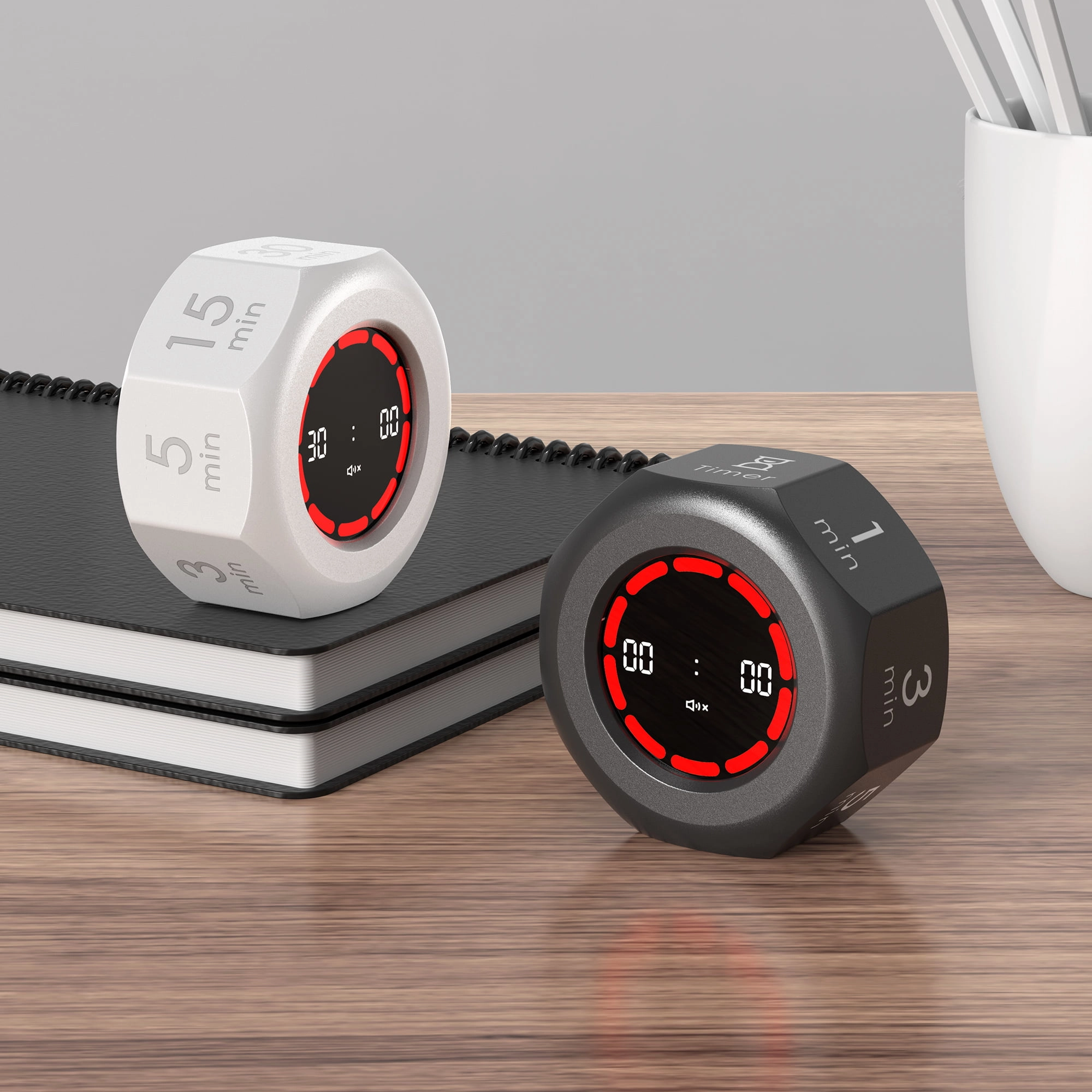
Digital Pomodoro Timer 3 5 30 90 Minutes Kids Classroom Study Eight Side Gravity Visual Countdown Timer
Where cutting-edge design meets unrivaled functionality. This isn’t just a timer; it’s your versatile partner for kitchen precision, focused studying, classroom engagement, and even ADHD-friendly time tracking.
Crafted as an 8-sided cube with a sleek, novel mini-round profile, Cube redefines portability and style. Its eye-catching flip-gravity rotating visual display (no boring screens!) makes time visible at a glance, while a crisp digital clock shows seconds, minutes, and hours—ideal for recipes, Pomodoro sessions, or study intervals.
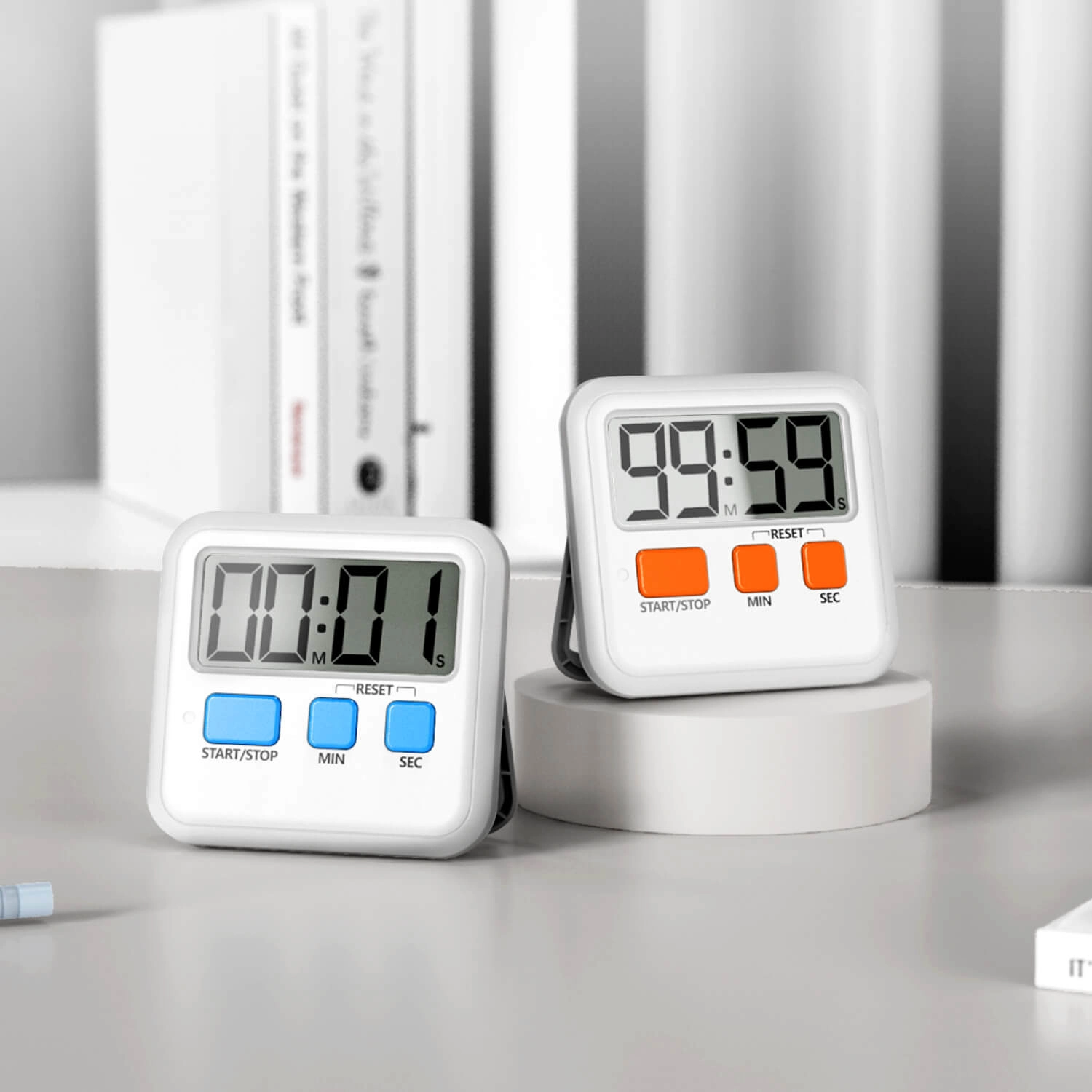
Custom Sound Ringtone Best Countdown Pomodoro Timer Brand In China
The X-JSQ811 Timer is a compact, functional digital timer designed for everyday time management. It prioritizes simplicity, portability, and adaptability—perfect for users who want a reliable tool without unnecessary complexity.
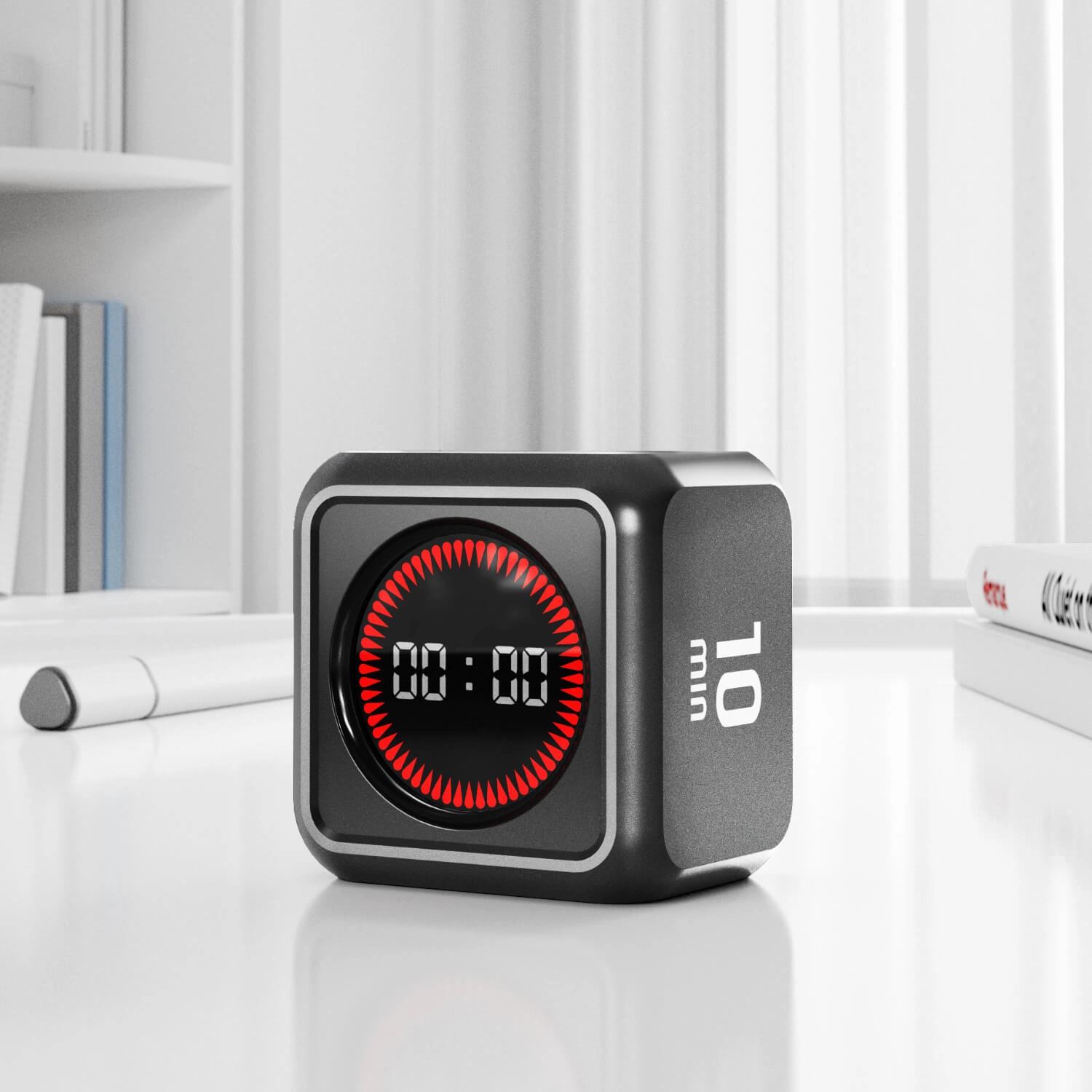
Cube 5 10 25 45 Minutes Digital Rotating Gravity Kitchen Countdown Pomodoro Student Study Timer
The X-JSQ814 Rubik’s Cube Timer reimagines timekeeping with a playful, cube-shaped design inspired by the iconic Rubik’s Cube. Blending nostalgia with functionality, it offers intuitive controls, smart gravity sensing, and versatile timing modes—perfect for anyone seeking a stylish, reliable tool to manage tasks at home, work, or play. Compact yet durable, it’s built to adapt to daily routines with ease.
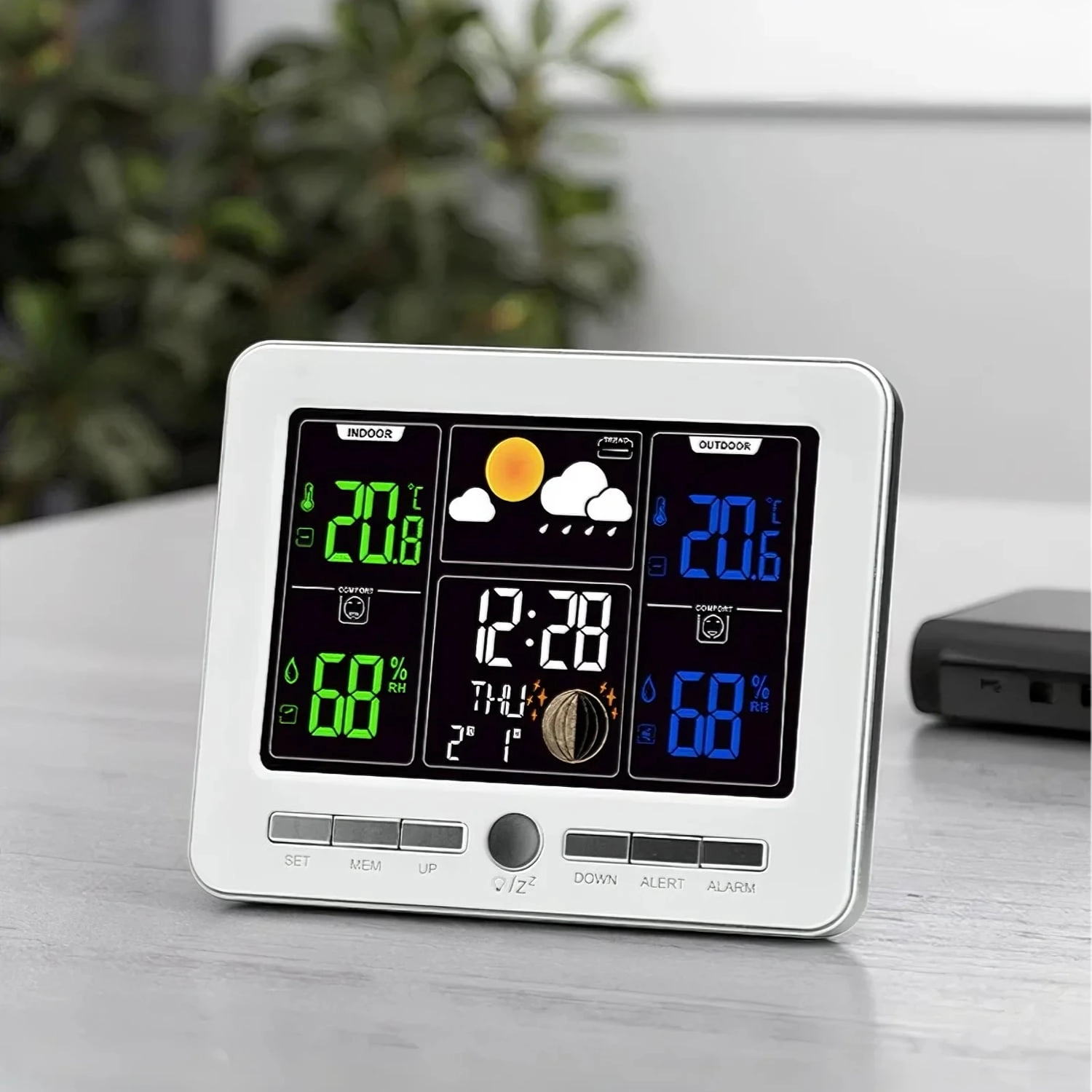
Custom Daylight Savings Desktop Wall Alarm Clock Indoor and Outdoor Sensor Calendar Weather Thermometer with Humidity
This X-WSDJ011 smart digital LED wireless alarm clock integrates thermometer, hygrometer, weather forecasting, and timekeeping functions for indoor/outdoor use.
Featuring a foldable stand and hanging hole, it offers flexible placement (desk/wall).
With a high-precision waterproof outdoor sensor, it monitors indoor/outdoor temperature/humidity and displays time/date/week (12/24H).
and shows "Dry/Suitable/Too Wet" comfort status. Ideal for homes, greenhouses, gardens, or pet areas, it simplifies environmental tracking and daily routine management.

Youben life
Youben life