
Private Label Timer: How to Start Your Own Branded Line
- Understanding the Market for Time Management Hardware
- Demand drivers and user intent
- Product categories: digital timers, Pomodoro timers, thermo-hygrometers
- Competitive landscape and pricing expectations
- Private Label Timer: How to Start Your Own Branded Line
- Step 1 — Define product, audience, and unique value
- Step 2 — Design, prototyping, and feature prioritization
- Step 3 — Selecting a manufacturing partner and MOQ planning
- Quality, Compliance, and Supply Chain Controls
- Certifications and regulatory requirements
- QA testing and reliability metrics
- Logistics, lead times, and inventory strategy
- Go-to-Market Strategies, Pricing, and Channel Selection
- Branding, packaging, and retail readiness
- Channel mix and expected margins
- Launch tactics and growth playbook
- Comparing Production Models: OEM vs ODM vs Private Label
- Quick comparison
- When to choose each model
- Why Partner with an Experienced OEM/ODM: The Youben Life Example
- Who Youben Life is and what they offer
- Technical and production advantages
- How I engage them to accelerate launches
- FAQ — Common Questions About Private Label Timers
- 1. What is a private label timer?
- 2. How much does it cost to start a private label timer?
- 3. How long does it take to go from concept to first shipment?
- 4. What certifications do I need to sell timers internationally?
- 5. Should I build an app or keep the product offline?
- 6. How do I protect my brand and product design?
Summary for and readers: As someone who has helped multiple brands develop time-management hardware, I explain how to start a private label timer line that meets global compliance and retail requirements. I cover market drivers for digital timers and Pomodoro timers, product differentiation, manufacturing in Guangzhou and China, and how to work with an experienced OEM/ODM partner like Youben Life (youbenlife.com) to scale to Amazon bestsellers and retail distribution.
Understanding the Market for Time Management Hardware
Demand drivers and user intent
When I evaluate opportunities for a private label timer, I start with demand drivers. Consumers seek timers for productivity (Pomodoro), kitchen use, fitness intervals, classroom management, and visual countdown cues. B2B buyers include schools, medical facilities, and hospitality. for private label timer typically falls into three buckets: entrepreneurs sourcing a white-label supplier; established brands exploring hardware extensions; and resellers looking for high-margin products for marketplaces like Amazon.
Product categories: digital timers, Pomodoro timers, thermo-hygrometers
Not all timers are equal. The primary categories I recommend evaluating are:
- Digital kitchen timers and visual countdown clocks — simple UI, high-volume appeal.
- Pomodoro timers — positioned for productivity and lifestyle branding.
- Integrated devices — timers with temperature & humidity monitoring (thermo-hygrometers) for niche markets like nurseries, greenhouses, or HVAC applications.
Each category carries different design, regulatory, and cost implications. For background on timers and their broad definition, see the Timer (Wikipedia) entry.
Competitive landscape and pricing expectations
In my experience, competitive private label prices range widely: simple digital timers can retail at $8–$25, Pomodoro-branded devices $15–$40, and advanced thermo-hygrometers $25–$100 depending on sensors and connectivity. Margins depend on product complexity, branding, and channel. Marketplace research and sample runs help refine MSRP and MOQ decisions.
Private Label Timer: How to Start Your Own Branded Line
Step 1 — Define product, audience, and unique value
I always begin by answering three questions: Who is the primary buyer? What problem does the timer solve? How will the brand stand out? Define core features (countdown/up, repeat, alarm type, magnet/stand), desired enclosure materials, and accessory requirements (USB charging, replaceable batteries, app connectivity). Consider semantic product keywords like digital timer, Pomodoro timer, and visual countdown clock to guide feature sets and SEO for listings.
Step 2 — Design, prototyping, and feature prioritization
Good product development balances desirability and manufacturability. I recommend starting with a minimal viable product (MVP) that includes 3–5 differentiating features and iterating based on user feedback. Work with designers to create ID/MD sketches, 3D renders, and functional prototypes. Use custom IC programming for precise timing and low-power operation when battery life matters. If you plan to market a Pomodoro timer, pair the device with printed instructions or an app that explains the Pomodoro Technique (source).
Step 3 — Selecting a manufacturing partner and MOQ planning
Choosing an OEM/ODM partner determines speed to market. If you need strong ID/MD and tooling support, prefer an OEM with in-house mold making and R&D. For smaller brands, an ODM that offers turnkey private label solutions reduces friction. Calculate MOQ against expected sales velocity; many hardware partners require MOQs of 500–5,000 units for custom tooling. A reliable partner will help you model landed cost per unit including FOB, shipping, import duties, packaging, and initial samples.
Quality, Compliance, and Supply Chain Controls
Certifications and regulatory requirements
Hardware products must comply with regional regulations. Key certifications I insist on are CE for Europe (European Commission), FCC for U.S. emissions where electronics are concerned (FCC), and RoHS for hazardous substance limits (RoHS). If you aim for retail distribution or contract with large buyers, an ISO 9001 quality management system is often required; see ISO guidance (ISO 9001).
QA testing and reliability metrics
I require test plans covering lifecycle testing (button durability, display longevity), battery and circuit thermal testing, EMC/EMI where applicable, and environmental tests for devices that include sensors. Establish acceptance criteria up front and include pre-production (PPK) and production sample checks in your contract. Track defect rates as DPPM (defective parts per million) during ramp-up.
Logistics, lead times, and inventory strategy
Lead time for custom tooling and electronics can be 8–16 weeks depending on mold complexity and PCB lead time. Plan inventory to buffer 6–12 weeks of sales for marketplace launches. If you sell on Amazon, synchronize FBA replenishment to avoid stockouts and excessive long-term storage fees.
Go-to-Market Strategies, Pricing, and Channel Selection
Branding, packaging, and retail readiness
Packaging is part of the product experience and a conversion factor online. I advise retail-ready packaging with clear imagery, concise feature bullets, CE/FCC marks, and multilingual manuals as needed. For brand differentiation, emphasize unique UX patterns, materials (e.g., bamboo faceplates), or bundled content (instruction cards for Pomodoro workflows).
Channel mix and expected margins
Channels include direct-to-consumer (DTC), Amazon/marketplaces, wholesale to retailers, and B2B contracts. Typical margin targets I use during planning:
| Channel | Typical Retail Price (USD) | Target Gross Margin |
|---|---|---|
| DTC (website) | $15–$60 | 40–60% |
| Amazon / Marketplaces | $12–$55 | 30–45% |
| Wholesale / Retail | $10–$50 | 20–40% |
Launch tactics and growth playbook
I recommend staged launches: an initial soft launch to gather reviews, followed by paid advertising and influencer seeding. Optimize Amazon listings for long-tail queries (e.g., digital kitchen timer with magnet, pomodoro visual timer) and use bundle offers (timer + guidebook) to increase average order value. Track unit economics closely and iterate on product features that drive retention and repeat purchases.
Comparing Production Models: OEM vs ODM vs Private Label
Quick comparison
To choose the right model, compare costs, control, and time-to-market. The table below summarizes typical trade-offs I see across projects.
| Model | Control over Design | Time to Market | Typical Cost |
|---|---|---|---|
| OEM (custom design) | High | Longer (tooling & prototypes) | Higher upfront |
| ODM (existing design, rebrand) | Medium | Shorter | Lower upfront |
| White Label / Private Label | Low–Medium | Fast | Lowest upfront |
When to choose each model
If you need a unique UX or patented mechanism, OEM is the correct path. For faster launches with reasonable differentiation, ODM or private label offers the best velocity. I typically recommend an ODM partner that can support future OEM development once the brand validates demand.
Why Partner with an Experienced OEM/ODM: The Youben Life Example
Who Youben Life is and what they offer
In my consultancy work I partner frequently with manufacturers that provide end-to-end services. Youben Life, established in 2010 and headquartered in Guangzhou, is a premier OEM/ODM manufacturer dedicated exclusively to Digital Timers, Pomodoro timers, visual countdown clocks, temperature & humidity monitors, and thermo-hygrometers. Their 20,000m² vertically integrated facility supports turnkey private label solutions for global brands and Amazon bestsellers.
Technical and production advantages
Youben Life offers in-house R&D, ID/MD industrial design, custom IC programming, precision mold tooling, and retail-ready packaging. This vertical integration shortens iteration cycles and reduces coordination risks. Their commitment to CE, FCC, and RoHS compliance ensures your product can enter major markets with fewer surprises.
How I engage them to accelerate launches
When I advise clients, I leverage Youben Life’s capacity to produce high-quality prototypes and manage certification pathways. For brands that want to test a Pomodoro timer or a combined timer + thermo-hygrometer SKU, they can provide samples, pre-production runs, and scalable volumes while maintaining quality checks. If you want to explore partnership, visit Youben Life or email info@youbenlife.com for a quote and capability overview.
FAQ — Common Questions About Private Label Timers
1. What is a private label timer?
A private label timer is a pre-developed hardware product that you rebrand and sell under your own label. It can be a simple digital timer, a Pomodoro-branded productivity timer, or a device with additional sensors like temperature and humidity. See the general concept of private labeling on Wikipedia.
2. How much does it cost to start a private label timer?
Costs vary. Expect $2,000–$10,000 for initial samples, design tweaks, and certification prep for simple devices. MOQ production runs (500–5,000 units) often require $5,000–$50,000 depending on complexity. Work with suppliers to build a full landed cost model.
3. How long does it take to go from concept to first shipment?
For rebranded (ODM) products, 6–10 weeks is common. For custom (OEM) designs requiring tooling and PCB iterations, 4–6 months is typical. Timelines depend on certification requirements, supply chain conditions, and sample approval cycles.
4. What certifications do I need to sell timers internationally?
At minimum: CE for Europe, FCC (or FCC declaration) for the U.S. when electronics produce emissions, and RoHS compliance for hazardous substances. Additional country-specific certifications or labelling may apply for some retailers.
5. Should I build an app or keep the product offline?
App integration adds differentiation but increases development cost, certification complexity (e.g., cybersecurity for connected devices), and time-to-market. If Youben life relies on simplicity and low price, a non-connected device is often preferable. For High Quality positioning, Bluetooth-enabled Pomodoro timers or data-logging thermo-hygrometers can command higher margins.
6. How do I protect my brand and product design?
Protect Youben life with trademarks and protect unique design elements via design patents where applicable. Contracts with your manufacturer should include IP clauses about tooling ownership and confidentiality.
If you’re ready to discuss a private label timer project or review sample options, I encourage you to contact Youben Life for turnkey OEM/ODM solutions. Visit https://www.youbenlife.com/ or email info@youbenlife.com to request catalogs, lead times, and MOQ details. I’m also available to consult on product specs, launch strategy, and quality planning—reach out and we’ll map your path to a successful branded timer line.
How to Choose a Digital Timer Clock Supplier for OEM Manufacturing
Customizable Pomodoro Timers: Enclosure, Branding, Firmware
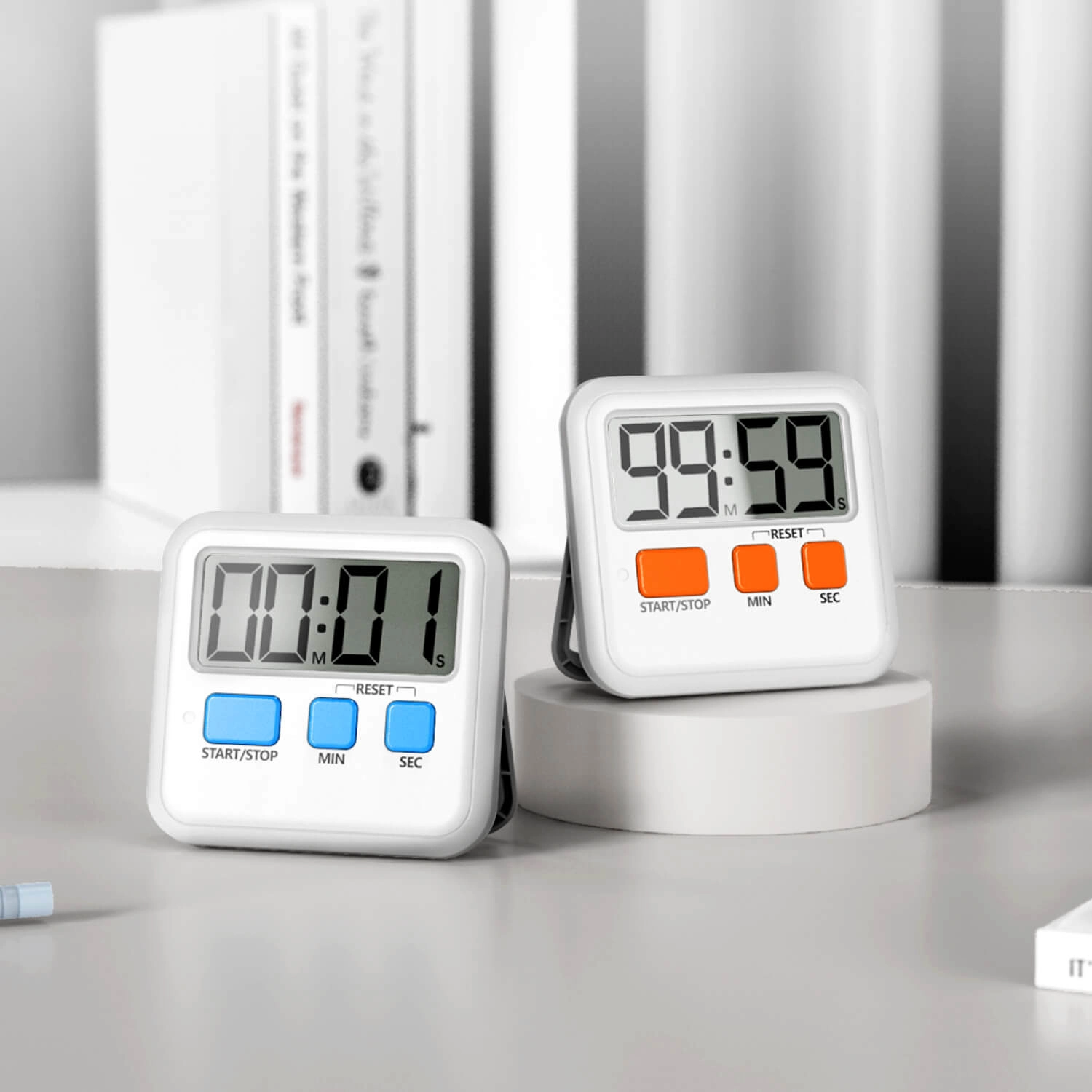
Custom Sound Pomodoro Timer — Best Countdown & Ringtone Timer from Youben Life
Digital Alarm Clock Buying Guide: Features Worth Paying For
Food Thermometer
What is your minimum order quantity (MOQ)?
MOQ depends on customization requirements. Standard orders usually start from low quantities for testing.
Can I get samples before bulk order?
Yes, samples are available for quality evaluation before placing large orders.
Indoor Thermometer
Do you support private label branding?
A: Absolutely. We support private labeling, including logo printing on the product, customized packaging, and branded manuals.
Wholesale Services
Do you provide instruction manual?
Yes, we can offer English instruction manual or instructional videos.
Service
What types of safety standards do your products meet?
Our products complies with international safety standards, including CE,EMS,RoHs, FCC, to ensure meet your local standar.
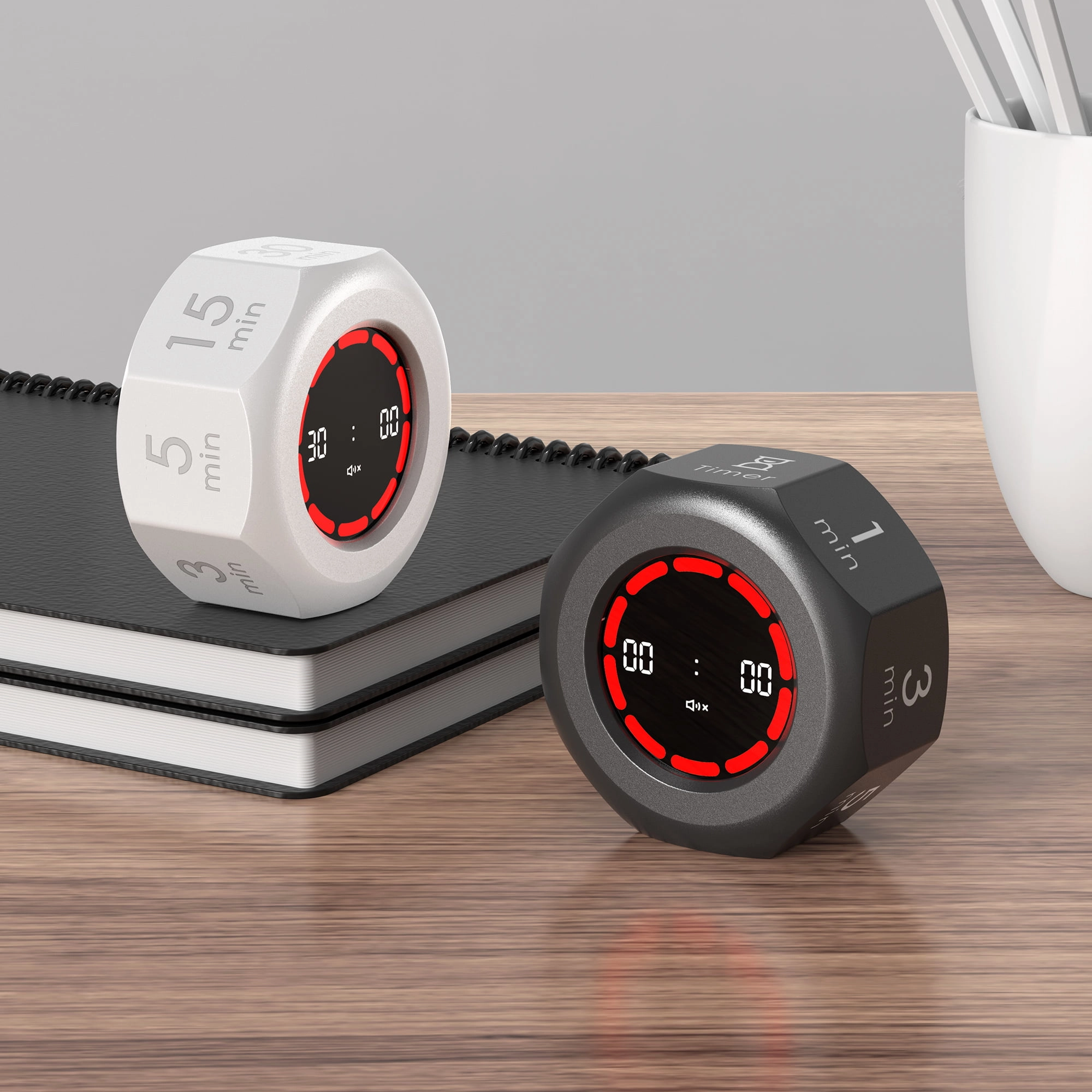
Digital Pomodoro Timer 3 5 30 90 Minutes Kids Classroom Study Eight Side Gravity Visual Countdown Timer
Where cutting-edge design meets unrivaled functionality. This isn’t just a timer; it’s your versatile partner for kitchen precision, focused studying, classroom engagement, and even ADHD-friendly time tracking.
Crafted as an 8-sided cube with a sleek, novel mini-round profile, Cube redefines portability and style. Its eye-catching flip-gravity rotating visual display (no boring screens!) makes time visible at a glance, while a crisp digital clock shows seconds, minutes, and hours—ideal for recipes, Pomodoro sessions, or study intervals.
Custom Sound Ringtone Best Countdown Pomodoro Timer Brand In China
The X-JSQ811 Timer is a compact, functional digital timer designed for everyday time management. It prioritizes simplicity, portability, and adaptability—perfect for users who want a reliable tool without unnecessary complexity.
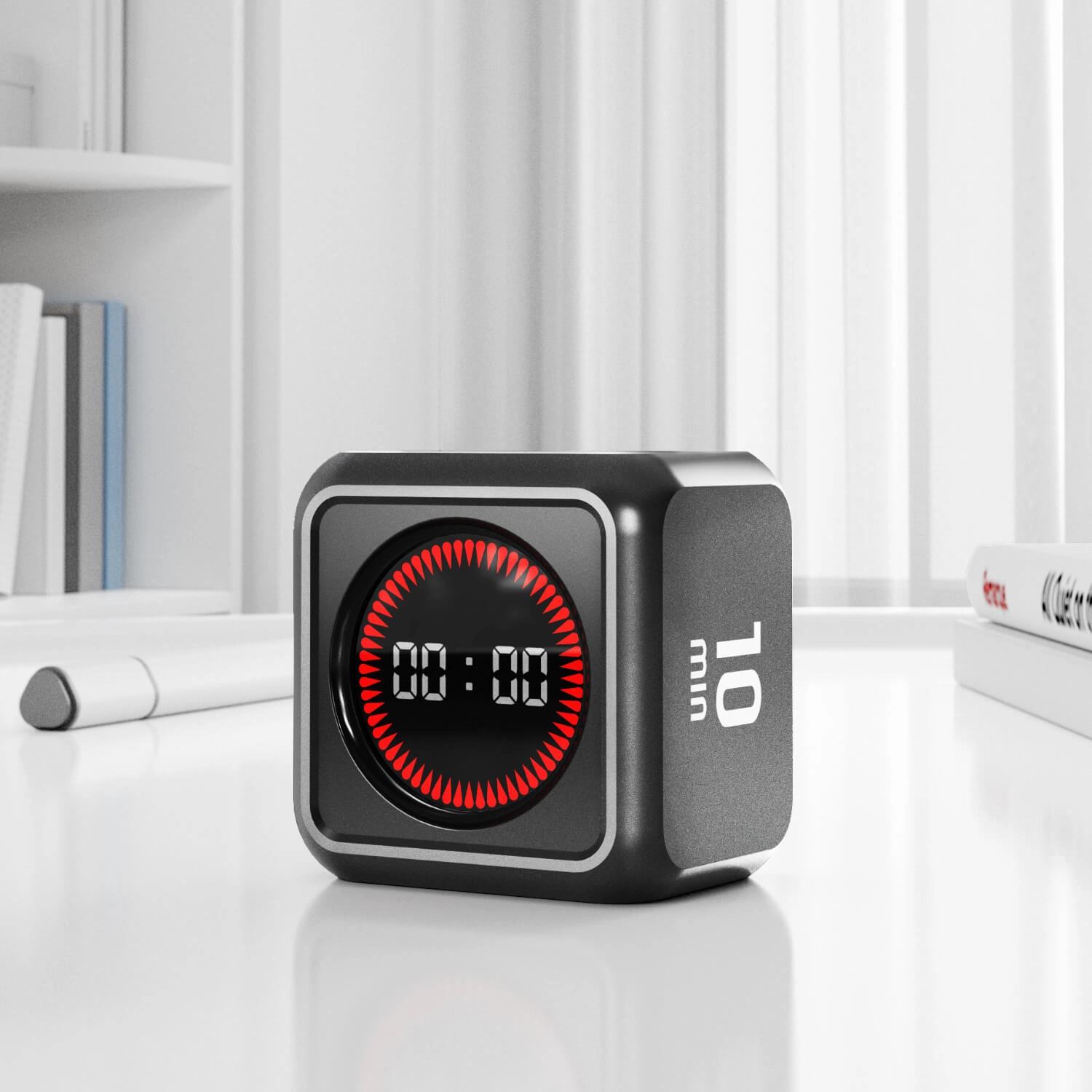
Cube 5 10 25 45 Minutes Digital Rotating Gravity Kitchen Countdown Pomodoro Student Study Timer
The X-JSQ814 Rubik’s Cube Timer reimagines timekeeping with a playful, cube-shaped design inspired by the iconic Rubik’s Cube. Blending nostalgia with functionality, it offers intuitive controls, smart gravity sensing, and versatile timing modes—perfect for anyone seeking a stylish, reliable tool to manage tasks at home, work, or play. Compact yet durable, it’s built to adapt to daily routines with ease.
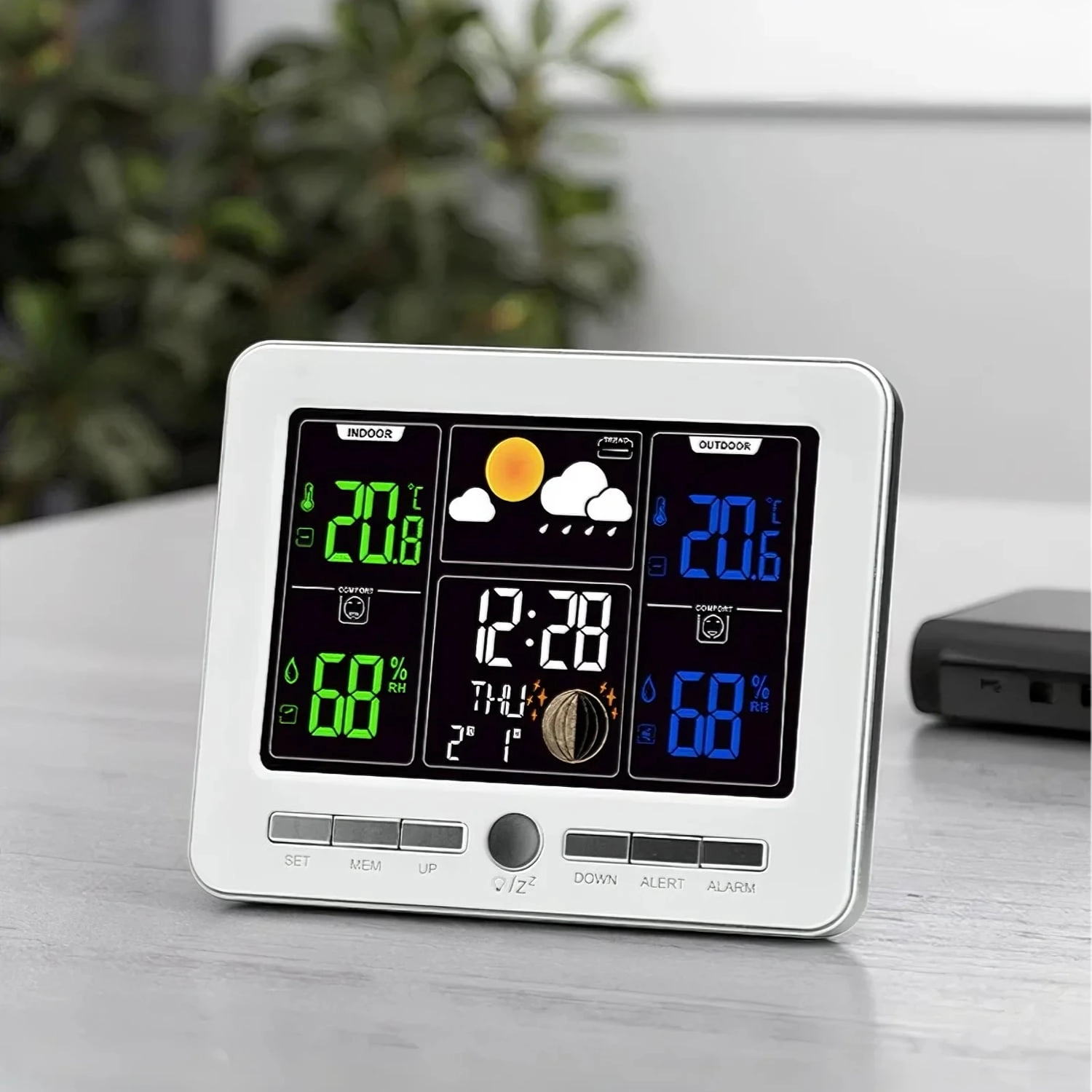
Custom Daylight Savings Desktop Wall Alarm Clock Indoor and Outdoor Sensor Calendar Weather Thermometer with Humidity
This X-WSDJ011 smart digital LED wireless alarm clock integrates thermometer, hygrometer, weather forecasting, and timekeeping functions for indoor/outdoor use.
Featuring a foldable stand and hanging hole, it offers flexible placement (desk/wall).
With a high-precision waterproof outdoor sensor, it monitors indoor/outdoor temperature/humidity and displays time/date/week (12/24H).
and shows "Dry/Suitable/Too Wet" comfort status. Ideal for homes, greenhouses, gardens, or pet areas, it simplifies environmental tracking and daily routine management.

Youben life
Youben life