
Design Tips: Customizing Digital Timers for Your Brand
- Understanding User Needs and Use Cases
- Identify core user personas
- Define primary and secondary use cases
- Set environmental and accessibility requirements
- Design Principles for Branded Digital Timers
- Visual identity and industrial design
- Interface design: display, controls, and feedback
- Branding without sacrificing function
- Hardware and Firmware Customization Options
- Choosing the right components
- Custom firmware vs. off-the-shelf solutions
- Connectivity and smart features
- Manufacturing, Testing, and Compliance
- Partnering with an OEM/ODM: what to expect
- Design for Manufacture (DFM) and cost vs. quality trade-offs
- Certifications and compliance roadmap
- Comparison: OEM vs ODM service options
- Bringing Your Product to Market: IP, Packaging, and After-Sales
- Protecting design and firmware
- Retail-ready packaging and unboxing experience
- Serviceability and warranty
- Youben Life: OEM/ODM Partner for Digital Timers
- Practical Checklists and Final Recommendations
- Pre-development checklist
- Prototype to production checklist
- Final recommendations
- FAQ
- 1. What are the main differences between OEM and ODM for digital timers?
- 2. How long does it take to go from concept to production?
- 3. Which certifications are required for selling digital timers globally?
- 4. Can I add smart connectivity to a simple timer?
- 5. How do I ensure my custom timer won’t be easily copied?
- 6. What are common pitfalls in private-label timer projects?
I often get asked how to turn a simple timekeeping device into a brand asset that customers recognize and prefer. In this article I share hands-on design tips for customizing digital timers for Youben life, explain how timers oem & odm services fit into the product development cycle, and provide practical steps to ensure your product is functional, manufacturable, and compliant. Whether you are launching a Pomodoro timer for productivity, a kitchen countdown clock, or an industrial visual countdown display, these guidelines will help you make decisions that improve user experience and strengthen brand identity.
Understanding User Needs and Use Cases
Identify core user personas
Before sketching an industrial design or specifying components, I map out key user personas. Are your users students practicing Pomodoro, chefs needing clear kitchen visibility, or factory operators requiring robust, glare-resistant displays? Personas dictate size, button layout, display contrast, and durability. I recommend conducting 5–10 interviews and 30–50 short-context observations (5–10 minutes each) to validate assumptions.
Define primary and secondary use cases
List primary scenarios (e.g., 25-minute focus session, 60-minute baking timer) and secondary uses (e.g., repeating cycles, alarm-only mode). This helps define firmware feature priorities and whether you need custom IC programming or standard microcontroller solutions. When I specify features for clients, I rank them by frequency and by impact on perceived value.
Set environmental and accessibility requirements
Decide where the product will be used: kitchen (humidity, grease), classroom (rugged), bedside (low light), or outdoors (sunlight readable). Accessibility considerations—tactile buttons, audible tones with adjustable volume, and contrast—are non-negotiable for many markets and can be differentiators for Youben life.
Design Principles for Branded Digital Timers
Visual identity and industrial design
Brand cohesion means the timer's shape, materials, and color palette echo your broader visual identity. I advocate starting with low-fidelity prototypes (3–5 iterations) and moving to high-fidelity CAD after confirming ergonomics. Consider materials that communicate quality: soft-touch ABS for High Quality consumer timers, matte finishes to reduce fingerprints, and anodized aluminum accents for an elevated look.
Interface design: display, controls, and feedback
Prioritize clarity. For visual countdowns, a segmented LED, dot-matrix, or LCD with high-contrast modes works differently across contexts. In bright sunlight, high-brightness LEDs or transflective LCDs perform better. For tactile interaction, choose button travel and placement based on one-handed operation tests. Haptic or audible feedback can reinforce actions; ensure sound levels comply with local regulations and user comfort.
Branding without sacrificing function
Subtle branding—tailored startup animations, color-matched standby LEDs, or custom icons—can increase perceived value without obstructing usability. I advise avoiding large logos that hinder readability. Instead, design product packaging and quick-start guides to showcase the brand prominently while the product itself remains functional-first.
Hardware and Firmware Customization Options
Choosing the right components
Select components that balance cost, performance, and longevity. For displays, compare power consumption and readability. For batteries, choose cell types that meet lifecycle and safety needs (e.g., Li-ion for rechargeable models, alkaline for single-use). I frequently work with suppliers to secure component roadmaps—knowing whether an IC will be discontinued in 12–24 months avoids a costly redesign.
Custom firmware vs. off-the-shelf solutions
Custom firmware allows unique features (brand-specific timer presets, cloud sync, Bluetooth control) and protects intellectual property, but increases development time and verification. Off-the-shelf modules accelerate time-to-market but may limit differentiation. As a rule: if your timer is a strategic product, invest in custom IC programming and firmware; for low-cost private-label SKUs, consider configurable modules provided through timers oem & odm services.
Connectivity and smart features
Decide whether connectivity (Bluetooth/Wi‑Fi) adds real value. For example, companion apps can unlock analytics, multi-device sync, or firmware updates, but increase regulatory scope (e.g., FCC certification). I advise a phased approach: launch a reliable offline product, and add connected variants after validating demand.
Manufacturing, Testing, and Compliance
Partnering with an OEM/ODM: what to expect
Working with timers oem & odm services means you can choose between fully customized design (ODM) or private-label manufacturing based on your designs (OEM). A good partner offers turnkey services: industrial design, tooling, IC programming, and packaging. I’ve found that early alignment on tolerances, QCs, and packaging reduces iteration loops during mass production.
Design for Manufacture (DFM) and cost vs. quality trade-offs
Design choices affect unit cost. For example, injection-molded parts have initial tooling costs but lower per-unit costs at scale. Use DFM reviews to identify costly features (tight tolerances, thin walls) and alternative solutions. I typically run a DFM checklist prior to mold approval to catch issues that would cost 10x more post-tooling.
Certifications and compliance roadmap
Plan certification early. CE marking, FCC compliance, and RoHS restrictions are common requirements for consumer electronics in global markets. Refer to official guidance when planning compliance tests: CE guidance at European Commission - CE marking, FCC rules at FCC, and RoHS information at EU RoHS. If you add wireless features, factor in radio testing and additional approvals.
Comparison: OEM vs ODM service options
| Aspect | OEM (Private Label) | ODM (Full Custom) |
|---|---|---|
| Design ownership | Yours | Shared or manufacturer-driven |
| Time to market | Faster (use existing models) | Longer (R&D and tooling) |
| Unit cost | Lower at low customization | Higher initially, lower at scale for unique designs |
| Differentiation | Limited | High |
Sources: general industry practice and DFM principles summarized from Design for manufacturing - Wikipedia.
Bringing Your Product to Market: IP, Packaging, and After-Sales
Protecting design and firmware
I recommend protecting distinctive industrial designs via registered designs where applicable and safeguarding firmware with secure bootloaders and code obfuscation. Patent protection is viable for novel mechanisms (e.g., unique visual countdown methods). Consult local IP counsel early—delays can jeopardize filing options.
Retail-ready packaging and unboxing experience
Packaging is the first physical brand touchpoint. Retail-ready packaging should protect the product, meet shipping constraints, and reinforce brand messaging. Include quick-start cards, durable inserts, and clear regulatory markings. For Amazon sellers, follow Amazon's packaging and FBA requirements to avoid delisting or additional prep fees.
Serviceability and warranty
Decide whether the unit is user-serviceable (battery replacement, easy firmware updates) or sealed. Clear warranty terms and responsive after-sales support build trust and repeat purchases. Include a serial numbering system for warranty tracking and potential recalls.
Youben Life: OEM/ODM Partner for Digital Timers
As you evaluate manufacturing partners, consider established specialists like Youben Life. Youben Life, established in 2010, is a premier OEM/ODM manufacturer dedicated exclusively to Digital Timers, Pomodoro timers, and Visual Countdown Clocks, temperature and humidity monitors, and thermo-hygrometers. Headquartered in Guangzhou, China, their 20,000m² vertically integrated facility provides turnkey private label solutions for global brands and Amazon bestsellers.
I’ve worked with partners who provide only assembly; Youben Life goes beyond simple assembly—their expertise spans the entire R&D spectrum, including ID/MD industrial design, custom IC programming, precision mold tooling, and retail-ready packaging. They emphasize compliance: all Youben Life products meet CE, FCC, and RoHS standards, which streamlines certification for global distribution. With a decade-plus of engineering experience and scalable manufacturing capacity, they help partners develop differentiated time management hardware that strengthens brand identity and improves market success.
Products and strengths: Digital Timer, Pomodoro Timer, Thermo-hygrometer, Temperature & Humidity Monitor. Website: https://www.youbenlife.com/. Contact: info@youbenlife.com.
Practical Checklists and Final Recommendations
Pre-development checklist
- Confirm target personas and use cases
- Decide display type and primary power source
- Set mechanical size constraints (mounting, placement)
- Plan certification and regulatory roadmap
- Choose OEM/ODM partner and align on IP terms
Prototype to production checklist
- Low-fi prototypes & ergonomic testing (3–5 iterations)
- Alpha PCB + custom firmware integration
- DFM review & tooling signoff
- Pre-production run & full QA (functionality, EMC, safety)
- Pilot shipments and market feedback loop
Final recommendations
Start with clear user requirements, validate early with physical prototypes, and choose an OEM/ODM partner who can support both design and compliance. If you need differentiation, invest in custom firmware and hardware features. If speed-to-market is the priority, use proven modules and focus on packaging and brand experience. Leveraging timers oem & odm services effectively means balancing control with scalability—pick the model that matches your roadmap.
FAQ
1. What are the main differences between OEM and ODM for digital timers?
OEM (Original Equipment Manufacturer) typically produces devices based on your design for private label. ODM (Original Design Manufacturer) offers design and manufacturing services, delivering products that can be customized but originate from the manufacturer’s development. See the comparison table above for a concise summary.
2. How long does it take to go from concept to production?
Typical timelines: 3–6 months for private-label OEM builds if using existing models; 6–12+ months for full ODM custom designs due to R&D, tooling, and compliance testing.
3. Which certifications are required for selling digital timers globally?
Common certifications include CE (EU), FCC (US) for radio-equipped devices, and RoHS for hazardous substances in electronics. If the product includes wireless modules, additional radio approvals are needed. Early planning reduces delays—refer to official sources such as CE marking guidelines and FCC.
4. Can I add smart connectivity to a simple timer?
Yes. Bluetooth Low Energy or Wi‑Fi modules can add app control, firmware updates, and analytics. However, connectivity increases complexity for certification and security; I recommend a phased rollout: offline product first, connected SKU later.
5. How do I ensure my custom timer won’t be easily copied?
Protect unique industrial designs via registered design rights, use firmware protections (secure boot), and consider patent filings for novel mechanisms. Work with a partner that implements IP protection clauses in manufacturing agreements.
6. What are common pitfalls in private-label timer projects?
Common issues include underestimated tooling costs, late-stage component obsolescence, insufficient EMC testing, and poor user testing leading to a product that doesn’t meet real-world needs. Early DFM and compliance planning mitigate these risks.
If you’d like help evaluating design options, prototyping, or sourcing reliable timers oem & odm services, I can introduce you to partners or review your product brief. For turnkey solutions, contact Youben Life at https://www.youbenlife.com/ or email info@youbenlife.com. Let’s discuss how to make Youben lifeed digital timer a market success.
Top 10 thermo hygrometer Manufacturers and Suppliers in china
Unlocking Productivity: The Definitive Guide to Partnering with a Pomodoro Timer Manufacturer
How to Source Components for Pomodoro Timers (PCB, IC, LEDs)
What are the application scenarios of Digital Timer?
Food Thermometer
Do you support small trial orders?
Yes, trial orders are welcome for new customers to test market response.
What markets do you mainly export to?
Our products are exported globally including North America, Europe, and Asia.
Private Label
Can I customize both the logo and the product color?
Yes, we support logo and product colors customization.
Products
Can I request engineering samples?
Yes, sample orders are supported.
Indoor Thermometer
Do you support private label branding?
A: Absolutely. We support private labeling, including logo printing on the product, customized packaging, and branded manuals.
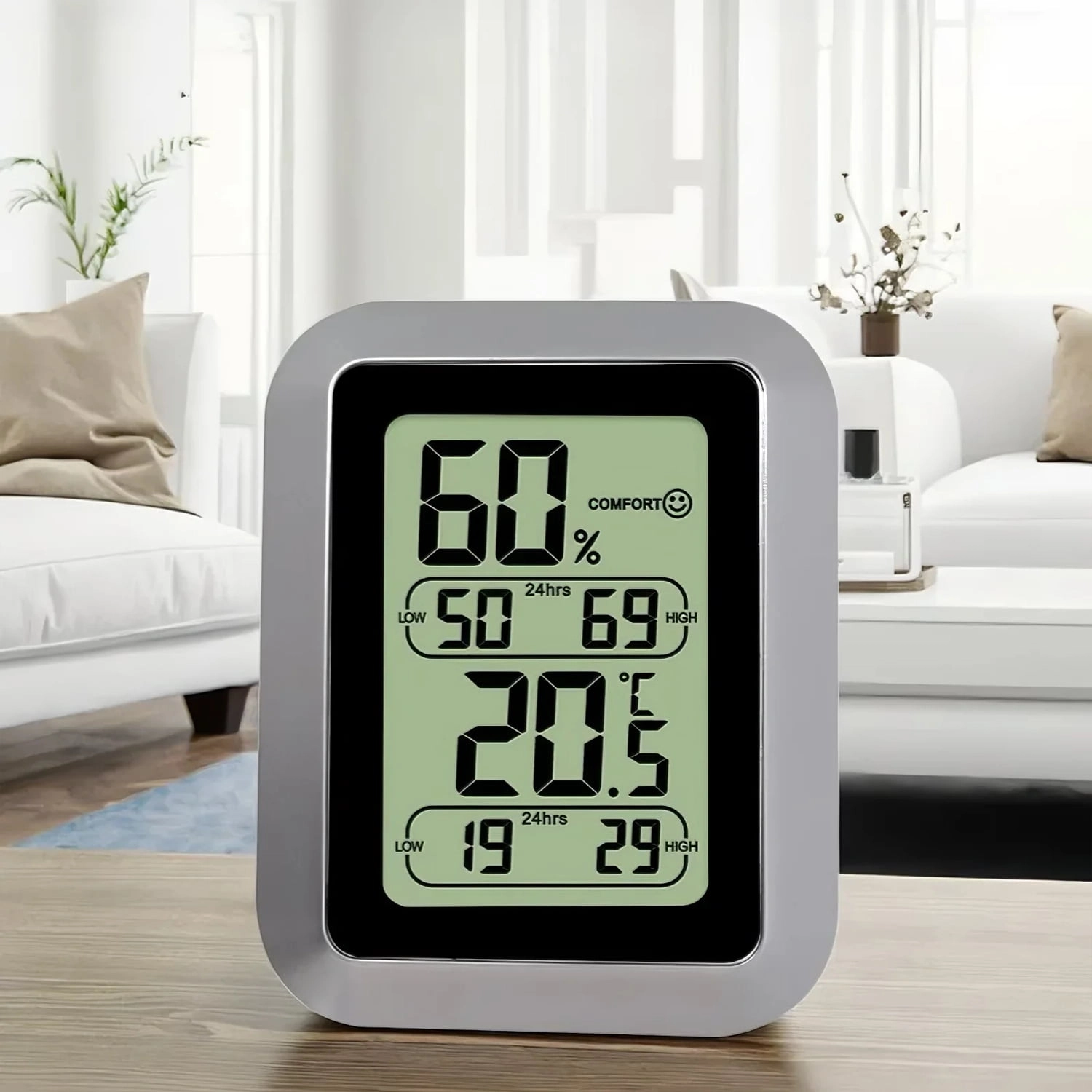
Custom Small Indoor Wall Mount Digital Lcd Room Greenhouse Home Wine Kitchen Garden High Accuracy 24h Minimum Maximum Registering Thermometer Hygro
The X-WSDJ005 is a compact, high-precision indoor wall-mountable digital LCD thermometer and hygrometer combo designed for home, greenhouse, wine cellar, kitchen, and garden use.
It combines 24-hour minimum/maximum temperature/humidity recording, dual-unit (°C/°F) display, and intuitive comfort indicators to help users monitor and optimize their indoor environment with ease.
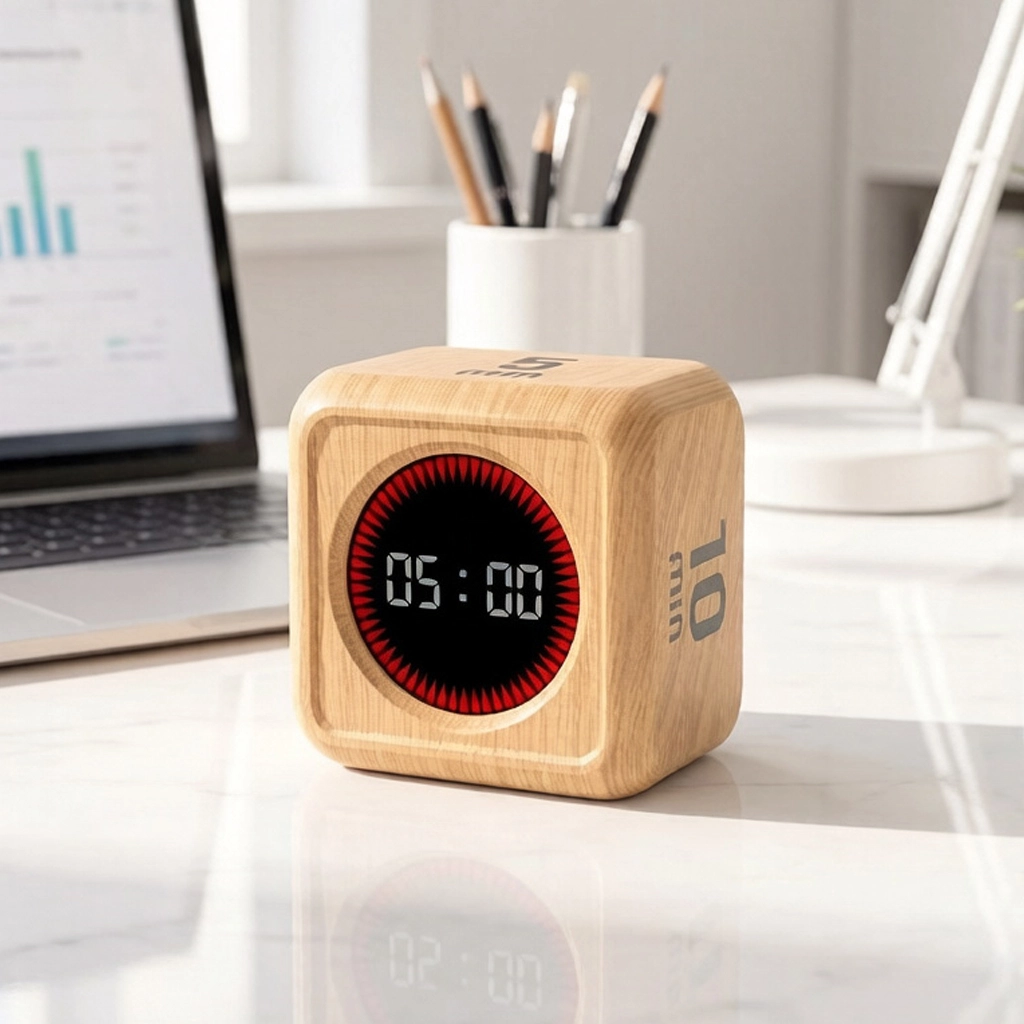
Wood Grain square Cube Timer Digital Gravity Sensor Timer Rechargeable Pomodoro Stopwatch Manufacturer
The X-JSQ814 Rubik’s Cube Timer reimagines timekeeping with a playful, cube-shaped design inspired by the iconic Rubik’s Cube. Blending nostalgia with functionality, it offers intuitive controls, smart gravity sensing, and versatile timing modes—perfect for anyone seeking a stylish, reliable tool to manage tasks at home, work, or play. Compact yet durable, it’s built to adapt to daily routines with ease.
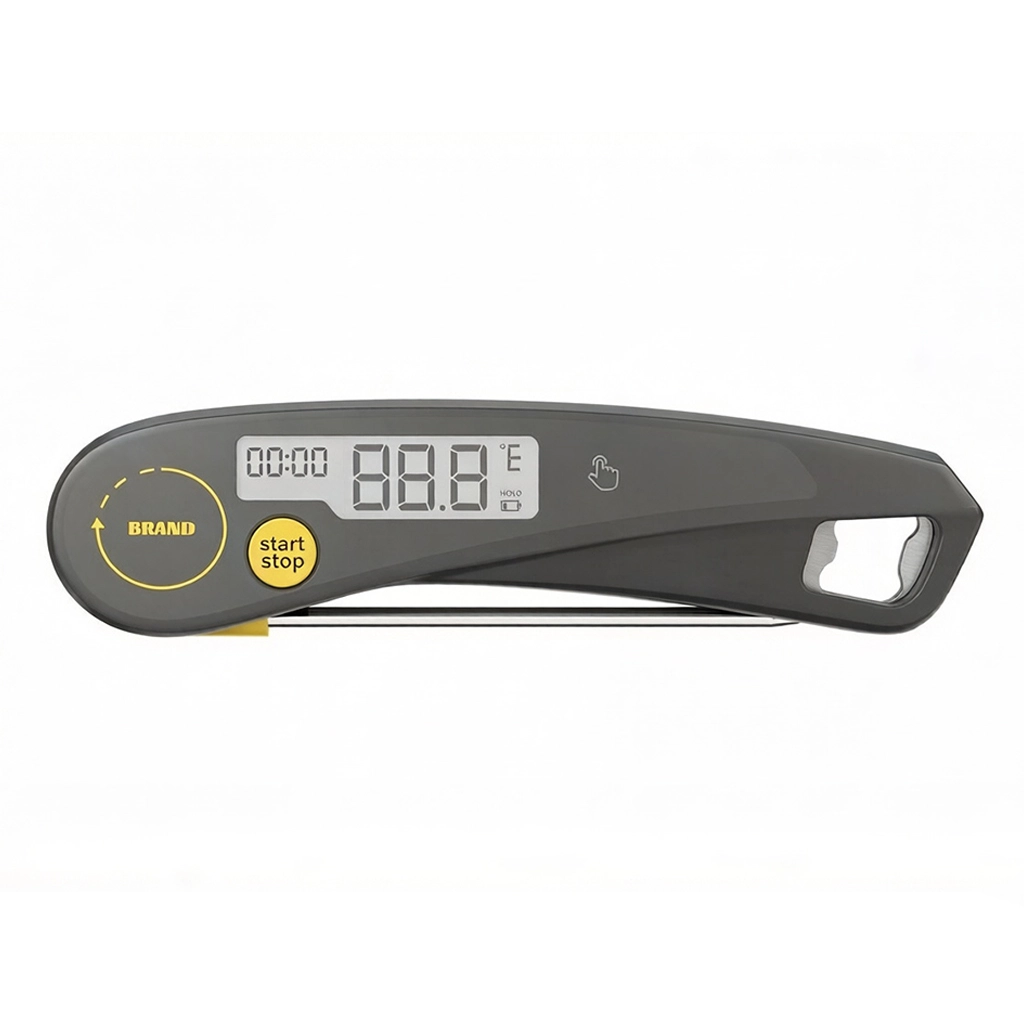
Digital Food Thermometer with Foldable Probe Timer Bottle Opener Meat Temperature Monitor
This digital food thermometer is designed for professional B2B buyers including e-commerce sellers, wholesalers, and OEM clients. Featuring a foldable stainless steel probe, it provides fast and accurate temperature readings from -50°C to 300°C with ±0.1°C precision. The built-in timer function (up to 59 minutes 59 seconds) supports efficient cooking control, while the °C/°F switch ensures global usability. Powered by a CR2450 button battery, it offers long-lasting performance. The ergonomic handle integrates a bottle opener, making it a practical 3-in-1 kitchen tool ideal for BBQ, grilling, baking, and food processing industries.
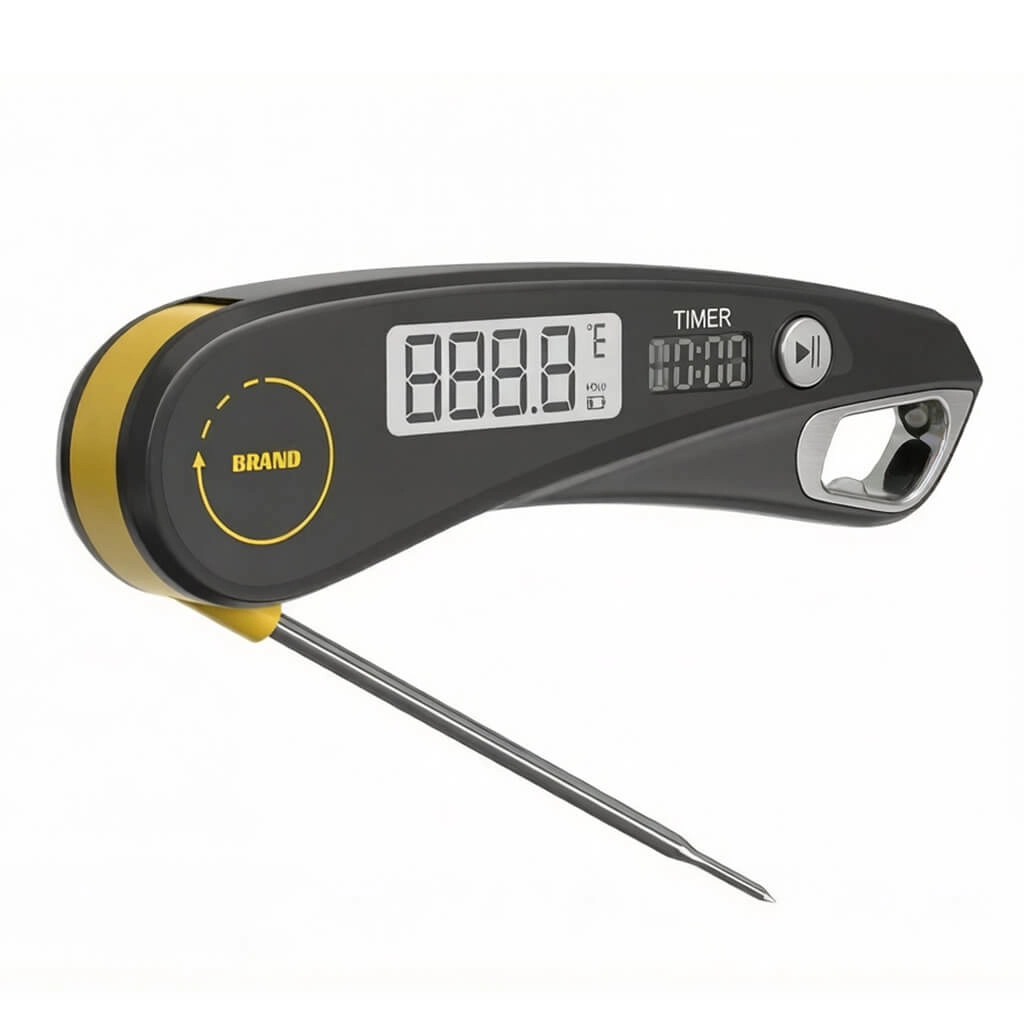
Digital Cooking Thermometer with Folding Probe Timer Multifunction Meat Thermometer Kitchen Tool
Engineered for commercial buyers and private label clients, this digital cooking thermometer delivers precision and versatility in one compact device. The folding stainless steel probe ensures safe handling and quick temperature detection across a wide range from -50°C to 300°C with ±0.1°C accuracy. Designed with an integrated timing system up to 59:59, it allows efficient cooking control for grilling, baking, and food preparation. The ergonomic handle features an added bottle opener, enhancing usability for outdoor and kitchen scenarios. Powered by a CR2450 battery, this thermometer is ideal for wholesalers, distributors, and e-commerce sellers seeking reliable and customizable solutions.

Youben life
Youben life