
Top 5 custom kitchen timer Company List and Products Compared in China
- Why brands invest in a custom kitchen timer — and buyer needs
- What buyers search for when they want an OEM/ODM kitchen timer
- Key functional requirements for modern kitchen timers
- How to match supplier type to your product strategy
- Top 5 custom kitchen timer companies in China and what they offer
- 1. Youben Life — specialized digital timer OEM/ODM (Headquartered: Guangzhou)
- 2. Foxconn (Hon Hai Precision Industry Co., Ltd.) — contract manufacturer with large-scale electronics capability
- 3. Midea Group — major appliance manufacturer with OEM capabilities
- 4. Haier Group — global appliance OEM with R&D and customization options
- 5. Xiaomi (and Mijia ecosystem) — consumer electronics and smart-home partner
- How these manufacturers compare — side‑by‑side table
- Selecting the right supplier — practical steps and decision criteria
- 1. Define your product scope and technical requirements
- 2. Ask suppliers for relevant evidence and samples
- 3. Compare total landed cost and service level, not just unit price
- 4. Plan IP protection and quality assurance
- Conclusion — which partner is best for your custom kitchen timer?
- Frequently Asked Questions (FAQ) about custom kitchen timers and Chinese suppliers
- Q: What is a reasonable MOQ for a custom kitchen timer?
- Q: What certifications should I ask for when importing timers to the EU or US?
- Q: Can I add smart features (Bluetooth, app control) to a basic kitchen timer?
- Q: How long does development to production typically take?
This article compares five leading companies in China that provide custom kitchen timer and related digital timing solutions for brands and retailers. It explains supplier strengths, technical points, product applications, and the kinds of customization each partner supports (OEM, ODM, private label). The comparison helps buyers evaluate options for digital kitchen timers, programmable countdown devices, magnetic timers, and smart kitchen timer modules for global markets (CE/FCC/RoHS compliance). Semantic keywords used naturally: custom kitchen timer, digital kitchen timer, programmable timer, OEM kitchen timer, countdown timer, smart kitchen timer, timer module.
Why brands invest in a custom kitchen timer — and buyer needs
What buyers search for when they want an OEM/ODM kitchen timer
When product managers, private-label brands or retail buyers search for a custom kitchen timer supplier they want clear answers on manufacturing capability, certification (CE/FCC/RoHS), minimum order quantities (MOQ), lead times, and product differentiation opportunities such as industrial design, color/logo personalization, packaging design, and firmware customization. Keywords reflecting buyer intent include custom kitchen timer supplier, OEM kitchen timer manufacturer, and private label kitchen timer.
Key functional requirements for modern kitchen timers
Typical technical expectations include reliable countdown/stopwatch functions, loud and adjustable alarms (≥65 dB at typical distance for audible alerts in kitchens), easy-to-read displays (LED/LCD), battery life optimization (coin cell vs AAA vs rechargeable), magnetic or stand mounting options, tactile controls, and — increasingly — smart connectivity via Bluetooth or Wi‑Fi for app-based timers and voice assistants. These functional and design choices influence cost, regulatory testing needs, and production complexity.
How to match supplier type to your product strategy
Large EMS/contract manufacturers (for example, global OEMs that handle electronics at scale) are appropriate for high-volume lines with complex integrations; specialized small-to-medium electronics manufacturers are better for mid-volume, highly customized countertop or magnet-on-fridge kitchen timers; and brand-focused ODMs like Youben Life can shorten development cycles for differentiated digital timers with full private-label support.
Top 5 custom kitchen timer companies in China and what they offer
1. Youben Life — specialized digital timer OEM/ODM (Headquartered: Guangzhou)
Company profile: Youben Life, founded in 2010 and based in Guangzhou, focuses on customized digital products for home electronics. Core product lines include digital timers, smart alarm clocks, digital thermometers, and hygrometers. The company advertises full OEM/ODM/private label services covering function, industrial design, appearance, packaging, and logo personalization, and states compliance with CE, FCC, and RoHS standards.
Advantages: Deep product focus on timers and clocks; flexible customization (firmware, UI, casing); experience supporting global exports; ability to deliver private-label products that align with brand identity. Good for mid-volume to high-volume orders with moderate complexity.
Limitations: As a specialized vendor focused on compact home electronics, very large-scale integrated appliance projects (e.g., oven control systems) are better handled by large EMS providers. Buyers should confirm lead times and MOQ during RFQ.
Technical points and features: Supports LED/LCD displays, magnetic/stand mounting, volume-adjustable buzzer, multiple timing modes (countdown, up, preset), battery types (AAA/coin cell/rechargeable), optional Bluetooth modules for app sync, and custom firmware. Typical applications: standalone countertop kitchen timers, promotional private-label timers, smart kitchen timer accessories paired with cookbooks or meal kits.
2. Foxconn (Hon Hai Precision Industry Co., Ltd.) — contract manufacturer with large-scale electronics capability
Company profile: Foxconn (Hon Hai) is a major EMS/contract manufacturer with massive electronics production capacity in mainland China and globally. See Foxconn on Wikipedia (source).
Advantages: World-class manufacturing scale, advanced supply chain integration, strong quality management systems, and ability to handle complex product assemblies and certifications at large volumes. Suitable if you need high-volume production, integrated smart electronics, or bundling with broader consumer electronics.
Limitations: Higher entry thresholds for customization and larger minimum order quantities; less focus on low-cost small-batch uniqueness; longer negotiation and setup cycles. For straightforward standalone kitchen timers, a smaller specialized OEM may be more cost-effective.
Technical points and features: Can integrate advanced connectivity (Wi‑Fi/Bluetooth), custom IC integration, and multi-component assemblies. Applications: large-scale branded kitchen appliance lines, smart kitchen ecosystems, and deeply integrated OEM partnerships.
3. Midea Group — major appliance manufacturer with OEM capabilities
Company profile: Midea is a leading Chinese home appliance manufacturer producing kitchen appliances that include timer functions (ovens, microwaves, range hoods). Wikipedia overview: Midea.
Advantages: Strong product engineering for kitchen appliances, global brand recognition, and robust compliance with safety and regulatory testing for appliances. Good partner for brands that need appliance-level timer functions embedded into larger devices.
Limitations: Midea is appliance-focused; for standalone or highly stylized countertop timers with small-batch customization, Midea is typically not the most economical or nimble choice. ODM/OEM services are oriented toward appliances rather than small accessory timers.
Technical points and features: Appliance-grade timer circuits integrated with device control boards, safety certifications, and durability testing. Applications: OEM kitchen appliances with built-in timer/control interfaces.
4. Haier Group — global appliance OEM with R&D and customization options
Company profile: Haier is another global home appliance giant producing products with embedded timer features (e.g., ovens, microwaves, smart kitchen appliances). Wikipedia: Haier.
Advantages: Strong product development resources, global distribution and after-sales networks, and the ability to meet strict regulatory and safety standards across markets. Useful for larger brand partnerships and appliance-level OEM needs.
Limitations: Similar to Midea, Haier is focused on full-size appliances. They are less positioned for low‑volume, highly customized countertop or novelty kitchen timers compared to specialized electronics OEMs.
Technical points and features: Industrial-grade control systems, embedded software, and integration into smart-home ecosystems. Applications: built-in timer functions for major kitchen appliances and smart appliance platforms.
5. Xiaomi (and Mijia ecosystem) — consumer electronics and smart-home partner
Company profile: Xiaomi and its Mijia / ecosystem partners produce many consumer electronics, including smart alarm clocks and multi‑function smart home devices. Wikipedia: Xiaomi.
Advantages: Strength in consumer-facing design, IoT integration, app ecosystems, and cost-effective production of smart accessories. Xiaomi’s ecosystem partners often produce smart timers or programmable countdown devices that integrate with smartphone apps and voice platforms.
Limitations: Xiaomi’s brand products are consumer products rather than dedicated OEM services; customization at the brand level is limited unless done through ecosystem partner agreements or white‑labeling arrangements. For private-label kitchen timers, Xiaomi is not typically the direct supplier.
Technical points and features: Bluetooth/Wi‑Fi connectivity, mobile app control, firmware OTA updates, voice assistant compatibility, and compact sensor integration. Applications: smart kitchen timer accessories, app-controlled countdown devices, and voice-enabled kitchen aids.
How these manufacturers compare — side‑by‑side table
Below is a practical comparison to help narrow choices. For precise MOQs, lead times, and pricing, contact suppliers directly.
| Company | Product types related to kitchen timing | OEM/ODM/private label | Best fit (volume & product) | Certifications / Compliance |
|---|---|---|---|---|
| Youben Life (Guangzhou) | Standalone digital timers, smart alarm clocks, timer modules | Full OEM/ODM/private label | Small-to-mid and mid-to-high volume custom timers | CE, FCC, RoHS (company-declared; confirm per SKU) |
| Foxconn (Hon Hai) | Integrated electronic solutions, smart device assemblies | Large-scale EMS/OEM | High-volume integrated smart kitchen products | Extensive global certifications (varies by product) |
| Midea Group | Appliances with embedded timers (ovens, microwaves) | OEM for appliances; limited small-accessory ODM | High-volume appliance lines | Global appliance safety standards (CCC, CE, etc.) |
| Haier Group | Appliances and smart kitchen devices with timer functions | OEM for appliances; R&D services for integration | Large appliance projects, smart kitchen ecosystems | Global appliance certifications (varies by SKU) |
| Xiaomi / Mijia partners | Smart alarm clocks, smart timers, IoT devices | Mostly in-house consumer products; partner ODMs | Consumer smart accessories and app-integrated timers | CE, FCC on exported consumer products |
Selecting the right supplier — practical steps and decision criteria
1. Define your product scope and technical requirements
Before contacting suppliers, document the exact features you need: display type (LED/LCD), alarm sound level, mounting style (magnet/hook/stand), battery type, enclosure materials, firmware modes, labeling/branding needs, packaging, target retail price, and expected annual volume. This helps suppliers give accurate quotes and realistic timelines.
2. Ask suppliers for relevant evidence and samples
Request compliance documents (CE, FCC, RoHS test reports), product samples, UL or local safety testing where applicable, and references for previous private-label projects. For Youben Life and other specialty OEMs, sample-testing can validate buzzer levels, display readability, and battery life.
3. Compare total landed cost and service level, not just unit price
Consider tooling/setup fees, firmware customization costs, packaging design, quality control inspections, warranty terms, shipping, duties, and after-sales support. For global market entry, confirm regulatory obligations in target markets (for example, CE marking requirements for electronic devices sold in the EU). Helpful references on CE and RoHS can be found at the European Commission pages and other regulatory bodies.
4. Plan IP protection and quality assurance
Use NDAs and clear ownership clauses for design and firmware IP. Include pre-production samples, PPAP or first article inspection processes, and agreed-on acceptance criteria in contracts. Arrange third-party QC inspections before shipment if you cannot visit factories in person.
Conclusion — which partner is best for your custom kitchen timer?
If you need a focused, brandable standalone digital kitchen timer with flexible customization and faster time-to-market, specialized OEM/ODM suppliers like Youben Life are typically the best match. Their expertise in digital timers and small home electronics supports private-label projects and mid-volume production runs while meeting export compliance requirements.
If your project is a high-volume appliance or a complex smart-home device that requires deep integration, choosing a large contract manufacturer (Foxconn) or an appliance manufacturer (Midea, Haier) is appropriate; these partners bring large-scale supply-chain strength and advanced engineering. Xiaomi’s ecosystem partners are attractive when you want app-driven smart timers and consumer-focused design but may not be positioned for traditional private-label manufacturing.
Always validate supplier claims with sample testing, compliance documentation, and a small initial order or pilot run to ensure product fit before scaling.
Frequently Asked Questions (FAQ) about custom kitchen timers and Chinese suppliers
Q: What is a reasonable MOQ for a custom kitchen timer?
A: MOQs vary widely. Specialized OEMs may accept MOQs in the low hundreds for simple cosmetic customization, while large EMS or appliance OEMs typically require thousands to tens of thousands. Confirm per-supplier; negotiate pilot runs where possible.
Q: What certifications should I ask for when importing timers to the EU or US?
A: For electronics, common certifications include CE (EU), RoHS (restriction on hazardous substances), and FCC (for devices with intentional RF emissions in the US). If a product contains rechargeable batteries, additional UN38.3 and airline/shipping tests apply. Check local market regulations for electrical safety standards.
Q: Can I add smart features (Bluetooth, app control) to a basic kitchen timer?
A: Yes. Many OEMs offer optional Bluetooth or Wi‑Fi modules and can integrate firmware for mobile apps and OTA updates. Adding smart features increases development time, firmware testing, certification complexity, and cost, so plan for longer lead times and additional EMC/RF testing if applicable.
Q: How long does development to production typically take?
A: For a straightforward cosmetic change to an existing timer platform, 4–8 weeks (including sample approval) is common. For new designs with custom PCBA and firmware, expect 8–20 weeks depending on complexity, certification needs, and tooling. Always build in time for iteration after sample evaluation.
Relevant external resources and industry references: General company background can be checked on authoritative sources such as Wikipedia (for corporate overviews) — e.g., Foxconn (source), Midea (source), Haier (source), and Xiaomi (source). For regulatory guidance, consult the European Commission (CE/RoHS pages) and FCC resources for US market compliance.
If you’d like, I can prepare a sample RFQ template to send to Youben Life and other shortlisted suppliers, or draft a technical specification sheet (product brief) that you can use to request accurate quotes and lead times.
Customizable Pomodoro Timers: Enclosure, Branding, Firmware
Pomodoro Digital Timer OEM vs ODM: Manufacturing Guide
Sustainable Materials for Pomodoro Digital Timer Manufacturing
Compliance: Certifications for Pomodoro Timers (CE RoHS FCC)
Wholesale Services
What is your Minimum Order Quantity (MOQ)?
Our MOQ varies by product type. Please contact us for details.
Service
Are there any hidden fees or charges?
We provide a comprehensive and transparent quote with no hidden fees. Any additional costs, such as shipping or customs duties, will be clearly outlined.
About after-sale service
Is there after-sales service for products with quality issues?
If you encounter any quality issues after receiving your order, please contact our sales representatives.
Products
Do you offer firmware or PCB customization?
Yes, full hardware and firmware customization is available.
About customization
Can you customize the logo and packaging, or other functional features of the appearance?
We can provide customize services. Please send us your customize requirements. We will try our best to meet your requirements.
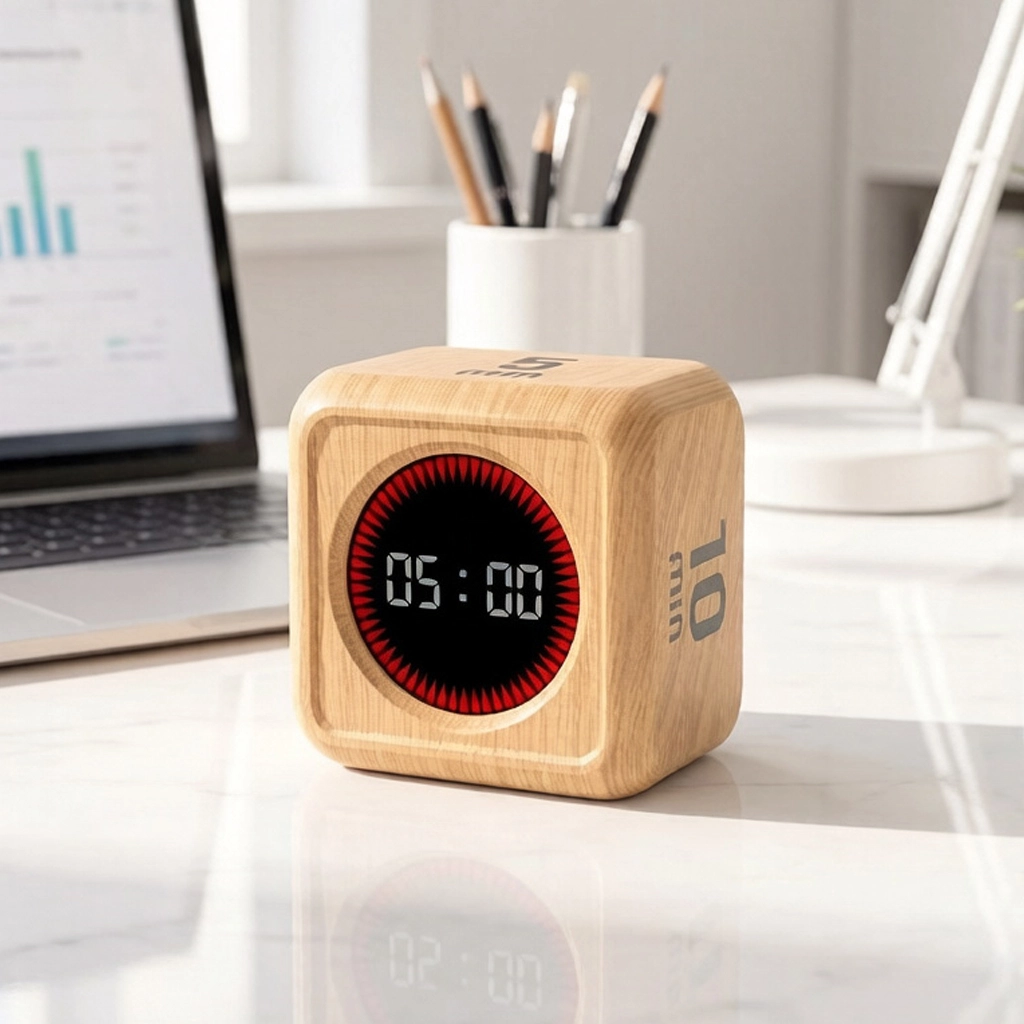
Wood Grain square Cube Timer Digital Gravity Sensor Timer Rechargeable Pomodoro Stopwatch Manufacturer
The X-JSQ814 Rubik’s Cube Timer reimagines timekeeping with a playful, cube-shaped design inspired by the iconic Rubik’s Cube. Blending nostalgia with functionality, it offers intuitive controls, smart gravity sensing, and versatile timing modes—perfect for anyone seeking a stylish, reliable tool to manage tasks at home, work, or play. Compact yet durable, it’s built to adapt to daily routines with ease.
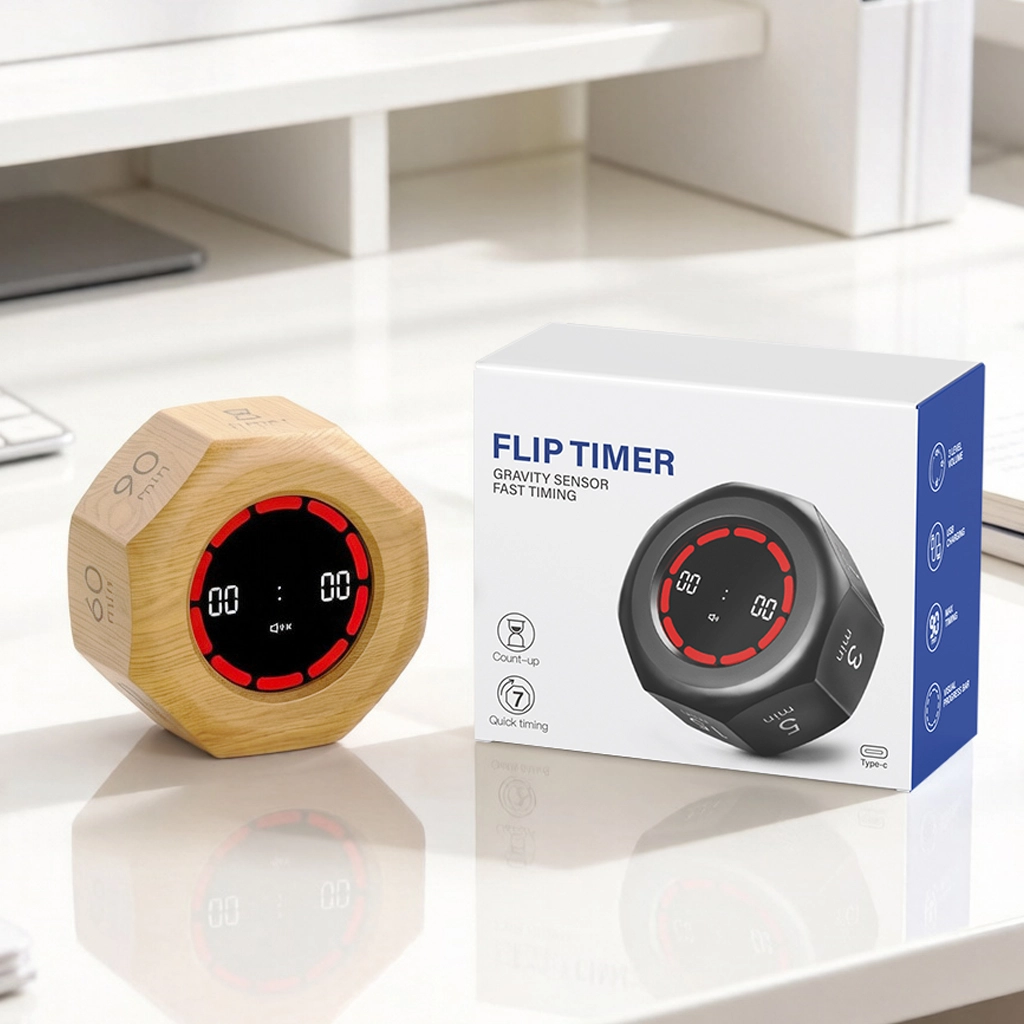
Wood Grain Gravity Sensor Digital Pomodoro Timer 3 5 30 90 Minutes Study Learn Visual Countdown Timer
Where cutting-edge design meets unrivaled functionality. This isn’t just a timer; it’s your versatile partner for kitchen precision, focused studying, classroom engagement, and even ADHD-friendly time tracking.
Crafted as an 8-sided cube with a sleek, novel mini-round profile, Cube redefines portability and style. Its eye-catching flip-gravity rotating visual display (no boring screens!) makes time visible at a glance, while a crisp digital clock shows seconds, minutes, and hours—ideal for recipes, Pomodoro sessions, or study intervals.
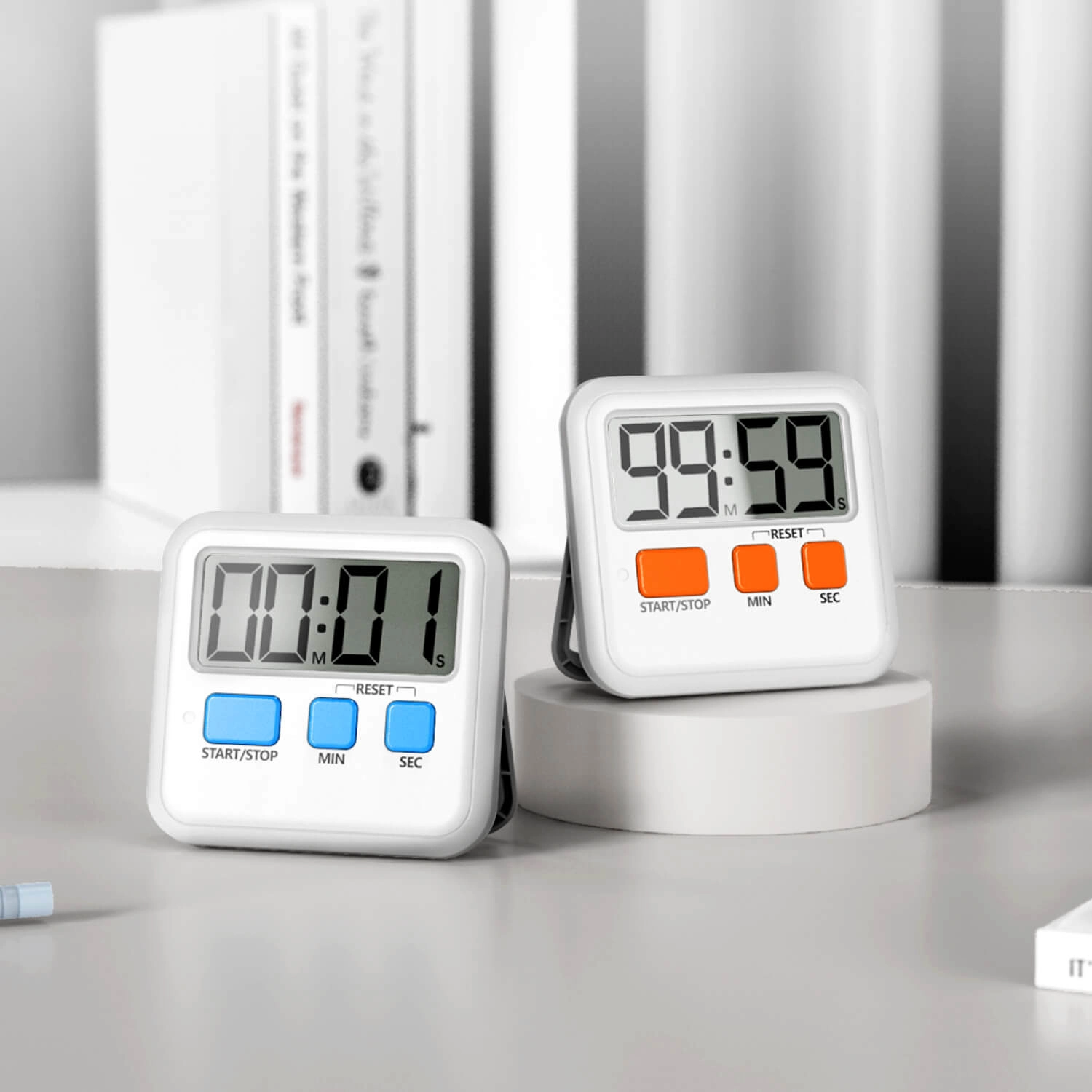
Custom Sound Ringtone Best Countdown Pomodoro Timer Brand In China
The X-JSQ811 Timer is a compact, functional digital timer designed for everyday time management. It prioritizes simplicity, portability, and adaptability—perfect for users who want a reliable tool without unnecessary complexity.
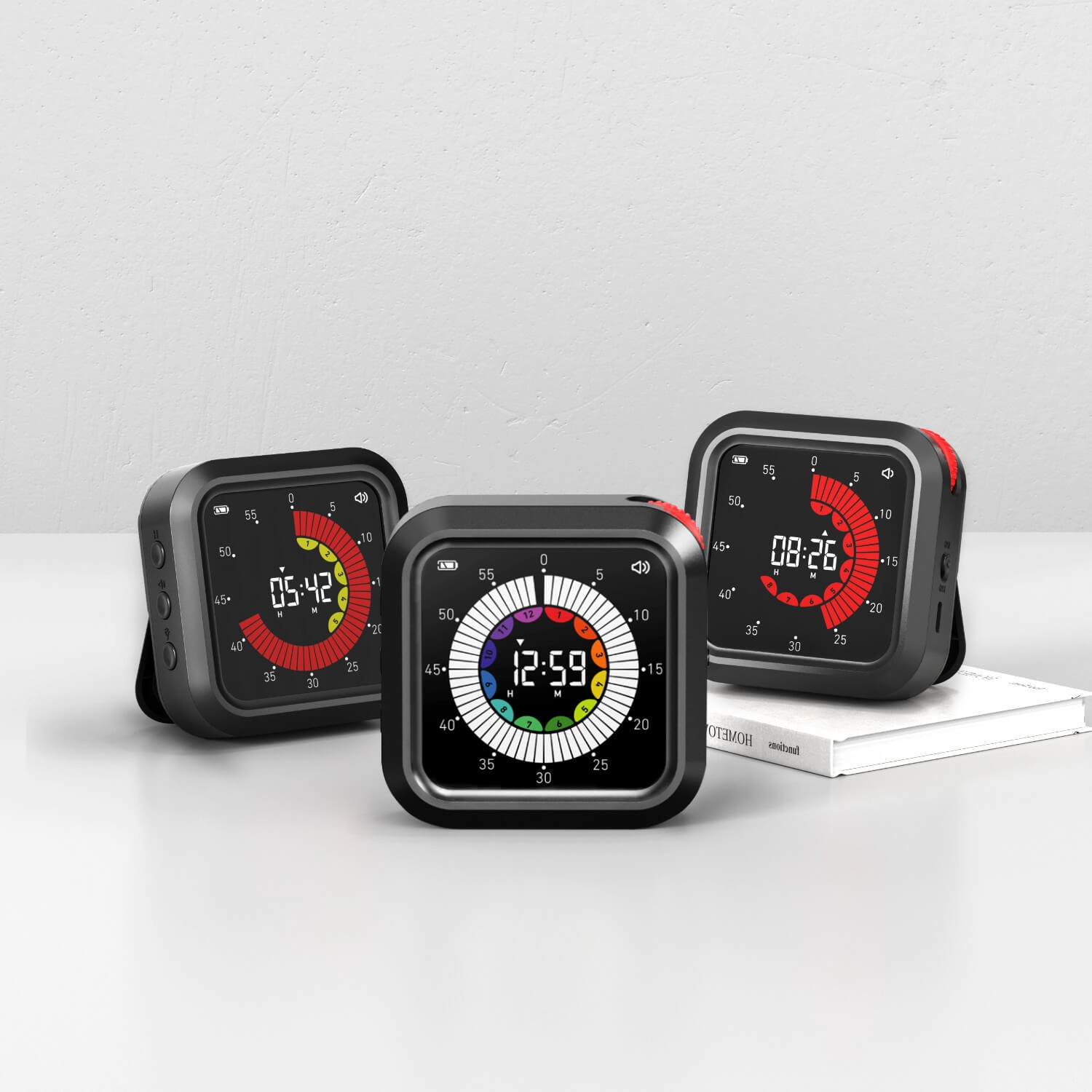
Digital Visual Tomato Pomodoro Technique Timer Study Kitchen Cooking Countdown Countup Timer Stopwatch
The X-JSQ817 Pomodoro Timer redefines simplicity and functionality for productivity, daily tasks, and creative pursuits. Designed with intuitive controls, robust features, and adaptable design, it caters to users seeking precision, convenience, and accessibility in a compact package.

Youben life
Youben life
Youben life
Youben life