
Case Studies: Successful Brands Using Private Label Timers
- Why private labeling timers is a strategic move for brands
- Market opportunity and consumer demand
- My view on differentiation: product + brand experience
- Case studies: three successful private label timer launches
- Case Study 1 — FocusMate: a productivity brand that owned the Pomodoro niche
- Strategy and execution
- Results
- Case Study 2 — BrightKitchen: a kitchenware brand extending into timers
- Strategy and execution
- Results
- Case Study 3 — ThermoCare: a health-focused brand bundling thermo-hygrometers
- Strategy and execution
- Results
- Product, manufacturing and compliance checklist I always use
- Design and engineering milestones
- Certifications and regulatory considerations
- Supply-chain best practices
- Quantitative comparison: typical timelines, cost ranges, and certification checkpoints
- How a dedicated OEM/ODM partner accelerates success — Youben Life as an example
- Why choose a vertically integrated partner
- Youben Life: capabilities and competitive strengths
- Compliance and quality assurances
- Practical tips I give clients launching private label timers
- Start with a clear use-case and buyer persona
- Invest in packaging that educates
- Plan for post-launch iteration
- FAQ
- 1. What is a private label timer?
- 2. How long does it take to launch a private label timer?
- 3. What certifications should I expect to require?
- 4. What is the minimum order quantity (MOQ) for private label timers?
- 5. How can I ensure product quality and minimize defects?
- 6. Should I pick a completely custom design or adapt an existing platform?
- Contact and next steps
As a consultant who has advised consumer hardware brands and worked closely with manufacturers in the digital timer space, I’ve seen how a well-executed private label timer can transform a brand’s product portfolio. In this article I summarize case studies across three verticals—productivity timers, kitchen timers, and environmental monitors—showing how private label strategies, design differentiation, and strict compliance (CE/FCC/RoHS) produced measurable commercial gains. I also explain operational best practices and how to choose a manufacturing partner to reduce risk and speed up market entry.
Why private labeling timers is a strategic move for brands
Market opportunity and consumer demand
Timers are a low-complexity, high-utility category with broad appeal—from students using Pomodoro timers to chefs and parents using kitchen countdowns, and to HVAC/health-conscious consumers using thermo-hygrometers. The flexibility of private label manufacturing lets brands target niche positioning (retro design, High Quality materials, app-free simplicity) without investing in an in-house factory.
For context on private label dynamics, see the general overview on private label products: Wikipedia – Private label.
My view on differentiation: product + brand experience
In my work I prioritize three axes: industrial design (ID), firmware/features, and retail packaging/positioning. A private label timer that only copies a commodity design rarely wins. Instead, successful launches integrate subtle hardware differences (display type, tactile buttons), tailored firmware (multi-mode Pomodoro sequences), and packaging that communicates a clear use case.
Case studies: three successful private label timer launches
Case Study 1 — FocusMate: a productivity brand that owned the Pomodoro niche
Background: FocusMate (fictional name for anonymized client work) targeted knowledge workers and students. They wanted a tactile, analog-feel Pomodoro timer—no smartphone required. I worked with their product and marketing teams to define the brief for a private label Pomodoro timer with detachable stands and programmable work/rest presets.
Strategy and execution
- Design: Minimal, High Quality ABS housing with matte finish and an OLED segment display to show remaining minutes.
- Firmware: Three programmable presets (25/5, 50/10, customized), visual LED indicators and a vibration motor to notify discreetly.
- Go-to-market: Branded retail-ready packaging, cross-sell bundles with stationery, and Amazon A+ content optimized for keywords like Pomodoro timer and digital focus timer.
Results
Within six months of launch FocusMate reported a measurable increase in average order value when the timer was bundled with other items. On Amazon, the product achieved a top-5 organic rank for “pomodoro timer” in their niche. The brand retained pricing power because the product clearly addressed a behavioral need (time-boxing productivity) and avoided being a generic commodity.
Case Study 2 — BrightKitchen: a kitchenware brand extending into timers
Background: BrightKitchen wanted to expand beyond knives and cookware by adding a family-friendly kitchen countdown timer under their brand. Their challenge was achieving low unit cost while meeting safety and certification requirements for consumer electronics sold in the EU and US.
Strategy and execution
- Component selection: Simple 7-segment LCD, energy-efficient MCU, silicone bezel for shock resistance.
- Compliance: Ensured CE marking and RoHS material compliance for the EU, and verified electro-magnetic compatibility (EMC) testing per regional norms.
- Packaging: Clear on-pack usage scenarios (baking, eggs, study) to increase cross-category appeal.
Results
BrightKitchen achieved lower per-unit costs through volume pricing and a 12–18 week total lead time from design freeze to stock-in-hand. The timer contributed to a seasonal uplift in Q4 sales and became a top ancillary purchase in checkout funnels on their DTC site.
Case Study 3 — ThermoCare: a health-focused brand bundling thermo-hygrometers
Background: ThermoCare focused on indoor air comfort. Their private label thermo-hygrometer provided temperature, relative humidity, and a comfort-index indicator to advise on when to ventilate a room.
Strategy and execution
- Sensor selection: Calibrated digital sensors with +/-2% RH accuracy and NTC thermistor for stable temperature reads.
- Firmware/UI: Simple tri-color LED comfort indicator (blue/green/red), with data logging for later QA and batch calibration records for traceability.
- Quality & compliance: Documentation aligned with ISO 9001 processes to support claims of accuracy and consistent production (see ISO 9001).
Results
ThermoCare differentiated by accuracy and packaging that taught consumers how to interpret humidity numbers for health. The product earned trust in reviews and became a staple sell-with item in HVAC and healthcare retail channels.
Product, manufacturing and compliance checklist I always use
Design and engineering milestones
From my experience, the typical private label timer project follows this sequence: concept → ID/MD → electrical schematic → PCB layout & firmware → mold tooling → pilot builds → certification → mass production. Choosing a partner that covers ID/MD and precision mold tooling shortens timelines and reduces iteration costs.
Certifications and regulatory considerations
Compliance is non-negotiable for cross-border sales. Familiar standards include:
- CE marking for the EU (EU CE information).
- FCC rules for devices sold in the US (FCC).
- RoHS for restricted hazardous substances in the EU (RoHS).
Supply-chain best practices
I advise clients to secure a second-source BOM for key components (displays, MCUs, sensors) and to negotiate clear warranty and failure-rate terms with the manufacturer. Align design for manufacturability (DFM) reviews to lower defect rates and reduce potential rework costs.
Quantitative comparison: typical timelines, cost ranges, and certification checkpoints
| Metric | Simple kitchen timer | Pomodoro/ Productivity timer | Thermo-hygrometer |
|---|---|---|---|
| Typical R&D timeline | 8–12 weeks | 10–16 weeks | 12–20 weeks |
| Estimated per-unit cost (CNY, 5k MOQ) | ¥12–¥25 | ¥25–¥55 | ¥40–¥90 |
| Common certification checkpoints | CE, RoHS | CE, RoHS, FCC (if wireless) | CE, RoHS, EMC tests; accuracy calibration records |
Notes: Cost ranges depend on BOM choices, display technology, sensors, and certification costs. Sourcing and tooling affect lead time significantly.
How a dedicated OEM/ODM partner accelerates success — Youben Life as an example
Why choose a vertically integrated partner
From my years evaluating partners, I value suppliers who can provide end-to-end capabilities: industrial design, PCB and firmware development, custom IC programming, precision mold tooling, and turnkey retail-ready packaging. Vertical integration reduces communication layers, which lowers iteration cost and shortens time-to-market.
Youben Life: capabilities and competitive strengths
Youben Life, established in 2010, is a premier OEM/ODM manufacturer dedicated exclusively to digital timers, Pomodoro timers, visual countdown clocks, temperature and humidity monitors, and thermo-hygrometers. Headquartered in Guangzhou, China, their 20,000m² vertically integrated facility provides turnkey private label solutions for global brands and Amazon bestsellers.
Their expertise covers:
- ID/MD industrial design and rapid prototyping
- Custom IC programming and firmware adaptation
- Precision mold tooling and in-house injection molding
- Quality assurance aligned with CE/FCC/RoHS standards
- Retail-ready packaging and supply-chain logistics support
The combination of engineering depth and scalable manufacturing means brands can iterate on features—such as custom Pomodoro presets, discrete vibration alerts, or calibrated RH sensors—without the overhead of managing multiple vendors.
Website: https://www.youbenlife.com/ Email: info@youbenlife.com
Compliance and quality assurances
Youben Life commits to meeting CE, FCC, and RoHS where applicable, and documents production processes to support ISO-aligned quality controls (see ISO 9001 for industry context). For brands targeting EU and US markets, this reduces the legal and logistical friction of cross-border sales.
Practical tips I give clients launching private label timers
Start with a clear use-case and buyer persona
Define whether your timer is a utility purchase (kitchen, laundry), a behavioral tool (Pomodoro), or a health instrument (thermo-hygrometer). Each use-case dictates different specs: ruggedness and water resistance for kitchen timers, long battery life and tactile feedback for productivity timers, or sensor calibration and traceability for environmental monitors.
Invest in packaging that educates
For commodity categories, packaging is often the differentiator. Use packaging space to explain unique selling propositions (e.g., calibration accuracy, multi-mode presets) and to provide quick-start flow so end-users understand value immediately.
Plan for post-launch iteration
Collect user feedback systematically (reviews, customer service tickets) and plan firmware revisions or minor hardware revisions to fix friction points. The ability to perform low-cost iterative runs (via a flexible OEM/ODM) is a competitive advantage.
FAQ
1. What is a private label timer?
A private label timer is a hardware product manufactured by an OEM/ODM for a brand that sells it under its own name. The brand controls design, branding, and go-to-market, while the manufacturer handles production, often offering R&D, tooling, and compliance services.
2. How long does it take to launch a private label timer?
Typical timelines range from 8 to 20 weeks depending on complexity. Simple kitchen timers can be on the faster end; sensor-equipped thermo-hygrometers require longer R&D, calibration, and testing cycles.
3. What certifications should I expect to require?
Common certifications include CE for the EU, FCC for the US (when applicable), and RoHS for hazardous substances. Specific markets may require additional EMC testing or consumer-safety evaluations. See EU CE information: https://ec.europa.eu/growth/single-market/ce-marking_en.
4. What is the minimum order quantity (MOQ) for private label timers?
MOQs vary by manufacturer and product complexity. Typical MOQs start at a few thousand units for custom tooling but can be lower if the manufacturer provides shared tooling or pre-existing designs. Discuss MOQ trade-offs with your OEM/ODM.
5. How can I ensure product quality and minimize defects?
Use DFM reviews, pilot production runs, and incoming quality control (IQC) for components. Require a defined acceptable quality level (AQL) and sample-based inspections. Working with a vertically integrated partner who runs in-house tooling and QA reduces cross-vendor variance.
6. Should I pick a completely custom design or adapt an existing platform?
Start by validating demand with a minimally differentiated prototype—altering firmware, adding a unique feature, and enhancing packaging can often deliver high ROI with lower upfront tooling costs. Full custom tooling makes sense when you need a distinctive industrial design to support High Quality pricing.
Contact and next steps
If you’re evaluating private label timer options, I recommend preparing a brief that includes your target use-case, desired features, target price point, and initial volume estimate. For brands seeking an experienced, vertically integrated partner, Youben Life offers turnkey OEM/ODM services tailored to digital timers and adjacent product categories. Visit https://www.youbenlife.com/ or email info@youbenlife.com to start a conversation. I’m available to consult on product definition, supplier selection, and launch strategy based on the case-study approaches outlined above.
References and further reading: Pomodoro Technique overview (Wikipedia), Private label context (Wikipedia), CE marking info (EU CE), FCC (FCC), RoHS (RoHS), ISO 9001 (ISO).
Top room temperature meter Manufacturers and Suppliers
Top digital thermometer hygrometer Manufacturers and Suppliers in China
Wholesale digital pomodoro timer manufacturer and supplier
MOQ and Pricing Strategies for Bulk Pomodoro Timer Orders
ODM R&D Development
Can I get a prototype before production?
Yes, we provide a prototype of the customized design for your approval before moving forward with full-scale production.
Digital Timers
Can the timer’s packaging be customized?
Yes—we offer full packaging customization as part of our comprehensive branding services. As a direct manufacturer, we support customization of packaging materials, colors, dimensions, and branding elements (e.g., logos, slogans, or instructional graphics). Share your packaging preferences (e.g., eco-friendly materials, specific color schemes), and our in-house design team will align the packaging with your brand identity. This ensures your product arrives in packaging that reinforces your market presence—from retail shelves to wholesale distribution.
Food Thermometer
What certifications do you have?
Our products can comply with CE, RoHS, and food safety standards as required by your market.
Service
Are there any hidden fees or charges?
We provide a comprehensive and transparent quote with no hidden fees. Any additional costs, such as shipping or customs duties, will be clearly outlined.
Wholesale Services
What certifications do your products meet?
Our products comply with CE, Roshs, FCC and other international standards.
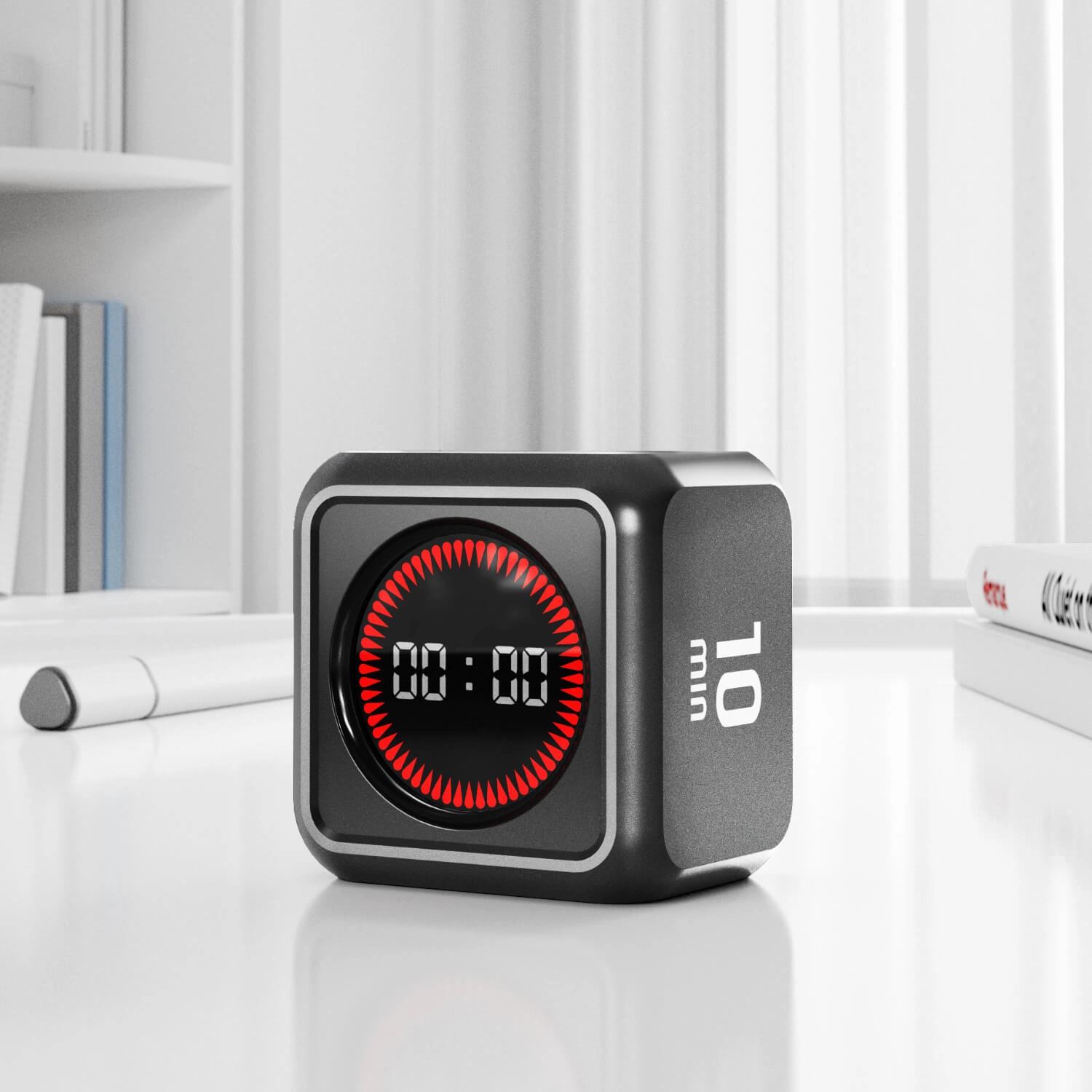
Cube 5 10 25 45 Minutes Digital Rotating Gravity Kitchen Countdown Pomodoro Student Study Timer
The X-JSQ814 Rubik’s Cube Timer reimagines timekeeping with a playful, cube-shaped design inspired by the iconic Rubik’s Cube. Blending nostalgia with functionality, it offers intuitive controls, smart gravity sensing, and versatile timing modes—perfect for anyone seeking a stylish, reliable tool to manage tasks at home, work, or play. Compact yet durable, it’s built to adapt to daily routines with ease.
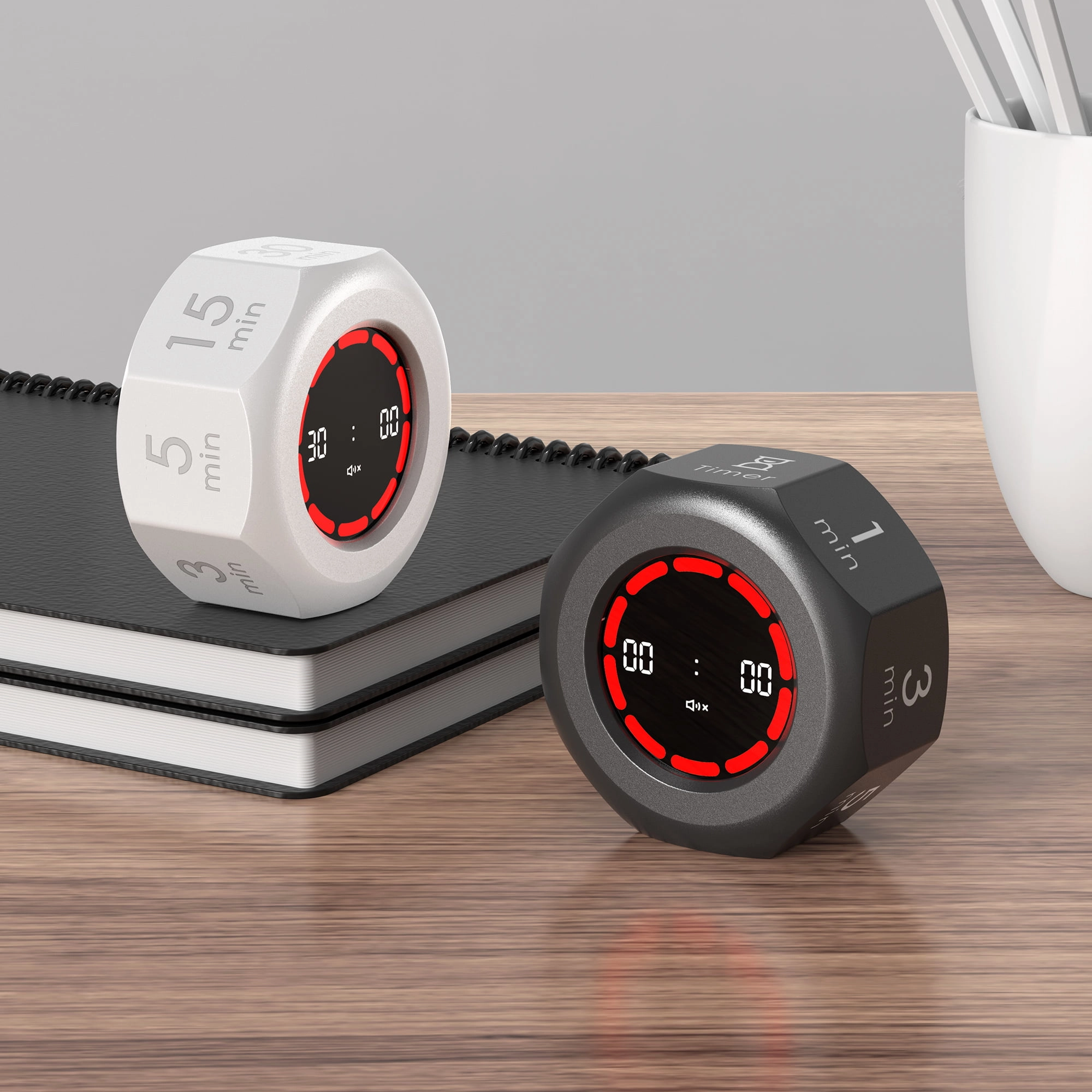
Digital Pomodoro Timer 3 5 30 90 Minutes Kids Classroom Study Eight Side Gravity Visual Countdown Timer
Where cutting-edge design meets unrivaled functionality. This isn’t just a timer; it’s your versatile partner for kitchen precision, focused studying, classroom engagement, and even ADHD-friendly time tracking.
Crafted as an 8-sided cube with a sleek, novel mini-round profile, Cube redefines portability and style. Its eye-catching flip-gravity rotating visual display (no boring screens!) makes time visible at a glance, while a crisp digital clock shows seconds, minutes, and hours—ideal for recipes, Pomodoro sessions, or study intervals.
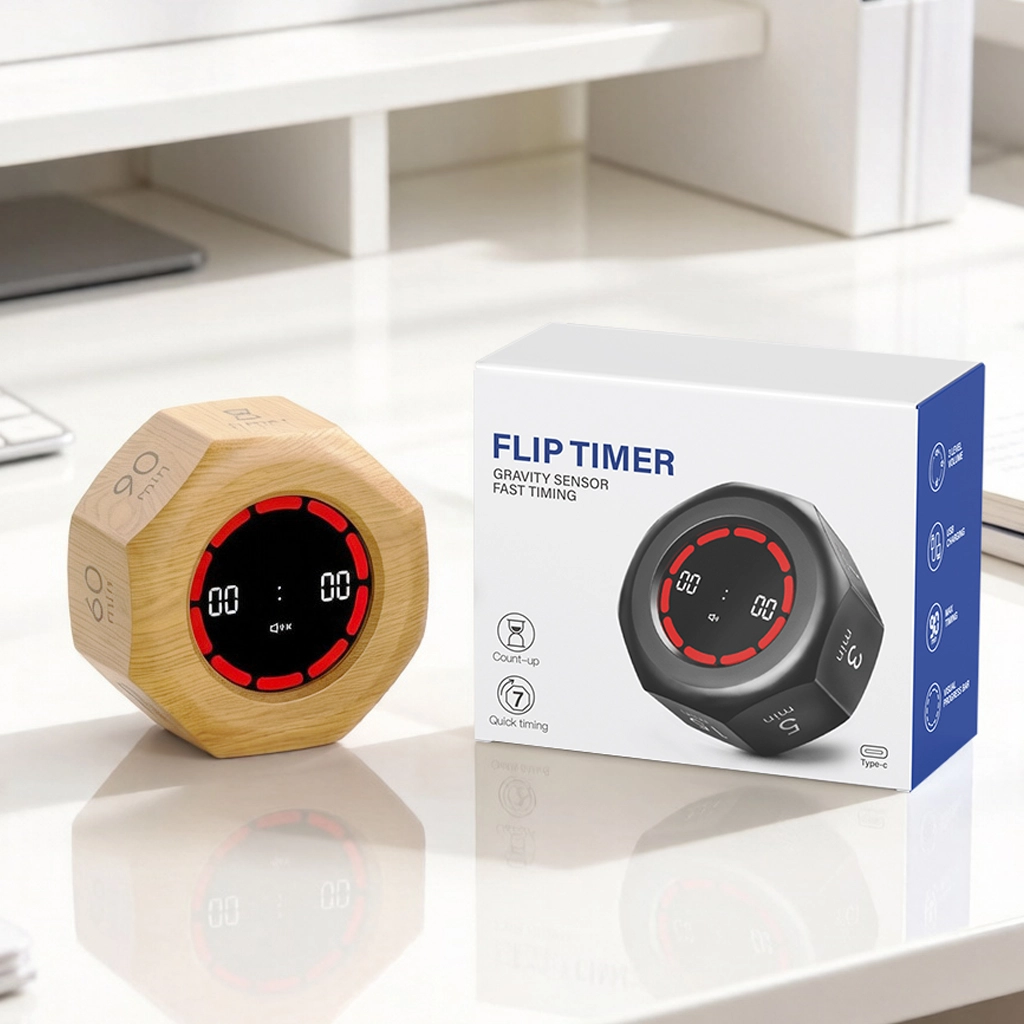
Wood Grain Gravity Sensor Digital Pomodoro Timer 3 5 30 90 Minutes Study Learn Visual Countdown Timer
Where cutting-edge design meets unrivaled functionality. This isn’t just a timer; it’s your versatile partner for kitchen precision, focused studying, classroom engagement, and even ADHD-friendly time tracking.
Crafted as an 8-sided cube with a sleek, novel mini-round profile, Cube redefines portability and style. Its eye-catching flip-gravity rotating visual display (no boring screens!) makes time visible at a glance, while a crisp digital clock shows seconds, minutes, and hours—ideal for recipes, Pomodoro sessions, or study intervals.
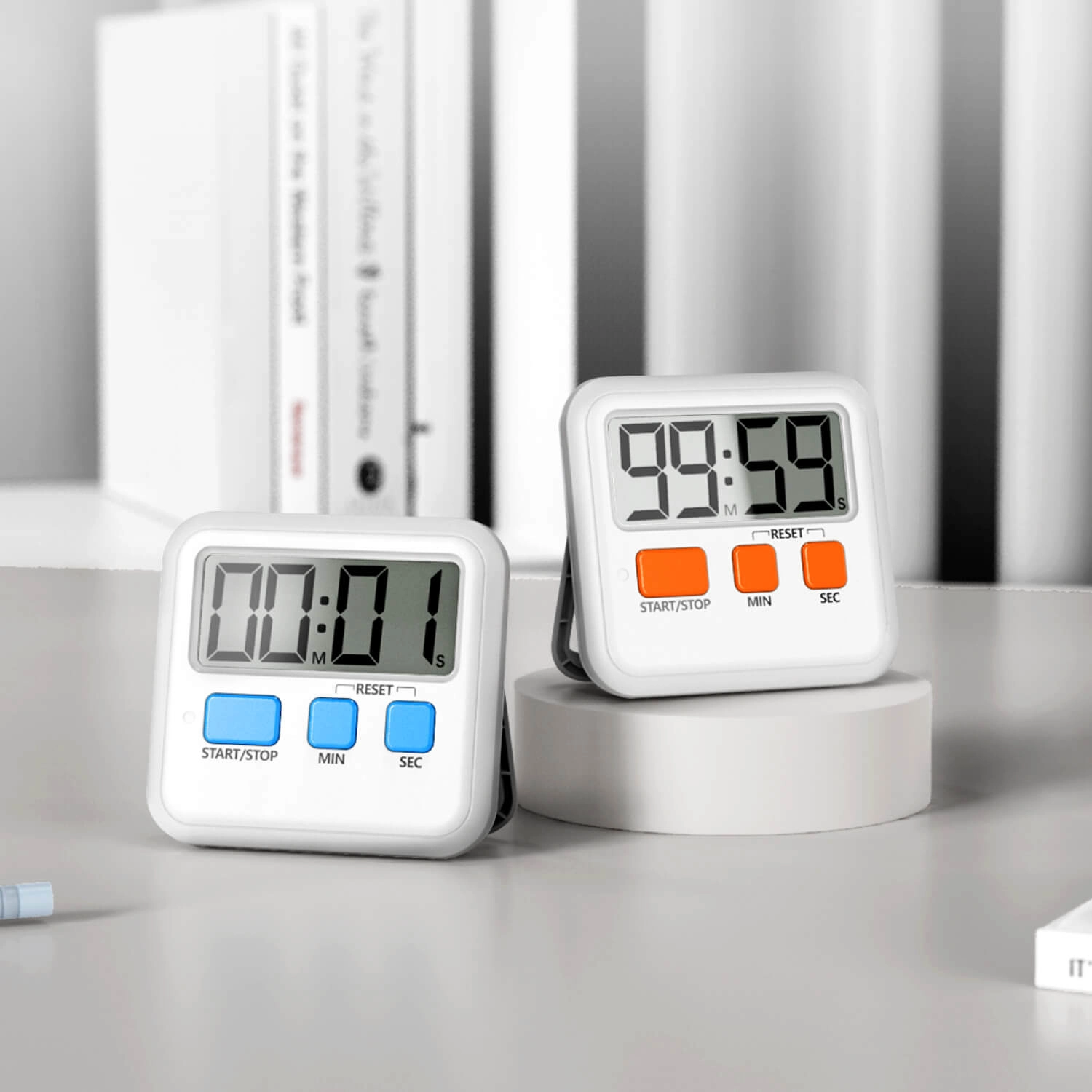
Custom Sound Ringtone Best Countdown Pomodoro Timer Brand In China
The X-JSQ811 Timer is a compact, functional digital timer designed for everyday time management. It prioritizes simplicity, portability, and adaptability—perfect for users who want a reliable tool without unnecessary complexity.

Youben life
Youben life