
Bulk Purchase Guide for Digital Alarm Clocks: Tips for Retailers
- Understanding shopper intent and market trends
- Why shoppers buy digital alarm clocks
- Key buyer segments and use cases
- Market signals and data sources
- Sourcing and supplier evaluation
- Spec sheet: what to specify in your RFQ (Request for Quotation)
- Evaluating OEM/ODM partners
- Supplier due diligence checklist
- Product types, pricing and unit economics
- Comparing digital alarm clock types
- Unit economics and margin planning
- MOQ strategies and inventory planning
- Compliance, testing and quality control
- Regulatory requirements for electronics
- Testing protocols
- Quality control at scale
- Packaging, branding and go-to-market tactics
- Retail-ready packaging and unboxing experience
- Launch and merchandising strategies
- After-sales support and warranty policy
- Why choose an integrated OEM/ODM partner: manufacturer spotlight
- Youben Life—what they offer
- Technical capabilities and differentiation
- How this translates to product success
- Practical checklist for your first bulk buy
- FAQ
- 1. What is the minimum order quantity (MOQ) for digital alarm clocks?
- 2. Which certifications are required to sell digital alarm clocks in the EU and U.S.?
- 3. Should I choose OEM or ODM for my alarm clock line?
- 4. How much lead time should I plan for a new custom model?
- 5. What quality control steps reduce returns and warranty costs?
- 6. How can I verify a supplier’s claims about certifications?
- Final thoughts and next steps
As a consultant who has worked directly with manufacturers and retail buyers in Guangzhou and beyond, I know the importance of clear sourcing signals for local and international buyers. This guide focuses on bulk purchasing of digital alarm clocks for retailers—from understanding shopper intent and product segmentation to supplier selection, compliance, and go-to-market tactics. Wherever possible I reference authoritative standards and resources to make procurement decisions verifiable and low-risk.
Understanding shopper intent and market trends
Why shoppers buy digital alarm clocks
Retail demand for a digital alarm clock spans utility, design, and lifestyle behaviors. Some customers want a simple bedside clock with a snooze button and night light; others seek smart, voice-enabled units that integrate with home ecosystems. There’s also demand for niche products: pomodoro timers for productivity, visual countdown clocks for classrooms, and thermo-hygrometers that combine timekeeping with environmental monitoring. Aligning SKUs with these intents reduces returns and improves conversion.
Key buyer segments and use cases
Segmenting buyers helps define specifications and MOQ (minimum order quantity):
- Value-driven shoppers: prioritize low-cost, reliable digital alarm clocks with clear LED displays.
- Design-conscious buyers: seek High Quality finishes, minimalist design, and retail-ready packaging.
- Smart-home adopters: demand Wi‑Fi/Bluetooth, app integration, and voice control.
- Educational and institutional buyers: need visual countdown clocks and robust Pomodoro timers with durable housings.
Market signals and data sources
To verify demand trends, I monitor authoritative sources and industry signals. For general context on timekeeping devices and historical evolution, see the overview on alarm clocks from Wikipedia. For productivity-specific products (Pomodoro), reference the Pomodoro Technique background at Wikipedia. For consumer sleep and health guidance (which correlates to alarm clock usage and product features like gradual wake or light alarms), the CDC provides robust guidance: CDC - About Sleep.
Sourcing and supplier evaluation
Spec sheet: what to specify in your RFQ (Request for Quotation)
When I prepare RFQs for retailers, a clear spec sheet is non-negotiable. Include:
- Product type (digital alarm clock, smart alarm, sunrise alarm, travel alarm, pomodoro timer)
- Display tech (LED, LCD, e-ink), size and brightness control
- Power options (AC adapter, battery type, USB-C, rechargeable)
- Connectivity (none, Bluetooth, Wi‑Fi) and app/firmware update expectations
- Enclosure materials, color options, and IP rating if used in humid environments
- Firmware customization, custom IC programming, and private-label requirements
- Target unit price, MOQ, and lead time
Evaluating OEM/ODM partners
Choosing the right partner affects margin, time-to-market, and product differentiation. I assess vendors on these criteria:
- Vertical integration: in-house mold tooling and assembly reduce lead time and improve consistency.
- R&D capabilities: ability to deliver ID/MD industrial design, custom firmware and IC programming.
- Quality certifications and compliance testing experience (CE/FCC/RoHS).
- Production capacity and scalability—important for seasonal buy cycles.
- Sample and prototyping process—turnaround and iteration speed.
For example, manufacturers that provide turnkey private label solutions—covering ID, tooling, and programming—can shorten your development cycle and help create retail-ready packaging. This is especially relevant if you plan Amazon private-label launches or branded retail channels.
Supplier due diligence checklist
When I audit suppliers I use a checklist which includes factory tour reports, references from other brands, and sample testing records. For documented quality management practices, ISO 9001 is a useful benchmark: ISO 9001.
Product types, pricing and unit economics
Comparing digital alarm clock types
Different product types require different sourcing strategies. Below is a concise comparison I use to decide SKU mixes for retailers.
| Type | Typical features | Wholesale price range (USD/unit) | Best retail channels |
|---|---|---|---|
| Basic digital alarm clock | LED/LCD display, snooze, battery/USB power | $3–$8 | Mass retailers, discount chains, e-commerce |
| Radio/Multifunction alarm | FM/BT, dual alarms, multiple inputs | $8–$20 | Big box, online electronics, gift stores |
| Sunrise/Gradual light alarm | LED light simulation, multiple sounds, app control | $20–$45 | Home goods, wellness retailers, online marketplaces |
| Smart alarm (Wi‑Fi/Voice) | App, firmware updates, voice assistants | $25–$80+ | Smart-home retailers, e-commerce, brand channels |
| Pomodoro/Visual countdown clocks | Large displays, segmented timers, classroom-grade | $8–$30 | Education suppliers, productivity stores, Amazon |
Note: the wholesale price ranges above are typical market ranges based on supplier catalogs and B2B marketplaces as of my recent sourcing cycles. Exact cost depends on MOQ, materials, and feature set.
Unit economics and margin planning
To set retail prices, calculate land‑ed cost per unit = unit price + shipping + duty + testing & compliance allocation + packaging + per-unit tooling amortization. A typical retailer target margin for consumer electronics is 40–60% gross margin. For private label products with custom tooling, amortize tooling over initial production runs to avoid skewed profitability on first shipments.
MOQ strategies and inventory planning
MOQs vary by manufacturer and product complexity. Basic alarm clocks may have MOQs as low as 500–1,000 units per color, while custom smart-alarm models often require 2,000–5,000 units due to tooling and certification costs. I recommend staging orders: pilot 300–1,000 units for market validation (if the supplier supports smaller pilot runs) then scale. Forecasting should account for seasonality (back-to-school and holiday spikes).
Compliance, testing and quality control
Regulatory requirements for electronics
Compliance is a procurement risk area. Core standards I check for digital alarm clocks include CE marking for product safety in the EU (European Commission - CE Marking), FCC authorization for intentional/unintentional radiators in the U.S. (FCC), and RoHS restrictions on hazardous substances in electronic equipment (RoHS).
Testing protocols
My recommended testing regimen includes:
- EMC and radio tests (for Wi‑Fi/Bluetooth models)
- Electrical safety and insulation tests
- Battery and UL/IEC tests for rechargeable units
- Environmental tests for thermo-hygrometers: calibration verification against reference instruments
Use accredited third-party labs for testing records to reduce customs and marketplace risk.
Quality control at scale
On-site QC protocols I insist on:
- Incoming materials inspection (ABI) for plastics, PCBs, and displays
- In-line testing for firmware and IC programming validation
- Random sampling for functional test (10% for first run, adjusted by supplier reliability)
- Pre-shipment inspection (AQL standard) and photo reports
| QC Step | Purpose | Reference/Standard |
|---|---|---|
| Incoming Materials Inspection | Verify raw parts meet specs | Supplier documentation + QC protocol |
| Functional Factory Tests | Each unit boots, alarm triggers, display OK | Manufacturer test scripts |
| EMC & Safety Testing | Regulatory compliance for market entry | CE/FCC/RoHS required tests |
| Pre-shipment Inspection (AQL) | Reduce defects to acceptable levels | AQL sampling standards |
Packaging, branding and go-to-market tactics
Retail-ready packaging and unboxing experience
Packaging influences perceived value. For private-label digital alarm clocks, I recommend retail-ready packaging that includes:
- Clear product photography and feature icons
- Multilingual instruction card and quick-start guide
- Recyclable protective inserts and branding sleeve
For Amazon or direct-to-consumer channels, consider including a QR code linking to setup videos and firmware support to reduce returns due to user error.
Launch and merchandising strategies
Effective rollouts often blend online and offline tactics. I use a three-stage approach:
- Pilot launch: limited SKUs on marketplace channels with A/B testing for product titles, images, and price points.
- Scale: increase inventory, expand SKUs after validation, invest in PPC and influencer seeding (for smart alarms and sunrise models).
- Retail expansion: pitch to brick-and-mortar with proven sell-through data and point-of-sale materials.
After-sales support and warranty policy
Warranty and returns policy impact buyer confidence. For electronics, a 12-month limited warranty is typical. Ensure your supplier provides RMA support and spare parts availability. If you sell smart devices that require firmware updates, include a plan for OTA updates and security patches.
Why choose an integrated OEM/ODM partner: manufacturer spotlight
Youben Life—what they offer
As part of my sourcing network, I frequently partner with Youben Life. Established in 2010 and headquartered in Guangzhou, Youben Life is a premier OEM/ODM manufacturer dedicated exclusively to digital timers, pomodoro timers, visual countdown clocks, temperature and humidity monitors, and thermo-hygrometers. Their 20,000m² vertically integrated facility provides turnkey private label solutions for global brands and Amazon bestsellers.
Technical capabilities and differentiation
What sets Youben Life apart in my experience:
- End-to-end R&D: ID/MD industrial design, custom IC programming, precision mold tooling and firmware development.
- Manufacturing scale: in-house tooling and assembly reduce lead times and improve product consistency.
- Compliance track record: experience in CE, FCC and RoHS testing and documentation reduces market entry risk.
- Product focus: specialization in timing devices and environmental monitors leads to deeper domain expertise than general consumer electronics factories.
Contact: https://www.youbenlife.com/ | Email: info@youbenlife.com
How this translates to product success
For private label or co-branded launches, partnering with a manufacturer that owns tooling, firmware, and packaging capabilities shortens development cycles and lowers the number of third-party vendors you must manage. This translates directly to faster iterations, better quality control, and clearer responsibility for warranties and after-sales support.
Practical checklist for your first bulk buy
- Define buyer personas and select 2–3 core SKUs that address distinct needs (value, High Quality, niche).
- Prepare a clear RFQ with specs, target unit price, and desired MOQ.
- Request sample units and run independent testing where necessary.
- Verify CE/FCC/RoHS documentation and lab test reports from accredited labs.
- Negotiate tooling amortization, lead times, and payment terms (staged payments tied to milestones).
- Plan a pilot order and staging strategy to validate market fit before scaling.
FAQ
1. What is the minimum order quantity (MOQ) for digital alarm clocks?
MOQ varies by supplier and product complexity. Basic models may have MOQs of 500–1,000 units per color; custom, tool-dependent models typically start at 2,000–5,000 units. Discuss pilot runs with suppliers to mitigate risk.
2. Which certifications are required to sell digital alarm clocks in the EU and U.S.?
For the EU, CE marking is required for electronic product safety (European Commission - CE Marking). For the U.S., FCC certification is required for devices that may emit radio frequency energy (FCC). RoHS compliance is needed to meet hazardous substance restrictions in many markets (RoHS).
3. Should I choose OEM or ODM for my alarm clock line?
Choose OEM if you have a finalized design and only need manufacturing. Choose ODM if you want the supplier to contribute design, tooling, or firmware expertise. ODMs like Youben Life can accelerate time-to-market by providing turnkey solutions.
4. How much lead time should I plan for a new custom model?
Typical timelines: 4–8 weeks for tooling and prototypes (simple changes), 8–16 weeks for full production runs, plus testing and certification time. Complex smart devices requiring FCC/EMC testing can add additional weeks for lab scheduling and remediation.
5. What quality control steps reduce returns and warranty costs?
Implement incoming material inspections, in-line functional tests, firmware validation, and pre-shipment AQL inspections. Use accredited third-party labs for regulatory testing to prevent customs holds and marketplace delistings.
6. How can I verify a supplier’s claims about certifications?
Request original test reports from accredited labs (not copies from the supplier alone), check certificate validity and scope, and confirm laboratory accreditation. For management systems, verify ISO certificates with the issuing body where possible (ISO 9001).
Final thoughts and next steps
Bulk purchasing digital alarm clocks is a balance between selecting the right SKUs for your customers and partnering with suppliers who can reliably deliver compliant, well-crafted products. My approach emphasizes precise specifications, staged launches, thorough testing, and selecting partners with vertical integration to reduce risk.
If you’re evaluating suppliers or planning a private-label alarm clock line, I recommend starting with a pilot SKU and requesting a visiting audit or video walkthrough of the manufacturer’s facility. For brands seeking an experienced, vertically integrated OEM/ODM partner, consider Youben Life—established in 2010, specialized in Digital Timers, Pomodoro timers, Visual Countdown Clocks, and thermo-hygrometers, headquartered in Guangzhou with a 20,000m² facility and turnkey private-label capabilities. Visit https://www.youbenlife.com/ or contact their team at info@youbenlife.com to discuss custom designs, IC programming, and production capacity.
If you’d like, I can review your current product spec and supplier quotes to identify cost-saving opportunities, compliance gaps, and a suggested pilot order size. Reach out to start the conversation.
Quality Control Checklist for Pomodoro Timer Manufacturing
MOQ and Pricing Strategies for Bulk Pomodoro Timer Orders
Certifications for Pomodoro Digital Timers: CE, RoHS, FCC
Classroom Digital Timers: Essential Tools for Teachers and Education Brands
X-JSQ016
What are the shipping costs and delivery times?
For stock products: Competitive rates via air/sea/express, with delivery in 7–15 business days (location-dependent). For customized orders: Includes 10–15 days for production + shipping; exact timelines confirmed post-design finalization. We ensure reliable, cost-effective delivery tailored to your schedule.
Indoor Thermometer
Do you support OEM and ODM customization?
A: Yes, we provide full OEM & ODM services, including logo printing, packaging design, product color customization, and function adjustment based on your requirements.
About product
What products do you mainly deal in?
We are a professional manufacturer of digital timers,alarm clocks,and digital temperature/humidity meters.
Wholesale Services
Can I customize in bulk orders?
Yes, we offer customization options including design, color, and branding, but there is a MOQ requirement.
Service
How do I get support if I have a questions about the customizaiton?
You could please send your questions to us, we have technicians to responds to you.
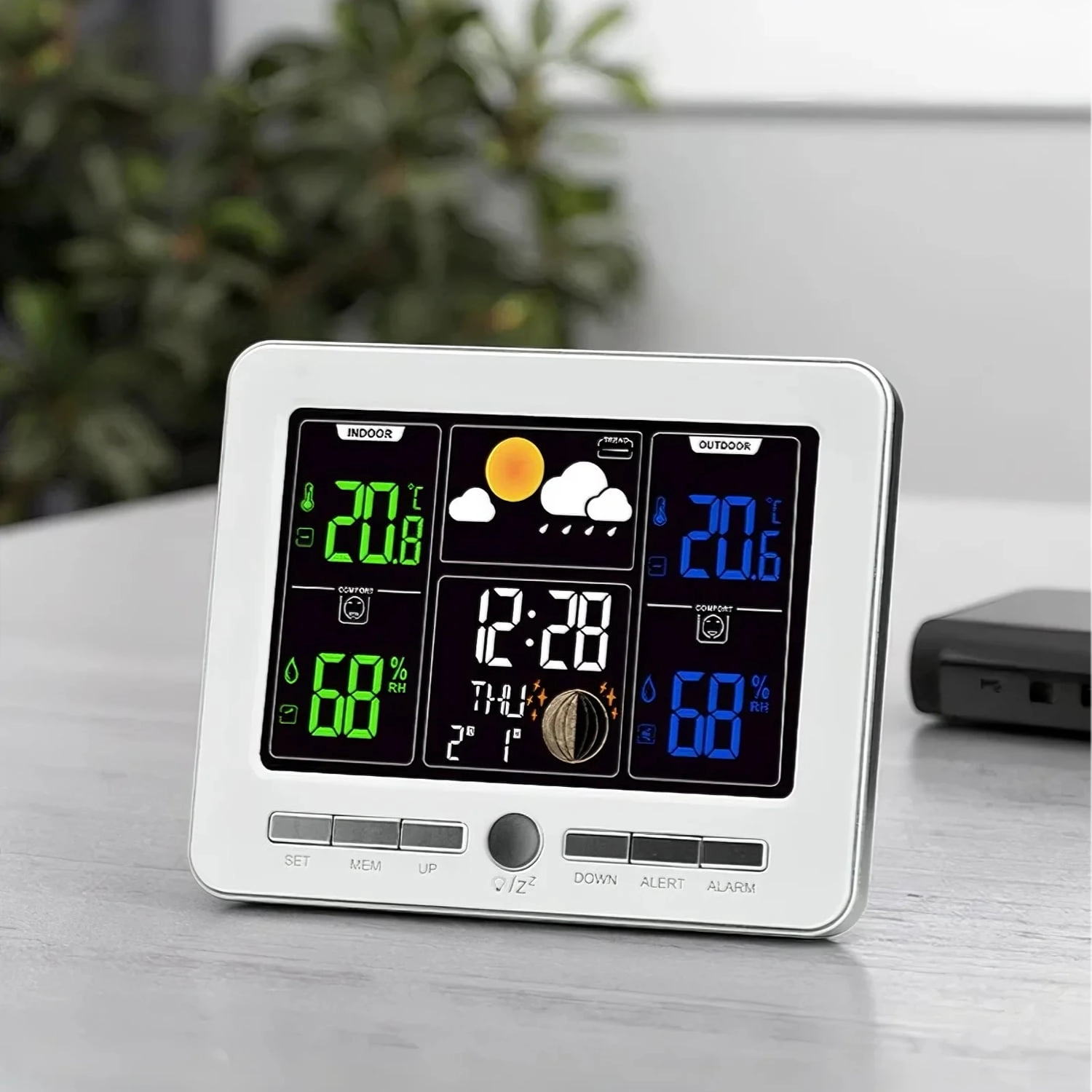
Custom Daylight Savings Desktop Wall Alarm Clock Indoor and Outdoor Sensor Calendar Weather Thermometer with Humidity
This X-WSDJ011 smart digital LED wireless alarm clock integrates thermometer, hygrometer, weather forecasting, and timekeeping functions for indoor/outdoor use.
Featuring a foldable stand and hanging hole, it offers flexible placement (desk/wall).
With a high-precision waterproof outdoor sensor, it monitors indoor/outdoor temperature/humidity and displays time/date/week (12/24H).
and shows "Dry/Suitable/Too Wet" comfort status. Ideal for homes, greenhouses, gardens, or pet areas, it simplifies environmental tracking and daily routine management.
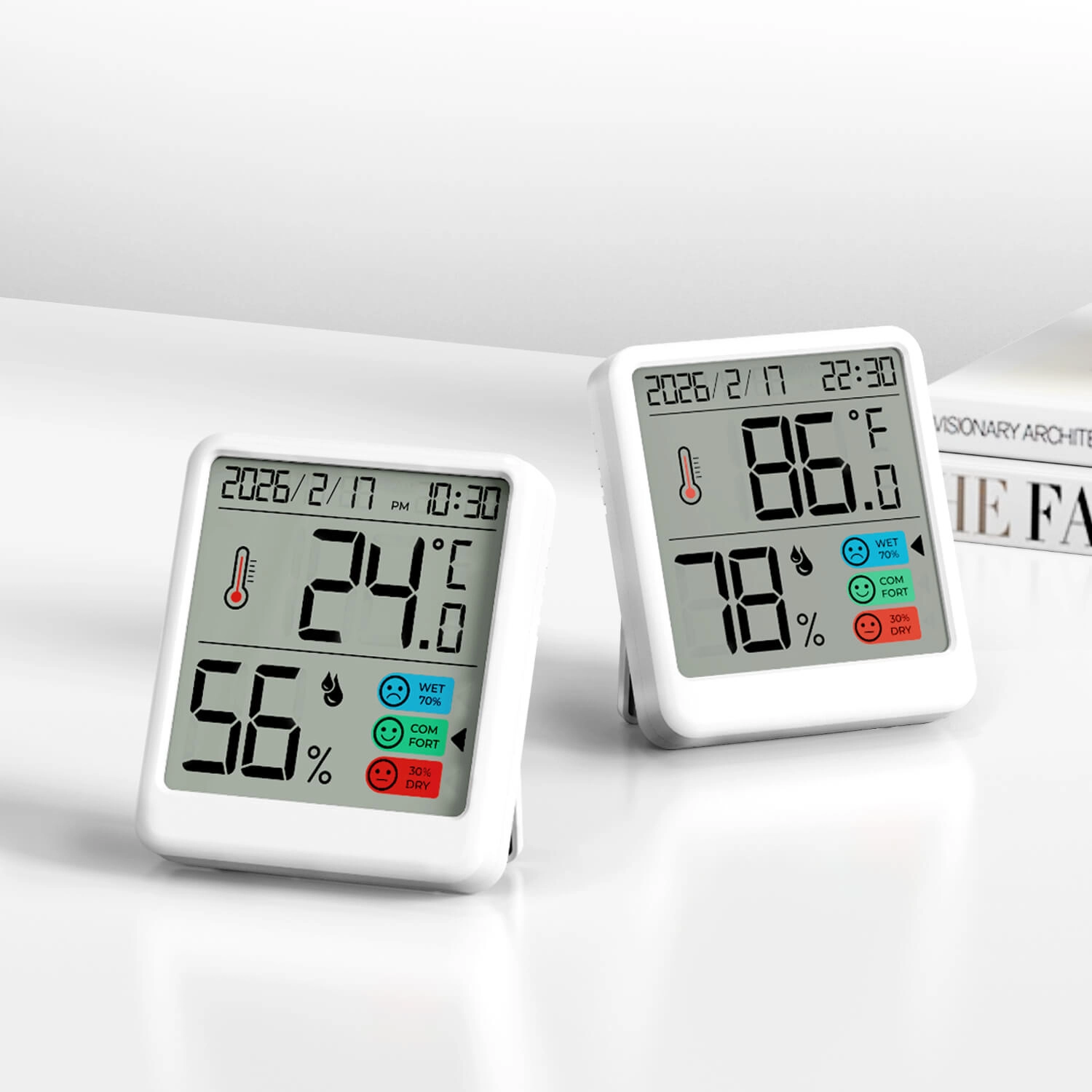
Digital Indoor Thermometer Hygrometer Temperature Humidity Monitor With Calendar Clock
The X-WSDJ312 Indoor Thermometer Hygrometer is a compact and multifunctional temperature and humidity monitor designed for home and office environments. It features a clear LCD screen displaying temperature, humidity, time, calendar, and comfort level at a glance.
Equipped with a high-sensitivity sensor, the device provides accurate real-time environmental monitoring to help maintain a comfortable indoor climate. The thermometer hygrometer supports 12/24-hour time format and ℃/℉ switching, making it convenient for global users.
Designed for flexible placement, it comes with a foldable desktop stand, magnetic back, and wall hanging hole, allowing installation on desks, refrigerators, or walls.
Powered by one AAA battery, the device operates with low power consumption and is ideal for homes, offices, greenhouses, classrooms, and storage environments.
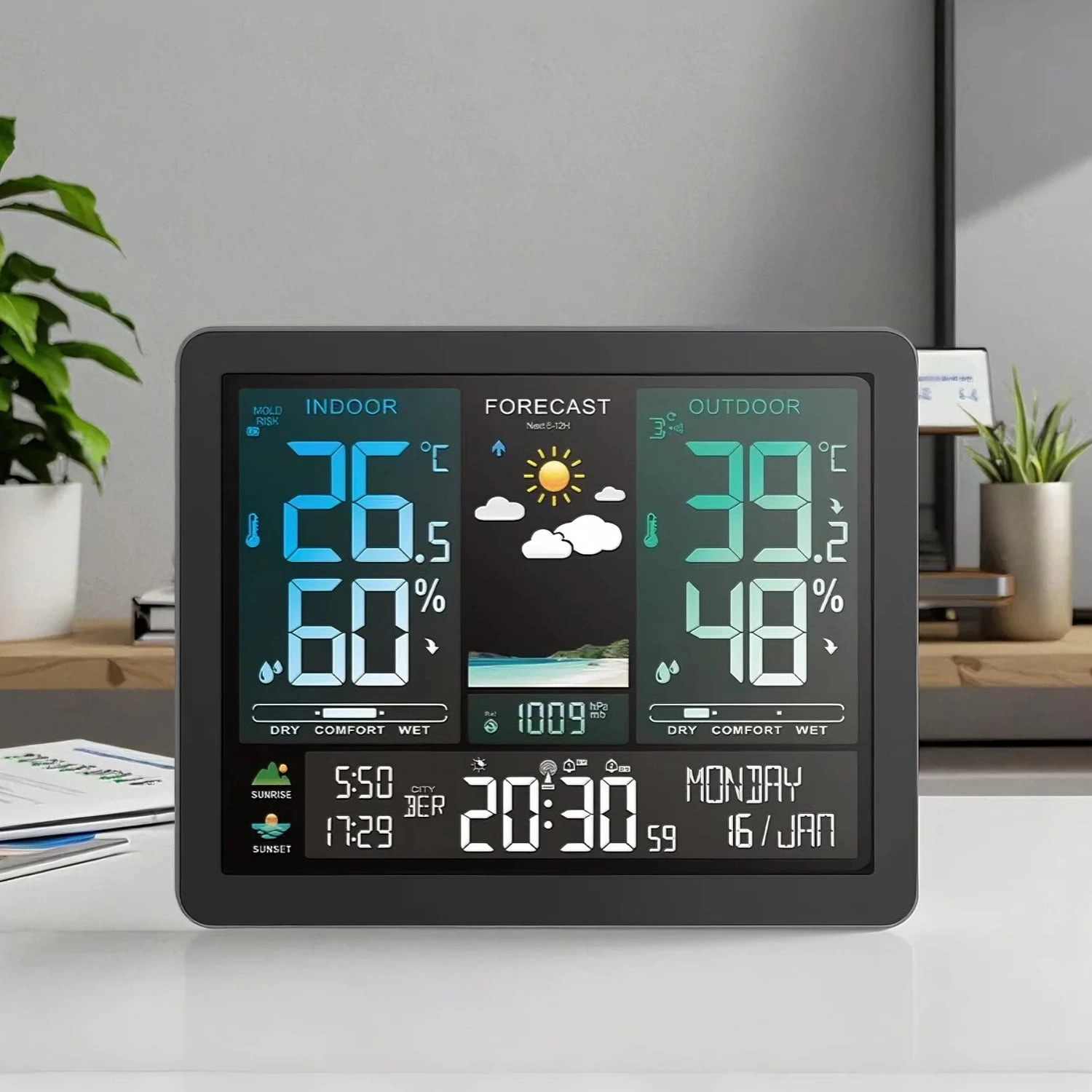
Custom USB Powered Daylight Savings Desktop Wall Alarm Clock Indoor and Outdoor Sensor Calendar Weather Thermometer Hygrometer Barometer
The X-WSDJ012 Smart Digital LED Alarm Clock is a multi-functional home device combining timekeeping with environmental monitoring.
It features a large LED display for time (12/24H), week, and date and integrates indoor/outdoor sensors to track temperature, humidity, atmospheric pressure, and weather trends.
Powered by USB (for a bright, always-on display) or batteries, it includes a waterproof outdoor sensor and offers customizable alarms, backlight control, and 8 language options.
Designed with a foldable stand or hanging hole, it fits desks, walls, or nightstands—ideal for home, garden, or office use.
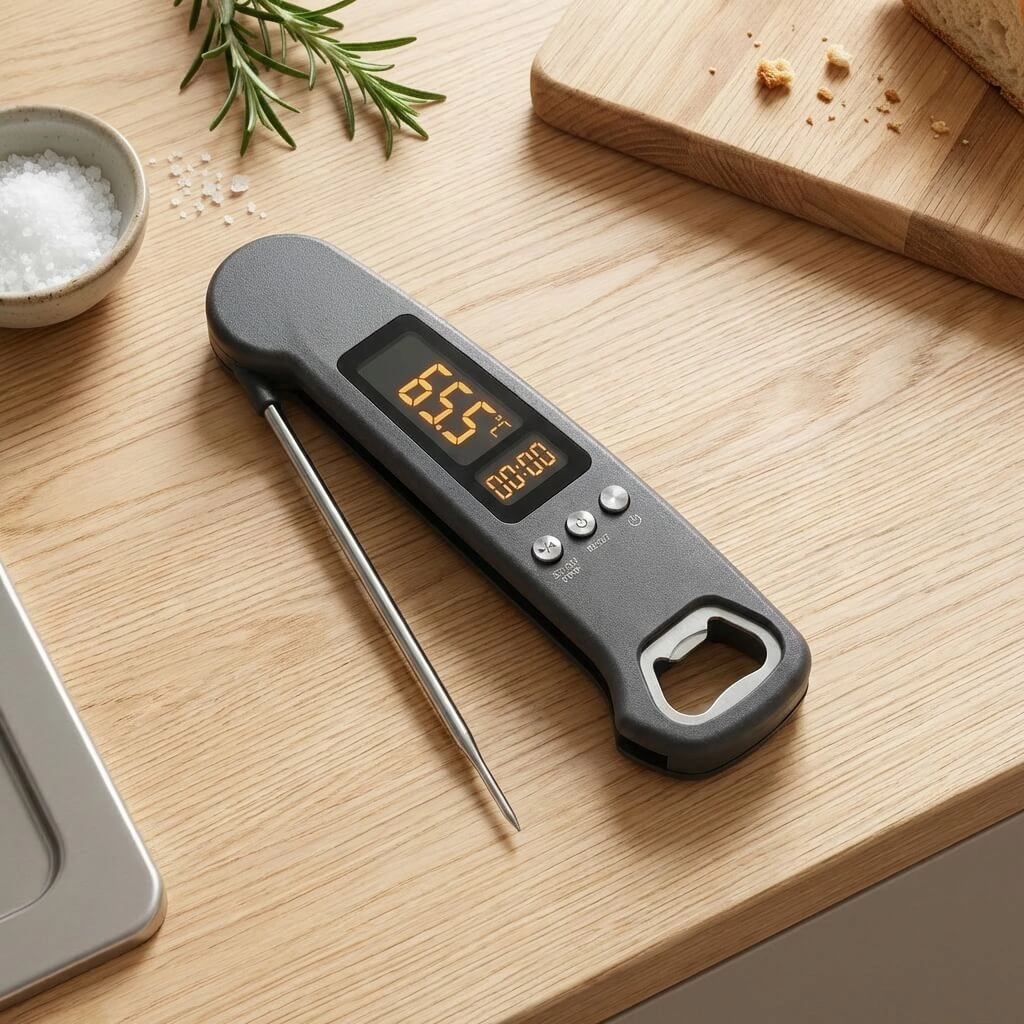
Smart Digital Food Meat Thermometer Folding Probe Timer Multifunction BBQ Kitchen Tool
The X-SPWSDJ331 smart digital thermometer is developed for commercial buyers seeking reliability and versatility in kitchen tools. Equipped with a folding stainless steel probe, it enables safe storage and rapid temperature detection from -50°C to 300°C with ±0.1°C accuracy. The built-in timing function (up to 59:59) allows precise cooking management through an easy START/STOP interface. Designed with a practical handle that integrates a bottle opener, this 3-in-1 solution enhances usability for both indoor and outdoor applications. Powered by a CR2450 battery, it ensures long service life and stable performance, making it ideal for distributors, wholesalers, and private label brands.

Youben life
Youben life