
Which digital timers for kids boost focus and study habits?
- 1. Which digital timers for kids are best for children with ADHD or executive-function challenges, and what features should I prioritize?
- 2. Which digital timers for kids boost focus and study habits for elementary students using the Pomodoro method at home?
- 3. What digital timers for kids are safest and most durable for rough classroom use (drop-resistant, non-toxic materials)?
- 4. Which digital timers for kids allow customizable visual and auditory cues without overstimulation?
- 5. How do app-connected digital timers for kids maintain privacy and offline reliability for classroom use?
- 6. Which digital timers for kids enable teachers/parents to track progress and produce reports for IEP goals?
1. Which digital timers for kids are best for children with ADHD or executive-function challenges, and what features should I prioritize?
Children with ADHD and executive-function delays respond best to timers that reduce cognitive load and provide clear, consistent cues. Prioritize these features when evaluating digital timers for kids:
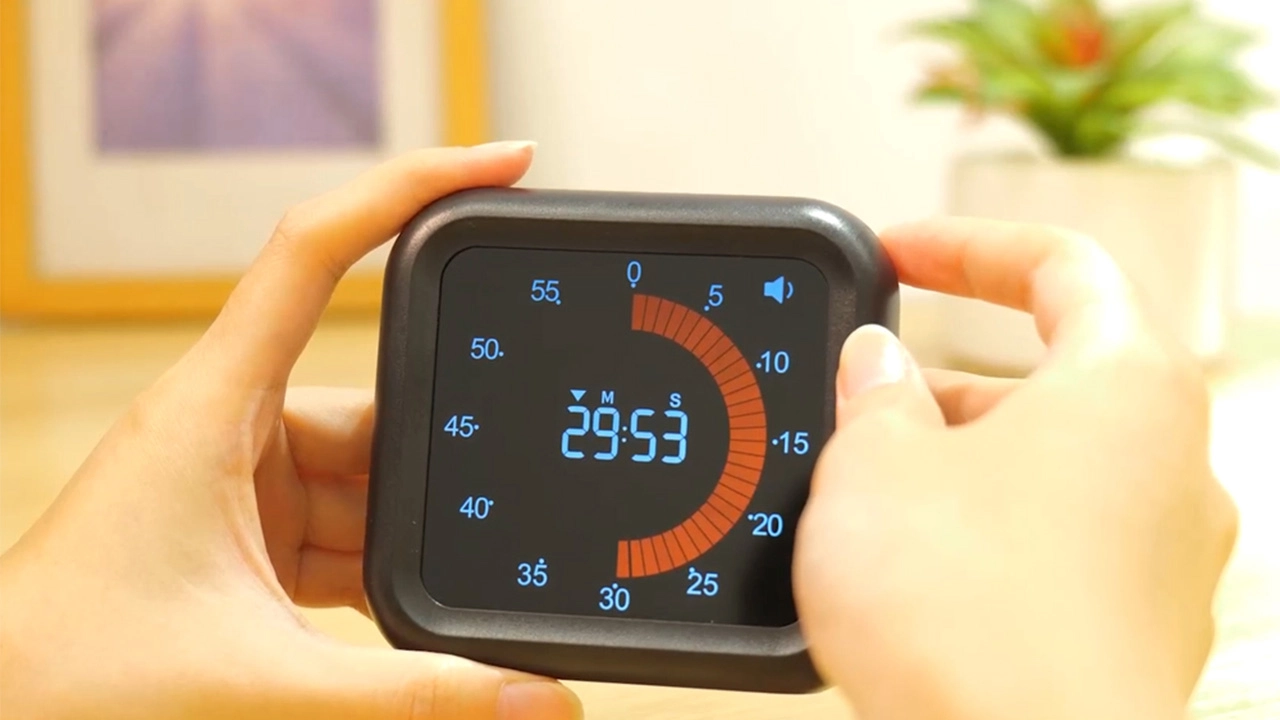
- Visual countdown (not just digits): A color wedge or progressively shrinking visual field gives immediate time awareness without reading numbers. Visual timers support time perception and reduce verbal prompting.
- Adjustable auditory cues: Multiple volume levels and choice of tones (or vibration) allow a gentle warning without startle reactions. A distinct short-warning tone (e.g., 1–2 minutes before end) helps with task transition.
- Simple single-task programming: Limit options to 1–3 preset durations to avoid confusion; a single large start/stop button reduces executive demands.
- Durable tactile controls: Big buttons that respond reliably to fidgeting hands are crucial in real-world use.
- Portable and visible: A small desk-sized device with a clear display or a clip/magnet helps place the timer within the child’s visual field.
- No distracting lights/animations: Avoid high-contrast flashing or animated screens that can overstimulate.
How to test before you buy: trial one-week use at home or in class, observe on-task minutes per timed activity, and note how often adult prompts are still required. If prompts drop by at least one interaction per session, the timer is functionally helping.
Why these features work: Visual and auditory cues externalize time management, reducing working-memory load. For many children with ADHD this reduces refusals and improves independent task completion.
2. Which digital timers for kids boost focus and study habits for elementary students using the Pomodoro method at home?
The Pomodoro-inspired approach (timed focus blocks with short breaks) can be adapted for young learners using child-friendly study timers. Look for these qualities in a focus timer:
- Customizable interval sets: Ability to program 15–25 minute focus blocks with 3–5 minute breaks, plus a longer break after a cycle. Some child-oriented timers offer preset “work/break” sequences named for age groups.
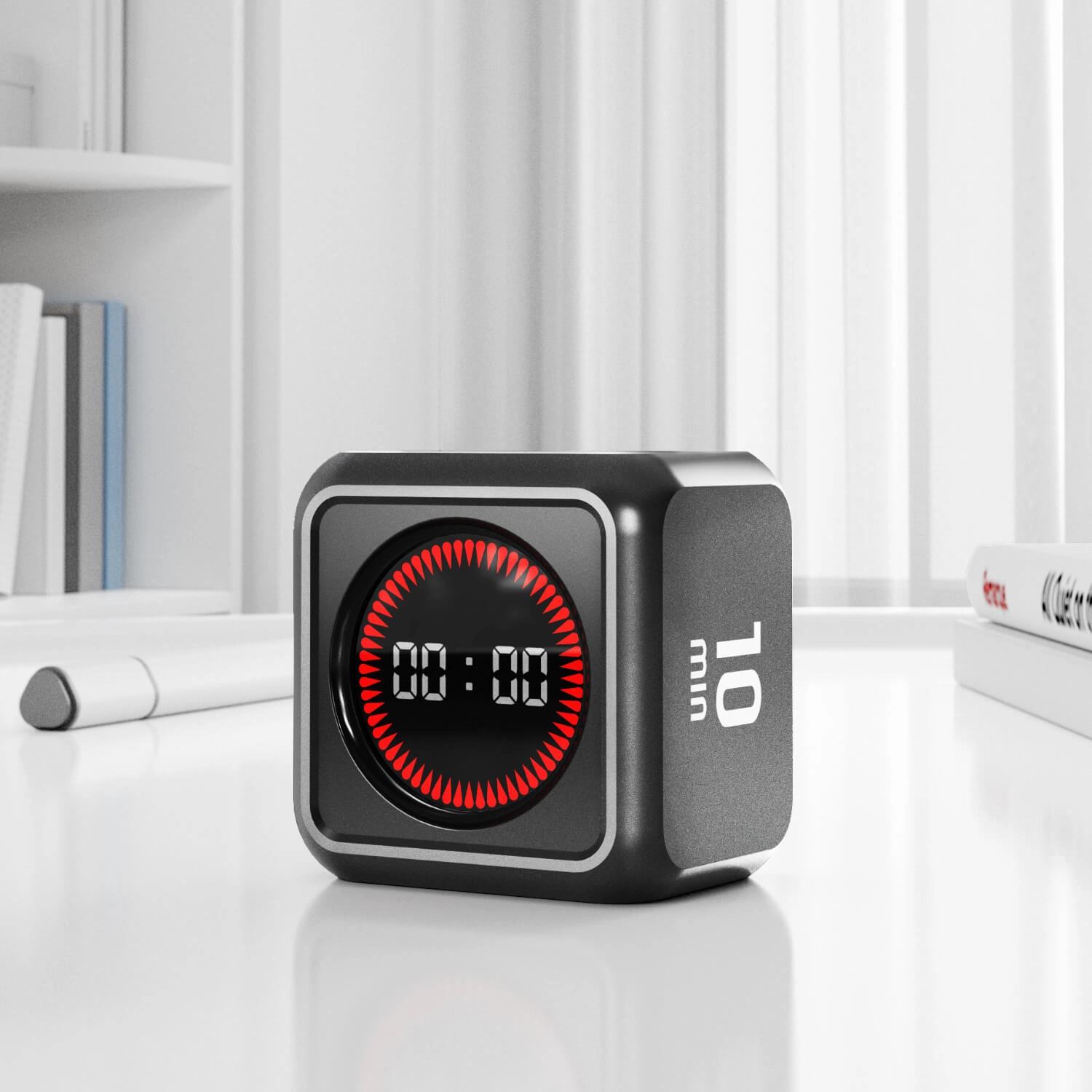
- Visual progress indicator: A progress ring or bar helps kids anticipate the end of a block and self-regulate during the interval.
- Minimal app-dependency: For elementary kids, a standalone physical timer avoids the distraction risk of phone apps while still allowing Pomodoro structure.
- Reward integration: Timers that pair with sticker charts, token counters, or simple gamified rewards increase motivation for repeated use.
- Ease of resetting mid-block: Kids and parents need to adjust for interruptions (bathroom, sibling) so restart functions should be simple.
Suggested routine example (practical, research-aligned): 20 minutes focused study (visual timer set), 5 minutes movement break, repeat twice, then a 20–30 minute reward. For math drills or reading, shorter blocks (10–15 minutes) with more frequent breaks can maintain steady focus in younger children.
Outcomes to expect: With consistent use, families typically see improved session length, fewer breaks initiated by caregivers, and increased completion of planned tasks within 1–3 weeks.
3. What digital timers for kids are safest and most durable for rough classroom use (drop-resistant, non-toxic materials)?
Classroom environments demand robustness and safety. When assessing durability, evaluate:
- Build materials: Look for BPA-free plastics and rounded edges. Vendors should list material safety and any certifications (e.g., CPSIA-compliant toy standards) on product pages.
- Drop and impact resistance: Devices marketed for schools often advertise drop tests or rubberized bumpers. If specific tests aren’t cited, request MIL-STD or similar test data from the supplier.
- Water/splash resistance: A light-duty ingress protection (e.g., splash-proof) is helpful for messy craft areas.
- Replaceable parts and warranty: Classroom use accelerates wear—choose timers with replaceable batteries, external power options, and a 1–3 year commercial warranty.
- Easy-to-clean finish: Smooth surfaces that tolerate disinfectant wipes maintain hygiene without degrading labeling.
Installation and mounting options: Magnetic backs, desk stands, and hook slots allow secure placement. For shared classroom sets, choose timers with lockable settings so students cannot unintentionally change presets.
Procurement tip: For bulk purchases, request sample units for field testing (drop and clean cycles) and ask for a repair/replacement SLA in the quote.
4. Which digital timers for kids allow customizable visual and auditory cues without overstimulation?
Customization that prevents overstimulation is about control and subtlety. Key capabilities to seek:
- Multi-mode visual display: Options for full-color wedge, soft backlight, or simple numeric readout so you can reduce visual intensity for sensory-sensitive children.
- Gradual alerts: Instead of sudden loud alarms, choose timers with ramped volume or progressive light change to signal the approaching end.
- Silent/vibrate modes: For libraries or quiet study, vibration plus a soft visual cue can be effective.
- Parental/teacher lock: Prevents accidental enabling of bright animations or high-volume sounds during sensitive periods.
Implementation strategy: Match the timer mode to the task and the child’s sensory profile. For example, reading time may use a dim visual wedge and vibration, while active play uses bright visuals and an audible bell.
5. How do app-connected digital timers for kids maintain privacy and offline reliability for classroom use?
App connectivity adds functionality (scheduling, remote control, reporting) but raises privacy and reliability issues. Evaluate connectivity through these lenses:
- Local control and offline operation: The timer should run core functions (countdown, visual cues, alarms) reliably without the app or an internet connection.
- Minimal data collection: Vendor privacy policies should explicitly state what data is collected. For children’s products, compliance with COPPA (USA) or relevant child-data protections in your region is essential.
- Local-only pairing options: Bluetooth-only pairing without cloud account requirements reduces exposure of student data.
- Secure firmware updates: Check that the manufacturer uses signed firmware updates to prevent tampering.
- Battery and fail-safe behavior: If connection drops mid-session, the device must continue the countdown and emit end cues; app-only timers that pause without connection are unsuitable for classrooms.
Procurement checklist: Request the product’s privacy whitepaper and technical sheet showing offline behavior. For school purchases, involve your IT/privacy officer to confirm compliance with local student-data rules.
6. Which digital timers for kids enable teachers/parents to track progress and produce reports for IEP goals?
For individualized education plan (IEP) monitoring, the right timer supports data collection and simple analytics. Look for these features:
- Built-in session logging: Timers that record start/stop timestamps for sessions without needing manual entry reduce data-entry errors.
- Exportable logs: CSV or PDF export of session duration, frequency, and interruptions allows easy attachment to IEP notes.
- Simple tagging: Ability to tag sessions by activity type (reading, math, transition) so educators can filter data by goal area.
- Privacy-respecting cloud options: If logs sync to the cloud for multi-teacher access, ensure data policies and access controls meet district requirements.
- Ease of teacher use: The interface to retrieve reports should be straightforward—one or two clicks to export weekly or monthly summaries.
Using timers for IEPs: Define measurable IEP goals tied to timer metrics (e.g., increase independent work time from 8 to 15 minutes per task). Use exported session logs as objective evidence during review meetings.
Implementation tip: Pilot the timer for 2–4 weeks to establish baseline metrics, then set incremental targets. Combine timer data with qualitative notes (engagement level, prompts required) for a full picture.
Conclusion
Digital timers for kids—when chosen with attention to visual support, auditory customization, durability, privacy, and data capabilities—offer measurable improvements in time awareness, independent work, and classroom management. For parents and educators, a short pilot (1–4 weeks) focused on objective metrics (on-task minutes, prompt frequency) will reveal whether a particular timer reduces adult prompting and increases task completion.
For tailored recommendations, bulk pricing, or to request product testing data and a formal quote, contact us at info@youbenlife.com or visit www.youbenlife.com to request a quote.
Contacts
Sofia
WhatsApp/Phone
All
Do you offer OEM & ODM clock services?
Yes, we provide both OEM & ODM solutions, allowing clients to customize clock design, materials, packaging, and branding.
What types of clocks can you manufacture?
We manufacture a wide range of clocks, including wall clocks, desk clocks, digital clocks, and smart clocks.
Can I customize the clock design and logo?
Absolutely. We offer customization for clock appearance, structure, materials, and logo printing to perfectly match your brand.
What is the minimum order quantity (MOQ)?
Our standard MOQ varies depending on the model, usually starting from 200–500 pieces. Custom designs may require different quantities.
How do you ensure product quality?
All clocks undergo strict quality control, including time accuracy tests, durability checks, and packaging inspections before shipment.
Interested in this article?
Let’s talk.
Need specifications, pricing, or customization options? We’ll provide everything you need.
By clicking “Submit,” you agree to share your information with our authorized team to process your request.
Your data will only be used for necessary communication and support.

Youben life
Youben life