
How to Choose a Reliable Pomodoro Timer Manufacturer (2026 Guide)
- What Makes a Pomodoro Timer Manufacturer Reliable?
- Key Takeaways: Quick Summary
- OEM vs. ODM: Which Sourcing Model Fits Your Productivity Brand?
- The OEM Approach (Custom Design)
- The ODM Approach (White-Label)
- 2026 Manufacturing Trends: IoT Integration and Sustainable Materials
- Data Comparison Table: Sourcing Metrics and Material Costs
- Essential Quality Control Standards (CE, RoHS, and PCB Testing)
- Expert Tips: Common Mistakes When Partnering With a Hardware Factory
- Industry-Leading Solution: How Youben Life Scales Your Vision
- Conclusion
- Frequently Asked Questions
- How do I find a verified Pomodoro timer factory?
- What is the standard MOQ for custom digital timers?
- Does my productivity timer need CE and RoHS certification?
- How long does it take to manufacture a custom Pomodoro device?
- What is the difference between OEM and ODM timer manufacturing?
- Can a manufacturer add IoT capabilities to a standard timer?
- How much does custom plastic injection molding cost for timers?
- What quality control tests are standard for electronic timers?
What Makes a Pomodoro Timer Manufacturer Reliable?
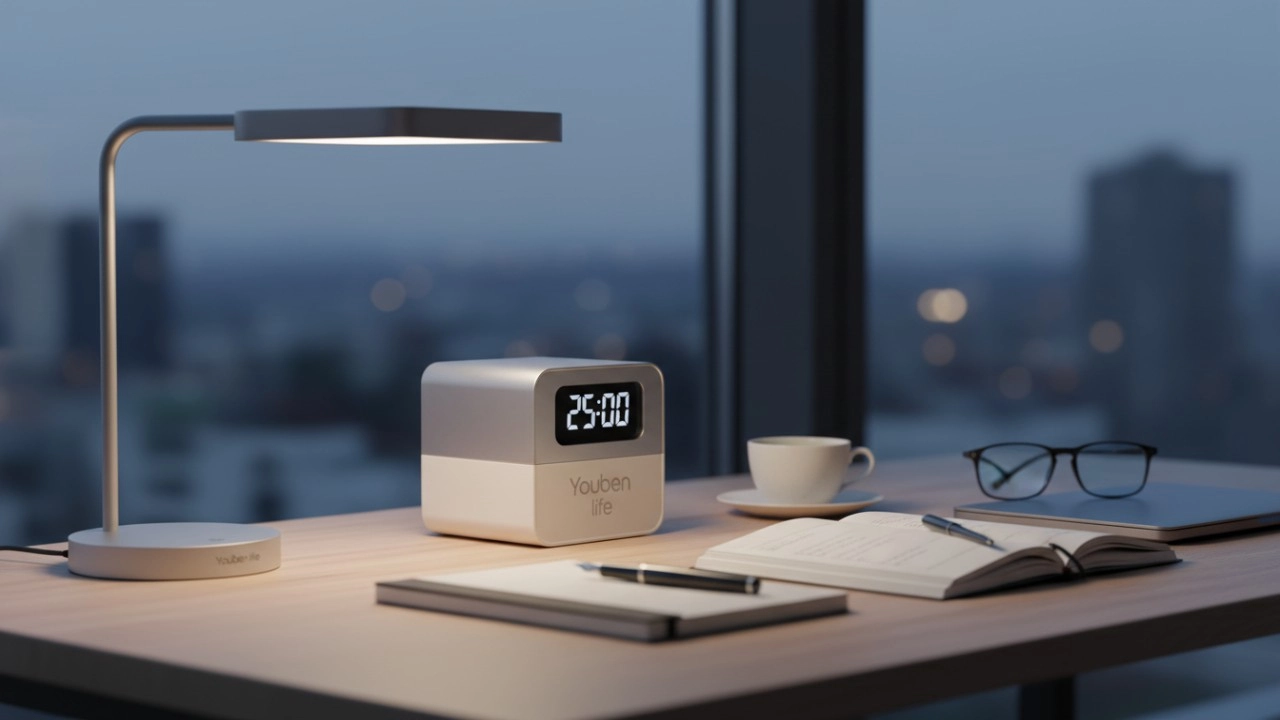
A reliable pomodoro timer manufacturer is a certified facility that offers end-to-end production capabilities, strict quality control, and transparent communication. They ensure consistent PCB quality, comply with CE and RoHS standards, and provide flexible custom digital timer OEM solutions tailored to your specific productivity brand needs.
When venturing into the world of physical productivity tools, finding the right factory is the most critical step. A top-tier manufacturer doesn't just assemble plastic and silicone; they act as a strategic partner in your brand's growth. They understand the nuances of productivity hardware manufacturing and possess the engineering capabilities to bring complex designs to life.
To evaluate a manufacturer's reliability, you must look beyond their basic B2B directory storefront. True reliability is demonstrated through:
- End-to-End Capabilities: The ability to handle Industrial Design (ID), Mechanical Design (MD), and custom IC programming under one roof without outsourcing to third-party sub-contractors.
- Quality Control (QC) Systems: An active ISO 9001 certification and automated testing protocols for every batch of products to ensure zero defects upon delivery.
- Transparent Communication: Clear, proactive updates on tooling progress, material shortages, and realistic production lead times to help you plan your marketing launches.
- Scalability: The capacity to grow with your business, transitioning smoothly from a 1,000-unit pilot run to a 50,000-unit mass production order without a drop in build quality.
Key Takeaways: Quick Summary
The quick summary of choosing a manufacturing partner involves verifying certifications, understanding sourcing models, and adapting to modern hardware trends. A reliable factory will offer transparent lead times, rigorous battery testing, and clear distinctions between custom OEM and white-label ODM production to scale your business effectively.
If you are short on time, here are the most critical points to remember before signing a manufacturing contract:
- Verify Certifications: Always verify CE, RoHS, and FCC certifications before partnering with a factory to ensure global legal compliance.
- Choose the Right Model: Understand the fundamental differences between OEM (custom design) and ODM (white-label) to allocate your budget and scale effectively.
- Embrace 2026 Trends: Modern 2026 trends demand durable materials, tactile mechanical buttons, and optional IoT tracking features for advanced users.
- Demand Transparency: A reliable partner provides transparent lead times, precise tooling costs, and rigorous battery life testing data upfront.
OEM vs. ODM: Which Sourcing Model Fits Your Productivity Brand?
Choosing between OEM and ODM depends on your budget, timeline, and need for customization. OEM allows you to build a completely custom timer from scratch with unique tooling, while ODM offers pre-designed hardware for quick rebranding, drastically reducing your time to market and upfront engineering costs.
When navigating Pomodoro timer factory sourcing, you will immediately encounter the terms OEM (Original Equipment Manufacturer) and ODM (Original Design Manufacturer). Selecting the correct path is vital for your product roadmap.
The OEM Approach (Custom Design)
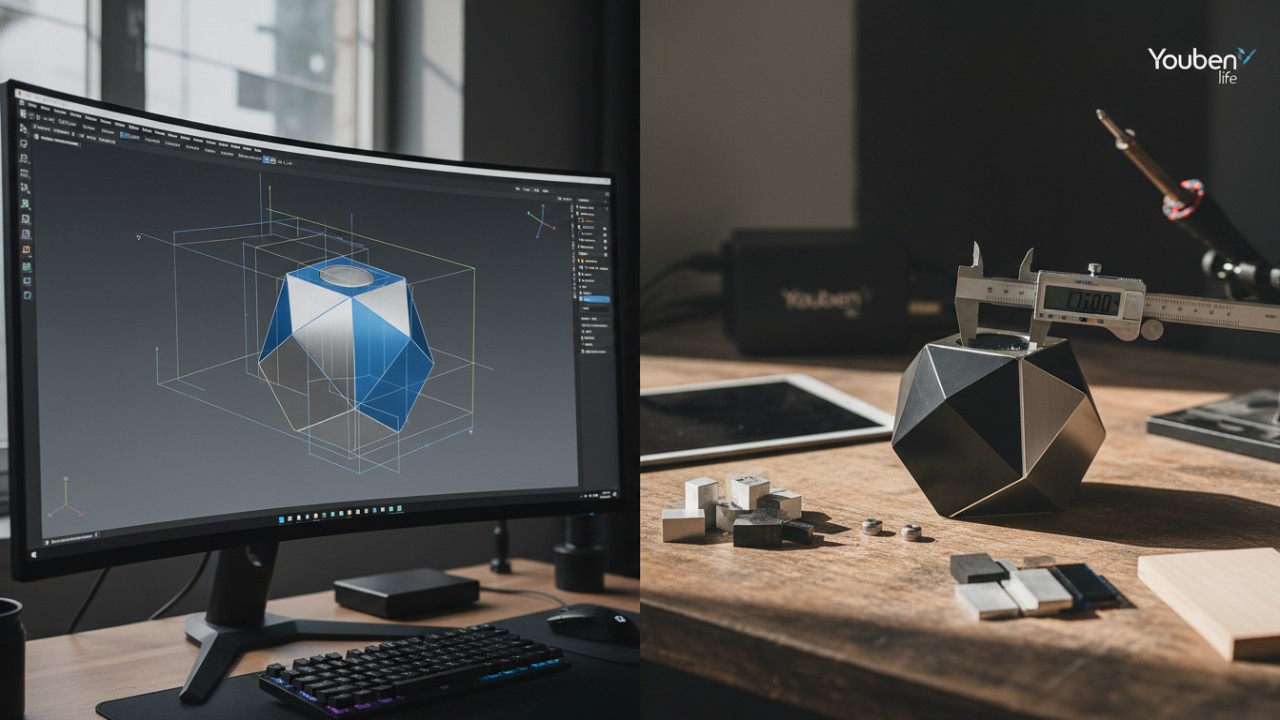
For brands that want complete control over the user experience, OEM is the ultimate choice. This model involves creating a product from the ground up.
- Advantages: You own the Intellectual Property (IP) and the custom injection molds. Your product will look and function unlike anything else on the market. If you want a unique geometric shape or a proprietary e-ink display, OEM makes it happen.
- Disadvantages: It requires a significantly higher upfront investment for R&D, prototyping, and mold creation. The time to market is also much longer, often taking 3 to 6 months before mass production begins.
- Learn More: Explore the full scope of Custom Digital Timer Manufacturing & OEM Solutions to understand the engineering phases involved.
The ODM Approach (White-Label)
If speed and budget are your primary concerns, partnering with a B2B productivity tools ODM is highly effective.
- Advantages: The factory has already invested in the R&D and tooling. You simply select an existing, proven design, apply your brand's logo, customize the packaging, and perhaps tweak the firmware colors or alarm sounds. This drastically lowers the barrier to entry.
- Disadvantages: Your product will share its physical shell with other brands. Differentiation relies heavily on your marketing, software ecosystem, and brand positioning rather than physical hardware uniqueness.
2026 Manufacturing Trends: IoT Integration and Sustainable Materials
The top 2026 manufacturing trends for productivity timers include the integration of IoT tracking features and the use of eco-friendly, sustainable materials. Consumers now demand smart hardware that logs focus sessions to the cloud seamlessly, alongside devices built from recycled plastics, bamboo, and ultra-low power consumption chips.
The productivity landscape is evolving rapidly. Buyers in 2026 are no longer satisfied with simple, ticking mechanical clocks. They expect sophisticated hardware that seamlessly blends into their digital workflows while minimizing environmental impact.
- IoT and Cloud Syncing: Advanced users want the tactile feel of a physical timer combined with the data analytics of a software app. Modern factories are integrating Bluetooth Low Energy (BLE) and Wi-Fi modules into timers, allowing devices to automatically log "focus sessions" to apps like Notion, Todoist, or dedicated proprietary dashboards.
- Sustainable Casing Materials: Eco-friendly manufacturing is no longer a niche; it is a market expectation. Brands are actively moving away from virgin plastics. Instead, they are opting for Post-Consumer Recycled (PCR) ABS plastics, biodegradable PLA, and premium sustainable materials like bamboo or recycled aluminum.
- Advanced Display Technologies: Beyond simple LCDs, the market is shifting toward e-ink displays and high-contrast OLEDs. E-ink is particularly popular for productivity tools because it mimics the look of physical paper, drastically reducing eye strain and eliminating the blue light emissions that disrupt circadian rhythms.
- Next-Generation Power Management: Type-C fast charging is now the absolute industry standard—micro-USB is entirely obsolete. Furthermore, manufacturers are utilizing ultra-low power consumption IC chips, allowing a single charge to last for several months of daily use.
Data Comparison Table: Sourcing Metrics and Material Costs
Comparing sourcing metrics and material costs is essential for forecasting your manufacturing budget and timeline. The table below outlines the differences in tooling costs, unit prices, minimum order quantities (MOQ), and production lead times across plastic, metal, and smart IoT-connected productivity timers.
When planning your procurement strategy, having hard data is crucial. The following table provides a realistic 2026 benchmark for sourcing different types of timers. Note: Prices and MOQs can fluctuate based on specific factory capabilities and global supply chain conditions.
| Timer Category | Primary Material | Est. Tooling Cost (USD) | Est. Unit Cost (USD) | Standard MOQ | Mass Production Lead Time |
|---|---|---|---|---|---|
| Basic ODM Timer | Standard ABS Plastic | $0 (Pre-existing) | $2.00 - $4.50 | 500 - 1,000 | 20 - 30 Days |
| Custom OEM Plastic | Recycled PCR ABS | $3,000 - $6,000 | $3.50 - $6.00 | 2,000 - 3,000 | 35 - 45 Days |
| Premium Metal Timer | Anodized Aluminum | $6,000 - $10,000 | $8.00 - $15.00 | 2,000 - 3,000 | 40 - 50 Days |
| Smart IoT Timer | Mixed (Plastic/Glass) | $8,000 - $15,000+ | $15.00 - $28.00 | 3,000 - 5,000 | 45 - 60 Days |
Data Insights: As the complexity of the device increases—especially with the addition of IoT connectivity or metal enclosures—both the initial tooling investment and the minimum order quantity rise significantly.
Essential Quality Control Standards (CE, RoHS, and PCB Testing)
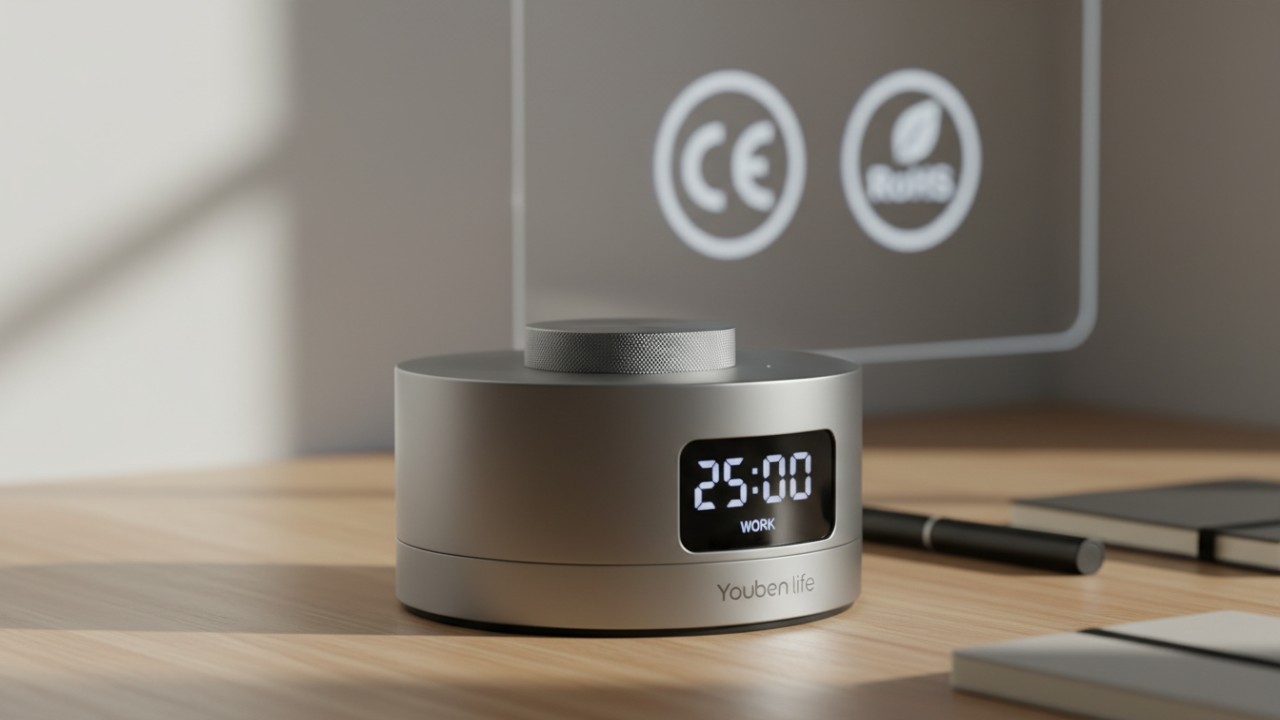
Essential quality control standards require factories to utilize automated optical inspection for PCB soldering and perform rigorous battery safety tests. Furthermore, partnering with a CE/RoHS certified timer supplier is non-negotiable for global distribution, ensuring your devices are free from hazardous materials and meet stringent electronic safety benchmarks.
Quality control (QC) is the backbone of any successful hardware brand. A single batch of defective timers can destroy your brand's reputation and result in thousands of dollars in returns. When vetting a factory, demand proof of the following QC protocols:
- Automated Optical Inspection (AOI): This technology uses high-resolution cameras to scan the Printed Circuit Boards (PCBs) for soldering defects, missing components, or short circuits. It is far more reliable than manual human inspection.
- RoHS Compliance: If you intend to sell in the European Union or other regulated markets, your products must adhere to RoHS (Restriction of Hazardous Substances) directives. This ensures that your electronics do not contain dangerous levels of lead, mercury, cadmium, or other toxic materials that pollute the environment.
- FCC Certification: For any device that emits radio frequencies (such as Bluetooth or Wi-Fi connected smart timers), obtaining FCC certification is a strict legal requirement in the United States to prevent electromagnetic interference.
- Battery Safety and Shipping Certifications: If your timer uses a rechargeable lithium-ion battery, it must undergo rigorous safety testing. Factories must provide UN38.3 and MSDS (Material Safety Data Sheet) certifications. Without these documents, your inventory cannot be legally transported via air freight.
- Durability and Lifecycle Testing: A reliable timer must withstand daily abuse. Request documentation on drop testing (typically from 1 meter onto concrete) and button click longevity (a minimum rating of 100,000 to 500,000 presses).
Expert Tips: Common Mistakes When Partnering With a Hardware Factory
The most common mistakes in factory sourcing include underestimating tooling timelines, ignoring battery shipping regulations, and failing to specify tactile button feedback. Avoiding these errors ensures a premium user experience and prevents costly delays during global logistics and mass production phases.
Even experienced entrepreneurs can stumble when manufacturing physical electronics. Since Francesco Cirillo invented the Pomodoro Technique in the late 1980s, the market has been flooded with cheap, unreliable knock-offs. To build a premium product, avoid these critical errors:
- Underestimating the Prototyping Phase: Many brands assume that once a 3D rendering is approved, mass production can begin the next week. In reality, creating the steel injection molds, fine-tuning the PCB layout, and passing safety certifications can take months. Always build a 20% time buffer into your launch schedule.
- Neglecting Tactile Feedback: A timer is a highly physical tool. If the buttons feel mushy or the rotary dial lacks satisfying "clicks," the perceived value of your product plummets. Specify the exact actuation force required for your switches (e.g., using high-quality mechanical switches instead of cheap membrane pads).
- Ignoring Logistics and Battery Regulations: As mentioned earlier, lithium-ion batteries are classified as dangerous goods. Failing to ensure your factory provides the correct battery testing reports will result in your inventory being seized by customs or rejected by carriers, causing massive delays.
Industry-Leading Solution: How Youben Life Scales Your Vision
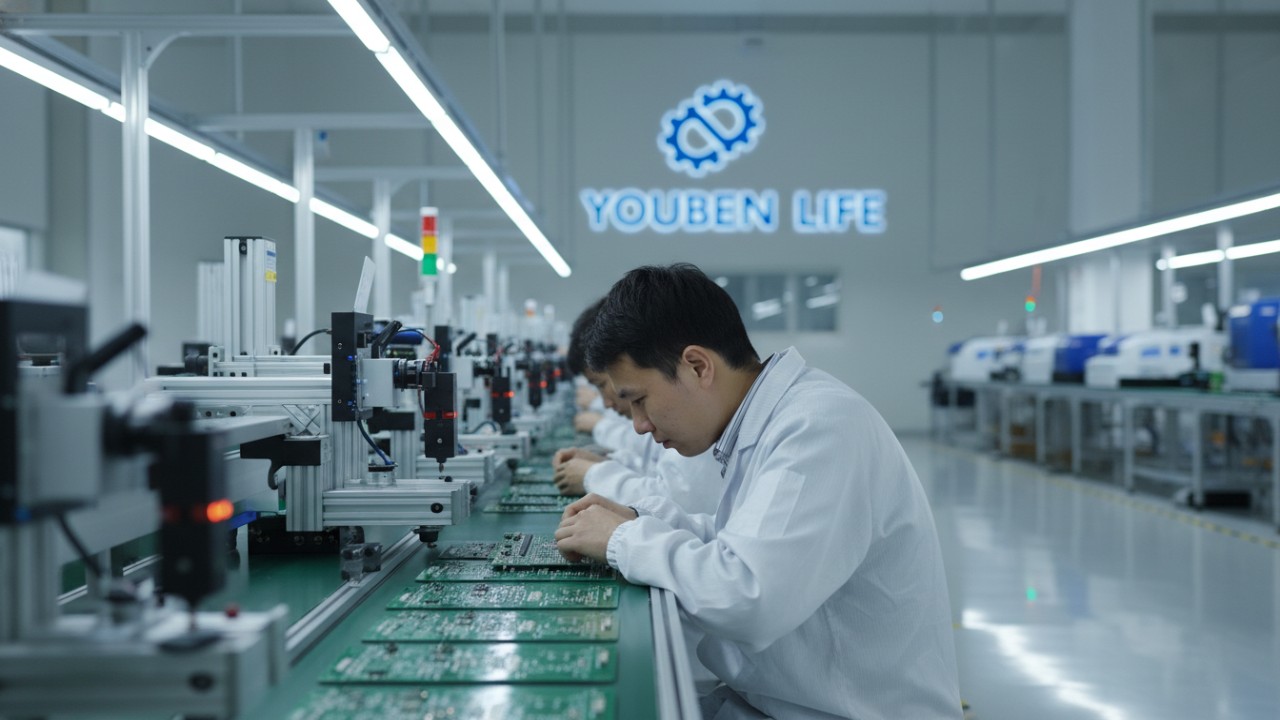
Guangdong Youben life Furnishing Industrial Co., Ltd. provides a seamless transition from concept to mass production with dedicated in-house R&D support. By leveraging strict quality control and a vertically integrated 20,000m² facility, we minimize defect rates and accelerate time to market for global productivity brands.
When you need a manufacturing partner that understands the intricacies of time management hardware, Youben Life stands out as the premier choice. Established in 2010 and headquartered in Guangzhou, China, we are not just an assembly line; we are a comprehensive OEM/ODM powerhouse dedicated exclusively to Digital Timers, Pomodoro timers, Visual Countdown Clocks, temperature and humidity monitors, and thermo-hygrometers.
Here is how our infrastructure guarantees your success:
- Massive Production Capacity: Our state-of-the-art 20,000m² vertically integrated facility allows us to handle high-volume orders for global brands and Amazon bestsellers without compromising on turnaround times. We provide turnkey private label solutions that go beyond simple assembly.
- Turnkey Engineering: We offer complete R&D services. From initial ID/MD industrial design and custom IC programming to precision mold tooling and retail-ready packaging, our decade of engineering experience covers the entire spectrum of product creation.
- Uncompromising Compliance: Every product that leaves our facility strictly adheres to CE, FCC, and RoHS standards. We take the guesswork out of international regulatory compliance, ensuring your products can be sold legally and safely anywhere in the world.
- Market Domination: We don't just build products; we help our partners develop differentiated time management hardware that strengthens brand identity and dominates the market. Our deep supply chain integration ensures consistent quality from the first prototype to the final mass-produced unit.
Conclusion
Selecting the right factory dictates the ultimate success, durability, and profitability of your physical productivity tool. By focusing on stringent quality control, verifying global certifications, and choosing an experienced manufacturing partner, you can confidently scale your brand and meet your 2026 growth goals.
The journey from a sketch on a napkin to a best-selling physical product is complex, but with the right guidance, it is entirely achievable. Prioritize user experience, demand transparency from your suppliers, and never compromise on safety standards.
Frequently Asked Questions
How do I find a verified Pomodoro timer factory?
Use B2B directories like Alibaba or Global Sources, but always verify their business licenses. Ask for video tours of their assembly lines and request samples of previous timer models. Check if they have an active ISO 9001 quality management system in place.
What is the standard MOQ for custom digital timers?
For white-label ODM products, the MOQ can be as low as 500 to 1,000 units. For completely custom OEM molds, factories typically require an MOQ of 2,000 to 5,000 units. MOQs often depend on the complexity of the PCB and the casing materials.
Does my productivity timer need CE and RoHS certification?
Yes, if you plan to sell within the European Union, CE and RoHS are legally required. Even outside the EU, these certifications act as a global benchmark for safety and quality. FCC certification is also necessary if the device emits radio frequencies (like Bluetooth models).
How long does it take to manufacture a custom Pomodoro device?
The initial design and prototyping phase usually takes 20 to 30 days. Creating the custom injection molds adds another 30 to 40 days to the timeline. Once molds are approved, mass production generally takes 25 to 35 days depending on component availability.
What is the difference between OEM and ODM timer manufacturing?
OEM (Original Equipment Manufacturer) means the factory builds your unique design from scratch. ODM (Original Design Manufacturer) means the factory provides a pre-existing design that you can brand as your own. OEM requires higher investment and time, while ODM is faster and more cost-effective.
Can a manufacturer add IoT capabilities to a standard timer?
Yes, factories with advanced R&D can integrate Wi-Fi or Bluetooth modules into standard timers. This requires custom firmware and a more complex PCB layout to handle data transmission. IoT capabilities will significantly increase both the unit cost and the initial engineering fees.
How much does custom plastic injection molding cost for timers?
Simple plastic molds for a basic digital timer can cost between $2,000 and $4,000. More complex molds with multiple moving parts or unique shapes can exceed $8,000. Molds for metal casings generally cost 30% to 50% more than plastic molds.
What quality control tests are standard for electronic timers?
Factories should perform functional testing on the PCB to ensure accurate timing intervals. Button durability tests ensure the switches can withstand tens of thousands of clicks. Aging tests involve leaving the timers powered on for extended periods to identify battery or display failures.
Contacts
Sofia
WhatsApp/Phone
All
Do you offer OEM & ODM clock services?
Yes, we provide both OEM & ODM solutions, allowing clients to customize clock design, materials, packaging, and branding.
What types of clocks can you manufacture?
We manufacture a wide range of clocks, including wall clocks, desk clocks, digital clocks, and smart clocks.
Can I customize the clock design and logo?
Absolutely. We offer customization for clock appearance, structure, materials, and logo printing to perfectly match your brand.
What is the minimum order quantity (MOQ)?
Our standard MOQ varies depending on the model, usually starting from 200–500 pieces. Custom designs may require different quantities.
How do you ensure product quality?
All clocks undergo strict quality control, including time accuracy tests, durability checks, and packaging inspections before shipment.
Interested in this article?
Let’s talk.
Need specifications, pricing, or customization options? We’ll provide everything you need.
By clicking “Submit,” you agree to share your information with our authorized team to process your request.
Your data will only be used for necessary communication and support.

Youben life
Youben life