
How Visual Timer Manufacturers Design Products for Clear Time Visualization and User Engagement
- Design Principles Behind Instantly Readable Countdown Devices
- Converting abstract time into a visual object
- Color, contrast, motion, and sensory feedback
- Human-centered controls and inclusive interaction
- Engineering Decisions That Influence Engagement and Ownership Cost
- Timing accuracy, firmware behavior, and power management
- Display architecture and enclosure engineering
- Engagement features that serve a defined use case
- How OEM and ODM Programs Turn a Concept into a Market-Ready Product
- From user requirements to validated specifications
- Compliance, safety, and documentation
- Quality control from pilot run to mass production
- Why Youben life Supports Differentiated Digital Timer Programs
- Specialized capability across time and environmental measurement products
- Vertically integrated OEM and ODM execution
- Compliance and scalable manufacturing for global channels
- Frequently Asked Questions
A visual timer manufacturer develops more than a countdown device: it creates a physical interface that converts abstract time into an instantly readable visual signal. Successful products combine a shrinking color field, high-contrast numerals, intuitive controls, audible or silent alerts, reliable quartz or microcontroller timing, durable enclosures, and application-specific ergonomics. For B2B buyers, product selection should therefore assess display legibility, user behavior, accessibility, battery life, compliance, tooling capability, customization depth, quality control, and supply-chain scalability rather than evaluating appearance alone. The most competitive digital timer platforms help users understand elapsed and remaining time at a glance, support focused work and classroom routines, and give brand owners a differentiated product that can be manufactured consistently across multiple sales channels.
Design Principles Behind Instantly Readable Countdown Devices
Converting abstract time into a visual object
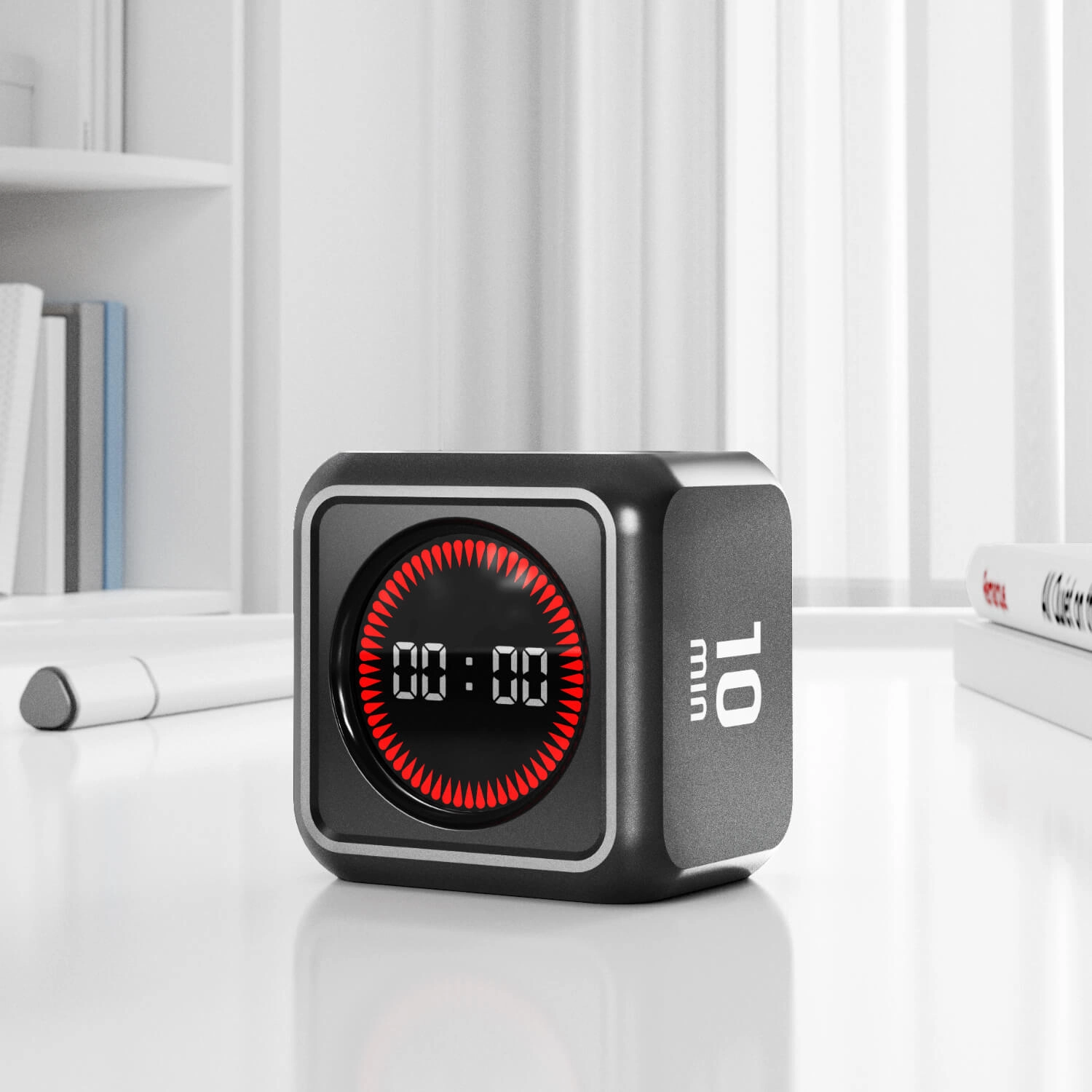
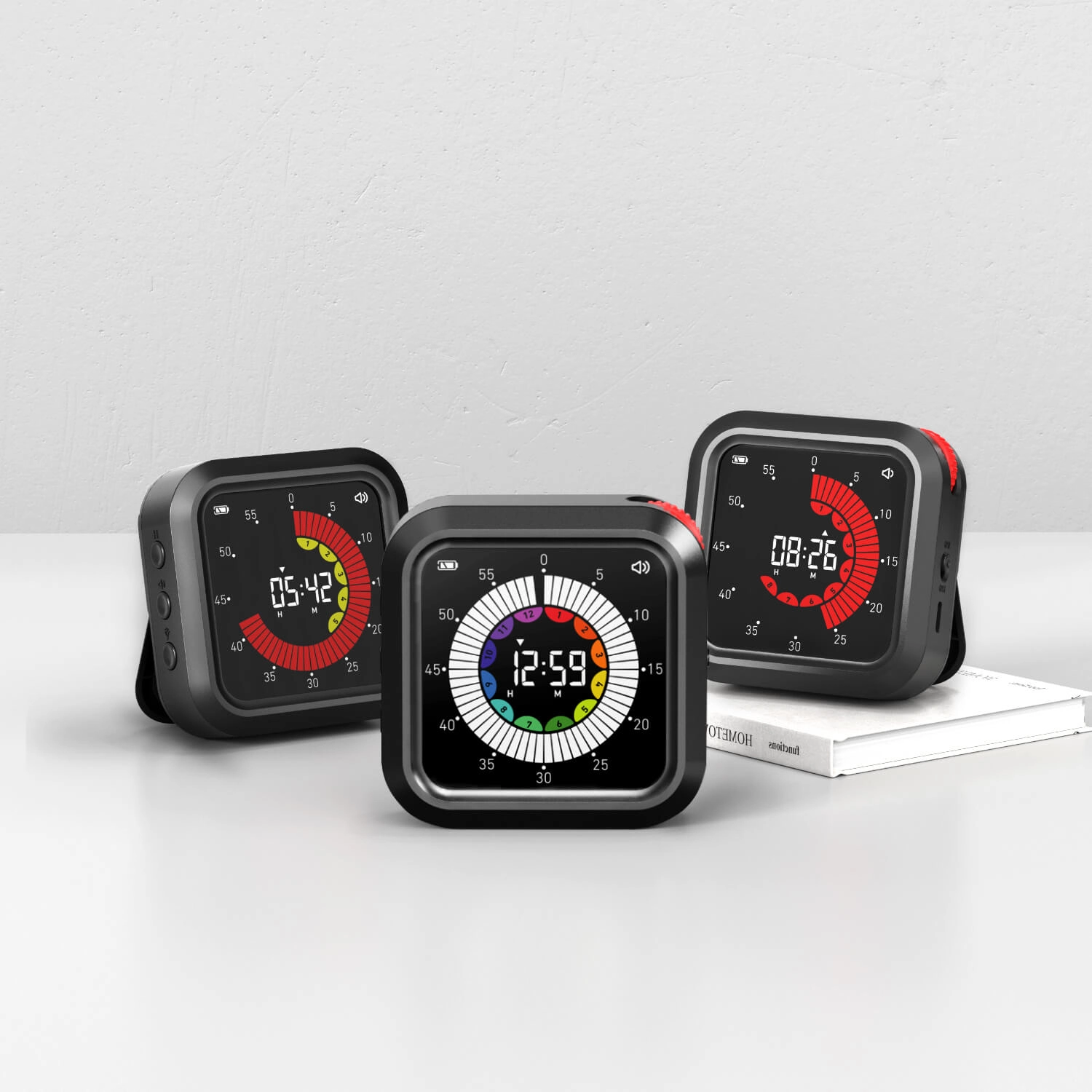
Conventional digital clocks communicate time through digits, but digits require interpretation. A visual countdown clock reduces that cognitive step by representing duration as a spatial quantity. A colored disk, radial sector, progress bar, or segmented ring gradually changes as the interval expires. This approach is especially useful for children, neurodiverse users, kitchen operators, meeting participants, and workers who need to monitor progress without interrupting an active task.
Product teams must determine how much visual information can be understood within a short glance. A broad color contrast between remaining and elapsed time is generally more accessible than subtle gradients. Clear separation between the active countdown area, control labels, and housing reduces visual clutter. Numerals remain valuable because they provide precision, while the animated or diminishing graphic supplies immediate context. The best interface uses both channels instead of forcing users to choose between exactness and speed of recognition.
Color, contrast, motion, and sensory feedback
Color selection should reflect the operating environment and the meaning assigned to each state. Green may indicate available time, amber can signal an approaching endpoint, and red may communicate completion or urgency, but color should not be the only indicator because color-vision differences and bright ambient conditions can reduce recognition. Manufacturers can reinforce state changes with shape, animation, a flashing boundary, a large zero display, or an optional sound.
Motion also requires restraint. A smoothly contracting visual field can communicate progression, while excessive flashing or rapid animation may distract users. Adjustable brightness, mute operation, and a clear end-of-cycle state support classrooms, offices, libraries, therapy environments, and shared workspaces. Product specifications should state whether the display remains visible under daylight, whether the alert can be disabled, and whether the device returns to the previous setting after a cycle.
Human-centered controls and inclusive interaction
Buttons should have distinct functions, tactile feedback, and sufficient spacing for quick operation. A common control architecture includes start or pause, reset, increase, decrease, and a mode selector. Rotary controls can accelerate setting changes, but they may increase tooling complexity and require protection against accidental rotation. Touch interfaces create a modern appearance but can be difficult to operate with wet hands, gloves, or limited dexterity.
Human-centered design should follow a documented process rather than relying on aesthetic preference. The principles described in ISO 9241-11 guidance on usability provide a useful framework for evaluating effectiveness, efficiency, and satisfaction in a defined context of use. For project owners, this means requesting usability tests with representative users and measuring task completion, setting errors, readability distance, and recovery from accidental inputs.
Engineering Decisions That Influence Engagement and Ownership Cost
Timing accuracy, firmware behavior, and power management
A countdown product must create confidence. Users quickly abandon devices that lose settings, pause unexpectedly, drift during longer cycles, or restart after a minor power interruption. Engineering teams should define timing tolerance, oscillator selection, firmware recovery behavior, button debounce logic, and low-battery performance before finalizing the product specification. These details affect perceived quality even when they are invisible in a product photograph.
Battery-powered units require a balance between display brightness, processor activity, alert volume, and standby current. Auto-dimming, scheduled sleep, efficient LED driving, and a clear low-battery warning can reduce returns caused by premature battery depletion. If rechargeable power is selected, buyers should confirm charging protection, connector durability, cable inclusion, and regional packaging requirements. For products intended for schools or hospitality sites, replaceable batteries may offer easier field maintenance than a sealed rechargeable cell.
Display architecture and enclosure engineering
LED matrices, segmented LCDs, e-paper elements, and mechanical visual indicators each create different cost, power, and user-experience outcomes. LED displays support vivid color and strong visibility but typically consume more power. LCD solutions can extend battery life and reduce heat, although they may require backlighting or careful viewing-angle management. Mechanical discs and sliding indicators create a tangible visual experience but add parts, assembly steps, and tolerance considerations.
Industrial design must account for viewing distance, mounting orientation, impact risk, cleaning chemicals, and storage conditions. A desktop unit may need a non-slip base and a stable viewing angle, whereas a wall-mounted product requires a secure bracket and accessible battery door. Rounded edges, recessed controls, and robust plastics can improve safety and durability. Mold design should avoid thin sections, sink marks, stress concentrations, and difficult ejection features that create cosmetic defects or increase cycle time.
Engagement features that serve a defined use case
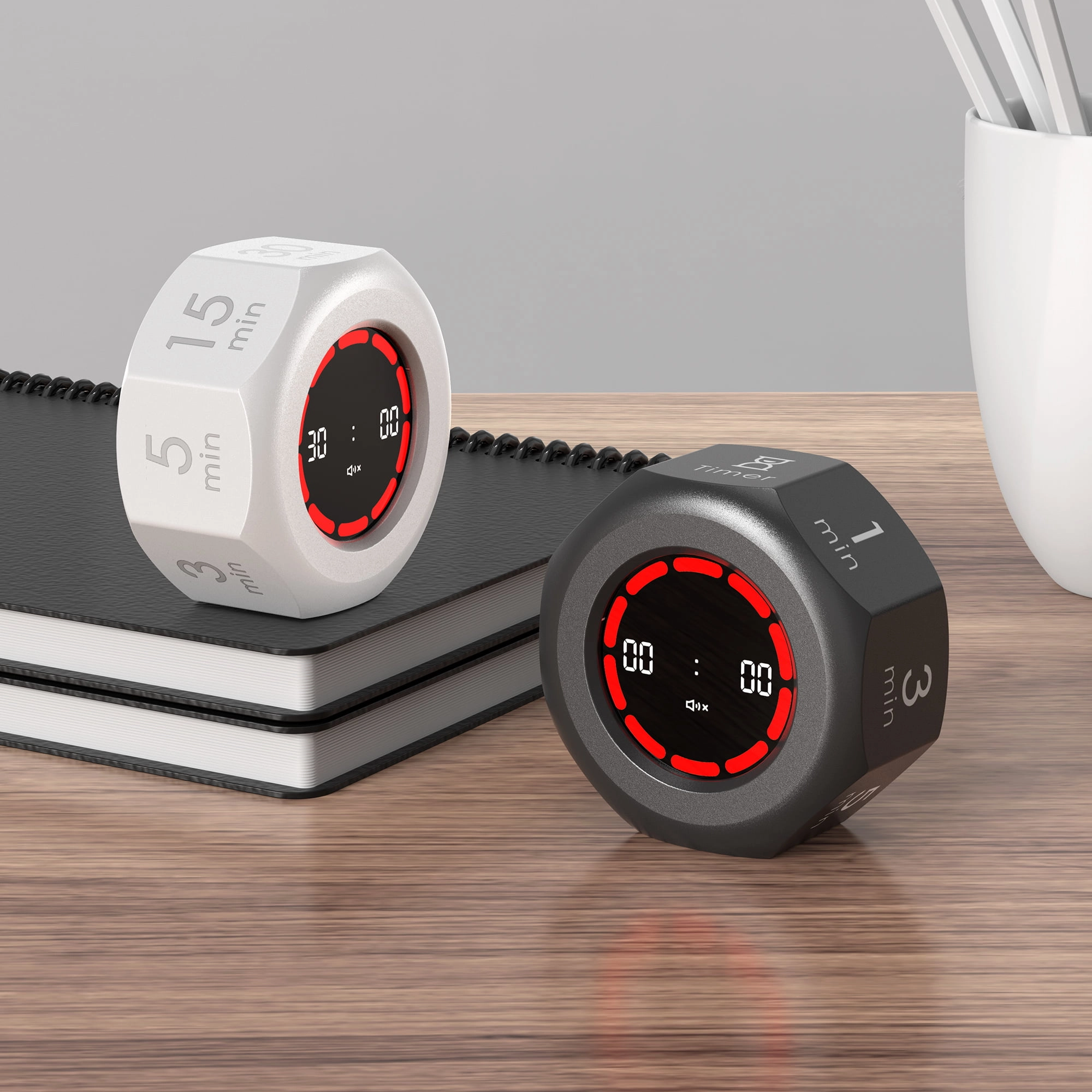
Engagement is not achieved by adding features without purpose. A Pomodoro timer may need preset work and break intervals, cycle counting, and a quiet visual mode. A classroom timer may prioritize oversized numerals, simple operation, and a highly visible progress field. A cooking timer may require grease-resistant surfaces, loud alerts, magnetic mounting, and rapid adjustment. A workplace focus timer may benefit from mute operation, a compact footprint, and a professional appearance.
Buyers should map every feature to a user scenario and a measurable commercial objective. Presets can reduce setup time, but too many modes increase training requirements and support inquiries. Bluetooth or app connectivity may support data collection, yet it also introduces firmware maintenance, cybersecurity expectations, certification considerations, and customer-support costs. A focused feature set often delivers stronger adoption than a technically complex interface that users find difficult to configure.
| Design dimension | Basic countdown device | Segmented visual timer | Configurable High Quality platform |
|---|---|---|---|
| Time communication | Primarily numerical display | Numerals plus shrinking color or progress field | Multiple visual modes, presets, and state indicators |
| Typical controls | Start, stop, reset | Start, pause, reset, increment, decrement | Dedicated modes, memory, adjustable alerts, and lock functions |
| Power strategy | Simple battery operation | Low-power display with standby management | Optimized firmware, charging or replaceable battery options |
| Customization scope | Color and packaging changes | Housing, display layout, firmware settings, and branding | Industrial design, tooling, custom IC or firmware, accessories, and retail system |
| Primary procurement concern | Price and basic reliability | Readability, usability, and return-rate control | Development risk, compliance, scalability, and brand differentiation |
This comparison is a product-development framework rather than a universal market classification. Actual performance depends on component selection, firmware quality, production controls, and the environment in which the unit is used. Procurement teams should request samples, test reports, firmware demonstrations, and pilot-production data before approving a large order.
How OEM and ODM Programs Turn a Concept into a Market-Ready Product
From user requirements to validated specifications
A reliable supplier begins with a structured product brief. The brief should define target users, operating locations, timing ranges, visibility distance, alert requirements, power source, preferred materials, packaging format, forecast volume, sales regions, and target retail price. It should also identify whether the device is a new design, a modification of an existing platform, or a private-label adaptation.
During design verification, engineering teams evaluate display readability, timing performance, button life, drop resistance, battery access, temperature behavior, acoustic output, electromagnetic compatibility, and cosmetic consistency. Design-for-manufacturing reviews then examine part count, assembly sequence, test fixtures, mold maintenance, tolerance stack-up, and component availability. This early discipline protects the buyer from late engineering changes that can delay launch or weaken margins.
Compliance, safety, and documentation
Market access requirements vary by destination and product configuration. For electronic timers sold in the United States, buyers should review applicable FCC Part 15 requirements for unintentional radiators and related electronic equipment. For European sales, restricted-substance obligations should be assessed against the European Union RoHS Directive. CE marking is not a single laboratory certificate; it is a manufacturer declaration supported by the applicable conformity assessment process and technical documentation.
Buyers should request declarations, test reports, labeling artwork, user instructions, material information, battery documentation where applicable, and traceability records. Documentation must match the exact model, hardware revision, power configuration, and intended market. A supplier that cannot connect test evidence to the delivered product creates regulatory and recall risk, even if the sample performs well.
Quality control from pilot run to mass production
Production control should include incoming inspection for displays, switches, batteries, plastics, and electronic components; first-article approval; in-process checks; firmware verification; aging or functional testing; and final sampling against an agreed acceptance quality limit. Visual products also need cosmetic standards for scratches, color variation, display uniformity, logo placement, and assembly gaps.
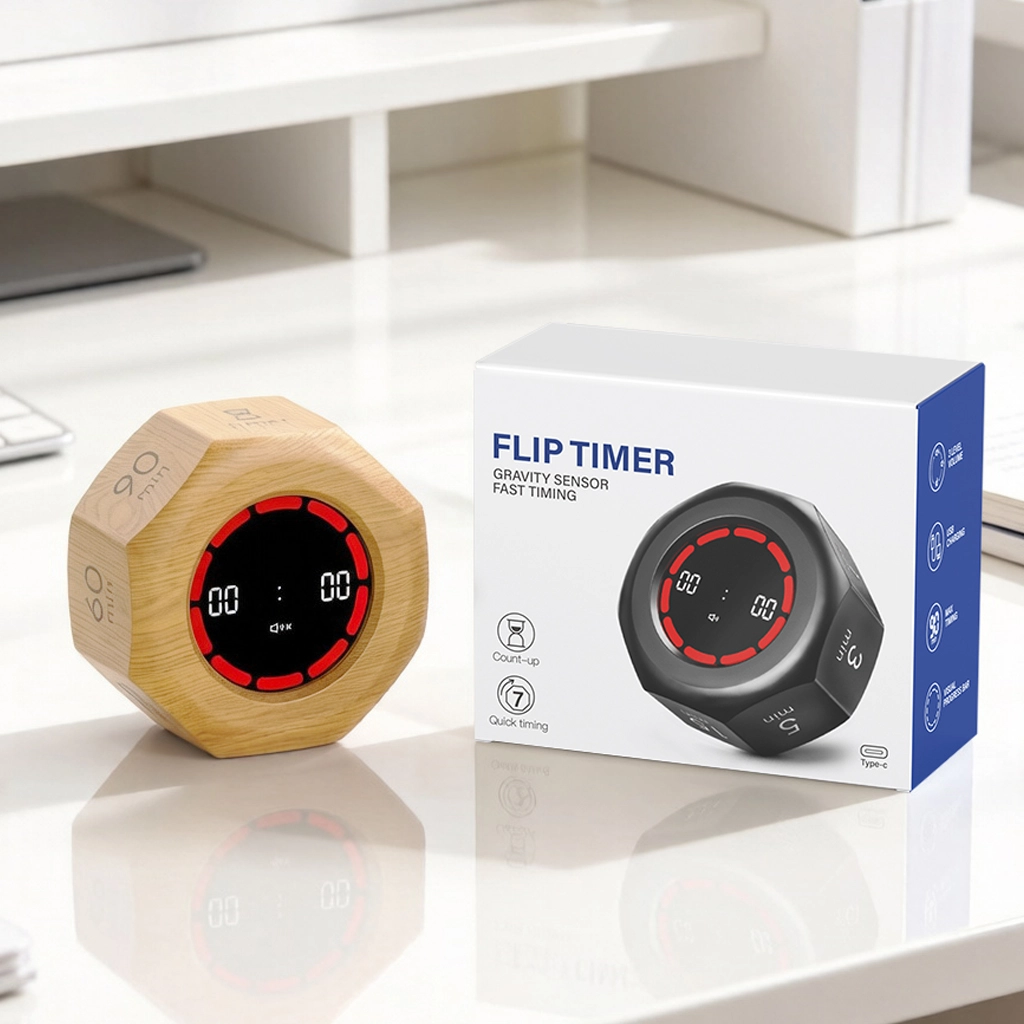
Packaging is part of the product experience and the logistics plan. Retail-ready cartons should protect the display, communicate the use case quickly, and include accurate operating information. Drop testing, barcode verification, carton compression review, and shipping simulations can prevent damage and chargebacks. Buyers should also establish change-control procedures so that substitutions in components, plastics, tooling, or firmware require documented approval.
Why Youben life Supports Differentiated Digital Timer Programs
Specialized capability across time and environmental measurement products
Youben life was established in 2010 as an OEM and ODM manufacturer dedicated to Digital Timers, Pomodoro timers, Visual Countdown Clocks, temperature and humidity monitors, and thermo hygrometers. This focused product scope supports deeper platform knowledge than a general electronics assembler. Our engineering and manufacturing process is designed around the practical requirements of time visualization: readable interfaces, dependable countdown behavior, purposeful alerts, durable controls, and efficient power use.
Our product range allows brand owners to build a coordinated portfolio instead of launching a single isolated SKU. A productivity line can combine a Digital Timer with a Pomodoro timer, while home, office, storage, and hospitality programs can extend into a thermo hygrometer or temperature humidity monitor. This portfolio approach can improve packaging consistency, cross-selling, channel presentation, and long-term product planning.
Vertically integrated OEM and ODM execution
Headquartered in Guangzhou, China, our 20,000m² vertically integrated facility provides turnkey private-label support for global brands and Amazon bestsellers. We go beyond basic assembly. Our capabilities cover ID and MD industrial design, custom IC programming, precision mold tooling, firmware-related development, production engineering, quality control, and retail-ready packaging.
For a project owner, this integration reduces handoffs between unrelated suppliers. Design intent can be reviewed alongside mold feasibility, electronic architecture, packaging dimensions, and assembly requirements. Brand owners can select an existing platform for a faster launch or develop a differentiated housing, display arrangement, control system, firmware behavior, and packaging identity. The appropriate route depends on forecast volume, target price, launch schedule, and the level of market distinction required.
Compliance and scalable manufacturing for global channels
Our products are developed to meet strict CE, FCC, and RoHS expectations, subject to the specific model and market requirements. Our quality process connects engineering validation with production inspection so that a successful prototype can be translated into repeatable output. Scalable manufacturing capacity supports pilot quantities, regional launches, and higher-volume programs while maintaining attention to component consistency and product appearance.
For distributors and investors, supplier evaluation should include more than factory size. The relevant questions are whether the supplier can protect intellectual property, manage engineering changes, maintain stable lead times, provide accurate documentation, support packaging localization, and respond to warranty or field-quality data. Youben life combines a decade of engineering experience with a dedicated product focus to help partners create differentiated time-management hardware that strengthens brand identity and supports market growth.
To discuss a customized Digital Timer, Pomodoro timer, Visual Countdown Clock, thermo hygrometer, or temperature humidity monitor program, contact Youben life at info@youbenlife.com or explore our OEM and ODM product capabilities.
Frequently Asked Questions
What makes a visual countdown timer easy to understand?
An easy-to-understand timer combines high-contrast numerals with a shrinking color field, progress bar, segmented ring, or other spatial representation of remaining time. Clear controls, distinct end-of-cycle feedback, and optional sound or mute operation further improve recognition.
What should B2B buyers evaluate before selecting a supplier?
B2B buyers should evaluate display readability, timing accuracy, battery life, firmware behavior, enclosure durability, compliance documentation, tooling capability, quality-control procedures, packaging, forecast capacity, and change-control processes. Samples and pilot-production data should be reviewed before a large order.
Which compliance requirements may apply to electronic timers?
Requirements depend on the destination market and product configuration. Buyers should review FCC Part 15 requirements for applicable products sold in the United States, EU RoHS obligations for restricted substances, and the applicable CE conformity assessment process for European sales.
Should a Pomodoro timer include many programmable modes?
Not necessarily. A Pomodoro timer should prioritize the needs of its defined users, such as work intervals, break intervals, cycle counting, and quiet visual operation. Too many modes can increase setup difficulty, training requirements, and customer-support costs.
How can a supplier reduce risk during private-label timer development?
Risk can be reduced through a structured product brief, design-for-manufacturing review, first-article approval, firmware verification, incoming and in-process inspection, functional testing, cosmetic standards, packaging validation, and documented engineering-change control.
What products can be developed alongside a digital timer?
A coordinated product portfolio can include a Digital Timer, Pomodoro timer, Visual Countdown Clock, thermo hygrometer, and temperature humidity monitor. Combining related products can support consistent branding, cross-selling, packaging alignment, and broader channel coverage.
Top magnetic classroom countdown timer for teachers Manufacturers and Suppliers
Custom Pomodoro Timer Quality Control Checklist for Buyers
How a Pomodoro Timer Manufacturer Supports Private Label and OEM/ODM Programs
Waterproof Digital Smart Timers for Outdoor and Pool Use
Interested in this article?
Let’s talk.
Need specifications, pricing, or customization options? We’ll provide everything you need.

Youben life
Youben life