
Visual Timer Manufacturer Pricing Guide: Understanding the Factors That Affect B2B Costs
- How B2B Countdown Timer Pricing Is Built
- Product architecture and display technology
- Materials, mechanics, and electronics
- Volume, tooling, and commercial structure
- Technical and Compliance Factors That Change the Quotation
- Accuracy, calibration, and operating environment
- Safety, electromagnetic compatibility, and market access
- Battery, packaging, and documentation requirements
- How Procurement Teams Should Compare Supplier Quotations
- Normalize the commercial basis
- Assess quality capability, not only factory scale
- Use staged sampling and total-cost scenarios
- Building a Defensible Product Strategy With Our Portfolio Framework
- Linking timers to a broader product range
- Where our commercial approach creates buyer value
- Preparing a supplier brief for faster pricing
- Frequently Asked Questions
- What is the biggest factor affecting B2B timer pricing?
- How can buyers reduce the cost of a custom countdown timer?
- Should tooling be included in the unit price?
- What quality documents should a buyer request?
- Are digital timers and pomodoro timers priced differently?
- How do thermo hygrometers affect supplier evaluation?
- What should be included in a supplier comparison sheet?
B2B visual timer pricing is determined by a combination of product architecture, component selection, tooling, order quantity, compliance requirements, packaging, logistics, and supplier capability. A low factory quotation may become expensive after certification, defect allowances, mold amortization, inspection, freight, and warranty costs are included. Buyers evaluating a countdown timer supplier should therefore compare total landed cost and commercial risk rather than unit price alone. The most reliable purchasing process connects the intended use case—education, healthcare, offices, productivity applications, hospitality, laboratories, or household retail—with the required display, battery life, accuracy, durability, customization, and production controls. This approach also applies to related products such as digital timers, pomodoro timers, thermo hygrometers, and temperature humidity monitors.
How B2B Countdown Timer Pricing Is Built
Product architecture and display technology
The display is one of the first cost variables. A simple mechanical color disk normally requires less electronic hardware than an LCD or LED interface, but mechanical products can involve more complex gearing, calibration, and durability testing. LCD models add a display module, driver circuitry, polarizer, backlight options, and a more structured assembly process. LED displays may improve visibility across a room, yet they can increase power consumption, thermal management requirements, and component cost.
Display size, viewing angle, contrast, digit height, color segmentation, and readability under bright or dim conditions also influence the bill of materials. A classroom timer designed for visibility from the back of a room has different requirements from a compact kitchen or desk product. If the project requires a large display, silent operation, a progress ring, multiple alarm tones, or a memory function, those specifications should be defined before a quotation is accepted.
Materials, mechanics, and electronics
Housing material affects both price and perceived value. Standard ABS or HIPS plastic can support cost-efficient mass production, while flame-retardant grades, recycled-content materials, soft-touch coatings, antimicrobial additives, or High Quality finishes raise material and processing costs. The enclosure also determines whether the product can withstand repeated drops, cleaning chemicals, ultraviolet exposure, or frequent handling in institutional environments.
Electronic cost is shaped by the microcontroller, buzzer, switches, battery contacts, power-management circuit, sensor, and printed circuit board. A basic countdown function may use a relatively simple control system. More advanced products can require multiple operating modes, calibration memory, low-battery alerts, child-lock functions, auto-shutoff, or wireless connectivity. Small changes to the specification can affect firmware development, testing time, and minimum order quantity.
Volume, tooling, and commercial structure
Order quantity influences pricing through purchasing leverage, production-line efficiency, and fixed-cost allocation. At low volume, engineering review, setup, sampling, inspection, and packaging preparation are spread across fewer units. At higher volume, component purchasing and assembly become more efficient, but larger orders may create working-capital, storage, and demand-forecast risks for the buyer.
Tooling should be quoted separately from recurring unit cost. Injection molds, silicone keys, decorative panels, custom battery doors, and specialized fixtures may require significant upfront investment. Buyers should confirm mold ownership, maintenance responsibility, revision policy, expected tool life, and whether the tooling can be transferred if the commercial relationship ends. A supplier that combines tooling and product cost into one figure can make it difficult to calculate the true return on investment.
| Cost element | Primary pricing influence | Buyer verification point |
|---|---|---|
| Display and electronics | Screen type, controller, backlight, alarm, memory, sensors | Request a component-level specification and approved alternatives |
| Housing and mechanical parts | Resin grade, finish, tolerances, mold complexity | Review material declarations, samples, and durability requirements |
| Tooling and engineering | Number of cavities, custom geometry, fixtures, firmware work | Separate non-recurring engineering from unit pricing |
| Compliance and testing | Destination market, electrical safety, EMC, chemical restrictions | Confirm applicable standards, test scope, and report ownership |
| Packaging and logistics | Retail presentation, carton dimensions, shipping mode, duties | Compare ex works, FOB, CIF, and delivered cost on the same basis |
| Quality and warranty | Inspection level, defect tolerance, replacement policy | Define acceptance criteria and warranty remedies in the contract |
Technical and Compliance Factors That Change the Quotation
Accuracy, calibration, and operating environment
Timing accuracy is often treated as a simple requirement, but the acceptable tolerance depends on the application. A classroom or productivity timer may tolerate a different deviation from a laboratory workflow, medical-adjacent setting, or industrial process. Buyers should define the measurement interval, acceptable error, startup behavior, reset behavior, and performance across the expected temperature and humidity range.
For products that include environmental sensing, sensor accuracy, response time, calibration method, and placement inside the enclosure become important. A thermo hygrometer or temperature humidity monitor can show inconsistent readings if the sensor is too close to heat-producing electronics, poorly ventilated, or inadequately calibrated. These design factors may raise development and quality-control costs, but they directly affect customer returns and brand reputation.
Safety, electromagnetic compatibility, and market access
Market requirements should be identified before design freeze. Depending on the destination and product architecture, a buyer may need evidence related to electrical safety, electromagnetic compatibility, radio equipment, batteries, chemical restrictions, packaging, or recycling obligations. The ISO 9001 quality management standard provides a recognized framework for consistent processes, although certification alone does not guarantee that every product meets the buyer’s technical specification.
For electronic equipment, the IEC 62368-1 safety standard is relevant to many audio, video, information, and communication technology products, while the exact applicability must be confirmed by a qualified compliance professional. The European Union’s RoHS Directive addresses restrictions on certain hazardous substances in electrical and electronic equipment. These requirements can affect material selection, supplier declarations, laboratory testing, labels, technical files, and production controls.
Battery, packaging, and documentation requirements
Battery selection affects recurring cost, shelf life, transport classification, user experience, and warranty exposure. Products using coin cells may be compact but require careful battery-door design and low-power engineering. Rechargeable models can add a charging circuit, cable, connector, battery protection, and additional shipping or compliance considerations. Packaging must protect the screen and enclosure while controlling carton volume, because dimensional weight can materially affect international freight.
Documentation is another cost category frequently omitted from initial quotations. Buyers may require user manuals, warning labels, multilingual artwork, barcodes, declarations, inspection records, test reports, packaging specifications, and traceability records. The ISO quality management framework emphasizes controlled processes and documented information, which is especially relevant when several factories or component suppliers participate in the same program.
How Procurement Teams Should Compare Supplier Quotations
Normalize the commercial basis
Supplier quotations are only comparable when they use the same commercial assumptions. A quote on an ex works basis may exclude export handling, inland transportation, customs clearance, freight, insurance, destination charges, duties, and local delivery. Buyers should request a cost model that identifies tooling, samples, testing, packaging, inspection, freight, and payment terms separately.
A practical landed-cost formula is: product price plus tooling amortization, testing, inspection, packaging, origin charges, freight, insurance, duties, destination fees, warehousing, expected warranty replacements, and currency or financing effects. The model should also include the cost of delayed launch if a supplier misses the required production date. For seasonal retail programs, schedule reliability can be more valuable than a small unit-price reduction.
Assess quality capability, not only factory scale
Factory size is not a substitute for process control. Buyers should examine incoming inspection, first-article approval, in-process checks, final inspection, calibration records, software or firmware version control, nonconforming-product handling, and corrective-action procedures. A documented sampling plan should specify inspection levels, critical defects, major defects, minor defects, and the remedies available when results fail.
Supplier audits should cover component traceability, mold maintenance, ESD controls where applicable, assembly work instructions, battery handling, aging tests, packaging verification, and change notification. A useful quality agreement prevents unauthorized substitutions of screens, sensors, plastics, batteries, or integrated circuits. It should also state who pays for rework, sorting, replacement, recall support, or additional testing when a defect is linked to supplier-controlled variation.
Use staged sampling and total-cost scenarios
The most effective development process uses staged samples. An engineering prototype validates dimensions and user interaction; a design-validation sample checks materials, display visibility, operating modes, and basic reliability; and a production-approval sample confirms the actual tooling, components, artwork, packaging, and assembly process. Approving a cosmetic prototype without validating production-intent parts can create avoidable cost later.
Procurement teams should request at least three scenarios: a standard configuration, a customized configuration, and a High Quality configuration. Each scenario should show minimum order quantity, lead time, tooling, test requirements, warranty terms, and estimated landed cost. This allows project owners to understand which features create genuine customer value and which features add expense without improving sell-through or operational performance.
Building a Defensible Product Strategy With Our Portfolio Framework
Linking timers to a broader product range
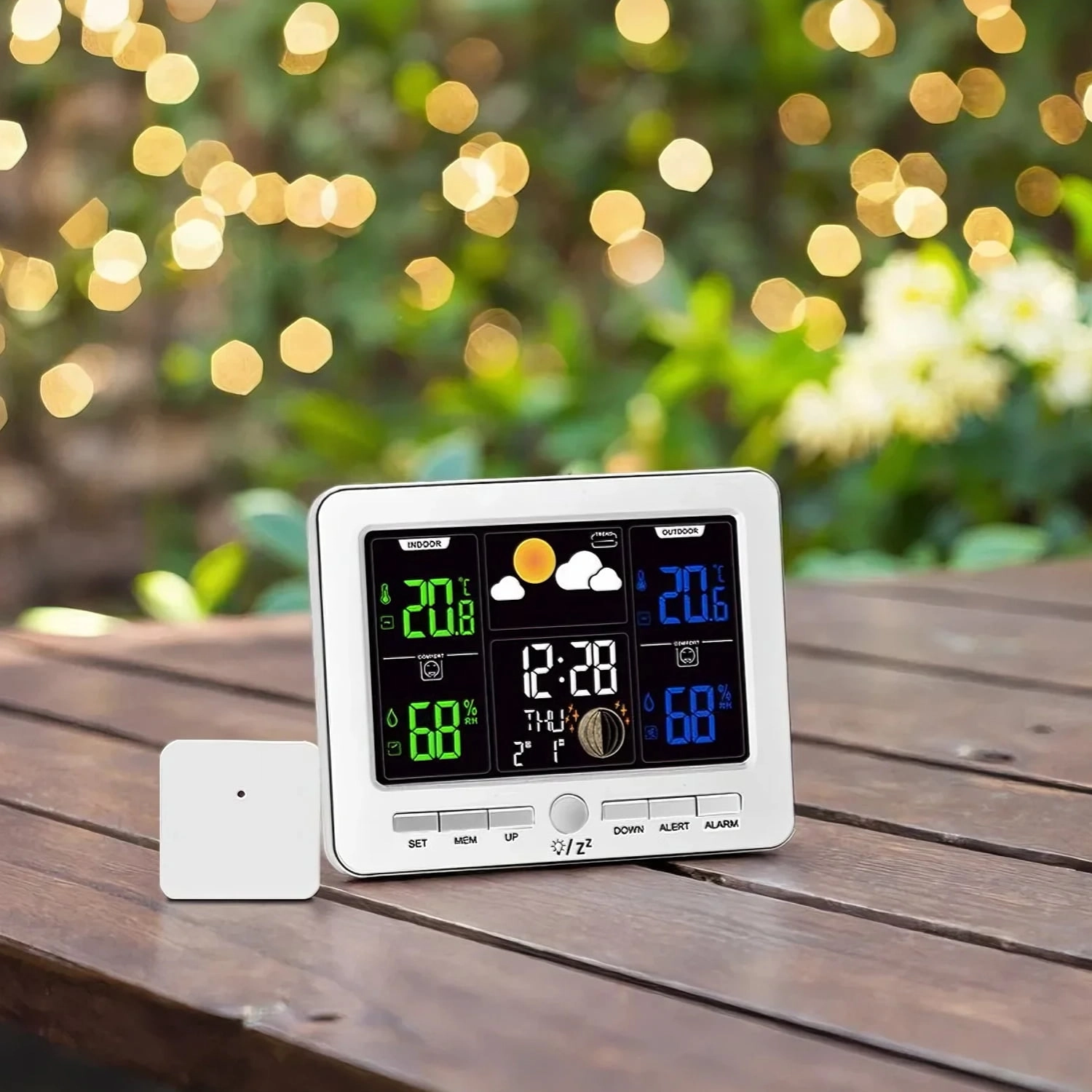
Our recommended portfolio approach is to treat the timer as part of a family of time-management and environmental-monitoring products rather than as an isolated SKU. A digital timer can serve general countdown applications, while a pomodoro timer can be positioned around focused work, study cycles, and structured breaks. A thermo hygrometer or temperature humidity monitor can extend the range into indoor comfort, storage, office, education, and facility-management use cases.
Product-family planning can reduce duplicated engineering work. Shared display modules, button designs, battery doors, packaging formats, and quality procedures may lower complexity when the product architecture is deliberately standardized. However, common parts should be selected only after checking performance and availability. A shared component that becomes obsolete or difficult to source can create supply risk across the entire range.
Where our commercial approach creates buyer value
Our commercial recommendation is to begin with a clear product requirement document, including application, target customer, dimensions, operating modes, display behavior, alarm expectations, power source, materials, packaging, market destination, and forecast volume. This document gives engineering and manufacturing teams a stable basis for quotation and reduces the number of hidden assumptions between the buyer and supplier.
Our quality-focused approach also separates design decisions from price concessions. A lower-cost screen, buzzer, resin, or battery may appear attractive, but the change should be evaluated against readability, failure rates, user satisfaction, and warranty exposure. For distributors and brand owners, a slightly higher purchase cost can be commercially justified when it produces lower returns, better shelf presentation, more reliable availability, or stronger compliance documentation.
Preparing a supplier brief for faster pricing
A strong request for quotation should include drawings or reference images, estimated annual demand, launch date, destination markets, preferred incoterm, packaging expectations, sample quantity, required certifications, inspection standard, warranty period, and customization scope. It should ask suppliers to identify assumptions, exclusions, alternative components, tooling ownership, lead time by stage, and the validity period of the quotation.
For digital timer, pomodoro timer, thermo hygrometer, and temperature humidity monitor programs, buyers should also ask for sample data showing timing performance or sensor accuracy, battery-life estimates under defined usage conditions, operating-temperature limits, and test methods. This makes supplier responses technically comparable and helps prevent a low initial offer from becoming a high-cost project after specification gaps are discovered.
Frequently Asked Questions
What is the biggest factor affecting B2B timer pricing?
The largest influences are usually product configuration, order volume, tooling, customization, compliance testing, and packaging. The correct comparison is total landed cost rather than the factory unit price alone.
How can buyers reduce the cost of a custom countdown timer?
Buyers can reduce cost by standardizing the enclosure, using proven display and electronic platforms, consolidating forecasts, limiting unnecessary cosmetic changes, separating essential from optional features, and approving production-intent samples before mass production.
Should tooling be included in the unit price?
Tooling should normally be shown as a separate non-recurring cost so that buyers can understand amortization, ownership, maintenance responsibility, tool life, and the financial effect of different order volumes.
What quality documents should a buyer request?
Useful documents include material declarations, applicable test reports, inspection records, calibration information where relevant, production-approval samples, packaging specifications, traceability records, and a written corrective-action process.
Are digital timers and pomodoro timers priced differently?
They can be priced differently when the pomodoro model adds preset work-and-break cycles, memory, specialized user controls, visual progress functions, or productivity-oriented packaging. The difference depends on the actual specification rather than the product name.
How do thermo hygrometers affect supplier evaluation?
Environmental monitors require additional evaluation of sensor accuracy, calibration, response time, ventilation, operating range, battery life, and placement relative to heat-producing components. These requirements can increase development and testing costs.
What should be included in a supplier comparison sheet?
The comparison should include unit price, minimum order quantity, tooling, sample fees, lead time, incoterm, packaging, testing, warranty, defect acceptance criteria, component alternatives, payment terms, and estimated total landed cost.
Contact our team to review product specifications, compare sourcing scenarios, and identify the most suitable digital timer, pomodoro timer, thermo hygrometer, or temperature humidity monitor configuration for your project.
Smart Digital Weather Clocks: Beyond Time, Your Environment Monitor
Wireless vs Wired Digital Smart Timers: Pros and Cons
Top buy digital kitchen timer Manufacturers and Suppliers
Marketing Tips: Positioning Your Electronic Kitchen Timer Brand
Interested in this article?
Let’s talk.
Need specifications, pricing, or customization options? We’ll provide everything you need.

Youben life
Youben life