
How Visual Timer Manufacturers Support OEM and ODM Customization for Business Buyers
- How Customized Countdown Products Are Planned for Commercial Use
- Requirement definition before industrial design
- Choosing between OEM adaptation and ODM development
- Designing for usability, accessibility, and channel requirements
- Engineering and Manufacturing Capabilities Buyers Should Verify
- Electronics, firmware, and power-management competence
- Tooling, materials, and design for manufacturability
- Quality assurance from prototype to mass production
- How Our Product Portfolio Supports Broader OEM and ODM Programs
- One development framework across timing and environmental monitoring
- Commercial value through configurable product architecture
- Documentation, communication, and launch readiness
- Procurement Checklist for Selecting a Custom Timing Product Partner
- Commercial and technical due diligence
- Questions that reduce project risk
- Frequently Asked Questions
OEM and ODM customization enables distributors, retailers, education suppliers, healthcare operators, workplace solution providers, and consumer brands to launch timing products that match a defined market position. In this model, a visual timer manufacturer may provide a complete product platform, adapt an existing design, or develop a new device around the buyer’s specifications. The scope can include countdown logic, display visibility, acoustic alerts, enclosure geometry, logo application, packaging, firmware behavior, battery selection, and production testing. The commercial objective is not simply to purchase a timer; it is to create a reliable, differentiated, and supportable product that performs consistently across its intended use cases.
For business buyers, customization should be evaluated as an integrated product-development process. A successful program connects user requirements with engineering feasibility, certification planning, manufacturing controls, and after-sales support. A supplier that can explain these connections clearly gives project owners better control over cost, launch timing, quality risk, and long-term availability. This is particularly important when a timer is used in classrooms, therapy programs, kitchens, laboratories, offices, productivity systems, or assisted-living environments where readability and predictable operation influence user trust.
How Customized Countdown Products Are Planned for Commercial Use
Requirement definition before industrial design
The first stage is a structured specification rather than a collection of visual preferences. Buyers should define the operating environment, target users, timing range, display distance, alert requirements, power source, mounting method, expected daily usage, cleaning conditions, and sales channel. A classroom product may prioritize a large high-contrast display and a quiet visual warning, while a productivity device may require a compact desktop form, intuitive controls, and a short setup sequence. A food-service application may need clear end-of-cycle alerts and surfaces that are easy to wipe.
Commercial specifications should also identify measurable acceptance criteria. Examples include countdown accuracy, button life, display legibility under specified lighting, battery endurance, alarm volume range, standby consumption, enclosure fit, and tolerance for temperature or humidity exposure. Defining these criteria early prevents disagreements during sampling and helps the procurement team compare quotations on equivalent terms.
Choosing between OEM adaptation and ODM development
OEM work generally starts with a buyer-owned design, specification, or brand concept. The supplier manufactures the product and may assist with design-for-manufacturing, component selection, testing, and packaging. ODM work typically begins with a supplier’s existing architecture or product platform, which is then modified for a particular market or brand. Adjustments may include colors, labels, user-interface behavior, firmware, molds, accessories, and retail presentation.
Neither approach is automatically superior. OEM is often appropriate when the buyer has a distinctive user experience, protected design, or established engineering package. ODM can reduce development time when the product requirements are close to an existing platform. The procurement decision should consider tooling ownership, intellectual-property rights, exclusivity, source-code access, component continuity, engineering fees, minimum order quantity, and the supplier’s willingness to support future revisions.
Designing for usability, accessibility, and channel requirements
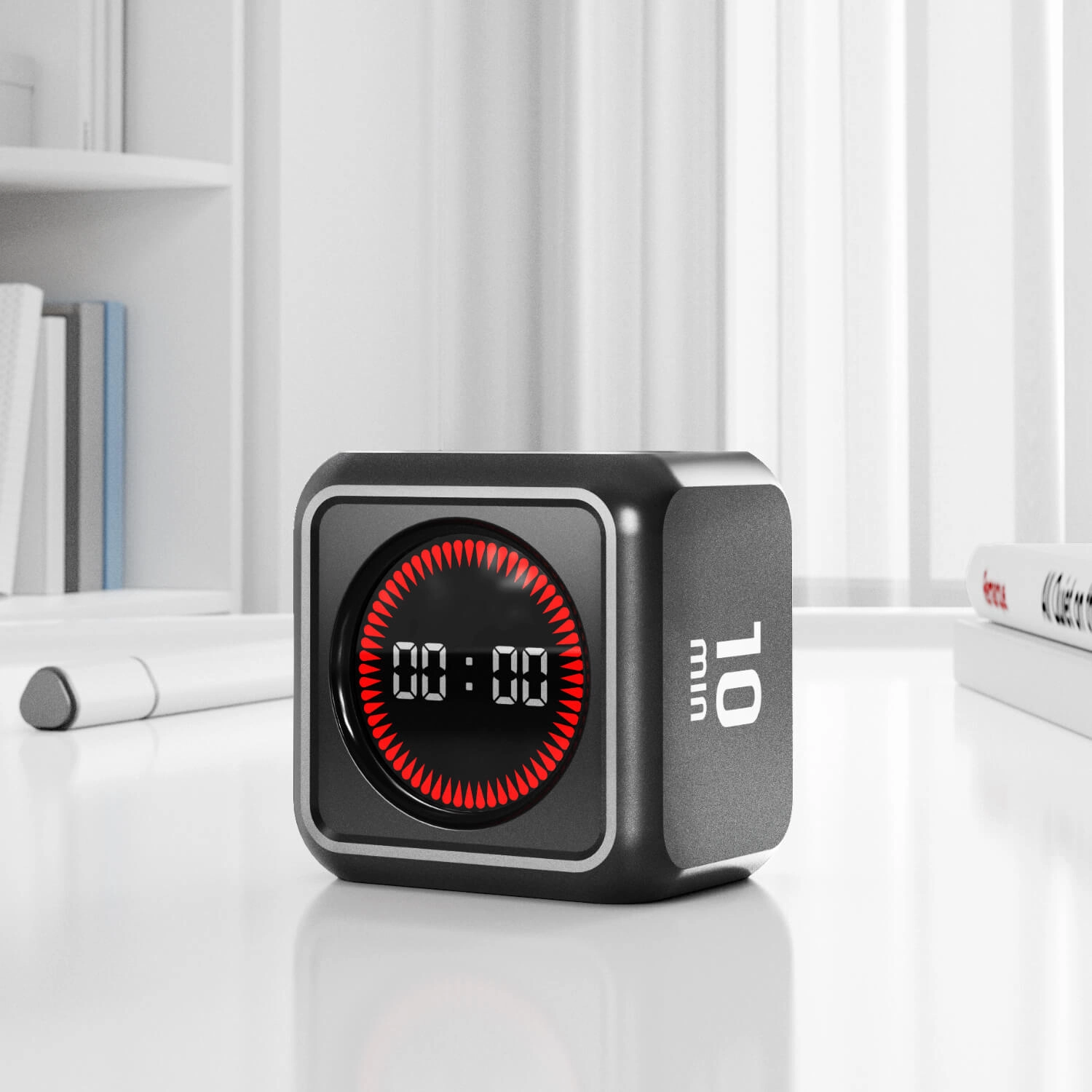
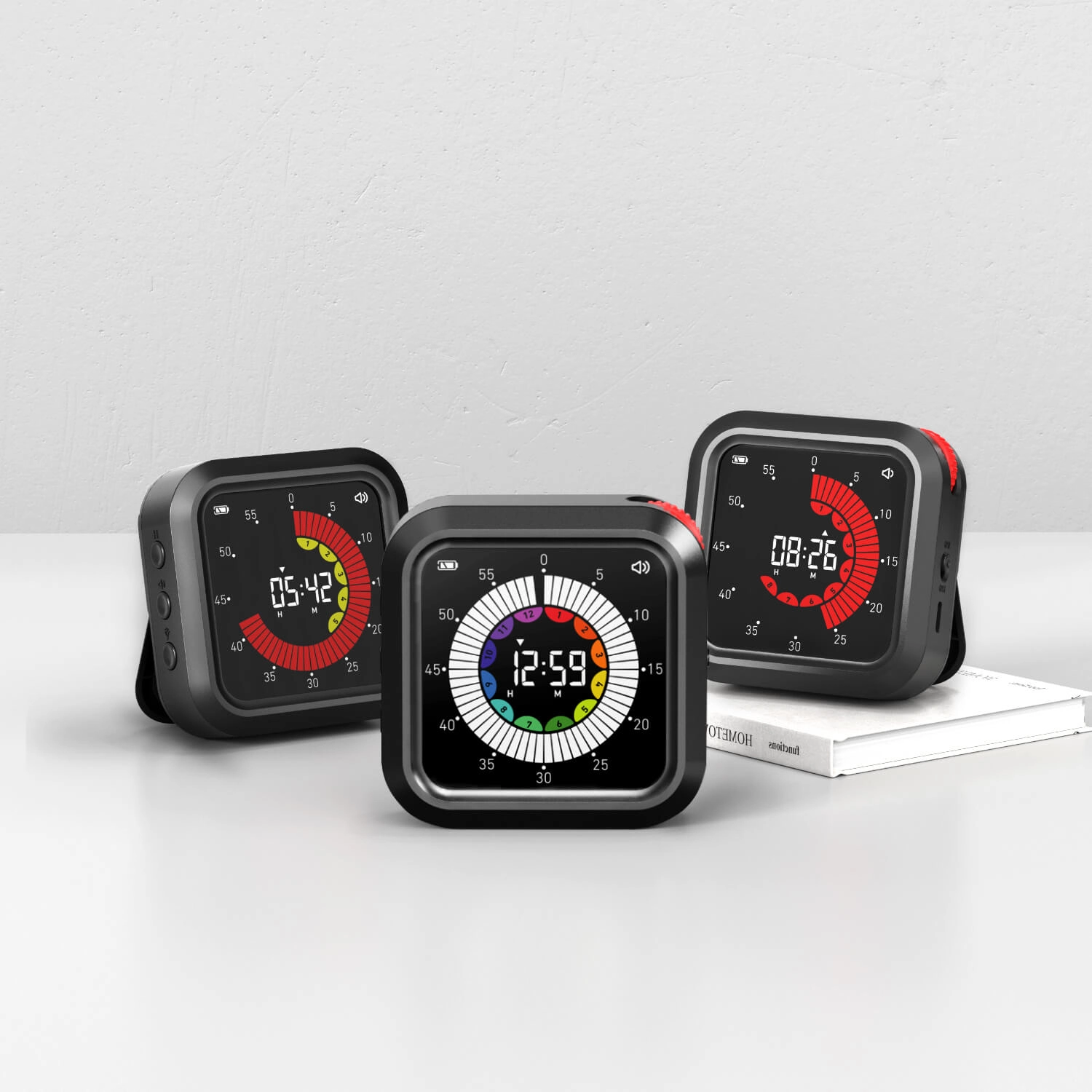
Visual timing products must communicate status quickly. Engineers may evaluate numerals, colored progress fields, rotating disks, segmented displays, LED indicators, or hybrid visual and acoustic signals. The correct solution depends on viewing distance, ambient illumination, age group, cognitive load, and whether the user needs to understand remaining time at a glance. Buyers should request prototypes under realistic conditions rather than approving a design from studio images alone.
Accessibility is also a commercial consideration. Tactile controls, clear labels, audible confirmation, adjustable alert levels, and strong contrast can make a product suitable for a broader user base. If the device is intended for regulated or sensitive settings, the project team should identify applicable local requirements early. General product-safety planning can be aligned with recognized quality practices such as ISO 9001 quality management principles, while the exact legal obligations depend on the destination market and product classification.
Engineering and Manufacturing Capabilities Buyers Should Verify
Electronics, firmware, and power-management competence
A countdown device may appear simple, but commercial reliability depends on coordinated hardware and software decisions. The engineering team should control oscillator accuracy, reset behavior, button debouncing, low-battery response, memory retention, alarm timing, and recovery after an unexpected power interruption. If the product includes a rechargeable battery, charging protection and thermal behavior require additional review. For connected products, wireless architecture, data security, application support, and regional radio requirements become part of the development scope.
Firmware customization can create meaningful differentiation. A supplier may implement preset intervals, repeat cycles, pause and resume functions, overtime indication, silent mode, child lock, memory recall, or multilingual prompts. Each added function should be linked to a test case and a defined user benefit. Excess features can increase failure points, training requirements, and support costs, so the best specification is usually the one that solves the target user’s priority problems with minimal friction.
Tooling, materials, and design for manufacturability
Enclosure design affects both perceived value and production stability. ABS, polycarbonate, silicone, acrylic, and other materials may be selected according to impact resistance, appearance, flexibility, heat behavior, and surface-cleaning needs. Mold design should account for wall thickness, draft angles, parting lines, sink marks, screw bosses, button alignment, and assembly access. A design review before tooling can prevent expensive revisions after the mold is completed.
Buyers should request a clear tooling quotation that separates mold cost, engineering changes, sampling, maintenance, spare inserts, and ownership terms. The supplier should also explain how color matching, pad printing, laser marking, in-mold decoration, labels, and packaging graphics will be controlled. These details determine whether a product maintains consistent brand presentation across production batches.
Quality assurance from prototype to mass production
Sampling should progress through defined stages rather than moving directly from a concept sample to bulk production. An engineering prototype validates function and ergonomics. A tooling sample validates molded parts and assembly. A pilot run demonstrates process capability, packaging readiness, and operator instructions. The pre-production sample should represent the configuration that will be shipped, including firmware, artwork, accessories, and labels.
Quality controls can include incoming inspection of electronic components, first-article verification, assembly-line checkpoints, functional testing, alarm testing, display inspection, battery checks, cosmetic standards, and final audit sampling. Buyers should ask how nonconforming units are isolated, how corrective actions are recorded, and how changes are approved. A documented change-control system reduces the risk that an equivalent-looking component or revised firmware enters production without authorization.
| Customization area | Typical buyer objective | Supplier capability to verify | Recommended evidence |
|---|---|---|---|
| Display and indication | Improve readability and brand differentiation | Display sourcing, optical evaluation, firmware control | Working samples tested under target lighting |
| Enclosure and controls | Match ergonomics, durability, and retail positioning | 3D design, mold engineering, material control | CAD review, material declaration, tooling sample |
| Timing functions | Support specific workflows and user routines | Embedded software development and verification | Functional specification and test report |
| Branding and packaging | Create consistent shelf and unboxing presentation | Decoration, artwork control, packaging engineering | Approved artwork proof and golden sample |
| Compliance and safety | Reduce market-entry and liability risk | Test planning for destination markets | Applicable reports, declarations, and traceability records |
| Production scale | Maintain quality while order volume changes | Capacity planning, supplier management, inspection systems | Capacity plan, quality records, and production samples |
Compliance documentation should be matched to the product and destination rather than treated as a generic marketing claim. Depending on the configuration and sales region, buyers may need to examine electrical safety, electromagnetic compatibility, battery transport, chemical restrictions, radio requirements, labeling, and packaging obligations. The International Electrotechnical Commission provides widely used international standards for electrical and electronic equipment, while the NIST Time and Frequency Division explains the technical foundations of time measurement. These sources do not replace market-specific legal review, but they help procurement teams ask more precise technical questions.
How Our Product Portfolio Supports Broader OEM and ODM Programs
One development framework across timing and environmental monitoring
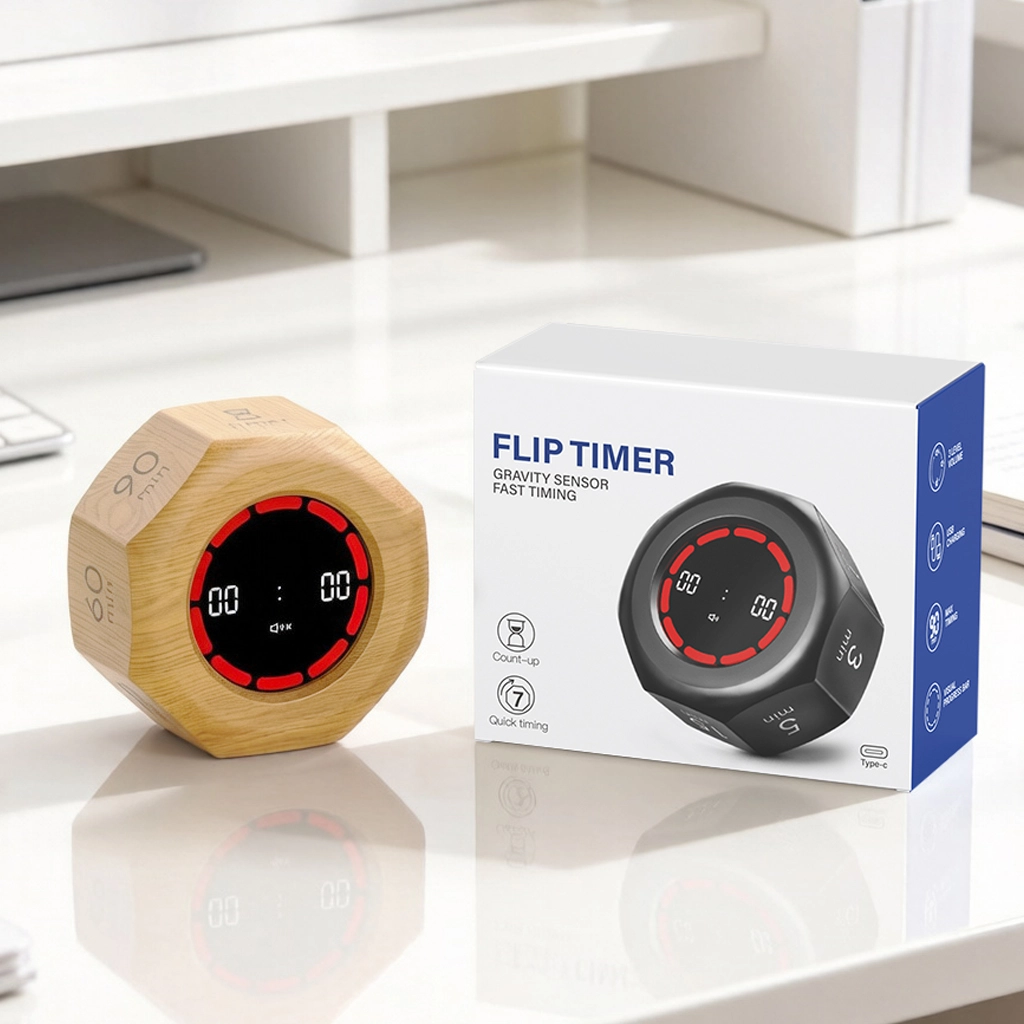
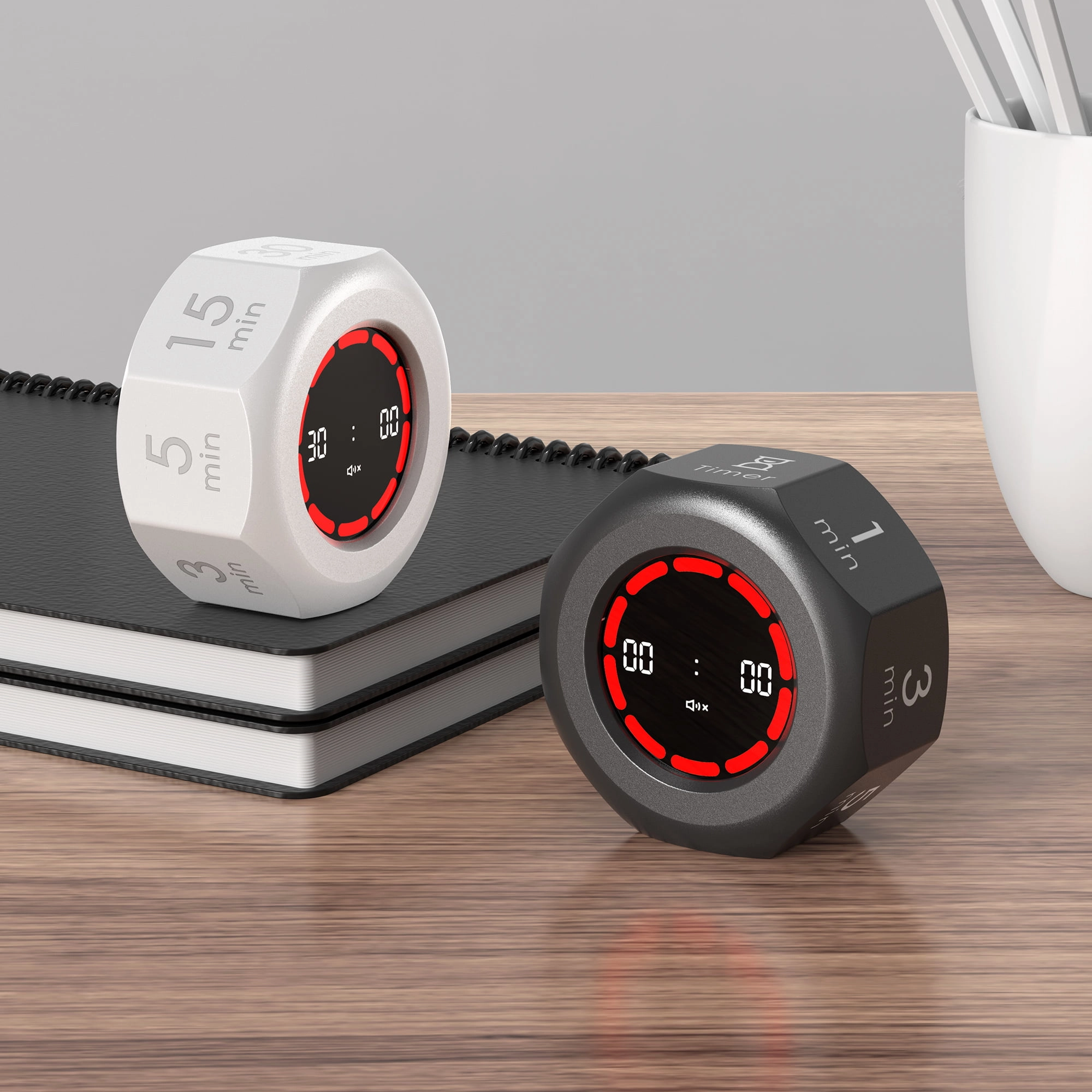
Our product-development approach can support buyers that need more than a single countdown device. A project may begin with a branded digital timer and later expand into a Pomodoro timer for productivity, a thermo-hygrometer for indoor condition awareness, or a temperature humidity monitor for home, office, education, and light commercial applications. Using a coordinated development framework helps maintain consistent industrial design, packaging language, control logic, and supplier communication across a product family.
For brand owners and distributors, this portfolio approach can simplify assortment planning. Shared design cues make products easier to position as a family, while differentiated functions allow each model to serve a specific price tier or user segment. Our engineering team can review the intended application, identify reusable platform elements, and separate them from features that require dedicated hardware, tooling, or firmware.
Commercial value through configurable product architecture
Our focus is to connect customization with manufacturability. Buyers can evaluate display formats, enclosure finishes, button layouts, alarm behavior, mounting solutions, power options, logo treatments, and retail packaging according to market needs. A configurable architecture may reduce unnecessary redevelopment when several models share a core timing module or sensor platform, while still allowing meaningful differences in external design and user experience.
For thermo-hygrometers and temperature humidity monitors, the specification should address sensor placement, response behavior, display units, calibration expectations, comfort indicators, memory functions, and battery replacement. For digital timers and Pomodoro timers, the priority may be interval presets, repeat cycles, silent operation, visual progress, and simple controls. Our role is to translate these commercial requirements into a practical product definition that can be sampled, tested, quoted, and produced.
Documentation, communication, and launch readiness
Clear documentation is a major part of supplier value. Our project communication can organize product specifications, approved drawings, component lists, firmware versions, artwork files, packaging requirements, inspection standards, and sample approvals in a controlled sequence. This creates a shared reference for purchasing, engineering, quality, marketing, and logistics teams.
Buyers should also evaluate post-launch support. A reliable partner should be able to discuss replacement parts, warranty analysis, recurring quality issues, engineering changes, forecast updates, and product discontinuation planning. These capabilities affect total cost of ownership because an inexpensive first order can become expensive if replacement units, customer complaints, or unavailable components disrupt the channel. Our objective is to support a repeatable supply relationship in which product improvements are assessed against quality, cost, compliance, and customer value.
Procurement Checklist for Selecting a Custom Timing Product Partner
Commercial and technical due diligence
Before requesting a final quotation, buyers should prepare a project brief covering estimated annual demand, initial order quantity, target launch date, sales regions, packaging language, customization level, forecast flexibility, and required documentation. The supplier evaluation should include manufacturing location, production capacity, engineering resources, testing equipment, quality certifications, component-sourcing practices, and experience with the intended channel.
It is useful to compare suppliers using a weighted scorecard rather than unit price alone. Suggested categories include product fit, prototype speed, engineering responsiveness, mold and artwork control, testing depth, compliance support, communication quality, minimum order quantity, lead time, warranty handling, and total landed cost. This approach makes trade-offs visible to finance, product, and operations stakeholders.
Questions that reduce project risk
- Which elements are standard, configurable, or fully custom?
- Who owns the tooling, firmware, drawings, and approved artwork?
- How are engineering changes reviewed and communicated?
- What inspection standards apply to cosmetic, functional, and packaging defects?
- How will the supplier manage component substitutions or end-of-life notices?
- Which tests are included in the quoted price, and which require an external laboratory?
- What information is required to provide an accurate production and tooling quotation?
A disciplined supplier-selection process improves the probability that a customized timer or environmental monitor will reach the market with stable quality and predictable economics. Buyers should treat sampling, documentation, compliance, and production validation as connected stages. When these stages are managed together, OEM and ODM customization becomes a practical route to differentiation rather than an uncontrolled source of complexity.
Frequently Asked Questions
What is the difference between OEM and ODM timer customization?
OEM work generally starts with a buyer-owned design, specification, or brand concept, while ODM work typically begins with a supplier’s existing architecture or product platform that is modified for a particular market or brand.
What should buyers define before requesting a custom timer quotation?
Buyers should define the operating environment, target users, timing range, display distance, alert requirements, power source, mounting method, expected daily usage, cleaning conditions, sales channel, and measurable acceptance criteria.
What quality controls should a custom timer supplier provide?
Quality controls can include incoming component inspection, first-article verification, assembly-line checkpoints, functional testing, alarm testing, display inspection, battery checks, cosmetic standards, final audit sampling, nonconformance isolation, corrective actions, and documented change control.
Why are tooling ownership and firmware rights important in an ODM project?
Tooling ownership, source-code access, intellectual-property rights, exclusivity, and change-control terms affect the buyer’s ability to maintain supply, approve future revisions, protect differentiation, and move or expand the program.
Can one supplier support both timing products and environmental monitors?
A coordinated product-development framework can support digital timers, Pomodoro timers, thermo-hygrometers, and temperature humidity monitors by reusing suitable platform elements while developing application-specific hardware, firmware, sensors, displays, and enclosures.
How should buyers compare custom timer suppliers?
Buyers should use a weighted scorecard covering product fit, prototype speed, engineering responsiveness, tooling and artwork control, testing depth, compliance support, communication, minimum order quantity, lead time, warranty handling, and total landed cost rather than comparing unit price alone.
Bulk Purchase Guide for Digital Alarm Clocks: Tips for Retailers
Pomodoro Timer Manufacturer Pricing Guide: Key Factors That Influence B2B Costs
What to Look for in a Professional Pomodoro Timer Manufacturer for B2B Projects
Bulk Ordering Tips for Electronic Kitchen Timers
Interested in this article?
Let’s talk.
Need specifications, pricing, or customization options? We’ll provide everything you need.

Youben life
Youben life