
Visual Timer Manufacturer Comparison: Key Differences in Features, Technology, and Product Design
- How Visual Countdown Clock Suppliers Differ in Core Product Capability
- Display architecture and user visibility
- Controls, presets, and workflow flexibility
- Accuracy, power management, and reliability
- Technology and Engineering Variables That Affect Commercial Risk
- Standard modules versus customized electronics
- Connectivity, sensors, and product ecosystem integration
- Compliance, validation, and quality documentation
- Product Design and Manufacturing Execution: What Buyers Should Audit
- Industrial design, ergonomics, and brand differentiation
- Tooling, pilot production, and production consistency
- Commercial evaluation and total cost of ownership
- Why Youben life Is Positioned for Private-Label Timer Programs
- Integrated development for digital time-management hardware
- Product portfolio and customization capability
- Quality, compliance, and scalable manufacturing support
- Frequently Asked Questions
Choosing the right visual countdown clock supplier requires more than comparing unit prices. B2B buyers should evaluate display readability, timing accuracy, control architecture, battery performance, acoustic output, enclosure engineering, tooling ownership, compliance documentation, quality systems, order scalability, and customization depth. The strongest partner combines digital timer engineering with industrial design, firmware or custom IC capability, reliable production controls, and retail-ready packaging. This comparison explains how manufacturers differ in product features, technology platforms, design execution, and commercial support so brand owners, distributors, education suppliers, healthcare operators, and workplace solution providers can reduce development risk and select hardware that delivers dependable user performance and long-term margin potential.
How Visual Countdown Clock Suppliers Differ in Core Product Capability
Display architecture and user visibility
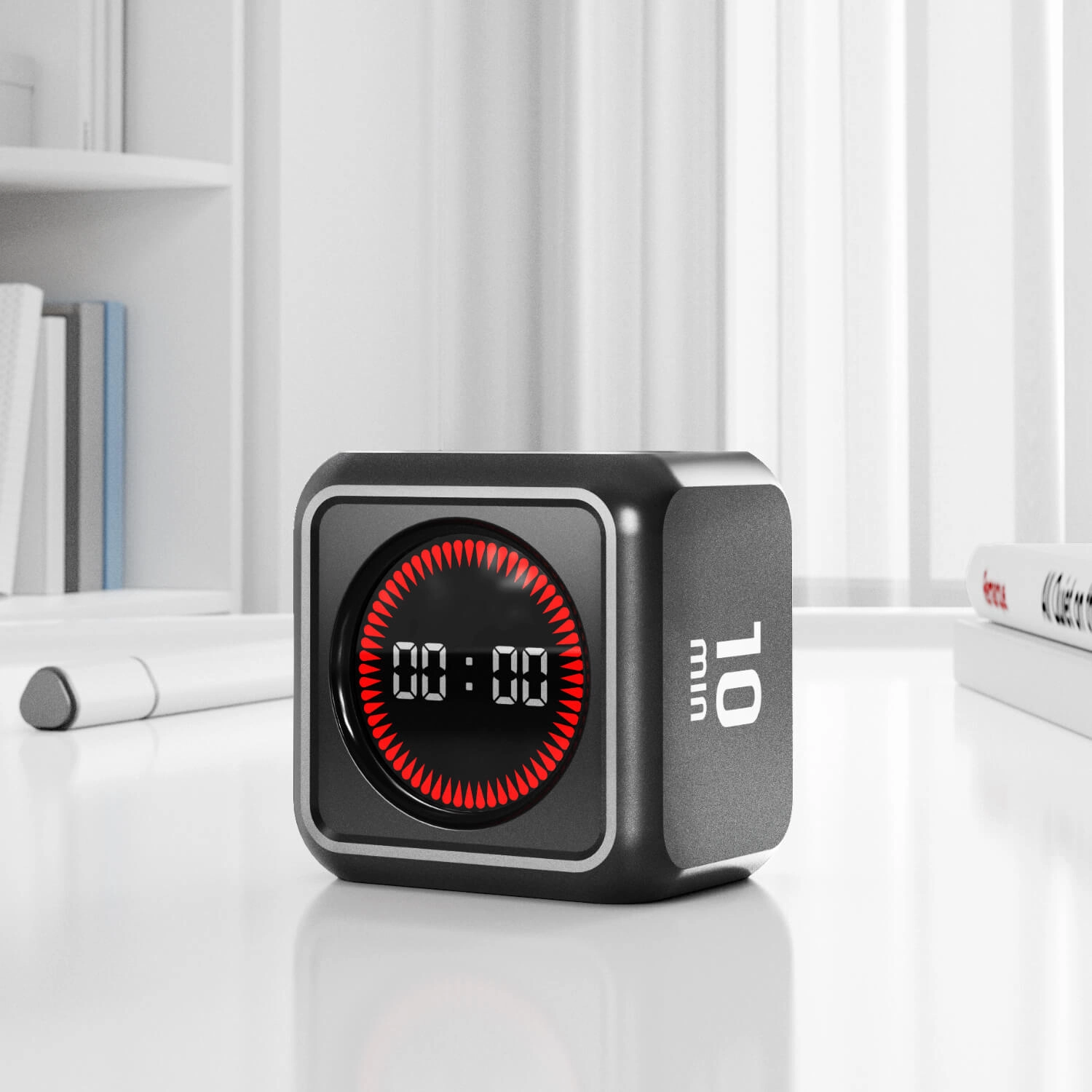
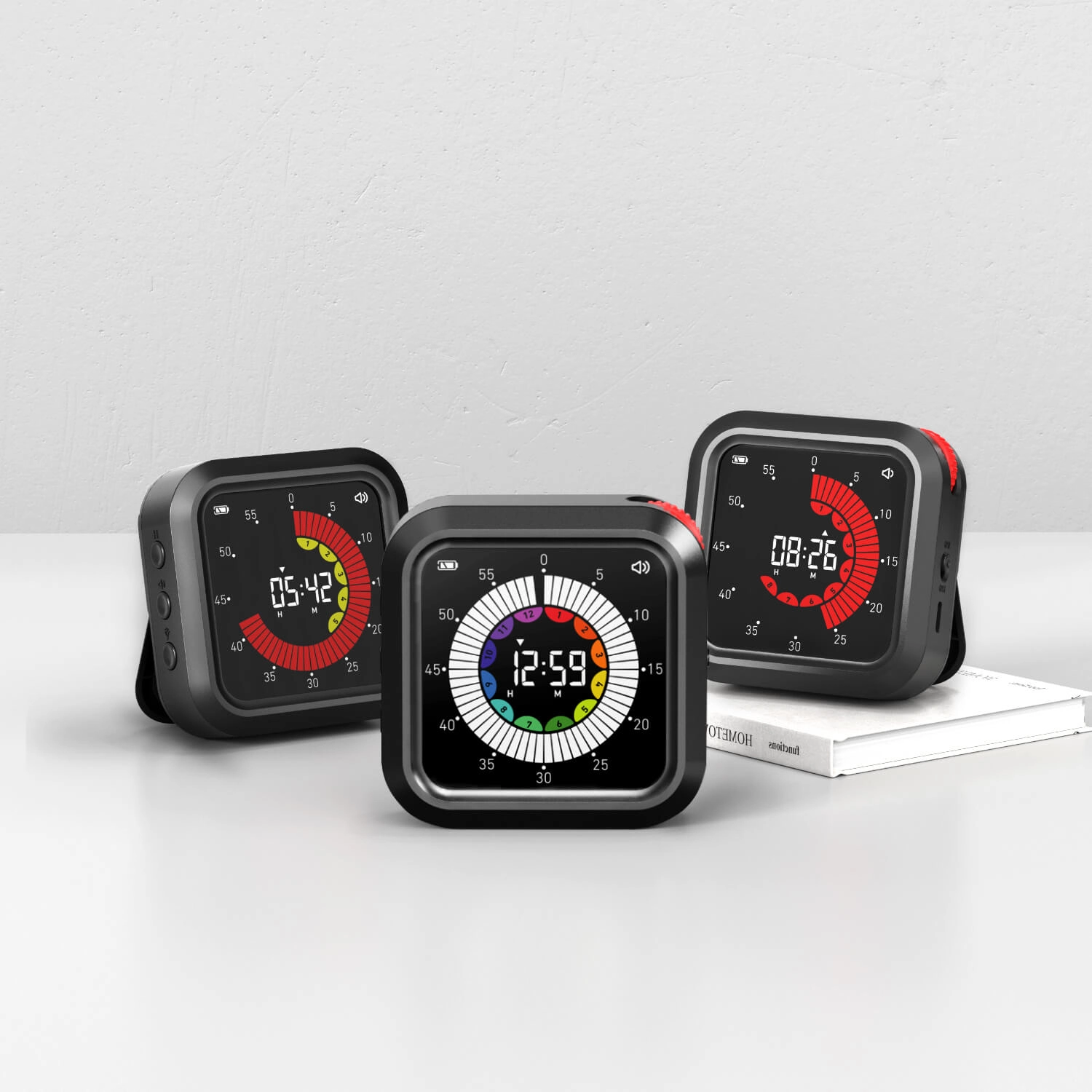
The most visible difference between competing suppliers is the way remaining time is communicated. A basic electronic timer may show only numerals, while a purpose-built visual countdown clock combines a shrinking colored field, segmented dial, progress bar, or high-contrast circular display with digital time information. The correct architecture depends on the use case. Classrooms, therapy rooms, kitchens, examination centers, and open offices often need immediate recognition from several meters away, whereas a personal productivity device can prioritize compact dimensions and low power consumption.
Procurement teams should compare active display area, viewing angle, brightness control, contrast ratio, color consistency, and legibility under daylight and artificial lighting. A large display is not automatically better if glare, weak contrast, or uneven illumination makes the remaining time difficult to interpret. Buyers should request photographs or samples under realistic conditions and confirm whether the visual indication remains clear during the final minutes, when user attention and urgency are highest.
Controls, presets, and workflow flexibility
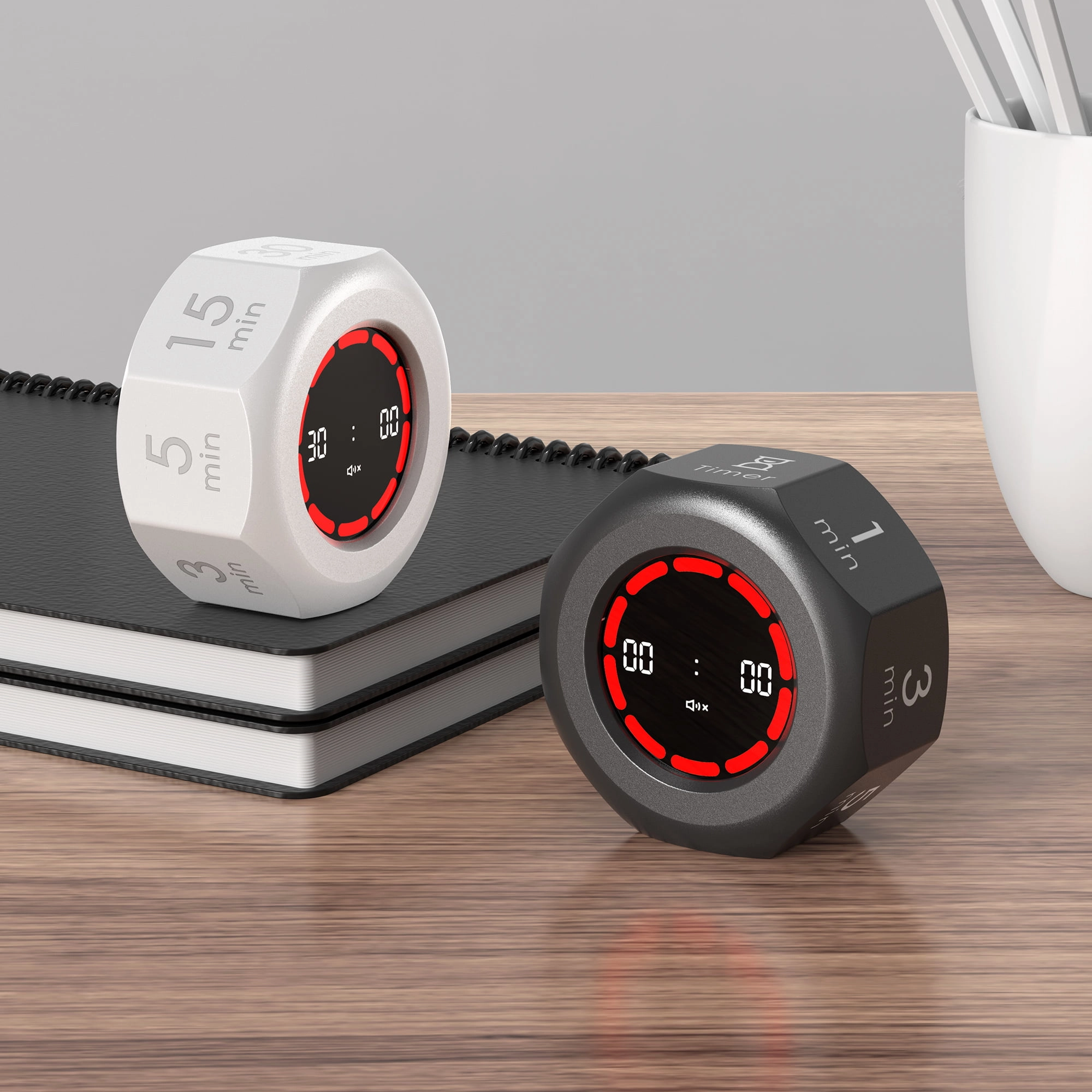
Control design directly affects adoption and support costs. Rotary dials can provide rapid adjustment and tactile feedback, while membrane keys, capacitive touch controls, and app-connected interfaces support different levels of functionality. A commercial-grade digital timer may require one-touch preset selection, pause and resume, repeat cycles, count-up mode, memory retention, auto shutoff, or separate short and long alert tones.
For productivity applications, a pomodoro timer should support configurable work and break intervals rather than locking users into a single preset. For institutional buyers, the more important requirement may be simplified operation that prevents accidental resets. A robust supplier maps the control scheme to the user environment, validates button life and torque performance, and documents the firmware behavior for every operating mode. This is particularly important when the product will be sold under a private label, because unclear controls can generate returns even when the electronics function correctly.
Accuracy, power management, and reliability
Timing accuracy depends on the oscillator, microcontroller or custom integrated circuit, firmware logic, and power architecture. Buyers should ask how timing is calibrated, what tolerance is accepted during normal operation, and whether low-battery conditions can interrupt a countdown. Battery-powered units should be assessed for standby consumption, display duty cycle, audible-alert energy demand, and the practical replacement process. USB-powered products require evaluation of connector durability, cable compatibility, adapter requirements, and protection against abnormal voltage conditions.
Reliability is also shaped by mechanical details. Loose battery doors, poorly supported displays, fragile knobs, and inadequate strain relief can create field failures unrelated to the core timing circuit. A capable electronics manufacturing partner tests the complete product, not only individual components, and uses design-for-assembly principles to minimize variation across production lots.
Technology and Engineering Variables That Affect Commercial Risk
Standard modules versus customized electronics
Some suppliers integrate an off-the-shelf timing module into a generic enclosure. This approach can reduce initial engineering expenditure, but it may limit display behavior, button layout, alert patterns, energy optimization, and future revisions. Other manufacturers develop a tailored printed circuit board, program a dedicated microcontroller, or create a custom IC solution. Customized electronics usually require more engineering coordination, yet they can improve product differentiation and reduce dependence on components that competitors also use.
The appropriate choice depends on forecast volume, product life cycle, target price, and intellectual-property objectives. A distributor testing a new category may prefer a proven platform with modest cosmetic changes. A brand owner competing on design and user experience may need custom firmware, proprietary timing modes, a distinctive display sequence, or a board layout optimized for a particular enclosure. The supplier should explain non-recurring engineering charges, minimum order quantities, firmware ownership, revision control, and the process for handling component obsolescence.
Connectivity, sensors, and product ecosystem integration
Not every timer requires wireless connectivity. Bluetooth or Wi-Fi can enable remote scheduling, data logging, and fleet management, but they also introduce certification, cybersecurity, application maintenance, pairing support, and battery-consumption considerations. For many consumer and professional applications, a standalone unit offers greater reliability and a shorter onboarding process.
Environmental monitoring products follow a different technical path. A temperature humidity monitor or thermo hygrometer depends on sensor accuracy, response time, calibration method, airflow exposure, enclosure venting, and display stability. If a product combines countdown functionality with environmental data, the engineering team must prevent heat generated by the electronics from distorting sensor readings. Buyers should request the stated measurement range, accuracy specification, test conditions, calibration documentation, and sensor placement rationale rather than relying only on a marketing claim.
Compliance, validation, and quality documentation
Regulatory readiness separates a professional supplier from an informal assembly operation. Depending on the destination market and product configuration, buyers may need electromagnetic compatibility testing, radio approvals, chemical restrictions documentation, battery transport information, labeling, user manuals, and traceability records. The European Commission CE marking guidance explains that manufacturers are responsible for demonstrating conformity with applicable European Union requirements. The EU RoHS Directive restricts specified hazardous substances in electrical and electronic equipment.
In the United States, products containing intentional radio transmitters may require processes governed by the FCC equipment authorization framework. Even for non-radio products, electromagnetic compatibility and labeling expectations should be clarified before mass production. Buyers should review test reports, declarations, bills of materials, change-control procedures, factory inspection records, and corrective-action workflows. An ISO 9001 certificate can indicate that a quality management system has been established, but it should be evaluated alongside actual process controls and product-specific evidence; the ISO 9001 quality management overview provides the standard’s general framework.
| Evaluation area | Basic supply model | Engineering-led OEM/ODM model | Buyer impact |
|---|---|---|---|
| Display and enclosure | Existing housing and fixed display layout | Custom ID/MD, tooling, colors, materials, and display behavior | Determines differentiation, usability, and retail positioning |
| Electronics | Standard module with limited adjustment | Custom PCB, firmware, or IC programming | Influences features, power use, serviceability, and lifecycle control |
| Quality control | Basic functional inspection | Incoming, in-process, aging, calibration, and final testing | Reduces failure rates and warranty exposure |
| Compliance | Documents may be incomplete or model-specific | Planned testing, declarations, labels, and traceability | Reduces market-entry and customs risk |
| Packaging | Generic carton or simple polybag | Retail-ready structural packaging and private-label artwork | Supports shelf presentation, e-commerce conversion, and logistics protection |
| Scale-up | Capacity varies with subcontractors | Defined capacity planning and controlled production flow | Improves continuity during promotions and seasonal demand |
Product Design and Manufacturing Execution: What Buyers Should Audit
Industrial design, ergonomics, and brand differentiation
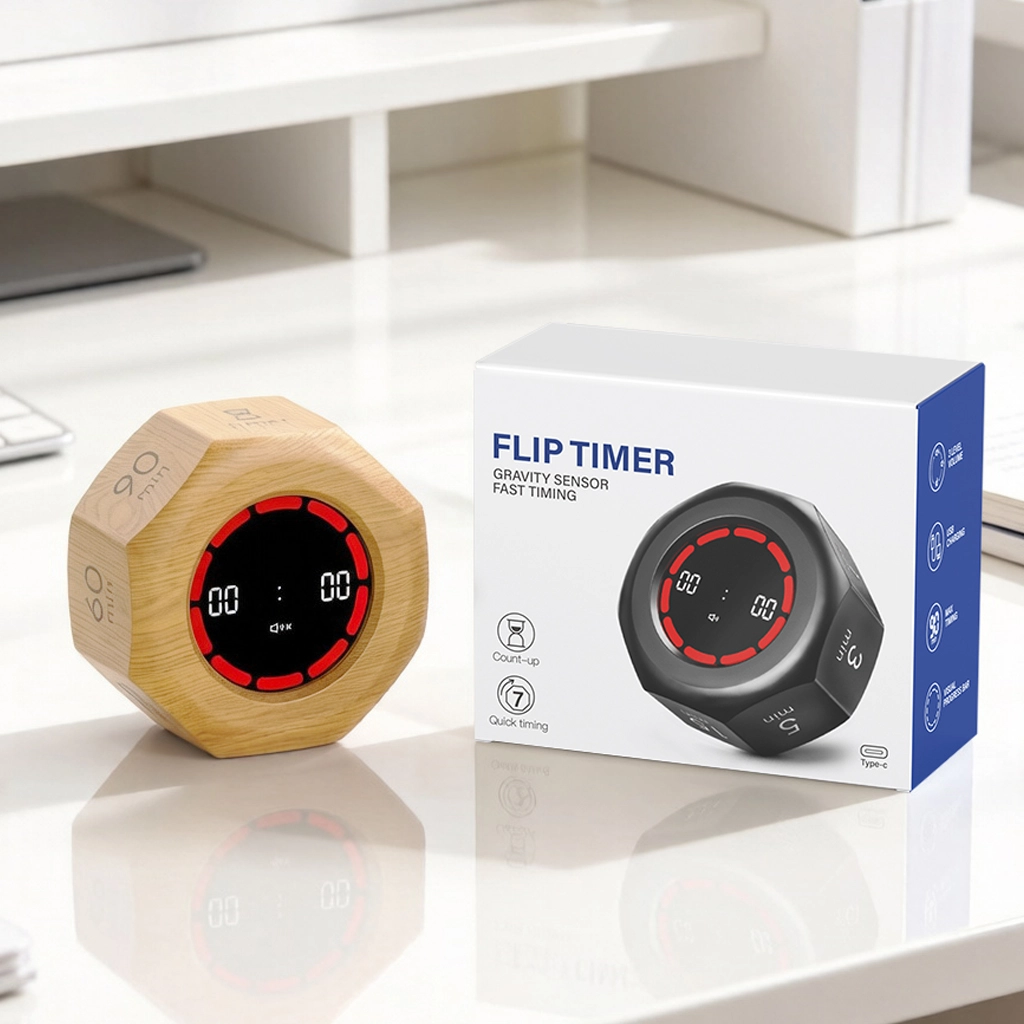
Product design should begin with the operating environment, not only a preferred appearance. A timer used by children may need rounded edges, stable footing, large controls, and intuitive visual feedback. A desk accessory may require a High Quality surface finish, silent operation, magnetic mounting, or a compact footprint. A commercial kitchen model may require grease-resistant materials, easy cleaning, and a display that remains visible from the preparation area.
Design reviews should cover human factors, assembly access, drop resistance, thermal behavior, material selection, color matching, logo placement, and cleaning requirements. Brand owners should also verify whether the supplier controls the CAD files, mold ownership, color standards, and engineering change process. A visually distinctive housing has limited value if the tooling is difficult to maintain or the chosen material produces inconsistent texture across batches.
Tooling, pilot production, and production consistency
Precision mold tooling affects dimensional stability, cosmetic quality, cycle time, and long-term unit economics. Before approving a mold, project owners should confirm the expected tool life, maintenance responsibilities, cavity configuration, spare-part plan, and ownership terms. Pilot runs should be used to validate fit, button feel, display alignment, assembly time, packaging protection, and the relationship between actual cycle time and quoted capacity.
Production consistency requires more than a final power-on check. A mature factory establishes incoming inspection for plastics, displays, batteries, sensors, and electronic components; first-article approval for new lots; in-process checkpoints; aging or burn-in tests where appropriate; and final sampling based on a documented acceptance standard. The ISO 2859-1 sampling standard overview is a useful reference when buyers and suppliers define lot-by-lot inspection plans, although the final acceptance criteria should reflect the product’s risk profile and contractual requirements.
Commercial evaluation and total cost of ownership
The lowest quoted factory price rarely represents the lowest project cost. A realistic comparison includes tooling, engineering, certification, packaging development, inspection, freight efficiency, spare components, warranty handling, software or firmware changes, and the cost of delayed launch. Buyers should request a costed bill of materials or at least a clear breakdown of one-time and recurring charges.
Supplier communication is another operational variable. A partner that documents specifications, responds with measurable corrective actions, and provides realistic lead times is easier to manage than a low-cost source that changes components without approval. Forecast accuracy, minimum order quantity, replenishment time, and contingency planning should be discussed before a product is listed or promoted. For Amazon sellers and global distributors, packaging dimensions, carton optimization, barcode placement, and drop-test performance can directly affect fulfillment costs and customer reviews.
Why Youben life Is Positioned for Private-Label Timer Programs
Integrated development for digital time-management hardware
We established Youben life in 2010 as a specialized OEM/ODM manufacturer focused exclusively on Digital Timers, pomodoro timers, Visual Countdown Clocks, temperature and humidity monitors, and thermo hygrometers. Our specialization allows product planning, electronics development, industrial design, tooling, assembly, and packaging decisions to be coordinated around the actual application rather than treated as disconnected subcontracting tasks.
Our 20,000m² vertically integrated facility in Guangzhou, China, supports turnkey programs for global brands, distributors, and Amazon bestsellers. We go beyond simple assembly: our engineering capability includes ID and MD industrial design, custom IC programming, precision mold tooling, product structure development, and retail-ready packaging. This integrated model helps shorten communication loops, protect design intent, and create differentiated products that are easier for a brand to position.
Product portfolio and customization capability
Our portfolio covers compact Digital Timer products for home, education, office, kitchen, and professional settings, along with configurable pomodoro timer platforms for focused work and interval-based routines. We also develop thermo hygrometer and temperature humidity monitor products for indoor comfort, storage, nursery, workplace, and general environmental awareness applications.
Customization can involve the enclosure form, screen arrangement, color palette, control method, alert behavior, mounting solution, firmware logic, logo treatment, packaging structure, and documentation. Buyers can select a proven platform when speed and controlled investment are priorities, or work with our team on a more distinctive product architecture when brand identity and channel differentiation are central to the business case.
Quality, compliance, and scalable manufacturing support
Our quality and compliance program is designed for international commercialization. Youben life products meet strict CE, FCC, and RoHS requirements, subject to the applicable product configuration and market requirements. Our team coordinates engineering validation, production controls, documentation, and packaging details so that compliance is considered during development instead of being postponed until the launch stage.
Scalable capacity is important when a product moves from testing to sustained sales. Our manufacturing process is structured to support pilot quantities, private-label launches, promotional demand, and repeat production while maintaining controlled specifications. Buyers should still define forecast assumptions, inspection standards, change-approval rules, and delivery milestones in the commercial agreement. With more than a decade of engineering experience and a dedicated focus on timing and environmental-monitoring hardware, our goal is to help partners build reliable products that strengthen brand identity and improve long-term return on development investment.
For qualification, buyers can review product options at Youben life or contact our team at info@youbenlife.com to discuss specifications, prototypes, compliance needs, packaging, and production planning.
Frequently Asked Questions
What should buyers compare when selecting a supplier for visual countdown clocks?
Buyers should compare display readability, timing accuracy, control architecture, battery performance, alert behavior, enclosure engineering, tooling capability, compliance documentation, quality systems, scalability, and customization depth.
What is the difference between a standard timer module and customized electronics?
A standard module can reduce initial engineering cost but may limit display behavior, controls, power optimization, and future revisions. Customized electronics, including a tailored PCB, firmware, or custom IC, can improve differentiation and lifecycle control when the project volume and business case justify the investment.
Which certifications and documents should a digital timer supplier provide?
Depending on the market and configuration, buyers may need CE-related conformity documentation, RoHS evidence, FCC authorization or applicable electromagnetic compatibility records, battery information, labeling, manuals, traceability records, and product-specific test reports.
How can buyers evaluate the quality of a timer factory before placing a large order?
Buyers should review incoming, in-process, aging or burn-in, calibration where applicable, and final inspection procedures; request pilot-run evidence; confirm acceptance standards; inspect change-control processes; and assess the factory’s corrective-action and traceability systems.
Why does industrial design matter for a private-label digital timer?
Industrial design affects usability, safety, stability, cleaning, display visibility, perceived value, packaging fit, and brand differentiation. It should reflect the operating environment and include decisions about materials, controls, mounting, surface finish, logo placement, and enclosure durability.
Can Youben life develop both timers and environmental monitoring products?
Yes. Youben life focuses on Digital Timers, pomodoro timers, Visual Countdown Clocks, temperature and humidity monitors, and thermo hygrometers, with support covering industrial design, custom IC programming, tooling, manufacturing, compliance, and retail-ready packaging.
Comparing Smart Focus Timers: Pomodoro vs Interval Modes
How to Choose a Mini Timer for Laboratory and Medical Use
Customizing Digital Timer Clock: PCB, Enclosure and Firmware Choices
Wholesale digital timer with alarm manufacturer and supplier
Interested in this article?
Let’s talk.
Need specifications, pricing, or customization options? We’ll provide everything you need.

Youben life
Youben life