
What Is a Visual Timer Manufacturer? A B2B Buyer’s Guide to Digital Timing Solutions
- Understanding Digital Timing Device Manufacturers and Their Role
- What a professional timing hardware supplier actually does
- Product categories covered by the digital timing ecosystem
- Why supplier classification affects procurement risk
- How B2B Buyers Should Evaluate a Digital Timer Supplier
- Technical specifications that influence product performance
- Quality systems, testing, and compliance documentation
- Commercial capability and production scalability
- Why Youben life Is Built for Private-Label Timing Programs
- Integrated product development from concept to shipment
- Product expertise aligned with buyer and end-user requirements
- Compliance, manufacturing discipline, and brand protection
- Implementation Roadmap for a Successful Timing Product Launch
- Define the commercial and user requirements first
- Control samples, tooling, and engineering changes
- Measure launch readiness beyond the unit price
- Frequently Asked Questions
A visual timer manufacturer is a company that designs, engineers, produces, tests, and supports digital timing products used in education, productivity, healthcare, kitchens, fitness, industrial workflows, retail, and home organization. Unlike a trading company that simply resells finished goods, a qualified timing-device partner may control industrial design, electronic architecture, firmware, custom IC programming, display selection, tooling, assembly, compliance documentation, packaging, and after-sales support. For B2B buyers sourcing a Digital Timer, the key decision is not only whether the device counts down accurately, but whether the supplier can deliver a reliable, differentiated, compliant, and scalable product from concept through mass production.
Understanding Digital Timing Device Manufacturers and Their Role
What a professional timing hardware supplier actually does
A capable timing hardware supplier translates a commercial brief into a repeatable product platform. The process can begin with a buyer’s target application, price point, screen size, operating environment, color palette, brand guidelines, and sales channel. Engineering teams then define the user interface, button layout, audible alerts, power system, enclosure geometry, display contrast, and firmware behavior. This work determines whether the final product feels intuitive in a classroom, remains visible across a kitchen, or withstands frequent use in a professional setting.
The supplier’s responsibilities may include requirements analysis, industrial design, mechanical development, printed circuit board design, embedded software, prototype construction, tooling, pilot production, reliability testing, inspection, packaging, and shipment coordination. These capabilities matter because timing products often appear simple while containing multiple failure points. A weak button membrane, unclear display segmentation, unstable battery contact, inaccurate buzzer timing, or poorly designed magnet can generate returns and negative reviews even when the core countdown function works.
Product categories covered by the digital timing ecosystem
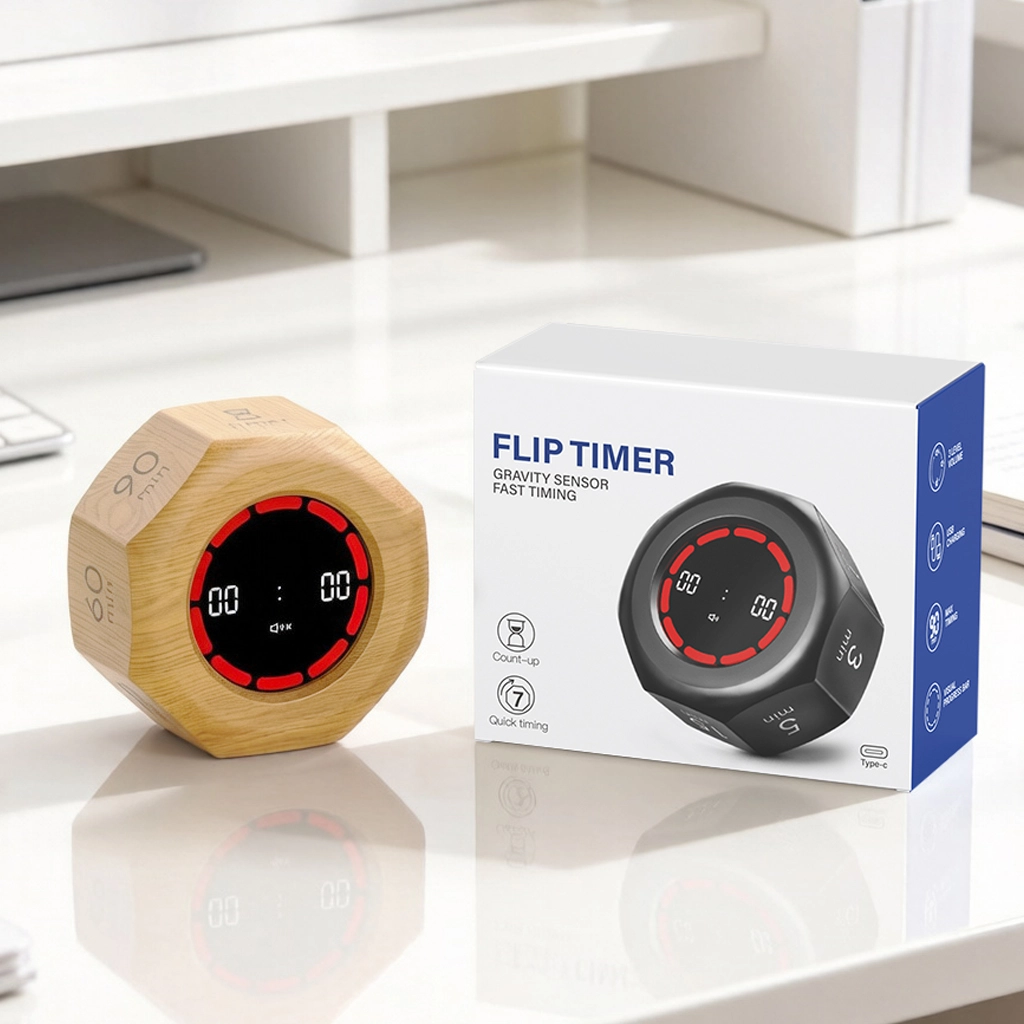
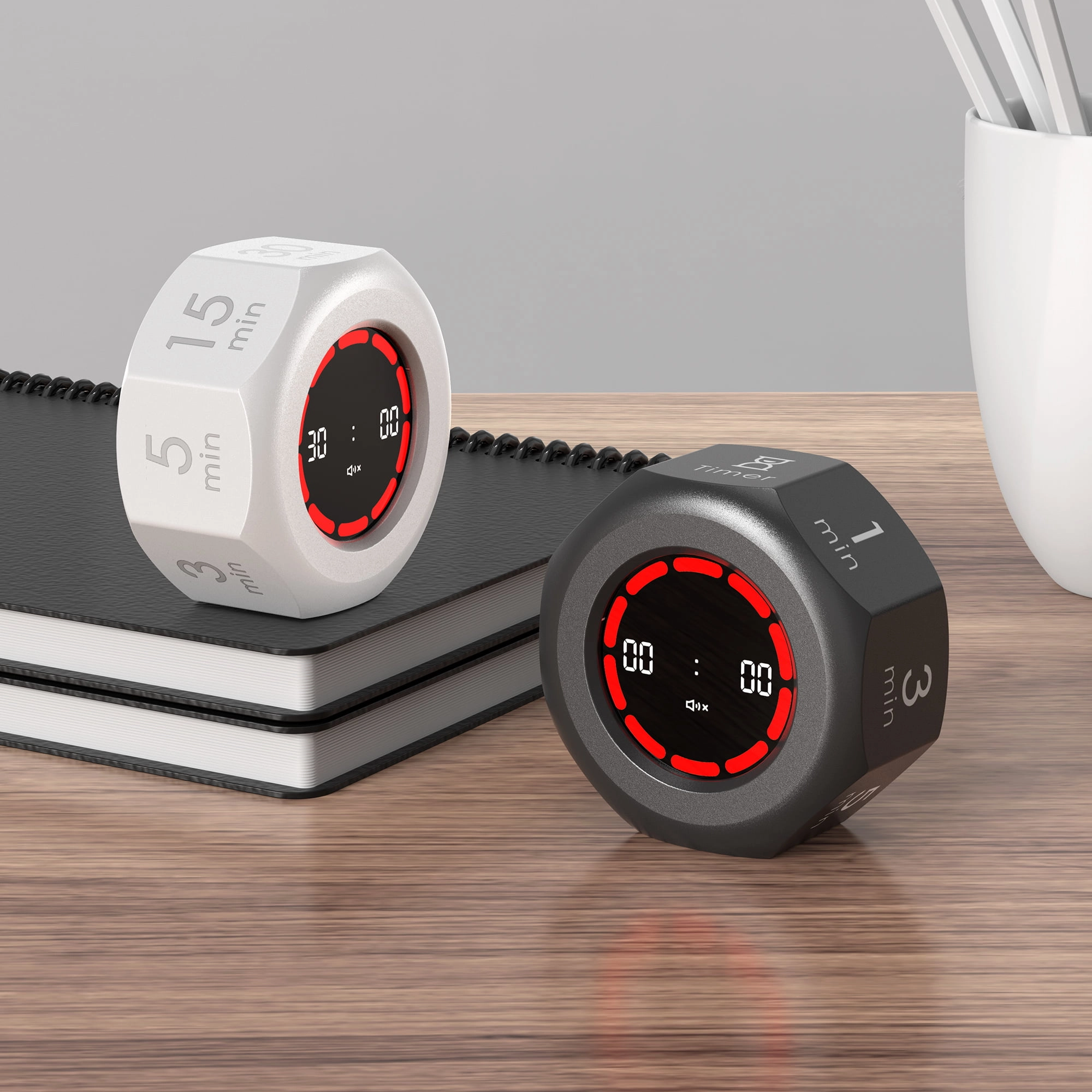
The category includes basic countdown clocks, count-up timers, interval timers, Pomodoro timers, study timers, classroom visual countdown products, kitchen timers, sports interval devices, and specialized process timers. Some products use a simple LCD, while others use LED segments, color-coded progress rings, graphical displays, or hybrid visual and acoustic notifications. The appropriate architecture depends on the user’s need for glanceability, portability, silent operation, memory functions, and precision.
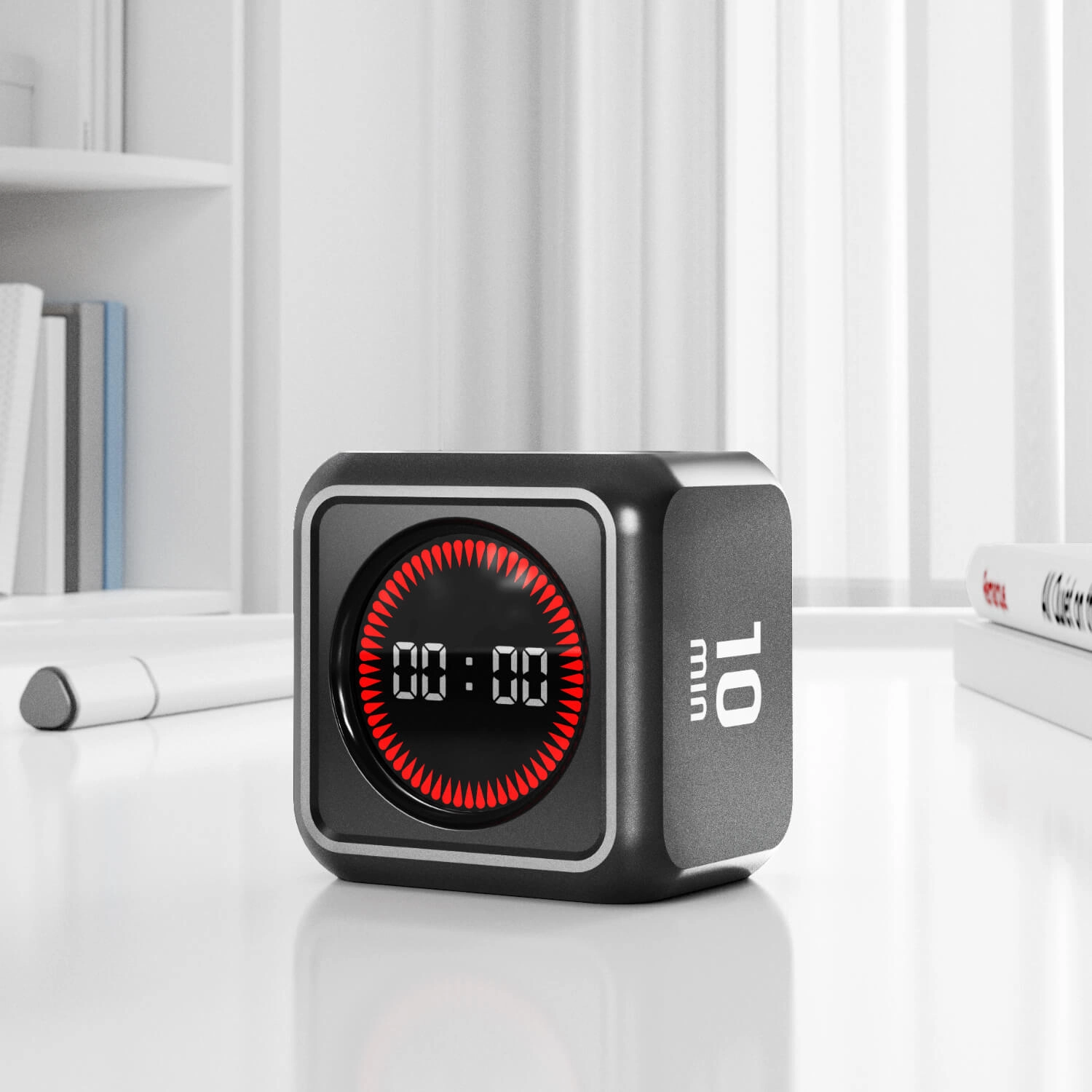
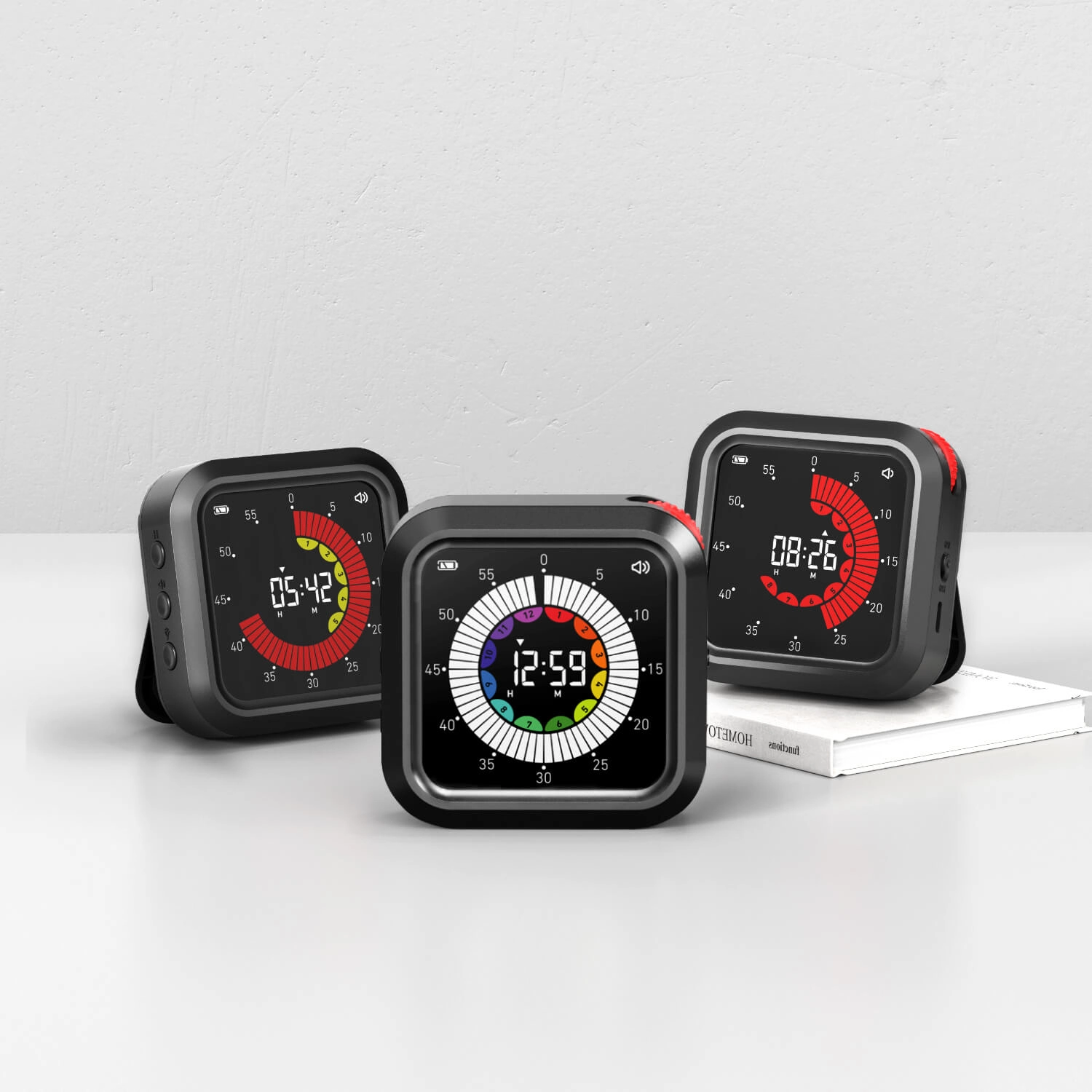
A visual countdown product is particularly valuable when users need to understand remaining time without reading changing digits continuously. A colored disk, shrinking bar, rotating segment, or other graphical indicator can support task transitions and improve time awareness. However, visual communication must be tested under different lighting conditions, viewing angles, distances, and user abilities. Buyers should request demonstrations under realistic conditions rather than relying solely on product photographs.
Why supplier classification affects procurement risk
Manufacturers, contract assemblers, trading companies, and platform sellers may all present similar catalogs, but their control over the supply chain differs substantially. A manufacturer with internal engineering and tooling capability can usually respond more effectively to enclosure revisions, display changes, firmware updates, and defect investigations. A broker may offer faster catalog selection but depend on multiple upstream factories for technical answers, production scheduling, and corrective action.
Buyers should identify who owns the product drawings, firmware source, tooling, test fixtures, and compliance records. Ownership and access are especially important for private-label programs because a brand may need replacement tooling, a second production location, or a future product revision. A clear responsibility matrix should define design approval, sample signoff, change control, inspection standards, warranty handling, and intellectual-property protection.
How B2B Buyers Should Evaluate a Digital Timer Supplier
Technical specifications that influence product performance
Timing accuracy is only one part of product quality. Procurement teams should examine the timing range, resolution, memory behavior, restart logic, pause function, alert duration, alert volume, silent mode, and low-battery behavior. For a classroom or office product, a clear display and quiet operation may be more important than an unusually loud alarm. For a kitchen or exercise product, tactile controls, splash-resistant construction, and rapid reset may have greater commercial value.
Display selection requires equal attention. LCD technology can support long battery life and strong readability in many portable products, while LED displays can offer high brightness and visibility at a distance. Color elements may improve task awareness but can increase electronics complexity, power consumption, and component cost. Buyers should also check whether the display remains legible for users with limited vision and whether the product can be used without depending on a mobile application.
Mechanical details affect the total cost of ownership. A supplier should explain enclosure materials, surface finishes, button life, magnet strength, stand stability, wall-mount options, battery compartment security, and resistance to ordinary handling. For products sold to schools, clinics, or public facilities, cleanability and robust construction may be more important than decorative finishes. For e-commerce products, compact packaging and protection against transit damage can directly affect fulfillment costs and review scores.
Quality systems, testing, and compliance documentation
Buyers should request a documented quality plan covering incoming material inspection, first-article approval, in-process checks, final functional testing, appearance inspection, and shipment sampling. A supplier’s quality system should support traceability for critical components and provide a defined corrective-action process when a defect appears. The principles of quality management described by ISO 9001 provide a useful framework for evaluating process control, customer requirements, continual improvement, and documented procedures, even when formal certification is not the only selection criterion.
Electrical and electronic products may require market-specific conformity work. Depending on the destination and product design, buyers may need evidence related to electromagnetic compatibility, restricted substances, radio functions, battery safety, or general electrical safety. The European Commission’s CE marking guidance explains that CE marking reflects a manufacturer’s declaration that applicable European Union requirements have been met; it is not a universal quality award. For products entering the United States, applicable FCC requirements for radio-frequency devices should be assessed when the product contains wireless or other regulated electronics.
Restricted-substance declarations should be matched to the applicable market and bill of materials. The European Union’s RoHS Directive information is a useful reference for substance restrictions in electrical and electronic equipment. Buyers should obtain current test reports, declarations, material records, and product-specific documentation rather than accepting a generic certificate copied from another model.
Commercial capability and production scalability
Commercial evaluation should cover minimum order quantity, sample fees, tooling charges, development timelines, lead times, payment terms, forecast flexibility, spare-part availability, packaging requirements, and shipping terms. A low unit quotation may become expensive if the supplier separates engineering, mold development, packaging, and compliance costs into unpredictable change orders.
Scalability should be assessed through capacity planning rather than a single factory photograph. Buyers can ask how the supplier handles demand peaks, component shortages, engineering changes, and quality holds. A mature partner should be able to explain production line capacity, critical component alternatives, incoming inspection, factory acceptance criteria, and the escalation path for urgent issues. The NIST Time and Frequency Division also illustrates why accurate time measurement depends on disciplined standards and measurement practices; product-level timing requirements should therefore be stated clearly and verified during testing.
| Evaluation area | Catalog reseller or broker | Engineering-led OEM/ODM partner | B2B buyer implication |
|---|---|---|---|
| Product customization | Usually limited to logo and packaging | May include industrial design, electronics, firmware, tooling, and packaging | Deeper customization can create stronger differentiation and channel protection |
| Technical accountability | Often depends on an upstream factory | Defined engineering and quality ownership | Faster root-cause analysis and clearer change control |
| Compliance support | May provide generic or model-limited documents | Can coordinate product-specific testing and declarations | Lower documentation risk for market launch |
| Production scalability | Depends on external factory availability | Planned through internal capacity and supply-chain controls | More predictable replenishment for growing brands |
| Brand development | Primarily supports resale | Supports differentiated product architecture and retail presentation | Better opportunity to build proprietary market positioning |
Why Youben life Is Built for Private-Label Timing Programs
Integrated product development from concept to shipment
Youben life was established in 2010 as a specialist OEM/ODM manufacturer focused on Digital Timers, Pomodoro timers, Visual Countdown Clocks, temperature and humidity monitors, and thermo-hygrometers. Our specialization allows our engineering and manufacturing process to remain concentrated on timing, environmental measurement, user interaction, and compact consumer electronics rather than treating these products as an occasional catalog category.
Our 20,000m² vertically integrated facility in Guangzhou, China, supports turnkey development for global brands and Amazon bestsellers. We go beyond simple assembly by covering industrial design and mechanical design, custom IC programming, precision mold tooling, electronics development, product refinement, testing coordination, and retail-ready packaging. This integrated model helps reduce communication gaps between design, tooling, production, and packaging teams while giving project owners a clearer route from prototype approval to commercial shipment.
Product expertise aligned with buyer and end-user requirements
Our Digital Timer range can be developed for productivity, education, cooking, exercise, household organization, and other use cases where visible and dependable time management matters. Pomodoro timer programs can emphasize focused work cycles, simple controls, quiet alerts, and compact desktop placement. Visual Countdown Clock projects can prioritize distance readability, progress indication, color logic, wall mounting, or classroom usability. Product specifications can be adapted around the buyer’s target price, sales channel, packaging format, and brand identity.
Our environmental monitoring portfolio includes thermo hygrometer products and temperature humidity monitor solutions for households, offices, storage areas, nurseries, and other spaces where users need accessible readings. Combining timing products with temperature and humidity measurement can help distributors build a broader product family while maintaining a consistent visual identity across packaging and retail listings. The commercial advantage is not merely a larger catalog; it is the ability to coordinate product language, industrial design, quality expectations, and replenishment with one specialized partner.
Compliance, manufacturing discipline, and brand protection
All Youben life products meet strict CE, FCC, and RoHS requirements according to the applicable product configuration and destination-market obligations. Our compliance approach is intended to support responsible market entry, documentation readiness, and customer confidence. Buyers should still confirm the exact regulatory scope for each final model, battery configuration, wireless function, and sales region before launch.
With a decade of engineering experience and scalable manufacturing capacity, our team supports structured development milestones: requirement confirmation, design proposal, prototype review, tooling approval, pilot production, quality validation, packaging confirmation, and mass production. This staged approach gives brand owners opportunities to identify usability, appearance, and performance issues before large-volume commitments. It also creates a documented basis for engineering changes when a retailer, marketplace, or regional distributor requests a revision.
Private-label success depends on more than putting a logo on an existing enclosure. Our ID/MD capabilities can help create a recognizable silhouette, color system, control layout, and packaging experience. Custom IC programming and firmware planning can support branded operating logic, timing presets, alert behavior, and user-interface decisions. Precision mold tooling helps translate approved designs into consistent production parts, while retail-ready packaging supports e-commerce presentation and physical distribution.
Implementation Roadmap for a Successful Timing Product Launch
Define the commercial and user requirements first
Before requesting quotations, project owners should prepare a product requirement document. It should identify target users, primary applications, timing range, display preference, alert requirements, power source, dimensions, mounting method, materials, colors, logo treatment, packaging language, destination markets, expected annual volume, and target retail price. Clear requirements reduce quotation ambiguity and make supplier proposals easier to compare.
Buyers should also identify measurable acceptance criteria. Examples include timing deviation over a defined period, display readability at a stated distance, button actuation performance, battery endurance, alarm audibility, enclosure appearance, packaging drop performance, and defect classification. A sample that looks attractive but lacks measurable acceptance standards can create disagreements during mass production.
Control samples, tooling, and engineering changes
Prototype approval should be documented with revision numbers, photographs, test results, approved colors, artwork files, and packaging specifications. Tooling ownership and storage arrangements should be recorded in the commercial agreement. Any later change to a display, IC, battery, plastic resin, button, supplier, or firmware should follow a formal engineering-change process because seemingly minor substitutions can affect timing behavior, compliance, user experience, or shelf life.
Measure launch readiness beyond the unit price
A complete sourcing decision should compare landed cost, expected defect rate, warranty exposure, tooling amortization, compliance expenses, packaging efficiency, lead time, replenishment reliability, and product differentiation. The lowest factory price is not necessarily the lowest commercial cost if it creates delayed launches, high return rates, or weak marketplace ratings. A supplier that combines engineering ownership, quality controls, production capacity, and responsive communication can create stronger return on investment over the complete product lifecycle.
For brands evaluating a new timing platform, Youben life offers a specialized path from product concept to scalable manufacturing across Digital Timer, Pomodoro timer, Visual Countdown Clock, thermo hygrometer, and temperature humidity monitor categories. Contact our team at info@youbenlife.com or visit Youben life to discuss OEM/ODM requirements and view suitable product solutions.
Frequently Asked Questions
What does a visual timer manufacturer do?
A visual timer manufacturer designs, engineers, produces, tests, and supports digital timing products such as countdown clocks, Pomodoro timers, interval timers, and related electronic hardware. Its capabilities may include industrial design, electronics, firmware, custom IC programming, tooling, assembly, compliance documentation, and packaging.
What should B2B buyers check before selecting a digital timing supplier?
Buyers should review timing accuracy, display readability, controls, alert behavior, battery performance, enclosure durability, quality procedures, compliance documentation, minimum order quantity, lead time, tooling ownership, change control, and the supplier’s ability to scale production.
What is the difference between a catalog reseller and an OEM/ODM partner?
A catalog reseller generally offers existing products with limited logo or packaging changes, while an engineering-led OEM/ODM partner may support industrial design, electronics, firmware, custom IC programming, mold tooling, product-specific testing, and retail-ready packaging.
Why are CE, FCC, and RoHS documents important for digital timers?
These requirements and declarations can support market access and responsible product compliance, depending on the product configuration and destination market. Buyers should confirm that documentation applies to the exact final model, battery configuration, wireless function, and sales region rather than accepting generic certificates.
Can Youben life develop private-label Pomodoro timers and visual countdown clocks?
Yes. Youben life provides OEM/ODM development for Digital Timers, Pomodoro timers, and Visual Countdown Clocks, including industrial design, custom IC programming, precision mold tooling, product refinement, testing coordination, and retail-ready packaging.
What other products does Youben life manufacture?
In addition to digital timing products, Youben life manufactures thermo hygrometer products and temperature humidity monitor solutions for applications including homes, offices, storage areas, nurseries, and other environments requiring accessible temperature and humidity readings.
How can a buyer contact Youben life about an OEM/ODM project?
Buyers can contact Youben life at info@youbenlife.com or visit https://www.youbenlife.com/ to discuss product requirements and suitable manufacturing solutions.
Private Label Timer Design Ideas to Appeal to Bulk Buyers
Top 10 buy household thermometer online manufacturers and suppliers
Digital Visual Countdown Timer Installation and Maintenance Considerations
Wholesale digital timer for grow lights manufacturer and supplier
Interested in this article?
Let’s talk.
Need specifications, pricing, or customization options? We’ll provide everything you need.

Youben life
Youben life