
Private Label Visual Timer Packaging Strategies for Retailers, Distributors, and Online Brands
- Packaging choices for branded visual countdown timers
- Start with the buyer and use case
- Select a format that supports display and protection
- Build packaging specifications around channel requirements
- Compare common packaging approaches
- Make product identification and logistics scannable
- Plan for online listings and returns
- Control artwork, claims, materials, and production quality
- Use a documented artwork and approval process
- Substantiate environmental and quality statements
- Coordinate with a supplier to scale a branded product line
- Our product portfolio supports related category planning
- Reduce launch risk with staged validation
- Use a buyer checklist before approving production
- Frequently Asked Questions
Retailers, distributors, and online brands can use packaging to make a visual countdown timer easier to understand, protect, merchandise, and ship. A successful private label visual timer packaging program connects the product’s use case with the right format, clear instructions, accurate claims, dependable barcode placement, and fit-for-channel protection. Buyers should define target customers and sales channels before approving artwork, then verify product-package compatibility, labeling, sustainability claims, quality controls, and replenishment requirements with the supplier. A phased process—from packaging brief and prototype through production inspection—helps reduce avoidable rework while building a consistent brand experience.
Packaging choices for branded visual countdown timers
Packaging is part of the product proposition, not merely a container. It communicates how a timer works, who may benefit from it, what is included, and whether the unit is suitable for a particular retail shelf or online order. Because timer designs vary in display style, controls, dimensions, power source, and intended use, packaging decisions should be based on the actual approved product rather than a generic category template.
Start with the buyer and use case
Map the principal audience before choosing a visual direction. A classroom-focused model may need an immediately understandable explanation of the remaining-time display and simple setup guidance. A desk or productivity timer may benefit from messaging about work intervals and task planning, while a family-oriented model may emphasize intuitive operation and visibility across a room. These are positioning choices, not performance claims: every statement must match the product’s tested features and intended use.
Translate the audience definition into a short packaging brief that names the sales channel, price position, principal benefit, required languages, product specifications, and mandatory content. Include the intended retail environment and the likely distance from which shoppers will view the front panel. This helps the design team prioritize legible product imagery, a clear category description, and a concise explanation of the visual countdown instead of crowding the panel with competing claims.
Select a format that supports display and protection
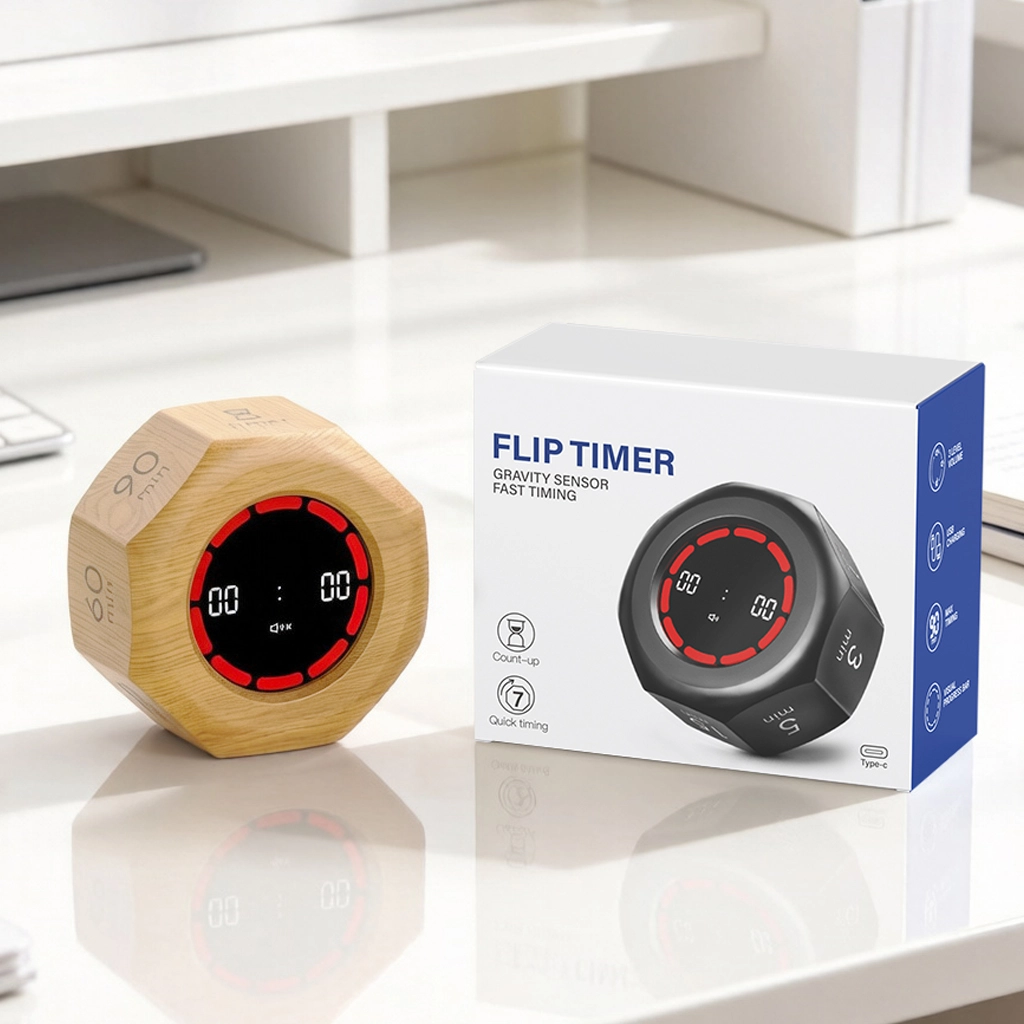
Folding cartons, hanging cartons, window boxes, and mailer-ready packs each serve different operational needs. A carton can provide broad surfaces for branding and instructions; a hanging format can support peg merchandising when the retailer’s planogram allows it; a window can show the product but adds a design and protection decision; and an e-commerce mailer may prioritize transit protection and efficient packing. The best option depends on product fragility, shelf fixtures, fulfillment method, package dimensions, and the customer’s need to inspect the device.
Confirm the internal fit with a production-representative sample. The timer should not shift excessively in transit, buttons should not be unintentionally pressed, and any display or lens should be protected from abrasion. If the package uses inserts, verify that the device can be removed without damaging the carton and that accessories, batteries where applicable, and instructions remain organized. A visually attractive mock-up alone does not establish that the pack will perform through distribution.
Build packaging specifications around channel requirements
One package design rarely performs equally well in every route to market. Retail distribution may require efficient shelf identification and case handling, while direct-to-consumer fulfillment introduces parcel handling, pick-and-pack processes, and product-page expectations. Distributors may also need master-carton markings that make receiving and inventory management straightforward. The packaging specification should distinguish consumer-facing information from logistics data and define which elements are fixed across channels.
Compare common packaging approaches
The following comparison describes typical trade-offs rather than guaranteed performance. Final results depend on the timer construction, materials, pack dimensions, retailer requirements, and distribution testing.
| Packaging approach | Retail visibility | Protection considerations | Operational considerations |
|---|---|---|---|
| Folding carton with product image | Provides a broad printable surface for brand and usage information | Protection depends on carton strength, internal fit, and any insert | Can support flat-packed carton supply and organized shelf presentation |
| Carton with viewing window | Allows shoppers to see part of the physical product | Window opening and film choice need review for dust, abrasion, and transit exposure | Requires coordination between product positioning, window dimensions, and artwork |
| Hanging retail pack | Can be displayed on compatible peg fixtures | Hanging point and pack structure must carry the packed product securely | Retailer fixture compatibility and peg-hole placement should be confirmed |
| Protective e-commerce mailer or shipper | Usually emphasizes delivery and brand experience rather than shelf display | Requires evaluation for parcel handling and internal movement | May add a separate pack-out step or serve as an outer shipping package |
Make product identification and logistics scannable
Barcode placement should be agreed before final artwork. Buyers should reserve an unobstructed, appropriately sized area, avoid seams and folds, and confirm that the selected code can be scanned on the actual printed material. GS1 explains barcode standards and their role in identifying products; consult the relevant GS1 barcode standards information and the applicable trading-partner requirements when defining the symbol and data. A proof that looks clear on screen still needs a print and scan check on production-representative packaging.
Also define the information needed on individual units and shipping cases, including product identifier, model or SKU, quantity, and handling details where required by the customer. Keep consumer-facing claims distinct from warehouse labels. If multiple variants share a carton design, use a controlled method—such as a defined label location or variant-specific artwork—to reduce picking errors and prevent similar-looking products from being confused during receiving.
Plan for online listings and returns
Online shoppers cannot handle the device before purchase, so packaging and product-page content should work together. The listing can provide detailed images, operating guidance, dimensions, included components, and relevant limitations; the package should make the product recognizable on arrival and provide essential setup information. Avoid relying on packaging alone to explain features that customers need before ordering. Clear identification and useful instructions can also help customer-service teams distinguish models when responding to setup questions or processing returns.
For parcel orders, decide whether the retail carton is designed to ship on its own or will be placed inside a secondary shipper. Do not assume that a shelf-ready box will withstand every fulfillment route. Evaluate package closure, internal movement, corners, and display surfaces using a distribution test plan appropriate to the product and channel. Record the approved configuration so that product, packaging, and fulfillment teams do not substitute a different pack-out without review.
Control artwork, claims, materials, and production quality
Packaging errors can create costly consequences even when the timer itself meets its specification. Typical risks include outdated instructions, incorrect model images, missing translations, unverified feature statements, inconsistent variant labels, and artwork that has not been checked against the dieline. A controlled approval workflow assigns responsibility for product facts, regulatory review, translation, design, and final release before files are sent to production.
Use a documented artwork and approval process
Maintain a master specification for each model and packaging version. It should identify approved product names, dimensions, included items, power details where relevant, instructions, warnings, barcode data, language requirements, and permitted claims. Require the appropriate product or technical owner to verify specifications and the commercial owner to approve positioning. Where a market requires local language or additional disclosures, obtain qualified review rather than treating a translated draft as automatically compliant.
Before mass production, review a physical proof or production sample for color, legibility, barcode scanning, print registration, carton fit, and correct product representation. Document the approved artwork revision and sample. Any later change to product hardware, accessories, supplier, or packaging material should trigger an assessment of whether the packaging remains accurate and fit for purpose. This revision control is especially important when several retailers or regions use related but non-identical versions.
Substantiate environmental and quality statements
Environmental language should be specific and supportable. Terms such as recyclable, recycled content, or responsibly sourced can depend on material composition, local collection systems, certification scope, and the exact claim being made. The U.S. Federal Trade Commission Green Guides provide guidance on environmental marketing claims in the United States; companies selling in other markets should check applicable local rules. Where a supplier offers certified fiber or chain-of-custody materials, confirm the certificate, scope, and permitted use of any associated mark rather than relying on a general supplier statement. The Forest Stewardship Council chain-of-custody certification overview explains the certification framework for tracking certified material through the supply chain.
Quality management should connect packaging controls to documented processes. Buyers can ask how a manufacturer approves artwork, inspects incoming packaging, controls revisions, and handles nonconforming output. ISO 9001:2015 specifies requirements for a quality management system; a certificate is not a substitute for checking the supplier’s scope, operational controls, and product-specific evidence. Agree on inspection criteria, sampling approach, defect categories, and corrective-action expectations before a large order is released.
Coordinate with a supplier to scale a branded product line
The most effective packaging program is developed alongside the product and supply plan. Buyers should align packaging artwork, engineering samples, production lead times, minimum order quantities, and shipping configuration early enough to identify conflicts before launch. A supplier discussion should cover available customization, packaging material options, printing and finishing capabilities, sample timing, quality checkpoints, and change-control responsibilities. These details help project owners compare proposals on total execution readiness rather than unit price alone.
Our product portfolio supports related category planning
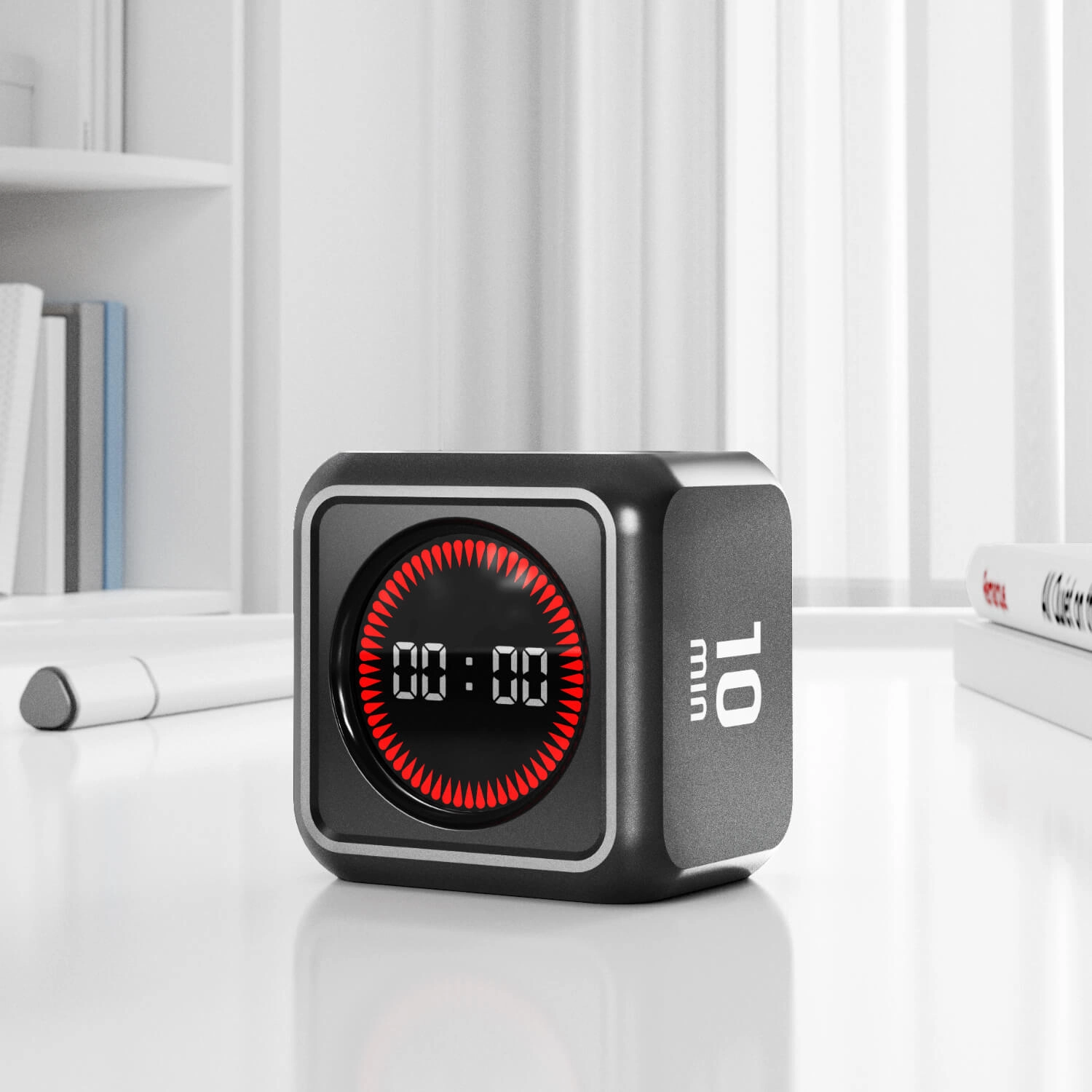
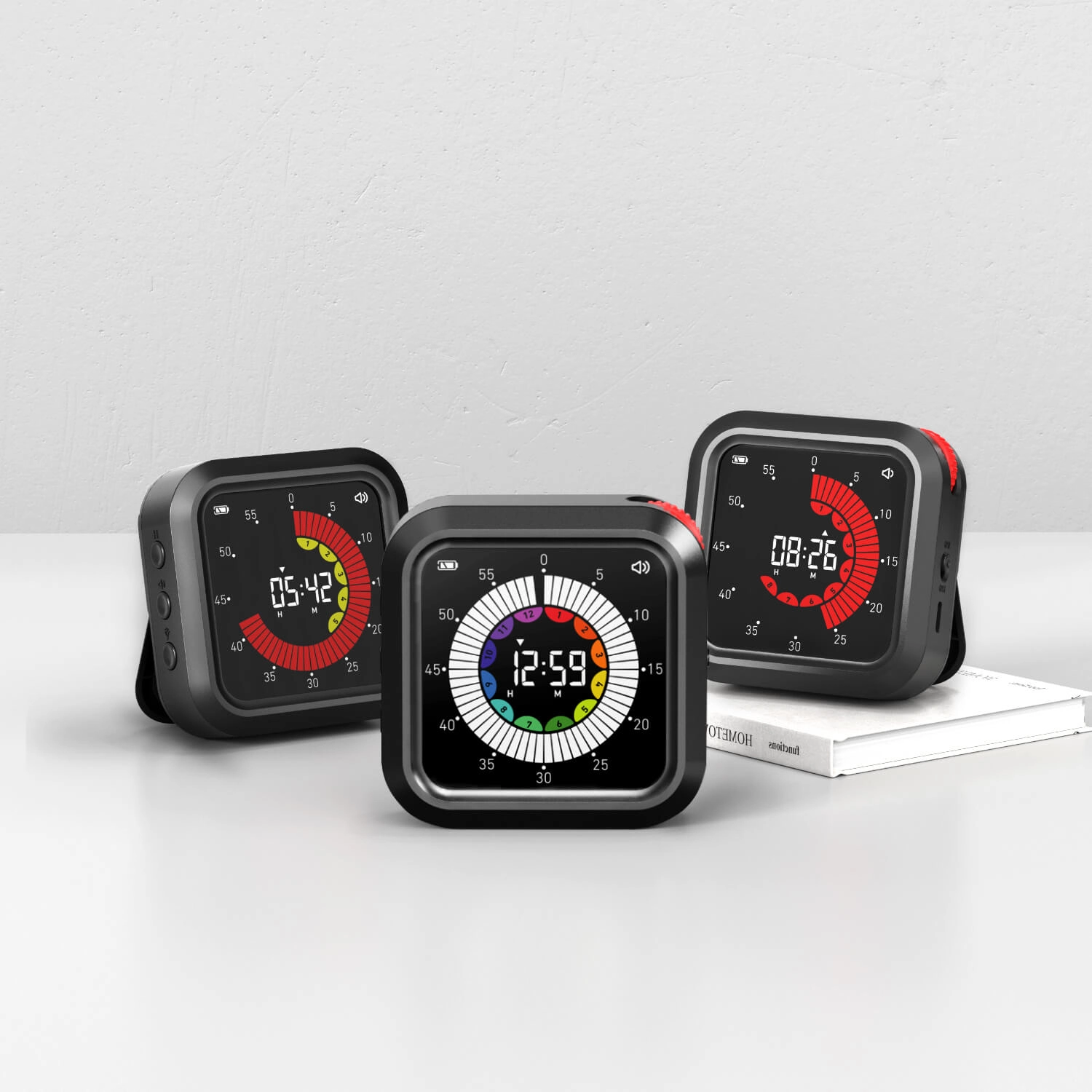
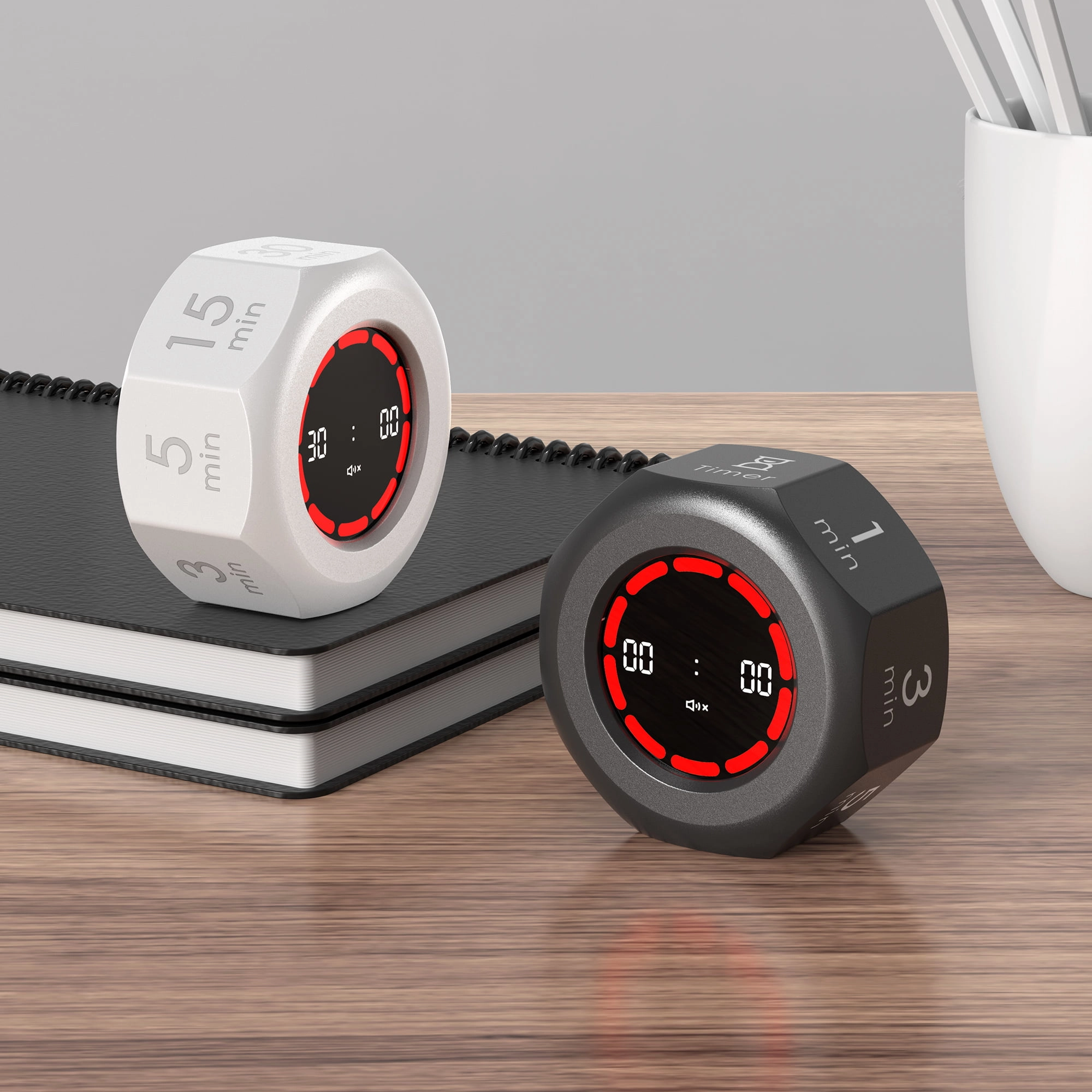
Our product range includes digital timers and Pomodoro timers, as well as thermo-hygrometers and temperature humidity monitors. This breadth can help retailers, distributors, and online brands assess whether a single supplier relationship may support adjacent time-management and environmental-monitoring categories. Product-specific packaging still needs to reflect each device’s actual dimensions, controls, display, included components, and intended market; shared brand elements should not obscure the information that distinguishes one model from another.
For a timer program, our team can coordinate discussions around product presentation, packaging requirements, and the information buyers need to evaluate a branded assortment. Buyers should provide target-channel details, expected positioning, markets and languages, forecast ranges, and any retailer specifications at the inquiry stage. A well-defined brief makes it easier to determine which requirements are common across products and which need model-specific artwork, inserts, or logistics labels. No production capability, certification, or performance claim should be assumed without confirmation for the specific project.
Reduce launch risk with staged validation
A disciplined launch can move through four practical gates: approve the product and packaging brief; review artwork and a structural sample; validate a production-representative package and required scans; then release production against the approved revision and inspection plan. At each stage, assign an owner and retain the relevant records. This process gives procurement, product, design, quality, and fulfillment teams a shared basis for sign-off and makes it easier to investigate discrepancies after delivery.
Commercial evaluation should include more than the printed carton price. Consider tooling or setup charges, pack-out labor, protective materials, storage volume, freight efficiency, damage exposure, and the cost of artwork changes. A lighter or smaller pack may influence shipping and storage, but any change must preserve protection and meet customer requirements. Request comparable quotations using the same specification and forecast assumptions so that suppliers are evaluated on a consistent scope.
Use a buyer checklist before approving production
Before releasing an order, confirm that the package matches the final product and target sales channel; the contents, instructions, languages, and claims have been checked; the barcode and logistics markings are approved; material and environmental statements are supported; and the physical sample has passed the agreed review. Verify carton quantities, case labels, shipping configuration, inspection criteria, artwork revision, and responsibility for future changes. For multi-market launches, identify any country-specific packaging or labeling review still required and schedule it before inventory is committed.
Packaging that aligns product truth, channel needs, and operational controls gives brands a stronger foundation for a reliable launch. Buyers evaluating a branded timer program should use the specification and validation steps above to compare suppliers, protect the customer experience, and plan a product assortment that can be maintained as models and markets evolve.
Frequently Asked Questions
What packaging format works best for a branded visual timer?
The right format depends on the product’s dimensions and fragility, retail fixture, customer need to view the device, and distribution route. Folding cartons, window boxes, hanging packs, and protective e-commerce mailers each have different visibility, protection, and operational trade-offs, so buyers should assess a production-representative sample.
What information should buyers provide to a timer packaging supplier?
Provide the target audience and sales channels, product specifications, included components, intended markets and languages, positioning, forecast ranges, retailer requirements, and any barcode or logistics specifications. This brief helps identify shared requirements and model-specific packaging needs.
How can a buyer verify barcode placement on retail packaging?
Agree on the barcode data and placement before artwork approval, reserve a clear area away from folds and seams, and check the symbol on production-representative printed material. Confirm that it scans and meets relevant GS1 and trading-partner requirements.
How should environmental claims on timer packaging be checked?
Use specific claims that can be substantiated for the actual packaging materials and markets. Check applicable local guidance, verify supplier documentation and certification scope, and do not use a certification mark or broad environmental statement without confirming that its use is permitted.
What quality checks should be completed before mass production?
Review a physical or production-representative sample for product fit, protection, print quality, legibility, barcode scanning, correct model representation, and required information. Document the approved artwork revision, inspection criteria, sampling approach, and process for handling later changes.
Should retail packaging be used as the shipping box for online orders?
Only if the package has been evaluated for the relevant parcel handling and fulfillment route. Buyers should decide whether a secondary shipper is needed and assess closure, internal movement, corners, and display surfaces using an appropriate distribution test plan.
Best Digital Alarm Clocks 2026: Top Models for Every Budget
Mini Timer Supplier Comparison: OEM vs. ODM Manufacturers
Mini Countdown Timers vs. Digital Timers: Which to Buy?
Wholesale programmable digital timer manufacturer and supplier
Interested in this article?
Let’s talk.
Need specifications, pricing, or customization options? We’ll provide everything you need.

Youben life
Youben life