
Private Label Visual Timer OEM or ODM: Choosing the Right Customization Route for Your Product Line
- OEM and ODM routes for custom visual timer development
- When an OEM program fits a defined product concept
- When an ODM platform offers a practical launch path
- How to assess specifications, compliance, and production risk
- Translate the product brief into testable requirements
- Verify quality systems and market-specific obligations
- Build a product-line decision and supplier scorecard
- Compare total project value, not just factory price
- Use a consistent supplier evaluation process
- Frequently Asked Questions
Choosing between OEM and ODM for a visual timer depends on how much control a brand needs over the product’s design, features, tooling, and market positioning. OEM is generally the better route when a buyer has a defined specification or proprietary design; ODM is often more suitable when speed to market and adaptation of an existing platform are priorities. Before approving a private label visual timer project, buyers should compare design ownership, customization limits, tooling costs, minimum order quantities, validation plans, and market-specific compliance responsibilities. The most reliable decision is based on a written product specification and a supplier review that covers engineering capability, production controls, and long-term supply continuity.
OEM and ODM routes for custom visual timer development
OEM and ODM are commercial models, not universal legal definitions. In practice, suppliers may use the terms differently, so a purchase agreement should clearly identify who owns the design, who pays for tooling, which changes require approval, and what happens to drawings and molds if production moves. A product brief should also distinguish essential requirements from optional preferences. This prevents a project from paying for customization that does not improve customer value.
When an OEM program fits a defined product concept
OEM is typically appropriate when a brand owner brings a product design, a detailed technical specification, or unique functional requirements to the manufacturer. The buyer may define the timer’s dimensions, display arrangement, control layout, sound options, power source, enclosure materials, packaging, and target performance. The factory then manufactures against the agreed specification and may contribute engineering support to make the design manufacturable.
This route can support stronger product differentiation, but it requires more decisions before production. Buyers should provide drawings or reference samples, expected use conditions, required operating behaviors, and acceptance criteria. If the concept is still changing, unresolved decisions can create engineering revisions, new tooling requirements, schedule delays, and disputes about whether a delivered unit conforms. Design ownership and permitted supplier use should be addressed in writing, including treatment of custom artwork, firmware, molds, and product-specific documentation.
When an ODM platform offers a practical launch path
ODM is commonly used when the supplier already has a timer platform that can be adapted with selected changes. A buyer might choose a standard housing and internal architecture, then customize the color, logo, packaging, display graphics, button labels, or selected functions. The approach can reduce development work, but customization remains bounded by the platform’s engineering and tooling limits.
Before selecting an existing model, request a configuration list that separates standard features from optional modifications. Confirm whether the supplier can alter the visual scale, alarm behavior, control interface, power method, or enclosure, and whether each change affects tooling, certification, lead time, or order quantity. A sample should represent the intended production configuration rather than a visually similar catalog item. This is particularly important when the timer will be sold as part of a coordinated product family.
| Decision factor | OEM route | ODM route |
|---|---|---|
| Starting point | Buyer-provided design, specification, or product concept | Supplier’s existing design or product platform |
| Design control | Usually greater buyer influence, subject to the contract and engineering feasibility | Usually constrained by the supplier platform and agreed adaptation scope |
| Customization scope | Can be broad, including product architecture, when supported by budget and engineering resources | Often focused on configurable features, appearance, branding, and selected modifications |
| Development workload | Typically requires more buyer-side specification, review, and validation | Can use existing designs to reduce new product development tasks |
| Ownership and tooling | Must be negotiated for buyer-supplied designs and any newly funded tooling | Existing platform ownership commonly remains with the supplier; custom additions need explicit terms |
| Best suited to | Distinctive concepts, specific technical requirements, or controlled product architecture | Market testing, faster adaptation, or launches based on proven product formats |
The table describes common commercial patterns, not guaranteed contract terms. A signed agreement and approved specification take precedence over a supplier’s use of the labels OEM or ODM.
How to assess specifications, compliance, and production risk
Customization decisions affect more than appearance. The timer’s user interface, electronics, battery selection, enclosure, packaging, and target market can each create different design and validation requirements. Procurement teams should build a requirement-to-evidence checklist before approving a quotation. This makes supplier comparisons more meaningful than comparing unit price alone.
Translate the product brief into testable requirements
A useful specification defines how the product should behave in ordinary use and how that behavior will be checked. For a visual countdown device, requirements may cover the display’s legibility, countdown range, alert method, button response, memory behavior after power interruption, battery access, stability on a desk, and tolerance to expected handling. If the timer is intended for classrooms, offices, kitchens, or therapy settings, the use environment should be stated rather than assumed.
Ask the supplier to identify the components and functions that may change between samples and mass production. Confirm the approved bill of materials, firmware version where applicable, cosmetic standards, packaging configuration, and change-control procedure. A golden sample can help anchor visual and functional acceptance, but it should be supported by measurable inspection criteria. For example, define how display defects, enclosure gaps, labeling errors, and functional failures will be classified and handled.
Verify quality systems and market-specific obligations
Quality-system certification can be one part of supplier due diligence, but it does not prove that a particular timer meets every product or market requirement. Buyers can verify the scope and status of a supplier’s quality certification and ask how incoming components, in-process checks, final inspection, nonconformities, and corrective actions are documented. The ISO 9001:2015 standard overview describes requirements for quality management systems; the buyer should still assess how those controls apply to the specific product and factory.
For products containing electrical or electronic components, regulatory obligations depend on design, destination market, and product classification. Where applicable, buyers should determine whether materials restrictions under the EU RoHS Directive apply and obtain suitable supplier declarations or test evidence for the actual bill of materials. Products with radio-frequency functions may also require market-specific review; in the United States, the FCC Part 15 rules address radio-frequency devices. A basic timer without wireless functions may have a different compliance profile, so requirements should be confirmed rather than copied from another product.
Documentation should match the shipped configuration. Request test reports, declarations, labeling details, and model identification that correspond to the exact product, components, and destination. A report for a similar model is not automatically evidence for a customized version. Importers and brand owners should identify who is responsible for testing, technical files, market access, and updates if a component or design changes.
Build a product-line decision and supplier scorecard
The best route depends on the commercial role the timer will play. A stand-alone hero product may justify deeper customization, while an accessory or pilot product may be better served by adapting an established platform. The decision should account for the full launch cost: engineering, tooling, samples, testing, packaging, inventory, freight, and post-launch support. A low quoted unit price can become expensive if the project requires repeated revisions or leaves ownership and change control unclear.
Compare total project value, not just factory price
For an OEM program, estimate the cost of design completion, engineering reviews, prototype rounds, tooling, verification, and any required production fixtures. For an ODM program, check modification charges, branding setup, platform restrictions, and any fees associated with a future change. In both cases, request quotation assumptions in writing, including order quantity, packaging, included accessories, inspection level, payment milestones, lead time, and quote validity.
Minimum order quantity should be considered alongside forecast confidence and inventory risk. A larger order may reduce unit cost but can tie up working capital and leave the buyer with stock that no longer matches market demand. Ask whether the supplier can support a controlled pilot order, repeat production, and forecast-based capacity planning. A realistic launch plan also allows time for sample approval, packaging review, compliance assessment, and corrective action before the sales date.
Use a consistent supplier evaluation process
We recommend scoring potential manufacturing partners against the same evidence-based criteria rather than relying on a sales presentation. Useful categories include engineering response quality, specification review, customization boundaries, sample consistency, change management, production traceability, quality documentation, communication, capacity, and after-sales handling. Buyers should request examples of relevant product experience without treating unrelated product references as proof of capability.
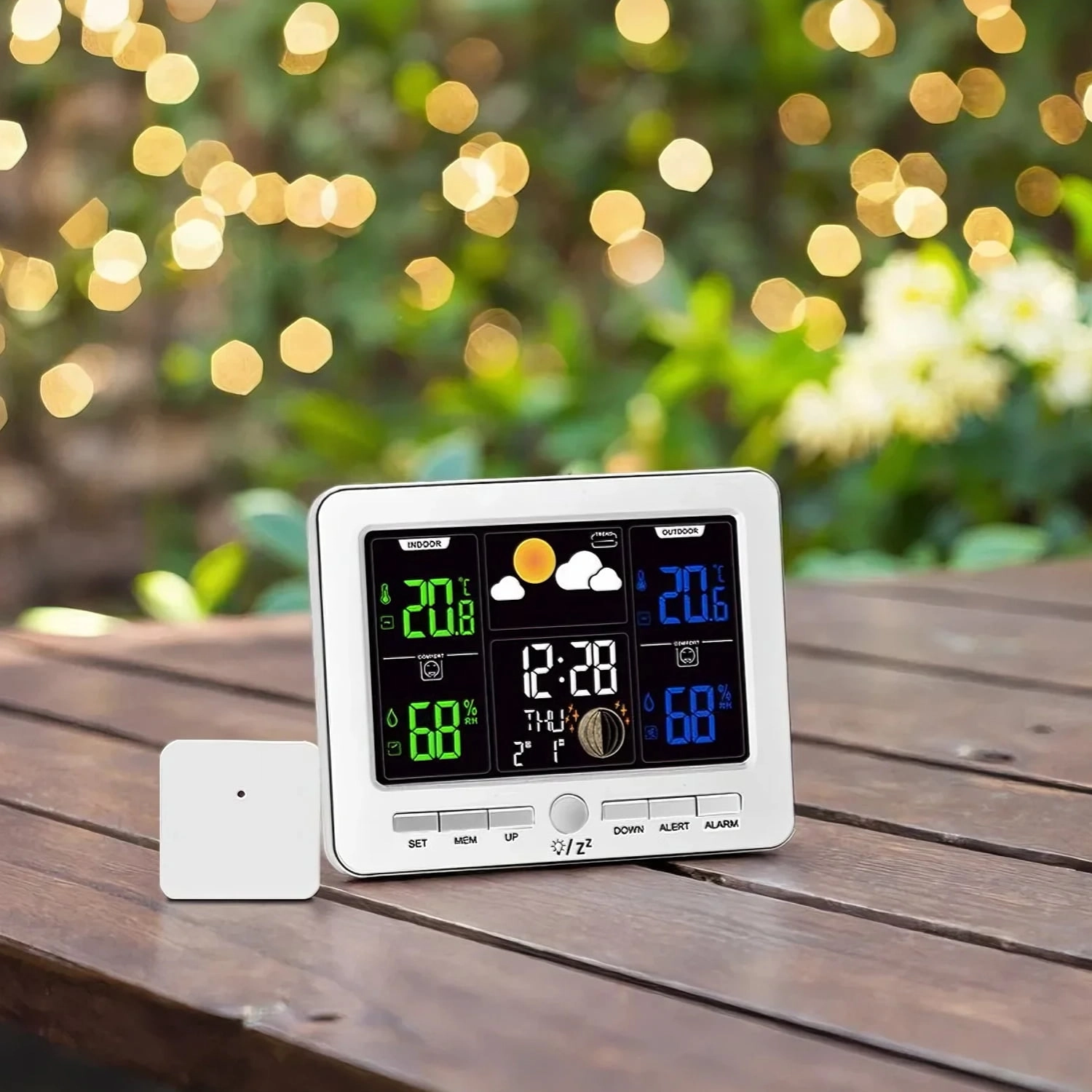
Our product-planning approach should also account for adjacent categories and the needs of the complete assortment. A digital timer or pomodoro timer may share customer channels with visual countdown products, while a thermo hygrometer or temperature humidity monitor can serve a different functional need within the same home, education, or workplace range. Coordinated packaging, channel positioning, and supplier oversight can simplify assortment planning, but technical requirements and compliance evidence must remain specific to each product.
Before a purchase order is released, confirm the approved specification, sample status, commercial terms, ownership provisions, quality plan, and change-approval contacts. Buyers should also agree how defects will be reported, investigated, and corrected, including response times and responsibility for replacement or rework. These controls help protect launch schedules and reduce avoidable disagreement after mass production begins.
Contact our team to discuss timer customization requirements or explore digital timer, pomodoro timer, thermo hygrometer, and temperature humidity monitor products for your range.
Frequently Asked Questions
What is the difference between OEM and ODM for a visual timer?
OEM generally starts with a buyer-provided design or detailed specification, while ODM generally adapts a supplier’s existing product platform. Exact responsibilities depend on the agreement, so design ownership, tooling, and customization scope should be documented.
Is OEM or ODM better for launching a custom visual countdown timer?
OEM may suit a differentiated concept or specific technical requirements. ODM may suit a launch that can use an existing platform with selected changes. The right choice depends on the required customization, budget, timing, and buyer’s design control needs.
What should buyers include in a visual timer product specification?
Define the countdown behavior, display legibility, alert method, controls, power source, enclosure, labeling, packaging, expected use environment, and acceptance criteria. Identify the approved configuration and how changes between samples and production will be controlled.
How can buyers verify quality and compliance for a customized timer?
Review the supplier’s quality controls and confirm which market requirements apply to the exact design and destination. Request documentation that matches the shipped configuration, such as relevant test reports, declarations, and labeling details; do not assume evidence for a similar model applies.
Who owns the mold and product design in an OEM or ODM project?
Ownership is determined by the commercial agreement, not by the OEM or ODM label alone. Specify ownership and permitted use for buyer designs, custom tooling, artwork, firmware, and product documentation, including what happens if production changes suppliers.
What factors should be compared besides unit price?
Compare engineering and tooling charges, sample rounds, testing, minimum order quantity, packaging, lead time, quality controls, change management, inventory exposure, and after-sales support. Include these costs and responsibilities in the total project assessment.
Digital Visual Countdown Timer Specifications: Display Size, Visibility, Controls, and Accuracy
Top 10 large display desk clock for seniors manufacturers and suppliers
Top 10 digital alarm clock with usb charging manufacturers and suppliers
Enhance Productivity: Advanced Weather Clocks for Offices
Interested in this article?
Let’s talk.
Need specifications, pricing, or customization options? We’ll provide everything you need.

Youben life
Youben life