
Private Label Visual Timer Features Buyers Are Prioritizing in the Growing Visual Productivity Market
- What B2B Buyers Value in Visual Time-Management Products
- At-a-glance time awareness for varied users
- Reliability, repeatability, and user confidence
- How to Compare Timer Formats and Core Specifications
- Choose a display architecture that fits the use case
- Translate desired features into a testable product brief
- Private-Label Program Risks, Quality Controls, and Differentiation
- Protect consistency from sample approval to repeat orders
- Build differentiation around customer value, not feature accumulation
- Aligning Product Portfolios with Buyer Priorities
- Connect timer selection to adjacent product needs
- Use a supplier review process that supports long-term execution
- Frequently Asked Questions
Buyers entering the visual productivity market are prioritizing timers that make remaining time immediately understandable, work reliably across daily routines, and support clear brand differentiation. When evaluating a private label visual timer, procurement teams should compare display format, timing accuracy, controls, power requirements, accessibility, customization options, safety and regulatory documentation, and production consistency. The strongest sourcing decision balances user experience with landed cost, target-market compliance, packaging needs, and the supplier’s ability to deliver a repeatable product specification.
What B2B Buyers Value in Visual Time-Management Products
At-a-glance time awareness for varied users
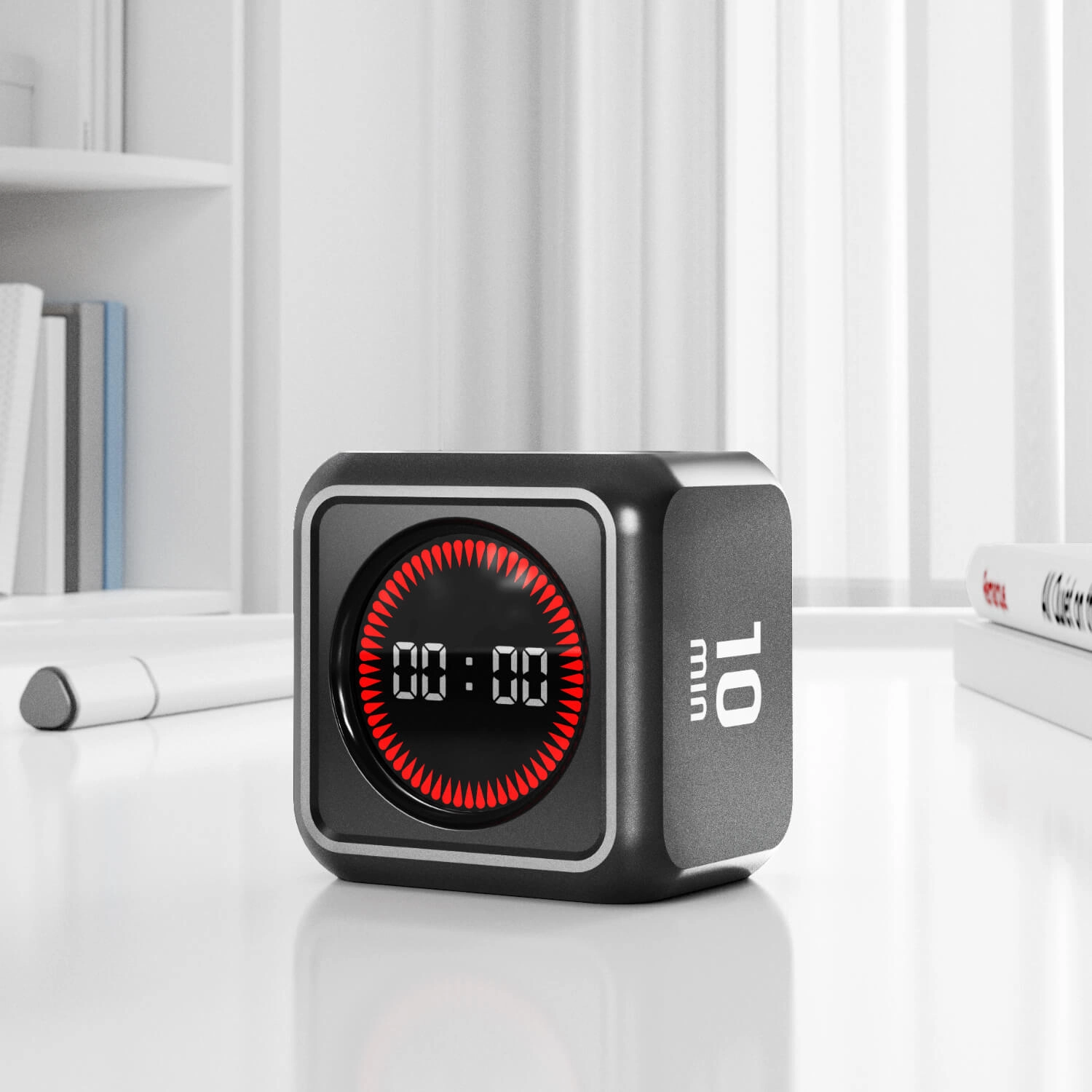
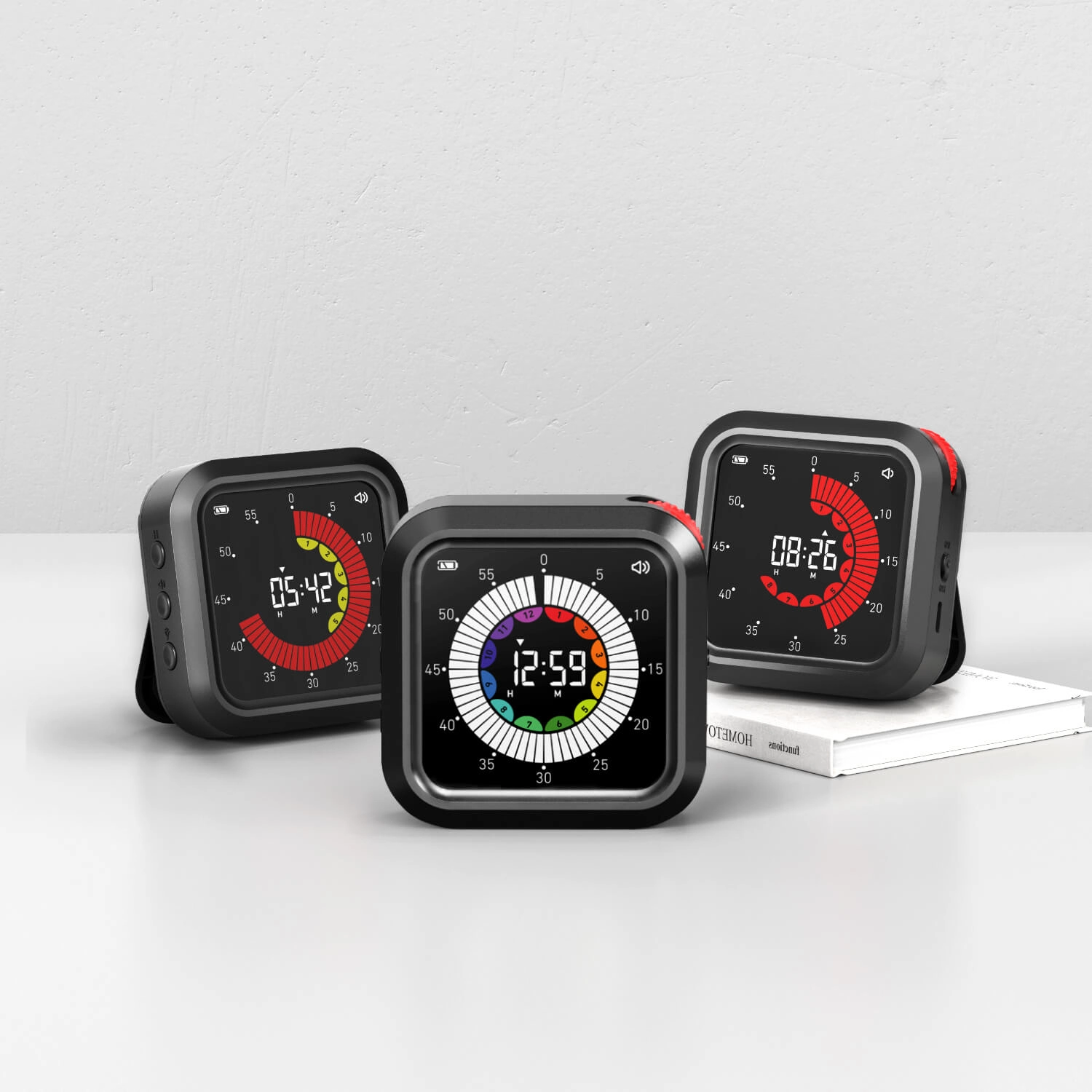
A visual timer translates elapsed time into a changing visual cue, often through a colored sector, bar, or segmented display. This can help users understand how much time remains without repeatedly reading a clock or calculating minutes. Potential settings include classrooms, home offices, therapy environments, meeting rooms, and shared workspaces. These applications do not have identical needs: a child-facing product may need oversized controls and durable construction, while an office model may prioritize a quiet alert, compact footprint, and understated styling.
For a buyer, the practical question is not simply whether a product looks visual, but whether its display communicates time clearly under expected conditions. Check whether the remaining-time indicator is distinguishable at the intended viewing distance, whether labels are legible, and whether the interface makes start, pause, reset, and mode selection easy to understand. Evaluate the display in typical room lighting and against likely backgrounds. User testing with representative customers can reveal confusion that a specification sheet will not.
Reliability, repeatability, and user confidence
Timer performance affects trust. If a device starts inconsistently, loses settings, or produces an unclear signal, users may stop relying on it. Procurement specifications should state the intended timing range, increment or resolution, acceptable accuracy tolerance, alert behavior, and reset behavior. Buyers should also confirm whether the timer retains a selected duration after power interruption, if that behavior matters to the use case. These requirements should be tested against the final production sample rather than inferred from a product image or a prototype with different components.
Usability is also a measurable design consideration. ISO 9241-11 describes usability in relation to specified users, goals, and contexts of use. That perspective is useful when drafting a product brief: define who will use the timer, what they need to accomplish, and where it will operate. A model intended for independent use by young children may require a different control layout from a desk timer used by adults during focused work sessions.
How to Compare Timer Formats and Core Specifications
Choose a display architecture that fits the use case
Visual timers are not one uniform product category. A mechanical or analog-style unit may communicate a countdown through a moving colored disc, while an LCD model can combine numeric time with a visual bar or segments. App-connected designs may add configurable reminders or device integration, but they can introduce setup, connectivity, privacy, and support requirements. The best format depends on the user, environment, price position, and channel—not on feature count alone.
The comparison below describes common design trade-offs, not guaranteed performance for every model. Buyers should verify each point against the proposed product’s actual construction and test results. For connected products, assess the app’s supported operating systems, update policy, data handling, and ongoing maintenance responsibilities in addition to the hardware.
| Timer format | Typical time cue | Potential advantages | Procurement checks |
|---|---|---|---|
| Mechanical or analog-style | Moving colored sector or dial | Time passage can be understood visually; may operate without an app | Timing range, winding or power method, setting precision, noise, durability, and ease of reset |
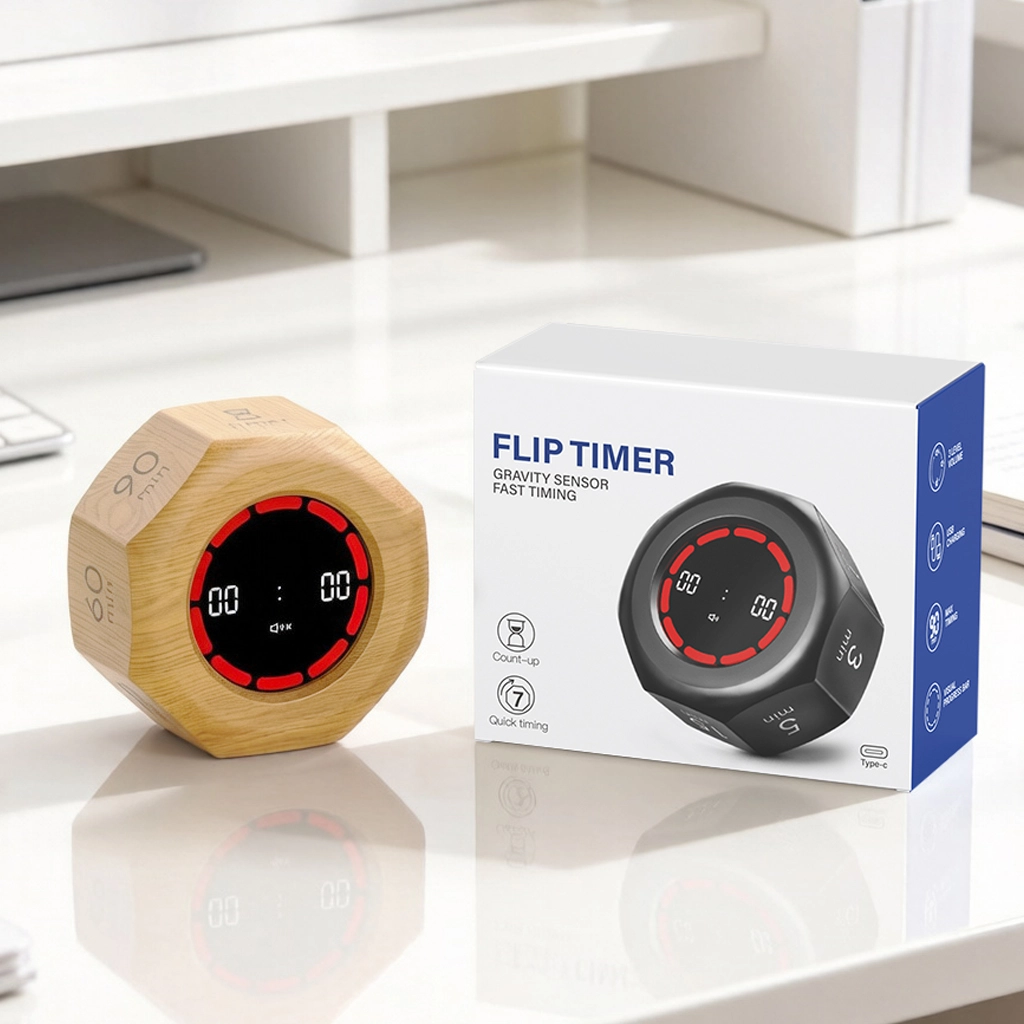
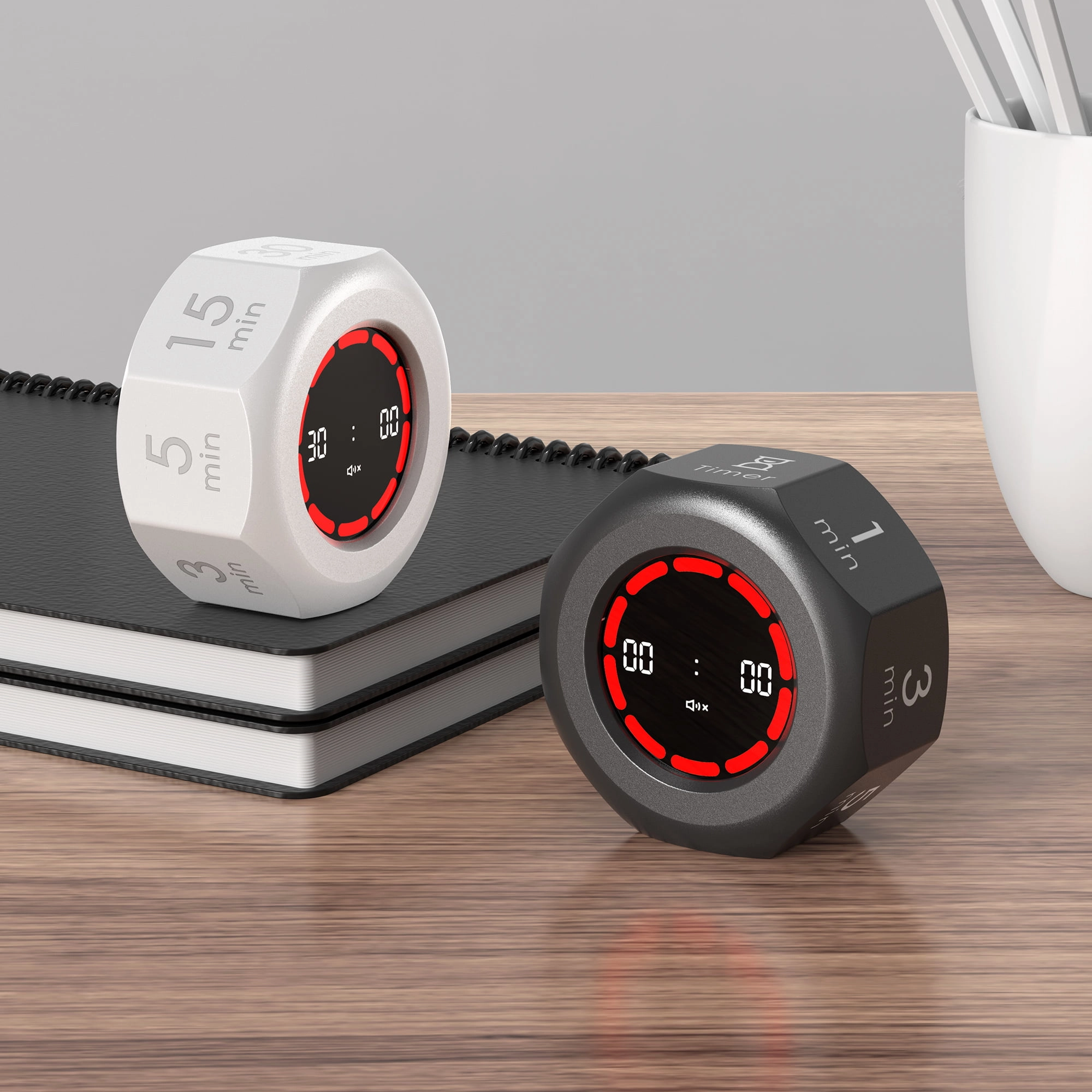
| Digital LCD or LED | Numeric countdown, sometimes paired with a bar or segments | Can show exact remaining minutes and support multiple modes | Screen legibility, contrast, button logic, battery life, alert volume, and display behavior at low power |
| App-connected timer | On-device display and/or companion interface | May provide configurable routines, notifications, or connected workflows | Pairing process, compatibility, software support, connectivity dependence, privacy, and service obligations |
For electronic products, safety and environmental obligations need to be checked for the destination market and product configuration. The IEC 62368-1 standard addresses safety requirements for audio/video, information, and communication technology equipment; whether it applies to a particular timer should be determined with the relevant compliance specialist or testing partner. In the European Union, the RoHS Directive restricts the use of certain hazardous substances in electrical and electronic equipment, subject to its scope and provisions. Buyers should request documentation that matches the exact model, components, and intended markets rather than relying on generic supplier statements.
Translate desired features into a testable product brief
A strong sourcing brief turns broad preferences into acceptance criteria. Specify the timing range and resolution, display dimensions, viewing angle, control labels, sound and visual alert behavior, material and finish, power source, and required languages. Define dimensions and weight if the product must fit a retail shelf, classroom kit, gift set, or online fulfillment package. If a quiet mode is required, state whether it disables sound entirely or simply lowers alert volume. If a magnetic back, stand, or wall-mount option is needed, define the expected attachment method and use conditions.
Packaging should be treated as part of the product experience and the operational specification. Confirm the pack-out, included accessories, battery policy, instructions, barcode placement, carton quantity, and shipping protection. For international programs, artwork review should cover translated instructions, local warnings, symbols, and market-specific labeling. A preproduction sample should represent the final hardware, firmware, packaging, and printed materials, since changing any of these after approval can affect cost, compliance, or user understanding.
Private-Label Program Risks, Quality Controls, and Differentiation
Protect consistency from sample approval to repeat orders
Private-label sourcing gives brand owners control over positioning and presentation, but it also makes specification control essential. A visually similar substitute component can change screen contrast, button feel, power consumption, or perceived quality. Buyers should create a controlled specification that identifies the approved model, revision, materials, color references, artwork files, and required test records. Any change to a critical component or production process should be subject to review and written approval.
Quality planning should address incoming components, in-process assembly, and finished-product inspection. Depending on product design and risk, checks may cover timing function, display consistency, control response, alert operation, assembly condition, packaging accuracy, and sample-based endurance testing. Agree in advance on inspection criteria, sampling approach, defect classification, corrective-action expectations, and responsibility for retesting. These controls help reduce avoidable returns and prevent differences between the approved sample and the goods delivered to a distribution center.
Build differentiation around customer value, not feature accumulation
Useful differentiation can come from a more readable display, simpler setup, purposeful color choices, a distinctive enclosure, thoughtful packaging, or a model configured for a particular routine. Buyers should test whether a feature solves a real customer problem before adding it. Extra modes or controls may increase component cost and make the interface harder to learn. For retail programs, a coherent product family can also help customers choose between a basic countdown model, a focused-work timer, and a more feature-rich digital option without making the range confusing.
Commercial evaluation should include more than unit price. Compare tooling or customization charges, minimum order quantities, lead times, sample costs, packaging costs, payment terms, freight assumptions, and the cost of market-specific testing. Model expected order volumes and replenishment cycles, and clarify how forecasts, component availability, and change control will be managed. A low quoted price is not necessarily the lowest total cost if it depends on unverified compliance, unstable components, or costly rework.
Aligning Product Portfolios with Buyer Priorities
Connect timer selection to adjacent product needs
Visual time management can sit within a broader productivity and environment-monitoring assortment. Our product range includes Digital Timer and pomodoro timer options alongside thermo hygrometer and temperature humidity monitor products. This creates an opportunity for buyers to consider complementary categories when planning a focused-work, study, or home-office collection. Each product still needs its own specification, market review, and validation; a shared retail theme does not replace product-level quality or compliance checks.
For assortment planning, compare the customer job each item serves. A countdown device supports time awareness, while a pomodoro timer can be positioned around structured work-and-break routines. A thermo hygrometer or temperature humidity monitor addresses awareness of indoor conditions. Buyers can use this distinction to develop clearer product descriptions, bundled offers, or channel-specific assortments without implying that a timer measures environmental conditions or that a monitor controls them.
Use a supplier review process that supports long-term execution
When assessing our offerings or any supplier’s proposal, buyers should request current specifications, sample units, applicable test reports, labeling details, and a clear explanation of customization boundaries. Discuss how engineering changes are communicated, how production samples are approved, and how quality issues are documented and resolved. Confirm who owns tooling and artwork, what happens when a component becomes unavailable, and whether the supplier can support the required order cadence. These questions help establish whether a product concept can be converted into a stable commercial program.
Our digital timer, pomodoro timer, thermo hygrometer, and temperature humidity monitor categories can be reviewed against the intended audience, channel, and price architecture. A disciplined project process should begin with a written brief, move through sample evaluation and compliance review, and finish with approved production criteria. Buyers who align those steps early are better positioned to reduce late-stage changes and make product claims that match the delivered item.
Contact us to discuss your product requirements or review our timer and monitoring product range for your next private-label program.
Frequently Asked Questions
What features should buyers prioritize in a private-label visual timer?
Prioritize an easy-to-understand visual display, reliable timing, intuitive start, pause, and reset controls, suitable alert behavior, appropriate power options, durable construction, and customization that matches the target market. Define these requirements as measurable acceptance criteria in the product brief.
How should buyers choose between an analog-style and a digital visual timer?
An analog-style timer may make the passage of time easy to see through a moving colored sector, while a digital model can show numeric time and may offer multiple modes. Compare the intended users, display legibility, timing range, setting precision, controls, power method, and required features before selecting a format.
What compliance documents should a timer supplier provide?
Request documentation relevant to the exact model, components, and destination markets, and have applicability confirmed by a qualified compliance specialist or testing partner. For example, IEC 62368-1 addresses safety for certain audio/video and information and communication technology equipment, while the EU RoHS Directive restricts certain hazardous substances in electrical and electronic equipment within its scope.
How can buyers reduce quality differences between an approved sample and production units?
Use a controlled specification identifying the approved model and revision, materials, colors, artwork, and required test records. Agree on inspection criteria, defect classifications, change approval, and corrective-action expectations, and ensure the preproduction sample reflects the final hardware, firmware, and packaging.
Which details belong in a visual timer product brief?
Specify timing range and resolution, display dimensions and legibility needs, controls, alert behavior, material and finish, power source, dimensions, languages, packaging, included accessories, and market labeling. Also define any required mounting or stand features and how samples will be evaluated.
Can visual timers be combined with other productivity products in a private-label assortment?
Yes. A visual countdown timer or pomodoro timer can complement products such as a thermo hygrometer or temperature humidity monitor in a broader work, study, or home-office assortment. Each product should retain distinct positioning and undergo its own specification, validation, and compliance review.
Smart Focus Timer Features Buyers Need: Connectivity & Battery
Best Indoor Thermometers for Nursery and Kids' Rooms
Best led sports timer for stadium manufacturers and supplier brands
Top 10 thermometer for pets and humans manufacturers and suppliers
Interested in this article?
Let’s talk.
Need specifications, pricing, or customization options? We’ll provide everything you need.

Youben life
Youben life