
Private Label Pomodoro Timer Purchase Risks: Preventing Inconsistent Quality and Specification Errors
- Where Focus Timer Sourcing Projects Commonly Fail
- Uncontrolled specifications create hidden product variation
- Electronics and firmware defects affect perceived brand quality
- Compliance and packaging errors can become market-access problems
- A Procurement Framework for Consistent Digital Timer Quality
- Convert the product concept into measurable requirements
- Validate samples in stages rather than approving one prototype
- Use layered quality assurance and acceptance sampling
- Supplier Due Diligence and Commercial Risk Controls
- Evaluate engineering depth, not just quoted unit price
- Protect the project with clear change and warranty procedures
- Measure total cost of ownership
- How Youben Life Supports Reliable Private-Label Timer Programs
- Integrated OEM and ODM engineering under one manufacturing system
- Specification control from concept through production
- Compliance, scalability, and a broader product portfolio
- Frequently Asked Questions
Buying a private label pomodoro timer is not simply a matter of selecting a housing, adding a logo, and placing a purchase order. The commercial outcome depends on specification control, electronic reliability, firmware behavior, battery safety, acoustic performance, display readability, regulatory documentation, packaging accuracy, and repeatable production. For brand owners and distributors, the most serious risks are inconsistent quality between batches and specification errors that remain unnoticed until products reach customers. A robust procurement program therefore requires a documented product requirement specification, engineering validation samples, approved reference units, supplier process audits, defined acceptance criteria, and pre-shipment inspection. International references such as ISO 9001 quality management principles, the FCC equipment authorization framework, the European Union RoHS Directive, and the Pomodoro Technique provide useful context, but the buyer must still verify that the actual product, components, labeling, and technical file match the intended market.
Where Focus Timer Sourcing Projects Commonly Fail
Uncontrolled specifications create hidden product variation
Many sourcing failures begin with an incomplete product brief. A request such as “a minimalist study timer with Pomodoro functions” does not define the operating logic that factories need to reproduce. A production-ready specification should identify countdown ranges, count-up functions, work and break presets, pause and resume behavior, memory retention, reset logic, alarm duration, sound levels, display format, button response, power source, low-battery indication, auto-off behavior, time accuracy, language requirements, and target environmental conditions.
Physical details require the same precision. The brief should specify dimensions and tolerances, surface finish, plastic resin or flame-retardant grade where applicable, button travel, display window color, magnet or stand requirements, label placement, logo treatment, carton dimensions, included accessories, and user manual language. Without controlled drawings and a bill of materials, a supplier may substitute a display, buzzer, battery compartment, or microcontroller to reduce cost or address availability. The product may still look acceptable while behaving differently from the approved sample.
Electronics and firmware defects affect perceived brand quality
A digital timer is a compact electronic system, not merely a clock face. The microcontroller, crystal or timing source, display driver, buzzer, buttons, battery contacts, power-management circuit, and printed circuit board must work as one system. A buzzer that is too quiet in a classroom, a display that becomes unreadable at an angle, or buttons that require excessive force can generate returns even when the enclosure is visually attractive.
Firmware variation is particularly difficult to identify through appearance inspection. The same housing can contain software with different default durations, alarm priorities, restart behavior, or sleep settings. A buyer should require a written functional test plan covering every user mode. Test cases should include rapid repeated button presses, low-voltage operation, interrupted countdowns, reset after battery replacement, simultaneous control inputs, and extended operation. The approved golden sample should be retained and compared against mass-production units using the same test sequence.
Compliance and packaging errors can become market-access problems
Regulatory responsibility does not transfer automatically to the factory. Depending on destination market and product configuration, buyers may need evidence relating to electromagnetic compatibility, restricted substances, battery transport, labeling, recycling marks, importer information, and consumer instructions. A CE mark, FCC statement, or RoHS declaration should never be treated as a substitute for product-specific verification. The documentation must correspond to the model number, hardware revision, components, and intended sales region.
Packaging is another frequent source of specification error. Incorrect battery information, missing warnings, wrong language, inaccurate operating instructions, or a barcode mismatch can create warehouse delays and marketplace compliance issues. Packaging artwork should be controlled with revision numbers, approval dates, color references, dielines, and a final prepress proof. The carton, insert, manual, product label, and online listing should all describe the same functions and accessories.
A Procurement Framework for Consistent Digital Timer Quality
Convert the product concept into measurable requirements
The first control point is a product requirement specification shared with every shortlisted manufacturer. Separate requirements into critical, major, and minor categories. Critical items may include safe battery installation, correct countdown logic, power stability, regulatory labeling, and correct model identity. Major items may include display uniformity, alarm operation, enclosure fit, and button response. Minor items may include small cosmetic marks outside the customer viewing area.
Each requirement should have a verification method. For example, “alarm is audible” is subjective, while “alarm operates for the defined duration at the approved sound setting and remains functional after repeated cycles” is testable. “Long battery life” should be converted into a defined test condition, operating profile, battery type, and minimum runtime. This approach reduces disputes because both parties understand how acceptance will be determined.
Validate samples in stages rather than approving one prototype
A single prototype is not enough to establish production consistency. A more reliable sequence includes an appearance model for industrial design review, an engineering prototype for electronics and firmware, a tooling sample for dimensional and surface validation, and a pilot-run sample made with production-intent materials and processes. The pilot stage should test not only the device but also the retail packaging, manual, accessories, and barcode.
Buyers should document every change between stages. A component substitution, mold adjustment, firmware revision, or artwork correction must receive written approval before production. The final approved unit should be signed, dated, photographed, and assigned a sample code. Retaining this reference reduces ambiguity when a later shipment is compared with the original development sample.
Use layered quality assurance and acceptance sampling
Quality assurance should operate at incoming-material, in-process, and final-inspection levels. Incoming controls can verify plastic parts, displays, batteries, PCBs, labels, and packaging materials. In-process controls can check soldering, assembly torque, button installation, display alignment, firmware loading, and enclosure closure. Final inspection can combine appearance review, functional testing, accessory verification, carton counts, barcode scanning, and random endurance checks.
Sampling plans should be agreed before production rather than negotiated after a defect is found. Buyers may use an accepted quality limit approach such as ANSI/ASQ Z1.4, provided the selected inspection level and defect classifications fit the product risk. Sampling does not replace process control: a supplier should still test every unit for essential functions such as power-on, display activation, countdown operation, alarm output, and safe battery polarity.
| Control area | Weak procurement practice | Recommended verification | Commercial risk reduced |
|---|---|---|---|
| Functional behavior | Approval based only on appearance | Written test matrix covering every operating mode | Returns caused by firmware or control errors |
| Components | Uncontrolled substitutions | Approved bill of materials and change-notification process | Variation in accuracy, display, battery life, or sound |
| Tooling and housing | Verbal dimensional agreement | Controlled drawings, tolerances, and tooling sample approval | Fit, finish, and assembly defects |
| Compliance | Generic certificates from another model | Model-specific technical records and market review | Customs, marketplace, and regulatory disruption |
| Shipment release | Trusting supplier self-inspection | Independent or buyer-approved pre-shipment inspection | Large-scale batch rejection and recall exposure |
Supplier Due Diligence and Commercial Risk Controls
Evaluate engineering depth, not just quoted unit price
The lowest quotation can conceal tooling exclusions, limited firmware capability, weak testing, unstable component sourcing, or packaging charges added later. During supplier evaluation, buyers should ask who owns the industrial design, whether the factory can modify firmware, how engineering changes are recorded, which tests are performed on every unit, and how nonconforming products are isolated. Evidence is more valuable than broad claims: request sample inspection records, process flow charts, equipment lists, calibration records, and examples of controlled technical documents.
Capacity should also be evaluated against the project timeline. A supplier may have adequate assembly labor but insufficient molding, programming, testing, or packaging capacity. The project plan should identify tooling lead time, pilot production date, component procurement window, production cycle, inspection date, and shipping release. This timeline makes bottlenecks visible before inventory commitments are made.
Protect the project with clear change and warranty procedures
Contracts and purchase orders should define the approved model, revision level, bill of materials, packaging version, inspection standard, defect remedies, replacement obligations, and warranty process. A no-change policy is not always practical because electronic components may become unavailable, but every substitution should require prior written approval and an impact assessment. The assessment should address function, safety, compliance, battery performance, appearance, and software behavior.
Warranty analysis should distinguish manufacturing defects from misuse and transit damage. Serial numbers or production codes can help identify affected lots, while retained samples and inspection records support root-cause analysis. A supplier that reports corrective actions using a structured method such as 8D demonstrates stronger operational maturity than one that simply offers a discount after a failure.
Measure total cost of ownership
Unit price is only one part of the investment. Buyers should model tooling, engineering changes, certification or testing, packaging development, inspection, freight, customs, marketplace fees, replacement units, customer support, and potential inventory write-offs. A reliable product with a slightly higher factory price may produce better contribution margin if it reduces returns, negative reviews, replacement shipments, and emergency rework.
Forecasting should include a realistic demand range rather than one optimistic volume. Minimum order quantities, component lead times, reorder flexibility, and safety stock affect working capital. A supplier capable of stable repeat production can be more valuable than a factory that offers an aggressive first order but cannot reproduce the same specification six months later.
How Youben Life Supports Reliable Private-Label Timer Programs
Integrated OEM and ODM engineering under one manufacturing system
We established Youben Life in 2010 as a specialist OEM/ODM manufacturer focused exclusively on Digital Timers, Pomodoro timers, Visual Countdown Clocks, temperature and humidity monitors, and thermo-hygrometers. This product focus allows our engineering and manufacturing processes to address the specific issues that determine performance in compact timing and environmental-monitoring devices.
Our 20,000m² vertically integrated facility in Guangzhou, China, supports turnkey development for global brands and Amazon bestsellers. We go beyond simple assembly by covering industrial design and mechanical design, custom IC programming, precision mold tooling, electronics integration, firmware development, production testing, and retail-ready packaging. Keeping these capabilities within an integrated project structure helps reduce communication gaps between concept, tooling, software, and mass production.
Specification control from concept through production
Our team works with brand owners to convert commercial objectives into controlled engineering requirements. Depending on the project, this can include custom countdown ranges, branded user interfaces, display configurations, sound settings, enclosure finishes, mounting options, logo execution, multilingual manuals, and packaging architecture. Sample approvals and engineering changes can be managed against defined revisions so that the production unit remains aligned with the approved product.
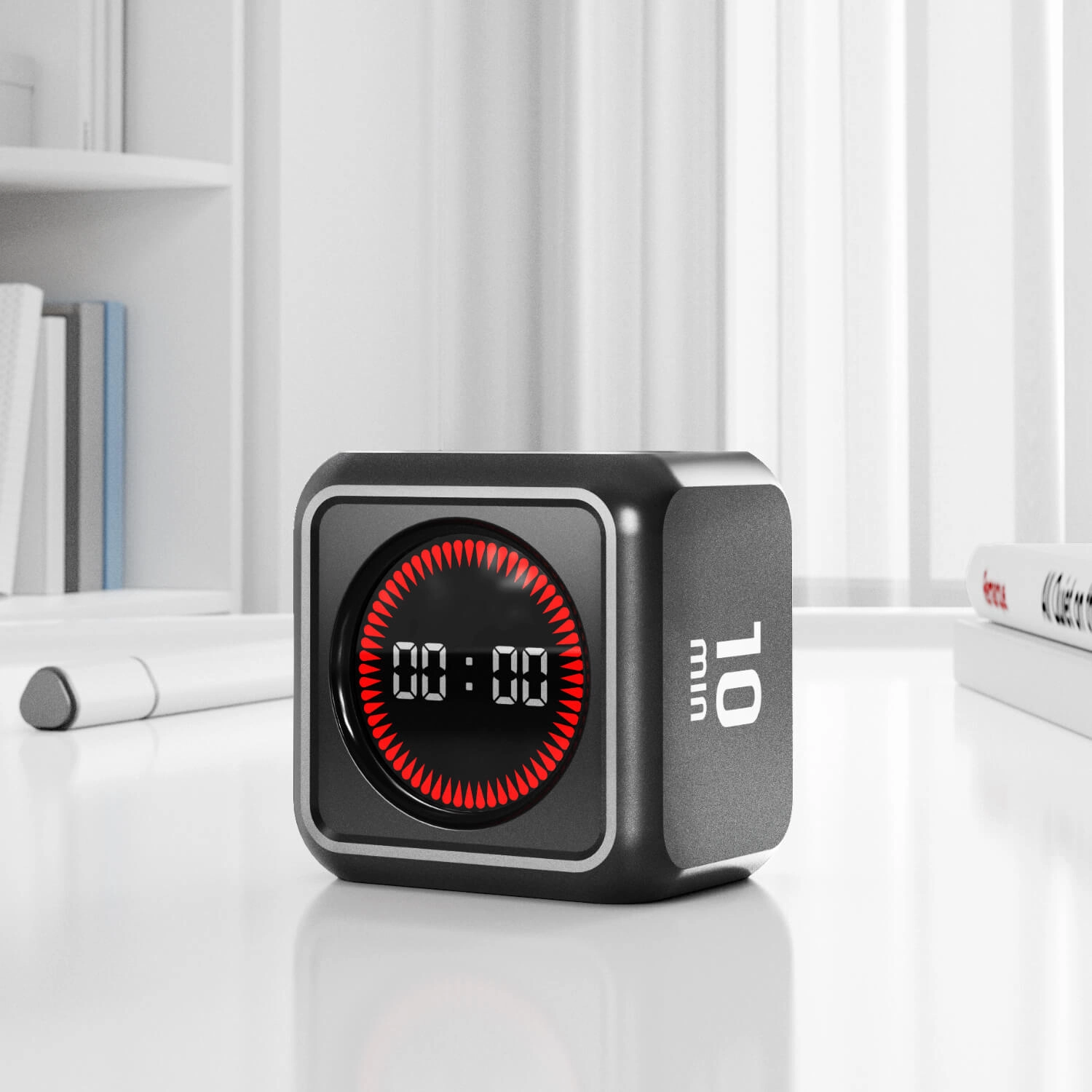
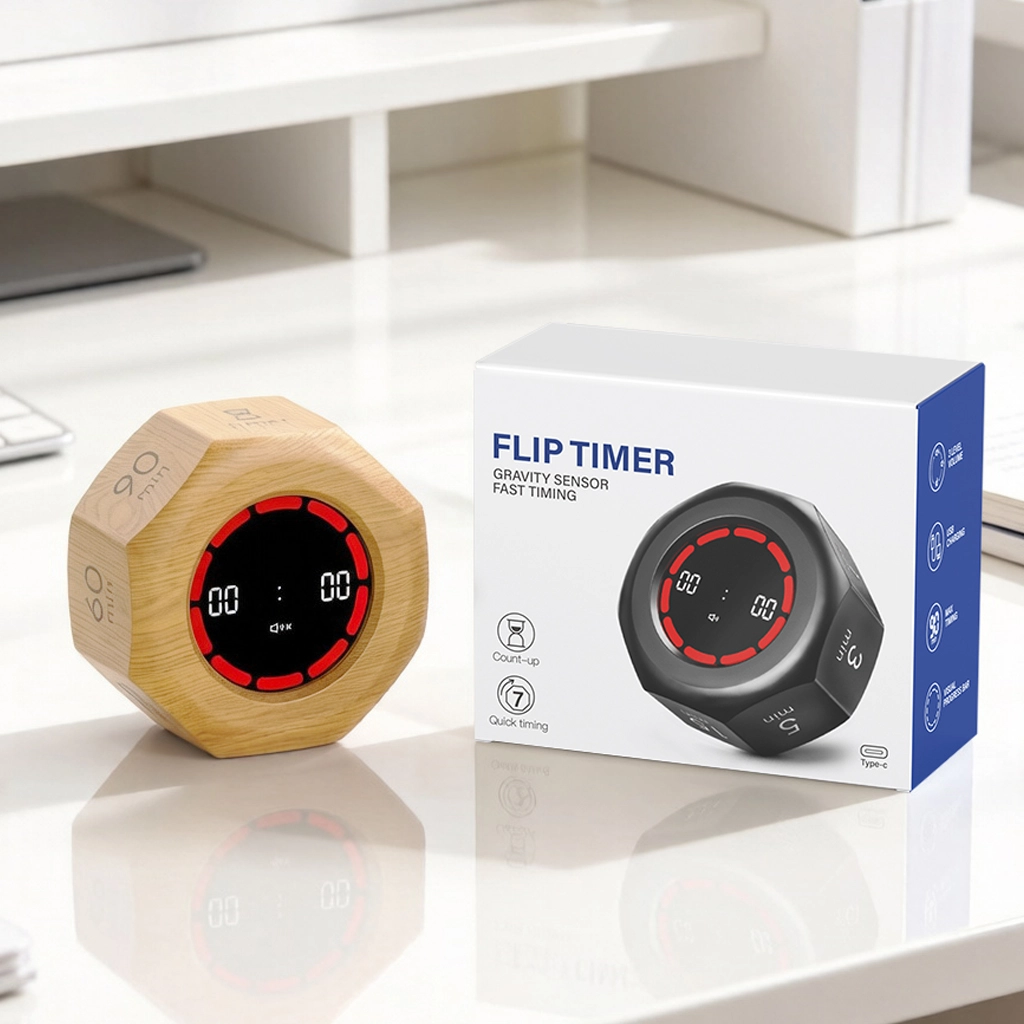
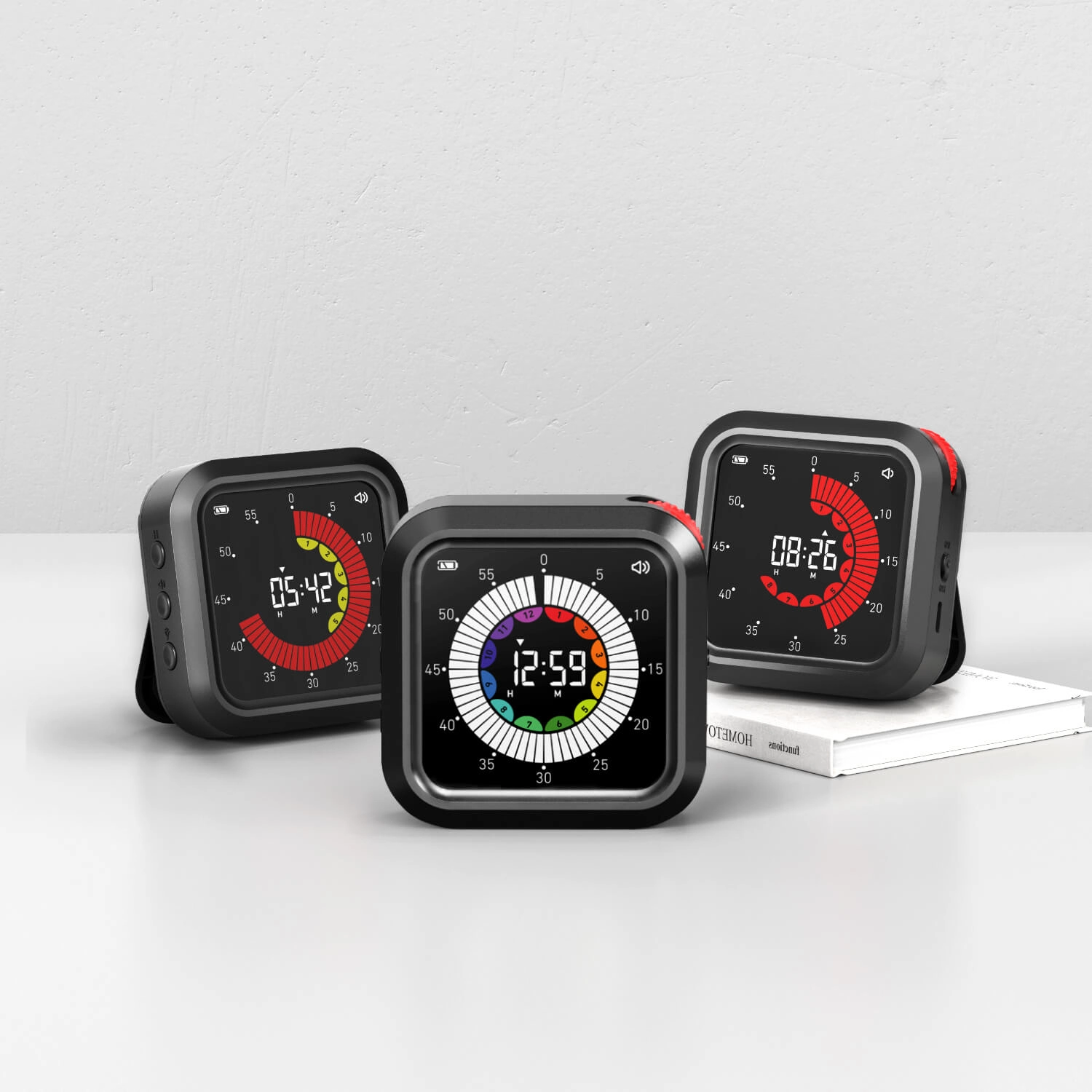
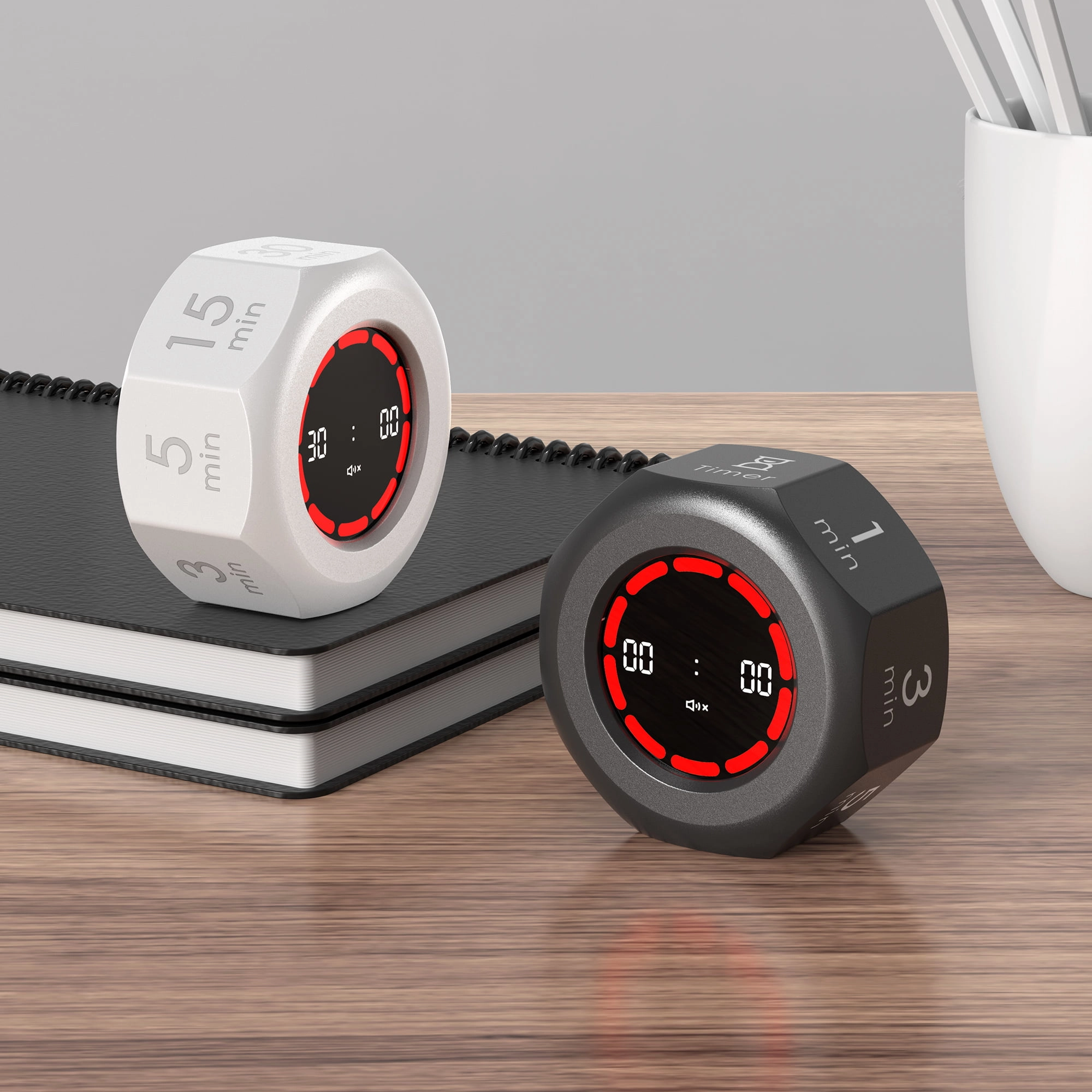
For a branded focus timer, this control is important because the product experience is created by many small details: the responsiveness of the controls, clarity of the digits, transition between work and rest intervals, alarm behavior, battery access, and stability of the stand. A differentiated Digital Timer should be dependable in classrooms, offices, homes, fitness environments, and other use cases rather than merely attractive in product photography.
Compliance, scalability, and a broader product portfolio
We design our quality and compliance process around the requirements of international markets, and all Youben Life products meet strict CE, FCC, and RoHS standards. Buyers should still confirm the applicable market documentation and product configuration for each project, but our established compliance focus provides a stronger foundation for responsible commercialization.
Our portfolio also enables brands to build a coordinated product family. Alongside a Pomodoro timer or visual countdown device, buyers can develop a thermo hygrometer, temperature humidity monitor, or other Digital Timer under a consistent design language and packaging strategy. This can support cross-selling, retail assortment planning, and stronger recognition across online and offline channels.
Scalable manufacturing capacity and more than a decade of engineering experience help our partners move from initial concept to repeat orders with clearer control over quality, specification, and delivery. For procurement teams, the value is not only access to a finished device; it is a structured path for reducing specification errors, improving production repeatability, and protecting the long-term reputation of the brand.
Contact Youben Life at info@youbenlife.com or visit our product and OEM/ODM manufacturing website to discuss a reliable branded timer or environmental monitoring program.
Frequently Asked Questions
What should a buyer include in a private-label Pomodoro timer specification?
The specification should define countdown ranges, count-up functions, work and break presets, pause and resume behavior, memory retention, reset logic, alarm duration, sound levels, display format, button response, power source, low-battery indication, time accuracy, dimensions, materials, logo placement, accessories, packaging, and manual languages.
How can buyers verify that mass-production units match the approved sample?
Buyers should retain a signed and dated golden sample with a sample code, control the bill of materials and revision level, document every engineering change, and use a written functional and appearance inspection plan during pilot production and pre-shipment inspection.
What quality tests are important for a digital focus timer?
Important tests include power-on, display activation, countdown and count-up operation, pause and reset behavior, alarm output, button response, low-voltage operation, battery polarity protection where applicable, repeated cycles, enclosure fit, display uniformity, accessory verification, and packaging accuracy.
Are generic CE, FCC, or RoHS documents sufficient for a branded timer?
No. Buyers should verify that compliance records correspond to the actual model number, hardware revision, components, labeling, and destination market. Generic certificates from another product may not support the specific configuration being sold.
Why is firmware validation necessary when the hardware looks correct?
Firmware controls default durations, alarm priorities, restart behavior, sleep settings, reset logic, and other user interactions. Two products with the same enclosure can perform differently if their software versions or programming are not controlled.
How should a buyer compare timer suppliers beyond unit price?
Supplier comparison should include engineering capability, firmware control, tooling ownership, component management, production testing, compliance support, capacity, inspection procedures, change control, warranty handling, lead time, and total cost of ownership including returns and rework.
What does Youben Life provide for branded timer projects?
Youben Life provides OEM/ODM development and manufacturing for Digital Timers, Pomodoro timers, Visual Countdown Clocks, thermo-hygrometers, and temperature humidity monitors, including industrial and mechanical design, custom IC programming, precision mold tooling, electronics integration, testing, compliance-focused production, and retail-ready packaging.
How to Choose a Smart Focus Timer: Buyer's Checklist
Portable Indoor Thermometers for Travel and Small Spaces
Top 10 buy household thermometer online manufacturers and suppliers
Customizing Digital Timer Clock: PCB, Enclosure and Firmware Choices
Interested in this article?
Let’s talk.
Need specifications, pricing, or customization options? We’ll provide everything you need.

Youben life
Youben life