
Private Label Pomodoro Timer for Wholesalers and Importers: How to Assess Product Consistency
- Core Quality Criteria for Consistent Focus-Timer Manufacturing
- Define functional specifications before requesting quotations
- Measure timing accuracy and electronic repeatability
- Control the visible and tactile brand experience
- How Importers Can Verify Supplier Process Control
- Review the supplier’s quality-management evidence
- Use a staged approval process
- Separate safety compliance from marketing claims
- Building a Reliable OEM/ODM Program with Youben life
- Vertically integrated development for differentiated products
- Engineering controls that support batch-to-batch consistency
- Compliance, product range, and scalable supply
- Procurement Checklist for Long-Term Product Consistency
- Questions to resolve before the first purchase order
- Metrics to monitor after launch
- Make consistency a commercial advantage
- Frequently Asked Questions
A private label pomodoro timer program should be evaluated as a controlled product system rather than a simple logo-printing exercise. For wholesalers and importers, product consistency means that every unit delivers comparable timing accuracy, button response, screen readability, alarm performance, battery life, housing quality, firmware behavior, packaging protection, and regulatory compliance. A reliable sourcing decision therefore depends on engineering evidence, repeatable manufacturing controls, pre-production approval, and measurable inspection criteria. This approach reduces returns, protects marketplace ratings, limits warranty exposure, and gives a brand owner confidence that the product sold in the first shipment will match later replenishment orders.
Core Quality Criteria for Consistent Focus-Timer Manufacturing
Define functional specifications before requesting quotations
Supplier comparison should begin with a detailed product specification sheet. The document should identify countdown and count-up ranges, interval settings, alarm volume, silent or visual alert modes, memory behavior, pause and resume logic, display refresh behavior, battery type, charging method, standby consumption, operating temperature, dimensions, materials, and color tolerances. Terms such as “high quality,” “long battery life,” or “large display” are too subjective for a purchase contract. They should be converted into acceptance criteria, such as a defined timing tolerance, minimum operating hours, a specified LCD or LED viewing angle, and a maximum allowable cosmetic defect rate.
For an importer, the specification should also distinguish mandatory functions from optional differentiation. A basic study timer may require a rotary control and a clear remaining-time display, while a High Quality productivity device may need multiple preset cycles, a child-safe battery compartment, a magnetic rear panel, USB-C charging, or a companion retail package. Clear priorities allow the factory to engineer the product around the intended channel instead of adding features that increase cost without improving sell-through.
Measure timing accuracy and electronic repeatability
Timing performance is the central value proposition of a focus countdown device. Buyers should ask how the supplier validates the oscillator, microcontroller, firmware, display driver, and alarm circuit. A production test should verify multiple time intervals rather than checking only one preset. Short cycles can expose firmware or button issues, while longer cycles help identify clock drift and power-management problems. Test results should be recorded by batch, model revision, and production date so that a defect trend can be traced back to a component, programming file, or process change.
Consistency also includes user input. Rotary encoders should not skip counts, touch controls should avoid false activation, and mechanical buttons should maintain a predictable actuation force across the production run. If a product uses a custom integrated circuit or programmed controller, the approved firmware version should be locked through document control. Unauthorized changes to timing logic, alarm duration, or low-battery behavior can create inconsistent customer experiences even when the exterior remains unchanged.
Control the visible and tactile brand experience
Visual quality has a direct effect on perceived value in retail and online channels. The approved golden sample should define color, texture, logo position, font rendering, screen brightness, segment uniformity, seam alignment, button spacing, and enclosure gloss. Cosmetic inspection should use consistent lighting and viewing distance. A supplier should classify critical, major, and minor defects, then apply an agreed acceptable quality limit, or AQL, according to the buyer’s risk tolerance. A reference to ISO 2859-1 sampling procedures can help establish a recognized framework for lot-by-lot inspection, although the final sampling plan should reflect the product’s safety and commercial risk.
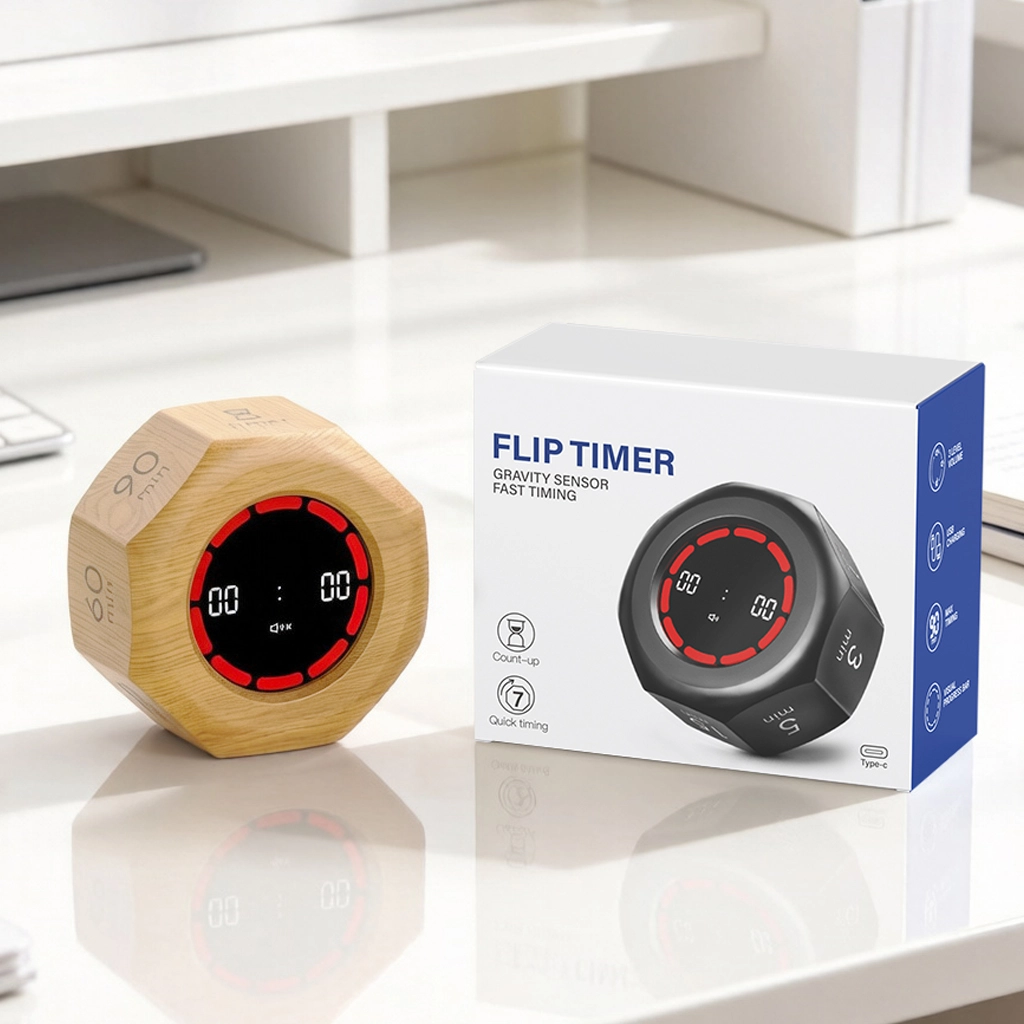
Packaging is part of consistency, not an afterthought. Cartons must protect the display, controls, and housing during ocean freight, air freight, warehouse handling, and last-mile delivery. Drop testing, compression checks, barcode verification, accessory counting, and multilingual label review should be completed before mass production. A visually attractive product with damaged retail packaging can still generate retailer deductions and negative reviews.
How Importers Can Verify Supplier Process Control
Review the supplier’s quality-management evidence
A factory assessment should examine incoming inspection, in-process controls, final testing, nonconformance handling, corrective actions, calibration records, and traceability. Buyers should request sample inspection reports rather than relying only on a certificate or a verbal quality promise. Useful evidence includes component inspection records, firmware version logs, functional test fixtures, aging-test results, packing checklists, and shipment release reports.
Quality-system maturity can be evaluated against recognized principles in ISO 9001 quality management, even when certification is not a contractual requirement. The key question is whether the supplier can demonstrate controlled processes that remain stable when volumes increase. A small pilot order may look excellent because it receives intensive attention; the real test is whether the same performance continues during repeat production and peak-season output.
Use a staged approval process
A disciplined project normally moves through concept approval, engineering validation, design validation, pilot production, pre-shipment approval, and replenishment monitoring. At the engineering stage, the buyer should confirm the industrial design, electronics architecture, user interface, materials, and intended certifications. During pilot production, samples should be tested under realistic operating conditions, including repeated button use, extended countdown cycles, low-battery operation, charging interruptions, and transport simulation.
Golden samples should be signed and retained by both parties. The approval package should include drawings, bill of materials, artwork files, packaging specifications, firmware identification, test limits, and permitted substitutions. Any change to a component, mold, battery, display, supplier, software build, or packaging material should require documented approval. This prevents silent substitutions that may alter appearance, operating time, or regulatory status.
Separate safety compliance from marketing claims
Regulatory requirements depend on the destination market, wireless functionality, power architecture, battery design, and product classification. For European distribution, buyers commonly review CE-related technical documentation and applicable directives; for the United States, an electronic device may require FCC assessment if it contains digital circuitry or radio functionality. Materials and restricted substances should be checked against applicable RoHS requirements. The European Commission CE marking guidance explains that CE marking is a manufacturer’s declaration of conformity with relevant EU requirements, not a universal quality seal.
Importers should verify the actual test reports, declaration of conformity, product labeling, responsible economic operator information, battery documentation, and technical file availability. Claims such as “eco-friendly,” “non-toxic,” “medical-grade,” or “precision timing” should be supported by appropriate evidence. The FDA medical-device resources are relevant when a seller makes health or clinical claims; an ordinary productivity timer should not be marketed as a medical device without the required regulatory basis.
| Assessment area | Recommended verification | Business risk if overlooked |
|---|---|---|
| Timing performance | Test short and long cycles across multiple units and batches | Complaints about inaccurate sessions and loss of trust |
| Controls and firmware | Check encoder counts, button life, pause logic, and approved software version | Unpredictable operation, returns, and inconsistent reviews |
| Power system | Verify battery capacity, charging protection, standby consumption, and low-power behavior | Short runtime, safety concerns, and warranty claims |
| Cosmetic finish | Compare color, seams, logos, screen uniformity, and surface texture with the golden sample | Retail rejection and weaker perceived value |
| Compliance file | Review applicable CE, FCC, RoHS, battery, labeling, and test documentation | Customs delays, listing removal, or legal exposure |
| Packaging integrity | Perform drop, compression, barcode, accessory, and carton inspections | Transit damage, chargebacks, and poor unboxing experience |
Building a Reliable OEM/ODM Program with Youben life
Vertically integrated development for differentiated products
Youben life was established in 2010 as an OEM/ODM manufacturer focused exclusively on Digital Timers, pomodoro timers, Visual Countdown Clocks, temperature and humidity monitors, and thermo hygrometers. Our 20,000m² facility in Guangzhou, China, supports a vertically integrated development and manufacturing model. This structure allows our team to coordinate industrial design, mechanical design, electronics development, custom IC programming, precision mold tooling, assembly, testing, and retail-ready packaging within one controlled project framework.
For a wholesaler or importer, vertical integration can shorten the feedback loop between design and production. If a display window, dial geometry, enclosure wall, battery compartment, or mounting feature requires adjustment, the engineering and tooling teams can evaluate the change before it becomes a costly mass-production issue. The result is a more practical path from product concept to repeatable commercial output.
Engineering controls that support batch-to-batch consistency
Our manufacturing process is designed to move beyond basic assembly. Custom IC programming and controlled firmware files help stabilize timing logic, interface behavior, and power management. Precision mold tooling supports repeatable enclosure dimensions, button alignment, and surface quality. Production testing can be structured around the buyer’s approved specification, including display operation, alarm behavior, control response, charging performance, and packaging configuration.
We also support custom appearance and market positioning. Brand owners may request differentiated colors, logo treatments, private packaging, product inserts, user-interface details, mounting solutions, or channel-specific configurations. Each change should be documented against an approved sample and bill of materials so that brand identity remains consistent as order quantities scale.
Compliance, product range, and scalable supply
Our products are developed to meet strict CE, FCC, and RoHS requirements, with project documentation aligned to the destination market and product configuration. Buyers should still confirm the exact compliance scope for their final model, because certification requirements can change when wireless modules, power adapters, batteries, or intended-use claims are added.
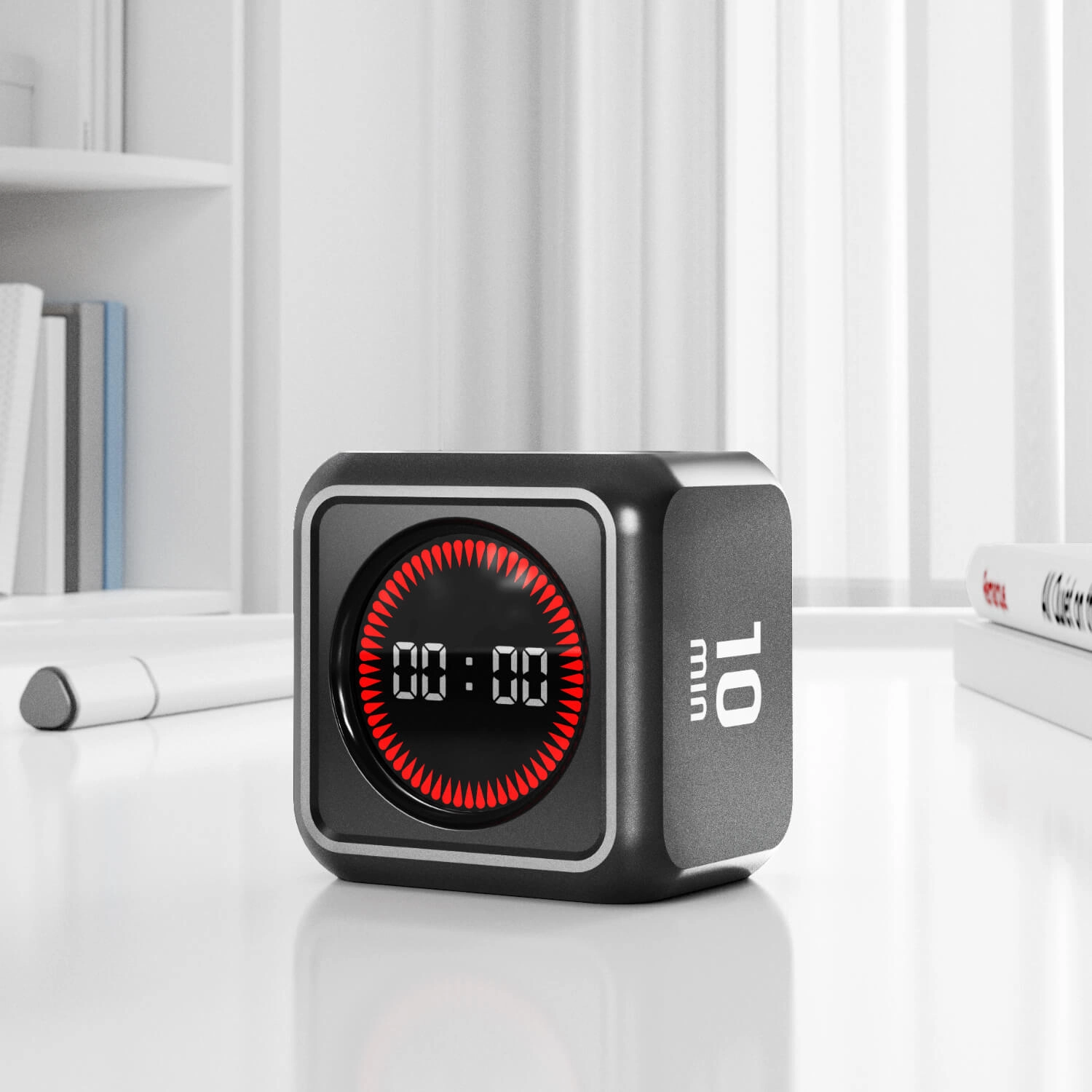
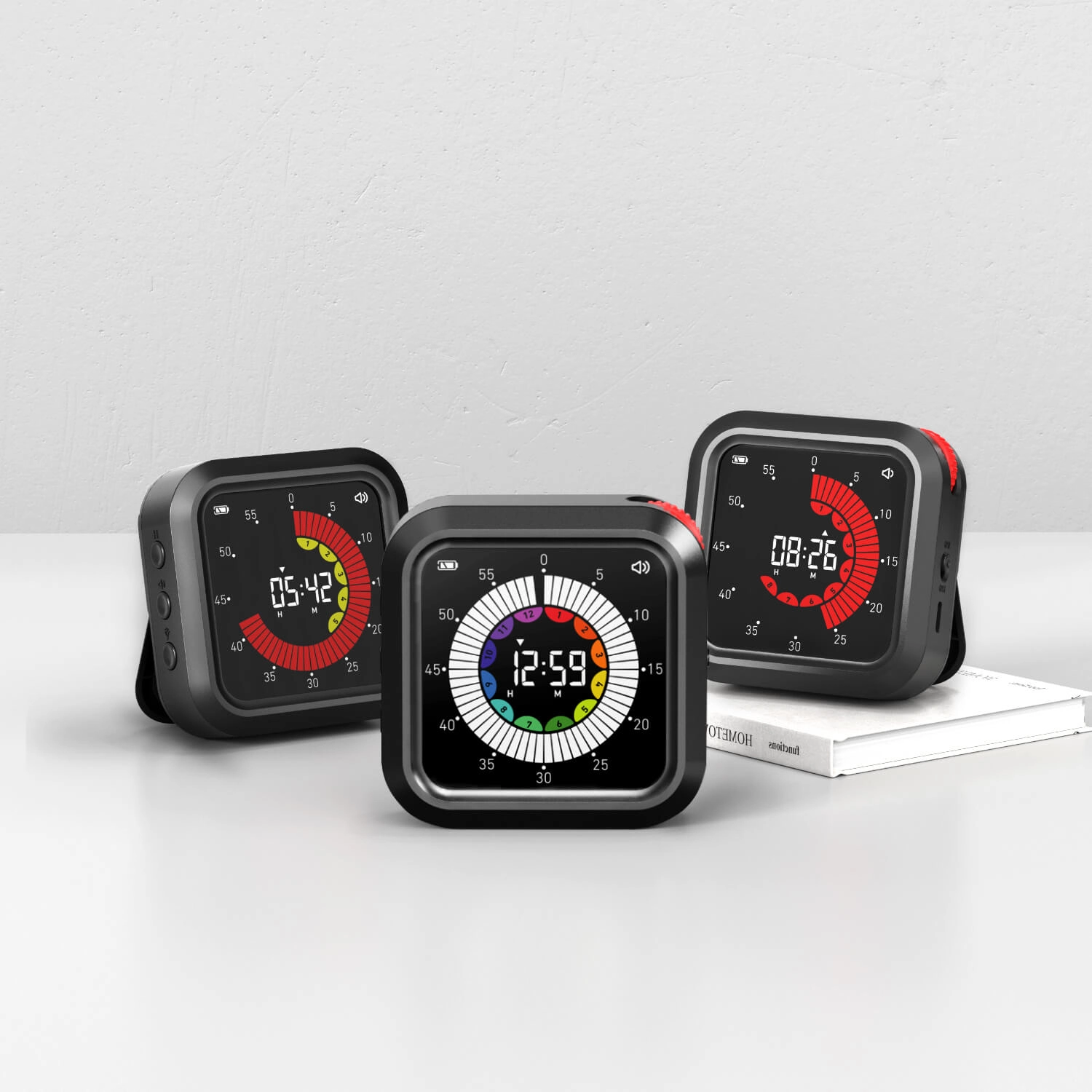
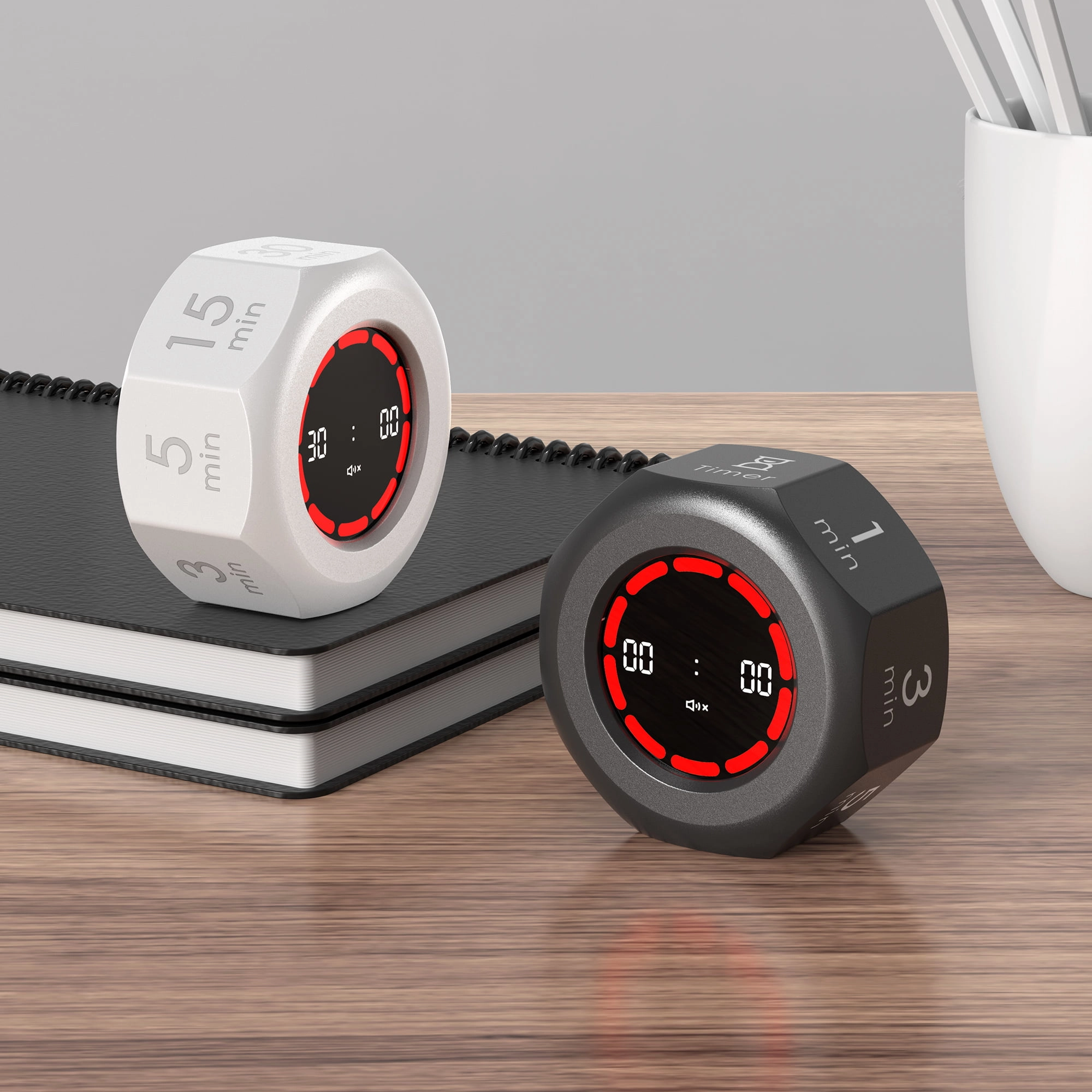
Our product portfolio includes Digital Timer solutions for kitchens, classrooms, laboratories, offices, fitness settings, and production environments; pomodoro timer designs for study and work routines; Visual Countdown Clocks for shared spaces; and thermo hygrometer and temperature humidity monitor products for home, storage, facility, and environmental awareness applications. This focused category expertise helps our engineering team reuse validated technical knowledge while developing a distinct design for each brand and sales channel.
For global brands and Amazon-focused businesses, scalable manufacturing capacity matters as much as prototype quality. Forecast sharing, component planning, packaging readiness, inspection scheduling, and shipment coordination should be established before the purchase order is released. Youben life provides turnkey private label support from early concept and ID/MD design through tooling, programming, production, compliance preparation, and retail packaging. Information about our capabilities is available at Youben life, and project inquiries can be directed to info@youbenlife.com.
Procurement Checklist for Long-Term Product Consistency
Questions to resolve before the first purchase order
Buyers should confirm the minimum order quantity, lead time for tooling and samples, component ownership, mold ownership, payment milestones, packaging responsibilities, warranty terms, spare-parts policy, inspection rights, and change-notification process. The commercial agreement should state which performance limits are guaranteed and how nonconforming goods will be corrected. It should also define the process for handling shortages, mixed revisions, late engineering changes, and replacement units.
Metrics to monitor after launch
Post-launch monitoring should combine factory data with market feedback. Useful indicators include incoming defect rate, first-pass yield, inspection failure rate, warranty claims, return reasons, average review score, battery-related complaints, missing-accessory incidents, and replenishment lead time. Trend analysis is more valuable than a single inspection result. For example, a gradual increase in button failures may indicate tooling wear or a component change before the problem becomes visible through customer returns.
Requalification should be scheduled after a major mold repair, firmware update, material substitution, battery change, new production line, or extended supply interruption. A periodic sample audit also helps confirm that the active production version still matches the approved golden sample. This governance model turns consistency into an ongoing operating discipline rather than a one-time pre-shipment activity.
Make consistency a commercial advantage
Reliable product performance improves more than factory acceptance. It supports predictable advertising claims, lower customer-service workload, stronger retailer relationships, fewer marketplace penalties, and better reorder confidence. A well-controlled timer can become a recognizable brand asset when its controls, display, sound, materials, and packaging remain familiar across production cycles. For importers, that reliability creates a foundation for expanding into adjacent products such as visual scheduling devices, environmental monitors, or other time-management hardware.
Frequently Asked Questions
What should importers check first when sourcing a branded pomodoro timer?
Importers should first define measurable specifications for timing accuracy, controls, display quality, alarm behavior, battery performance, materials, packaging, compliance, and acceptable defect levels before comparing suppliers.
How can a buyer verify timer accuracy across production batches?
The buyer should require testing of multiple short and long countdown cycles across several units and batches, with results recorded by model revision and production date.
Why is a golden sample important for private-label production?
A signed golden sample establishes the approved reference for color, logo placement, screen appearance, controls, materials, dimensions, packaging, and overall finish, helping prevent unauthorized production changes.
Which compliance documents should a digital timer importer review?
Depending on the destination and configuration, the importer should review applicable CE, FCC, RoHS, battery, labeling, declaration-of-conformity, and supporting test documentation for the exact finished model.
What supplier capabilities support consistent OEM timer production?
Important capabilities include controlled firmware programming, precision mold tooling, incoming and in-process inspection, functional testing, traceability, packaging validation, corrective-action procedures, and documented change control.
What does Youben life manufacture besides focus timers?
Youben life manufactures Digital Timers, pomodoro timers, Visual Countdown Clocks, thermo hygrometers, and temperature humidity monitors, with OEM/ODM support covering design, tooling, programming, production, compliance, and packaging.
Waterproof Digital Smart Timers for Outdoor and Pool Use
Private Label Pomodoro Timer Market Trends: Features and Designs Creating New Brand Opportunities
Top 10 led digital wall clock for office manufacturers and suppliers
Budget Mini Timers: Best Options for Bulk Procurement
Interested in this article?
Let’s talk.
Need specifications, pricing, or customization options? We’ll provide everything you need.

Youben life
Youben life