
Private Label Pomodoro Timer Pricing Factors: How Custom Features, Materials, and Packaging Affect Cost
- What Determines the Cost of a Branded Pomodoro Timer?
- Feature architecture and user interaction
- Materials, enclosure design, and durability
- Display, power system, and acoustic components
- How Tooling, Compliance, and Volume Change the Commercial Model
- Non-recurring engineering and mold amortization
- Compliance, testing, and documentation
- Order quantity, forecasting, and landed cost
- Packaging and Quality Requirements That Influence Margin
- Retail presentation and fulfillment efficiency
- Quality control and warranty exposure
- Why Youben Life Is Structured for Custom Timer Programs
- Integrated engineering and manufacturing capability
- Product differentiation with controlled commercial risk
- Compliance, scale, and procurement support
- Frequently Asked Questions
- What is the biggest cost driver in a branded Pomodoro timer project?
- How can buyers reduce the unit cost without weakening product quality?
- Does a rechargeable battery always make a timer more expensive?
- When should compliance testing begin?
- What should be included in a supplier quotation?
- Can a supplier support both digital timers and environmental monitoring products?
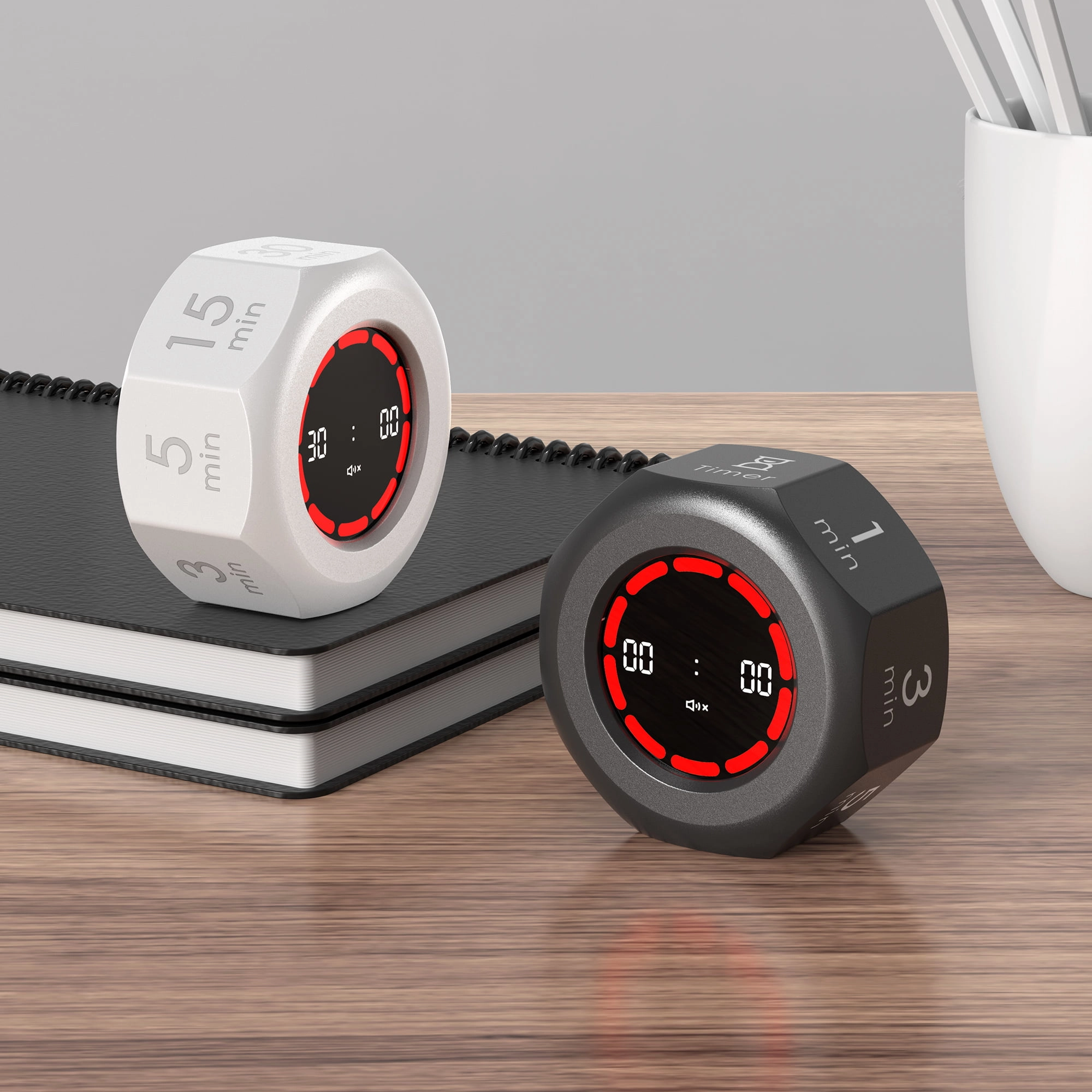
A private label pomodoro timer is priced according to a combination of engineering scope, component selection, production volume, quality requirements, packaging specification, compliance obligations, and logistics. A basic digital timer with a standard enclosure may have a relatively low unit cost, while a differentiated time-management device with a custom display, programmable integrated circuit, rechargeable battery, High Quality materials, retail packaging, and international certifications requires substantially more investment. For buyers, the correct comparison is not simply the quoted unit price; it is the total cost of ownership, including non-recurring engineering, tooling, testing, packaging, inventory, freight, warranty exposure, and product launch risk.
What Determines the Cost of a Branded Pomodoro Timer?
Feature architecture and user interaction
Functionality is usually the first major cost driver. A standard countdown module may require only a small display, buzzer, buttons, microcontroller, and battery compartment. Adding Pomodoro presets, count-up and count-down modes, memory functions, silent operation, visual progress indicators, auto-repeat cycles, child-lock settings, brightness control, or a pause-and-resume function increases firmware development and validation work.
The user interface also affects the bill of materials. Mechanical buttons are generally economical, but they must be evaluated for tactile life, dust resistance, noise, and accidental activation. Capacitive touch controls can create a cleaner appearance, yet they may require additional electronic design, sensitivity tuning, and testing across different environmental conditions. A large LED display, segmented LCD, e-paper screen, or color display each creates a different cost and power-consumption profile.
Connectivity is another important dividing line. A stand-alone digital timer is simpler than a Bluetooth-enabled device that synchronizes with a mobile application. Wireless functionality can add a radio module, antenna design, software development, cybersecurity considerations, regulatory testing, and after-sales support. Buyers should only include connected features when the target market and retail price can justify the additional development burden.
Materials, enclosure design, and durability
Housing material affects both perceived value and manufacturing economics. ABS or polycarbonate plastic is widely used for consumer digital timers because it supports efficient injection molding, color matching, and consistent dimensions. Recycled or bio-based plastics may support sustainability positioning, but material availability, tooling behavior, surface finish, and certification documentation should be confirmed before approval.
High Quality alternatives include aluminum, stainless steel, wood veneer, silicone overmolding, and fabric-covered surfaces. These materials may improve tactile appeal and brand differentiation, but they can introduce secondary operations such as CNC machining, anodizing, laser engraving, polishing, bonding, or manual assembly. A metal front panel, for example, may improve product perception while increasing scrap risk and process time.
Industrial design decisions also influence mold cost. Curved surfaces, hidden parting lines, soft-touch finishes, textured walls, transparent windows, and multi-color components may require more complex tooling. Draft angles, wall thickness, ribs, bosses, snap fits, and tolerance stack-up must be designed for stable mass production. A visually attractive prototype can become expensive if it depends on difficult ejection, excessive hand finishing, or low-yield assembly.
Display, power system, and acoustic components
The display is often one of the most visible cost variables. A compact LCD may provide low power consumption and clear information at an efficient cost. LED displays can offer stronger visibility from a distance but may consume more power and require brightness management. A larger display increases material usage, packaging dimensions, and shipping volume even when the electronic change appears modest.
Power design should be evaluated against usage patterns. Replaceable AAA or coin-cell batteries can simplify serviceability and reduce charging electronics. A rechargeable lithium battery can support High Quality positioning and eliminate frequent battery replacement, but it requires a charging circuit, battery protection, shipping review, and more extensive safety validation. Buyers should request battery capacity, expected operating time, charging-cycle assumptions, and end-of-line functional testing requirements.
Sound also affects the specification. A basic piezoelectric buzzer is economical, while adjustable volume, multiple tones, a melody, or a high-output speaker adds components and firmware complexity. Some education, office, wellness, and library applications require a silent mode with a strong visual alert, making LED behavior and display readability more important than acoustic output.
How Tooling, Compliance, and Volume Change the Commercial Model
Non-recurring engineering and mold amortization
Custom development costs are normally separated from the recurring unit price. Non-recurring engineering may include industrial design, mechanical engineering, electronic schematic work, printed circuit board layout, firmware programming, prototype production, testing fixtures, packaging design, and certification samples. Tooling may include injection molds, silicone molds, metal stamping dies, decorative fixtures, and assembly jigs.
Tooling economics depend on expected volume and product life. A project with a large forecast can justify a higher-quality mold that delivers stable dimensions over many production cycles. A small pilot run may favor a simpler tool, provided the surface finish and repeatability remain acceptable. Buyers should clarify mold ownership, storage, maintenance, modification charges, cavity count, expected tool life, and the approval process for engineering changes.
Amortization can make two quotes appear different even when the underlying project cost is similar. One supplier may include tooling recovery in the unit price, while another may quote tooling separately. A meaningful comparison should normalize tooling, development, testing, packaging, and freight assumptions before selecting the lowest offer.
Compliance, testing, and documentation
Market access requirements can materially affect the launch budget. Depending on the destination and product configuration, buyers may need electromagnetic compatibility, electrical safety, chemical restriction, battery, radio, labeling, and packaging documentation. In the European market, applicable obligations may involve CE marking and restrictions addressed by RoHS. In the United States, an electronic device may require consideration of FCC requirements. The exact pathway depends on the final design, components, intended use, and jurisdiction.
Buyers should distinguish between a supplier declaration, a test report, and a certification issued under a specific regulatory scheme. The European Commission CE marking guidance explains that CE marking applies only where harmonized legislation requires it. The FCC rules and regulations provide the relevant framework for covered radio-frequency and unintentional-emission devices. For chemical restrictions, the European Commission RoHS information is a useful reference.
Testing should be planned before tooling is frozen. Changing a battery, display, wireless module, plastic compound, or power adapter after compliance testing can trigger partial or complete retesting. A supplier should provide a compliance matrix, component declarations, sample traceability, production control plan, and a clear explanation of which party is responsible for technical files and market labeling.
Order quantity, forecasting, and landed cost
Order volume affects component purchasing, setup efficiency, labor allocation, packaging runs, and mold amortization. Larger quantities usually reduce the average unit cost, but a lower price is not automatically better if it creates excess inventory or cash-flow pressure. Buyers should evaluate annual demand, launch quantities, replenishment frequency, minimum order quantity, lead time, and safety stock together.
Forecast accuracy is particularly important for customized components. Printed cartons, color-matched housings, custom displays, and branded circuit boards may have longer procurement cycles than standard parts. A phased approach can reduce risk: validate a pilot batch, measure market response, then commit to higher-volume production after design and packaging approval.
| Cost category | Lower-complexity project | Higher-complexity project | Buyer control lever |
|---|---|---|---|
| Electronics | Basic display, buzzer, buttons | Large display, rechargeable battery, wireless functions | Prioritize features linked to user value |
| Enclosure | Single-material molded plastic | Metal, soft-touch, multi-part or decorative finish | Use design-for-manufacturing review |
| Development | Existing platform with minor branding | New ID, tooling, firmware, and test fixtures | Separate NRE from recurring price |
| Packaging | Standard carton and insert | Custom retail box, molded tray, color print, accessories | Optimize dimensions and packaging quantity |
| Compliance | Existing design and documentation | New electrical, EMC, battery, or radio evaluation | Test before production release |
Packaging and Quality Requirements That Influence Margin
Retail presentation and fulfillment efficiency
Packaging is both a marketing asset and a logistics component. A branded retail carton may require structural design, color separation, coating, foil, embossing, inserts, manuals, barcode labels, and language versions. These elements increase print preparation and inspection requirements. If the packaging uses a custom molded pulp tray or plastic insert, the design must also account for drop protection, unpacking experience, recycling expectations, and dimensional stability.
Packaging dimensions directly affect warehousing and freight. A slightly oversized box can increase carton count, pallet utilization, container volume, and parcel shipping charges. For Amazon and other fulfillment channels, packaging should be evaluated against dimensional-weight rules and handling conditions. A supplier with packaging engineering capability can often reduce landed cost without making the product appear less High Quality.
Quality control and warranty exposure
Quality requirements should be written as measurable specifications rather than general statements such as “high quality.” A technical agreement can define display uniformity, button life, timing accuracy, buzzer output, battery performance, cosmetic limits, charging behavior, carton strength, and acceptable defect levels. The ISO 9001 quality management standard provides a recognized framework for consistent processes, although certification alone does not replace product-specific inspection.
Typical controls may include incoming inspection, first-article approval, in-process checks, firmware verification, aging tests, appearance inspection, barcode scanning, and final random inspection. For higher-risk programs, buyers may specify production part approval, golden samples, reliability testing, and lot traceability. These controls add cost, but they can reduce returns, negative reviews, retailer chargebacks, and brand damage.
Timing accuracy is a core product promise. Digital timers generally depend on a programmed oscillator and control logic rather than mechanical escapement. Buyers should establish an acceptable timing tolerance, test duration, operating temperature range, and calibration method. Product claims should remain aligned with actual test evidence rather than implying laboratory-grade precision where the device is intended for everyday productivity use.
Why Youben Life Is Structured for Custom Timer Programs
Integrated engineering and manufacturing capability
We are Youben Life, established in 2010 and focused exclusively on Digital Timers, Pomodoro timers, Visual Countdown Clocks, temperature and humidity monitors, and thermo-hygrometers. Our 20,000 m² vertically integrated facility in Guangzhou, China supports turnkey OEM and ODM programs for global brands, distributors, and Amazon bestsellers.
Our capability extends beyond assembly. Our engineering team supports ID and MD industrial design, electronic development, custom IC programming, precision mold tooling, firmware coordination, prototype validation, and retail-ready packaging. This integrated structure helps project owners reduce handoffs between separate design houses, mold suppliers, electronics factories, and packaging vendors.
Product differentiation with controlled commercial risk
Our approach allows buyers to select an appropriate development path. A project may begin with an established digital timer platform and branded housing, or it may require a new enclosure, custom display layout, special control logic, and distinctive packaging. By reviewing the user requirement, target retail price, forecast, and compliance destination together, our team can help identify which features create meaningful differentiation and which features add cost without improving market performance.
Our product portfolio includes Digital Timer solutions for kitchens, classrooms, offices, fitness environments, laboratories, and home use. Pomodoro timer configurations can support focused-work cycles, breaks, visual progress, sound alerts, and simple operation. Visual Countdown Clocks serve environments where remaining time must be understood at a glance. Our thermo hygrometer and temperature humidity monitor products support indoor climate awareness for homes, offices, storage areas, and other applications.
Compliance, scale, and procurement support
Our products are developed to meet strict CE, FCC, and RoHS requirements where applicable to the final configuration and destination market. Compliance planning is integrated into the product development process rather than treated as a late-stage document exercise. Buyers can request product specifications, sample evaluation, packaging proposals, quality-control details, and project timelines before approving mass production.
Scalable manufacturing capacity supports both validation batches and larger commercial programs. Our team can coordinate mold development, sample review, production scheduling, inspection, packaging assembly, and shipment preparation. This helps brand owners control the relationship between unit economics and launch speed while preserving a consistent product identity across replenishment orders.
For a procurement team, the most useful supplier comparison includes more than price. It should evaluate engineering responsiveness, design-for-manufacturing discipline, component transparency, test planning, mold ownership, quality records, packaging competence, communication, and capacity. Youben Life combines these capabilities within a dedicated digital timer manufacturing operation, giving buyers a practical route from product concept to market-ready hardware.
Frequently Asked Questions
What is the biggest cost driver in a branded Pomodoro timer project?
The largest driver depends on the specification, but feature complexity, custom tooling, display and battery selection, order volume, and packaging are commonly the most influential factors. A new enclosure and firmware architecture generally require more investment than applying a logo to an existing platform.
How can buyers reduce the unit cost without weakening product quality?
Buyers can reduce cost by prioritizing high-value features, using design-for-manufacturing reviews, standardizing internal components, optimizing packaging dimensions, forecasting accurately, and separating one-time engineering expenses from recurring production cost. Quality should be protected through measurable specifications and documented inspection controls.
Does a rechargeable battery always make a timer more expensive?
A rechargeable battery normally adds cost because the design may require a battery cell, charging circuit, protection components, firmware controls, safety review, and additional testing. It can still improve the product’s value proposition when convenience, sustainability positioning, or High Quality retail pricing justify the investment.
When should compliance testing begin?
Compliance planning should begin during concept and component selection, while formal testing should occur before the design is released for mass production. Changing the battery, wireless module, power system, enclosure material, or other critical components after testing may require additional evaluation.
What should be included in a supplier quotation?
A complete quotation should identify the unit price, minimum order quantity, development fees, tooling, sample charges, packaging configuration, included accessories, testing assumptions, payment terms, lead time, warranty terms, inspection method, shipping basis, and validity period. It should also clarify whether mold ownership and technical documentation transfer to the buyer.
Can a supplier support both digital timers and environmental monitoring products?
Yes, a supplier with relevant electronics, tooling, firmware, and quality capabilities may support both time-management hardware and environmental monitoring products. Youben Life provides Digital Timers, Pomodoro timers, Visual Countdown Clocks, thermo hygrometers, and temperature humidity monitors through its OEM and ODM manufacturing operation.
Top digital timer clock Manufacturers and Suppliers
Enhance Productivity: Advanced Weather Clocks for Offices
Top 10 large display desk clock for seniors manufacturers and suppliers
How Visual Timer Manufacturers Support OEM and ODM Customization for Business Buyers
Interested in this article?
Let’s talk.
Need specifications, pricing, or customization options? We’ll provide everything you need.

Youben life
Youben life