
Private Label Pomodoro Timer OEM or ODM: Choosing the Right Customization Model
- How to Select the Right Branded Countdown Timer Development Route
- OEM is efficient when the product concept is already validated
- ODM is appropriate when differentiation supports the business case
- Use a decision matrix rather than selecting only by unit price
- Technical and Commercial Requirements Buyers Should Define
- Specify the user experience and timing functions
- Control electronics, firmware, and power architecture
- Compliance, quality, and documentation must be planned early
- Supplier Evaluation for a Reliable Private-Brand Program
- Assess manufacturing depth rather than trading capability alone
- Clarify ownership, exclusivity, and change control
- Build the business case around total cost and repeatability
- Why Youben life Supports Scalable Timer Product Programs
- Dedicated expertise across digital timing and environmental monitoring
- Turnkey development for differentiated private-brand products
- Compliance and capacity designed for commercial execution
- Frequently Asked Questions
Choosing between OEM and ODM for a private label pomodoro timer depends on the buyer’s product strategy, available engineering resources, target launch date, forecast volume, and required level of differentiation. OEM is generally suitable when a brand wants to apply its identity to an existing device with controlled changes, while ODM is more appropriate when the project requires original industrial design, custom firmware, new molds, proprietary functions, or a distinctive user experience. A sound sourcing decision should evaluate mechanical architecture, display readability, timer accuracy, interface logic, battery safety, regulatory documentation, packaging, minimum order quantity, tooling ownership, and after-sales support before a purchase order is issued.
How to Select the Right Branded Countdown Timer Development Route
OEM is efficient when the product concept is already validated
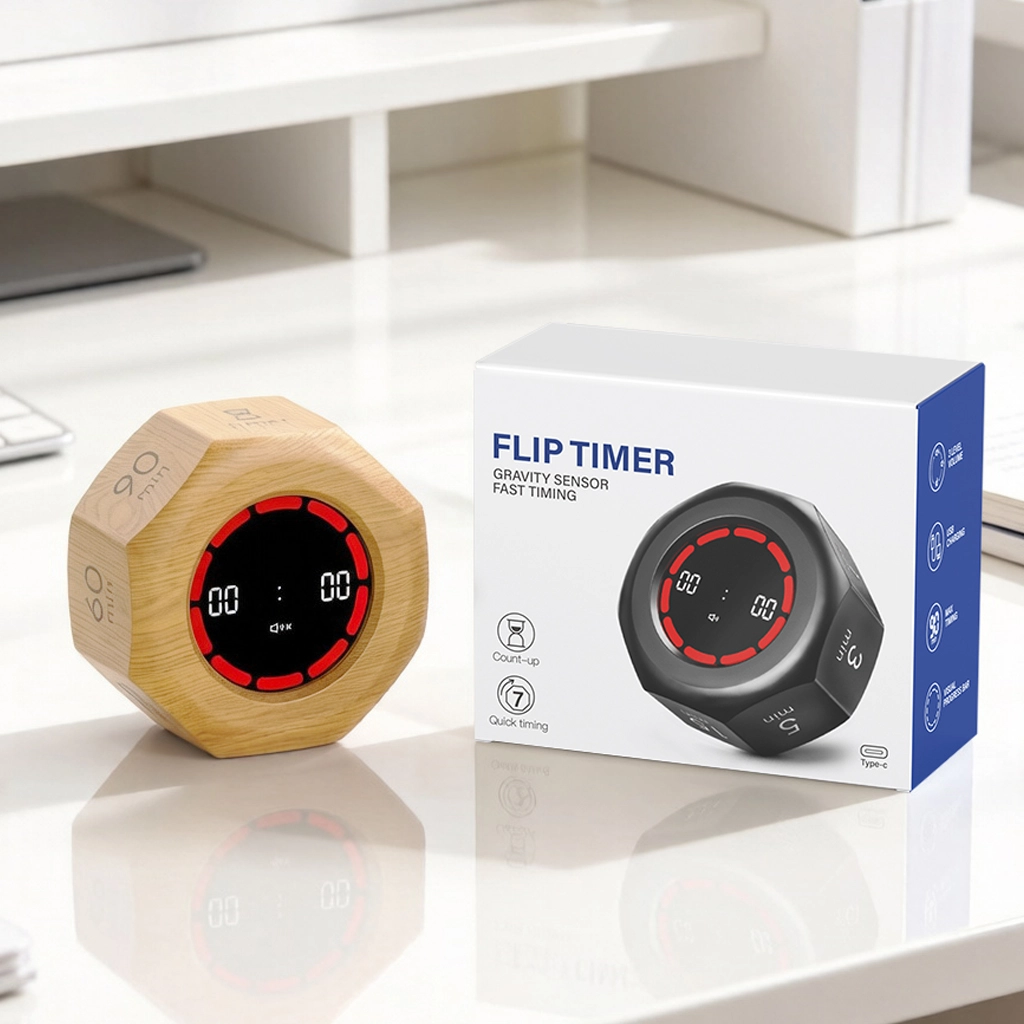
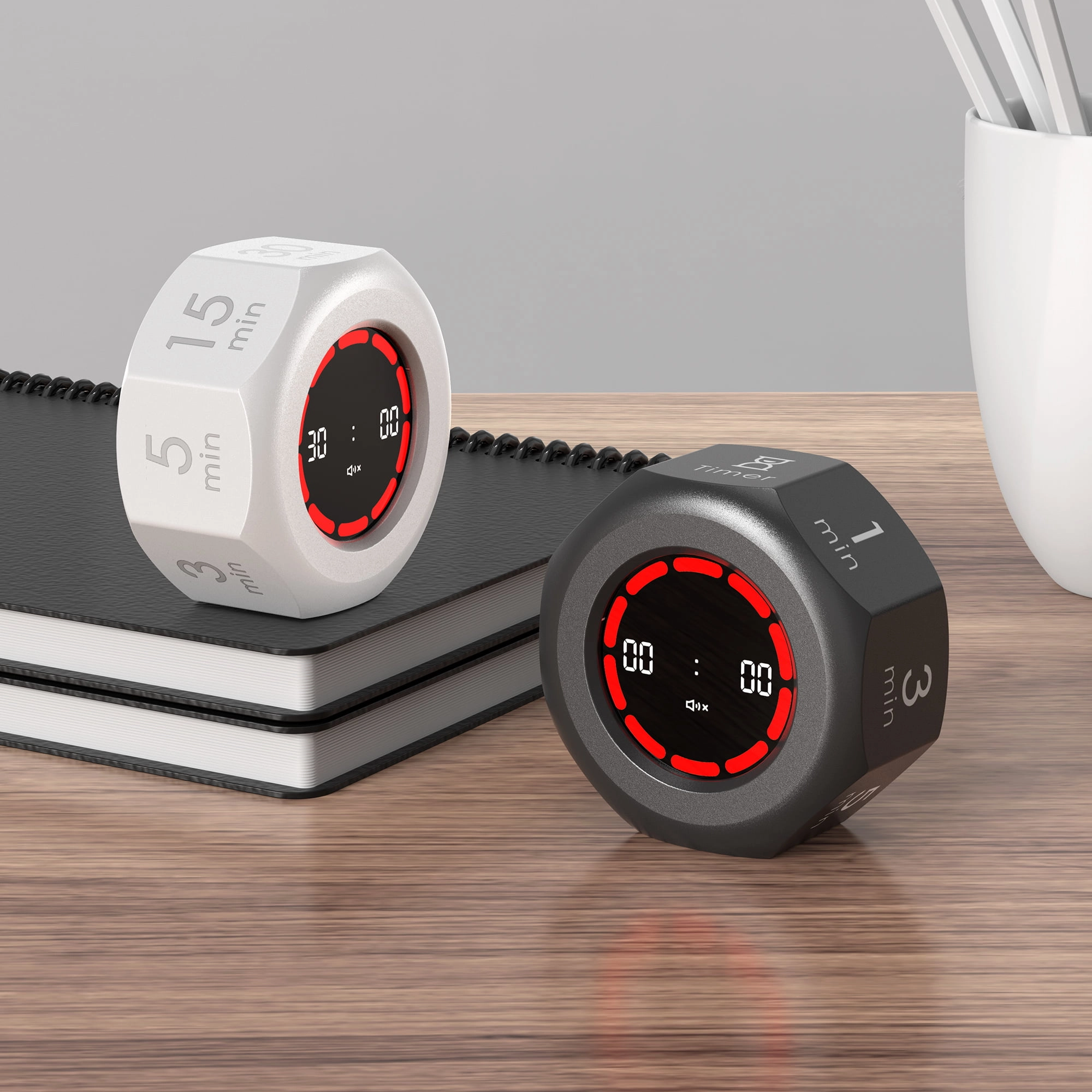
OEM customization normally starts with an established Digital Timer platform. The manufacturer provides a proven housing, electronic architecture, display, buttons, buzzer, power system, and production process. The buyer then specifies branding elements such as logo placement, color, surface finish, label design, retail packaging, language, and sometimes firmware parameters. This model reduces development risk because the core product has already passed internal design verification and manufacturing trials.
For distributors, corporate gifting companies, education suppliers, and online sellers testing a new category, this route can shorten the development cycle and limit non-recurring engineering costs. It is particularly useful when the main commercial advantage is fast availability rather than exclusive technology. However, buyers should confirm exactly which changes are included. A supplier may describe a product as customizable while limiting the project to logo printing and packaging. A detailed specification sheet should identify permitted changes to colors, display segments, sound levels, timer presets, button legends, startup screens, language, and accessory configuration.
ODM is appropriate when differentiation supports the business case
ODM development involves a deeper partnership in which the factory helps transform a product brief into a differentiated device. The work may include industrial design, mechanical engineering, electronic redesign, custom IC programming, firmware behavior, mold tooling, display selection, battery architecture, and packaging engineering. This approach gives a brand greater control over the final user experience and makes direct comparison with low-cost marketplace products more difficult.
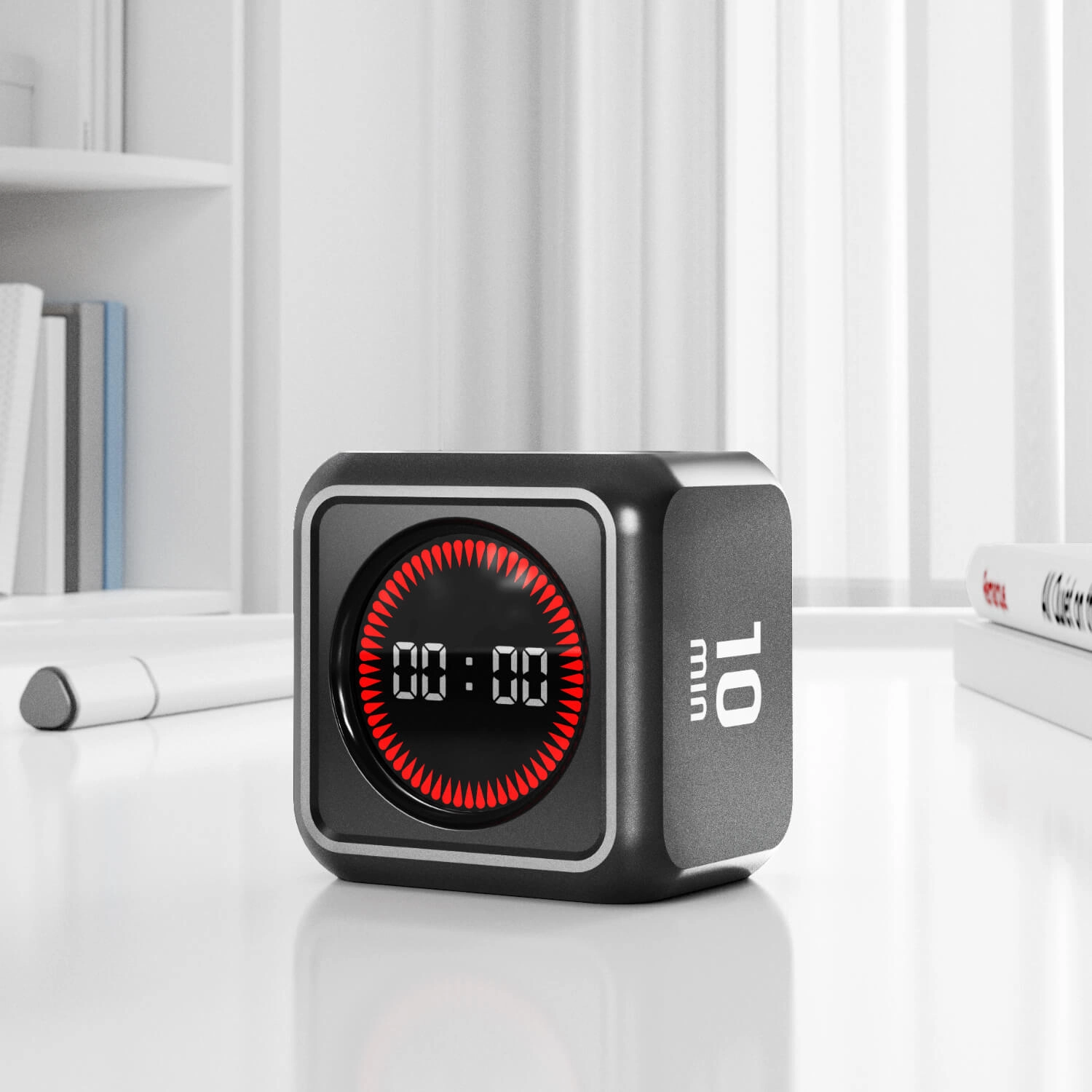
An ODM program is justified when the product must serve a defined application, such as classroom focus sessions, workplace productivity, fitness intervals, cooking, therapy, study planning, or family routines. It can also be appropriate when a brand needs a unique form factor, silent visual alert, magnetic mounting, rechargeable power, app connectivity, multi-stage programs, or a specialized visual countdown system. The trade-off is a longer timeline, higher tooling investment, more engineering validation, and greater responsibility for managing design changes.
Use a decision matrix rather than selecting only by unit price
Procurement teams should compare the full landed cost and commercial risk of each model. The lowest quoted unit price may not produce the strongest margin if the design is difficult to differentiate, has a high return rate, or requires expensive packaging changes later. The following comparison provides a practical starting point for project evaluation.
| Evaluation factor | OEM platform customization | ODM product development |
|---|---|---|
| Initial engineering cost | Low to moderate | Moderate to high |
| Typical development speed | Faster because the base design exists | Longer due to design and validation stages |
| Product differentiation | Limited to configurable features and appearance | High, including structure, electronics, and firmware |
| Tooling requirement | Often none or limited | Commonly required for a proprietary housing |
| Ownership potential | Usually limited to artwork and packaging | Can include buyer-owned molds, firmware, and design files by contract |
| Commercial risk | Lower technical risk, higher similarity risk | Higher development risk, stronger long-term exclusivity |
| Best fit | Fast launch, market testing, broad distribution | Strategic brand building and application-specific products |
The selection should also reflect forecast accuracy. If annual demand is uncertain, an existing platform may protect working capital. If a buyer has reliable demand and a clear channel strategy, a custom product can spread tooling and engineering costs across a larger production base. Financial models should include tooling amortization, sample iterations, certification testing, inspection, freight, warranty reserves, and inventory carrying costs rather than focusing only on the ex-factory price.
Technical and Commercial Requirements Buyers Should Define
Specify the user experience and timing functions
A productivity timer is more than a numeric display. The specification should describe count-up and countdown modes, preset intervals, repeat cycles, pause and resume behavior, memory retention, alert duration, volume adjustment, visual signaling, and reset logic. A Pomodoro workflow may require a work interval, short break, long break, automatic cycling, and an option to disable sound in quiet environments. Buyers should decide whether the device is intended for desk use, wall mounting, magnetic attachment, handheld operation, or multi-user environments.
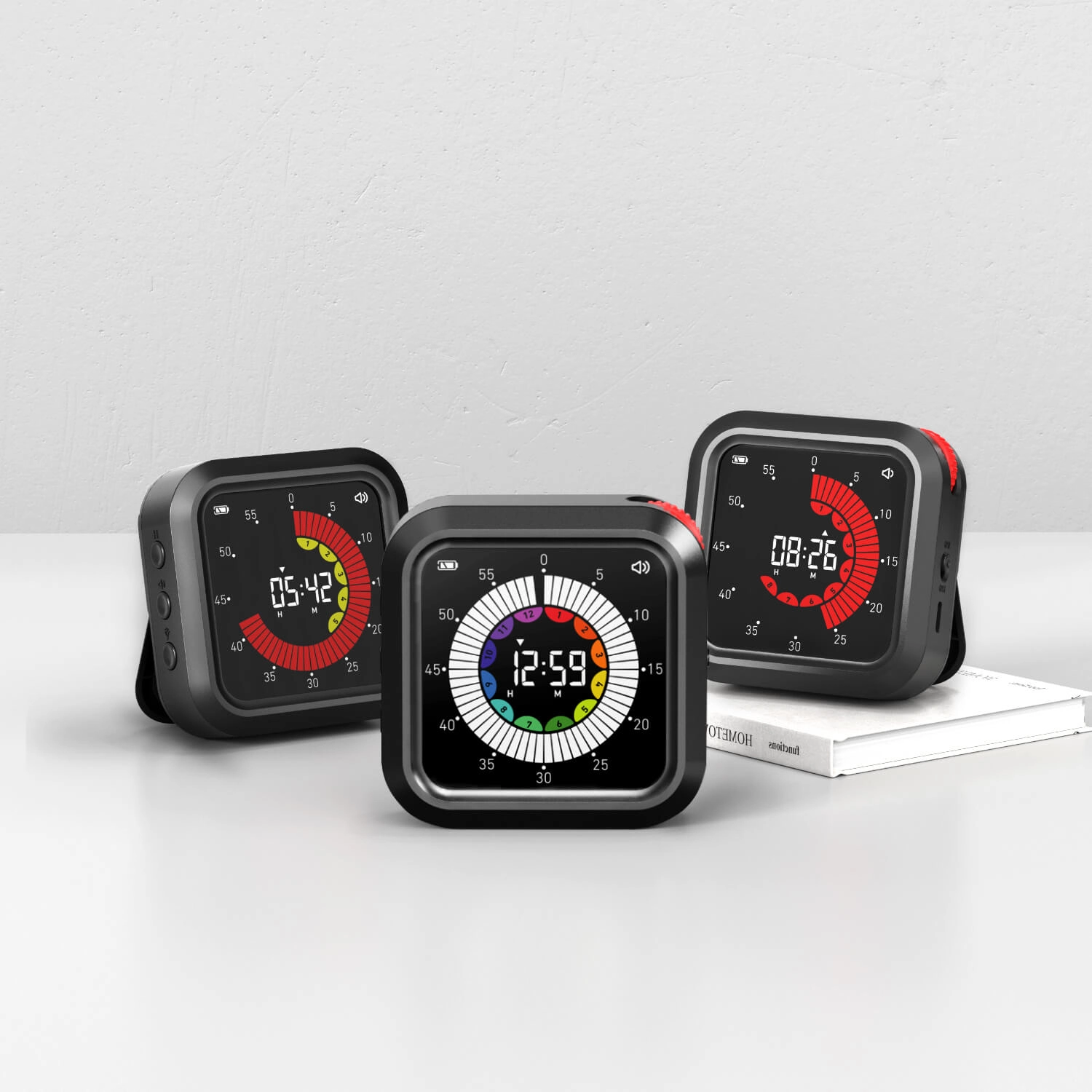
Display performance also affects perceived quality. Important parameters include digit height, viewing angle, contrast, backlight behavior, segment uniformity, low-battery indication, and readability under classroom or office lighting. A visual countdown clock may be more effective for children, neurodiverse users, kitchens, laboratories, and production areas because remaining time can be understood without reading small digits. Suppliers should provide functional samples and test them under realistic lighting and distance conditions.
Control electronics, firmware, and power architecture
Custom firmware can create meaningful differentiation. It may control preset logic, energy-saving modes, button lockout, child-safe operation, calibration parameters, multilingual prompts, and startup behavior. Buyers should define firmware ownership, version control, change authorization, and bug-fix responsibilities in the development agreement. If the product uses a custom IC, the contract should clarify whether source code, programming tools, and production binaries are accessible to the brand or retained by the manufacturer.
Power design must be matched to the use case. AAA or button-cell batteries can support a low-cost portable product, while USB-C or rechargeable lithium-ion systems may be more suitable for frequent commercial use. For rechargeable devices, the project should address charging protection, battery sourcing, cycle performance, cable specifications, transport documentation, and end-of-life handling. The battery compartment should resist accidental opening when the product is marketed for children or educational environments.
Compliance, quality, and documentation must be planned early
Regulatory obligations vary by destination, radio capability, battery type, and product construction. Buyers should identify applicable requirements for electrical safety, electromagnetic compatibility, chemical restrictions, packaging, labeling, and recycling before tooling approval. The European Union RoHS Directive restricts specified hazardous substances in electrical and electronic equipment, while the U.S. FCC Part 15 rules address unintentional radiators and other radio-frequency considerations in relevant products.
A quality system aligned with ISO 9001 principles can help organize document control, corrective action, supplier management, process monitoring, and traceability. Compliance claims should be supported by current test reports and declarations that match the exact model, component configuration, and destination market. Buyers should not rely on generic certificates that refer to a different housing, PCB, battery, or brand.
Inspection planning should include incoming material checks, assembly controls, display and button testing, timer accuracy, alarm performance, battery drain, drop resistance where relevant, cosmetic standards, packaging verification, and an agreed acceptable quality limit. A pre-shipment inspection cannot replace engineering validation, but it can reduce shipment-level defects when the criteria are measurable and documented.
Supplier Evaluation for a Reliable Private-Brand Program
Assess manufacturing depth rather than trading capability alone
A reliable supplier should explain which activities are performed internally and which are outsourced. Control over industrial design, mold tooling, PCB assembly, firmware programming, final assembly, testing, and packaging can reduce communication gaps and schedule risk. Vertical integration is especially valuable when a buyer requests late-stage engineering changes or needs several related products under one brand architecture.
Supplier evaluation should cover factory capacity, engineering staffing, tooling maintenance, component sourcing, production line configuration, quality personnel, sample approval procedures, and peak-season planning. Buyers should request a development timeline with design freeze, engineering sample, design validation, pilot production, compliance testing, packaging approval, and mass-production milestones. Clear gates make it easier to identify delays before they affect a retail launch.
Clarify ownership, exclusivity, and change control
Contracts should distinguish between pre-existing supplier technology and buyer-funded developments. The agreement should address logo artwork, packaging files, industrial design, molds, firmware, custom software, test fixtures, and any exclusive color or configuration. If a project includes proprietary tooling, ownership, storage, maintenance, replacement, and release conditions should be stated explicitly.
Exclusivity must also be defined precisely. A promise that a product is exclusive may apply only to a specific territory, color, customer segment, or sales channel. Buyers should determine whether the supplier may sell a visually similar device to other customers and what constitutes a material similarity. Engineering change notices should require documented approval when a component, material, display, battery, or firmware version changes after qualification.
Build the business case around total cost and repeatability
The financial model should measure landed cost, gross margin, defect cost, return logistics, customer support, certification renewal, tooling depreciation, and forecast flexibility. A reliable manufacturing partner should help identify cost drivers without weakening essential functions. For example, a simpler enclosure may reduce tooling expense, while a better display or quieter buzzer may reduce user complaints and returns.
Market positioning also matters. A commodity countdown device may compete primarily on price, whereas a branded time-management product can compete through ergonomics, accessibility, packaging, educational content, warranty, and a coherent family of products. Related categories such as thermo hygrometers and temperature humidity monitors can extend a brand’s portfolio into home, office, education, laboratory, and facility-management applications, provided that each product has a clear customer need and quality standard.
Why Youben life Supports Scalable Timer Product Programs
Dedicated expertise across digital timing and environmental monitoring
Youben life was established in 2010 and is dedicated to Digital Timers, Pomodoro timers, Visual Countdown Clocks, temperature and humidity monitors, and thermo hygrometers. This focused product scope allows our team to understand the practical details that influence buyer satisfaction, including display legibility, tactile controls, alarm behavior, enclosure durability, battery life, calibration considerations, and retail presentation.
Our 20,000m² vertically integrated facility in Guangzhou, China supports turnkey OEM and ODM programs for global brands and Amazon sellers. We go beyond simple assembly by covering ID and MD industrial design, custom IC programming, precision mold tooling, product engineering, production, quality control, and retail-ready packaging. This structure helps reduce handoffs between separate vendors and gives project owners a clearer path from concept brief to approved mass production.
Turnkey development for differentiated private-brand products
Our engineering team can support buyers that need a fast configuration of an established Digital Timer as well as projects requiring a more distinctive housing, interface, function set, or package. The development process can be organized around a buyer’s target market, forecast, price architecture, channel requirements, and compliance destination. This enables brand owners to select the appropriate balance between speed, investment, exclusivity, and technical differentiation.
For productivity-focused programs, our product range can include compact countdown devices, visual time-management tools, and Pomodoro-oriented products. For complementary categories, our thermo hygrometer and temperature humidity monitor solutions can support home organization, indoor comfort, storage, education, and facility applications. A coordinated product family can improve shelf presence and simplify supplier management when the specifications and quality expectations are aligned across models.
Compliance and capacity designed for commercial execution
Youben life products are developed to meet strict CE, FCC, and RoHS requirements applicable to the relevant configurations and markets. Compliance is treated as part of product planning rather than a final administrative step. Our scalable manufacturing capacity supports both market-entry quantities and larger repeat orders, while structured engineering and production controls help maintain consistency across replenishment cycles.
For buyers comparing factories, the practical advantage is a single partner capable of connecting design intent with mold execution, electronics, firmware, assembly, inspection, and packaging. Project owners should still review model-specific test documentation, sampling standards, quality agreements, and commercial terms before approval. Contact our team at info@youbenlife.com or visit Youben life to discuss a custom Digital Timer, Pomodoro timer, thermo hygrometer, or temperature humidity monitor program.
Contact Youben life to evaluate the right OEM or ODM route and develop a compliant, differentiated timer product for your target market.
Frequently Asked Questions
What is the main difference between OEM and ODM for a branded Pomodoro timer?
OEM usually applies branding and controlled changes to an existing timer platform, while ODM involves deeper development such as industrial design, custom electronics, firmware, new molds, and application-specific functions.
When should a buyer choose an OEM platform?
An OEM platform is suitable when a buyer needs faster launch timing, lower engineering investment, lower technical risk, or a market test based on an established product architecture.
When is ODM development a better option?
ODM is better when the project requires a unique form factor, proprietary functions, custom firmware, exclusive tooling, specialized user experience, or stronger long-term differentiation.
What should be included in a custom timer specification?
The specification should cover count-up and countdown modes, presets, repeat cycles, pause and resume behavior, alert settings, visual signaling, display readability, power system, mounting method, firmware logic, packaging, and destination-market compliance.
Which compliance documents should buyers request?
Buyers should request current model-specific test reports and declarations covering applicable electrical safety, electromagnetic compatibility, chemical restrictions, battery, labeling, and recycling requirements for the target market.
What should a supplier contract clarify for an ODM timer project?
The contract should clarify ownership of molds, industrial design, firmware, packaging files, test fixtures, and other buyer-funded developments, as well as exclusivity scope, engineering change approval, maintenance responsibilities, and release conditions.
Can one supplier provide both Digital Timers and environmental monitoring products?
Yes. Youben life supports Digital Timers, Pomodoro timers, Visual Countdown Clocks, thermo hygrometers, and temperature humidity monitors through its dedicated product development and vertically integrated manufacturing capabilities.
Multi-Timer Solutions for Restaurants and Catering
Top silent pomodoro timer for office Manufacturers and Suppliers
Customizing Digital Timer Clock: PCB, Enclosure and Firmware Choices
How to Compare Digital Visual Countdown Timer Manufacturers and Product Capabilities
Interested in this article?
Let’s talk.
Need specifications, pricing, or customization options? We’ll provide everything you need.

Youben life
Youben life