
Private Label Pomodoro Timer Market Trends: Features and Designs Creating New Brand Opportunities
- How the Focus Timer Category Is Expanding
- From basic countdown tools to productivity systems
- Visual progress is becoming a core differentiator
- App-free usability creates a practical market position
- Features Creating New Brand Opportunities
- Flexible timing modes and firmware architecture
- Silent, tactile, and accessible interaction
- Materials, power, and retail durability
- Procurement Framework for a Differentiated Timer Program
- Define the commercial brief before requesting quotations
- Control quality through measurable acceptance criteria
- Use pilot production to validate the retail proposition
- Youben life: Integrated OEM/ODM Support for Digital Time Products
- Engineering and manufacturing under one development structure
- Product platforms that support portfolio expansion
- Compliance, scale, and brand protection
- Frequently Asked Questions
The private label pomodoro timer market is evolving from simple countdown accessories into a broader digital productivity hardware category. Brand owners, distributors, educational suppliers, corporate wellness providers, and Amazon operators are seeking differentiated time-management devices that combine visual clarity, intuitive controls, attractive industrial design, and dependable mass-production quality. The most promising opportunities are not limited to the traditional study market: demand is also emerging in home-office equipment, classroom tools, ADHD productivity aids, fitness interval training, cooking, rehabilitation, and workplace focus programs.
A modern product strategy must address more than the appearance of a digital timer. Buyers need to evaluate the timing engine, display readability, acoustic behavior, power architecture, firmware logic, enclosure materials, user safety, packaging, compliance documentation, and after-sales risk. A supplier that can manage industrial design, electronics, tooling, software, assembly, testing, and packaging as one coordinated process can reduce launch complexity and protect the brand from quality inconsistencies.
How the Focus Timer Category Is Expanding
From basic countdown tools to productivity systems
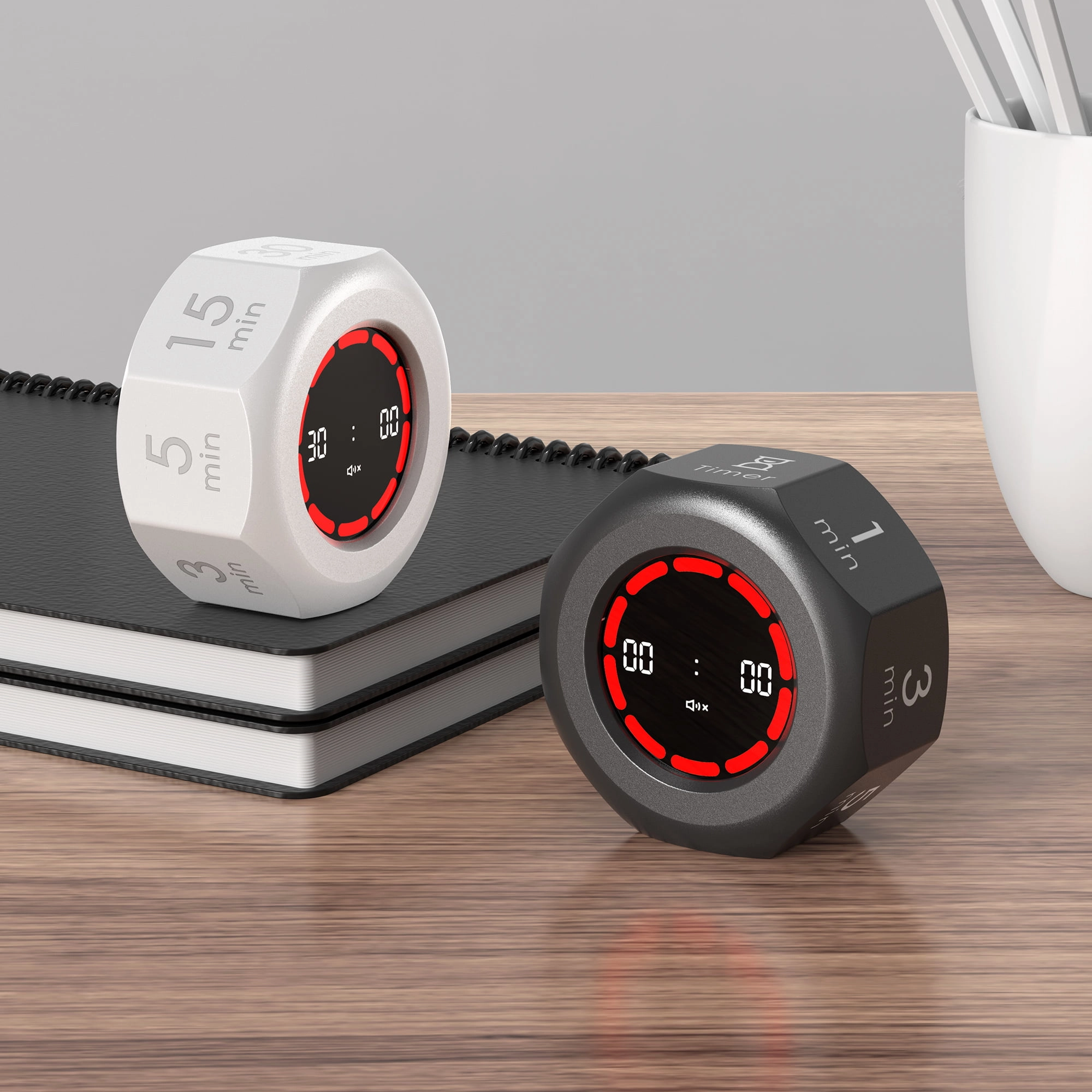
The original Pomodoro method divides work into focused intervals followed by short breaks, commonly using a 25-minute work period and a five-minute pause. However, commercial products are no longer restricted to that preset. Buyers increasingly request configurable work cycles, long-break intervals, repeat-count settings, countdown and count-up modes, and quick controls for classroom or office use. This creates room for several product tiers: a simple entry model, a High Quality desk device, and a specialized version with educational or wellness-oriented functions.
Product positioning should be connected to a specific user problem. Students may need a quiet visual indicator that does not disturb a library or shared room. Remote workers may value a large display, muted alerts, and a compact footprint. Parents and teachers may prefer tactile controls that children can understand without a mobile application. Fitness users may need high-volume alerts, repeat intervals, and a display visible from several meters away. Each application changes the ideal specification and the most persuasive retail message.
Visual progress is becoming a core differentiator
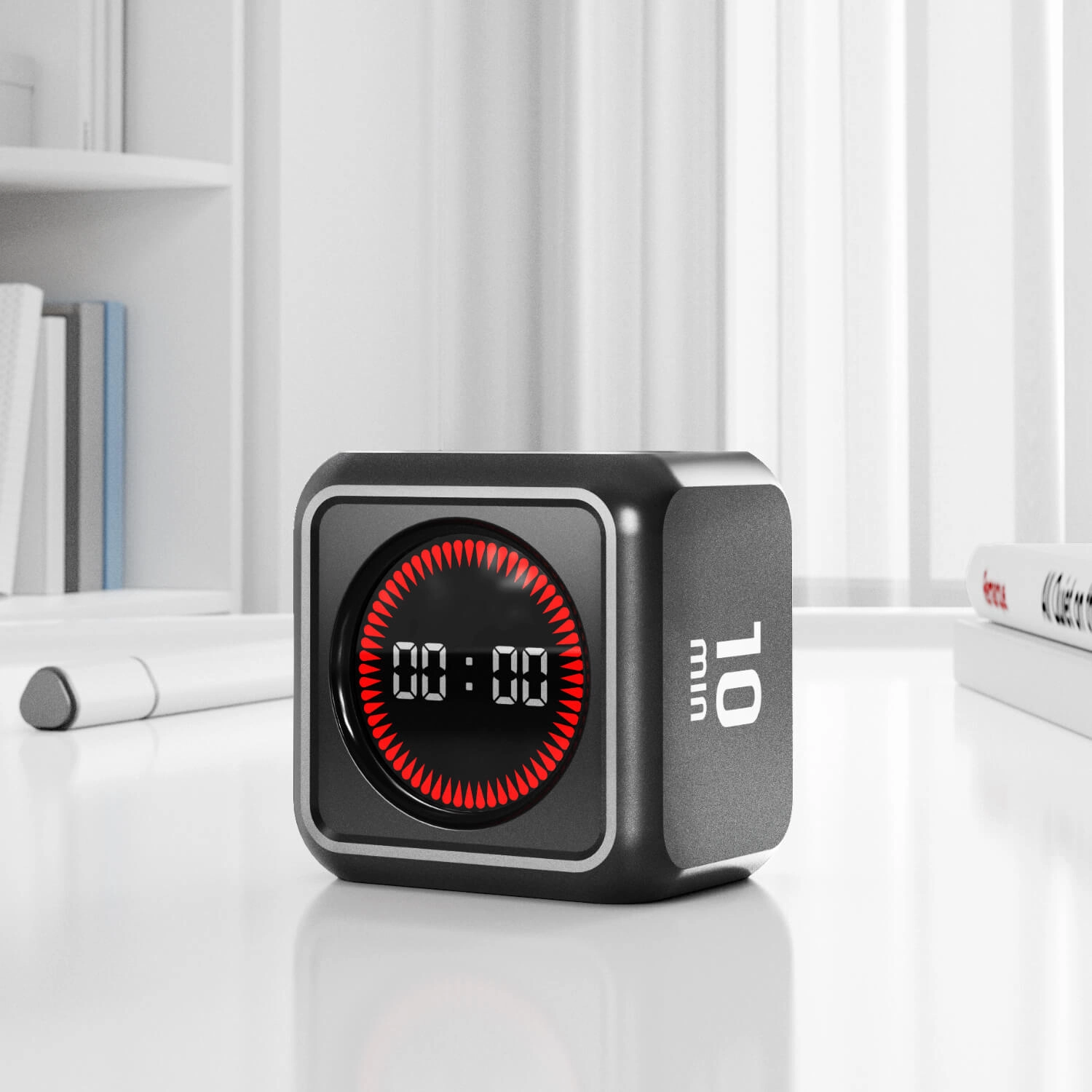
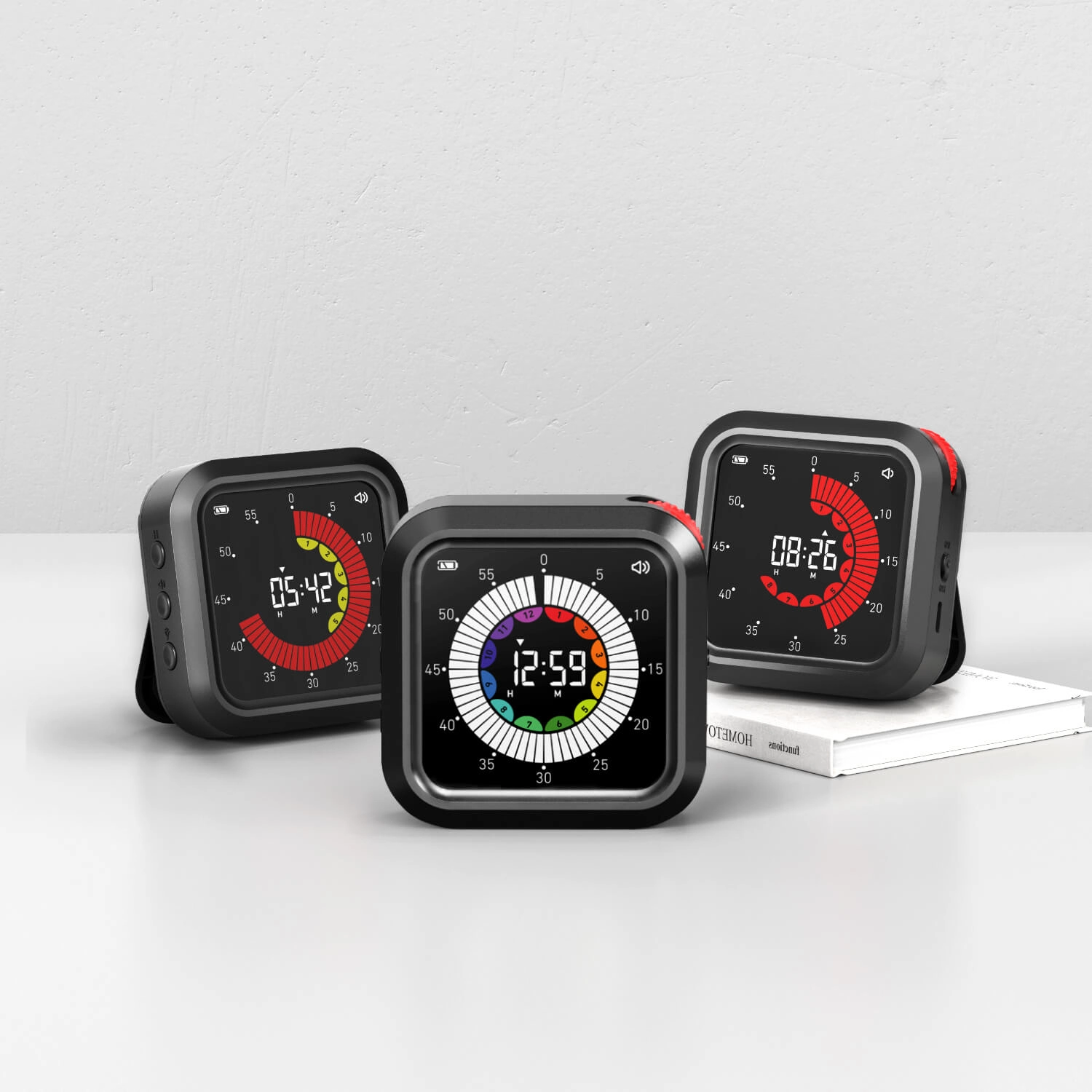
Visual countdown products communicate the remaining duration through digits, colored segments, rotating discs, or a reducing light ring. A continuously changing visual indicator can make elapsed time easier to understand than numbers alone, particularly for children, neurodiverse users, language learners, and users working in noisy environments. It also allows a brand to create a recognizable design language that is more difficult to copy than a generic rectangular enclosure.
Color selection should be treated as a functional decision rather than a decorative choice. A green, amber, and red sequence can communicate progress, but color should not be the only signal because users with color-vision deficiencies may not distinguish every hue. A reliable interface combines color with numerical information, segment movement, icons, or sound settings. The principles of human-centered design described in ISO 9241-210 support this approach by emphasizing user needs, context of use, evaluation, and iterative design.
App-free usability creates a practical market position
Connected products can offer data tracking, but many buyers deliberately prefer an app-free timer. A standalone unit avoids account creation, pairing problems, software updates, privacy concerns, and battery drain caused by wireless connectivity. This is particularly relevant for schools, clinics, libraries, hospitality settings, and workplaces with strict information-security policies.
For a branded product, app-free operation also reduces total development risk. A supplier can focus investment on accurate timing, responsive buttons, efficient power management, durable housing, and clear instructions. Bluetooth or Wi-Fi may be justified for a High Quality ecosystem, but connectivity should be validated through a business case rather than added simply to increase the specification list.
Features Creating New Brand Opportunities
Flexible timing modes and firmware architecture
Firmware is one of the most important sources of differentiation in a digital productivity device. Buyers should define the complete behavior of the product before tooling begins: default duration, adjustable increments, pause and resume rules, end-of-cycle behavior, memory retention, low-battery warnings, factory reset logic, and whether the device resumes the last setting after power interruption. Ambiguous requirements often lead to costly revisions after pilot production.
Custom IC programming enables a supplier to build a consistent user experience across several models. A brand may launch a basic desk timer first and later reuse the core timing architecture in a classroom model, a visual countdown clock, or a temperature and humidity monitor with reminder functions. Reusable electronics can shorten development time, while different enclosures, displays, firmware profiles, and packaging create distinct retail propositions.
Silent, tactile, and accessible interaction
Alert control is a major procurement consideration. A product intended for study rooms or shared offices should provide silent operation, vibration where appropriate, or a highly visible end-of-cycle signal. A kitchen or gym model may require a louder buzzer. Volume adjustment, a mute switch, and a clearly differentiated completion indicator can allow one platform to serve several environments.
Buttons should provide positive tactile feedback without requiring excessive force. Large controls, raised symbols, high-contrast labels, and a limited number of operating steps can improve accessibility and reduce returns caused by user confusion. Buyers should request usability samples from representative users rather than approving the interface solely from engineering drawings.
Materials, power, and retail durability
Housing material affects perceived value, drop resistance, cleanability, and tooling cost. ABS can support cost-effective molded enclosures, while High Quality finishes, silicone feet, magnetic backs, or recycled-material options may support a higher retail position. Surface texture should be selected with fingerprints, dust, cleaning chemicals, and long-term abrasion in mind.
Battery-powered products require a clear decision between replaceable cells, rechargeable lithium batteries, and USB-powered operation. Each option changes certification, packaging, shipping, consumer convenience, and end-of-life considerations. For rechargeable models, protection circuitry, charging behavior, cable quality, and battery documentation must be included in the technical file. The supplier should also explain expected runtime under normal display and alert conditions instead of presenting only an ideal laboratory figure.
| Design direction | Best-fit users | Commercial advantage | Procurement risks to verify |
|---|---|---|---|
| Compact numeric countdown | Students, home offices, kitchens | Low complexity, broad market, efficient packaging | Display size, button durability, alert volume |
| Visual progress clock | Classrooms, children, neurodiverse users | Strong visual identity and intuitive time awareness | Color accessibility, LED brightness, power consumption |
| High Quality desk productivity device | Professionals, corporate wellness programs | Higher perceived value and gift potential | Surface finish, firmware polish, stand stability |
| Rechargeable interval timer | Fitness, coaching, therapy, shared facilities | Repeat-use convenience and lower disposable-battery use | Battery safety, charging reliability, transport documentation |
| Connected productivity device | Software-led ecosystems and data-oriented users | Potential recurring-service integration | App maintenance, privacy, pairing, cybersecurity, support cost |
The table represents product-planning options rather than universal market averages. Actual specifications should be validated through prototype testing, target-user interviews, channel analysis, and regulatory review. Buyers should also distinguish between a feature that improves daily use and a feature that merely increases the bill of materials.
Procurement Framework for a Differentiated Timer Program
Define the commercial brief before requesting quotations
A request for quotation should include the intended market, user profile, sales channel, target retail price, forecast volume, launch date, packaging format, color references, display requirements, power method, alert behavior, and required certifications. Without this information, suppliers may quote different assumptions, making cost comparisons unreliable.
Brand owners should ask whether the quotation includes mold development, prototype charges, firmware customization, testing, packaging artwork, manuals, barcode labels, spare parts, and inspection. The lowest unit price may not represent the lowest total cost if engineering changes, tooling ownership, packaging revisions, and defect handling are excluded.
Control quality through measurable acceptance criteria
Timing accuracy, display uniformity, button life, battery runtime, charging performance, buzzer output, enclosure fit, and cosmetic standards should be defined in a product specification. A quality plan should identify incoming-material inspection, first-article approval, in-process controls, end-of-line functional testing, and pre-shipment inspection.
Compliance is also part of brand protection. Depending on the destination and design, buyers may need evidence related to electromagnetic compatibility, electrical safety, restricted substances, battery transportation, labeling, and recycling obligations. The European Commission RoHS Directive information explains restrictions on certain hazardous substances in electrical and electronic equipment. For products entering the United States, the U.S. Federal Communications Commission provides relevant information on radio-frequency and electromagnetic compliance areas. The exact obligations depend on the final product configuration and sales market.
Use pilot production to validate the retail proposition
A pilot run should test more than assembly yield. It should evaluate whether users understand the controls, whether the packaging communicates the benefit within seconds, whether the product survives normal handling, and whether the selected finish photographs consistently for online listings. Amazon and direct-to-consumer brands should inspect product photography, unboxing, instruction clarity, and the likelihood of negative reviews caused by hidden operating steps.
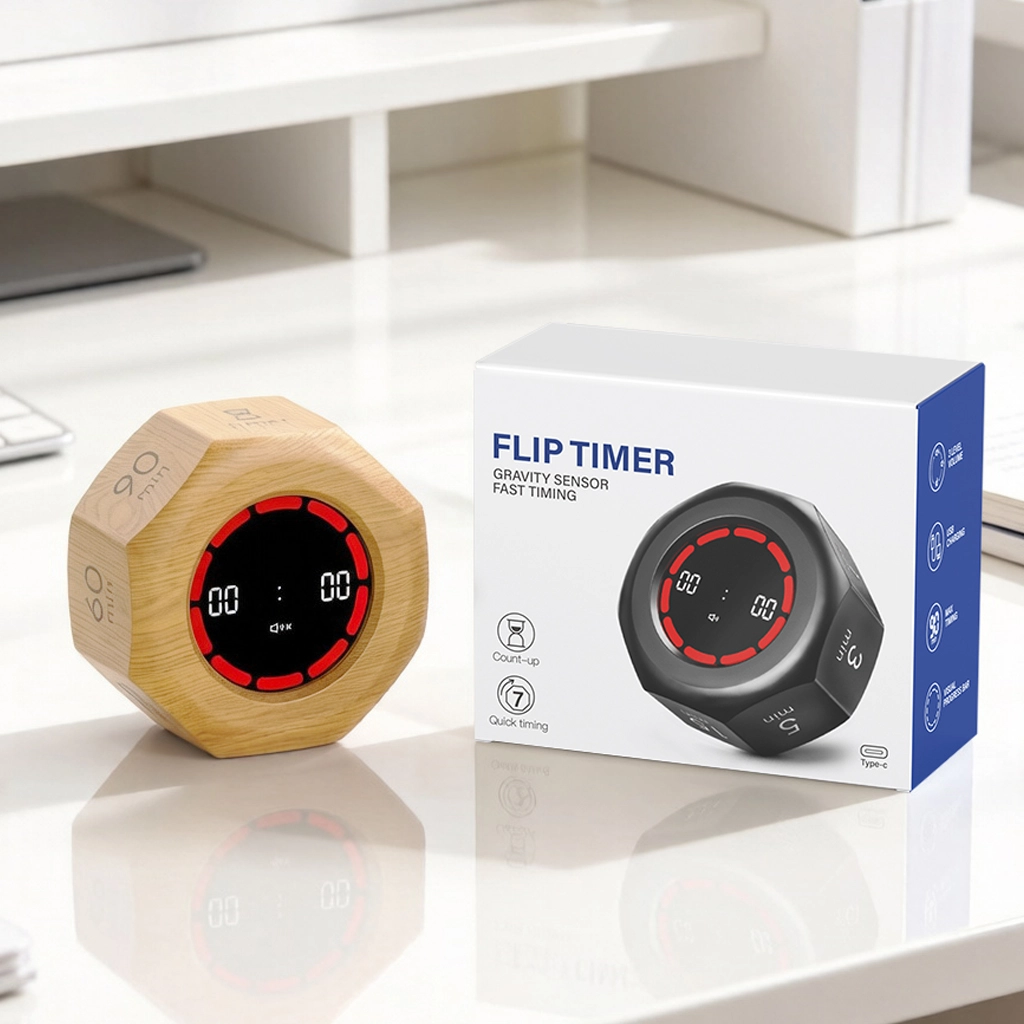
Packaging can turn a technically similar device into a recognizable brand asset. Window boxes, color-coded families, multilingual manuals, QR-linked support pages, and compact packaging can improve shelf presentation and reduce fulfillment costs. Buyers should confirm carton dimensions, drop-test expectations, pallet configuration, and barcode placement before mass production.
Youben life: Integrated OEM/ODM Support for Digital Time Products
Engineering and manufacturing under one development structure
Youben life was established in 2010 as an OEM/ODM manufacturer dedicated to Digital Timers, Pomodoro timers, Visual Countdown Clocks, temperature and humidity monitors, and thermo-hygrometers. Our 20,000m² vertically integrated facility in Guangzhou, China, supports turnkey development for global brands, distributors, and Amazon bestsellers.
Our capability extends beyond simple assembly. Our engineering team supports ID and MD industrial design, custom IC programming, precision mold tooling, electronics integration, firmware development, functional testing, and retail-ready packaging. This integrated structure gives project owners a single technical pathway from concept definition through prototype, pilot production, and scalable manufacturing.
Product platforms that support portfolio expansion
Our Digital Timer and pomodoro timer programs can be configured for study, office productivity, classrooms, kitchens, fitness intervals, therapy, and promotional applications. Buyers can evaluate numeric countdown products, visual progress displays, silent operation, rechargeable architectures, custom colors, logo application, and specialized firmware behavior according to channel requirements.
The same product-development discipline extends to our thermo hygrometer and temperature humidity monitor categories. These products can support home comfort, storage management, plant care, educational demonstrations, and facility monitoring. A brand owner that wants to build a broader productivity or home-environment portfolio can coordinate adjacent products through one experienced manufacturing partner rather than managing unrelated suppliers.
Compliance, scale, and brand protection
All Youben life products are developed with CE, FCC, and RoHS requirements in mind, with final compliance assessment determined by the applicable product configuration and destination market. Our manufacturing process emphasizes repeatable assembly, inspection, engineering change control, and scalable capacity. This is important for brands that must move from a small market test to larger replenishment orders without changing the fundamental product experience.
For buyers, the commercial value of an integrated supplier is measured through reduced coordination, faster issue resolution, consistent quality, and a stronger connection between brand strategy and physical product execution. Youben life helps partners create differentiated time-management hardware that communicates a clear use case, supports reliable retail performance, and strengthens long-term brand identity.
Project owners can learn more at Youben life or contact info@youbenlife.com to discuss product concepts, customization, tooling, compliance, packaging, and production planning.
Contact Youben life at info@youbenlife.com or visit https://www.youbenlife.com/ to develop a differentiated digital timer, visual countdown clock, or thermo-hygrometer program.
Frequently Asked Questions
What features should buyers prioritize in a branded Pomodoro timer?
Buyers should evaluate configurable work and break intervals, clear visual feedback, silent or adjustable alerts, intuitive controls, timing accuracy, reliable power management, durable housing, and firmware behavior that matches the intended user environment.
Is an app-free digital timer a good product opportunity?
Yes. A standalone timer avoids account creation, pairing problems, software updates, privacy concerns, and wireless connectivity risks. It is especially practical for schools, libraries, clinics, shared offices, and users who want simple operation.
What should an RFQ for a customized timer include?
An RFQ should state the target market, user profile, sales channel, retail-price objective, forecast volume, launch date, display and power requirements, alert behavior, colors, packaging, certifications, and whether tooling, firmware, testing, manuals, and inspection are included.
Which compliance topics should be reviewed before mass production?
Depending on the final design and destination, buyers may need to review electromagnetic compatibility, electrical safety, restricted substances, battery transportation, labeling, and recycling obligations. The applicable requirements depend on the product configuration and sales market.
Can one supplier support multiple timer and environmental-monitoring products?
Yes. Youben life supports Digital Timers, Pomodoro timers, Visual Countdown Clocks, thermo hygrometers, and temperature humidity monitors, allowing brands to coordinate adjacent product categories through one OEM/ODM development and manufacturing partner.
Why is pilot production important for a private-label launch?
Pilot production validates assembly yield, user understanding, packaging communication, product durability, cosmetic consistency, online photography, unboxing, and instruction clarity before a larger investment is made.
How to Choose a Reliable Digital Timers OEM Manufacturer
Custom digital learning timers Manufacturers and Suppliers in China
Mini Digital Timer vs. Mechanical Timer: Which to Choose?
Top 10 Mini Timers 2026: Best for Manufacturing & Retail
Interested in this article?
Let’s talk.
Need specifications, pricing, or customization options? We’ll provide everything you need.

Youben life
Youben life