
Private Label Pomodoro Timer Manufacturer vs. Trading Company: Which Partner Fits Your Brand?
- How to Compare a Direct Timer Factory with a Trading Supplier
- Different operating models create different levels of control
- Customization determines whether factory access matters
- Commercial and Technical Criteria for the Right Sourcing Decision
- Evaluate total landed cost instead of factory quotation alone
- Use compliance documentation as a supplier qualification tool
- Compare quality systems, not only inspection promises
- When Each Partner Model Makes Business Sense
- Trading companies can suit fast catalog-based launches
- Manufacturers are stronger for differentiated brand platforms
- Ownership and continuity should be written into the agreement
- Why Youben life Fits Advanced Digital Timer Programs
- Specialization combines product focus with engineering depth
- Turnkey development supports stronger brand differentiation
- Compliance and scalable production reduce execution risk
- What buyers should request before approving a supplier
- Frequently Asked Questions
Choosing between a private-label Pomodoro timer manufacturer and a trading company depends on product complexity, customization depth, compliance requirements, order volume, launch speed, and long-term brand strategy. Manufacturers provide stronger control over industrial design, firmware, tooling, quality systems, and cost structure, while trading companies may offer broader catalogs, lower initial commitment, and simpler sourcing for standardized products. For brand owners planning a differentiated digital timer program, the correct partner should be evaluated through engineering capability, supply-chain transparency, regulatory readiness, quality assurance, minimum order quantities, and total cost of ownership rather than unit price alone.
How to Compare a Direct Timer Factory with a Trading Supplier
Different operating models create different levels of control
A direct manufacturer owns or manages the core production activities behind the product. These activities may include industrial design, electronic engineering, printed circuit board development, firmware configuration, mold tooling, assembly, testing, packaging, and shipment preparation. Because more of the value chain remains under one operating structure, the buyer can usually communicate technical requirements more directly and resolve engineering changes with fewer intermediaries.
A trading company normally coordinates products from one or more factories. This model can be efficient when a buyer needs several unrelated categories, wants to compare existing catalog items, or is testing demand with limited customization. However, the trading intermediary may not control the factory schedule, bill of materials, firmware source, testing method, or corrective-action process. A specification change can therefore require additional negotiation between the brand, trading company, and production site.
Customization determines whether factory access matters
Standard color changes and logo printing require limited technical involvement. More advanced requirements, such as a custom enclosure, silent vibration mode, dual countdown presets, child-lock functionality, rechargeable power, magnetic mounting, multilingual display prompts, or an application-specific operating workflow, require engineering ownership. The project may also need custom button geometry, display brightness tuning, acoustic optimization, battery protection, and firmware validation.
For these programs, a direct development partner is generally better positioned to protect design intent. A trading company can still coordinate customization, but buyers should confirm who owns the design files, who approves engineering changes, who pays for tooling, and who is responsible when a prototype does not meet the approved specification.
Commercial and Technical Criteria for the Right Sourcing Decision
Evaluate total landed cost instead of factory quotation alone
A low quoted price does not necessarily represent the lowest procurement cost. Brand owners should calculate tooling, engineering, samples, packaging development, inspection, certification, freight, import duties, defect allowances, warranty claims, and inventory carrying costs. A trading company may present a convenient consolidated quotation, but the margin structure can make future cost reductions less transparent. A factory may require more technical input at the beginning while providing clearer cost drivers over the product life cycle.
Cost analysis should also consider the consequences of design changes. If every update passes through an intermediary, communication delays can extend the development schedule and increase revision expenses. A vertically integrated supplier can often combine engineering, tooling, production, and quality decisions in a shorter approval chain. This is particularly valuable when a product must meet a retail launch date or a marketplace promotion window.
Use compliance documentation as a supplier qualification tool
Digital timers contain electronic components, batteries or power adapters, displays, plastics, and sometimes wireless functions. Buyers should request applicable test reports, declarations of conformity, material declarations, labeling guidance, and product traceability records. Requirements vary by destination market and product configuration. The European Union explains the role of CE marking, while the United States Federal Communications Commission provides rules and guidance for equipment authorization relevant to applicable electronic products.
Material compliance should also be addressed early. The European Commission outlines restrictions under the RoHS Directive, which can affect electrical and electronic equipment placed on the European market. A credible supplier should explain which configuration was tested, whether the report matches the final model, and how component substitutions are controlled. Certificates alone are insufficient if they do not correspond to the actual product shipped.
Compare quality systems, not only inspection promises
Quality assurance should cover incoming materials, in-process assembly, firmware loading, display performance, button life, battery behavior, timing accuracy, cosmetic inspection, packaging integrity, and final random inspection. Buyers should ask whether inspection criteria are documented, whether sample sizes are defined, and whether nonconforming units are isolated and analyzed.
Where a supplier operates a formal quality management system, buyers can request evidence of the applicable certification and understand how corrective actions are recorded. The ISO 9001 quality management framework emphasizes consistent processes, customer requirements, performance evaluation, and continual improvement. ISO 9001 certification does not automatically guarantee a perfect product, but a documented system provides a stronger basis for repeatability than informal inspection claims.
| Evaluation factor | Direct manufacturer | Trading company | Buyer implication |
|---|---|---|---|
| Product customization | Typically strong when engineering is internal | Usually depends on the selected factory | Confirm who controls design revisions and tooling |
| Supplier breadth | Usually concentrated in defined product categories | Often broad across multiple categories | Choose breadth for assortment and specialization for technical depth |
| Communication path | Brand to engineering and production teams | Brand to intermediary to factory | Fewer handoffs can reduce clarification time |
| Cost transparency | Often clearer for tooling, components, and processes | May include less visible coordination margin | Compare total landed cost and future revision cost |
| Minimum order flexibility | May depend on production planning and component MOQ | May offer catalog alternatives or mixed sourcing | Match the model to launch volume and inventory risk |
| Quality accountability | Factory owns more production variables | Accountability may be shared across parties | Define warranty, inspection, and corrective-action responsibility contractually |
When Each Partner Model Makes Business Sense
Trading companies can suit fast catalog-based launches
A trading company may be practical for a distributor building a broad assortment of office accessories, educational tools, household devices, or promotional products. It can reduce the time spent identifying factories and may simplify communication when the buyer lacks an internal sourcing team. This model can also work for small test orders where the product remains unchanged and the primary requirement is logo application or standard packaging.
Before proceeding, buyers should verify whether the quoted factory is disclosed, whether the same model is sold to competing brands, and whether the trading company can maintain consistent specifications between batches. Product photos and a sample are not enough. The purchase agreement should define the model number, materials, dimensions, display behavior, battery type, color tolerance, packaging contents, and acceptance criteria.
Manufacturers are stronger for differentiated brand platforms
A direct factory is usually the better fit when the timer is intended to become a core product rather than a short-term accessory. Brand differentiation may depend on a proprietary enclosure, distinctive user interface, improved readability, low-noise operation, energy efficiency, special mounting, or a coordinated family of time-management products. These requirements benefit from close collaboration among industrial designers, electronic engineers, mold specialists, firmware developers, and quality teams.
The same logic applies when the product roadmap includes several related devices. A visual countdown clock for classrooms, a desk timer for productivity, and a temperature humidity monitor for home or workplace use may share packaging standards, brand language, display conventions, and channel strategy. A specialized manufacturer can help establish a repeatable platform rather than treating every purchase as an isolated transaction.
Ownership and continuity should be written into the agreement
Procurement teams should clarify ownership of CAD files, tooling, firmware customization, artwork, test fixtures, and approved samples. The agreement should also address engineering-change notifications, end-of-life components, replacement parts, warranty processing, production-site changes, confidentiality, and assistance with market surveillance or product recalls.
Continuity is especially important for products sold through Amazon, retail chains, schools, corporate procurement programs, and subscription or replenishment channels. A partner that can maintain component records and production history gives the brand greater protection against uncontrolled substitutions. Forecast sharing, safety stock planning, and realistic lead-time commitments further reduce the risk of stockouts during seasonal demand.
Why Youben life Fits Advanced Digital Timer Programs
Specialization combines product focus with engineering depth
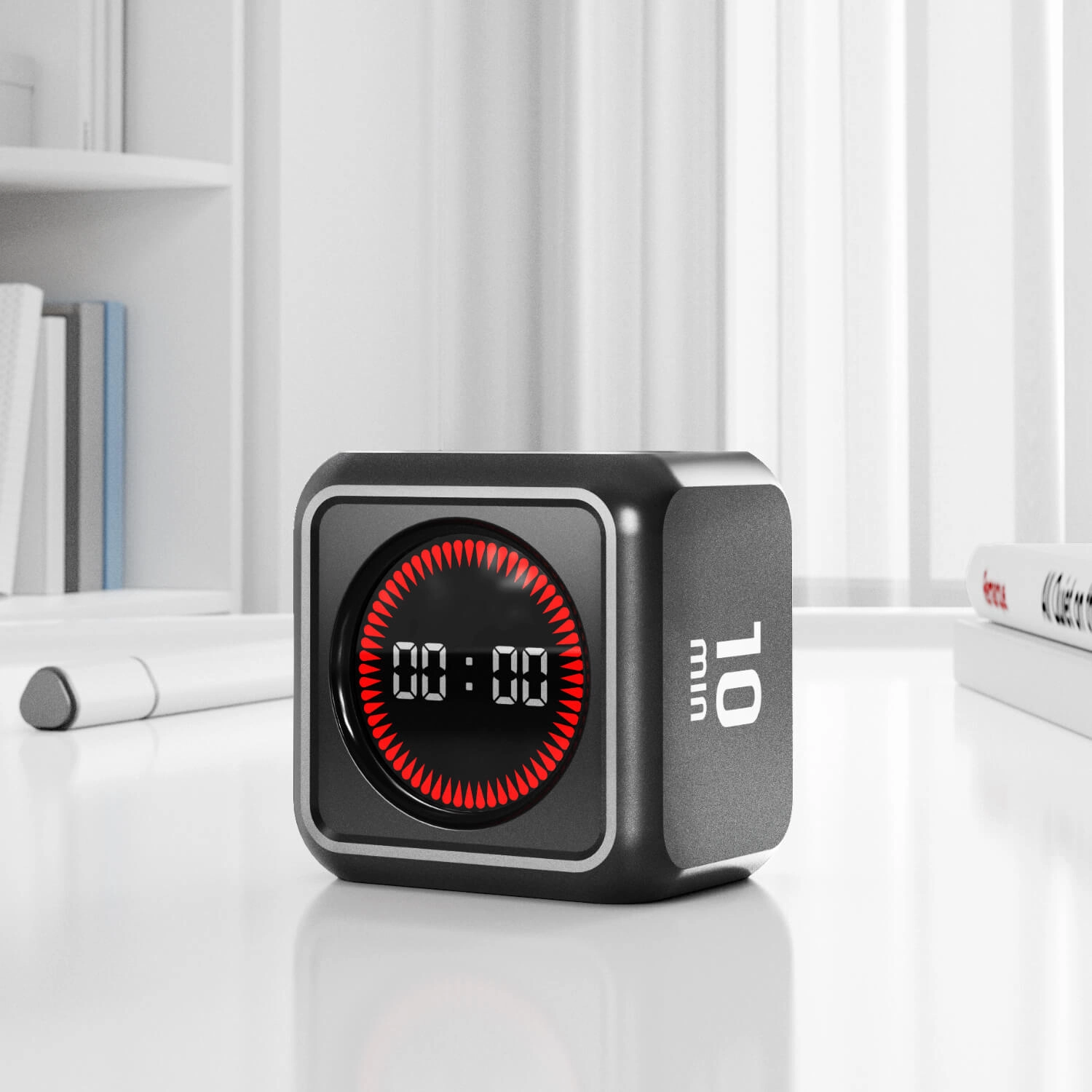
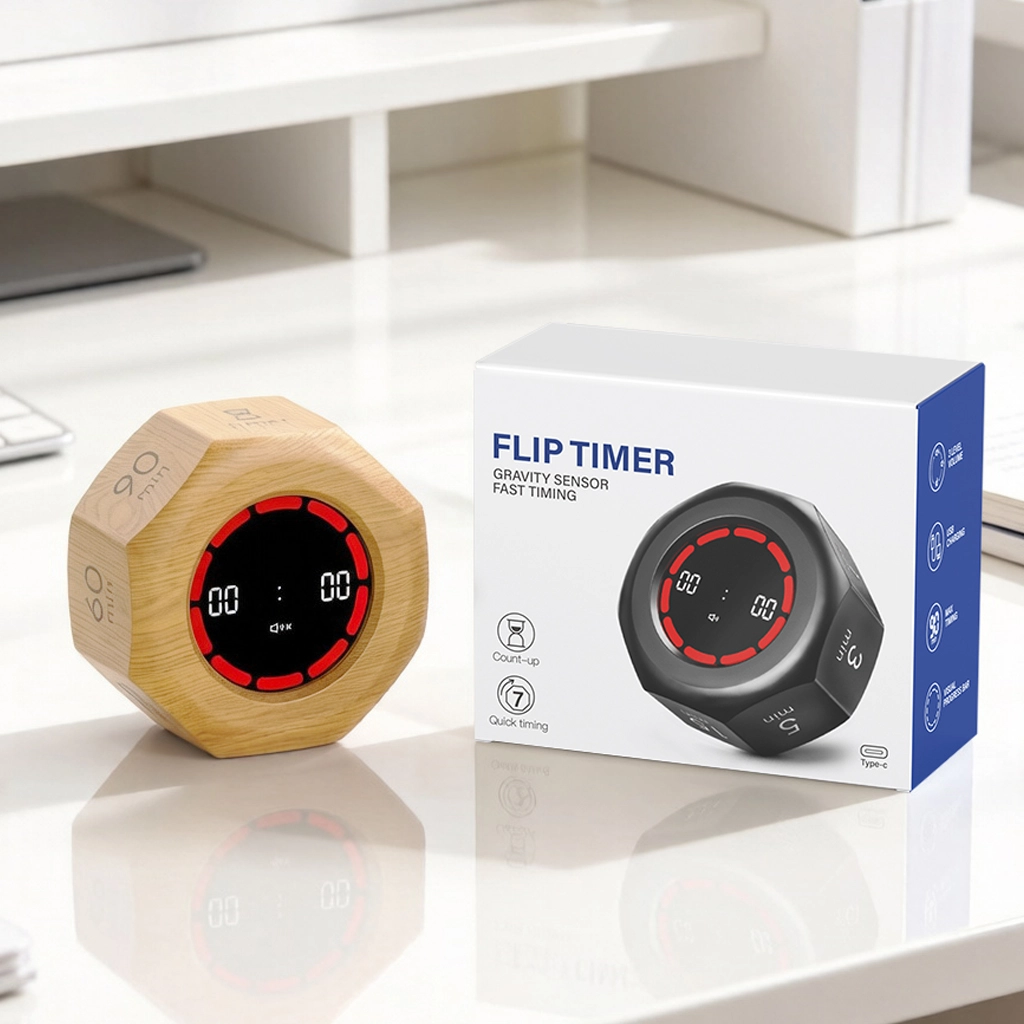
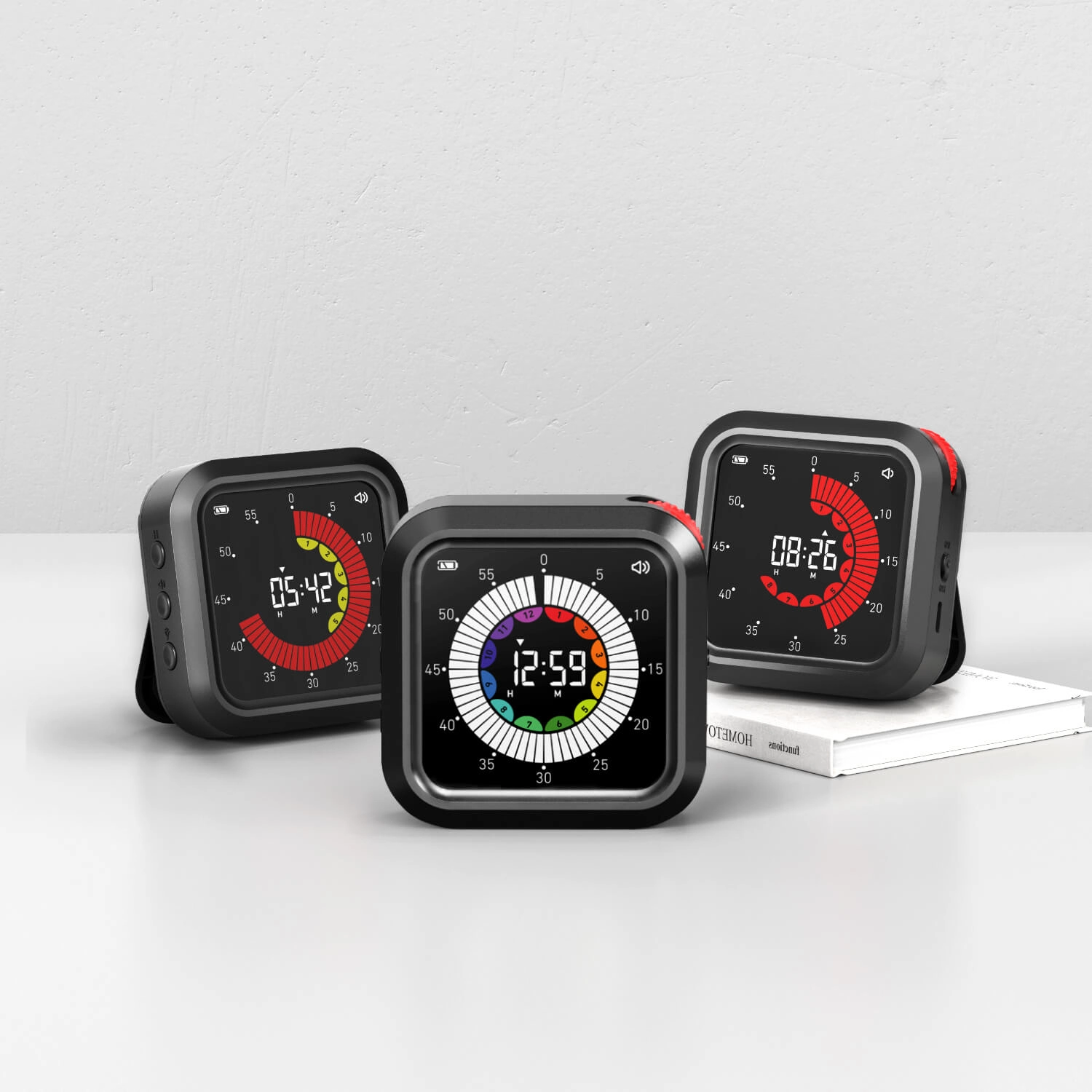
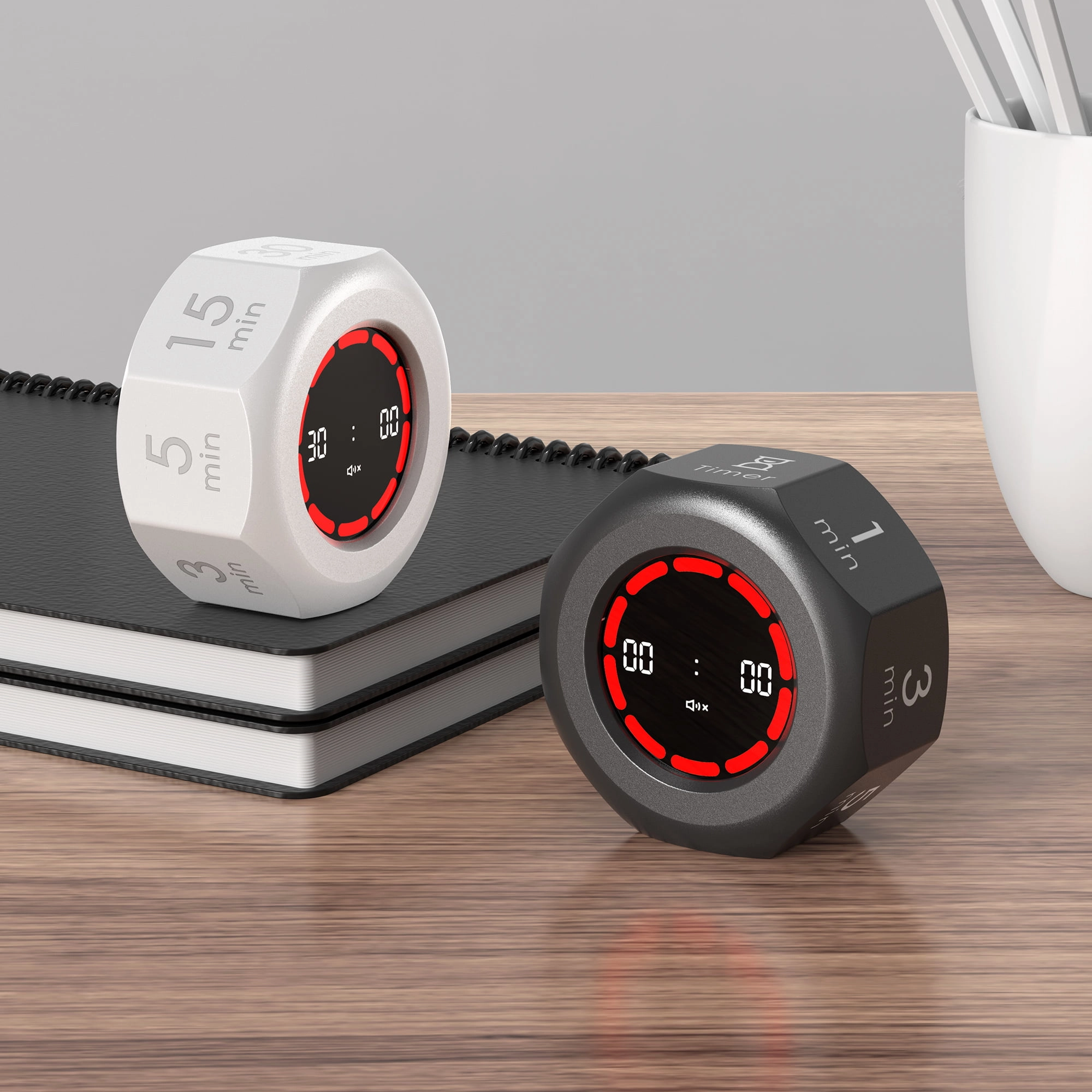
Youben life was established in 2010 as an OEM and ODM manufacturer dedicated to Digital Timers, Pomodoro timers, Visual Countdown Clocks, temperature and humidity monitors, and thermo hygrometers. Our focused product scope allows our engineering and manufacturing teams to understand the practical details that affect user experience, including display legibility, control layout, timing modes, alert behavior, power management, enclosure durability, and retail presentation.
Our 20,000m² vertically integrated facility in Guangzhou, China supports turnkey development for global brands and Amazon bestsellers. We go beyond simple assembly. Our capabilities cover ID and MD industrial design, custom IC programming, precision mold tooling, electronics development, production assembly, testing, and retail-ready packaging. This structure helps project owners move from an initial concept to a manufacturable product with fewer disconnected suppliers.
Turnkey development supports stronger brand differentiation
Our team can support projects that require more than a logo on an existing housing. A brand owner may need a customized digital timer with a signature form factor, a visual countdown clock with a highly readable interface, or a Pomodoro productivity device designed for a specific workspace or learning environment. Engineering decisions can be coordinated with mold construction, component availability, packaging dimensions, and production capacity from the beginning.
We also support adjacent environmental measurement products, including thermo hygrometers and temperature humidity monitors. This broader but still relevant portfolio can help distributors and brand owners build a coherent product family for home offices, classrooms, kitchens, laboratories, storage areas, nurseries, and commercial facilities. Shared brand standards across time-management and environmental-monitoring devices can improve shelf recognition and simplify channel management.
Compliance and scalable production reduce execution risk
All Youben life products are developed to meet strict CE, FCC, and RoHS requirements applicable to their configuration and destination market. Our compliance-oriented process helps buyers organize technical documentation, labeling requirements, material controls, and testing discussions earlier in the project. Final obligations remain dependent on the product design and selling market, so the buyer and supplier should confirm the correct regulatory pathway before mass production.
Our decade-plus engineering experience and scalable manufacturing capacity support both initial launches and volume growth. A practical supplier evaluation should still include approved samples, product specifications, inspection standards, packaging drawings, forecast assumptions, and a written quality agreement. With these controls in place, our manufacturing process can support a brand strategy focused on repeatability, product differentiation, and long-term retail performance.
What buyers should request before approving a supplier
Before issuing a purchase order, project owners should request a capability presentation, factory profile, product drawings, sample plan, development schedule, bill of materials policy, compliance documents, packaging proposal, quality-control plan, warranty terms, and production lead-time estimate. The supplier should explain which tasks are performed internally and which are outsourced. Buyers should also confirm communication ownership, escalation procedures, payment milestones, and the process for approving engineering changes.
Youben life can provide a structured discussion around product concept, target market, expected volume, functional requirements, packaging positioning, and launch timetable. This approach allows the commercial decision to be based on technical fit and lifecycle value rather than on an isolated quotation. For a standard catalog item, a trading company may remain efficient; for a differentiated product family, direct access to a specialized manufacturer usually provides stronger control over quality, IP, and brand consistency.
Contact Youben life at info@youbenlife.com or visit our product and OEM/ODM solutions to discuss your next Digital Timer, Pomodoro timer, thermo hygrometer, or temperature humidity monitor program.
Frequently Asked Questions
What is the main difference between a direct timer manufacturer and a trading company?
A direct manufacturer owns or manages core activities such as engineering, tooling, assembly, testing, and packaging, while a trading company coordinates products from one or more factories and may provide broader catalog access.
When should a brand choose a manufacturer instead of a trading company?
A manufacturer is generally better when the project requires a proprietary enclosure, custom firmware, specialized functions, coordinated product-family development, stronger quality control, or long-term production continuity.
What compliance documents should buyers request for a digital timer?
Buyers should request applicable test reports, declarations of conformity, material declarations, labeling guidance, and traceability records, while confirming that the documentation matches the final product configuration and destination market.
How can buyers compare the true cost of different sourcing partners?
Buyers should calculate tooling, engineering, samples, packaging, certification, inspection, freight, import duties, defect allowances, warranty claims, and inventory carrying costs instead of comparing unit quotations alone.
What does Youben life manufacture?
Youben life manufactures Digital Timers, Pomodoro timers, Visual Countdown Clocks, temperature and humidity monitors, and thermo hygrometers, with OEM/ODM capabilities covering industrial design, custom IC programming, mold tooling, production, testing, and retail-ready packaging.
Can Youben life support customized timer products?
Yes. Youben life supports customized products involving industrial design, mechanical development, custom IC programming, precision mold tooling, electronics, firmware-related requirements, testing, and retail-ready packaging.
Pomodoro Timer OEM Guide for Home Electronics Manufacturers
Certifications for Pomodoro Digital Timers: CE, RoHS, FCC
How to Evaluate a Pomodoro Timer Manufacturer’s Product Quality and Manufacturing Standards
Top digital kitchen timers Manufacturers and Suppliers
Interested in this article?
Let’s talk.
Need specifications, pricing, or customization options? We’ll provide everything you need.

Youben life
Youben life