
Private Label Pomodoro Timer for Corporate and Education Projects: Custom Features Buyers May Need
- How to Specify a Branded Focus Timer for Institutional Use
- Start with the operating environment and user behavior
- Define the interval logic before selecting hardware
- Balance visibility, sound, and accessibility
- Custom Features That Improve Project Value
- Industrial design and brand identity
- Power architecture, durability, and maintenance
- Connectivity: when simplicity is better than smart features
- Procurement, Compliance, and Supplier Due Diligence
- Build a technical file around the destination market
- Compare suppliers by development depth, not only unit price
- Use a staged approval process
- Youben life OEM/ODM Capabilities for Branded Timer Programs
- Integrated engineering and manufacturing support
- Product breadth for related workplace and education applications
- Quality, compliance, and scalable project execution
- Frequently Asked Questions
A private-label Pomodoro timer for corporate and education projects is more than a branded countdown device. It is a purpose-built productivity tool that must fit classroom routines, office workflows, training programs, employee wellness initiatives, and institutional procurement standards. Successful projects combine dependable timekeeping, intuitive interval controls, visual clarity, durable industrial design, regulatory compliance, scalable manufacturing, and retail-ready brand presentation. Buyers should define the intended use environment first, then select custom hardware, firmware, power architecture, packaging, and quality controls that support measurable adoption and long-term return on investment.
How to Specify a Branded Focus Timer for Institutional Use
Start with the operating environment and user behavior
Corporate and education deployments often involve multiple user groups, including students, teachers, hybrid employees, trainers, administrators, and facility teams. Each group may require a different interaction model. A classroom device may need a large remaining-time display, quick start controls, and a loud but configurable alert. An open-plan office may prioritize silent vibration, adjustable brightness, and non-disruptive visual signaling. A coaching or training program may require repeatable work-and-break cycles that can be configured without navigating complicated menus.
Project owners should document the expected session length, number of daily cycles, ambient lighting, noise level, mounting position, user age range, and cleaning routine. These requirements influence display size, button dimensions, enclosure materials, speaker output, battery selection, and firmware logic. A timer placed on a teacher’s desk has different requirements from one distributed in employee onboarding kits or installed in a shared study area.
Define the interval logic before selecting hardware
The familiar Pomodoro workflow commonly uses focused work intervals followed by short breaks and a longer recovery period after several cycles. However, institutional buyers should not assume that one preset meets every use case. Education programs may use 15-minute reading blocks, 5-minute transitions, and 30-minute project periods, while corporate teams may prefer 25-minute focus sessions, 5-minute breaks, or customized meeting intervals.
Useful firmware functions include independent work and break duration settings, automatic cycle progression, pause and resume, session counting, countdown and count-up modes, one-touch reset, memory retention after power loss, and optional lockout controls. A configuration lock can prevent students or workshop participants from accidentally changing an approved schedule. For enterprise programs, firmware may also support a start-up default, branded terminology, or a simplified interface for large-scale distribution.
Balance visibility, sound, and accessibility
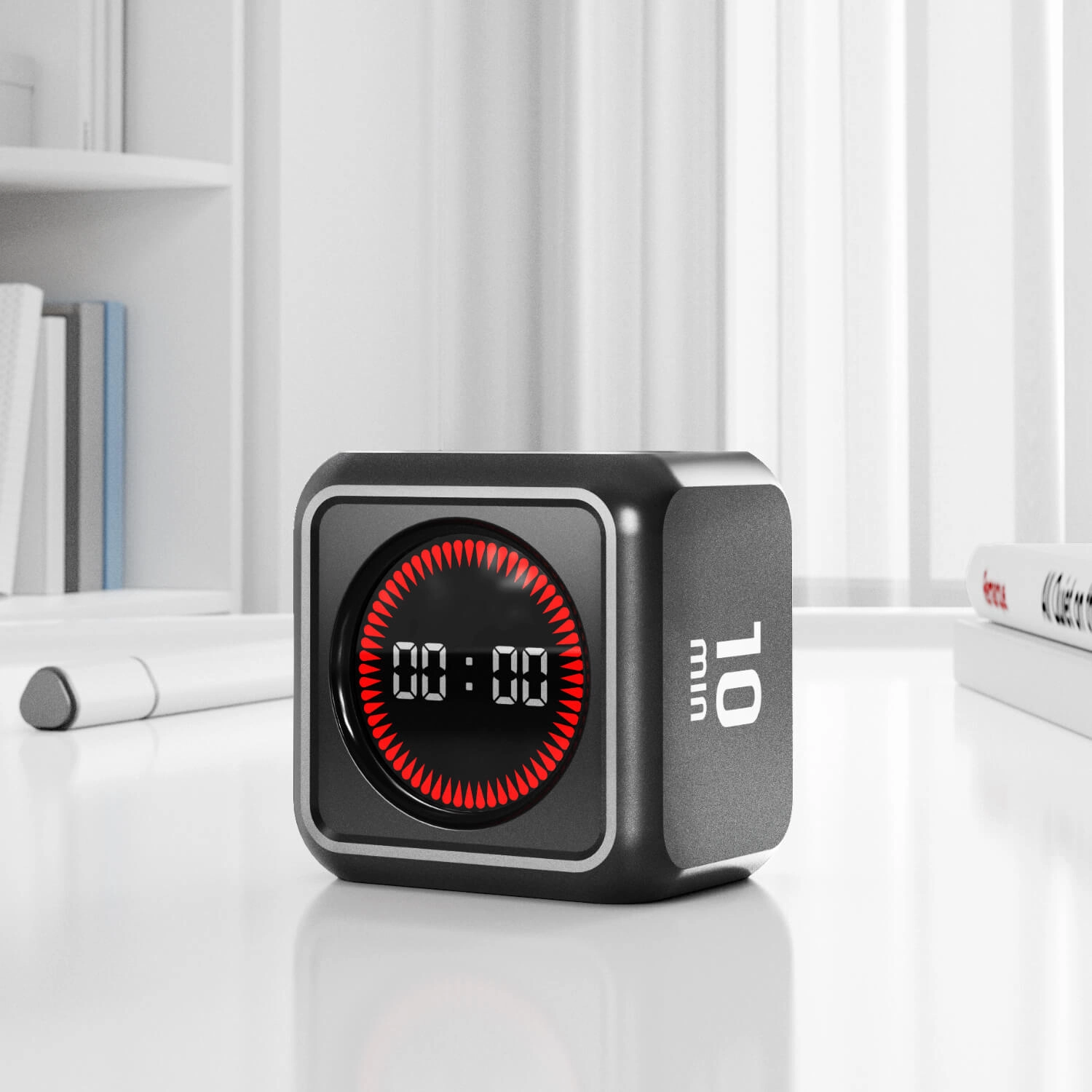
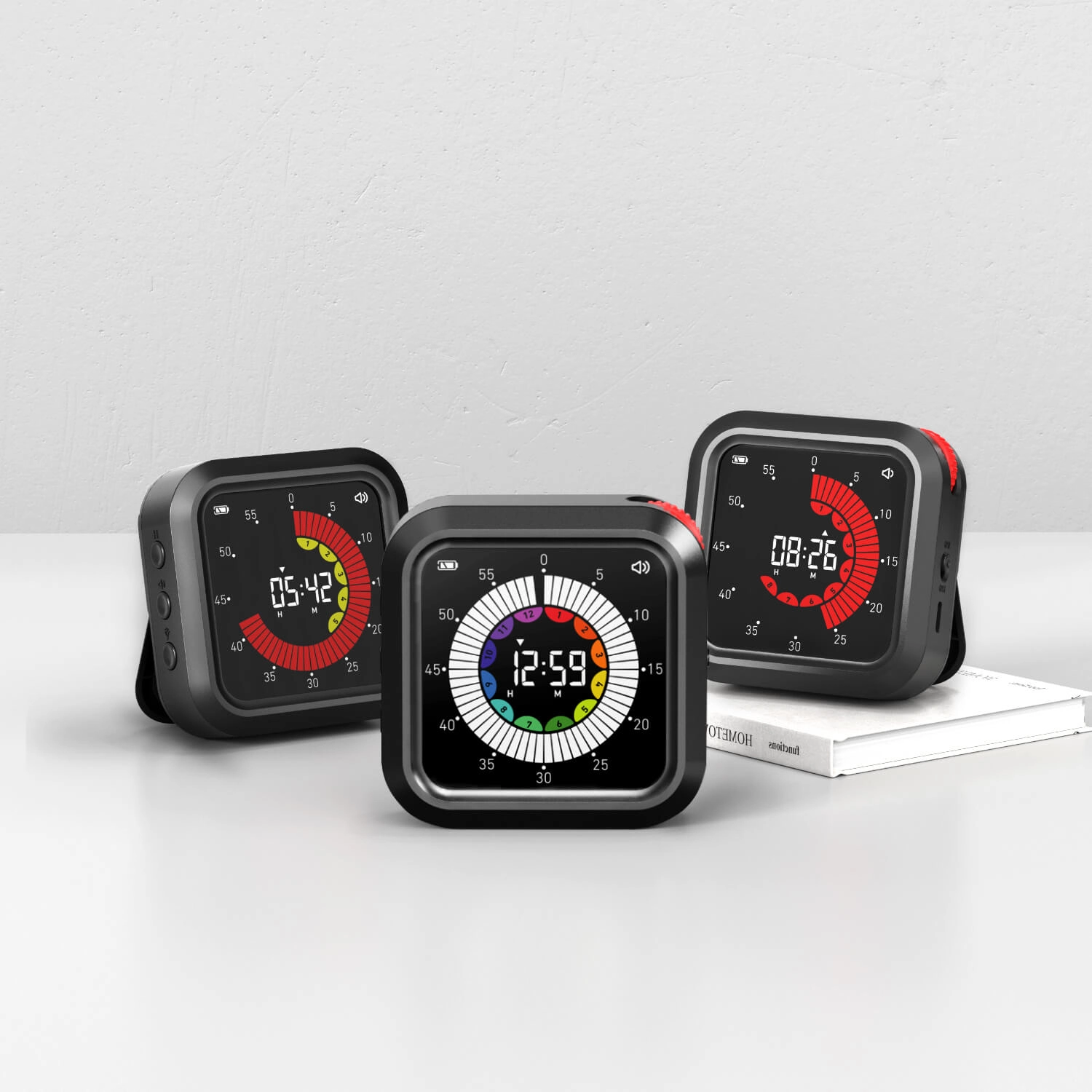
Visual communication is central to a focus timer. Buyers should compare segmented LED displays, LCD panels, high-contrast screens, and color-coded indicators according to viewing distance and lighting conditions. A large digital timer used in a classroom or training room should remain legible from the back of the room, while a desk unit can use a smaller footprint.
Alerts should be configurable rather than fixed. Options can include adjustable volume, multiple tones, silent mode, flashing indicators, vibration, and a gradual alert sequence. These choices support neurodiverse users, quiet offices, libraries, examination settings, and shared learning spaces. Accessibility planning should also consider tactile buttons, clear iconography, color contrast, and operation without relying solely on color. The principles of human-centered design described in ISO 9241-210 are useful when evaluating how easily different users can understand and operate the device.
Custom Features That Improve Project Value
Industrial design and brand identity
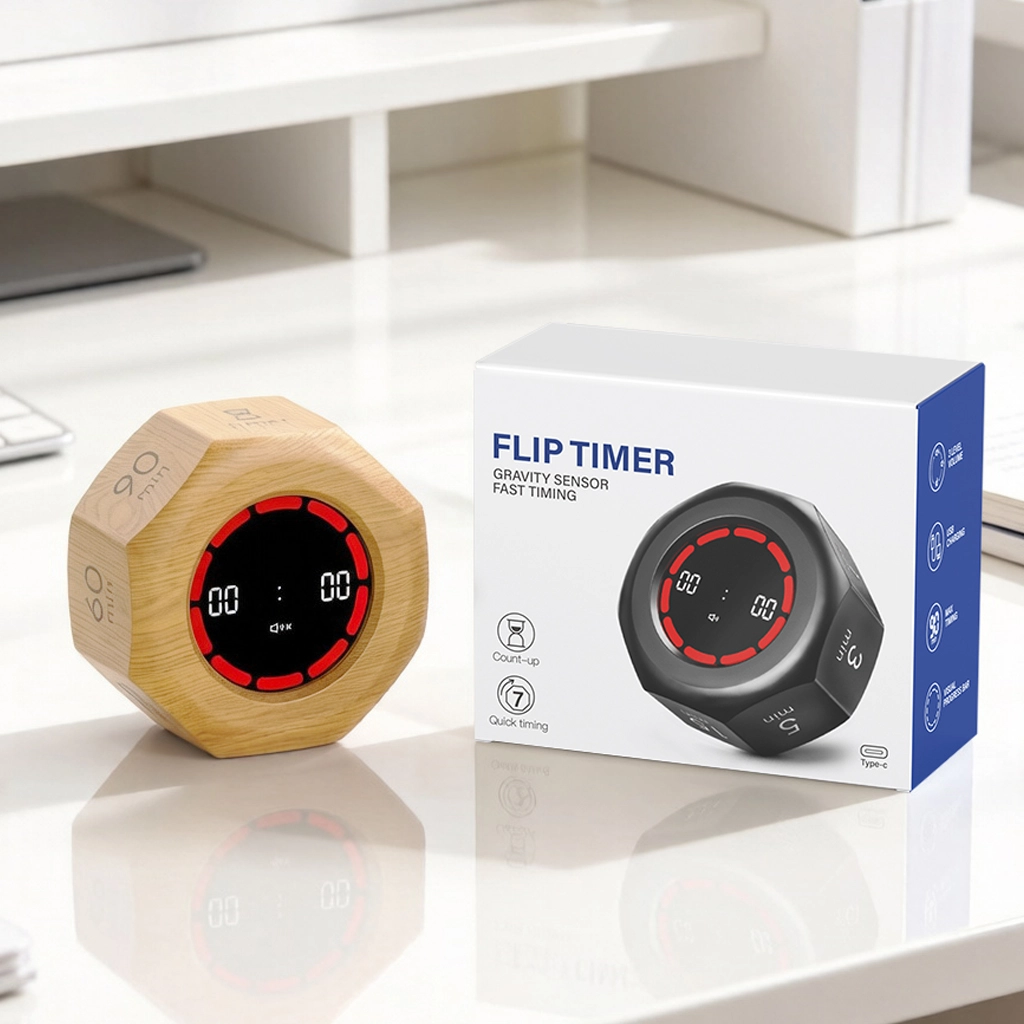
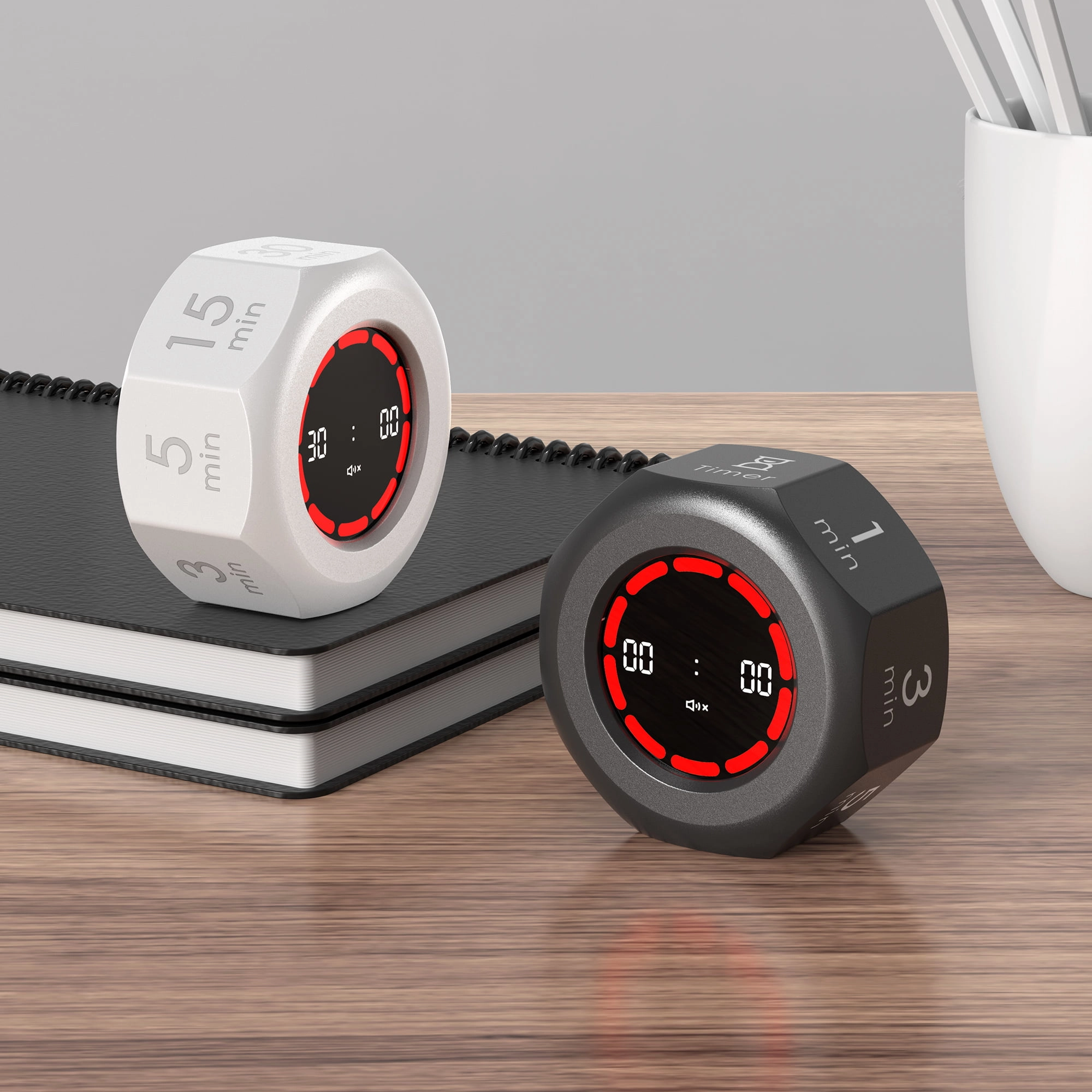
Private-label hardware should communicate the buyer’s brand consistently across the product, packaging, user guide, and digital marketing materials. Customization may include enclosure color, surface texture, logo placement, button geometry, display layout, and branded start-up screens. A distinctive form factor can help a productivity brand avoid competing solely on price, while a restrained corporate design may support employee benefits programs and institutional purchasing.
Material selection affects both perceived quality and lifecycle performance. ABS or PC enclosures can provide a practical balance of impact resistance, weight, and cost. Rubber feet or a silicone base can reduce movement on desks. A recessed display can improve protection during transport, while a wall-mounting slot or magnetic back expands installation options. Buyers should request prototype samples and review injection-mold flow, parting lines, button feel, surface finish, and logo durability before approving production tooling.
Power architecture, durability, and maintenance
Power requirements should be evaluated against the project’s distribution model. A replaceable-battery unit may suit schools that need quick battery changes without charging infrastructure. Rechargeable USB-C models can reduce recurring battery purchases and support sustainability objectives, but they require charging guidance, battery protection, cable planning, and end-of-life considerations. Buyers should confirm standby consumption, operating duration, charging time, overcharge protection, and the availability of replacement components.
Durability targets should reflect the real handling environment rather than laboratory assumptions. Education products may be moved between rooms, placed in backpacks, or cleaned frequently. Corporate devices may remain on desks for years and experience repeated button presses. Supplier validation should cover drop testing where appropriate, button-cycle testing, display aging, battery safety, adhesive performance, and carton protection. If the product is used near food, in healthcare-adjacent settings, or in high-humidity locations, cleaning compatibility and enclosure sealing should be reviewed during specification.
Connectivity: when simplicity is better than smart features
Bluetooth, Wi-Fi, mobile applications, and cloud dashboards can add reporting or centralized configuration, but they also increase firmware complexity, cybersecurity obligations, certification scope, and support costs. Many focus-timer projects do not need connectivity because the primary value is a reliable, distraction-free physical cue.
Buyers should add wireless functionality only when there is a clear operational requirement, such as synchronized timers across classrooms, fleet-level settings, usage analytics, or integration with a learning platform. For a standalone office or education device, dependable local controls can produce higher adoption and lower total cost of ownership. A clear product requirements document should distinguish essential functions from optional features so that engineering resources remain focused on user value.
| Requirement area | Basic deployment | Enhanced institutional deployment | Buyer evaluation metric |
|---|---|---|---|
| Interval control | Preset work and break cycles | Independent programmable intervals and cycle memory | Setup time and error rate |
| Alert system | Single audible alarm | Adjustable sound, silent visual alert, and vibration options | Suitability for shared environments |
| Display | Standard LCD or LED countdown | High-contrast display with status icons and adjustable brightness | Readability at the intended viewing distance |
| Power | Replaceable batteries | Rechargeable USB-C battery with protection circuitry | Runtime, charging time, and maintenance cost |
| Customization | Logo and packaging print | Custom enclosure, firmware, interface, tooling, and retail packaging | Brand differentiation and project fit |
| Compliance | Market-specific basic documentation | Applicable test reports, declarations, labeling, and traceability | Import readiness and procurement approval |
The table should be used as a scoping framework rather than a universal product ranking. Actual performance depends on the selected components, firmware, enclosure, battery, production controls, and destination-market requirements. Buyers should request current technical documentation rather than relying on generic supplier claims.
Procurement, Compliance, and Supplier Due Diligence
Build a technical file around the destination market
Regulatory obligations vary by sales region and product configuration. A digital timer with no radio function generally has a different compliance pathway from a connected device. Buyers should identify the destination countries, applicable electrical and electromagnetic requirements, battery rules, labeling obligations, packaging regulations, and importer responsibilities before finalizing the bill of materials.
For European distribution, buyers can review the European Commission’s overview of RoHS requirements concerning restricted substances in electrical and electronic equipment. For the United States, radio-enabled or digitally controlled products may require consideration of applicable FCC equipment authorization procedures. A supplier should provide relevant declarations, test reports, labeling information, and component traceability for the actual production model, not merely a similar reference product.
Compare suppliers by development depth, not only unit price
Unit cost is important, but it does not capture mold investment, engineering revisions, testing, packaging development, quality inspection, freight, warranty exposure, or delayed launch risk. A supplier comparison should examine design ownership, prototype lead time, mold maintenance, firmware revision control, component sourcing, production capacity, quality checkpoints, and corrective-action procedures.
Procurement teams should ask how the manufacturer manages engineering change notices, golden samples, incoming inspection, in-process inspection, final inspection, and pre-shipment approvals. It is also prudent to clarify the warranty period, spare-parts policy, defect classification, replacement process, and communication responsibilities. A supplier that documents these processes can reduce the risk of inconsistent batches and unsupported field failures.
Use a staged approval process
A practical development sequence includes requirement definition, industrial design review, functional prototype, engineering validation, compliance testing, pilot production, packaging approval, and mass production. Each stage should have measurable acceptance criteria. For example, the prototype gate may confirm usability and visibility, while the pilot gate may confirm color consistency, button force, firmware stability, carton integrity, and production yield.
Organizations should also test the device with representative users. Teachers can evaluate classroom visibility, employees can assess desk ergonomics, and administrators can review setup instructions and inventory handling. User trials often reveal problems that technical specifications miss, such as confusing icons, overly bright indicators, accidental resets, or alert tones that are unsuitable for shared spaces.
Youben life OEM/ODM Capabilities for Branded Timer Programs
Integrated engineering and manufacturing support
Youben life has operated since 2010 as an OEM/ODM manufacturer focused on Digital Timers, Pomodoro timers, Visual Countdown Clocks, temperature and humidity monitors, and thermo-hygrometers. This product specialization supports buyers that need a supplier familiar with time-management hardware, display technologies, control interfaces, and compact consumer-electronics production.
Our 20,000m² vertically integrated facility in Guangzhou, China supports turnkey private-label development for global brands and Amazon bestsellers. Our capabilities extend beyond assembly and include ID/MD industrial design, custom IC programming, precision mold tooling, firmware-related development, prototype coordination, production engineering, and retail-ready packaging. This integrated structure can reduce handoff risk between design, tooling, electronics, and packaging vendors.
Product breadth for related workplace and education applications
Our portfolio allows project owners to develop a broader productivity or environment-monitoring program rather than sourcing every device from a different manufacturer. A Digital Timer can support study intervals, training exercises, examinations, workshops, and office focus routines. A visual countdown clock can provide shared time awareness in meeting rooms, classrooms, therapy spaces, and event operations.
For projects where comfort and environmental awareness matter, our thermo hygrometer and temperature humidity monitor products can complement time-management hardware in classrooms, offices, storage rooms, and wellness programs. This product breadth may help brand owners create coordinated packaging, consistent industrial design language, and consolidated procurement schedules.
Quality, compliance, and scalable project execution
Our manufacturing process is designed to support consistent output from pilot quantities through larger production programs. All Youben life products meet strict CE, FCC, and RoHS standards as applicable to the product configuration and destination requirements. Buyers should still confirm the exact compliance documentation for the selected model, market, battery configuration, and any wireless functions.
Our decade-plus engineering experience supports customization across enclosure design, color, logo treatment, display behavior, control logic, packaging, and product documentation. Scalable manufacturing capacity helps project owners plan launches for corporate campaigns, education initiatives, distributor programs, and online retail. The commercial objective is not merely to place a logo on an existing Digital Timer; it is to create a dependable product experience that strengthens brand identity and supports repeat purchasing.
For supplier evaluation and product development discussions, buyers can review the Youben life product and OEM/ODM capabilities or contact the engineering and sales team at info@youbenlife.com. A clear brief should include target market, estimated annual volume, preferred functions, packaging format, compliance destination, launch date, and expected customization depth.
Contact Youben life at info@youbenlife.com to develop a compliant, differentiated Digital Timer or related branded timing solution for your corporate or education project.
Frequently Asked Questions
What custom features should buyers request for a branded Pomodoro timer?
Buyers may request programmable work and break intervals, automatic cycle progression, pause and resume, session counting, adjustable brightness, silent mode, vibration, configurable sound, custom enclosure colors, logo placement, branded firmware behavior, and retail-ready packaging.
Should a corporate or education timer include Bluetooth or Wi-Fi?
Connectivity should be added only when the project requires synchronized timers, centralized configuration, usage analytics, or platform integration. For many offices and classrooms, reliable local controls provide simpler operation, lower cost, fewer certification obligations, and less support complexity.
What compliance documents should a timer supplier provide?
The supplier should provide documentation relevant to the destination market and actual product configuration, such as applicable declarations, test reports, labeling information, battery documentation, and component traceability. Wireless and non-wireless versions may have different compliance requirements.
How can buyers compare OEM timer manufacturers?
Buyers should compare industrial design capability, firmware control, prototype and tooling support, component sourcing, production capacity, quality inspection, engineering change management, compliance documentation, packaging development, warranty terms, and corrective-action procedures rather than evaluating unit price alone.
Can a branded timer be developed for both corporate and education use?
Yes. A common hardware platform can be adapted through firmware presets, alert options, display behavior, enclosure design, packaging, and user documentation. The final configuration should be validated in representative classrooms, offices, training rooms, or other intended environments.
What other products can complement a branded focus timer program?
Visual countdown clocks can support shared time awareness, while thermo hygrometers and temperature humidity monitors can support environmental monitoring in classrooms, offices, storage areas, and wellness programs.
How to Build a Long-Term Partnership With a Reliable Visual Timer Manufacturer
Essential Questions to Ask Before Choosing a Pomodoro Timer Manufacturer
Digital Visual Countdown Timer Integration with Production Lines, Equipment, and Control Systems
Best Smart Focus Timers 2026: Top Picks for Buyers
Interested in this article?
Let’s talk.
Need specifications, pricing, or customization options? We’ll provide everything you need.

Youben life
Youben life