
Private Label Custom Pomodoro Timer Packaging Options
- Strategic Packaging Formats for Private-Label Productivity Timers
- Folding cartons for scalable retail programs
- Rigid boxes for High Quality positioning
- Blister, window, and e-commerce-ready structures
- Material, Structure, and Compliance Decisions
- Balancing protection, sustainability, and total landed cost
- Artwork, labeling, and multilingual configuration
- Print quality and brand consistency
- Procurement Controls for a Reliable Packaging Launch
- Build a packaging specification before requesting quotations
- Validate performance through staged testing
- Manage cost through platform thinking
- Why Youben life Supports Integrated Timer Packaging Programs
- One development path from product concept to retail pack
- Technical capability for differentiated product families
- Compliance, quality, and scalable supply
- Frequently Asked Questions
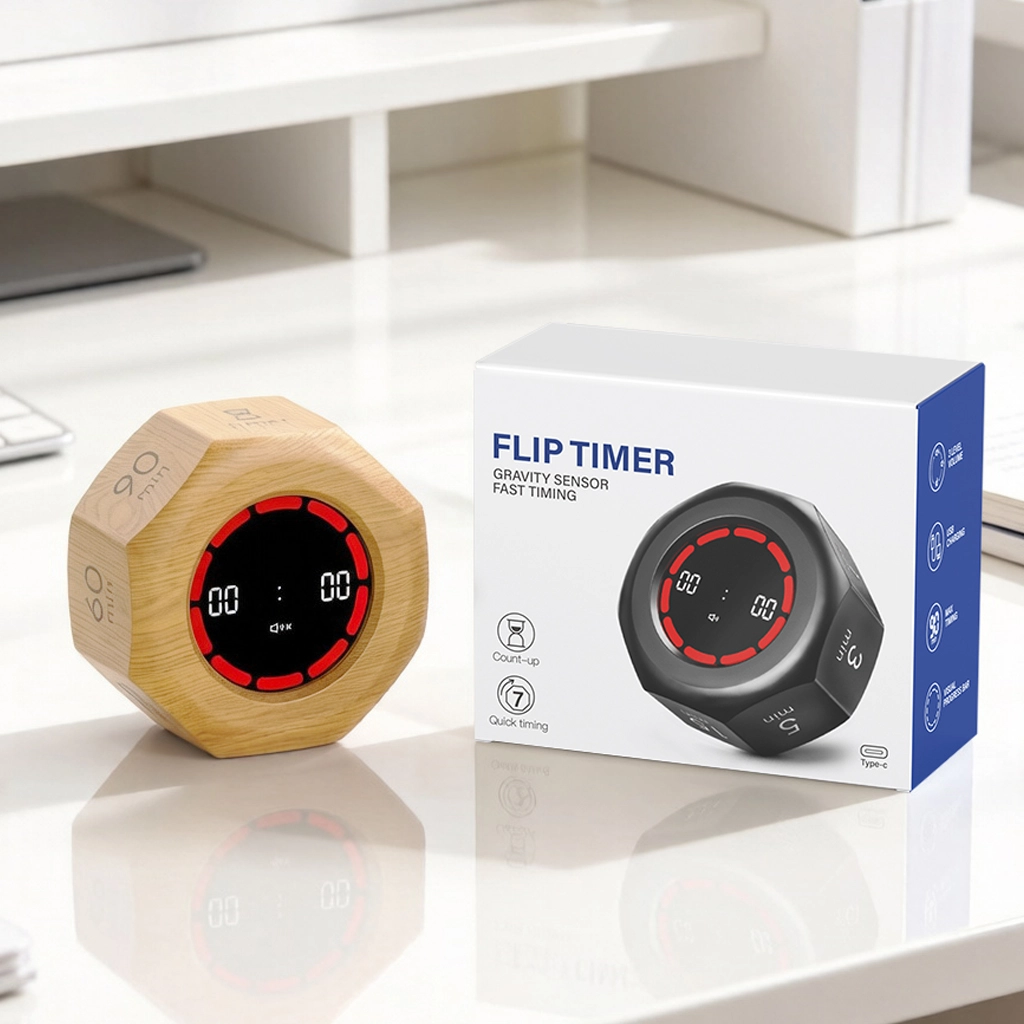
Private-label packaging for Pomodoro timers is a strategic product-development decision rather than a final graphic-design task. The selected format influences perceived value, shipping damage, shelf visibility, regulatory labeling, assembly labor, storage utilization, and the brand owner’s total landed cost. Buyers should evaluate folding cartons, rigid presentation boxes, molded-pulp protection, blister packs, mailer cartons, and hybrid structures against sales channel, order volume, target retail price, sustainability objectives, and product configuration. A successful package protects the digital timer, communicates its productivity benefits within seconds, supports reliable fulfillment, and creates a repeatable platform for related products such as visual countdown clocks, temperature and humidity monitors, and thermo-hygrometers.
Strategic Packaging Formats for Private-Label Productivity Timers
Folding cartons for scalable retail programs
Folding cartons are often the most practical starting point for a branded time-management device. SBS paperboard or recycled-content board can provide a clean printable surface for product photography, operating highlights, QR codes, language panels, and compliance information without the tooling investment associated with rigid boxes. The structure can include a locking tab, dust flaps, an internal paperboard cradle, or a separate insert that prevents buttons, display windows, and rotary controls from receiving concentrated pressure during transit.
For distributors and Amazon-focused brands, carton dimensions should be engineered around the finished device, accessory cable, batteries if included, manual, and protective components. Excessive empty space raises dimensional-weight charges and increases material consumption, while insufficient clearance can create scuffing or display damage. A packaging engineer should review dielines with the product CAD model before artwork approval and confirm that the folded carton remains square after filling.
Rigid boxes for High Quality positioning
Rigid setup boxes communicate higher perceived value and are suitable for executive gifts, education bundles, wellness programs, and High Quality productivity collections. A wrapped greyboard construction can accommodate a lift-off lid, magnetic closure, ribbon pull, molded insert, or layered presentation. The format offers strong unboxing potential, but it usually requires more material, manual assembly, warehouse space, and freight volume than a folding carton.
Rigid packaging is commercially justified when the price architecture supports its additional cost or when the box is expected to serve as long-term storage. Project owners should compare the incremental packaging cost with measurable benefits such as higher average selling price, improved giftability, lower return rates caused by presentation concerns, and stronger cross-selling opportunities. A High Quality exterior cannot compensate for weak internal retention, so the insert and closure must be tested as a complete system.
Blister, window, and e-commerce-ready structures
Blister packs and window cartons allow shoppers to see the display, finish, and control layout before purchase. They can work well in mass retail where visual inspection affects conversion, but plastic components may create recycling limitations and can increase sealing or assembly complexity. Paperboard window alternatives, molded fiber trays, and transparent cellulose-based solutions may support a lower-plastic positioning, subject to available suppliers and required visibility.
For direct-to-consumer fulfillment, a crash-lock mailer or self-locking shipping carton can combine retail presentation with parcel protection. The package should be evaluated for edge crush, drop performance, vibration, compression, and abrasion. A product that looks attractive on a store shelf but arrives with a crushed corner or scratched display can generate replacement costs and negative reviews. Packaging specifications should therefore distinguish between retail-only packs, parcel-ready packs, and multipacks placed inside a master carton.
Material, Structure, and Compliance Decisions
Balancing protection, sustainability, and total landed cost
Material selection should be based on the product’s actual vulnerability. A compact digital timer may need protection for its screen, encoder, battery compartment, magnets, charging port, or stand rather than a thick layer of generic foam. Paperboard partitions, molded pulp, EPE, EVA, and thermoformed trays each offer different combinations of cushioning, appearance, recyclability, and packing speed. The correct choice depends on drop height, product mass, supply-chain handling, humidity exposure, and whether accessories can move inside the package.
Environmental claims require evidence and precise wording. Buyers should request material specifications, recycled-content declarations, ink information, and supplier documentation before printing claims such as recyclable, compostable, plastic-free, or FSC-certified. The FSC Chain of Custody framework explains how certified material is tracked through the supply chain, while the ISO 18601 packaging and environment standard provides a recognized framework for packaging-related environmental management. These references help prevent unsupported sustainability language that could create legal or marketplace risk.
Artwork, labeling, and multilingual configuration
Packaging artwork must do more than display a logo. The front panel should establish the primary use case, such as focused work, study intervals, classroom activities, cooking, exercise, or meetings. Side and rear panels can explain countdown modes, alarm behavior, memory functions, battery type, charging method, magnetic or stand features, and included accessories. Clear information reduces pre-sale questions and helps customers select the correct model when a product family contains several sizes or colorways.
International programs require a controlled labeling matrix. Model number, importer or responsible economic operator details, electrical ratings, battery information, disposal marks, barcode format, country-of-origin wording, and language requirements should be reviewed for every destination. Electrical and electronic products may also interact with recycling obligations and restricted-substance requirements. The European Commission WEEE guidance is a useful reference for electronic-product disposal responsibilities in the European Union, while the EU RoHS Directive addresses restrictions on specific hazardous substances.
Print quality and brand consistency
Color management should be agreed before mass production. Brand owners should define the color reference system, acceptable Delta E tolerance where relevant, coating or varnish type, barcode quiet zones, minimum text size, and proofing method. Matte lamination can reduce glare and create a soft-touch feel, whereas aqueous coating may simplify recycling considerations and reduce plastic film use. Spot UV, foil stamping, embossing, and debossing should be reserved for high-value brand elements because excessive finishing can raise cost and complicate registration.
| Packaging format | Typical commercial advantage | Primary limitation | Best-fit channel |
|---|---|---|---|
| Folding carton with paperboard insert | Efficient printing, storage, and high-volume conversion | Requires careful structural engineering for impact protection | Retail, marketplaces, and distributor programs |
| Rigid setup box | High Quality presentation and reusable storage | Higher material, assembly, and freight volume | Gift, executive, and High Quality collections |
| Blister or window pack | Product visibility at point of sale | Plastic management and sealing complexity | Mass retail and visual merchandising |
| Crash-lock mailer | Combines branded presentation with parcel protection | May need additional internal retention for heavy devices | Direct-to-consumer and e-commerce fulfillment |
| Molded-pulp tray with outer carton | Fiber-based cushioning and structured presentation | Higher tooling or dimensional variation risk | Sustainability-led retail programs |
The comparison is directional rather than a universal cost ranking. Final economics depend on board grade, dimensions, order quantity, print coverage, finishing, insert material, packing labor, shipping destination, and testing requirements. A supplier quotation should separate tooling, sampling, unit packaging, assembly, master-carton packing, and freight assumptions so that procurement teams can compare like for like.
Procurement Controls for a Reliable Packaging Launch
Build a packaging specification before requesting quotations
A professional RFQ should include product drawings, unit dimensions, net and gross weight, accessories, battery status, sales channels, target markets, annual forecast, initial order quantity, packaging images for reference, required certifications, barcode files, and acceptable cosmetic standards. It should also identify whether the package must support shelf hanging, palletization, fulfillment-center handling, or container loading. Without this information, suppliers may quote different protection levels and material grades under the same general description.
Buyers should request a packaging bill of materials and a packaging approval sample. The BOM should identify board thickness, paper weight, insert construction, coatings, adhesives, labels, polybags if applicable, desiccants, and master-carton specifications. Approval should cover both appearance and function: product retention, opening sequence, accessory placement, manual readability, barcode scanning, and closure strength.
Validate performance through staged testing
Testing should begin with engineering samples, proceed to a pilot run, and conclude with a pre-shipment inspection. Relevant methods may include drop, vibration, compression, edge-crush, humidity conditioning, abrasion, and transit simulation. The exact protocol should reflect the shipping route and sales channel instead of relying on a generic laboratory result. For parcel shipments, corners and display faces deserve particular attention because repeated handling can expose weak points that are not visible in a short factory inspection.
Product-packaging compatibility also matters. Rubber feet, silicone parts, coated surfaces, printed graphics, and plastic housings can react with certain inks, adhesives, foams, or protective films during prolonged storage. A controlled aging or compatibility review can reduce the risk of residue, discoloration, odor, or surface transfer. Packaging should not obstruct the device’s power switch, expose batteries to accidental activation, or create pressure that changes the calibration or alignment of controls.
Manage cost through platform thinking
Rather than creating a completely new box for every model, brand owners can establish a modular architecture. A common carton footprint, interchangeable printed sleeves, adjustable inserts, and standardized master cartons can reduce SKU complexity while preserving differentiated graphics. This approach is especially effective when a portfolio includes a digital timer, visual countdown clock, desk accessory, and temperature humidity monitor with similar retail dimensions.
Cost analysis should include more than the quoted unit price. Important variables include tooling amortization, minimum order quantities, print setup, defect allowance, packing labor, inventory carrying cost, dimensional-weight freight, damage replacement, marketplace prep fees, and disposal obligations. A slightly more expensive structure may create a lower total cost when it improves packing speed, reduces damage, or allows more units per pallet.
Why Youben life Supports Integrated Timer Packaging Programs
One development path from product concept to retail pack
Youben life was established in 2010 as an OEM/ODM manufacturer focused exclusively on Digital Timers, Pomodoro timers, Visual Countdown Clocks, temperature and humidity monitors, and thermo-hygrometers. That specialization gives our team a practical understanding of the relationship between user interface, housing geometry, display protection, battery access, controls, accessories, and package structure. Our engineering workflow can align the product enclosure and packaging early, helping buyers avoid late-stage compromises caused by mismatched dimensions or inaccessible controls.
Our 20,000m² vertically integrated facility in Guangzhou, China, supports turnkey private-label programs for global brands and Amazon bestsellers. We go beyond simple assembly through ID and MD industrial design, custom IC programming, precision mold tooling, product engineering, sample validation, and retail-ready packaging. This integrated route can reduce communication gaps between the device team and the packaging team, which is valuable when a project involves custom functions, new molds, several colorways, or multilingual packaging.
Technical capability for differentiated product families
Our manufacturing process is designed to support differentiated time-management hardware rather than commodity packaging alone. Buyers can develop a focused-work device with custom interval settings, a visual countdown product for classrooms or meeting rooms, or a broader home-and-office collection that includes a thermo hygrometer and temperature humidity monitor. Shared design language across cartons, sleeves, inserts, and instruction materials can help a brand build recognition while retaining model-specific information.
Custom IC programming and precision tooling are particularly relevant when the product requires unique alarm logic, display behavior, memory functions, button combinations, or low-power performance. These technical choices affect the user manual, front-of-pack claims, regulatory labeling, battery instructions, and package insert layout. Coordinating them during development helps ensure that the customer promise shown on the carton matches the actual operating experience.
Compliance, quality, and scalable supply
Quality and compliance are central procurement considerations for electronic time-management products. Youben life products meet CE, FCC, and RoHS requirements, subject to the applicable product configuration and market documentation. Our quality process supports specification control, sample approval, production inspection, and shipment coordination. Buyers should still confirm the exact test reports, declarations, labeling scope, and destination-market obligations for each finished SKU before launch.
Scalable manufacturing capacity allows our team to support both initial validation orders and larger replenishment programs. Packaging can be developed for retail shelves, e-commerce parcels, distributor cartons, or multipack programs, with the structure selected according to the product, route to market, and brand positioning. This combination of product engineering, mold capability, packaging execution, and compliance awareness helps project owners protect launch schedules and build a consistent customer experience.
For procurement teams, the strongest packaging partner is not simply the supplier offering the lowest carton price. It is the partner able to translate product requirements into a manufacturable structure, verify protection through testing, document material and compliance choices, maintain color and dimensional consistency, and scale production without losing control. By treating packaging as part of the product system, brand owners can improve shelf communication, reduce fulfillment risk, and create a stronger platform for future digital timer products.
Frequently Asked Questions
Which packaging format is most suitable for a private-label Pomodoro timer?
A folding carton with a paperboard insert is often the most practical option for retail, marketplaces, and distributor programs because it supports strong printing, efficient storage, and scalable production. Premium gift or executive products may justify a rigid setup box, while parcel-focused programs may require a crash-lock mailer.
How can buyers reduce packaging damage during shipping?
Packaging should be engineered around the device CAD model and tested through appropriate drop, vibration, compression, abrasion, and transit simulations. Internal retention must protect the display, buttons, charging port, battery compartment, and accessories, while the outer structure should match the actual shipping channel.
What compliance information should appear on the packaging?
Depending on the destination and product configuration, packaging may need the model number, electrical ratings, battery information, disposal marks, barcode, country-of-origin wording, importer or responsible economic operator details, and required regulatory marks. Buyers should verify the exact requirements for every target market and finished SKU.
Can sustainable materials be used for electronic timer packaging?
Yes. Options may include recycled-content paperboard, molded pulp, reduced-plastic structures, and certified fiber materials. Sustainability claims should be supported by supplier documentation, and buyers should review material specifications, recycled content, certification scope, ink and coating information, and disposal conditions before printing environmental claims.
What information should be included in a packaging RFQ?
A packaging RFQ should include product drawings, dimensions, weight, accessories, battery status, target markets, sales channels, order forecast, required certifications, barcode files, packaging references, testing expectations, and master-carton requirements. A complete RFQ enables suppliers to quote comparable protection levels and material specifications.
Can the same packaging platform support several timer models?
Yes. A modular packaging architecture can use a common carton footprint, interchangeable sleeves, adjustable inserts, and standardized master cartons. This platform approach can reduce SKU complexity and packaging inventory while preserving model-specific graphics and operating information.
Digital Smart Timer Features Buyers Must Compare
How to Choose a Smart Focus Timer Supplier for Bulk Orders
Private Label Visual Timer Pricing: What Drives Unit Cost, Tooling, Packaging, and Bulk Order Value
Top buy digital kitchen timer Manufacturers and Suppliers
Interested in this article?
Let’s talk.
Need specifications, pricing, or customization options? We’ll provide everything you need.

Youben life
Youben life