
Pomodoro Timer Manufacturer Selection Guide: From Product Evaluation to Long-Term Partnership
- How to Evaluate a Productivity Timer Supplier Before Sampling
- Begin with the intended use case and buyer profile
- Inspect timing, controls, display, and energy performance
- Review compliance evidence and quality-system maturity
- Commercial and Technical Due Diligence for Private-Label Programs
- Compare engineering depth instead of comparing quotations alone
- Assess factory control, capacity, and supply continuity
- Use a weighted scorecard for an objective decision
- Building a Long-Term Partnership for Digital Timer Growth
- Align product roadmaps and brand differentiation
- Measure partnership performance after launch
- Why specialization matters in a focused category
- Why Youben Life Supports Scalable Private-Label Programs
- Integrated engineering and manufacturing capabilities
- Product range designed for differentiated positioning
- Compliance, capacity, and partnership support
- Frequently Asked Questions
Selecting a supplier for a Pomodoro-based productivity device is a strategic product decision rather than a simple sourcing exercise. The right partner must combine accurate timekeeping, intuitive human-machine interaction, durable construction, regulatory readiness, attractive packaging, dependable production capacity, and responsive project management. Buyers should assess the complete commercial system: product performance, customization, engineering ownership, quality controls, shipment reliability, documentation, and the supplier’s ability to support future versions. This approach reduces launch risk and helps a branded digital timer achieve stronger reviews, lower return rates, and longer market relevance.
How to Evaluate a Productivity Timer Supplier Before Sampling
Begin with the intended use case and buyer profile
Product requirements should be defined before requesting quotations. A timer for home study may prioritize quiet operation, a compact footprint, a clear display, and simple rotary or button controls. A workplace focus device may require a more High Quality enclosure, adjustable work and break cycles, mute functionality, and a design that fits professional interiors. Educational products often need large numerals, high-contrast graphics, robust controls, and packaging that communicates the operating method quickly.
The product brief should specify target users, expected daily usage, operating environment, display visibility, power source, sound requirements, preferred materials, color standards, packaging format, sales channel, target retail price, and anticipated annual volume. Buyers should also identify whether the device will be sold as a standalone focus timer, bundled with stationery or learning products, or positioned as part of a broader smart productivity range. A clear use case prevents unnecessary features from increasing cost and helps the engineering team make appropriate trade-offs.
Inspect timing, controls, display, and energy performance
Core evaluation should cover countdown accuracy, timer persistence after repeated cycles, button life, rotary encoder response where applicable, alarm consistency, display readability, and power consumption. A product that looks attractive but has vague controls or an overly loud alert can generate avoidable customer complaints. Samples should be tested across short and long countdown periods, repeated start-stop operations, low-battery conditions, and common user errors such as accidental resets.
Display selection also affects perceived quality. LED segments can provide strong visibility, while LCD solutions may support lower energy use and additional information. Buyers should review viewing angles, contrast, digit height, backlight behavior, and performance under indoor and brightly lit conditions. For battery-powered units, the project team should confirm battery type, replacement access, standby behavior, auto-shutoff logic, and whether the enclosure protects the power compartment adequately.
Review compliance evidence and quality-system maturity
Compliance documentation should be matched to the destination market, product architecture, and wireless features. For European sales, the manufacturer should explain the applicable requirements behind the CE marking rather than presenting a generic logo. The European Commission CE marking guidance explains that CE marking indicates conformity with relevant EU legislation for products within its scope. For products sold in the United States, electromagnetic compatibility and unintentional radiator requirements may involve the U.S. FCC Part 15 rules.
Material compliance should also be documented through appropriate declarations, test reports, and supplier controls. The European Union RoHS Directive restricts specified hazardous substances in electrical and electronic equipment. Buyers should verify whether reports apply to the finished model, the exact bill of materials, and the intended market. A supplier operating an established quality system can provide more consistent control; ISO 9001 describes internationally recognized quality-management principles, although certification alone does not replace product-specific inspection.
Commercial and Technical Due Diligence for Private-Label Programs
Compare engineering depth instead of comparing quotations alone
Low unit cost can conceal tooling charges, engineering change fees, packaging limitations, high minimum order quantities, or weak post-launch support. A serious procurement review should separate non-recurring engineering, mold investment, sample fees, certification costs, packaging development, production tooling, and recurring unit pricing. The quotation should identify what is included, which party owns the tooling, how revisions are approved, and whether firmware or custom graphics are exclusive to the buyer.
Technical due diligence should establish whether the supplier can modify industrial design, mechanical structure, printed circuit boards, display layouts, firmware behavior, alert tones, button legends, and packaging. Custom integrated-circuit programming can be valuable when a brand needs a distinctive operating sequence, low-power behavior, or proprietary user interface. Buyers should request a development schedule with design review, engineering validation, design validation, pilot production, compliance testing, and mass-production approval gates.
Assess factory control, capacity, and supply continuity
A factory audit should examine incoming-material inspection, component traceability, assembly controls, calibration procedures, aging tests, final inspection, packaging verification, and nonconforming-product handling. Capacity should be evaluated against realistic peak demand rather than average monthly output. A supplier that can produce a small pilot but cannot reserve components for a seasonal launch may still create serious commercial risk.
Supply continuity discussions should cover display availability, microcontroller lifecycle, battery sourcing, plastic resin consistency, backup vendors, engineering-change notification, and inventory planning. Buyers should ask how the manufacturer handles component substitutions and whether a change triggers renewed testing or customer approval. Clear escalation procedures are especially important for private-label programs where a missed launch window can affect advertising, retail placement, and marketplace rankings.
Use a weighted scorecard for an objective decision
A weighted scorecard converts subjective impressions into a repeatable procurement process. Product performance and reliability may receive the highest weighting, followed by compliance, customization, total landed cost, capacity, lead time, communication, packaging, and after-sales service. Each supplier should be scored against the same evidence requirements, with unsupported claims marked as unverified.
| Evaluation area | Evidence to request | Commercial impact |
|---|---|---|
| Product performance | Functional samples, repeated-cycle test results, display and alarm evaluation | Reduces returns and negative reviews |
| Compliance | Market-specific declarations, laboratory reports, material documentation | Supports legal market access and retailer review |
| Engineering capability | Design portfolio, development plan, firmware and tooling process | Enables differentiation and controlled revisions |
| Factory quality | Inspection plan, traceability records, audit access, corrective-action process | Improves batch consistency |
| Supply capacity | Production plan, component strategy, lead-time assumptions | Protects launch schedules and replenishment |
| Commercial terms | MOQ, tooling ownership, payment terms, warranty and defect policy | Clarifies total cost and financial exposure |
The scorecard should include a pilot-order review. A pilot reveals whether the supplier follows approved drawings, maintains color consistency, protects units during transit, and responds efficiently when defects are reported. Contractual terms should define acceptance criteria, allowable defect levels, corrective-action timing, spare-part responsibility, and the process for engineering changes.
Building a Long-Term Partnership for Digital Timer Growth
Align product roadmaps and brand differentiation
Long-term value comes from treating the manufacturer as a product-development resource rather than a transactional vendor. A roadmap may begin with a basic focus timer and expand into visual countdown clocks, classroom timing tools, desk accessories, temperature and humidity monitors, or a connected family of productivity products. Shared market feedback can guide display sizes, colors, operating modes, packaging messages, and regional variants.
Brand owners should establish ownership and confidentiality rules before development begins. The agreement should address industrial-design files, tooling, firmware, custom artwork, test reports, packaging files, and the rights to use product images. A defined change-control process prevents unauthorized substitutions and ensures that revisions are recorded, tested, and approved.
Measure partnership performance after launch
Supplier performance should be reviewed through measurable indicators such as on-time delivery, first-pass yield, defect rate, complaint response time, corrective-action closure, forecast flexibility, and documentation accuracy. Commercial teams should combine these indicators with marketplace returns, warranty claims, customer reviews, and distributor feedback. A quarterly business review can identify whether the product requires a firmware adjustment, mechanical improvement, revised packaging, or a new production forecast.
After-sales support is particularly important for battery-powered consumer electronics. The partner should provide troubleshooting guidance, replacement procedures, spare-unit policies, and clear handling for cosmetic or functional defects. Consistent support protects brand equity and makes it easier to expand into new regions without rebuilding the entire supply chain.
Why specialization matters in a focused category
A supplier dedicated to digital timing and environmental measurement products is more likely to understand recurring category issues such as segment visibility, alarm acoustics, tactile feedback, low-power design, enclosure tolerances, sensor placement, calibration, and retail packaging. The Pomodoro Technique traditionally uses alternating work and rest intervals, but commercial products must translate that concept into reliable physical controls and an understandable user experience. Category specialization can shorten development cycles and reduce the number of avoidable design iterations.
Why Youben Life Supports Scalable Private-Label Programs
Integrated engineering and manufacturing capabilities
Youben Life was established in 2010 and specializes exclusively in Digital Timers, Pomodoro timers, Visual Countdown Clocks, temperature and humidity monitors, and thermo-hygrometers. Our 20,000m² vertically integrated facility in Guangzhou, China, supports turnkey OEM and ODM programs for global brands, distributors, and high-volume e-commerce operators.
Our capabilities extend beyond basic assembly. Our engineering team supports ID and MD industrial design, custom IC programming, precision mold tooling, product structure, firmware behavior, sample validation, and retail-ready packaging. This integrated model gives project owners one coordinated path from concept definition to production release. It also helps reduce communication gaps between design, tooling, electronics, assembly, and packaging teams.
Product range designed for differentiated positioning
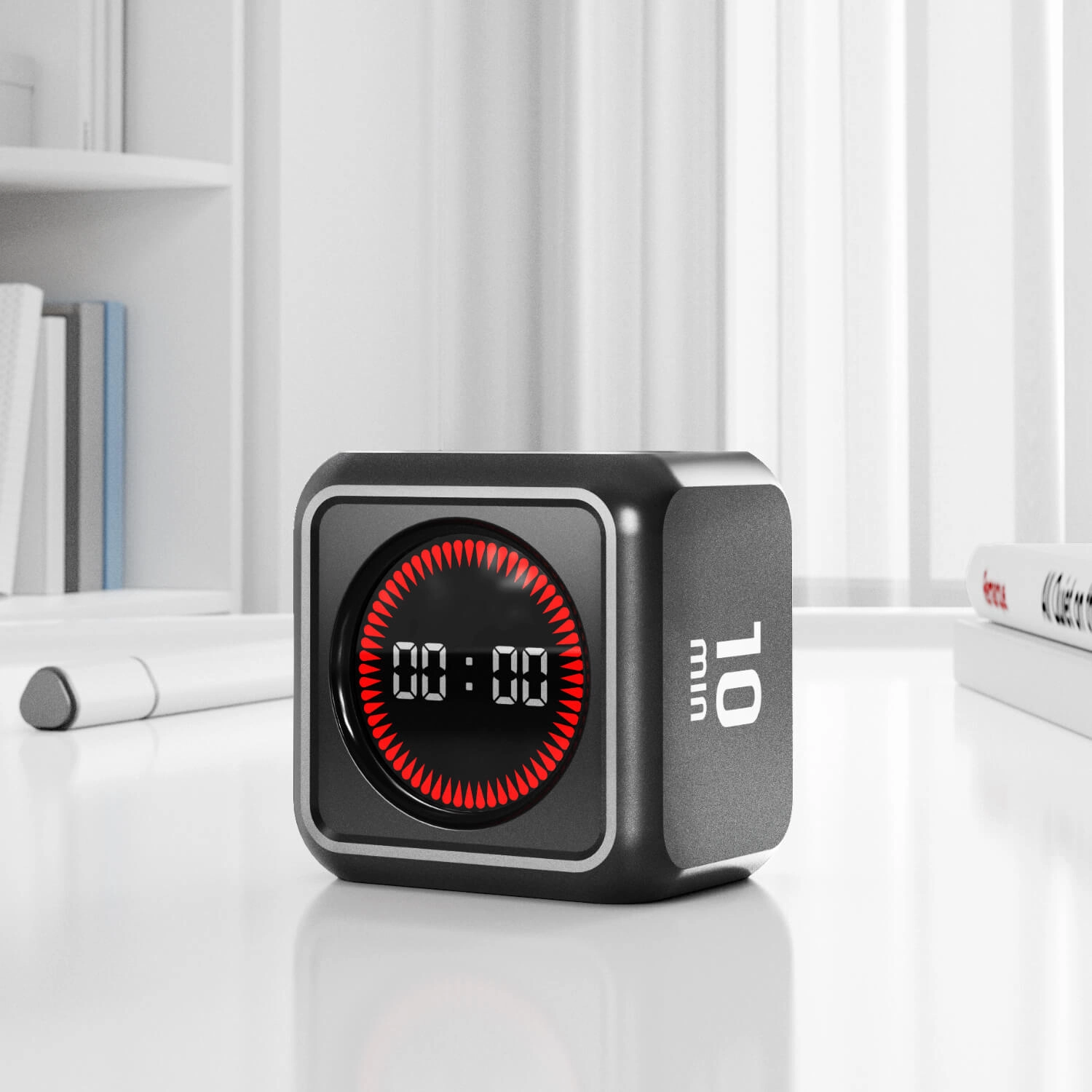
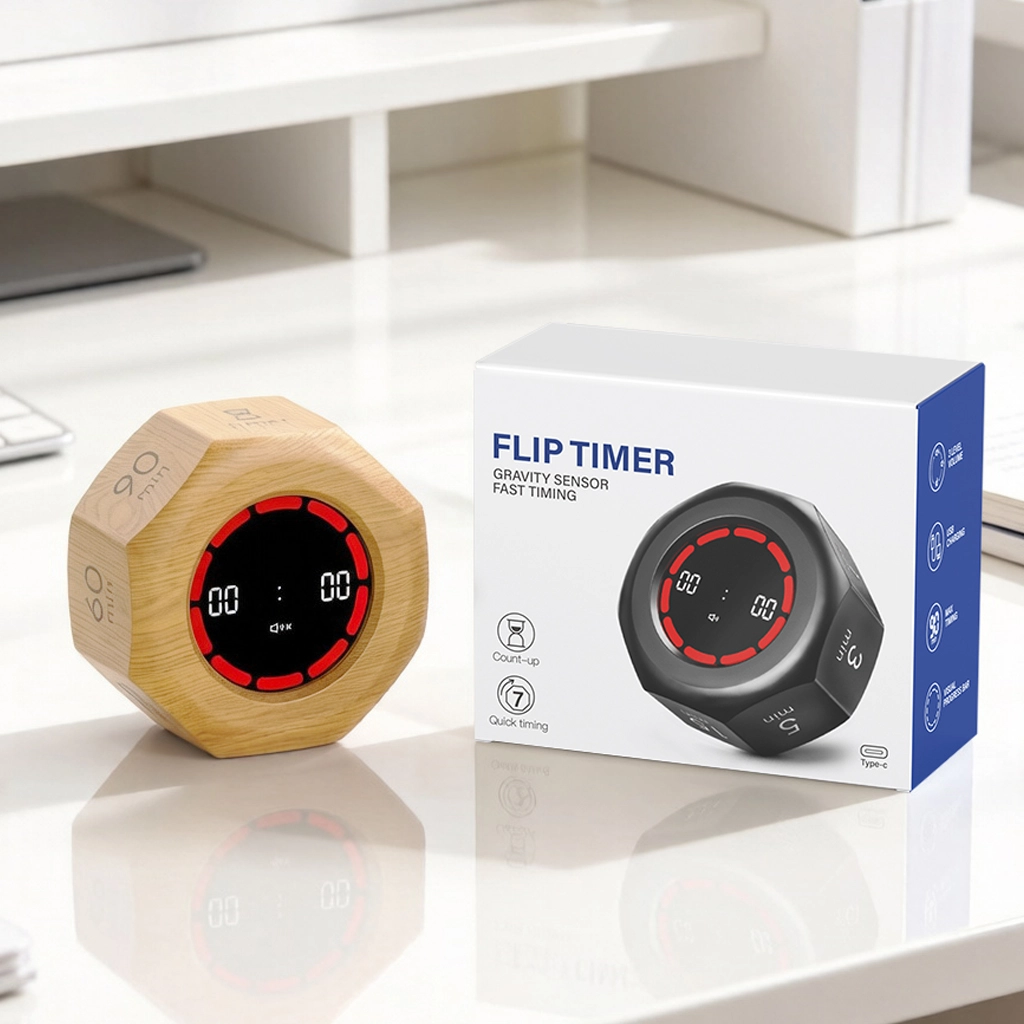
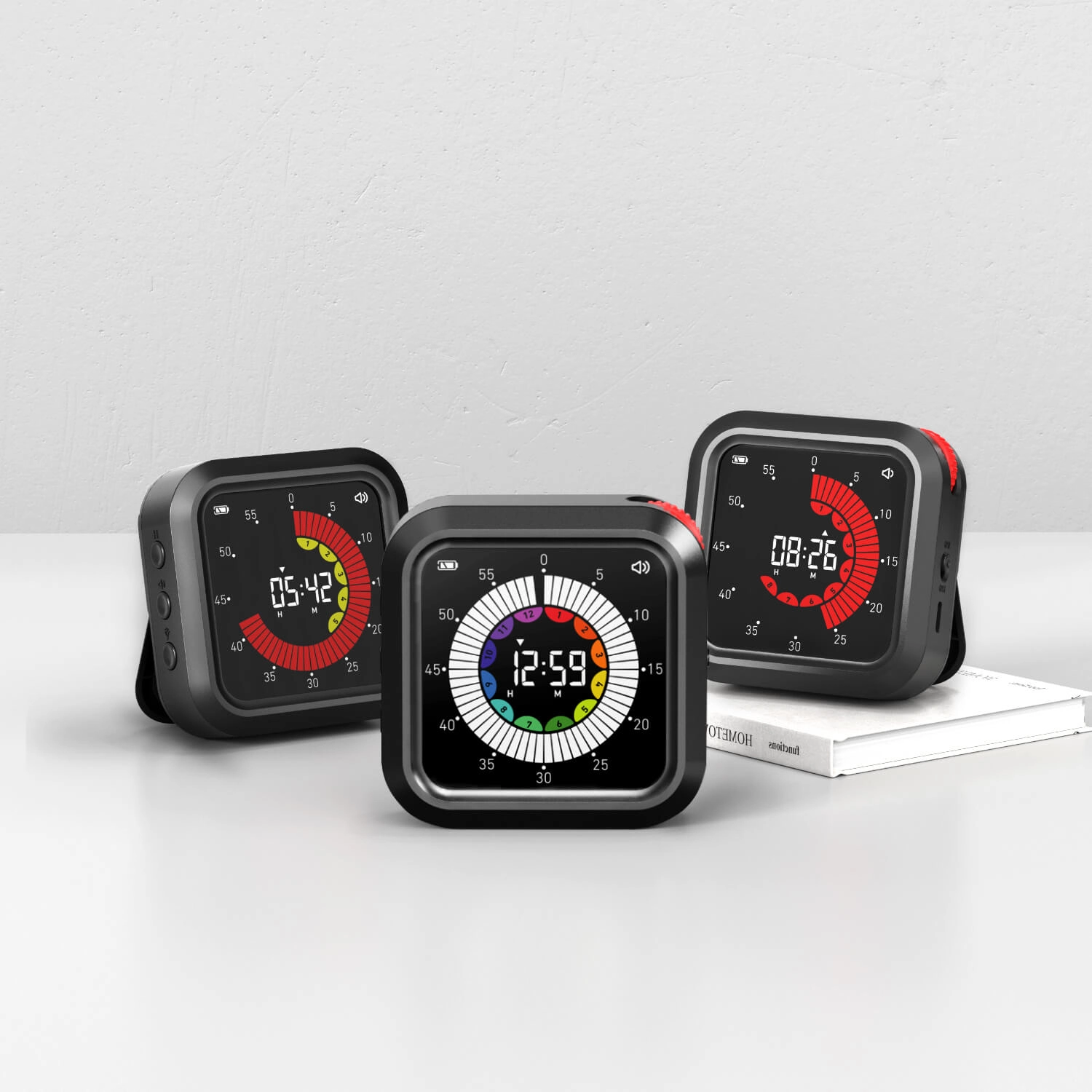
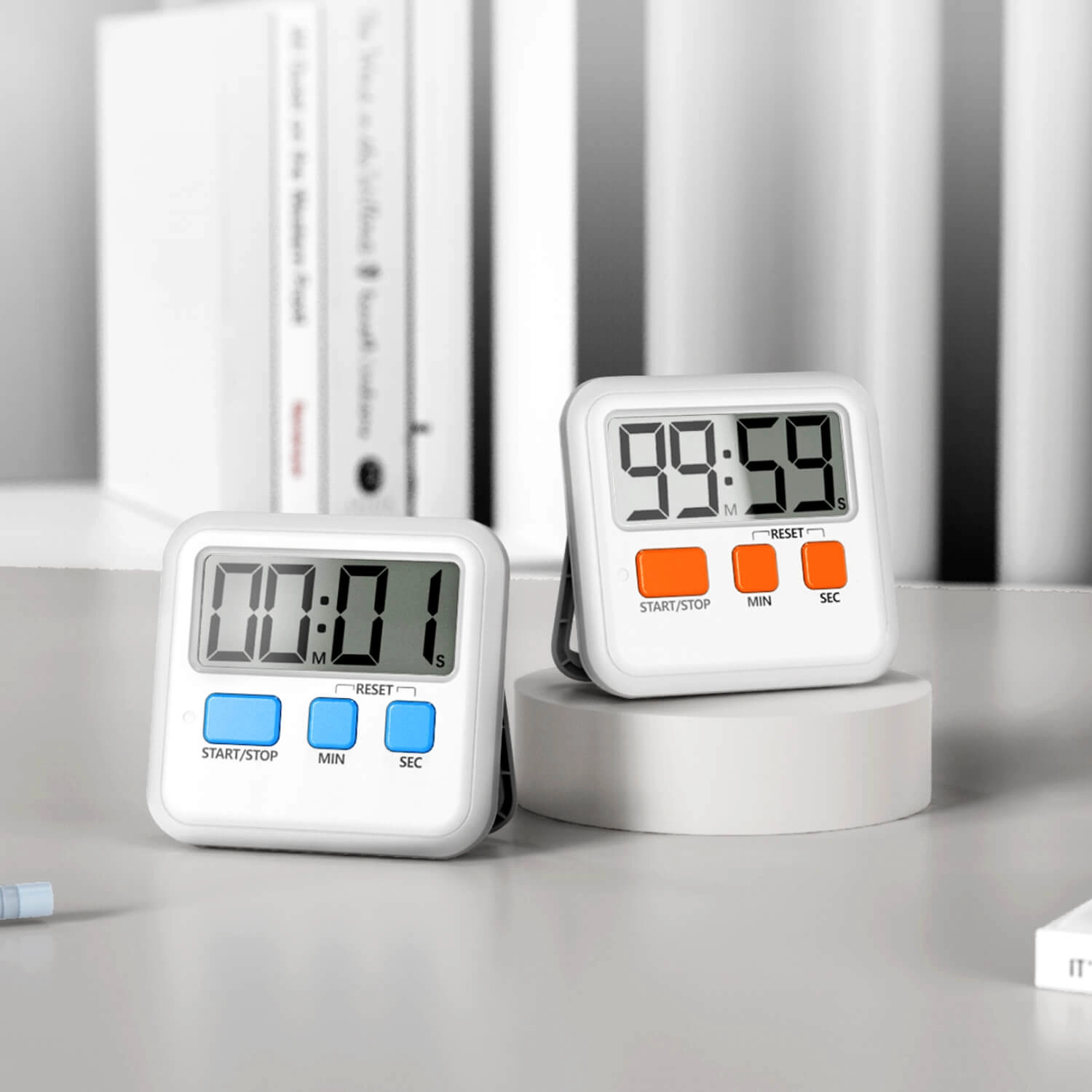
Our Digital Timer portfolio can be configured for study, work, classroom, kitchen, fitness, and general productivity applications. Pomodoro timer programs can be adapted through work-break cycles, visual indicators, alert settings, controls, enclosure finishes, and branded packaging. Visual Countdown Clocks provide a more immediate time-progress display for environments where users need to understand remaining time at a glance.
Beyond time-management hardware, our thermo hygrometer and temperature humidity monitor solutions support indoor climate awareness for homes, offices, classrooms, storage areas, and other practical applications. Combining related categories under one manufacturing partner can help brands create a coherent product family while simplifying supplier management, packaging development, quality review, and replenishment planning.
Compliance, capacity, and partnership support
Our products are developed to meet strict CE, FCC, and RoHS requirements as applicable to the finished product and target market. Compliance planning is integrated into development rather than treated as a final-stage formality. Our manufacturing process is supported by more than a decade of engineering experience and scalable capacity, allowing programs to move from sampling and validation toward repeat production with greater continuity.
We support brand owners with product differentiation, private-label execution, and retail presentation. The objective is not merely to deliver a functioning timer; it is to help create a dependable product with recognizable industrial design, controlled quality, efficient packaging, and a commercially practical cost structure. Buyers evaluating a long-term supplier can contact Youben Life at info@youbenlife.com or visit Youben Life to discuss product concepts, customization requirements, and production plans.
For a structured sourcing project, begin by preparing the use-case brief, target market list, compliance requirements, forecast, packaging expectations, and acceptance criteria; then compare suppliers using documented evidence rather than price alone.
Frequently Asked Questions
What should buyers evaluate first when selecting a productivity timer supplier?
Buyers should first define the intended use case, target users, operating environment, display requirements, power source, sound preferences, materials, packaging, sales channel, target retail price, and expected volume.
Which compliance documents should a digital timer supplier provide?
The supplier should provide market-appropriate declarations, test reports, and material documentation. European projects may require evidence related to CE requirements and RoHS, while products for the United States may involve FCC Part 15 requirements depending on the product architecture.
Why is engineering capability important for a private-label timer program?
Engineering capability allows a supplier to modify industrial design, mechanical structure, circuit boards, display layouts, firmware behavior, alert tones, controls, and packaging while managing tooling, testing, and production approval gates.
How can buyers assess factory quality and supply continuity?
A factory audit should examine incoming-material inspection, component traceability, assembly controls, calibration, aging tests, final inspection, packaging verification, and nonconforming-product handling. Supply discussions should also cover component availability, backup vendors, engineering-change notification, and inventory planning.
What makes Youben Life suitable for private-label digital timer projects?
Youben Life was established in 2010 and operates a 20,000m² vertically integrated facility in Guangzhou, China. The company supports ID and MD industrial design, custom IC programming, precision mold tooling, retail-ready packaging, and OEM and ODM production for Digital Timers, Pomodoro timers, Visual Countdown Clocks, thermo hygrometers, and temperature humidity monitors.
How should a buyer measure a manufacturing partnership after launch?
Performance can be measured through on-time delivery, first-pass yield, defect rate, complaint response time, corrective-action closure, forecast flexibility, documentation accuracy, marketplace returns, warranty claims, and customer feedback.
Wholesale digital timer for grow lights manufacturer and supplier
Reduce Costs: Timers OEM & ODM Pricing and MOQ Strategies
Top 10 instant read digital kitchen thermometer manufacturers and suppliers
Private Label Pomodoro Timer OEM or ODM: Choosing the Right Customization Model
Interested in this article?
Let’s talk.
Need specifications, pricing, or customization options? We’ll provide everything you need.

Youben life
Youben life