
How a Pomodoro Timer Manufacturer Supports Private Label and OEM/ODM Programs
- How Private Label Timer Development Moves from Brief to Production
- Product definition begins with a precise use case
- Industrial design and mechanical engineering create differentiation
- Electronics and firmware determine the daily user experience
- OEM and ODM Controls That Protect Commercial Performance
- Tooling, sampling, and engineering validation
- Compliance is a market-entry requirement, not a marketing add-on
- Quality systems connect incoming materials to shipment release
- Why Youben life Fits Scalable Digital Timer Programs
- One specialized partner for product development and manufacturing
- Custom R&D supports differentiated product positioning
- Compliance, capacity, and packaging support launch readiness
- How Buyers Should Evaluate a Long-Term Manufacturing Partner
- Commercial questions to resolve before quotation
- Operational metrics reveal supplier maturity
- From pilot order to repeatable global supply
- Frequently Asked Questions
Private label and OEM/ODM programs for time-management hardware require considerably more than placing a logo on an existing product. A successful program combines user research, industrial design, electronic engineering, firmware behavior, tooling, sourcing, compliance, packaging, quality assurance, and fulfillment planning. For brands entering the productivity, education, office, wellness, or smart-home accessory sectors, a capable digital timer development partner can reduce technical uncertainty while creating a product that is visibly different from low-cost marketplace alternatives.
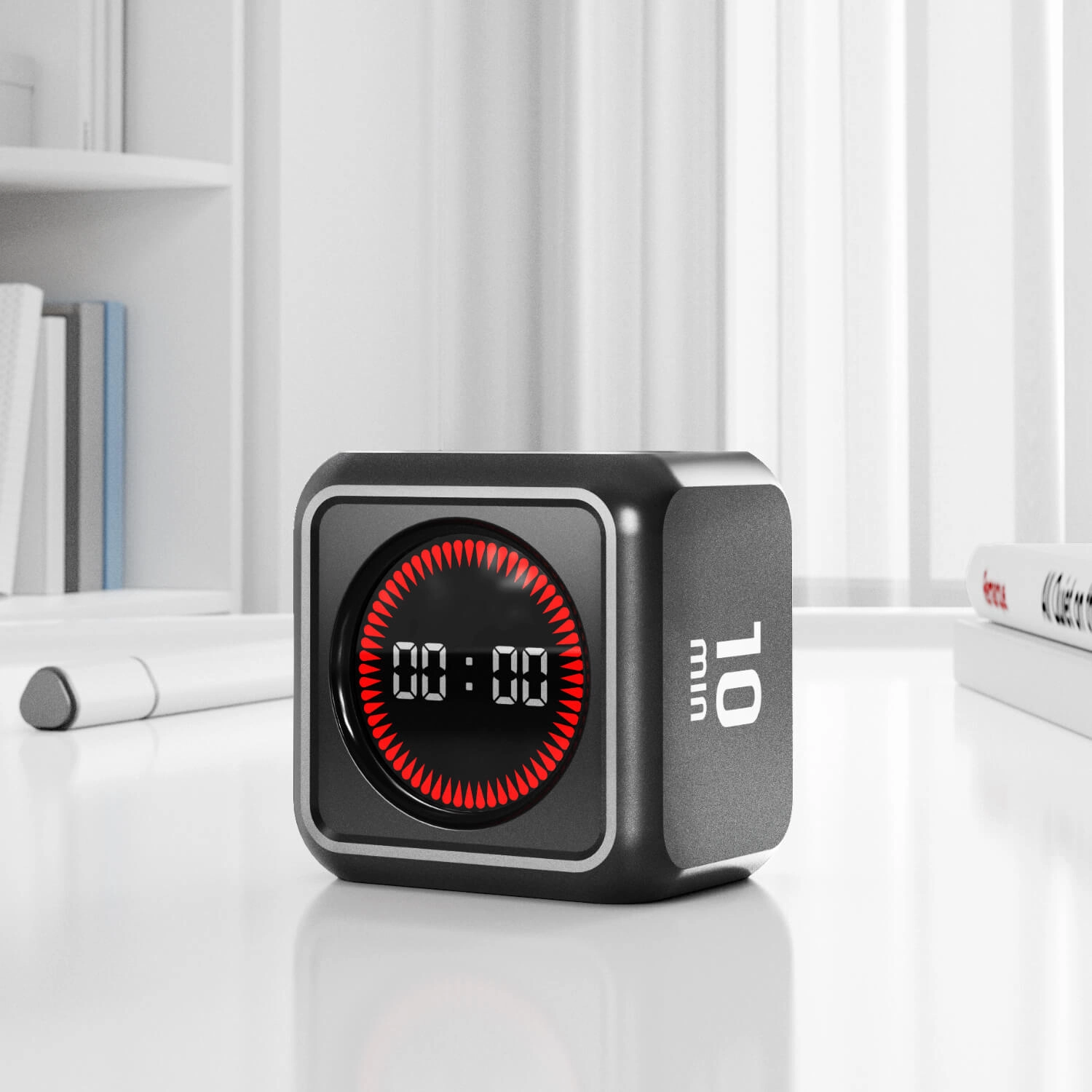
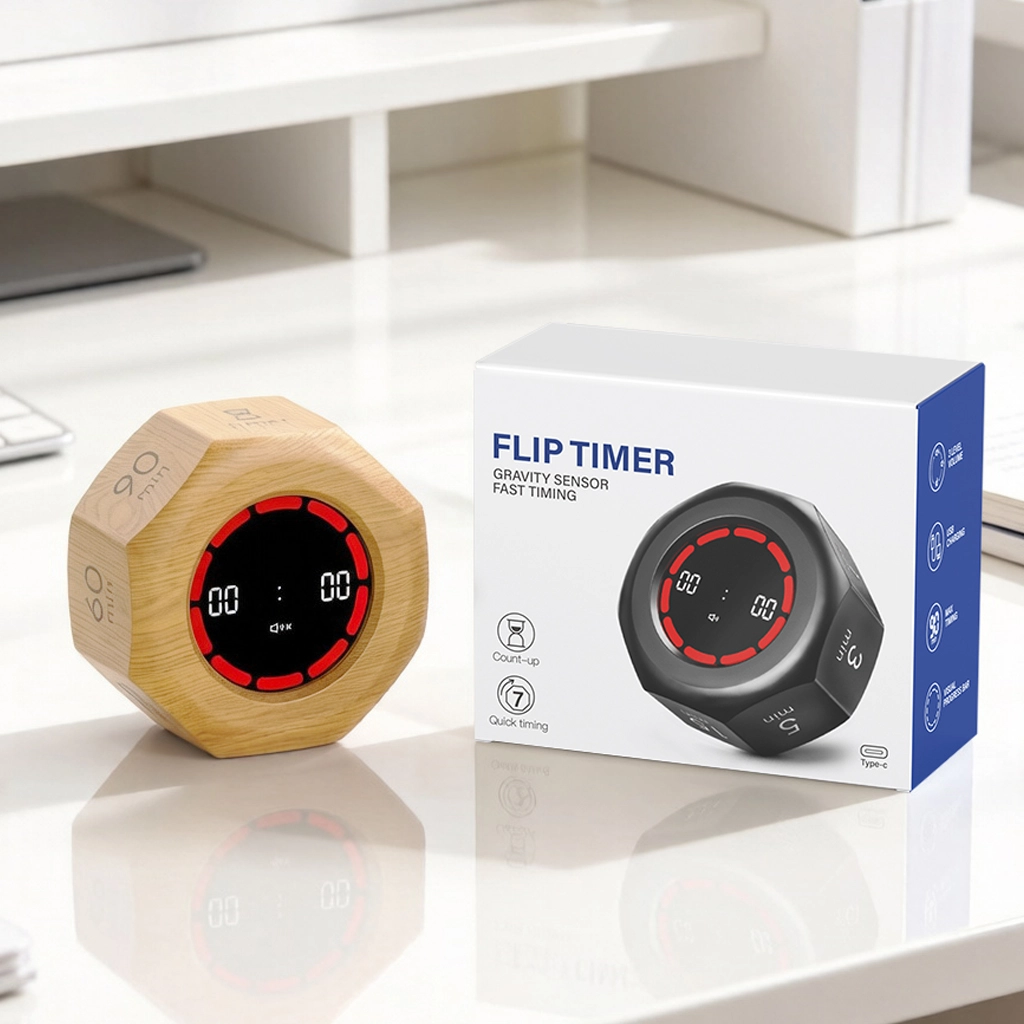
A Pomodoro timer manufacturer typically supports this process by converting a commercial brief into a manufacturable product platform. The scope may include countdown logic, work-and-break presets, rotary or button controls, audible alerts, silent operation, LED indicators, display readability, battery selection, magnetic mounting, desktop stability, and child-safe materials. The strongest suppliers also provide engineering validation, pre-production samples, compliance documentation, and packaging execution so that the buyer is not forced to coordinate multiple disconnected vendors.
The Pomodoro method is commonly associated with alternating focused work sessions and short breaks; its general concept is documented by Wikipedia’s overview of the Pomodoro Technique. However, a commercial product must translate that behavioral concept into intuitive hardware. Buyers should therefore evaluate not only timing accuracy, but also the complete ownership experience, including setup speed, ergonomics, acoustic behavior, power consumption, durability, and after-sales support.
How Private Label Timer Development Moves from Brief to Production
Product definition begins with a precise use case
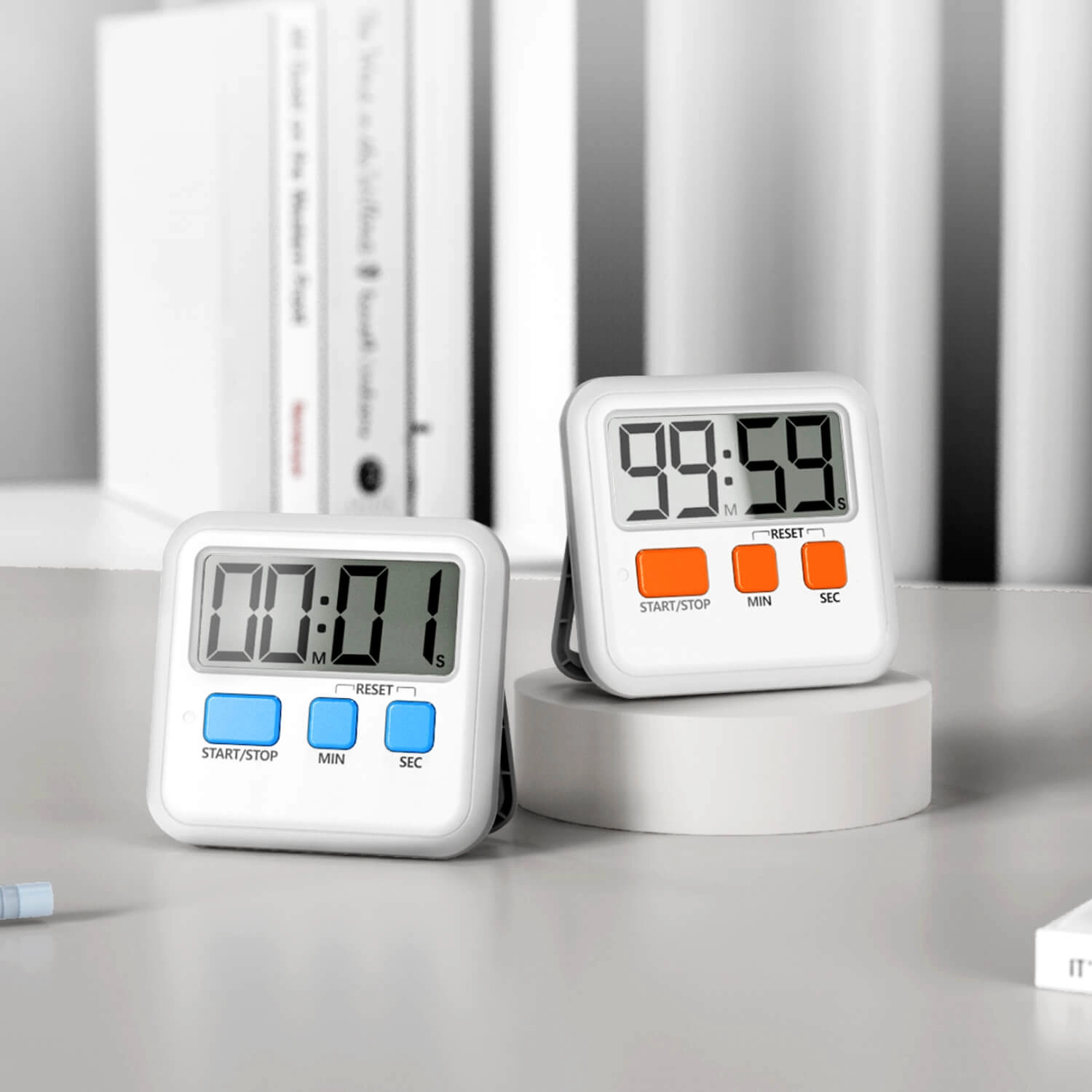
Before a supplier recommends a platform, the project owner should define where and how the product will be used. A study accessory for students may require a compact body, quiet operation, visual status cues, and a simple control interface. An office productivity device may prioritize High Quality materials, a larger display, USB-C power, and a restrained acoustic alert. A kitchen or household countdown device may need stronger viewing angles, wipe-clean surfaces, and a louder alarm.
This use-case definition influences nearly every downstream decision. It affects the display size, segment layout, control placement, enclosure geometry, battery compartment, magnet strength, stand angle, and packaging claims. A reliable supplier should document these requirements in a product specification sheet, identify measurable acceptance criteria, and separate essential features from optional features. That discipline prevents late-stage scope expansion and makes quotations more comparable.
Industrial design and mechanical engineering create differentiation
Private label success depends on recognizable physical design. Industrial design establishes the silhouette, surface treatment, color system, button language, and visual relationship between the product and the brand portfolio. Mechanical engineering then converts the concept into a durable enclosure with suitable tolerances, draft angles, fastening methods, acoustic openings, and assembly access.
For a digital countdown product, small mechanical decisions have commercial consequences. A recessed display can improve protection but may reduce viewing angles. A large rotary dial can improve usability but increase tooling size. A fold-out stand can support desktop use but introduce hinge fatigue. Engineering reviews should assess these trade-offs through prototypes and design-for-manufacturing analysis rather than relying only on attractive renders.
Electronics and firmware determine the daily user experience
Custom electronics may include the microcontroller, display driver, buzzer, sensor inputs, power-management circuit, buttons, encoder, and charging interface. Firmware controls preset values, countdown behavior, pause and resume logic, memory functions, alert duration, sleep mode, and low-battery behavior. These details determine whether the product feels dependable after repeated daily use.
Project owners should request a clear firmware behavior document and test cases before approval. Typical checks include timing continuity, button debounce, power restoration, alarm cancellation, display refresh, and operation at low battery voltage. If a product is intended for international sales, the supplier should also confirm the electrical configuration, labeling, user instructions, and charger strategy for each destination market.
OEM and ODM Controls That Protect Commercial Performance
Tooling, sampling, and engineering validation
OEM projects usually begin with a buyer’s existing specification or design, while ODM projects often begin with a supplier platform that is adapted to the buyer’s market and brand identity. In both models, mold ownership, modification rights, sample approval, and engineering change procedures should be written into the commercial agreement.
Precision mold tooling affects part consistency, cosmetic quality, assembly fit, and long-term unit economics. A supplier should provide a tooling schedule, trial-shot plan, dimensional inspection approach, and sample revision history. Golden samples or approved limit samples can establish the acceptable range for color, texture, button force, display brightness, sound level, and enclosure gaps. These controls reduce arguments during mass production because quality is evaluated against an agreed reference.
Compliance is a market-entry requirement, not a marketing add-on
Electrical and electronic products sold across markets may be subject to different obligations. The European Commission explains the role of CE marking for products covered by applicable European Union legislation, while the U.S. Federal Communications Commission provides guidance on equipment authorization for relevant electronic devices. Material restrictions for many electrical and electronic products in the European market are addressed through the EU’s RoHS Directive.
Compliance planning should begin during design. Component selection, battery architecture, plastic resin, cable configuration, labeling, and packaging claims can all affect testing. Buyers should clarify which party holds technical files, declarations, test reports, and product registration responsibilities. It is also important to distinguish between a supplier’s existing certification scope and the exact finished configuration being purchased; a change in enclosure, PCB, power supply, or wireless function may require additional evaluation.
Quality systems connect incoming materials to shipment release
A professional manufacturing program uses multiple quality gates. Incoming inspection verifies critical components and cosmetic materials. First-article inspection checks the initial production unit against approved drawings and samples. In-process controls monitor assembly, soldering, display installation, button operation, and firmware loading. Final inspection evaluates appearance, function, packaging, accessories, labeling, and carton integrity.
Buyers should request an inspection standard that distinguishes critical, major, and minor defects. The supplier and buyer can then agree on acceptable quality limits, sampling levels, reliability tests, and corrective-action timing. ISO describes quality management principles and requirements through ISO 9001 quality management guidance. Although certification alone does not guarantee a perfect product, a documented quality system provides stronger process visibility than informal inspection alone.
| Program area | Basic relabeling approach | Structured OEM/ODM approach | Buyer benefit |
|---|---|---|---|
| Product identity | Logo and carton change | Industrial design, color, interface, and feature adaptation | Stronger differentiation and brand recognition |
| Engineering | Limited customization | Mechanical design, PCB, firmware, and tooling support | Better fit with the intended use case |
| Compliance | Generic or incomplete documents | Configuration-specific testing and technical documentation | Lower market-entry and regulatory risk |
| Quality assurance | Final visual check | Incoming, in-process, first-article, and final inspection | More consistent performance at scale |
| Packaging | Standard box with sticker | Retail-ready structure, artwork, manuals, labels, and carton planning | Faster channel launch and better shelf presentation |
Why Youben life Fits Scalable Digital Timer Programs
One specialized partner for product development and manufacturing
Youben life was established in 2010 and is dedicated exclusively to Digital Timers, Pomodoro timers, Visual Countdown Clocks, temperature and humidity monitors, and thermo hygrometers. This focused product scope supports deeper familiarity with timing interfaces, display technologies, alert systems, compact enclosures, environmental sensing, and the practical requirements of retail and e-commerce channels.
Our 20,000m² vertically integrated facility in Guangzhou, China, supports turnkey private label programs for global brands and Amazon bestsellers. The vertically integrated model helps connect industrial design, engineering, tooling, assembly, testing, and packaging decisions. For buyers, this can simplify project communication and make the path from concept approval to production more transparent.
Custom R&D supports differentiated product positioning
Our capabilities extend beyond simple assembly. Our engineering team supports ID and MD industrial design, custom IC programming, precision mold tooling, electronic development, firmware adaptation, and retail-ready packaging. This allows project owners to choose the appropriate customization level: a fast adaptation of an established platform, a branded enclosure and interface, or a more comprehensive product developed around a specific market opportunity.
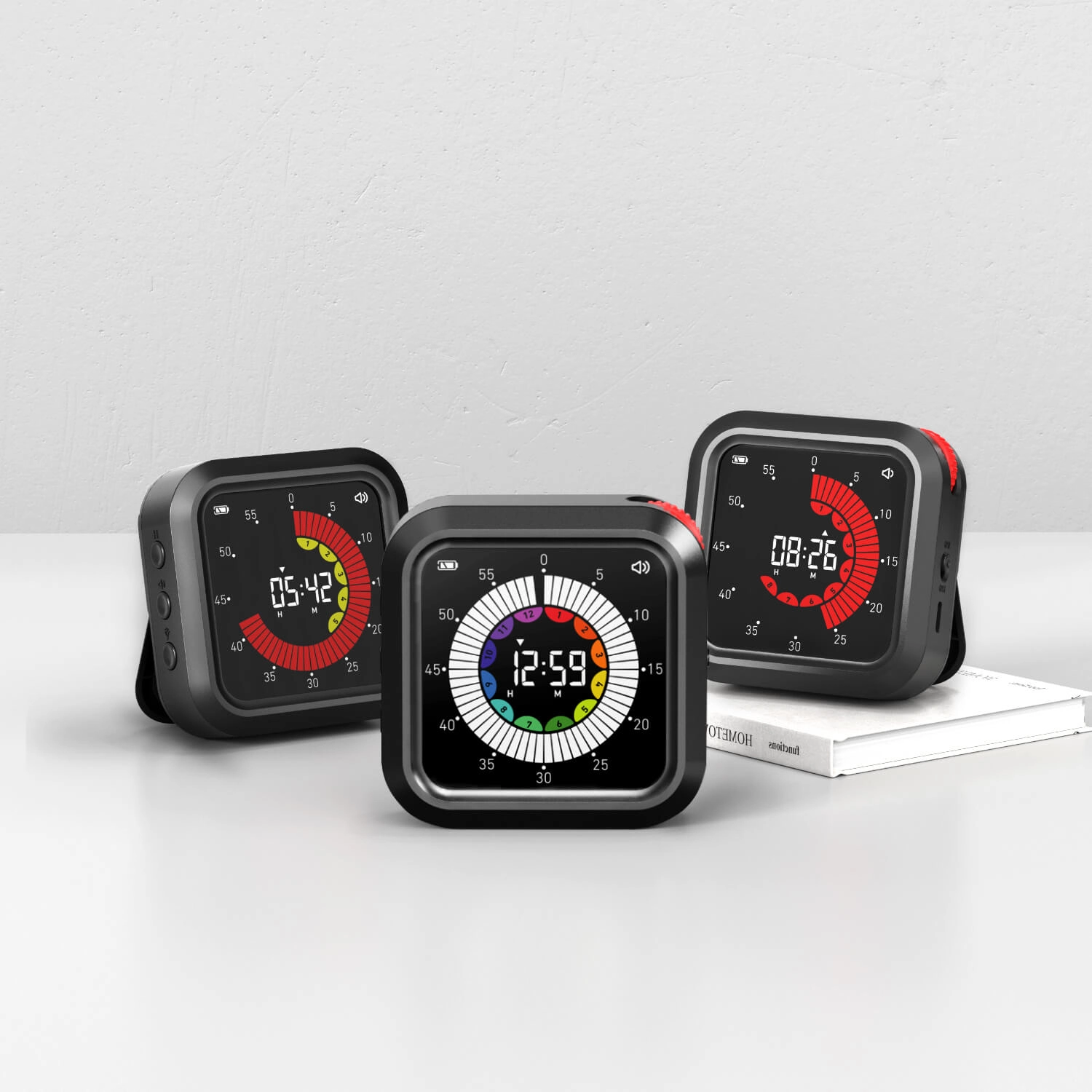
For example, a productivity brand may combine a focused-work countdown mode with a visual progress indicator, silent operation, and a High Quality desktop form factor. An education distributor may require larger controls, simplified instructions, and a classroom-friendly alert. A wellness or home-office brand may pair a Digital Timer with a coordinated thermo hygrometer or temperature humidity monitor range. The objective is not to add features without purpose, but to align the product architecture with the buyer’s channel, price point, and customer expectations.
Compliance, capacity, and packaging support launch readiness
Our products meet strict CE, FCC, and RoHS standards, subject to the applicable product configuration and market requirements. Compliance planning is integrated with product development so that design decisions can be reviewed before mass production. Our scalable manufacturing capacity supports both initial market tests and larger replenishment programs, helping brands manage demand uncertainty without abandoning quality controls.
Packaging is treated as part of the product program rather than an afterthought. Our team can coordinate retail-ready cartons, inserts, user manuals, barcode placement, protective structures, and shipping cartons. This is especially relevant for marketplace sellers, where packaging must protect the unit through parcel handling while communicating key benefits within a limited visual area. Clear packaging architecture can also reduce customer confusion about timer modes, power requirements, and included accessories.
How Buyers Should Evaluate a Long-Term Manufacturing Partner
Commercial questions to resolve before quotation
A meaningful supplier comparison should cover more than unit price. Buyers should ask about minimum order quantities, tooling charges, sample fees, development timelines, lead times, payment terms, forecast flexibility, spare-part policy, warranty handling, and engineering-change costs. The quotation should identify what is included in the price, such as firmware, packaging artwork support, testing, accessories, and export cartons.
It is also important to confirm intellectual-property treatment. The agreement should clarify ownership of buyer-provided artwork, custom molds, firmware modifications, industrial design files, test reports, and market-specific packaging. Confidentiality provisions and approval controls can help protect a new product before launch.
Operational metrics reveal supplier maturity
Useful performance indicators include sample approval cycle time, on-time delivery, first-pass yield, defect rate, corrective-action closure, complaint response time, and forecast-to-production accuracy. A supplier that shares structured reports and escalation procedures is generally easier to manage than one that communicates only when a problem has already affected shipment.
After-sales readiness should also be assessed. The program may require replacement units, troubleshooting guides, firmware records, spare components, or multilingual manuals. These details influence return rates and customer satisfaction, particularly for products sold through online marketplaces where negative reviews can quickly affect conversion and advertising efficiency.
From pilot order to repeatable global supply
A prudent launch plan uses staged validation. The first stage confirms the product concept and user interface. The second validates tooling, electronics, firmware, packaging, and compliance documentation. The third evaluates a pilot production run under normal manufacturing conditions. Only after these gates are passed should the program move to regular replenishment.
This approach gives brand owners a practical way to test demand while protecting the long-term product roadmap. Once sales data identifies the strongest colors, features, bundles, or regional versions, the supplier can support controlled revisions rather than unplanned redesigns. For distributors, this creates a more dependable portfolio; for investors and brand operators, it improves the relationship between development spending, sell-through, and repeat orders.
Businesses seeking a specialized partner for private label or OEM/ODM development can review Youben life’s solutions at youbenlife.com or contact the team at info@youbenlife.com.
Frequently Asked Questions
What is the difference between private label, OEM, and ODM timer production?
Private label usually applies a buyer’s branding to an existing product platform. OEM production follows the buyer’s specification or design, while ODM production adapts a supplier’s existing platform or develops a product with the supplier’s engineering team.
What customizations can be made to a Pomodoro or digital countdown timer?
Common customizations include enclosure shape, colors, surface finish, logo treatment, display layout, buttons, rotary controls, countdown modes, alert behavior, firmware, battery or charging configuration, accessories, manuals, and retail packaging.
What compliance documents should buyers request?
Buyers should request documentation relevant to the finished configuration and destination market, including applicable CE, FCC, and RoHS evidence, test reports, declarations, labeling information, and technical files where required.
How does tooling affect an OEM/ODM timer project?
Precision tooling affects enclosure consistency, cosmetic quality, assembly fit, and unit economics. Buyers should confirm tooling ownership, modification rights, trial-shot procedures, dimensional inspection, and approval samples before mass production.
What quality checks should be included in a digital timer manufacturing program?
A structured program can include incoming material inspection, first-article approval, in-process assembly checks, firmware and functional testing, cosmetic inspection, packaging verification, final inspection, sampling standards, and corrective-action procedures.
Can a supplier support both small launches and larger replenishment orders?
A supplier with scalable manufacturing capacity can support staged development, pilot production, market testing, and later replenishment, provided minimum order quantities, forecast rules, lead times, and quality gates are agreed in advance.
Wholesale led display digital countdown timer manufacturer and supplier
Best Indoor Thermometers for Smart Home Timers
Customizing Digital Timer Clock: PCB, Enclosure and Firmware Choices
Wholesale digital timer for kitchen manufacturer and supplier
Interested in this article?
Let’s talk.
Need specifications, pricing, or customization options? We’ll provide everything you need.

Youben life
Youben life