
Pomodoro Digital Timer OEM vs ODM: Manufacturing Guide
- Choosing the Right Manufacturing Path for Your Timer Product
- Why this guide matters for brands developing a pomodoro digital timer
- What is a pomodoro digital timer and core product requirements
- Product definition, common features, and user expectations
- OEM vs ODM: Definitions and strategic implications
- What OEM means for a pomodoro digital timer
- What ODM means for a pomodoro digital timer
- Side-by-side comparison: OEM vs ODM for pomodoro digital timers
- Quick comparison table (key decision factors)
- How to choose: checklist for product owners of pomodoro digital timers
- Business and product questions to determine OEM vs ODM
- Manufacturing workflow: from concept to mass production
- Phases and milestones for a reliable launch
- Certifications and regulatory checklist for global markets
- Must-have compliance for consumer electronics
- Cost drivers: what affects per-unit price and development budget
- Primary cost components for a pomodoro digital timer
- MOQ, lead times and sample policy
- Typical expectations & negotiation levers
- Quality assurance and supplier auditing
- Practical QA checklist before mass production
- Packaging, branding and private label strategies
- How branding choices differ under OEM and ODM
- Youben Life: OEM & ODM partner for pomodoro digital timers and related products
- How Youben Life supports brands (advantages & capabilities)
- Case study: Typical timeline for launching a new pomodoro digital timer
- Example timelines (ODM vs OEM)
- Contract terms and IP protection
- Key contractual clauses to negotiate
- Final recommendations for product managers and brand owners
- Decision summary tied to business scenarios
- FAQ (Frequently Asked Questions)
- 1. What is the minimum order quantity (MOQ) I should expect for a pomodoro digital timer?
- 2. How much does certification (CE, FCC, RoHS) add to project cost and time?
- 3. Can an ODM provide full firmware source code and IP assignment?
- 4. How do I test the battery life and reliability of a pomodoro digital timer?
- 5. Is it possible to add smart features (Bluetooth/app) later if I start with a basic pomodoro timer?
- 6. How do I verify a supplier’s compliance claims (CE/FCC/RoHS)?
- 7. What are common hidden costs when working with manufacturers?
- Contact & Request a Quote
- Need a reliable partner for OEM/ODM pomodoro digital timers?
- References
Choosing the Right Manufacturing Path for Your Timer Product
Why this guide matters for brands developing a pomodoro digital timer
Developing a pomodoro digital timer — a compact, reliable device designed to support time-blocked productivity — requires choices that will determine costs, speed to market, product differentiation, and intellectual property control. The two most common manufacturing routes are OEM (Original Equipment Manufacturer) and ODM (Original Design Manufacturer). This guide explains both options in the context of consumer-grade digital timers, provides a practical decision framework, and walks through the manufacturing lifecycle so you can select the approach that aligns with your business goals and customer expectations.
What is a pomodoro digital timer and core product requirements
Product definition, common features, and user expectations
A pomodoro digital timer is a consumer electronic device optimized for the Pomodoro Technique — typically offering 25-minute work intervals, short and long break settings, simple start/stop/reset controls, and clear visual/audible feedback. For today’s users, desirable features often include:
- Accurate countdown timing (±1s/min acceptable for consumer use)
- Multiple preset timers (e.g., 25/5/15 minutes) and programmable intervals
- Large, low-power display (LCD, segmented LED, or e-ink for low power)
- Audible alarm with adjustable volume and optional vibration
- Battery or USB power options, and energy efficiency
- Compact industrial design for desk placement or portability
- Optional smart features: Bluetooth, app integration, or voice assistant compatibility
Design priorities often balance cost, usability, battery life, and brand appearance. These requirements shape whether OEM or ODM is preferable.
OEM vs ODM: Definitions and strategic implications
What OEM means for a pomodoro digital timer
OEM (Original Equipment Manufacturer) means you provide the full product specification, design files, and often the bill of materials (BOM). The OEM factory manufactures to your drawings and may assist with DFM (design for manufacturability) but does not own the design. Use OEM when you want tight control over product IP, already have engineering resources, or are private labeling an existing design.
What ODM means for a pomodoro digital timer
ODM (Original Design Manufacturer) supplies a ready or semi-ready design that you can customize (branding, firmware tweaks, cosmetic changes). ODM is faster and usually less expensive in upfront engineering costs, making it attractive for companies that lack deep hardware design capabilities or want rapid market entry with differentiated cosmetics and packaging.
Side-by-side comparison: OEM vs ODM for pomodoro digital timers
Quick comparison table (key decision factors)
| Factor | OEM | ODM |
|---|---|---|
| Design ownership & IP | Full owner (you supply designs). Strong IP control. | Design often owned by manufacturer or shared — customize but limited IP exclusivity unless negotiated. |
| Upfront engineering cost | Higher (you pay design, prototyping, tooling). | Lower (uses existing designs; you pay customization). |
| Time to market | Longer (development and validation time). | Shorter (based on existing platforms). |
| Unit cost at volume | Comparable or slightly lower once tooling amortized; BOM optimization possible. | Competitive; depends on how much customization you request. |
| Customization | Unlimited (subject to manufacturing feasibility). | Cosmetic and firmware customization; hardware changes possible but more costly. |
| Minimum order quantity (MOQ) | Varies; often negotiable but tooling demands may raise MOQ. | Often lower MOQs on standard ODM SKUs. |
| Quality control & supplier risk | You define tests and standards. Requires strong QC process. | Manufacturer may have established QC; verify via audits and samples. |
Sources and industry conventions for these comparisons are cited in the references section below.
How to choose: checklist for product owners of pomodoro digital timers
Business and product questions to determine OEM vs ODM
Answer these to choose the right path:
- Do you already own a detailed hardware design and firmware? If yes, OEM is logical.
- Is speed-to-market critical and do you accept a shared baseline design? If yes, consider ODM.
- How important is IP exclusivity? Critical IP control points to OEM or a tightly-negotiated ODM contract.
- What is your risk tolerance for upfront costs (tooling, certification)? ODM reduces upfront investment.
- What volume do you expect in Year 1 and Year 3? Lower initial volumes favor ODM; high projected volumes can justify OEM tooling.
Manufacturing workflow: from concept to mass production
Phases and milestones for a reliable launch
Whether you choose OEM or ODM, the manufacturing lifecycle for a pomodoro digital timer typically follows these stages:
- Concept & Requirements: Define user scenarios, power source, display type, size, and mandatory certifications.
- Industrial Design & Ergonomics: Form factor, button layout, materials, and packaging direction.
- Electronics Design / BOM Selection: MCU selection, RTC/timer IC, display driver, buzzer, power management.
- Prototype & Validation: Functional prototypes, firmware testing, battery life measurements.
- Pre-Production & Tooling: Injection molds, jigs, and fixtures for assembly.
- Certifications & Compliance Testing: CE (EMC/safety), FCC (emissions), RoHS (materials), and battery/safety tests.
- Pilot Run & Quality Validation: First-run inspection, reliability tests, life-cycle tests.
- Mass Production & Logistics: Final QC, packaging, warehousing, and shipping plan.
Certifications and regulatory checklist for global markets
Must-have compliance for consumer electronics
For exportable pomodoro digital timers, typical certifications include:
- CE marking (European Economic Area) — indicates compliance with relevant EU directives for safety and EMC.
- FCC Part 15 (USA) — for devices emitting radiofrequency energy (if wireless/Bluetooth features exist) or for conducted emissions guidance.
- RoHS (Restriction of Hazardous Substances) — restricts hazardous materials in electronic products sold in EU and many other markets.
- Battery transport & safety standards — UN38.3 for lithium batteries, plus national labeling.
Work with your manufacturer and a certified lab early: test loops can take weeks, and failure late in development can add months to your timeline.
Cost drivers: what affects per-unit price and development budget
Primary cost components for a pomodoro digital timer
The main cost buckets are BOM, tooling, certification, firmware engineering, and logistics:
- BOM (components): MCU, display, buzzer, enclosure, batteries — component sourcing influences reliability and lead times.
- Tooling: Injection molds for plastic housings are a large one-time cost for OEMs; ODMs amortize costs across customers.
- Certifications & testing: Lab fees and retesting if designs change.
- Firmware & UI development: Custom features (app integration, Bluetooth) increase software development and validation time.
- Quality assurance & warranty provisioning: Higher QA reduces returns and supports brand reputation.
MOQ, lead times and sample policy
Typical expectations & negotiation levers
Minimum order quantities (MOQs) and lead times vary by factory and by whether you're using OEM or ODM:
- ODM: Many suppliers offer lower MOQs for a standard SKU (e.g., several hundred to a few thousand units) and faster lead time because designs already exist.
- OEM: MOQs can be higher due to tooling and custom components; initial samples and pilot runs are required — plan for longer timelines.
- Samples: Expect 2–6 weeks for prototypes or modified ODM samples; tooling parts may take 4–12 weeks depending on complexity.
Negotiate staged production (small pilot run then ramp) and request clear lead-time SLAs in contracts.
Quality assurance and supplier auditing
Practical QA checklist before mass production
Implement these steps to reduce product failures and returns:
- Factory audit: ISO certifications, on-site process inspection, capacity review.
- Incoming quality control (IQC): Component sampling and testing.
- In-process quality control (IPQC): Line checks, first-article inspections.
- Final quality control (FQC): Full or sample-based inspection for cosmetic and functional defects.
- Reliability testing: Drop tests, battery life, buzzer durability, button lifecycle (e.g., 50k actuations).
Packaging, branding and private label strategies
How branding choices differ under OEM and ODM
Packaging and brand identity are high-value, low-cost differentiators. Under OEM, you control packaging design and can request bespoke inserts, manuals, and High Quality boxes. With ODM, packaging templates may be available for quick customization.
Checklist for packaging:
- Durability for shipping (transit testing)
- Clear user guide and regulatory markings
- Sustainable materials if targeting eco-conscious markets — increasingly important for retailers
Youben Life: OEM & ODM partner for pomodoro digital timers and related products
How Youben Life supports brands (advantages & capabilities)
Youben Life, founded in 2010 and headquartered in Guangzhou, is a leading home electronics manufacturer and supplier specializing in customized digital products. Their main product lines include digital timers, smart alarm clocks, digital thermometers, and hygrometers. Youben Life provides complete OEM, ODM, and private label solutions covering product functionality, industrial design, appearance customization, packaging design, and logo personalization.
Key competitive strengths of Youben Life:
- Full-service manufacturing: from concept and firmware to tooling and mass production.
- Strong compliance track record: products complying with CE, FCC, and RoHS standards for global export.
- Experience in digital timer product line: established BOM choices, proven reliability testing, and optimized power management for longer battery life.
- Flexible business models: supports both small pilot runs and large-scale production with private labeling.
- Local manufacturing hub in Guangzhou: proximity to component supply chain and reduced logistics lead times for Asia-based production.
For brands that want to develop a distinct pomodoro digital timer, Youben Life’s combination of in-house design, certified production, and OEM/ODM flexibility can shorten development cycles while maintaining quality and regulatory compliance.
Case study: Typical timeline for launching a new pomodoro digital timer
Example timelines (ODM vs OEM)
Note: timelines are indicative and depend on complexity and certifications.
| Phase | ODM (using existing platform) | OEM (custom design) |
|---|---|---|
| Requirements & initial quote | 1–2 weeks | 2–4 weeks |
| Design & sample development | 2–6 weeks (cosmetic + firmware tweaks) | 6–16 weeks (full hardware + firmware development) |
| Certification & testing | 4–8 weeks | 6–12 weeks |
| Tooling & pilot run | 2–6 weeks (minor tooling) | 6–12+ weeks (injection molds) |
| Mass production & delivery | 4–8 weeks | 6–12 weeks |
These timelines illustrate why ODM is often faster for MVPs or seasonal launches, while OEM is suited for long-term differentiated products where tooling amortization is justified.
Contract terms and IP protection
Key contractual clauses to negotiate
Protect your product and brand by ensuring contracts include:
- Clear IP ownership clauses (design files, firmware source code, and custom tooling).
- Non-disclosure agreements (NDAs) and non-compete or non-manufacture-for-others clauses for designs you provide.
- Quality warranties, failure rate thresholds, and return/repair policies.
- Penalties for late delivery and minimum lead-time guarantees.
- Acceptance criteria for pilot runs and final inspection checklists.
Final recommendations for product managers and brand owners
Decision summary tied to business scenarios
Choose ODM when:
- You need fast market entry and lower upfront costs.
- You are comfortable customizing existing designs and focusing on branding/marketing.
Choose OEM when:
- You need unique hardware or proprietary features and want ownership of design/IP.
- You plan high volumes that justify tooling investments and seek BOM cost optimization.
Regardless of route, prioritize supplier audits, clear contracts, early compliance testing, and staged production to reduce risk.
FAQ (Frequently Asked Questions)
1. What is the minimum order quantity (MOQ) I should expect for a pomodoro digital timer?
MOQ ranges widely. ODM suppliers commonly accept MOQs from a few hundred to a few thousand units for standard SKUs. OEM orders with custom tooling can require higher MOQs to amortize mold costs. Always negotiate staged pilot runs to de-risk initial inventory.
2. How much does certification (CE, FCC, RoHS) add to project cost and time?
Certification costs depend on test scope and whether the device has wireless elements. Budget for lab testing fees (from a few hundred to several thousand USD per test) and add several weeks for failure rework. Start certification planning early; factor it into your timeline.
3. Can an ODM provide full firmware source code and IP assignment?
Some ODMs will provide source code and negotiate IP terms, but this must be explicitly contracted and may incur higher fees. If IP ownership is critical, consider OEM or ensure the ODM contract includes clear IP transfer clauses.
4. How do I test the battery life and reliability of a pomodoro digital timer?
Run real-world usage scenarios and accelerated life testing. Measure average current draw in active, idle, and standby modes; calculate battery life with typical usage patterns. Include button lifecycle tests (e.g., 50k actuations) and drop/shock tests for physical reliability.
5. Is it possible to add smart features (Bluetooth/app) later if I start with a basic pomodoro timer?
Yes, but hardware must be designed to support expansion (MCU capacity, antenna space, power budget). If you plan future upgrades, design a modular PCB or reserve footprint for wireless modules to reduce redesign costs.
6. How do I verify a supplier’s compliance claims (CE/FCC/RoHS)?
Request copies of test reports and certificates from accredited labs, verify lab accreditation (e.g., CNAS, ILAC), and, if possible, procure samples and review the test report details. Factory audits and third-party inspections provide additional assurance.
7. What are common hidden costs when working with manufacturers?
Hidden costs include tooling change orders, rework after failed tests, shipping delays, customs duties, and warranty returns. Build contingencies into budgets and maintain clear change-control processes with your supplier.
Contact & Request a Quote
Need a reliable partner for OEM/ODM pomodoro digital timers?
If you’re evaluating suppliers or need an integrated OEM/ODM partner for digital timers, Youben Life offers end-to-end services from industrial design to mass production, with CE/FCC/RoHS-compliant products. Contact Youben Life to request a quote, technical consultation, or samples for your pomodoro digital timer project.
References
- “Pomodoro Technique” — Wikipedia. https://en.wikipedia.org/wiki/Pomodoro_Technique (accessed 2025-12-22).
- “OEM vs ODM: What’s the Difference?” — Alibaba.com Seller Resource. https://sell.alibaba.com/en/article/what-is-odm-and-oem (accessed 2025-12-22).
- “Original Equipment Manufacturer (OEM)” — Investopedia. https://www.investopedia.com/terms/o/oem.asp (accessed 2025-12-22).
- European Commission — CE marking guidance. https://ec.europa.eu/growth/single-market/ce-marking/ (accessed 2025-12-22).
- FCC — Equipment Authorization. https://www.fcc.gov/engineering-technology/laboratory-division/general/equipment-authorization (accessed 2025-12-22).
- European Commission — RoHS overview. https://ec.europa.eu/environment/topics/waste-and-recycling/rohs-directive_en (accessed 2025-12-22).
Best Digital Timers manufacturers and supplier brands in China
The B2B Buyer’s Guide to digital pomodoro timers | Youben life Ultimate Insights
Custom digital learning timers Manufacturers and Suppliers in China
Packaging & Logistics Strategies for Pomodoro Timers
Private Label
What if I want exclusive distribution with my brand?
We can discuss exclusive deals for select regions or markets.
Products
Do you have product certifications?
CE, RoHS, and ISO-based production are available for most models.
What is the MOQ?
Standard products start from 200–500 pcs; ODM/OEM requirements vary by project.
About company
Where is the company located?
In Guangzhou, Guangdong Province, China.
X-JSQ016
Can the Pomodoro Technique Timer be customized with a logo?
Yes—we offer professional custom logo services. As a direct manufacturer with in-house design capabilities, we customize both the timer body and outer packaging to align with your brand. Share your logo files (AI/PNG) and packaging preferences, and our team will handle the rest, ensuring a distinct, market-ready product.
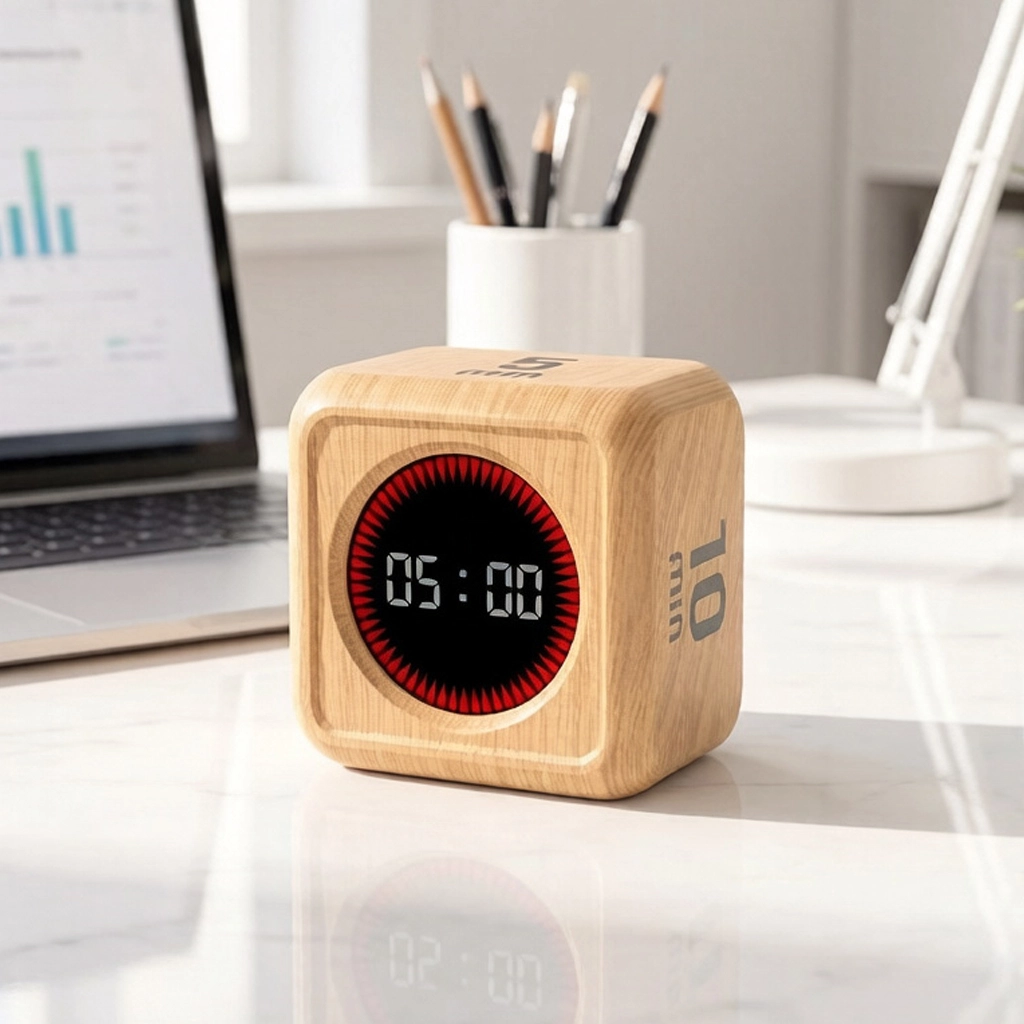
Wood Grain square Cube Timer Digital Gravity Sensor Timer Rechargeable Pomodoro Stopwatch Manufacturer
The X-JSQ814 Rubik’s Cube Timer reimagines timekeeping with a playful, cube-shaped design inspired by the iconic Rubik’s Cube. Blending nostalgia with functionality, it offers intuitive controls, smart gravity sensing, and versatile timing modes—perfect for anyone seeking a stylish, reliable tool to manage tasks at home, work, or play. Compact yet durable, it’s built to adapt to daily routines with ease.
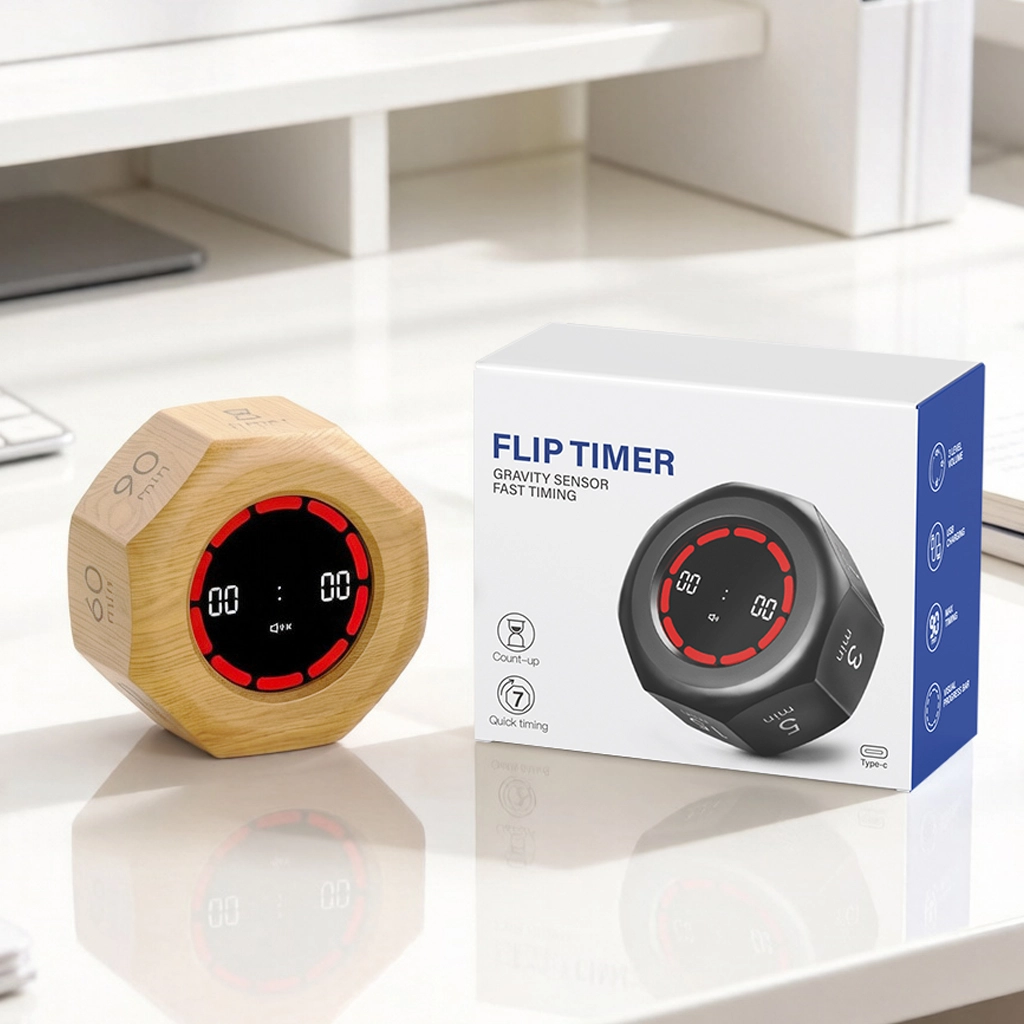
Wood Grain Gravity Sensor Digital Pomodoro Timer 3 5 30 90 Minutes Study Learn Visual Countdown Timer
Where cutting-edge design meets unrivaled functionality. This isn’t just a timer; it’s your versatile partner for kitchen precision, focused studying, classroom engagement, and even ADHD-friendly time tracking.
Crafted as an 8-sided cube with a sleek, novel mini-round profile, Cube redefines portability and style. Its eye-catching flip-gravity rotating visual display (no boring screens!) makes time visible at a glance, while a crisp digital clock shows seconds, minutes, and hours—ideal for recipes, Pomodoro sessions, or study intervals.
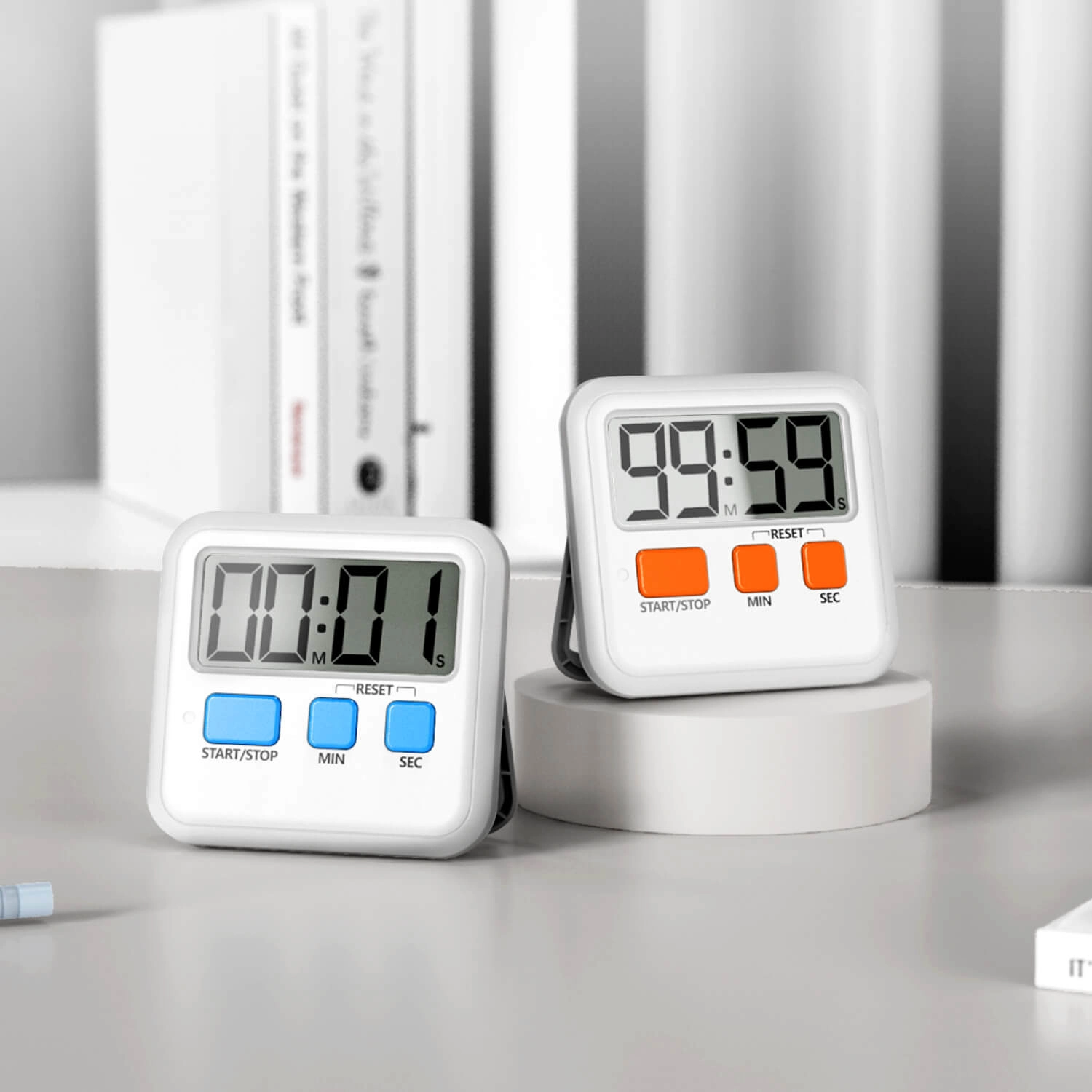
Custom Sound Ringtone Best Countdown Pomodoro Timer Brand In China
The X-JSQ811 Timer is a compact, functional digital timer designed for everyday time management. It prioritizes simplicity, portability, and adaptability—perfect for users who want a reliable tool without unnecessary complexity.
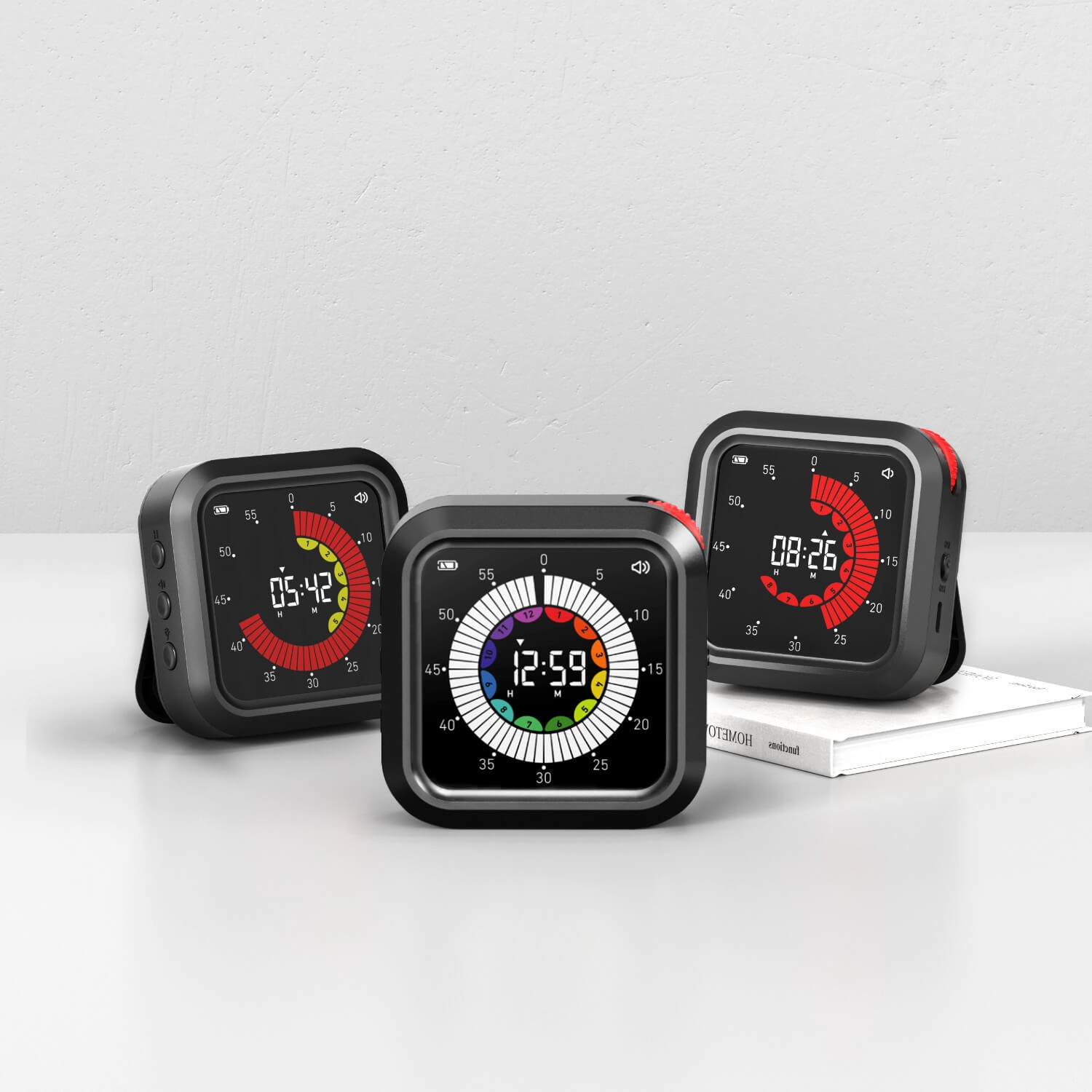
Digital Visual Tomato Pomodoro Technique Timer Study Kitchen Cooking Countdown Countup Timer Stopwatch
The X-JSQ817 Pomodoro Timer redefines simplicity and functionality for productivity, daily tasks, and creative pursuits. Designed with intuitive controls, robust features, and adaptable design, it caters to users seeking precision, convenience, and accessibility in a compact package.

Youben life
Youben life
Youben life
Youben life