
How to Choose a Smart Focus Timer: Buyer's Checklist
- How to Define the Right Focus-Time Device for the Use Case
- Start with the operating environment
- Separate essential functions from marketing features
- Assess display and human-factor performance
- Technical Checklist for Comparing Digital Timer Hardware
- Verify timing accuracy, firmware logic, and reset behavior
- Review power, alarm, and connectivity requirements
- Use a weighted comparison model
- Supplier Due Diligence, Compliance, and Total Cost of Ownership
- Check quality systems and regulatory readiness
- Calculate the full commercial cost
- Consider accessibility and sustainability claims carefully
- Why an Experienced OEM/ODM Partner Can Reduce Launch Risk
- Youben life’s integrated product development capability
- Product portfolio aligned with multiple buyer segments
- Compliance, scalability, and brand differentiation
- Frequently Asked Questions
- What should buyers prioritize when selecting a focus-time device?
- Is a connected timer better than a standalone digital timer?
- Which compliance documents should an importer request?
- Can an OEM manufacturer customize the timing logic and user interface?
- How can buyers reduce warranty and return risk?
Choosing a smart focus timer requires more than comparing countdown ranges or retail prices. For distributors, education suppliers, workplace-product brands, hospitality operators, and e-commerce businesses, the right device combines reliable timekeeping, intuitive controls, clear visual feedback, appropriate alert behavior, durable construction, regulatory compliance, and a supply chain capable of consistent customization. A complete buying decision should connect the product’s user scenario with measurable requirements such as session length, display readability, battery life, manufacturing quality, private-label potential, packaging, and after-sales risk.
How to Define the Right Focus-Time Device for the Use Case
Start with the operating environment
The intended environment determines the product architecture. A classroom timer may need an oversized display, magnetic mounting, silent visual alerts, and simple controls that can be understood from across a room. A home-office productivity device may prioritize a compact footprint, tactile buttons, adjustable brightness, and a discreet alarm. A commercial kitchen, clinic, laboratory, or manufacturing workstation may require stronger housing, easier cleaning, high contrast, and controls that remain usable during fast-paced operations.
Buyers should document ambient light, viewing distance, expected handling, installation method, temperature range, noise sensitivity, and cleaning requirements before requesting quotations. A device designed for a desk does not automatically suit wall mounting or shared workplace use. This early use-case definition prevents a common procurement mistake: selecting attractive features that do not solve the actual operational problem.
Separate essential functions from marketing features
Core functions normally include countdown, count-up, repeat cycles, pause and resume, reset, memory, and a reliable end-of-session indication. Advanced models may add interval programming, multiple presets, a progress bar, productivity modes, lockout controls, or synchronization with a mobile application. These features should be assessed according to user value rather than novelty.
For example, a distributor serving schools may gain more commercial value from large digits and a strong visual alert than from an application ecosystem. A brand selling to remote professionals may benefit from preset work and rest intervals, low-noise interaction, and a refined industrial design. The Pomodoro Technique commonly uses alternating work and break periods, but buyers should not assume that one fixed interval pattern suits every market. Programmable cycles and configurable presets can make a product relevant to students, knowledge workers, creators, and operational teams.
Assess display and human-factor performance
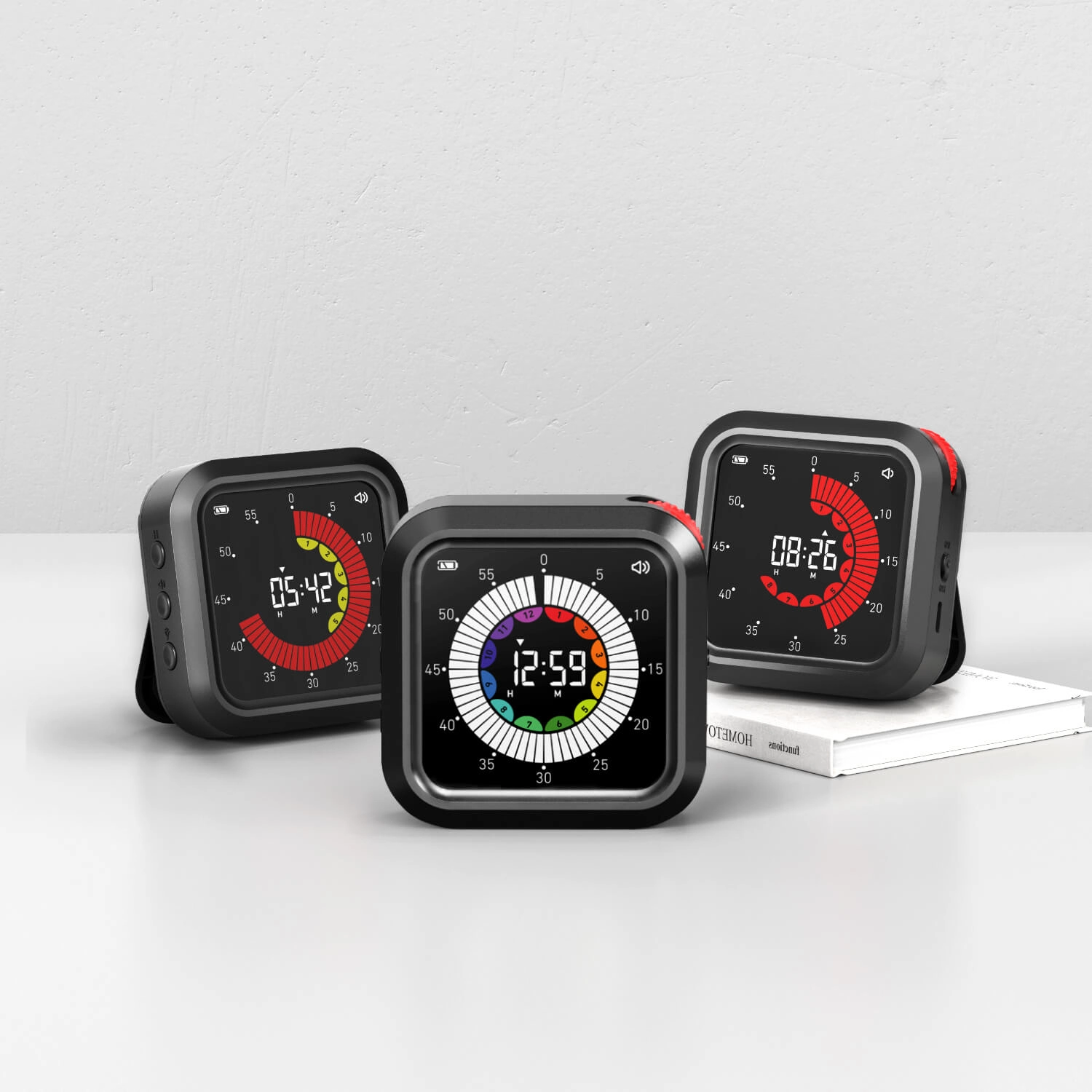
Display selection directly affects perceived product quality. Buyers should compare digit height, viewing angle, contrast, backlight behavior, refresh performance, glare, and readability under both bright and dim conditions. A visual countdown clock should communicate remaining time immediately without forcing users to interpret complicated icons.
Controls also deserve structured testing. Buttons should provide clear feedback, resist accidental activation, and support common actions without an unnecessarily steep learning curve. Rotary controls can improve speed for setting durations, while physical buttons may be more dependable in shared environments. Touch controls can support a modern appearance but may be less suitable where users wear gloves, operate with wet hands, or need tactile confirmation.
Technical Checklist for Comparing Digital Timer Hardware
Verify timing accuracy, firmware logic, and reset behavior
A timing device should maintain consistent intervals across repeated sessions and recover predictably after pause, reset, battery replacement, or power interruption. Procurement teams should request a functional test plan covering maximum and minimum settings, repeated cycles, alarm completion, memory retention, and abnormal user inputs. Firmware should prevent confusing states such as a timer appearing active after the display has been paused.
For private-label products, custom firmware may be more valuable than a longer feature list. Custom IC programming can support branded start-up behavior, preset intervals, regional settings, alarm patterns, button locks, and user-interface language requirements. These details can differentiate an otherwise commoditized digital timer while reducing the need for a separate software platform.
Review power, alarm, and connectivity requirements
Power architecture affects cost, user satisfaction, shipping, and warranty exposure. Buyers should compare disposable batteries, rechargeable cells, USB-powered operation, and hybrid designs. The evaluation should include charging indicators, low-power behavior, battery compartment security, cable requirements, standby consumption, and the availability of replacement components.
Alert design should be treated as a configurable system. Audible alarms need adjustable volume or a mute option when the product may be used in offices, libraries, therapy rooms, or bedrooms. Visual alerts such as flashing digits, color changes, or progress indicators are valuable when sound is unsuitable. Vibration may be useful in personal productivity products but can increase complexity and assembly requirements.
Wireless connectivity is not automatically an advantage. Bluetooth or Wi-Fi can enable remote control and data integration, but it also introduces pairing friction, application maintenance, cybersecurity considerations, regional radio requirements, and customer-support costs. For many B2B applications, an intuitive standalone device offers a lower total cost of ownership than a connected product with underused software functions.
Use a weighted comparison model
A weighted scorecard helps project owners avoid selecting a low-price product that creates operational problems later. The following model is a practical starting point; percentages should be adjusted for the use case and channel.
| Evaluation criterion | Suggested weighting | What to verify |
|---|---|---|
| Functional performance | 25% | Timing modes, interval programming, pause, reset, memory, and alarm completion |
| Display and usability | 20% | Readability, controls, viewing angle, brightness, icons, and accessibility |
| Build quality | 15% | Housing, buttons, mounting, battery door, materials, and repeated-use durability |
| Power and alert system | 10% | Battery or USB design, standby behavior, volume, mute, and visual notification |
| Compliance and documentation | 10% | Applicable test reports, declarations, labeling, manuals, and traceability |
| Customization capability | 10% | Industrial design, firmware, mold tooling, logo, color, packaging, and MOQ |
| Commercial support | 10% | Lead time, quality control, warranty process, spare parts, and communication |
This scoring method is not an industry-mandated formula; it is a procurement tool for making trade-offs visible. Each supplier should receive the same questionnaire and prototype test conditions. A documented score also makes internal approval easier because product, engineering, finance, compliance, and marketing teams can review the same decision logic.
Supplier Due Diligence, Compliance, and Total Cost of Ownership
Check quality systems and regulatory readiness
Regulatory obligations depend on the destination market, power architecture, radio functions, materials, and product claims. Buyers should ask for current technical documentation rather than relying only on logos printed in a catalog. For European-market planning, the European Commission CE marking guidance explains that manufacturers are responsible for determining applicable requirements and completing the relevant conformity process. In the United States, electronic products may require attention to FCC rules, while restricted substances and material declarations should be reviewed for the target market.
RoHS requirements address the restriction of certain hazardous substances in electrical and electronic equipment. Buyers can consult the European Commission RoHS Directive information when planning documentation for European distribution. A responsible supplier should be able to explain which standards apply, identify the test laboratory or documentation source, and maintain consistency between the tested sample and mass-production configuration.
Quality due diligence should cover incoming material inspection, mold control, assembly checks, firmware loading, calibration or timing verification, aging tests, packaging inspection, and pre-shipment sampling. The ISO 9001 quality management overview provides useful context for evaluating process-based quality management, although certification alone does not guarantee that a specific product will meet every buyer requirement.
Calculate the full commercial cost
Unit price is only one element of procurement economics. The total cost model should include tooling, engineering charges, sample development, certification testing, packaging artwork, inspection, freight, import duties, warehousing, warranty replacements, and customer-support handling. A low-cost housing with frequent button failures or unclear instructions can create more expense than a slightly higher-priced product with stable quality and lower return rates.
Buyers should also clarify minimum order quantities, forecast flexibility, production lead time, payment milestones, tooling ownership, intellectual-property treatment, change-control procedures, and the supplier’s policy for component substitutions. A written approval sample and golden-sample process can reduce disputes when colors, display brightness, firmware behavior, or packaging details are important to the brand.
Consider accessibility and sustainability claims carefully
Accessible operation can expand the addressable market. High-contrast digits, readable labeling, tactile buttons, clear audible settings, and simple interaction benefit users with different visual, auditory, or motor needs. These features should be validated through usability testing rather than assumed from a product specification sheet.
Sustainability claims should also be evidence-based. Buyers can evaluate product life, replaceable components, packaging volume, recycled-material content, battery strategy, repairability, and shipping efficiency. Vague statements such as eco-friendly should not replace measurable material or packaging information. Clear documentation protects both the purchasing company and the end consumer.
Why an Experienced OEM/ODM Partner Can Reduce Launch Risk
Youben life’s integrated product development capability
For brands that need differentiated time-management hardware, Youben life provides a vertically integrated OEM/ODM route rather than a simple trading arrangement. Established in 2010, our company focuses exclusively on Digital Timers, Pomodoro timers, Visual Countdown Clocks, temperature and humidity monitors, and thermo hygrometers. This focused product scope helps our engineering and production teams understand the practical requirements of timing interfaces, display systems, compact housings, and consumer-ready operation.
Our 20,000m² facility in Guangzhou, China, supports turnkey development for global brands and Amazon bestsellers. Our capabilities extend across ID and MD industrial design, custom IC programming, precision mold tooling, electronic assembly, functional testing, and retail-ready packaging. This integrated structure can simplify communication between design, engineering, sourcing, quality, and production teams while giving project owners a clearer path from concept to mass production.
Product portfolio aligned with multiple buyer segments
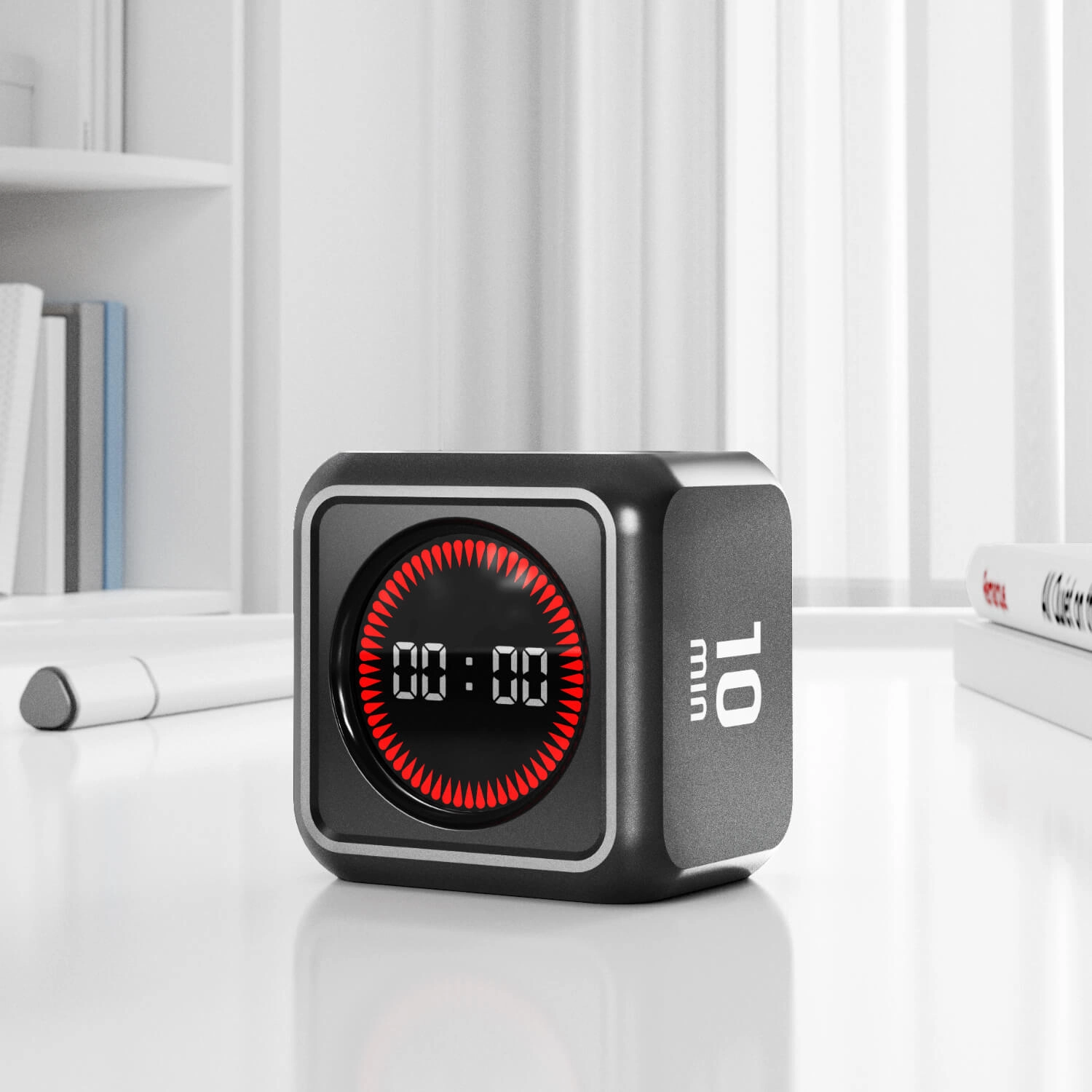
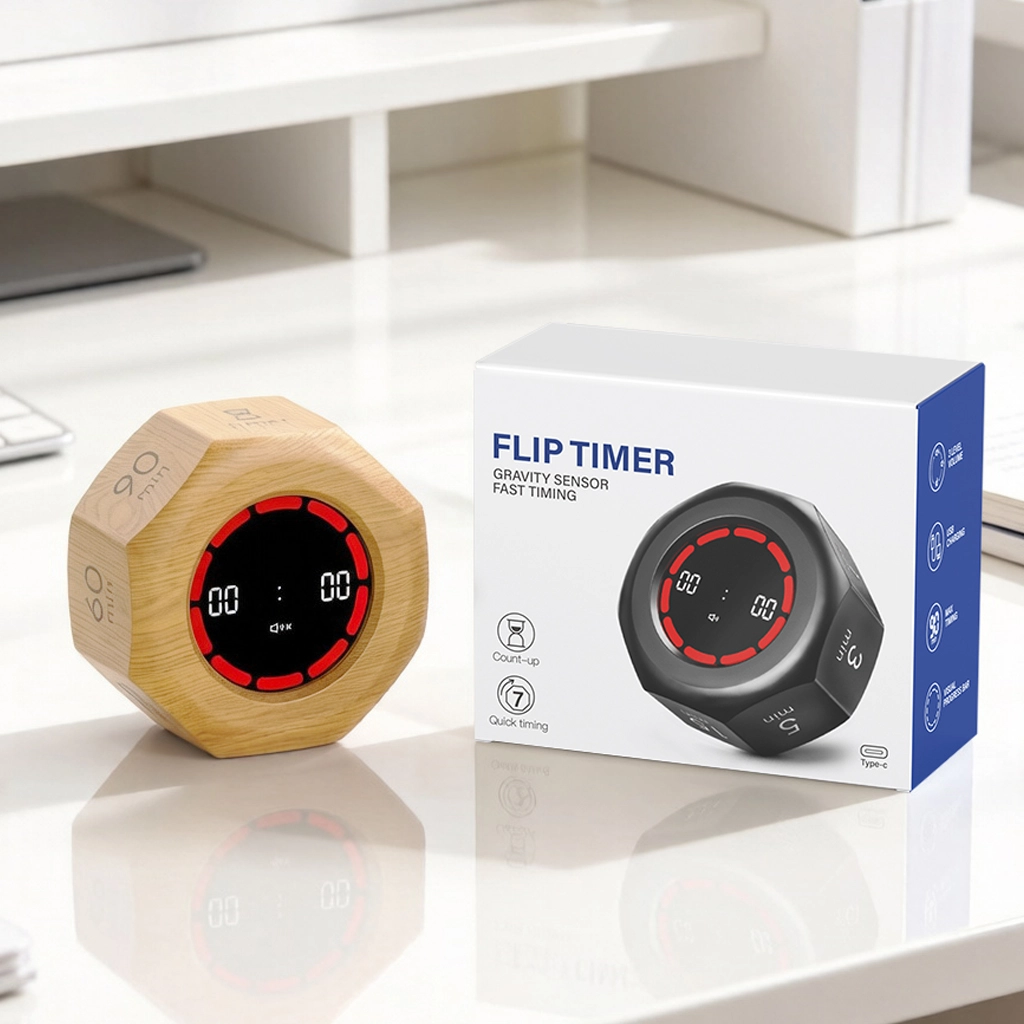
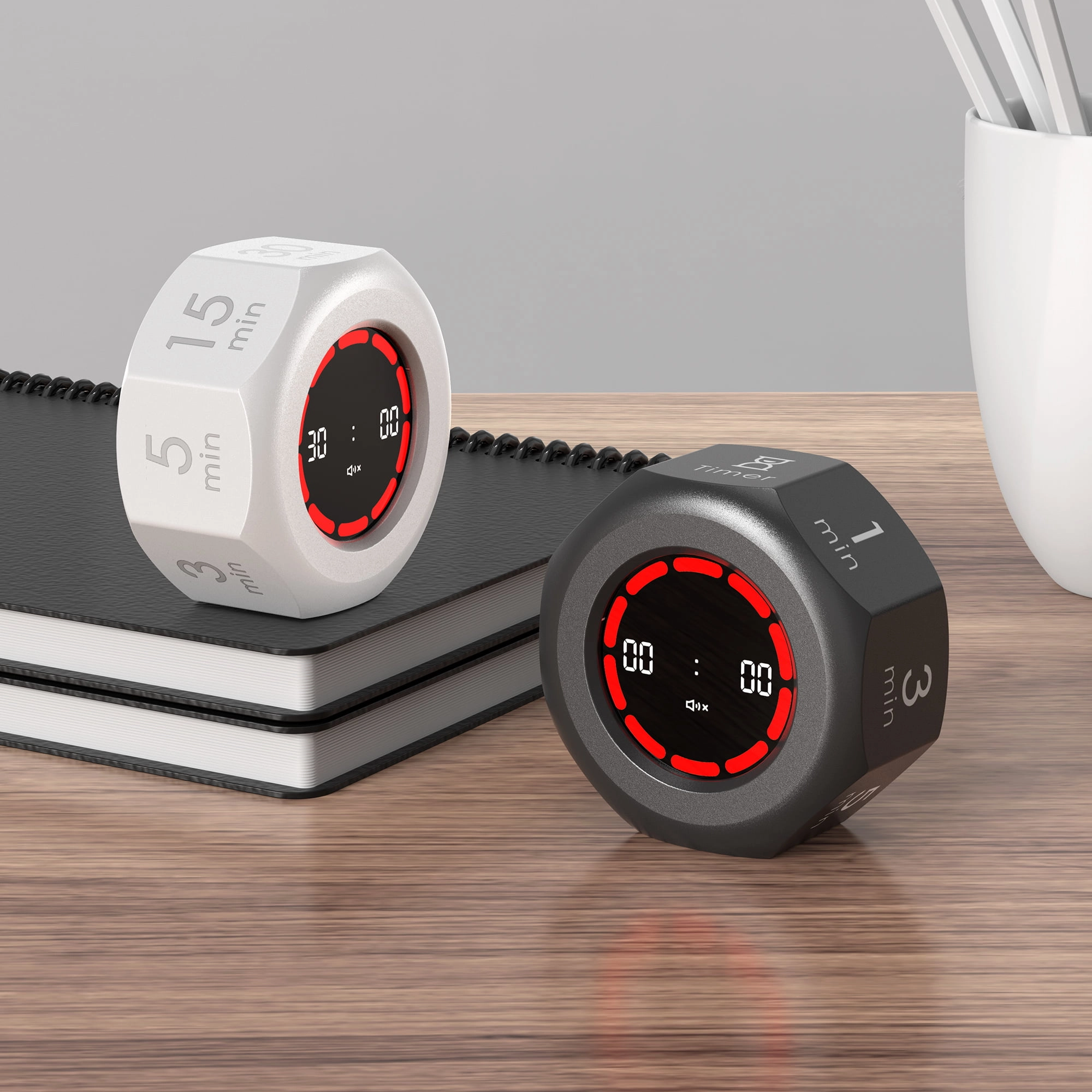
Our Digital Timer range can be developed for education, home productivity, cooking, sports, therapy, laboratories, and workplace applications. Pomodoro timer formats can support branded work-break routines, while Visual Countdown Clocks can emphasize fast time recognition in classrooms, meeting rooms, clinics, and shared facilities. Product architecture can be adapted around display size, mounting method, control layout, power source, alarm behavior, color, surface finish, and packaging strategy.
Our broader portfolio also includes thermo hygrometers and temperature humidity monitors. These products can support complementary retail collections for home offices, nurseries, storage areas, greenhouses, hospitality spaces, and facility monitoring. For distributors, combining time-management devices with environmental monitoring products can improve category coverage and create cross-selling opportunities without moving into unrelated manufacturing categories.
Compliance, scalability, and brand differentiation
Our products are developed to meet strict CE, FCC, and RoHS requirements applicable to the relevant product configuration and target market. Compliance planning remains part of the project discussion, including the need to confirm destination-market obligations, labeling, manuals, and test documentation. Our engineering experience and scalable manufacturing capacity support both initial product launches and larger replenishment programs.
Private-label success depends on more than printing a logo. A differentiated program may combine a distinctive enclosure, proprietary color system, custom user interface, branded firmware behavior, retail packaging, accessory strategy, and channel-specific instructions. Our manufacturing process is structured to help brand owners convert these elements into a repeatable production specification. This approach supports stronger shelf identity, clearer online positioning, and a more defensible product proposition than an unmodified catalog item.
Project owners evaluating a development partner should request a capability review, prototype plan, compliance roadmap, quality-control process, and commercial quotation. Youben life can be contacted at youbenlife.com or info@youbenlife.com to discuss customized Digital Timer, pomodoro timer, thermo hygrometer, and temperature humidity monitor programs.
Frequently Asked Questions
What should buyers prioritize when selecting a focus-time device?
Buyers should prioritize the intended environment, timing functions, display readability, control simplicity, alarm behavior, power design, durability, compliance documentation, customization capability, and total cost of ownership.
Is a connected timer better than a standalone digital timer?
Not necessarily. Connected functions can enable remote control and integration, but they also add pairing, application maintenance, cybersecurity, and regulatory considerations. A standalone product may provide better reliability and lower ownership cost for many B2B applications.
Which compliance documents should an importer request?
An importer should request applicable conformity documentation, test reports, material or RoHS evidence where relevant, labeling information, user manuals, and records showing that the production configuration matches the tested sample.
Can an OEM manufacturer customize the timing logic and user interface?
Yes. An experienced OEM/ODM manufacturer may customize firmware, presets, interval logic, alarm patterns, button behavior, display elements, enclosure design, colors, logos, and retail packaging, subject to project scope and minimum order requirements.
How can buyers reduce warranty and return risk?
Buyers can reduce risk by approving engineering samples, defining acceptance criteria, conducting repeated-use and abnormal-operation tests, reviewing quality-control procedures, confirming component change controls, inspecting packaging, and establishing a documented warranty process before mass production.
Top-Rated Indoor Thermometers with Humidity Display
Indoor Thermometer vs Hygrometer: Which To Buy?
How to Find Reliable Private Label Timer Manufacturers in China
Digital Visual Countdown Timer Specifications: Display Size, Visibility, Controls, and Accuracy
Interested in this article?
Let’s talk.
Need specifications, pricing, or customization options? We’ll provide everything you need.

Youben life
Youben life