
How Brands Compare Custom Pomodoro Timer Suppliers
- How to Evaluate Suppliers of Branded Productivity Timers
- Start with the product brief, not the quotation
- Separate standard customization from genuine OEM development
- Assess human factors and daily usability
- Commercial and Technical Criteria for Supplier Comparison
- Compare engineering depth and development ownership
- Verify quality systems and product compliance
- Use a total-cost model instead of a unit-price model
- Why Factory Transparency Matters for Digital Timer Programs
- Inspect the manufacturing process and supply chain
- Define acceptance standards before mass production
- Protect brand equity through packaging and documentation
- Why Youben Life Supports Scalable Private Label Programs
- Dedicated expertise across timer and environmental-monitoring products
- Vertical integration from design to retail-ready delivery
- Compliance, capacity, and brand differentiation
- Frequently Asked Questions
Brands comparing custom Pomodoro timer suppliers should evaluate far more than unit price. The strongest procurement decision considers industrial design, countdown accuracy, interface usability, firmware flexibility, tooling ownership, regulatory compliance, quality systems, packaging readiness, production capacity, and after-sales support. A reliable digital timer manufacturer should be able to convert a product concept into a repeatable commercial product while protecting brand identity and controlling total cost across development, manufacturing, logistics, and warranty stages.
How to Evaluate Suppliers of Branded Productivity Timers
Start with the product brief, not the quotation
A supplier comparison becomes meaningful only when every candidate receives the same technical brief. The document should define the timing range, work and break presets, sound and visual alerts, display format, button behavior, memory functions, battery type, charging method, standby performance, dimensions, materials, color targets, logo placement, packaging requirements, and intended sales channels. Without a common specification, one factory may quote a basic countdown device while another prices a more advanced programmable unit, creating a misleading comparison.
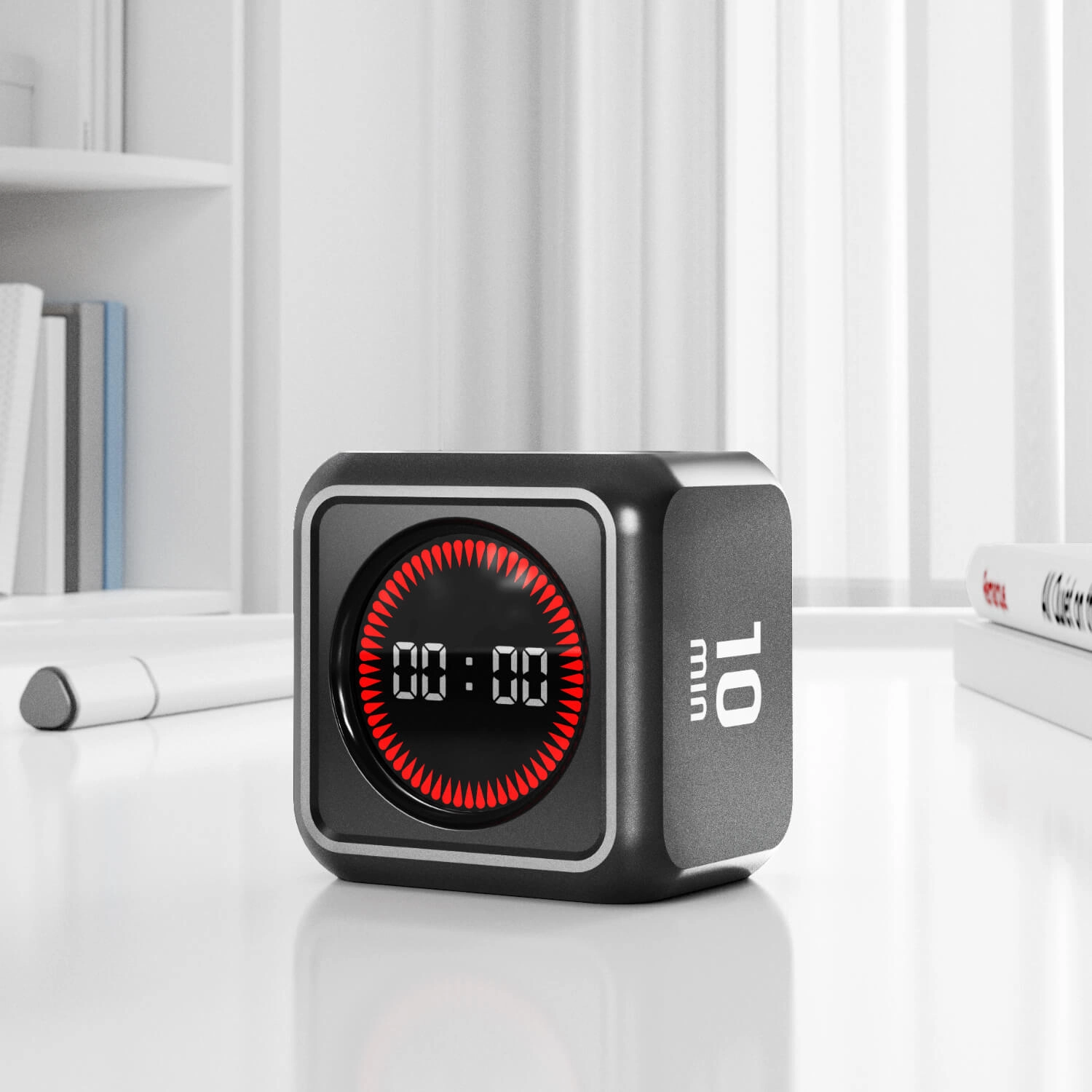
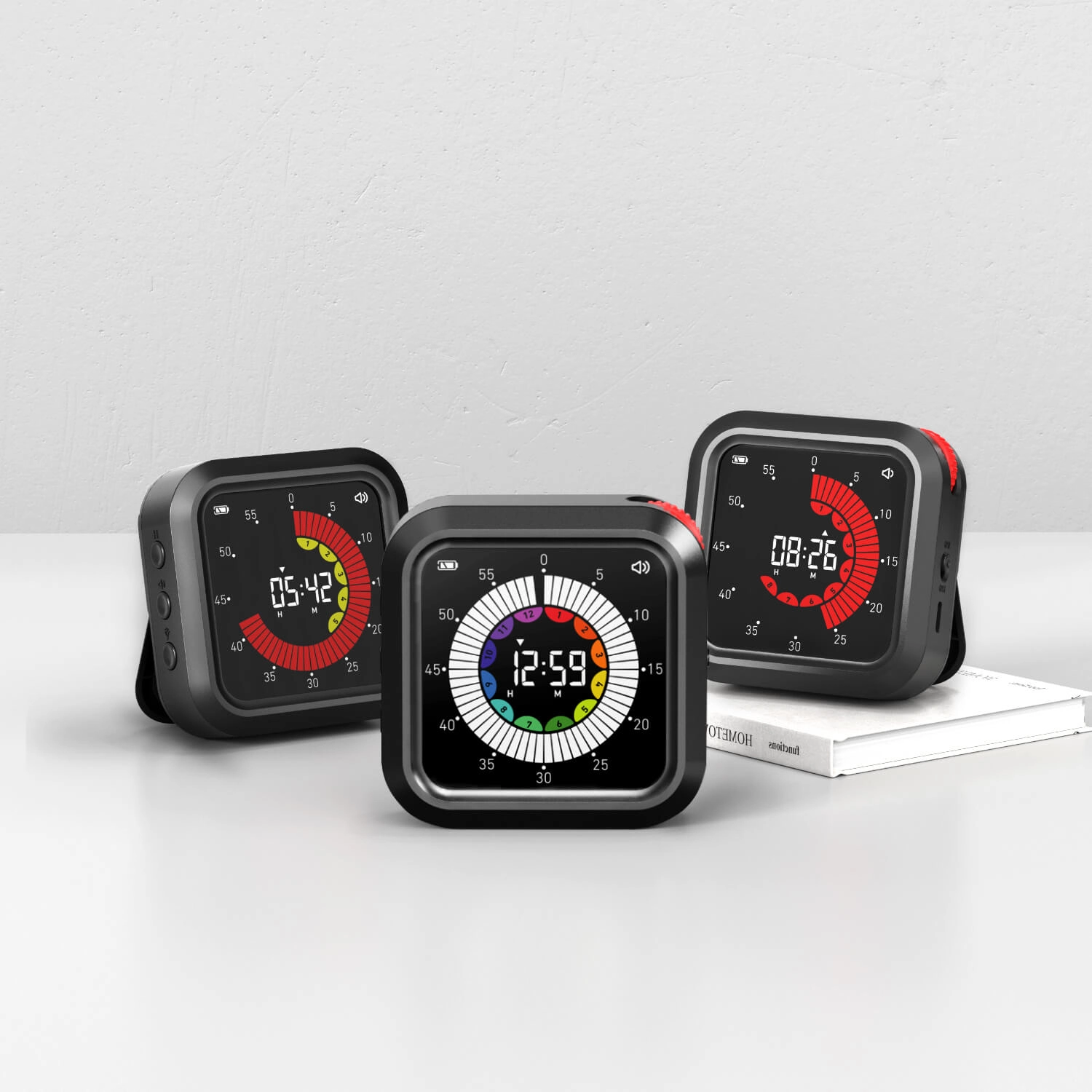
Brand owners should also identify the commercial use case. A desk productivity product may prioritize silent operation, compact dimensions, and low visual distraction. A classroom or office device may require a large display, louder alerts, magnetic mounting, or a clear visual progress indicator. A wellness, study, or gaming product may need distinctive industrial design and app-free simplicity. The correct supplier is the one that understands the use case and can translate it into measurable design requirements.
Separate standard customization from genuine OEM development
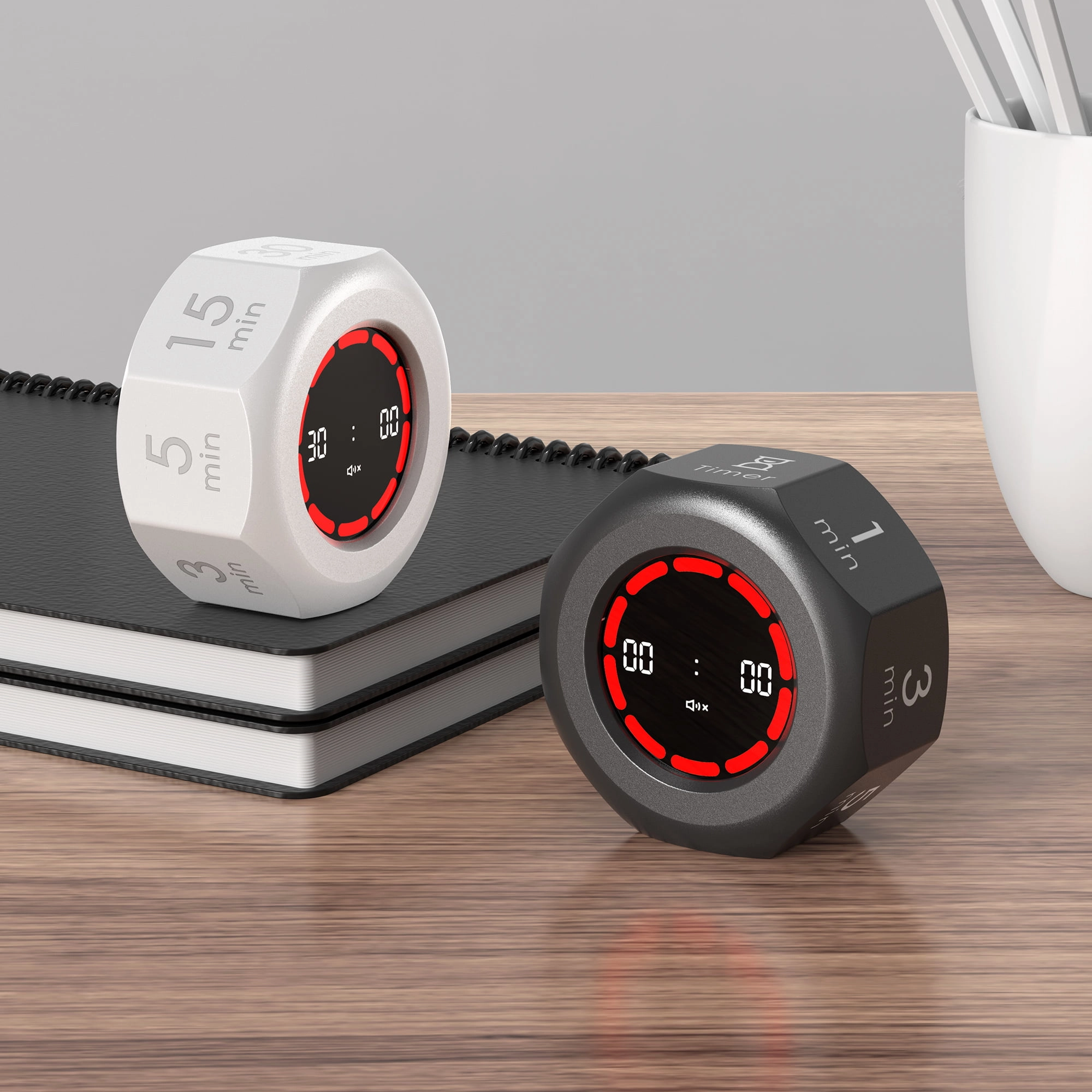
Many manufacturers offer logo printing on an existing digital countdown clock and describe it as customization. That approach can be appropriate for a low-risk promotional project, but it may not create meaningful differentiation in a crowded marketplace. A stronger OEM or ODM partner can modify the enclosure, display window, control layout, firmware logic, alert behavior, surface finish, accessories, and retail presentation.
Procurement teams should ask which elements are genuinely changeable and which are fixed by an existing platform. Important questions include whether the supplier owns the source firmware, whether custom integrated-circuit programming is available, whether new molds can be developed, who owns the tooling, and how engineering changes are documented. These details determine whether a brand receives a defensible product or simply a relabeled item that competitors can purchase from the same source.
Assess human factors and daily usability
A productivity timer is used repeatedly, often dozens of times per week. Small usability weaknesses therefore become visible quickly. Buyers should inspect the readability of the display from normal desk distances, the tactile response of buttons, the clarity of operating instructions, the stability of the base, the strength of magnets or clips, and the ease of switching between work and rest intervals.
Usability testing should cover different lighting conditions, users with varying levels of technical confidence, and common error scenarios such as accidental button presses or low battery conditions. A supplier that can support prototypes, pilot samples, and structured user feedback is generally better positioned to protect product ratings and reduce returns after launch.
Commercial and Technical Criteria for Supplier Comparison
Compare engineering depth and development ownership
Engineering capability is one of the clearest differences between a trading company, an assembly facility, and a vertically integrated product manufacturer. A complete development team may include industrial designers, mechanical engineers, electrical engineers, firmware specialists, tooling engineers, quality personnel, and packaging developers. This combination reduces handoff errors and allows the project owner to solve mechanical, electronic, and user-interface issues within one coordinated workflow.
During supplier audits, buyers should request a development schedule showing concept review, industrial design approval, engineering validation, mold trials, firmware verification, pilot production, and mass-production release. The supplier should also explain how engineering change orders are approved and how revision-controlled drawings, bills of materials, and test procedures are maintained.
Verify quality systems and product compliance
Compliance documents should be matched to the actual model, electrical configuration, battery system, and intended sales market. A certificate bearing a similar product name is not sufficient evidence. Buyers should review test reports, declarations, labeling requirements, safety instructions, and the responsibility of each party in the import process. For quality management, the principles described by ISO 9001 provide a useful reference for documented processes, corrective action, risk-based thinking, and continual improvement.
For products sold internationally, the supplier should understand applicable requirements rather than treating compliance marks as a marketing decoration. European market access may involve the European Commission CE marking framework, while electronic products for the United States may require attention to FCC equipment authorization requirements when relevant. Material restrictions should also be evaluated against the European Union RoHS Directive. The exact obligations depend on product construction, destination, and sales model, so independent regulatory review remains advisable.
Use a total-cost model instead of a unit-price model
The lowest quoted price may become the most expensive option after tooling revisions, defective batches, delayed launch dates, packaging redesign, freight changes, and warranty replacements are included. A total-cost model should include engineering fees, molds, prototypes, certification testing, inspection, packaging, labeling, minimum order quantities, payment terms, freight assumptions, spare parts, and expected defect costs.
Lead time should be divided into development time and manufacturing time. A supplier with a slightly higher factory price may deliver faster because it controls tooling, firmware, assembly, and quality verification internally. This can improve launch timing and reduce the working capital tied up in repeated sample rounds. Buyers should request a written quotation with validity dates, assumptions, exclusions, and a clear definition of acceptable product quality.
| Comparison area | Basic relabeling supplier | Integrated OEM/ODM manufacturer | Buyer verification method |
|---|---|---|---|
| Product differentiation | Logo, color, or packaging changes | Industrial design, tooling, firmware, and packaging development | Review design samples, drawings, and changeable specifications |
| Engineering control | Limited platform modification | Cross-functional design and engineering support | Request the development plan and engineering responsibility matrix |
| Quality management | Batch inspection may be outsourced | Defined incoming, in-process, and final inspection procedures | Audit quality records and sample inspection standards |
| Compliance readiness | Generic certificates may be supplied | Model-specific testing and documentation coordination | Match reports and declarations to the final product configuration |
| Scale-up capability | Capacity may depend on third parties | Coordinated tooling, assembly, testing, and packaging capacity | Review production lines, capacity planning, and contingency controls |
| Commercial risk | Potentially lower entry price but higher customization limits | Higher development discipline with stronger long-term control | Calculate landed cost, launch risk, and warranty exposure |
Why Factory Transparency Matters for Digital Timer Programs
Inspect the manufacturing process and supply chain
Factory transparency helps buyers distinguish actual manufacturing capability from sales claims. A meaningful audit should examine incoming material control, electronic component traceability, mold maintenance, assembly flow, firmware loading, functional testing, aging tests, packaging inspection, and finished-goods storage. The objective is not simply to see a clean facility; it is to determine whether the supplier can reproduce the approved sample under normal production conditions.
Component continuity also deserves attention. Display modules, buzzers, switches, microcontrollers, batteries, and plastics can face shortages or end-of-life changes. A mature supplier maintains an approved vendor list, evaluates equivalent components carefully, and obtains customer approval before making changes that could affect performance or compliance.
Define acceptance standards before mass production
Purchase contracts should reference a controlled golden sample, approved artwork, technical drawings, packaging specifications, and a written inspection standard. Functional tests may include countdown accuracy, preset retention, alert duration, display uniformity, button life, charging behavior, battery endurance, power consumption, and recovery after interruption. Cosmetic standards should define acceptable limits for scratches, sink marks, color variation, printing alignment, and assembly gaps.
For larger programs, buyers may use an independent inspection company for pre-production, during-production, and pre-shipment inspections. Independent inspection does not replace factory quality control, but it adds a documented release decision and can identify production drift before goods reach a distribution center.
Protect brand equity through packaging and documentation
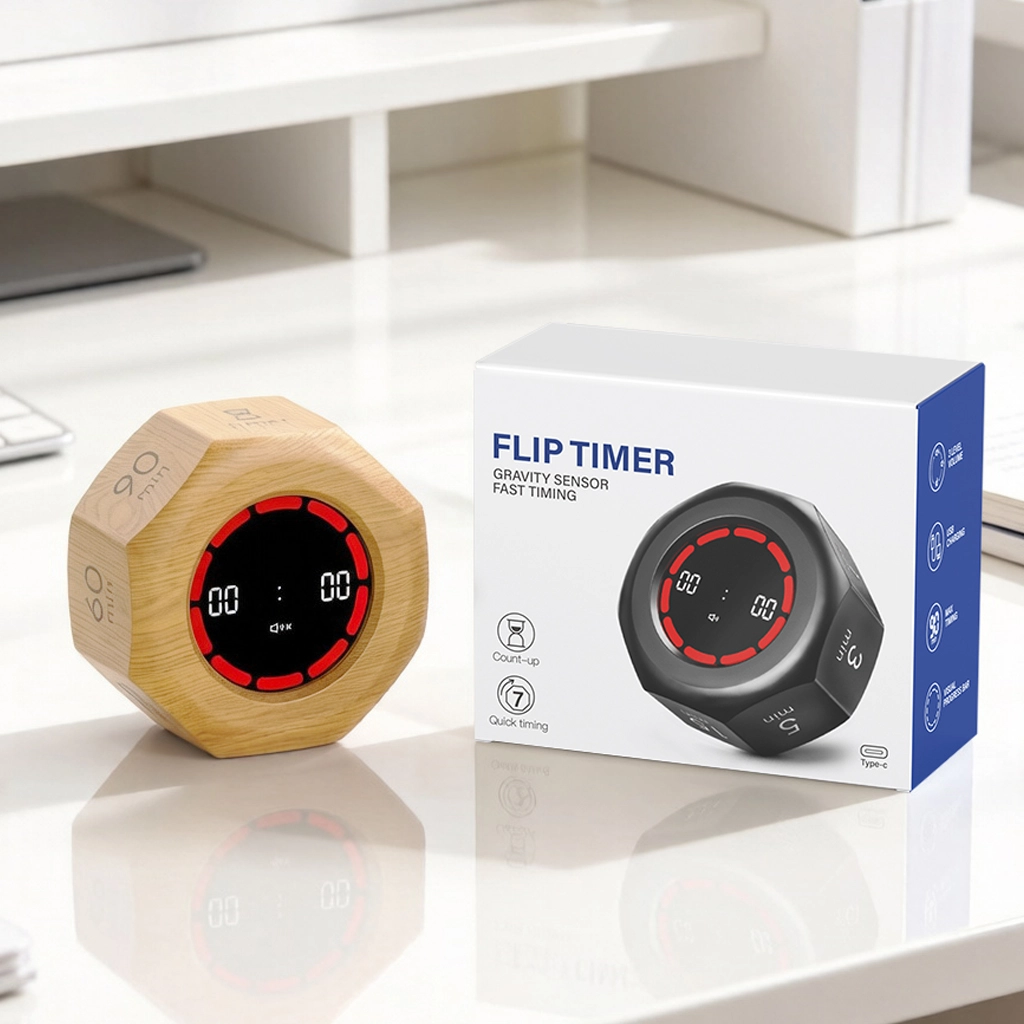
Retail packaging is part of the product experience and influences conversion, unboxing, shelf presentation, and marketplace compliance. A supplier should support structural packaging design, barcode placement, multilingual instructions, warning labels, inserts, carton markings, and drop-test considerations. Digital assets such as product photography, user manuals, quick-start guides, and firmware instructions should be reviewed as carefully as the physical enclosure.
Brand owners should also clarify intellectual-property ownership. The agreement should address industrial design files, mold ownership, firmware rights, tooling access, confidentiality, exclusivity, and the process for approving derivative products. Clear documentation reduces disputes and gives the brand greater flexibility when expanding into new regions or adding related products.
Why Youben Life Supports Scalable Private Label Programs
Dedicated expertise across timer and environmental-monitoring products
Youben life was established in 2010 as an OEM/ODM manufacturer focused exclusively on Digital Timers, Pomodoro timers, Visual Countdown Clocks, temperature and humidity monitors, and thermo-hygrometers. This focused product scope helps our team build practical knowledge across timing functions, display systems, user interfaces, electronic controls, and consumer product requirements.
Our portfolio supports brands that need more than a basic desk accessory. We develop productivity-focused timing devices, visual countdown solutions, and environmental-monitoring products that can serve home offices, classrooms, workplaces, wellness spaces, retail programs, and online marketplaces. This product concentration also enables customers to develop a coordinated range rather than sourcing every device from a different supplier.
Vertical integration from design to retail-ready delivery
Our 20,000m² facility in Guangzhou, China, provides an integrated development and manufacturing environment for global brands and Amazon bestsellers. Our capabilities extend beyond assembly and include ID and MD industrial design, custom IC programming, precision mold tooling, electronic development, production coordination, and retail-ready packaging.
This structure allows our engineering team to address enclosure geometry, display visibility, control logic, tooling feasibility, and assembly efficiency as one connected project. For buyers, that can simplify communication, shorten the path between prototype feedback and production revision, and improve consistency between approved samples and finished goods.
Compliance, capacity, and brand differentiation
Our products are developed to meet strict CE, FCC, and RoHS requirements, subject to the specific configuration and destination market. We support customers with compliance coordination, controlled product documentation, and scalable manufacturing planning. Quality procedures are applied across development, production, inspection, and packaging so that commercial growth does not require sacrificing product consistency.
Our decade-plus engineering background helps brand owners create differentiated time-management hardware rather than competing only on price. Custom appearance, programmed functions, display behavior, accessory choices, and packaging can be coordinated to strengthen brand identity. The same manufacturing platform can also support a broader assortment of Digital Timer products, pomodoro timer solutions, thermo hygrometer devices, and temperature humidity monitor products.
Supplier selection should ultimately reflect the brand’s growth plan. A factory capable of supporting a first order is useful; a development partner capable of maintaining quality, documentation, capacity, and product differentiation through multiple product generations is more valuable. Buyers can contact Youben life at youbenlife.com or email info@youbenlife.com to discuss product development, private label manufacturing, and project requirements.
Frequently Asked Questions
What should brands compare when selecting a Pomodoro timer supplier?
Brands should compare industrial design, firmware flexibility, tooling ownership, product quality, regulatory documentation, manufacturing capacity, packaging support, minimum order quantities, lead times, and total landed cost rather than relying only on unit price.
What is the difference between relabeling and OEM or ODM development?
Relabeling usually involves adding a logo or changing packaging on an existing product. OEM or ODM development can include enclosure design, display layout, firmware logic, custom integrated-circuit programming, tooling, materials, accessories, and retail presentation.
Which compliance documents should buyers request for a digital timer?
Buyers should request model-specific test reports, declarations, labeling information, and safety documentation applicable to the destination market. Depending on the product and market, this may include CE-related documentation, FCC requirements, and RoHS material compliance evidence.
How can buyers reduce quality problems during mass production?
Buyers can approve a controlled golden sample, define cosmetic and functional acceptance standards, audit the manufacturing process, verify incoming and in-process inspections, conduct pilot production, and use pre-shipment inspection before releasing finished goods.
Why is factory vertical integration valuable for a private label timer project?
Vertical integration can reduce communication gaps between industrial design, engineering, tooling, assembly, testing, and packaging. It may also improve revision control, shorten development cycles, and provide stronger consistency between approved prototypes and mass-produced units.
Can Youben life support products beyond a basic productivity timer?
Yes. Youben life supports Digital Timers, Pomodoro timers, Visual Countdown Clocks, thermo hygrometers, temperature humidity monitors, and related private label product programs through design, engineering, tooling, manufacturing, compliance coordination, and retail-ready packaging.
How to Find Reliable Private Label Timer Manufacturers in China
Complete Buyer's Guide to Timers OEM & ODM Services
Custom Pomodoro Timer Pricing: What Shapes Bulk Costs?
Wholesale led display digital countdown timer manufacturer and supplier
Interested in this article?
Let’s talk.
Need specifications, pricing, or customization options? We’ll provide everything you need.

Youben life
Youben life