
The Complete Guide to Evaluating a Visual Timer Manufacturer’s Product Quality and Reliability
- How to Assess Timing Device Quality Before Placing an Order
- Define the operating requirements and risk profile
- Verify timekeeping accuracy and functional consistency
- Examine display visibility and human factors
- Quality Systems, Compliance, and Manufacturing Evidence
- Review the supplier’s quality-management system
- Confirm electrical, material, and market-access requirements
- Assess durability through realistic testing
- How Our Product Portfolio Can Support Reliable Sourcing
- Connect product selection with the intended use case
- Prioritize engineering communication and customization control
- Measure total value rather than initial purchase price
- Procurement Checklist for Selecting a Dependable Supplier
- Before sampling
- During sample approval
- Before and after mass production
- Frequently Asked Questions
Evaluating a visual timer manufacturer requires a structured review of product performance, manufacturing consistency, regulatory compliance, and long-term service capability. A reliable supplier should demonstrate accurate timekeeping, clear visual indication, durable materials, stable electronics, repeatable quality-control procedures, traceable testing records, and the ability to support customization and volume production. Buyers should also examine battery life, alarm performance, operating temperature, display contrast, packaging integrity, warranty coverage, and responsiveness during sampling and mass production. The same procurement logic applies when sourcing digital timers, Pomodoro timers, thermo-hygrometers, and temperature humidity monitors for consumer, education, healthcare, office, hospitality, or industrial environments.
How to Assess Timing Device Quality Before Placing an Order
Define the operating requirements and risk profile
Product evaluation should begin with the application rather than the catalog specification. A classroom timer may prioritize an oversized display, simple controls, silent operation, and impact resistance. A productivity timer may require quick mode switching, intuitive countdown settings, and a clear end-of-cycle notification. A healthcare or laboratory use case may place greater emphasis on measurement stability, cleaning compatibility, battery reliability, and documented calibration procedures.
Project owners should document the intended timing range, resolution, alarm volume, display viewing distance, mounting method, power source, expected daily usage, and environmental conditions. Important questions include whether the product will operate continuously, whether children or elderly users will handle it, whether it must remain readable under bright light, and whether the enclosure may be exposed to dust, moisture, or cleaning agents. These factors determine which design features are essential and which are merely promotional.
Verify timekeeping accuracy and functional consistency
Countdown accuracy should be checked across the full operating range, not only at one convenient setting. A supplier should explain the timing architecture, oscillator or clock source, tolerance range, and test method used during production. Buyers can compare a sample against a calibrated reference timer at several intervals, such as one minute, ten minutes, thirty minutes, and sixty minutes. Repeating the test with multiple units helps reveal variation between samples.
Functional consistency also includes button response, rotary control performance, memory retention, pause and resume behavior, reset logic, alarm duration, and automatic shutoff. A device that keeps accurate time but occasionally ignores input may create operational disruption. The sample approval process should therefore include repeated use testing, rapid setting changes, low-battery operation, and recovery after power interruption.
Examine display visibility and human factors
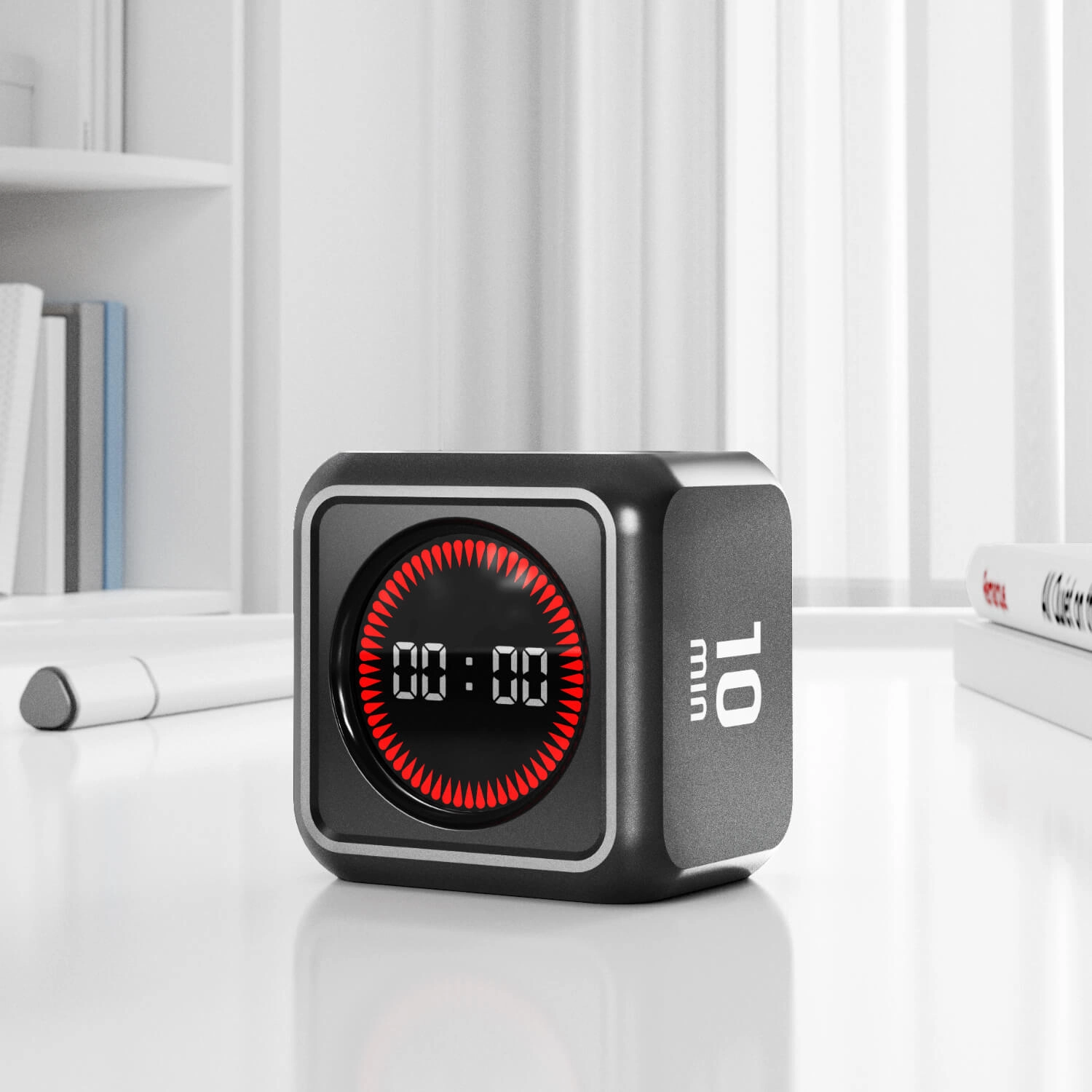
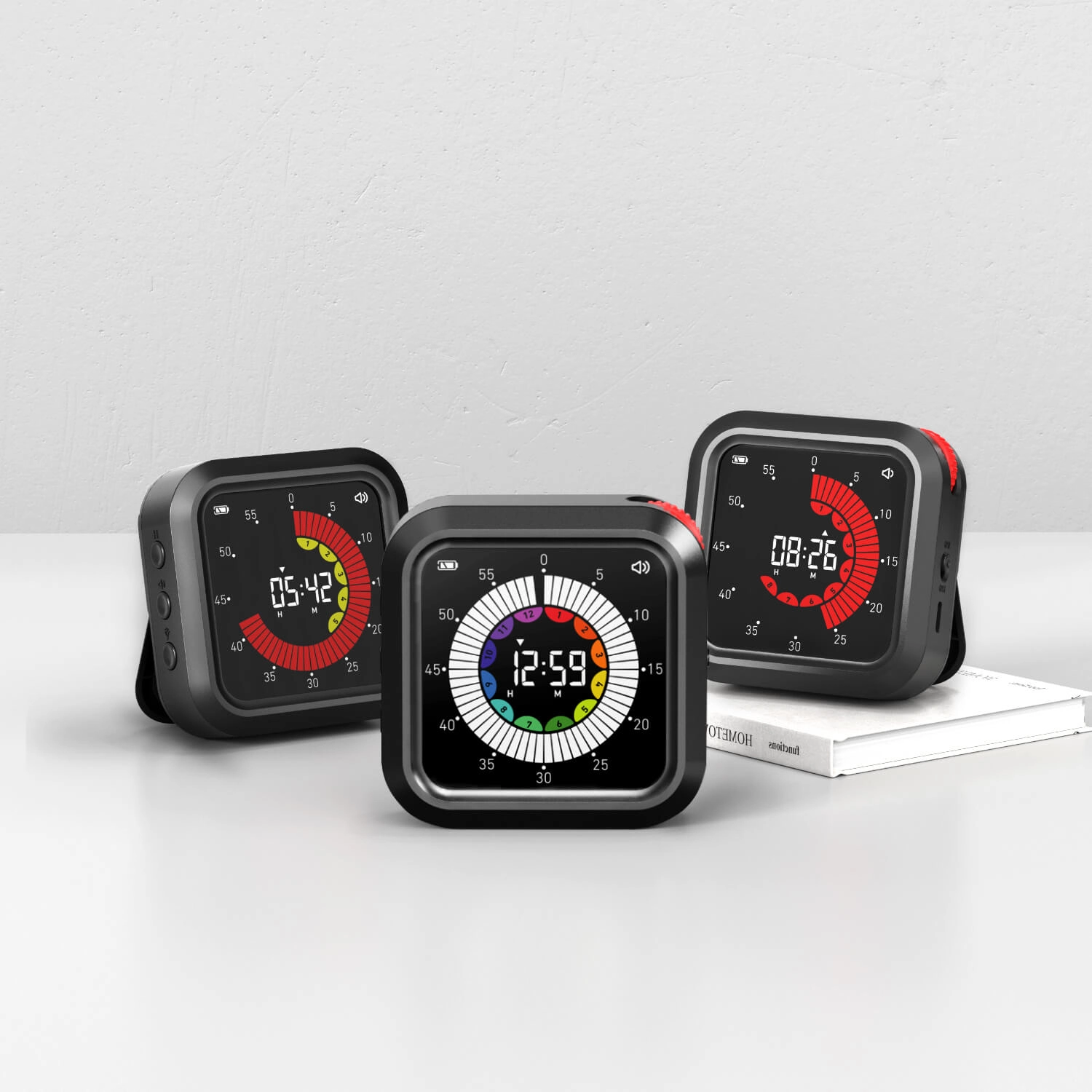
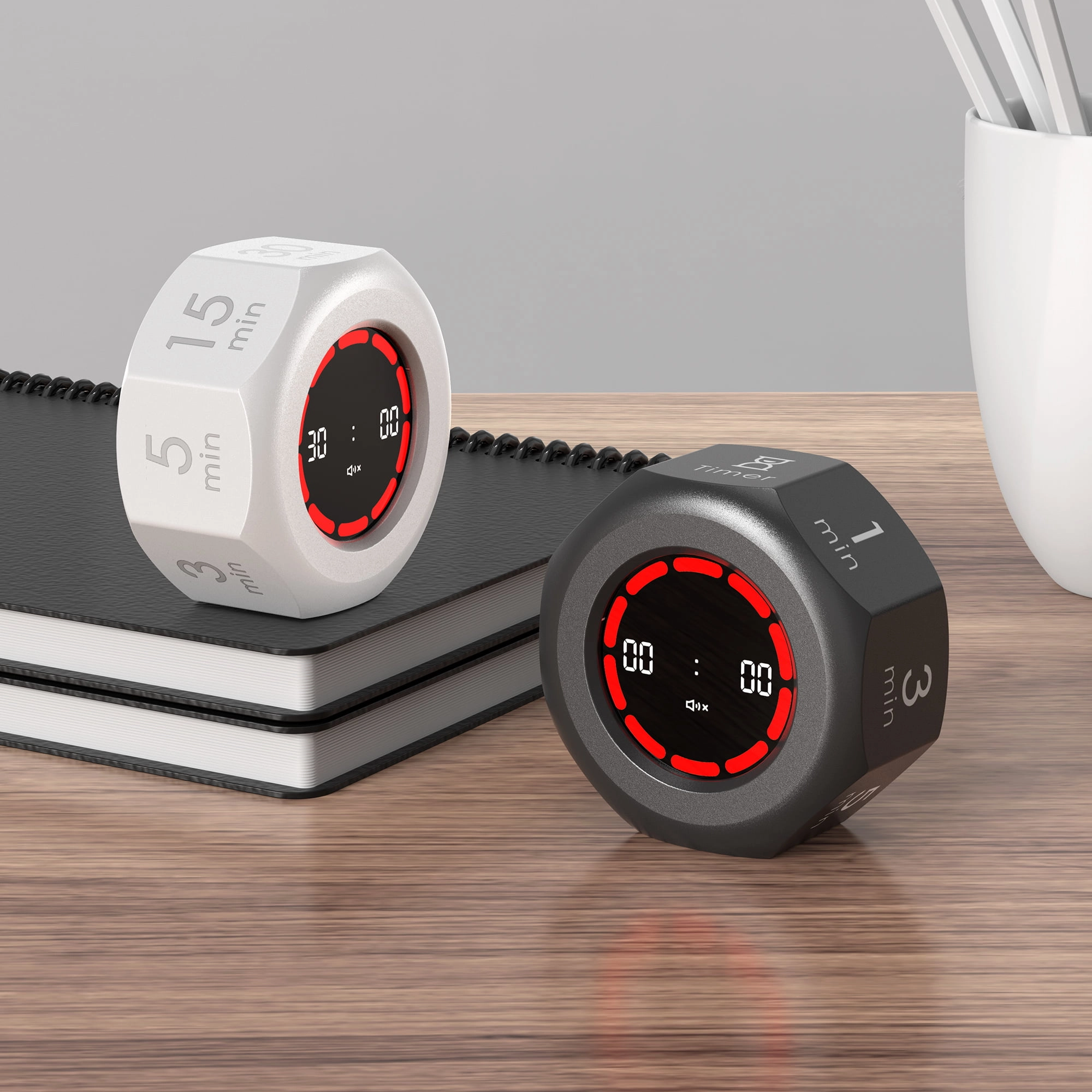
Visual communication is central to this product category. Buyers should assess digit height, contrast, viewing angle, brightness, color differentiation, and readability from the distance at which the device will normally be used. A colored progress ring or segmented indicator should advance smoothly and correspond logically with the remaining time. If the display uses a liquid-crystal module, the supplier should provide information about contrast performance and operation across the expected temperature range.
Human-factor quality includes tactile feedback, labeling, control spacing, mounting stability, and the possibility of accidental activation. A practical design minimizes the number of steps required to start a countdown and makes the current mode obvious. For education and workplace settings, a large, quiet, and non-distracting display may deliver more value than a product with numerous rarely used functions.
Quality Systems, Compliance, and Manufacturing Evidence
Review the supplier’s quality-management system
A polished sample does not prove reliable mass production. Buyers should ask how incoming components are inspected, how assembly defects are controlled, how firmware versions are managed, and how nonconforming units are isolated. Evidence of a documented quality-management system is valuable because it indicates that inspection activities are repeatable rather than dependent on individual operators.
When appropriate to the project, purchasers can request information about an ISO 9001 quality-management system, process flow diagrams, inspection standards, corrective-action reports, and production traceability. Certification alone should not replace practical verification. The key question is whether the supplier can connect each batch to component lots, inspection results, production dates, and corrective actions.
Confirm electrical, material, and market-access requirements
Compliance requirements depend on the destination market and product configuration. For products sold in the European Economic Area, buyers may need to evaluate applicable CE-marking obligations and relevant directives. For products entering the United States, electrical safety, radio functionality, battery transport, and material requirements may apply depending on the design. Buyers should request applicable declarations, test reports, labeling details, and user instructions rather than accepting vague statements such as “international standard compliant.”
Battery-powered devices also require careful review of cell quality, protection circuitry, polarity safeguards, charging behavior, and shipping documentation. If the product contains wireless connectivity, electromagnetic compatibility and radio requirements become more complex. The International Electrotechnical Commission publishes widely used standards for electrical and electronic equipment, while the EU RoHS framework addresses restrictions on certain hazardous substances in electrical and electronic products. The exact obligation should be confirmed with a qualified compliance specialist for the target market.
Assess durability through realistic testing
Durability testing should reflect actual handling rather than relying only on a general laboratory claim. Relevant evaluations may include repeated button presses, rotary-switch cycling, drop testing, enclosure torque, cable or connector strain, battery-door opening cycles, and extended display operation. Thermo-hygrometer products and temperature humidity monitors should additionally be assessed for sensor response, drift, condensation exposure, and recovery after environmental changes.
Testing conditions should be recorded clearly, including sample quantity, equipment used, pass criteria, and failure observations. For environmental performance, buyers can consult the principles of measurement traceability described by the BIPM International System of Units. A supplier that can explain how measurement results are referenced and maintained generally provides stronger evidence than one that only lists impressive accuracy figures.
| Evaluation area | Basic supplier evidence | Stronger procurement evidence | Buyer verification method |
|---|---|---|---|
| Timing accuracy | Published tolerance statement | Test procedure, sample records, and batch controls | Compare several units with a calibrated reference |
| Display performance | Screen size and resolution | Viewing-angle, brightness, and operating-condition data | Test readability at realistic distances and lighting levels |
| Battery endurance | Estimated operating time | Defined test load, battery specification, and low-power behavior | Run repeated charge or replacement cycles |
| Durability | General material description | Documented cycle, drop, connector, and enclosure tests | Conduct a controlled pilot-use assessment |
| Measurement products | Accuracy shown on a datasheet | Calibration method, sensor tolerance, and drift data | Compare readings against traceable instruments |
| Production control | Factory photographs or audit claims | Inspection plans, traceability, corrective-action records | Perform a supplier audit or third-party inspection |
How Our Product Portfolio Can Support Reliable Sourcing
Connect product selection with the intended use case
Our product portfolio can be evaluated using the same evidence-based framework across digital timers, Pomodoro timers, thermo-hygrometers, and temperature humidity monitors. This approach helps buyers compare not only appearance and price, but also the underlying factors that influence ownership cost: component stability, ease of use, production repeatability, packaging protection, replacement requirements, and service responsiveness.
For a productivity program, a Pomodoro timer should make work and rest intervals immediately understandable while minimizing setup friction. For schools, training centers, and therapy environments, a digital timer should provide dependable countdown operation and clear visual status. For storage rooms, offices, hotels, and facility-management applications, a thermo-hygrometer or temperature humidity monitor should provide stable readings, readable information, and appropriate alert or recording functions where required.
Prioritize engineering communication and customization control
Customization can involve enclosure color, logo placement, display layout, firmware behavior, alarm settings, packaging, language, mounting accessories, or retail presentation. Each change can influence tooling, component availability, certification scope, and lead time. Our engineering and production process should therefore be assessed by the clarity of its technical documents, sample-approval stages, revision controls, and change-notification procedures.
Buyers should request a formal specification sheet, approved artwork, bill of materials or controlled component description, golden sample, inspection checklist, and packaging standard before mass production. When a design change is necessary, written approval and updated revision identification prevent an unapproved component or cosmetic variation from entering the shipment. This discipline is particularly important for distributors and brand owners managing multiple channels or regional requirements.
Measure total value rather than initial purchase price
A low quotation may become expensive if the device generates returns, requires frequent battery replacement, has inconsistent displays, or lacks replacement support. Total cost of ownership should include sample development, tooling, compliance testing, freight packaging, inspection, warranty claims, field failures, and inventory complexity. Buyers should also assess minimum order quantity, production lead time, spare-part policy, defect replacement terms, and the supplier’s ability to maintain the same specification over time.
Our commercial evaluation should be based on transparent specifications and realistic project objectives. A product that costs slightly more but provides better readability, stronger enclosure construction, dependable sensors, and more consistent batch quality may produce a higher return for distributors and institutional buyers. Quality is commercially meaningful when it reduces returns, protects channel reputation, improves user adoption, and supports repeat orders.
Procurement Checklist for Selecting a Dependable Supplier
Before sampling
- Define the application, user group, operating environment, and expected annual volume.
- Specify timing range, measurement range, display requirements, alarm behavior, power source, and enclosure expectations.
- Identify destination-market compliance, labeling, language, packaging, and battery requirements.
- Request company information, manufacturing scope, quality certificates, test records, and relevant product references.
During sample approval
- Test several samples for accuracy, controls, display visibility, alarm operation, battery endurance, and mechanical integrity.
- Compare temperature and humidity readings against suitable reference instruments under stable conditions.
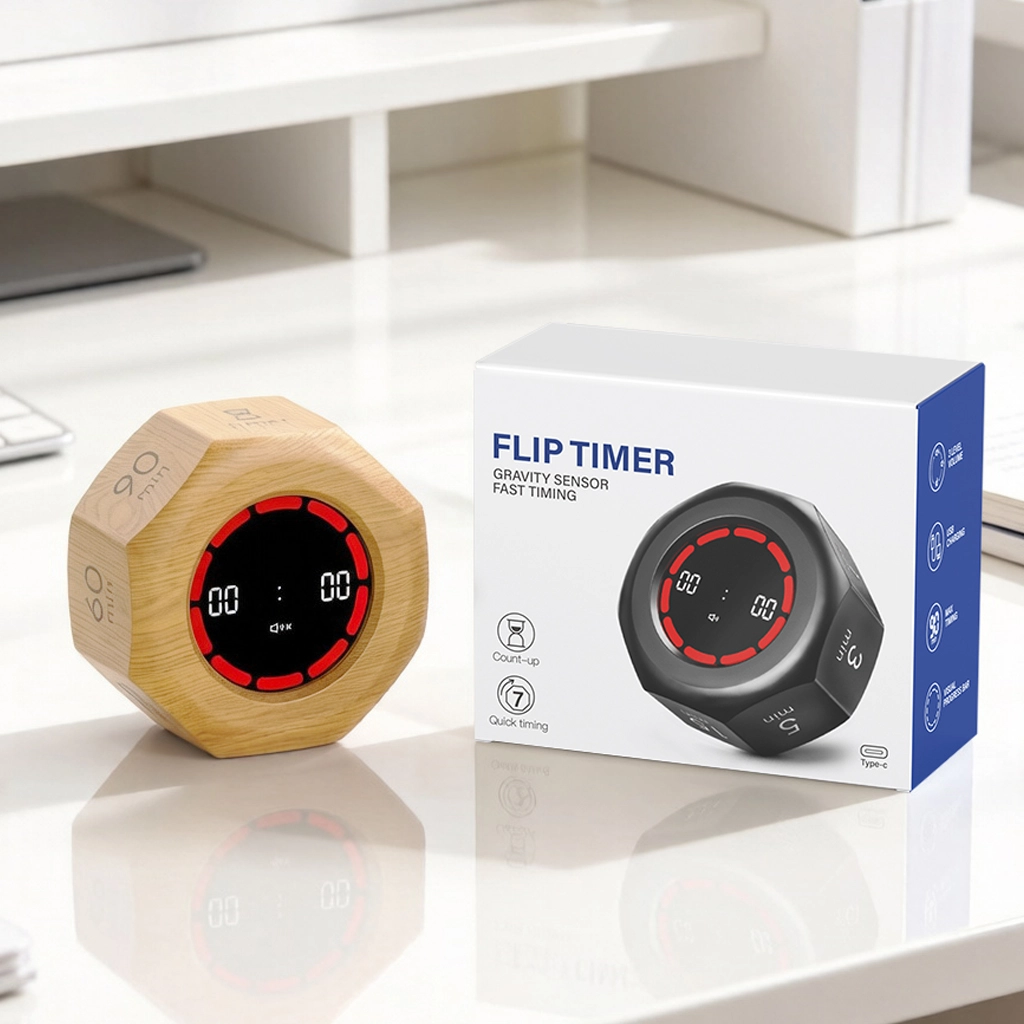
- Review user instructions, warning labels, packaging protection, barcode data, and product identification.
- Record every approved detail in a signed technical specification and golden-sample agreement.
Before and after mass production
- Approve a pre-production sample and verify that the production bill of materials matches the agreed design.
- Use an inspection plan covering appearance, function, dimensions, packaging, accessories, and labeling.
- Consider third-party inspection for high-value or time-sensitive shipments.
- Track complaints, failure modes, replacement rates, and corrective actions to inform future orders.
A strong sourcing decision combines technical validation, factory-process assessment, compliance review, commercial analysis, and post-delivery monitoring. Buyers that follow this sequence are better positioned to distinguish a dependable timing and environmental-monitoring partner from a supplier that only offers attractive samples or aggressive pricing.
Frequently Asked Questions
What should buyers check first when evaluating a visual timer supplier?
Buyers should first define the application, timing range, display requirements, power source, operating environment, user group, and destination-market compliance requirements before reviewing samples or quotations.
How can a buyer verify countdown accuracy?
A buyer can compare several samples with a calibrated reference timer at multiple intervals, such as one minute, ten minutes, thirty minutes, and sixty minutes, while also testing pause, resume, reset, alarm, and low-battery behavior.
Which quality documents should a supplier provide?
A supplier should provide applicable quality certificates, inspection procedures, test records, technical specifications, compliance declarations or reports, production traceability information, and corrective-action documentation when relevant.
What durability tests are important for digital timers?
Important tests may include repeated button and rotary-control cycles, drop testing, enclosure torque, connector strain, battery-door cycles, extended display operation, and realistic pilot-use testing.
How should thermo-hygrometer accuracy be evaluated?
Thermo-hygrometer accuracy should be compared with suitable reference instruments under stable conditions, while also reviewing the sensor tolerance, calibration method, response time, drift information, condensation behavior, and recovery after environmental changes.
Why is total cost of ownership more useful than unit price?
Total cost of ownership includes sampling, tooling, compliance testing, packaging, freight, inspection, warranty claims, field failures, battery replacement, and inventory complexity, so it provides a more realistic view of commercial value than the initial quotation alone.
How to Evaluate Digital Visual Countdown Timer Quality, Reliability, and Safety
Bulk Buying: Sourcing Indoor Thermometers for Retailers
How to Choose the Right Visual Timer Manufacturer for Education, Healthcare, and Workplace Applications
Top 10 digital oven probe thermometer manufacturers and suppliers
Interested in this article?
Let’s talk.
Need specifications, pricing, or customization options? We’ll provide everything you need.

Youben life
Youben life