
How to Evaluate a Pomodoro Timer Manufacturer’s Product Quality and Manufacturing Standards
- Core Quality Criteria for Professional Digital Timer Projects
- Timing accuracy and firmware stability
- Display, controls, and user interaction
- Materials, battery performance, and mechanical durability
- How to Audit a Supplier’s Engineering and Factory Controls
- Review the product-development system
- Examine incoming, in-process, and final inspection
- Validate compliance and market access
- Production-Scale Readiness and Total Cost of Ownership
- Pilot runs, capacity, and consistency
- Packaging, logistics, and after-sales risk
- Why Youben life Fits Complex Private-Label Requirements
- Integrated engineering and manufacturing capability
- Compliance-focused product execution
- Product breadth and brand-building support
- Frequently Asked Questions
Evaluating a Pomodoro timer manufacturer requires more than comparing unit prices, product photographs, or sample features. For distributors, private-label brands, corporate procurement teams, and Amazon operators, product quality is determined by the complete system: timing accuracy, electronic design, display readability, acoustic performance, battery safety, enclosure durability, firmware behavior, regulatory compliance, process control, and post-launch support. The strongest supplier is able to prove how each requirement is designed, tested, documented, and reproduced at scale. Buyers should therefore assess the factory as an engineering and quality partner rather than treating the project as a simple sourcing transaction.
Core Quality Criteria for Professional Digital Timer Projects
Timing accuracy and firmware stability
The central function of a Pomodoro product is dependable time control. A supplier should define the timing tolerance under normal operating conditions and explain how the oscillator, microcontroller, power source, and firmware interact. A low-cost prototype may appear accurate during a short demonstration while drifting after battery voltage declines, after repeated start-stop cycles, or when the unit operates near its temperature limits. Buyers should request test records covering countdown duration, pause and resume behavior, reset logic, memory retention, and end-of-cycle transitions.
The familiar Pomodoro workflow commonly uses focused work intervals followed by short breaks, but commercial products may need adjustable presets, custom interval lengths, long-countdown functions, or repeat-cycle programming. Product requirements should be converted into a written firmware specification before tooling begins. This prevents misunderstandings over button logic, audible alerts, silent mode, automatic restart, daylight-saving implications for clock functions, and factory-reset behavior. Firmware version control is equally important because an undocumented software change can create inconsistent batches even when the housing and circuit board remain unchanged.
Display, controls, and user interaction
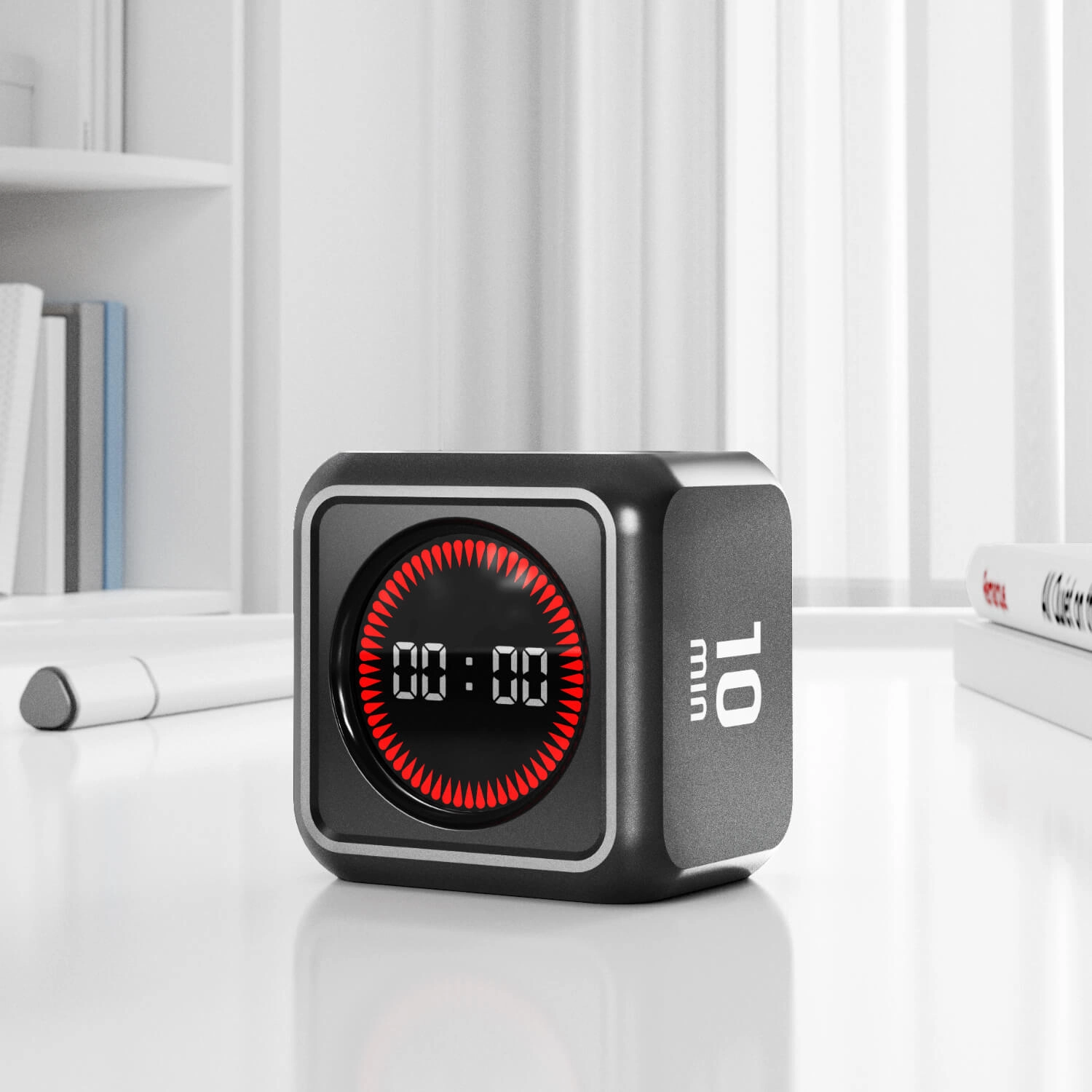
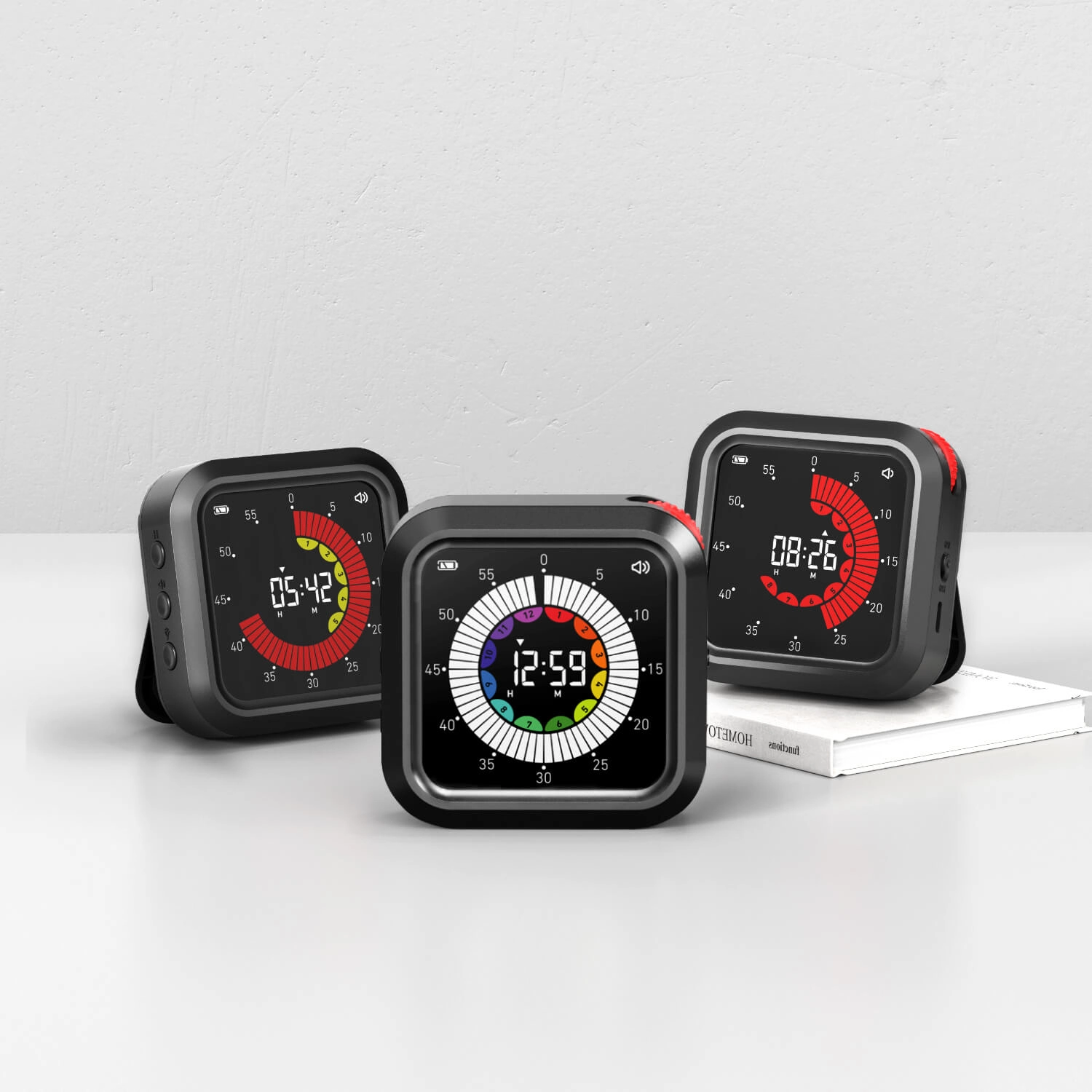
Display quality directly influences perceived value in offices, classrooms, kitchens, fitness studios, and shared workspaces. Evaluation should cover digit height, viewing angle, contrast, refresh behavior, backlight uniformity, low-light performance, and visibility under direct illumination. LED, LCD, and segmented displays each offer different trade-offs in power consumption, brightness, viewing distance, and retail positioning. A professional supplier should provide samples under several lighting conditions rather than relying on a studio photograph.
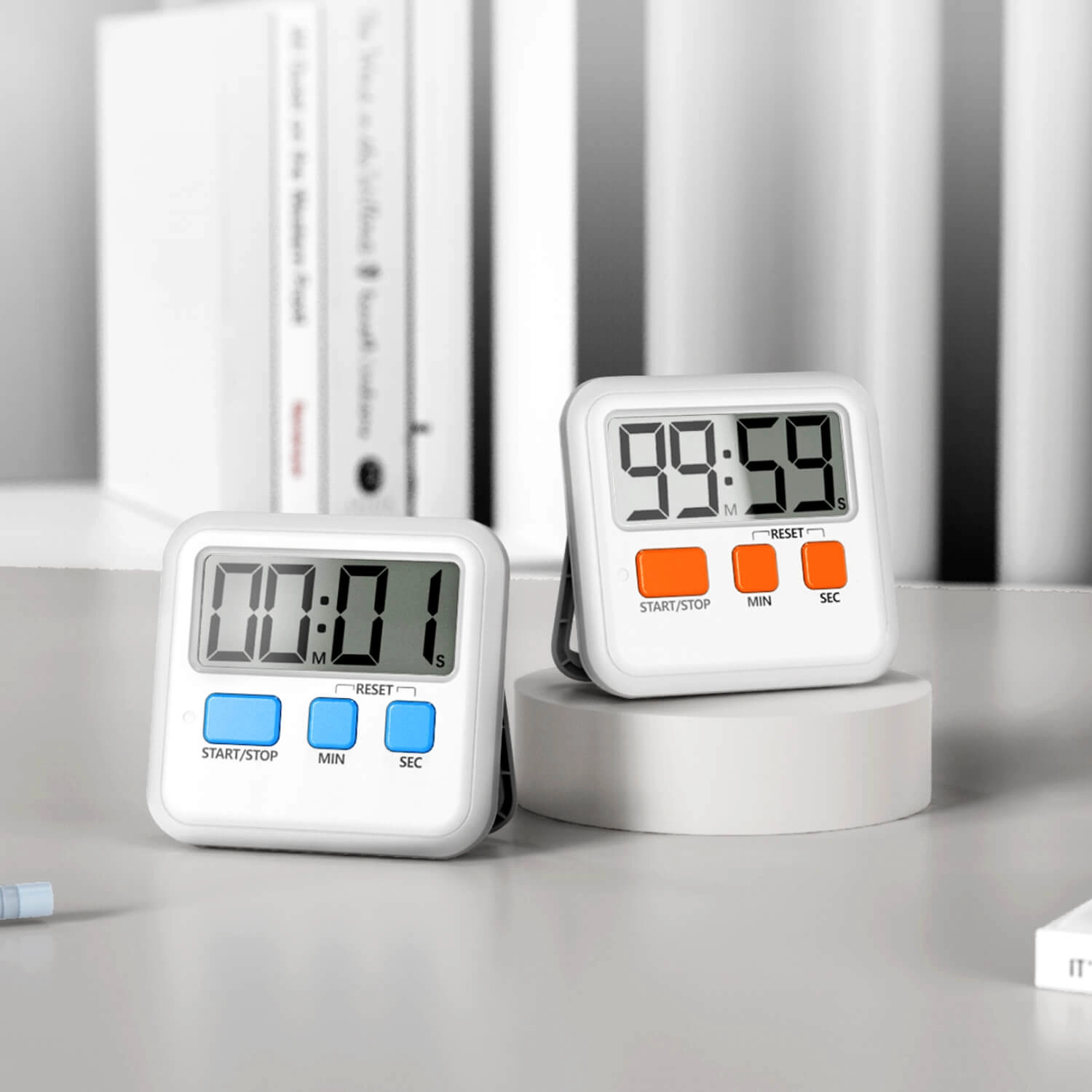
Controls should be assessed for tactile consistency, accidental activation resistance, labeling clarity, and accessibility. Buyers should test the unit while wearing gloves where relevant, operate it repeatedly with one hand, and confirm that audible and visual notifications can be independently adjusted. A well-designed enclosure should prevent dust ingress around buttons, avoid sharp edges, and remain stable on desks or wall mounts. These details reduce returns that are often incorrectly attributed to electronic failure.
Materials, battery performance, and mechanical durability
Material selection affects safety, appearance, weight, odor, scratch resistance, and long-term customer satisfaction. The supplier should identify the plastic grade, surface finish, magnets, adhesives, lenses, battery type, and packaging materials. For products using rechargeable cells, the evaluation must include charging protection, over-current control, thermal behavior, connector durability, and transport documentation. For replaceable-battery products, the battery compartment should resist incorrect insertion and remain secure after repeated opening.
Mechanical validation should include button-life testing, drop testing from an agreed height, vibration exposure, enclosure assembly checks, stand or mounting-force testing, and repeated battery-door operation. The precise method should match the intended market and product claim. Buyers should avoid accepting generic statements such as “high quality ABS” without a material specification, supplier declaration, or inspection result. The ISO 9001 quality management principles provide a useful framework for checking whether these requirements are managed through controlled processes rather than informal promises.
How to Audit a Supplier’s Engineering and Factory Controls
Review the product-development system
A capable OEM/ODM partner should explain its path from concept definition to industrial design, schematic development, printed circuit board layout, firmware, prototypes, tooling, pilot production, and mass production. Each stage should have approval gates, documented change control, and measurable acceptance criteria. Ask who owns the design files, whether component substitutions require approval, how engineering change orders are recorded, and how obsolete versions are prevented from entering production.
For private-label programs, industrial design and manufacturing design must be considered together. A visually distinctive enclosure is commercially valuable only when its draft angles, wall thickness, snap fits, screw bosses, parting lines, and cosmetic tolerances support repeatable production. Early design-for-manufacture analysis can reduce tooling revisions, assembly labor, cosmetic defects, and minimum-order risk. It also helps ensure that the branded product is differentiated without creating a repair or yield problem.
Examine incoming, in-process, and final inspection
Factory quality is best evaluated as a layered control system. Incoming inspection should verify electronic components, displays, plastics, batteries, labels, and packaging against approved specifications. In-process controls should monitor soldering, programming, assembly torque, display alignment, button operation, and firmware loading. Final inspection should combine functional tests with cosmetic, packaging, barcode, and accessory checks.
Ask for the supplier’s inspection plan, sampling standard, defect classification, calibration records, and corrective-action process. A documented nonconformance report should identify the defect, containment action, root cause, corrective action, responsible owner, and verification date. Buyers can also request a sample quality-control report with confidential commercial information removed. The presence of records is not enough; the records should connect to serial numbers, production dates, component lots, and firmware versions so that a field issue can be isolated quickly.
Validate compliance and market access
Regulatory requirements vary by destination, wireless capability, power architecture, battery configuration, and product claims. For electronic products sold in the European Economic Area, the manufacturer should explain which applicable directives and harmonized standards support the Declaration of Conformity. RoHS documentation should cover restricted substances in relevant materials and components; the European Commission RoHS Directive information is a useful reference for buyers reviewing substance restrictions.
Products with intentional or unintentional radio-frequency emissions may require additional evaluation in the United States. Buyers should distinguish between a supplier’s marketing statement and evidence appropriate to the product category, including test reports, labeling, user documentation, and, where applicable, FCC authorization. The FCC equipment authorization programs explain the relevant regulatory pathways. Electrical and electronic equipment safety should also be assessed against the applicable product standard; the IEC 62368-1 standard is widely used for audio, video, information, and communication technology equipment, although applicability must be confirmed for the specific design.
| Evaluation area | Weak sourcing evidence | Stronger approval evidence | Procurement implication |
|---|---|---|---|
| Timing function | Demonstration sample only | Defined tolerance, cycle test, firmware record | Lower risk of drift and inconsistent user experience |
| Materials | Generic plastic description | Material specification, approved sample, incoming inspection | Better control of appearance, safety, and durability |
| Production quality | Verbal inspection promise | Inspection plan, calibrated equipment, corrective-action records | More predictable yield and fewer returns |
| Compliance | Unverified logo or certificate image | Applicable test reports, technical file, Declaration of Conformity | Reduced market-access and customs risk |
| Traceability | Batch information unavailable | Lot, date, serial, component, and firmware linkage | Faster containment if a defect appears in the field |
| Customization | Logo placement only | Industrial design, tooling, firmware, packaging, and validation support | Greater brand differentiation and launch control |
Production-Scale Readiness and Total Cost of Ownership
Pilot runs, capacity, and consistency
A successful prototype does not prove mass-production readiness. Before a purchase order is released, buyers should request a pilot run that uses production-intent materials, tooling, firmware, assembly instructions, packaging, and inspection equipment. The pilot should measure first-pass yield, rework rate, cycle time, functional failure modes, cosmetic consistency, and carton performance. Golden samples should be approved and retained by both parties as the reference for future production.
Capacity should be evaluated against actual demand rather than a maximum figure printed in a presentation. Ask about injection-molding capacity, assembly lines, test stations, peak-season planning, component lead times, second-source strategy, and quality staffing. A vertically coordinated facility can reduce handoffs between design, tooling, assembly, and packaging, but buyers should still verify how departments share data and manage changes. Stable output is more valuable than a large theoretical monthly capacity that cannot meet the required defect rate or delivery window.
Packaging, logistics, and after-sales risk
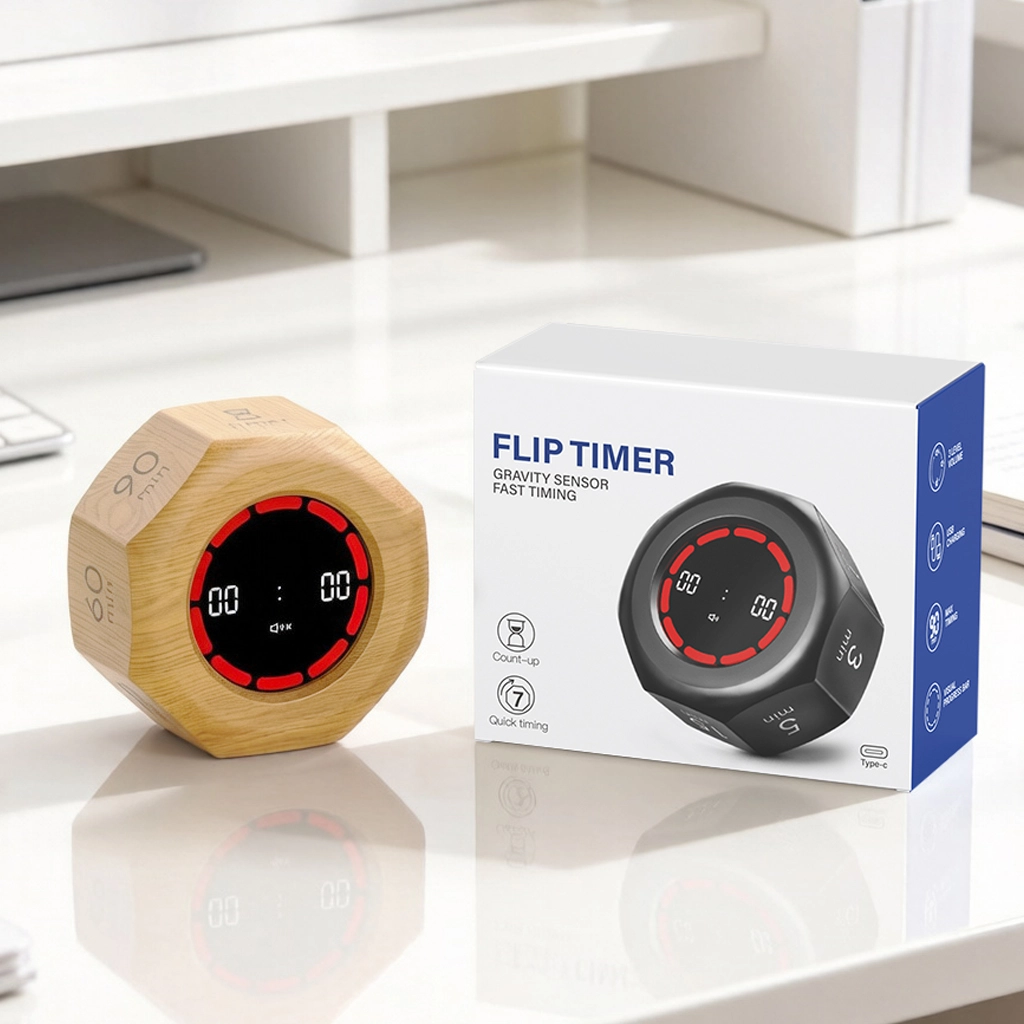
Retail-ready packaging is part of product quality because the package protects the timer during transport and communicates the product promise at the point of sale. Validation should include drop and compression testing appropriate to the shipping channel, barcode verification, accessory count, language accuracy, carton labeling, and protection against screen scratches. E-commerce sellers should also examine dimensional weight, parcel survivability, return packaging, and the availability of replacement parts.
Total cost of ownership includes more than the ex-factory price. Buyers should model tooling, engineering changes, compliance testing, packaging development, inspection, freight, warranty replacements, customer-service workload, and inventory obsolescence. A slightly higher unit price may be commercially preferable if it delivers lower failure rates, stronger retail presentation, faster issue resolution, and fewer negative reviews. Procurement decisions should therefore compare landed cost and risk-adjusted margin rather than unit price alone.
Why Youben life Fits Complex Private-Label Requirements
Integrated engineering and manufacturing capability
Youben life has operated since 2010 as an OEM/ODM specialist focused on Digital Timer products, Pomodoro timers, Visual Countdown Clocks, temperature and humidity monitors, and thermo hygrometers. Our 20,000m² facility in Guangzhou, China, supports a vertically integrated development and production model for global brands, distributors, and high-volume online sellers.
Our team supports the full R&D spectrum rather than limiting the service to logo application or final assembly. Industrial design and mechanical design are coordinated with precision mold tooling, electronic engineering, custom IC programming, firmware requirements, and production validation. This structure helps project owners move from a market brief to a differentiated time-management device with fewer communication gaps between creative, technical, and manufacturing decisions.
Compliance-focused product execution
Our quality approach is designed for products that must perform consistently across retail and professional environments. Youben life products meet applicable CE, FCC, and RoHS requirements, with project documentation and testing aligned to the destination market and product configuration. Compliance is treated as a development input, not an artwork-stage addition, which helps reduce late redesigns caused by emissions, material, labeling, or safety concerns.
For buyers assessing a long-term supplier, this combination of engineering experience and scalable production capacity supports repeatable inspection, controlled product changes, and more reliable launch planning. Our manufacturing process can be structured around approved samples, defined specifications, pilot validation, production testing, and retail packaging verification. These controls are particularly valuable for products where a small display defect, inconsistent alarm, weak stand, or incorrect firmware setting can quickly generate returns and customer complaints.
Product breadth and brand-building support
Our portfolio enables complementary product strategies across productivity, home organization, education, wellness, and environmental monitoring. A brand may launch a focused Pomodoro timer, extend into a larger visual countdown clock, or build a related range with a thermo hygrometer and temperature humidity monitor. Shared expertise in displays, housings, controls, packaging, and firmware can simplify portfolio development while preserving distinct industrial-design directions.
Turnkey support includes concept refinement, custom appearance, tooling, electronics, software configuration, compliance coordination, mass production, and retail-ready packaging. This helps brand owners compete on usability, visual identity, and feature relevance instead of entering the market with an undifferentiated generic digital timer. For project discussion, product selection, and private-label planning, buyers can review Youben life’s product capabilities and contact the team at info@youbenlife.com.
Contact Youben life at info@youbenlife.com to discuss a quality-controlled OEM/ODM digital timer project or review the product range at https://www.youbenlife.com/.
Frequently Asked Questions
What quality documents should buyers request from a digital timer supplier?
Buyers should request product specifications, timing-tolerance reports, firmware records, inspection plans, calibration records, material documentation, applicable compliance test reports, a Declaration of Conformity where relevant, packaging validation, and corrective-action records.
How can a buyer verify Pomodoro timer accuracy before mass production?
The buyer should require a written timing specification and a pilot test covering countdown duration, pause and resume behavior, reset logic, repeated cycles, battery-voltage conditions, and operation across agreed environmental limits.
Why is a pilot production run important for private-label timers?
A pilot run uses production-intent tooling, materials, firmware, assembly methods, packaging, and inspection equipment, allowing the buyer to measure yield, rework, cosmetic consistency, functional defects, and shipping protection before full-scale production.
What compliance areas matter for electronic countdown products?
Requirements depend on the destination market and product configuration. Buyers should review applicable CE-related obligations, RoHS substance restrictions, FCC requirements where relevant, electrical safety considerations, labeling, user instructions, and supporting technical documentation.
What should be included in a supplier’s traceability system?
A robust system links production records to batch or serial information, production dates, component lots, firmware versions, inspection results, and corrective actions so that any field issue can be isolated and contained efficiently.
Can Youben life support custom branding and product development?
Yes. Youben life provides OEM/ODM support covering industrial design, mechanical design, custom IC programming, precision mold tooling, electronics, firmware configuration, compliance coordination, mass production, and retail-ready packaging for digital timers and related monitoring products.
OEM & Private Label Smart Focus Timers for Retailers
Wireless, Bluetooth, and Wi-Fi Digital Smart Timers: Pros and Cons
How to Choose an Indoor Room Thermometer Supplier: Buyer’s Guide
Visual Timer Manufacturer Supplier Evaluation Checklist for Professional Procurement Teams
Interested in this article?
Let’s talk.
Need specifications, pricing, or customization options? We’ll provide everything you need.

Youben life
Youben life