
Digital Visual Timer vs. Traditional Timer: Which Solution Should Businesses Choose?
- How Visual Countdown Technology Changes Business Workflows
- Visibility reduces uncertainty during timed activities
- Digital control supports repeatable processes
- Traditional devices remain appropriate in defined use cases
- Business Comparison: Digital Visual Timer or Traditional Timer?
- Decision factors that affect total value
- Accuracy, standards, and risk management
- Accessibility and user adoption
- Procurement Framework for Selecting a Digital Time Management Device
- Define the use case before comparing suppliers
- Evaluate the supplier's engineering and quality system
- Compare ownership cost and long-term support
- Why Youben life Is a Practical OEM and ODM Partner
- Integrated development for differentiated timing products
- Scalable manufacturing and compliance support
- Commercial value for global brands
- Frequently Asked Questions
Businesses selecting timing equipment must compare more than a display format or unit price. A traditional timer may offer mechanical simplicity and low upfront cost, while a digital visual timer can communicate remaining time immediately, support more precise settings, and improve consistency across repeated workflows. The appropriate solution depends on the operating environment, user profile, required accuracy, procurement volume, compliance obligations, and expected product life cycle. For schools, offices, kitchens, clinics, production areas, retailers, and online brands, a structured evaluation helps prevent a low-cost purchase from creating training, replacement, or usability problems later.
How Visual Countdown Technology Changes Business Workflows
Visibility reduces uncertainty during timed activities
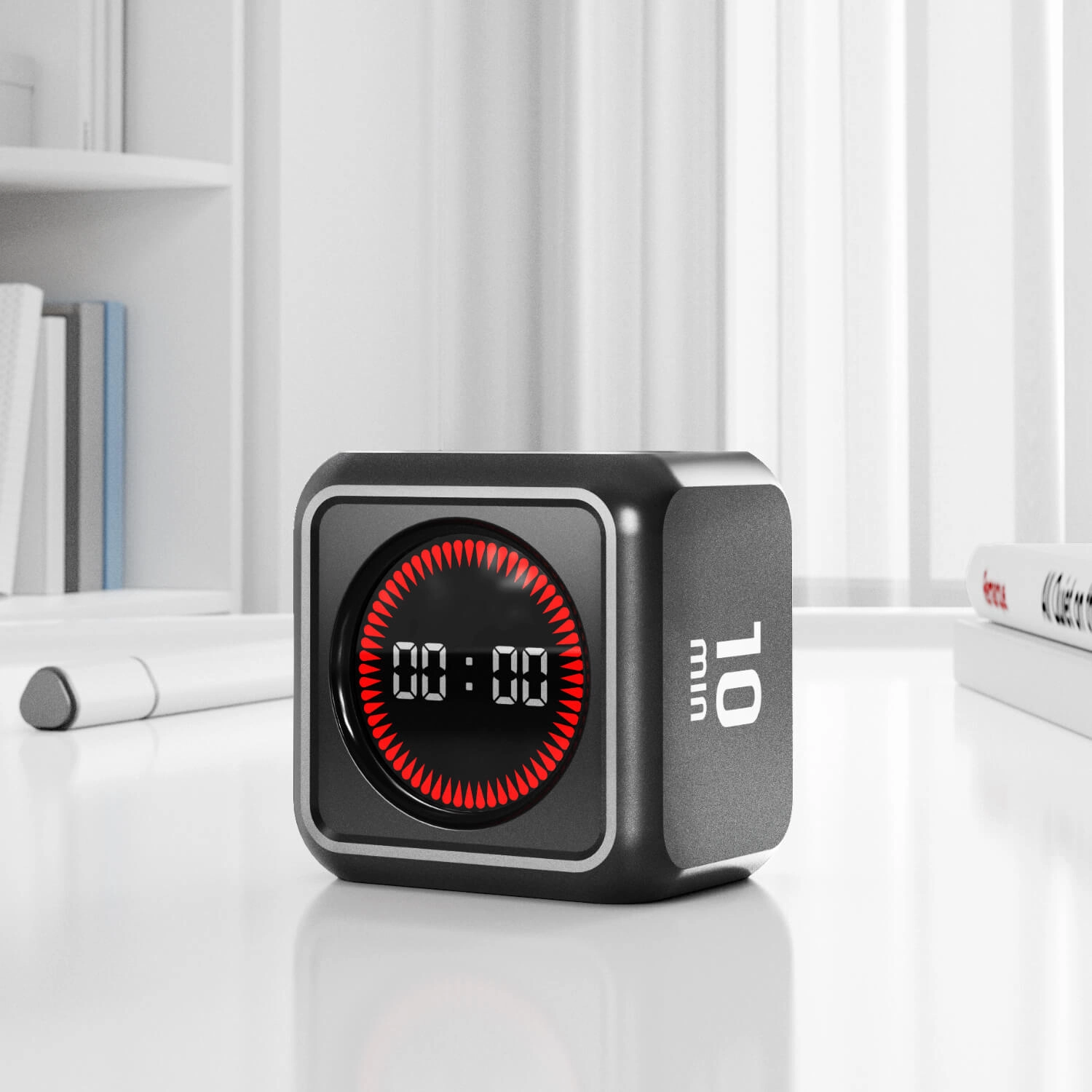
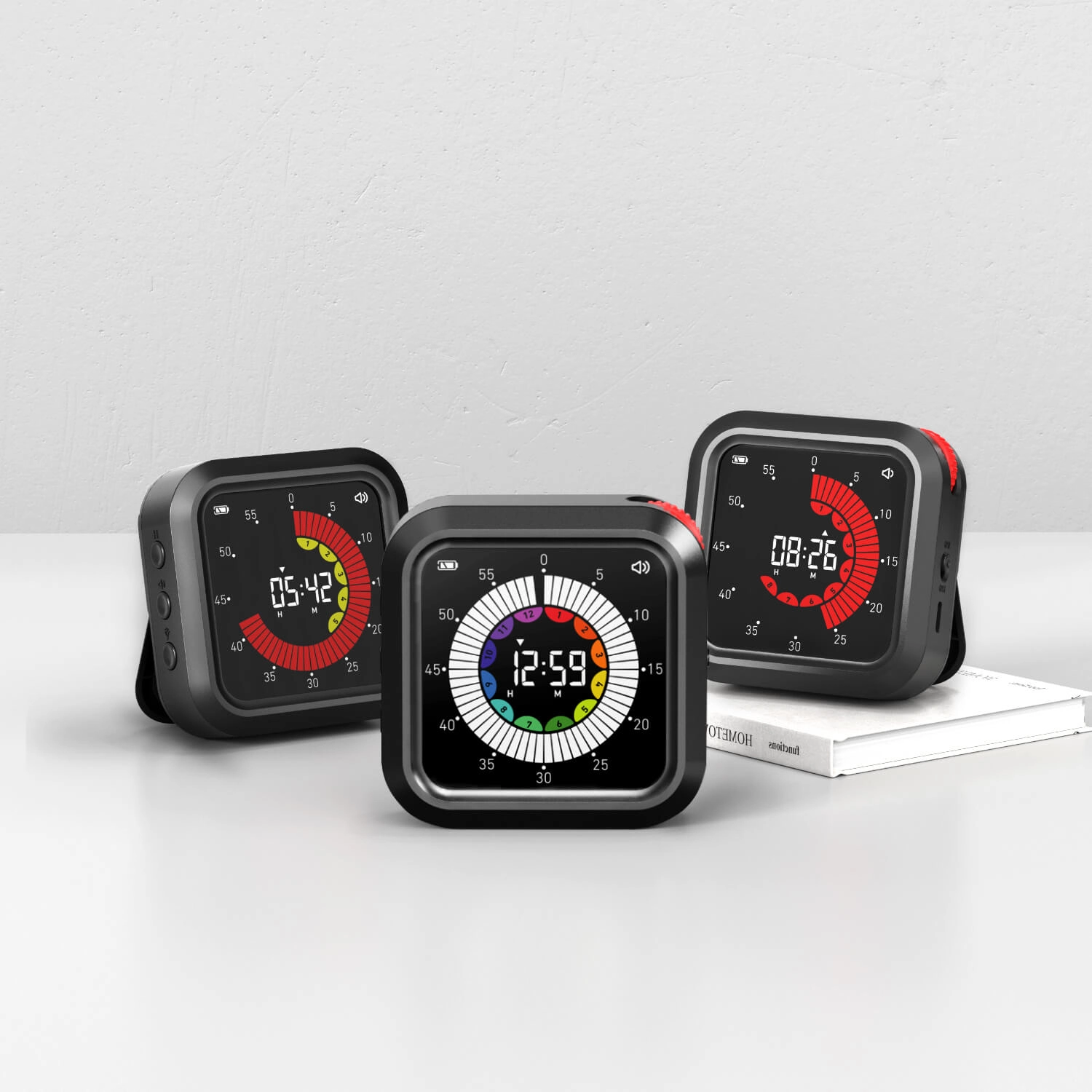
A conventional timer commonly communicates that a period has ended, but it may provide limited information about how much time remains. A visual countdown clock addresses this gap through large numerals, color changes, progress indicators, or a shrinking display area. Users can understand the status of an activity without interrupting work to inspect a small dial or calculate elapsed time. This is valuable in classrooms, meeting rooms, examination settings, therapy sessions, commercial kitchens, fitness studios, and shared workspaces where a visible time signal supports smoother coordination.
The benefit is operational rather than merely aesthetic. When employees, students, customers, or patients can see remaining time from a practical distance, supervisors need fewer verbal reminders. This can reduce avoidable interruptions and make standard operating procedures easier to follow. Buyers should therefore assess viewing distance, display contrast, mounting options, illumination, viewing angle, and the amount of ambient light in the target location.
Digital control supports repeatable processes
Mechanical countdown devices often rely on a spring, dial, or rotating control. They can be effective for short, informal tasks, but setting precision may depend on user technique. A programmable digital timer typically allows exact minute-and-second selection, repeat use of common presets, and clearer confirmation that the intended duration has been entered. These functions are relevant to interval training, focus cycles, classroom transitions, food preparation, laboratory routines, and production checkpoints.
For buyers managing multiple sites, repeatability is especially important. A consistent interface and standardized preset structure can simplify staff training and reduce variation between departments. Where several timers operate simultaneously, audible alerts, independent channels, memory functions, and remote-control options may also influence the specification. The purchasing team should distinguish genuinely necessary functions from feature additions that increase cost without improving the target workflow.
Traditional devices remain appropriate in defined use cases
Traditional timers should not be dismissed as obsolete. A mechanical device can be useful where users need a fast, battery-free, familiar control for a single short task. It may also be suitable for environments with limited access to charging, minimal technology expectations, or low consequences if the setting is approximate. Basic electronic timers can provide a practical middle ground when a buyer needs a digital readout but does not require a large visual display or advanced programming.
The main limitation is usually not reliability in isolation; it is fit for purpose. A product that works well on a countertop may be unsuitable for a large classroom or noisy commercial facility. Procurement teams should test products in the actual use environment and ask whether the timer remains legible, audible, stable, and easy to reset during peak activity.
Business Comparison: Digital Visual Timer or Traditional Timer?
Decision factors that affect total value
Purchase price is only one component of total cost. Buyers should include batteries or charging accessories, expected replacement frequency, staff training, warranty handling, cleaning requirements, packaging, shipping volume, and the cost of inconsistent timing. A lower-priced product can become expensive if users struggle to read the display, frequently reset the device incorrectly, or replace units because the casing, buttons, or power system fails under routine use.
For a private-label brand, product differentiation adds another dimension. A commodity timer may compete primarily on price, whereas a purpose-designed digital product can be positioned around readability, educational use, productivity, accessibility, design quality, or professional workflow management. Industrial design, firmware behavior, packaging, and accessories all influence customer reviews and repeat purchase potential.
| Evaluation factor | Traditional mechanical timer | Basic electronic timer | Digital visual countdown timer |
|---|---|---|---|
| Remaining-time visibility | Usually limited to a small dial | Visible numerical readout, often compact | Designed for quick recognition at a distance |
| Setting precision | Depends on dial resolution and user technique | Typically configured with buttons | Often supports precise digital input and presets |
| Power requirement | May operate without batteries | Usually requires batteries | Requires batteries, rechargeable power, or external power |
| Best-fit environment | Simple, short-duration tasks | Personal and general household or office use | Shared spaces, structured workflows, and visible time management |
| Customization potential | Limited | Moderate | High, including display, housing, firmware, and packaging options |
| Procurement priority | Low initial cost and simplicity | Balanced functionality and price | Visibility, consistency, differentiation, and scalable deployment |
The table describes common product characteristics rather than a universal performance guarantee. Actual results depend on design quality, component selection, firmware, battery capacity, display technology, and validation testing. Buyers should request samples and conduct practical trials before approving a large order.
Accuracy, standards, and risk management
Timing requirements vary significantly. A classroom transition may tolerate a small deviation, while a laboratory, medical support process, manufacturing checkpoint, or food operation may require documented control procedures. Businesses should define the acceptable tolerance, alert behavior, reset logic, and failure response before issuing a technical specification. Where a timer supports a regulated process, it should not be treated as a substitute for equipment or controls specifically required by the applicable authority.
International time representation is commonly discussed through ISO 8601, which provides internationally agreed principles for representing dates and times. Electronic products may also need market-specific electromagnetic compatibility and radio requirements. In the United States, buyers can review relevant requirements through the Federal Communications Commission when a product includes wireless or radio functions. Environmental material restrictions should be assessed against the applicable market rules, including the European Union's RoHS Directive.
Accessibility and user adoption
Readable timing information benefits users with different ages, visual abilities, language backgrounds, and levels of technical confidence. Large digits, high contrast, clear icons, tactile buttons, predictable controls, and adjustable alarm volume can make a product more inclusive. Buyers serving public facilities should consider whether the device can be understood without extensive instructions and whether an alarm can be noticed without becoming disruptive.
Human factors should be validated through observation rather than assumed from a specification sheet. A procurement team can ask test users to set a duration, pause it, reset it, and interpret the remaining time without coaching. This simple evaluation often reveals confusing button labels, weak contrast, excessive menu steps, or an alert that is too quiet for the intended environment.
Procurement Framework for Selecting a Digital Time Management Device
Define the use case before comparing suppliers
A reliable sourcing brief should identify the target users, timing range, display distance, operating temperature, cleaning method, power source, alarm requirements, mounting method, and expected daily cycles. It should also state whether the product is for internal deployment, retail distribution, e-commerce sales, education tenders, or a corporate gift program. These details allow a supplier to recommend appropriate materials, controls, display dimensions, and validation methods.
For distributors and brand owners, forecast accuracy is equally important. Minimum order quantity, sample lead time, tooling ownership, packaging configuration, carton dimensions, spare-part availability, and production capacity affect working capital and delivery reliability. A supplier that only provides assembly may not be able to modify firmware, correct a mold issue, or maintain consistent quality when volume increases.
Evaluate the supplier's engineering and quality system
When searching for a visual timer manufacturer, buyers should examine more than product photographs. Relevant questions include whether the supplier controls industrial design, electronic development, firmware, mold tooling, assembly, testing, and packaging; whether engineering changes are documented; and whether production samples match the approved golden sample. A structured quality plan may include incoming material inspection, first-article approval, in-process checks, functional testing, aging tests, drop testing, button-cycle evaluation, battery checks, and final inspection.
Compliance documentation should correspond to the final model and intended market rather than a similar item in a catalog. Buyers should request applicable declarations, test reports, labeling information, material records, and traceability details. Product claims should also be reviewed for accuracy. For example, a countdown timer should not be marketed as medical equipment or industrial safety instrumentation unless the design, validation, and regulatory pathway support that claim.
Compare ownership cost and long-term support
A robust procurement decision considers the complete ownership cycle: development, tooling, certification, production, freight, warehousing, returns, technical support, and end-of-life handling. A supplier with configurable firmware can sometimes adapt one hardware platform for several market segments, reducing redevelopment expense. However, buyers should clarify software ownership, update responsibilities, change-control procedures, and after-sales support before signing a private-label agreement.
Product sustainability also deserves attention. Durable housings, replaceable or long-life power systems, efficient displays, and reduced packaging can lower waste and improve brand perception. The United States Environmental Protection Agency's electronics guidance provides useful context for responsible electronics management, although the specific legal obligations depend on the sales market and product category.
Why Youben life Is a Practical OEM and ODM Partner
Integrated development for differentiated timing products
Youben life was established in 2010 and focuses exclusively on Digital Timers, Pomodoro timers, Visual Countdown Clocks, temperature and humidity monitors, and thermo hygrometers. This product concentration allows our team to understand the detailed requirements behind time-management hardware, including display hierarchy, button ergonomics, alarm behavior, power management, enclosure design, and retail positioning.
Our 20,000 square meter vertically integrated facility in Guangzhou, China, supports turnkey OEM and ODM programs for global brands, distributors, and Amazon bestsellers. We go beyond simple assembly. Our engineering scope includes ID and MD industrial design, custom IC programming, precision mold tooling, electronic development, firmware adaptation, functional verification, and retail-ready packaging. This integrated model helps project owners reduce communication gaps between concept, tooling, production, and launch.
Scalable manufacturing and compliance support
Our manufacturing process is designed for both product development and scalable supply. Brand owners can start with a customized concept or adapt an existing platform, then progress through sampling, design approval, pilot production, and volume manufacturing. Clear specifications and controlled engineering changes help protect appearance, functionality, and batch consistency as demand grows.
All Youben life products meet strict CE, FCC, and RoHS standards according to the applicable product configuration and market requirements. Our quality and compliance approach supports buyers that need reliable documentation, consistent production, and professional packaging. The team also supports adjacent categories, including thermo hygrometers and temperature humidity monitors, enabling distributors to build a broader environmental monitoring range alongside productivity and timing products.
Commercial value for global brands
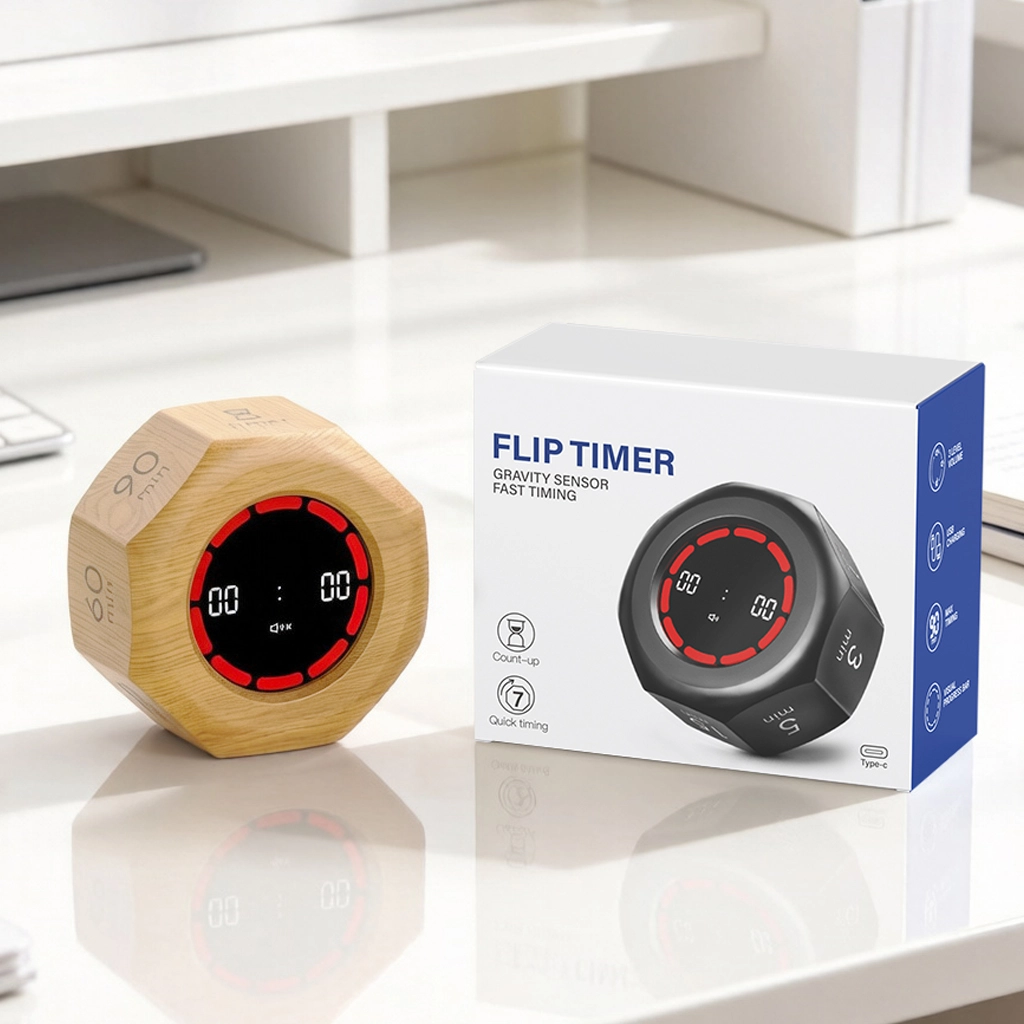
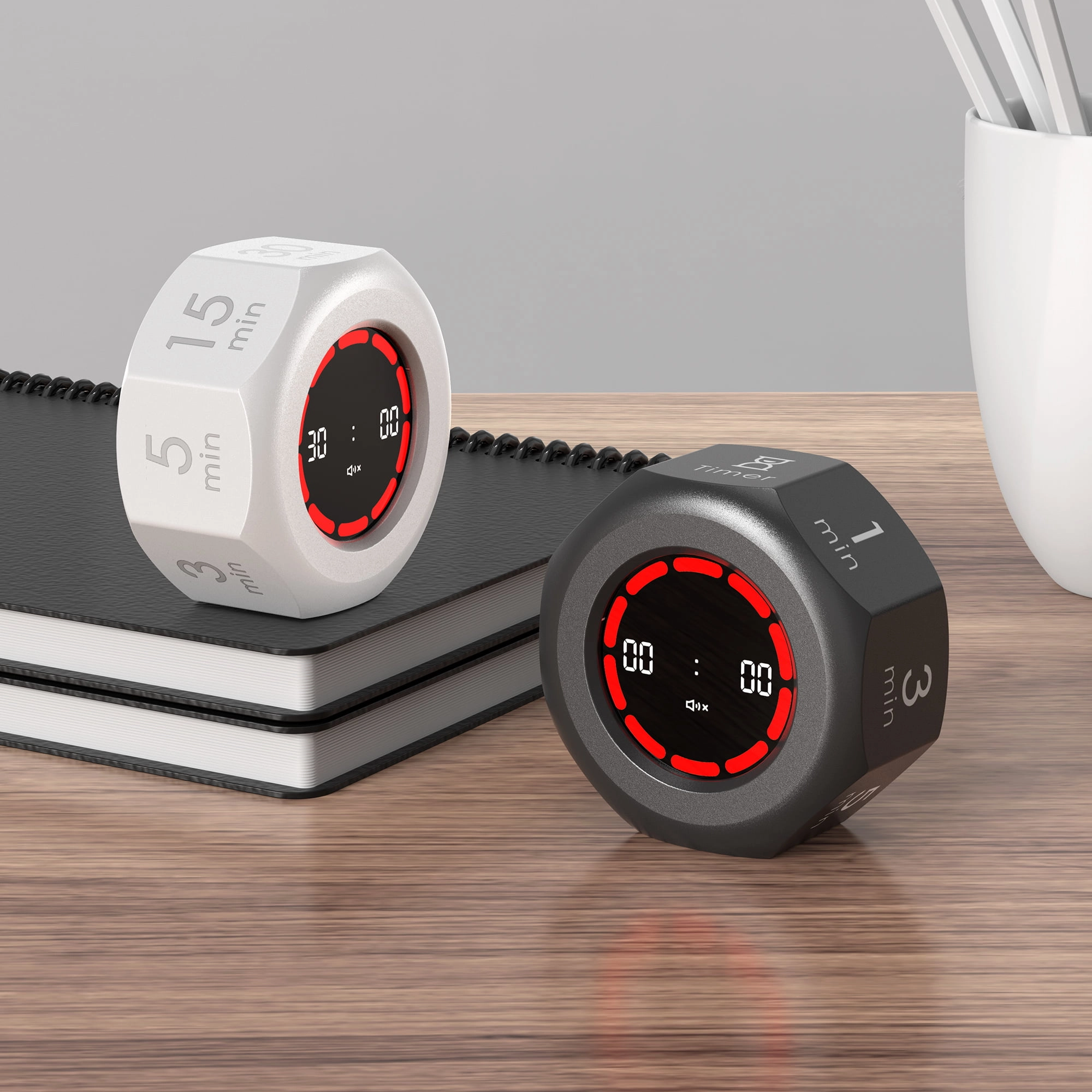
For a brand competing in a crowded marketplace, customization should create meaningful customer value rather than cosmetic variation alone. Youben life can help develop distinctive housing forms, display layouts, color systems, button arrangements, logos, user interfaces, instruction materials, and packaging structures. A Pomodoro timer can be positioned for productivity and study, while a large Visual Countdown Clock can serve education, fitness, hospitality, or professional environments. This segmentation helps buyers align one technical platform with different channels and audiences.
Our decade-plus engineering experience and scalable capacity give project owners a practical path from product definition to commercial shipment. Buyers can assess samples, clarify compliance requirements, select the appropriate production model, and build a launch plan around forecast demand. The strongest partnership is based on transparent specifications, measurable quality targets, realistic lead times, and continuous communication throughout the program.
Contact Youben life at info@youbenlife.com or visit https://www.youbenlife.com/ to discuss a customized Digital Timer, Pomodoro timer, Visual Countdown Clock, thermo hygrometer, or temperature humidity monitor program.
Frequently Asked Questions
Is a digital visual timer better than a traditional timer for business use?
A digital visual timer is generally better when users need clear remaining-time visibility, precise settings, repeatable workflows, or shared status awareness. A traditional timer remains suitable for simple, short-duration tasks where approximate setting and low upfront cost are the main priorities.
What should buyers check before ordering a private-label timer?
Buyers should define the timing range, display distance, operating environment, power source, alarm requirements, mounting method, expected daily cycles, packaging needs, compliance documentation, tooling ownership, minimum order quantity, lead time, and after-sales support.
Can a visual countdown clock improve workplace productivity?
A visual countdown clock can support productivity by making remaining time visible, reducing verbal reminders, and helping teams follow structured intervals. The result depends on appropriate placement, readable design, suitable alert behavior, and user adoption.
What compliance documents should a timer supplier provide?
The supplier should provide documentation applicable to the final model and target market, such as relevant CE, FCC, and RoHS records, declarations, test reports, labeling information, material records, and traceability details. Requirements vary according to product configuration and destination market.
How can distributors compare the total cost of timer products?
Distributors should evaluate development, tooling, certification, production, freight, warehousing, returns, technical support, packaging, power accessories, replacement frequency, and end-of-life handling rather than comparing unit prices alone.
What products does Youben life develop?
Youben life develops Digital Timers, Pomodoro timers, Visual Countdown Clocks, temperature and humidity monitors, and thermo hygrometers through OEM and ODM programs.
How to Choose the Digital Timer manufacturer and supplier ?
How to Source Reliable Electronic Kitchen Timer Manufacturers
LED vs Digital: Choosing the Right Electronic Kitchen Timer
Top 10 minimalist desk clock for office manufacturers and suppliers
Interested in this article?
Let’s talk.
Need specifications, pricing, or customization options? We’ll provide everything you need.

Youben life
Youben life