
Digital Visual Countdown Timer Specifications: Display Size, Visibility, Controls, and Accuracy
- How to define requirements for a visible countdown display
- Match digit size to distance and viewing conditions
- Specify visibility, brightness, and mounting together
- Choose a display format suited to the task
- Controls, accuracy, and reliability in daily operation
- Design controls around users and workflow
- Set accuracy and resolution as separate requirements
- Check power continuity and operating environment
- Procurement, acceptance testing, and supplier assessment
- Build a practical acceptance test
- Assess lifecycle cost and documentation
- Product fit and implementation support
- Connect product categories to buyer requirements
- Make supplier discussions technically useful
- Frequently Asked Questions
A digital visual countdown timer should be specified around the people who need to read it, the environment in which it will operate, and the consequences of timing error. Buyers should evaluate display dimensions and digit height, contrast and brightness, viewing angle, control accessibility, countdown range, resolution, accuracy, power continuity, mounting, and environmental suitability as one coordinated system. There is no single display size or accuracy tolerance appropriate for every installation: a small desk timer, a classroom wall display, and a production-area unit have different viewing distances and operational risks. The most reliable procurement process defines measurable requirements, asks suppliers for test evidence, and validates the selected model under actual site conditions.
How to define requirements for a visible countdown display
Specification work should begin with the operating scenario rather than a preferred product shape. A timer used by one person at a desk may prioritize simple buttons and low brightness, while a shared wall-mounted unit may need large digits, high contrast, and controls that cannot be changed accidentally. Procurement teams should document the function, location, users, viewing positions, expected timing duration, and any consequences of a missed or unclear display before comparing models.
Match digit size to distance and viewing conditions
Display size is not just the overall width of the enclosure. The relevant measurement is the height and stroke width of the numerals, combined with contrast, viewing angle, ambient light, and whether the observer is moving. A large case with small digits can be less readable than a compact unit with a well-proportioned display. Buyers should request dimensioned drawings or photographs with a scale reference, then assess the intended digits from the farthest routine viewing point and from likely side angles.
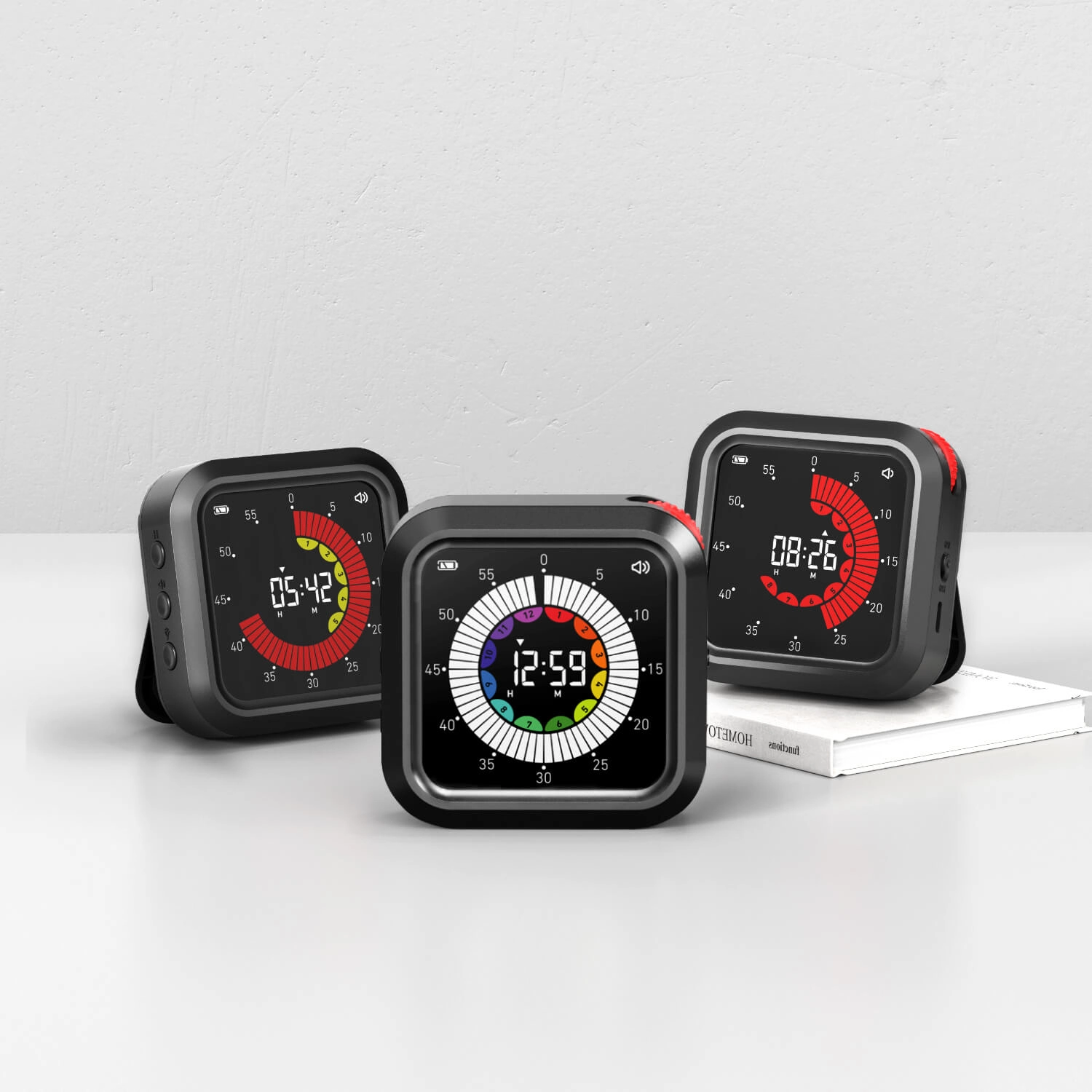
For shared spaces, check whether the display presents hours, minutes, and seconds in a format that remains clear at the required distance. Colon indicators, leading zeroes, and status icons should not compete with the remaining-time value. If the timer is used during presentations or group activities, a quick site trial is more dependable than judging legibility from a product image. Test in the room’s normal lighting and include any glare from windows, polished surfaces, or overhead luminaires.
Specify visibility, brightness, and mounting together
Visibility depends on the combination of numeral size, luminous intensity, background, viewing direction, and ambient illumination. A display that is easy to read in a dim office may wash out in a bright room; a very bright display can cause discomfort or distract users in a dark space. Ask whether brightness is fixed, manually adjustable, or automatically controlled, and verify that any automatic adjustment behaves predictably during transitions between lighting conditions.
Mounting also affects readability and security. Confirm the viewing angle from seated and standing positions, the available wall or tabletop area, cable routing, and whether users can reach the controls. If the unit is mounted above normal reach, remote control or a protected setting mode may be necessary. As a reference for assessing visual display ergonomics, buyers can review ISO 9241-303; its scope concerns electronic visual displays, so it should inform evaluation rather than be treated as a product-specific timer certification.
Choose a display format suited to the task
Count-up, countdown, interval, and preset-cycle functions support different workflows. A remaining-time display should make the active mode obvious and show whether the timer is running, paused, or complete. For repetitive sessions, presets can reduce setup time, but the interface should make the selected duration visible before starting. If timing is part of a safety-critical or regulated process, a consumer visual timer should not be assumed to replace a validated control system, alarm, or calibrated instrument without an appropriate risk assessment.
Controls, accuracy, and reliability in daily operation
Strong specifications account for the full operating sequence: setting the duration, starting, pausing, resuming, resetting, and responding when time expires. A timer that is technically accurate but easy to start incorrectly can create more operational risk than a simpler model with clear controls. Evaluate setup errors, accidental button presses, reset behavior, and how quickly a new user can understand the interface.
Design controls around users and workflow
Buttons should be distinguishable by position, shape, labeling, or tactile feedback. Buyers should confirm whether a long press differs from a short press, whether setting changes are saved automatically, and whether the timer can be locked after configuration. For environments with gloves, frequent cleaning, or users with limited dexterity, small touch controls may be unsuitable. A physical button interface may be more dependable where users need to operate the unit quickly without navigating menus.
Consider who is authorized to change presets and whether an accidental reset would disrupt a session or process. For group use, a clear start/pause control and a deliberate reset action can reduce interruptions. If remote control is offered, clarify its range, line-of-sight requirements, pairing method, battery replacement process, and behavior when the remote is unavailable. These details belong in the purchase specification because they affect maintenance and usability over the product lifecycle.
Set accuracy and resolution as separate requirements
Resolution describes the smallest displayed time increment, while accuracy describes how closely elapsed or remaining time corresponds to the intended time interval. A display that changes in one-second steps is not automatically accurate to one second over a long period. Buyers should state the required countdown range, display resolution, and acceptable timing error over a defined interval, such as a complete operating cycle or a specified number of hours. The tolerance should reflect the application, not an unsupported assumption that all digital units perform alike.
Ask suppliers how accuracy is measured, under what operating conditions, and whether the figure applies across the full countdown range. Testing should compare the timer with a traceable reference time source or suitable calibrated measurement equipment. The NIST time services page describes authoritative time services, while the NIST explanation of the second provides background on the SI unit of time. These references establish timekeeping context; they do not certify a particular consumer timer or define its allowable error.
Check power continuity and operating environment
Power design influences whether a timer preserves its setting and continues its countdown during an outage. Confirm whether the product uses replaceable batteries, rechargeable cells, USB power, an AC adapter, or a combination. Ask what happens when external power is interrupted: does the display go blank, retain the remaining time, resume automatically, or reset? For installations where interruption matters, test the precise behavior rather than relying on a general statement such as backup supported.
Temperature, humidity, dust, vibration, and cleaning practices can affect performance and service life. Request the supplier’s specified operating and storage conditions, enclosure details, and any stated ingress or safety ratings. Electrical and electronic equipment safety requirements vary by product category and market; the IEC 62368-1 standard is a product safety standard for audio/video, information, and communication technology equipment, but buyers should verify whether it applies to the particular timer and the destination market. Do not infer compliance from appearance or from a supplier’s use of a standard’s name without relevant documentation.
| Specification area | Shared room or classroom | Desk or personal session | Production or facility setting | Buyer validation |
|---|---|---|---|---|
| Digit visibility | Prioritize readable numerals from the farthest normal seat | Prioritize close-range clarity and comfortable brightness | Assess long-distance sightlines and ambient glare | View the live unit from actual user positions |
| Controls | Use clear start/pause and deliberate reset behavior | Favor quick setup and easy preset selection | Consider restricted settings or a control lock | Run representative users through the operating sequence |
| Timing performance | Define resolution and acceptable error for the activity | Check that session duration and alert behavior suit the routine | Set tolerance from process risk and document the test interval | Compare against an appropriate reference time source |
| Power and installation | Check mounting, cable routing, and interruption behavior | Check portability and battery replacement | Check supply stability and environmental limits | Test installation and power interruption at the site |
The table provides a procurement framework, not universal performance thresholds. Buyers should convert each applicable cell into a measurable acceptance criterion, then record the sample tested, operating conditions, and result. This makes supplier comparisons more consistent and helps prevent a low purchase price from obscuring usability or maintenance costs.
Procurement, acceptance testing, and supplier assessment
Comparing products solely by listed features can miss how they perform once installed. Procurement teams should request a technical datasheet, user instructions, dimensional drawings, power details, environmental limits, warranty terms, and applicable market-compliance documentation. For branded or private-label projects, also confirm customization options, minimum order quantities, packaging, production lead times, sample approval steps, and change-control procedures. The level of documentation should match the project’s risk and scale.
Build a practical acceptance test
A useful test plan includes first-use setup, start and pause operation, changing a preset, reset behavior, end-of-countdown indication, power interruption, and a timing check over the intended cycle. Evaluate visibility from each critical position under normal and challenging lighting. Record whether users can distinguish the timer’s active state and whether they can operate it without unintended resets. For a multi-unit deployment, inspect representative production samples and confirm that labeling, firmware behavior, and packaging match the approved sample.
Acceptance criteria should be unambiguous. Instead of requiring a large display, specify the viewing distance and the minimum digit height or a user-tested pass condition. Instead of requiring high accuracy, define an allowable error, reference method, and test duration. Instead of asking for reliable backup, define the expected behavior during a power loss. Clear requirements improve quotation quality and create a defensible basis for incoming inspection and supplier corrective action.
Assess lifecycle cost and documentation
Unit price is only one part of total cost. Battery replacement, charging accessories, mounting hardware, replacement availability, service response, packaging damage, and training can affect the cost of ownership. For distributors and brand owners, consistency across batches and dependable documentation also matter: discrepancies between samples and mass production can lead to returns, installation delays, and customer-service expenses.
Request clarification when specifications use undefined terms such as industrial grade, high precision, or long range. Ask for the underlying test method and the conditions in which the claim was verified. Where a supplier cannot provide a formal report, a documented sample evaluation can still reduce risk, provided the buyer records the acceptance criteria and results. The goal is not to add unnecessary complexity, but to make product claims comparable and operationally meaningful.
Product fit and implementation support
In the latter stages of selection, align the timer type with the wider product or distribution strategy. Shared countdown displays, focus-session products, and environmental monitoring devices solve different needs, but buyers may source them through related product programs. A consistent approach to specifications, packaging, and quality checks can simplify assortment planning without treating distinct products as interchangeable.
Connect product categories to buyer requirements
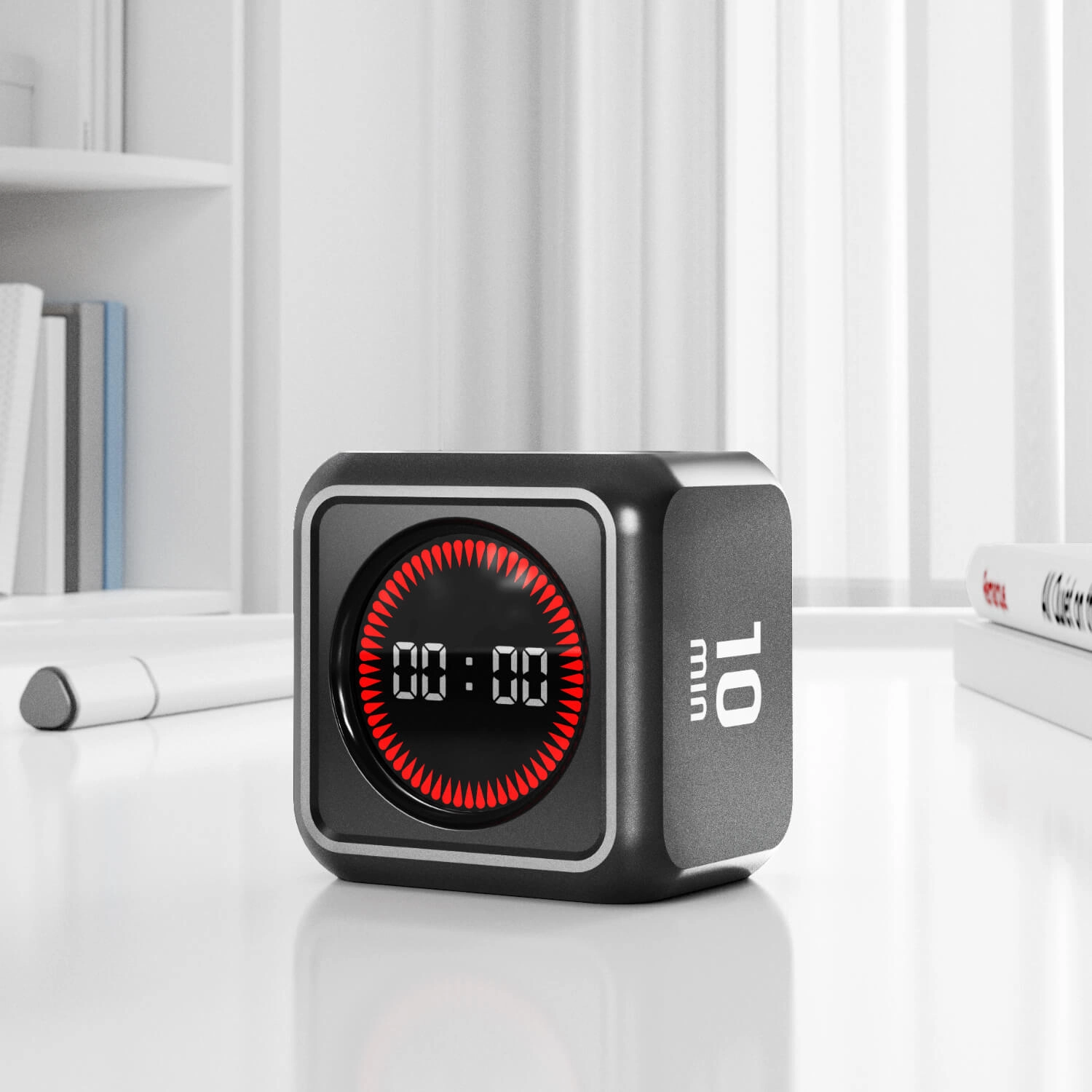
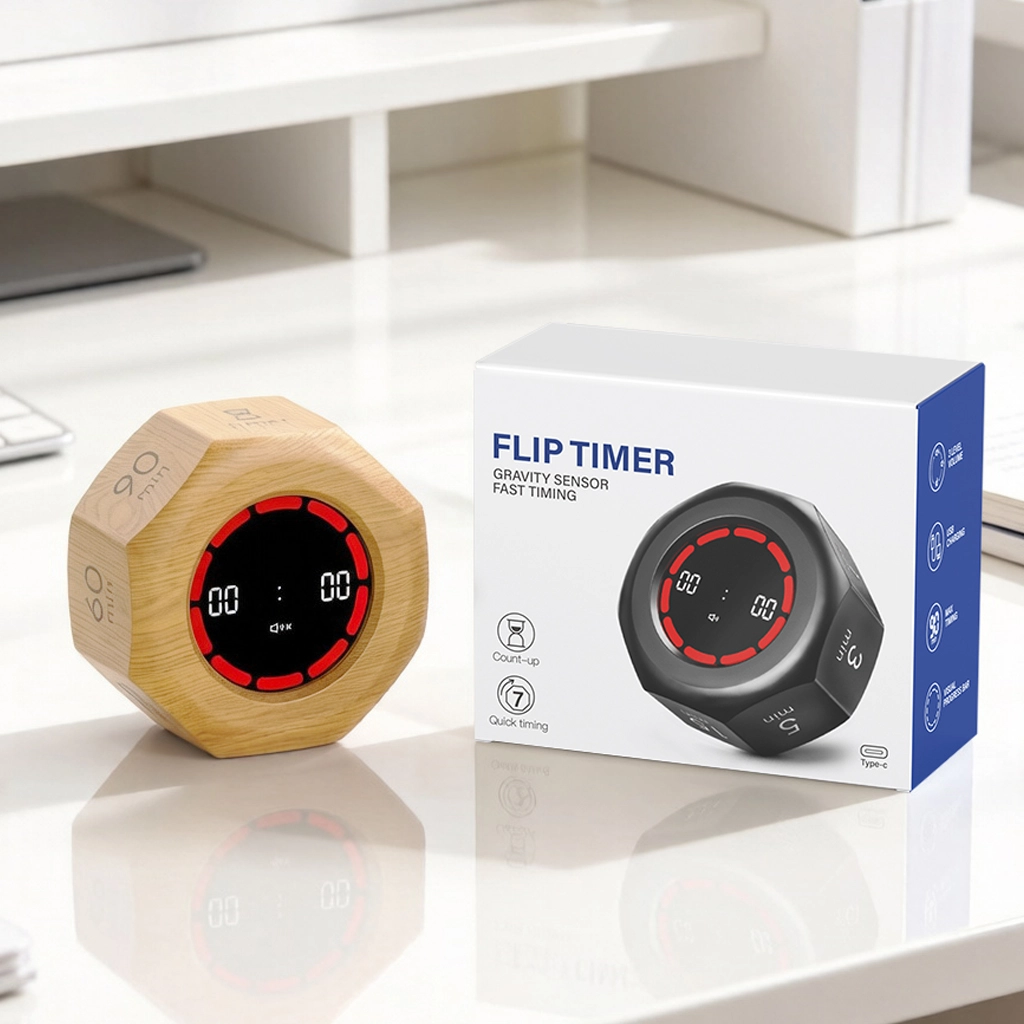
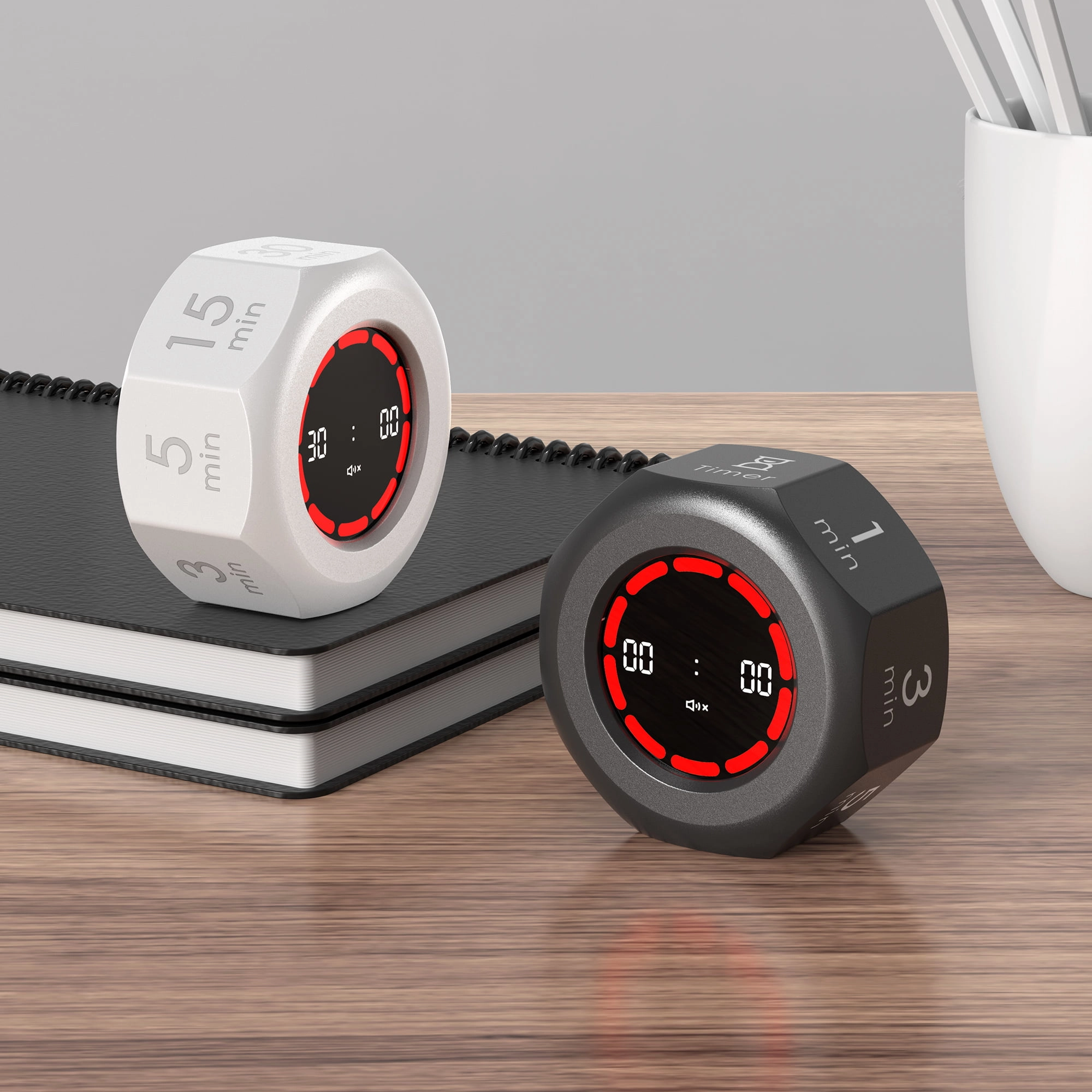
Our product range includes Digital Timer products for general timing needs and pomodoro timer products for structured focus sessions. Buyers should compare the timing modes, display presentation, control layout, power arrangement, and packaging against their target market and channel. A focus timer may need intuitive preset sessions and a design that encourages repeated use, while a general-purpose timer may need broader duration flexibility and clearer status indication. The appropriate feature set depends on customer workflow and should be verified against samples before volume commitment.
Our portfolio also includes thermo hygrometer and temperature humidity monitor products for users who need to observe ambient conditions. These instruments serve a different function from countdown devices, so their measurement range, sensor performance, display, and calibration or verification documentation should be reviewed separately. Bringing complementary product types into one sourcing discussion may support a more coordinated assortment, but each product still requires its own technical specification and acceptance plan.
Make supplier discussions technically useful
We encourage project owners to share their intended viewing distance, installation location, required countdown modes, acceptable timing error, power expectations, target market, and packaging requirements at the quotation stage. Clear inputs help our team assess product fit and identify questions that could otherwise emerge late in sampling or production. Where a specification is not yet defined, a sample evaluation can help buyers compare options before finalizing measurable requirements.
For distributors, importers, and brand owners, technical discussions should also cover document availability, product labeling, customization boundaries, change notification, inspection arrangements, and the process for addressing nonconforming goods. These details do not replace independent compliance review or buyer testing; they make the sourcing process more transparent. A well-defined brief gives both parties a common basis for evaluating design choices and managing expectations from sample approval through delivery.
Contact our team to discuss product requirements or explore our digital timer, pomodoro timer, thermo hygrometer, and temperature humidity monitor range for your next sourcing project.
Frequently Asked Questions
How do buyers choose the right display size for a countdown timer?
Evaluate numeral height and contrast from the farthest routine viewing position, including likely side angles and the room’s normal lighting. A site trial is more dependable than judging a product image, and overall enclosure size should not be confused with digit size.
What is the difference between timer resolution and accuracy?
Resolution is the smallest displayed time increment; accuracy describes how closely the timer’s elapsed or remaining time corresponds to the intended interval. A one-second display step does not by itself prove one-second accuracy over a longer period.
How should a buyer test countdown timer accuracy?
Define an acceptable timing error over a stated interval and compare the unit with a traceable reference time source or appropriate calibrated measurement equipment. Ask the supplier how accuracy was measured and under what operating conditions.
What controls should a shared countdown timer have?
A shared unit should make start, pause, resume, and reset actions clear, with a deliberate reset behavior to reduce accidental changes. Buyers should consider locking settings or restricting access when unauthorized changes could disrupt a session or process.
What should happen to a timer during a power interruption?
The expected behavior should be specified and tested: the display may go blank, retain the remaining time, resume automatically, or reset depending on the design. Buyers should confirm backup power details and verify the exact behavior on a sample.
Which documents should buyers request from a timer supplier?
Request a technical datasheet, user instructions, dimensional drawings, power details, environmental limits, warranty terms, and applicable market-compliance documentation. For a deployment, also confirm sample approval, production consistency, inspection arrangements, and change-control procedures.
Best wireless sports timer manufacturers and supplier brands
Waterproof Digital Smart Timers for Outdoor and Pool Use
Top 10 Smart Focus Timers for Offices and Classrooms
Best reading timer with alarm manufacturers and supplier brands
Interested in this article?
Let’s talk.
Need specifications, pricing, or customization options? We’ll provide everything you need.

Youben life
Youben life