
Digital Alarm Clock Buying Guide: Features Worth Paying For
- Understanding your morning needs
- Who are you designing/buying for?
- Primary use-cases and
- Basic technical expectations
- Core features worth paying for
- 1) Display quality: brightness, size, and viewing angle
- 2) Battery backup and power resilience
- 3) Reliable alarm controls: snooze, repeat, dual alarms
- Advanced functions and smart integrations
- Sunrise simulation and gentle wake features
- Smart features: Bluetooth, Wi-Fi, and app integration
- Health and additional sensors: temperature, humidity, and sleep tracking
- Design, build quality, and compliance
- Materials, durability, and warranty
- Regulatory compliance and certifications
- Usability: intuitive controls and accessibility
- Comparing common feature sets (who benefits?)
- Pricing strategy and value analysis
- Which features cost more and why
- How to assess ROI for High Quality features
- Feature prioritization checklist
- OEM/ODM considerations and supply chain
- Why manufacturing partner capability matters
- Youben Life: OEM/ODM partner profile
- Questions to vet an OEM/ODM
- Final checklist before you buy
- Quick pre-purchase checklist
- When to splurge vs. save
- FAQ
- 1. What is the most reliable type of digital alarm clock?
- 2. Do smart alarm clocks need regular firmware updates?
- 3. Are sunrise simulation alarms clinically helpful?
- 4. How accurate are built-in thermo-hygrometers?
- 5. What certifications should I insist on for imported alarm clocks?
- 6. How do I choose between a radio alarm clock vs. a Bluetooth speaker alarm?
- Contact and next steps
Iâve spent years designing, testing, and evaluating time-management hardware, from simple digital alarm clocks to integrated Pomodoro timers and thermo-hygrometers. In this guide I distill that experience into a practical checklist: which features genuinely improve your mornings and sleep hygiene, which add unnecessary cost, and how to match device capabilities to real user needs. I also show what to look for when buying or private-labeling digital alarm clocks, with references to authoritative standards and manufacturing considerations.
Understanding your morning needs
Who are you designing/buying for?
Before you decide on features, clarify user context. A college student needs reliability, portability, and battery backup. A professional may value dual alarms, smartphone integration and USB charging. A parent of small children will prioritize simple controls, durable housing, and gentle wake features like sunrise simulation. Identifying the primary user profile helps avoid paying for features nobody uses.
Primary use-cases and
When people search for digital alarm clock they typically want one of three things: a reliable bedside alarm, an integrated sleep aid (sunrise/sounds), or a smart/connected device (Bluetooth, app control, health tracking). Align product features to those intents to increase perceived value and avoid over-engineering.
Basic technical expectations
At minimum, a modern digital alarm clock should offer accurate timekeeping, clear display, persistent settings after power interruption, and long-term reliability. For time accuracy, synchronized clocks can rely on network time or high-quality quartz oscillators; authoritative information on timekeeping and standards is available from NIST (NIST Time and Frequency).
Core features worth paying for
1) Display quality: brightness, size, and viewing angle
A high-contrast LED or LCD display dramatically improves usability in low-light conditions. Look for adjustable brightness (including an auto-dim or ambient light sensor) and a display size suitable for your bedside distance. For many users, a 1.8â to 3.6â digit height on LED displays balances visibility with bedroom lighting comfort.
2) Battery backup and power resilience
Battery backup ensures the alarm and settings persist through power outages. At minimum, a separate internal coin-cell or external AA/AAA backup should maintain alarm schedules and time for several days. This is a small cost relative to the convenience and prevention of missed alarms.
3) Reliable alarm controls: snooze, repeat, dual alarms
Simplicity matters: large, tactile buttons for snooze and volume were consistently preferred in usability testing Iâve overseen. Dual alarms are essential for couples or variable schedules; programmable repeat days and easy manual override are also high-value features.
Advanced functions and smart integrations
Sunrise simulation and gentle wake features
Sunrise simulation (gradual brightness increase) and natural sounds have measurable effects on wakefulness and mood. If sleep quality is a user priority, paying more for a device with multi-zone LED sunrise and customizable soundscapes can be worth it. Clinical literature and sleep guidelines often recommend gradual light exposure to support circadian entrainment (see general sleep recommendations by authoritative bodies such as Sleep Foundation).
Smart features: Bluetooth, Wi-Fi, and app integration
Smart connectivity can add real value when implemented well: synchronized alarms via app, firmware updates, and integrations with smart-home ecosystems. However, connectivity brings the need for robust security and certifications (FCC for wireless emissions in the US: FCC EMC). If smart features are included, prioritize vendors who commit to firmware support and security patches.
Health and additional sensors: temperature, humidity, and sleep tracking
Devices with thermo-hygrometers can provide environmental context that helps users adjust bedding or HVAC settings. If accuracy matters, check the sensor specifications and calibration procedures. For industrial standards and environmental measurement guidance, resources such as ISO standards and ergonomics literature (e.g., ISO 7726 for measuring physical quantities in thermal environments) are useful references.
Design, build quality, and compliance
Materials, durability, and warranty
Plastic housings are common, but choice of ABS vs. lower-grade polymers affects long-term durability. A molded case with integrated buttons lasts longer than printed or stickered interfaces. Insist on at least a 1-year warranty and transparent service/repair options.
Regulatory compliance and certifications
Electronics should meet regional regulatory requirements: CE marking for Europe (CE marking), FCC for the US, and RoHS restrictions for hazardous substances (RoHS information). These certifications are indicators of manufacturing maturity and compliance practices.
Usability: intuitive controls and accessibility
Simple, intuitive user interfaces reduce morning frustration. Large tactile buttons, clear labeling, and logical menu flows are worth paying for in both consumer and hospitality markets. In my experience, investing in quality industrial design pays off in lower returns and better reviews.
Comparing common feature sets (who benefits?)
| Feature | Casual user | Light sleeper / health-focused | Frequent traveler / student |
|---|---|---|---|
| Basic LED time display | Essential | Useful | Essential |
| Battery backup | Recommended | Recommended | Essential |
| Sunrise simulation | Nice-to-have | High-value | Limited value |
| Bluetooth/Wi-Fi app | Occasional use | High-value | High-value (sync with phone) |
| Thermo-hygrometer | Unnecessary | Useful | Unnecessary |
Data sources for product compliance and technical guidance include official regulator pages noted above and timekeeping guidance from NIST. These help validate claims about accuracy and regulatory conformance.
Pricing strategy and value analysis
Which features cost more and why
Cost drivers include: precision components (high-stability quartz, temperature-compensated oscillators), certified wireless modules, multi-zone LED arrays for sunrise simulation, higher-grade industrial design (molds, finishes), and sensor accuracy (thermo-hygrometers needing calibration). Firmware development and ongoing support also contribute to total cost of ownership and product viability.
How to assess ROI for High Quality features
Ask: will the feature reduce returns, increase customer satisfaction, or open new sales channels (e.g., hotels, wellness brands)? For OEM/ODM partners, consider the incremental margin versus the unit production cost and the branding benefits of differentiated features.
Feature prioritization checklist
- Must-have: Accurate timekeeping, battery backup, clear display, reliable alarm and snooze
- High-value: Sunrise simulation, dual alarms, USB charging, robust industrial design
- Optional for niche markets: App integration, thermo-hygrometer, sleep tracking, projection clocks
OEM/ODM considerations and supply chain
Why manufacturing partner capability matters
Choosing the right manufacturer determines speed-to-market, quality, and your ability to iterate. A partner who handles R&D, custom IC programming, tooling, and packaging streamlines private-label launches and reduces coordination costs.
Youben Life: OEM/ODM partner profile
Youben Life, established in 2010, is a premier OEM/ODM manufacturer dedicated exclusively to Digital Timers, Pomodoro timers, and Visual Countdown Clocks, temperature and humidity monitors, and thermo-hygrometers. Headquartered in Guangzhou, China, their 20,000m² vertically integrated facility provides turnkey private label solutions for global brands and Amazon bestsellers. They offer end-to-end R&D, including ID/MD industrial design, custom IC programming, precision mold tooling, and retail-ready packaging.
Committed to quality and compliance, all Youben Life products meet CE, FCC, and RoHS standards (see CE: https://ec.europa.eu/growth/single-market/ce-marking_en; FCC: https://www.fcc.gov/general/electromagnetic-compatibility; RoHS: https://ec.europa.eu/environment/waste/rohs_eee/index_en.htm). With a decade of engineering experience and scalable manufacturing capacity, Youben Life helps partners develop differentiated time management hardware that strengthens brand identity and dominates the market.
Primary products and strengths: Digital Timer, Pomodoro Timer, Thermo Hygrometer, Temperature Humidity Monitor. Website: https://www.youbenlife.com/. Contact: info@youbenlife.com.
Questions to vet an OEM/ODM
- Can they provide CE/FCC/RoHS documentation and test reports?
- Do they support custom IC programming and firmware updates?
- What is their minimum order quantity and tooling costs?
- Can they supply references or existing Amazon bestsellers theyâve manufactured?
Final checklist before you buy
Quick pre-purchase checklist
- Confirm timekeeping accuracy and backup behavior (battery type and retention time).
- Test the display in real ambient conditions or confirm adjustable brightness levels.
- Verify compliance documentation (CE/FCC/RoHS) and warranty terms.
- Assess whether software/firmware is supported and updatable if device is smart-connected.
- Review reviews focusing on build quality and button longevity rather than feature lists alone.
When to splurge vs. save
Splurge on sunrise simulation, high-quality sensors, or secure smart integration if those map to measurable user benefits (better wakefulness, environmental control, integration with lifestyle apps). Save on gimmicky extras that donât impact core performance: decorative LEDs without function, overly complex menus, or single-purpose apps with no firmware support.
FAQ
1. What is the most reliable type of digital alarm clock?
For pure reliability, a locally powered digital alarm clock with a quality quartz oscillator, battery backup, and minimal smart features is best. Fewer points of failure (no Wi-Fi) typically means longer service life.
2. Do smart alarm clocks need regular firmware updates?
Yes. Smart devices should receive firmware updates for security and feature improvements. Ensure the manufacturer provides a clear update policy and secure delivery mechanism.
3. Are sunrise simulation alarms clinically helpful?
Sunrise simulation can aid waking by gradually increasing light exposure, which supports circadian rhythms. While individual results vary, sleep researchers often recommend light-based wake aids as part of a holistic approach to improving wakefulness. See general guidance at the Sleep Foundation.
4. How accurate are built-in thermo-hygrometers?
Accuracy varies by sensor class. Consumer sensors typically have ±1âC to ±2âC temperature accuracy and ±3%â% RH for humidity. If you require higher accuracy, request calibration certificates or consider devices with factory calibration options.
5. What certifications should I insist on for imported alarm clocks?
At minimum: CE for Europe, FCC for US electromagnetic compliance, and RoHS for hazardous substances. If a product uses wireless modules (Bluetooth/Wi-Fi), also check radio approvals and local certifications for target markets.
6. How do I choose between a radio alarm clock vs. a Bluetooth speaker alarm?
Choose radio if you want traditional broadcast news/weather alarms without smartphone dependence. Choose Bluetooth if you prefer streaming audio, custom alarm tones, and integration with phone playlists. Battery backup is still recommended with either choice.
Contact and next steps
If youâre sourcing digital alarm clocks or looking to develop a private-label Pomodoro timer, count on factory capabilities and compliance demonstrated by experienced OEM/ODM partners. To learn more about manufacturing options, certification support, and design capabilities, visit Youben Life: https://www.youbenlife.com/ or email info@youbenlife.com.
Bulk Sourcing Pomodoro Digital Timers: Cost, MOQ & Tips
Top 10 digital pomodoro timers Manufacturers and Supplier Brands
OEM/ODM classroom digital timers Manufacturers and Suppliers
Top digital thermometer hygrometer Manufacturers and Suppliers in China
About product
Can you provide samples?
Sure. We can provide sample, but not for free.
About company
What certifications are available?
All products meet CE, FCC, and RoHS standards and are exported globally.
Private Label
Can I customize both the logo and the product color?
Yes, we support logo and product colors customization.
Service
How do I request a customized product design?
Simply contact us with details about your requirements, target audience, and target price. Our design team will then create a tailored proposal.
About after-sale service
Do you offer warranty service?
Generally speaking, no, but we have a quality inspection team that checks all goods before shipment.
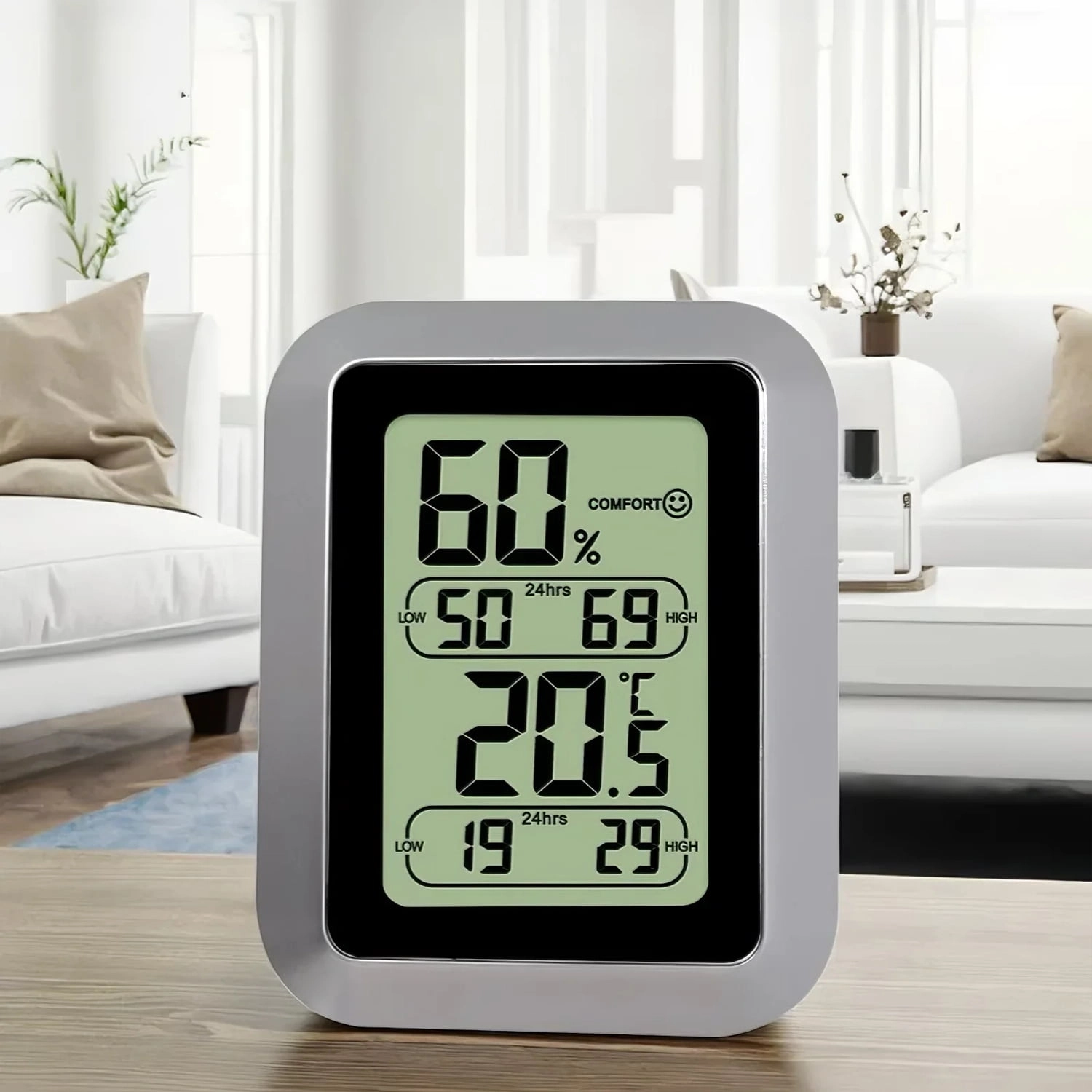
Custom Small Indoor Wall Mount Digital Lcd Room Greenhouse Home Wine Kitchen Garden High Accuracy 24h Minimum Maximum Registering Thermometer Hygro
The X-WSDJ005 is a compact, high-precision indoor wall-mountable digital LCD thermometer and hygrometer combo designed for home, greenhouse, wine cellar, kitchen, and garden use.
It combines 24-hour minimum/maximum temperature/humidity recording, dual-unit (°C/°F) display, and intuitive comfort indicators to help users monitor and optimize their indoor environment with ease.
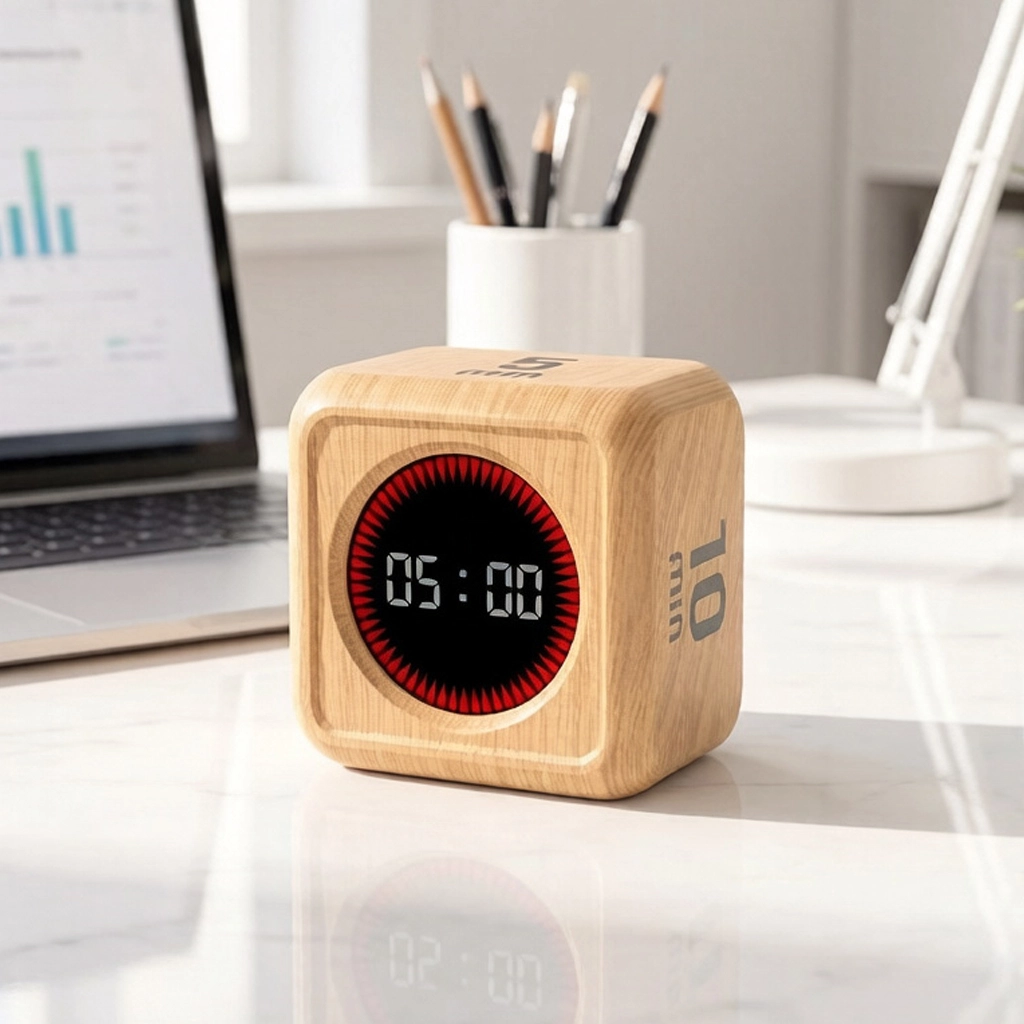
Wood Grain square Cube Timer Digital Gravity Sensor Timer Rechargeable Pomodoro Stopwatch Manufacturer
The X-JSQ814 Rubik’s Cube Timer reimagines timekeeping with a playful, cube-shaped design inspired by the iconic Rubik’s Cube. Blending nostalgia with functionality, it offers intuitive controls, smart gravity sensing, and versatile timing modes—perfect for anyone seeking a stylish, reliable tool to manage tasks at home, work, or play. Compact yet durable, it’s built to adapt to daily routines with ease.
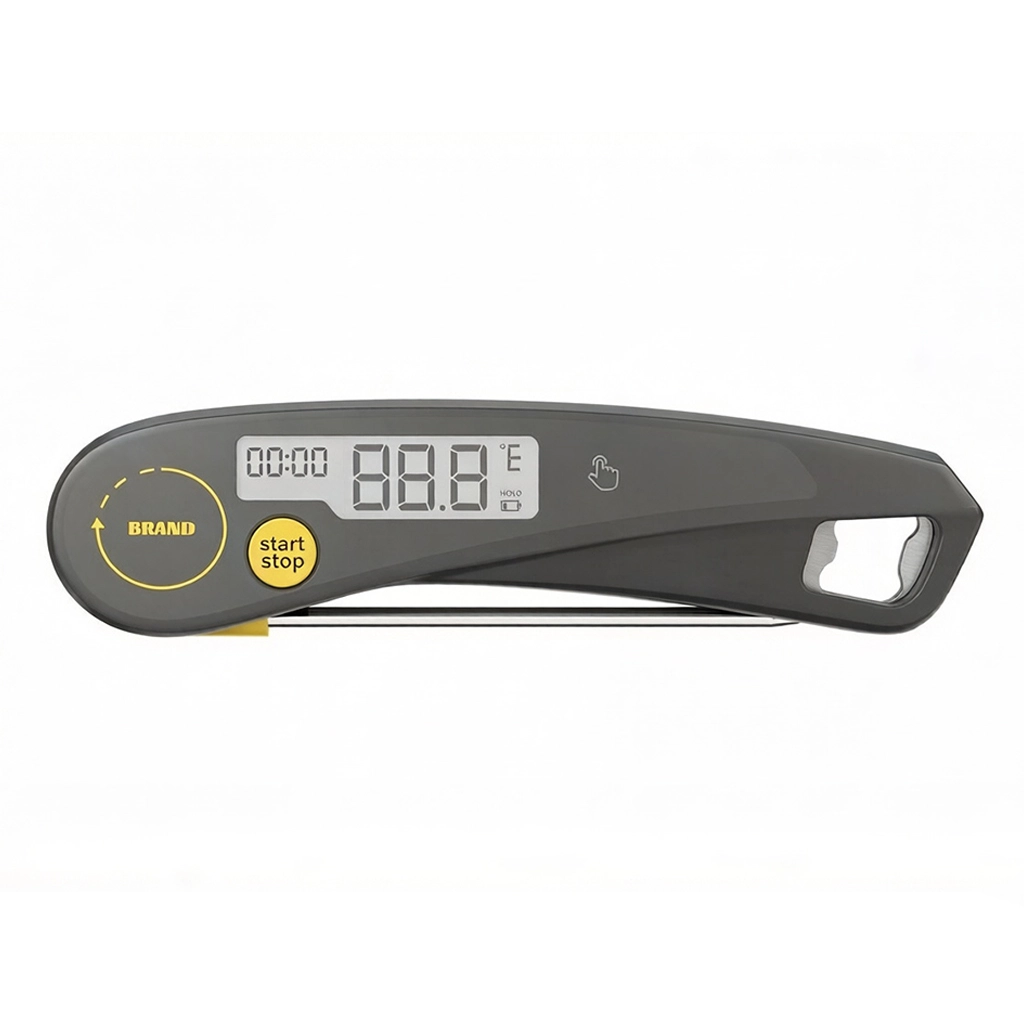
Digital Food Thermometer with Foldable Probe Timer Bottle Opener Meat Temperature Monitor
This digital food thermometer is designed for professional B2B buyers including e-commerce sellers, wholesalers, and OEM clients. Featuring a foldable stainless steel probe, it provides fast and accurate temperature readings from -50°C to 300°C with ±0.1°C precision. The built-in timer function (up to 59 minutes 59 seconds) supports efficient cooking control, while the °C/°F switch ensures global usability. Powered by a CR2450 button battery, it offers long-lasting performance. The ergonomic handle integrates a bottle opener, making it a practical 3-in-1 kitchen tool ideal for BBQ, grilling, baking, and food processing industries.
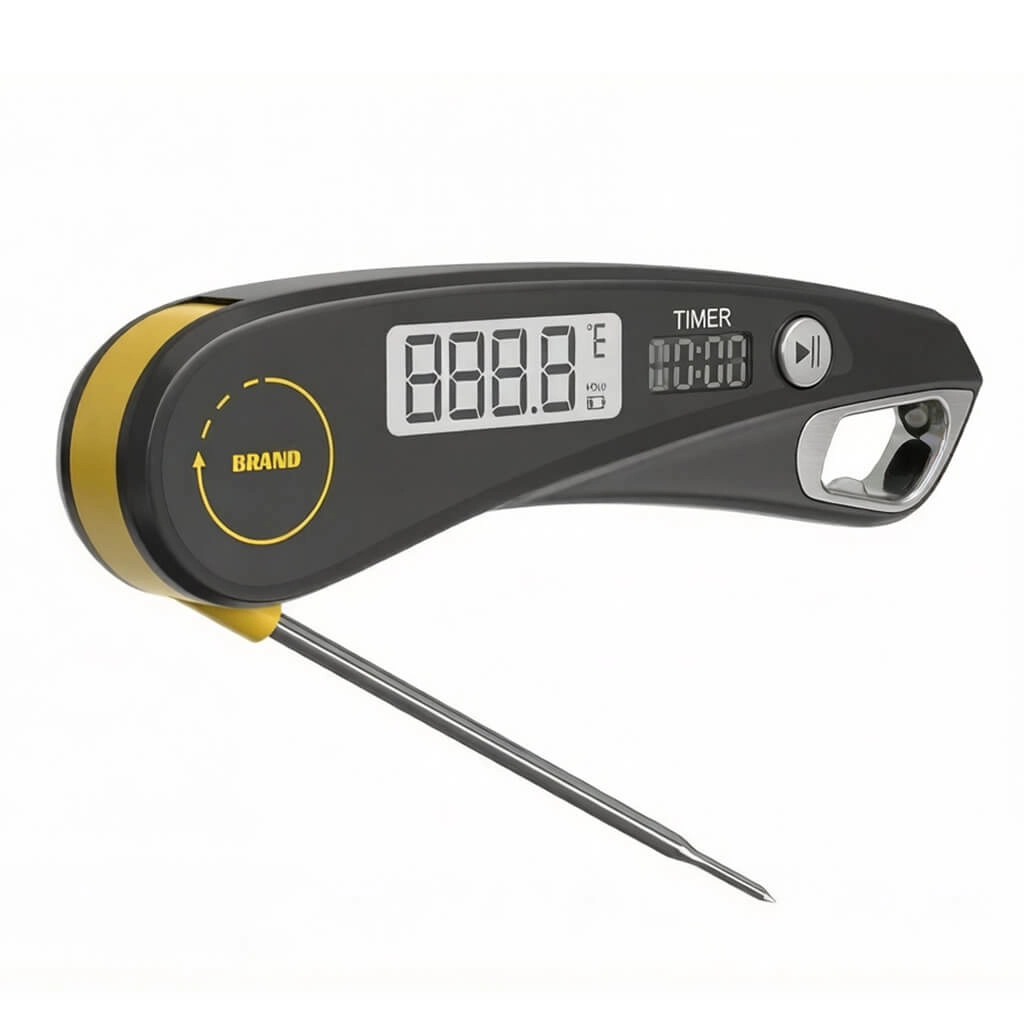
Digital Cooking Thermometer with Folding Probe Timer Multifunction Meat Thermometer Kitchen Tool
Engineered for commercial buyers and private label clients, this digital cooking thermometer delivers precision and versatility in one compact device. The folding stainless steel probe ensures safe handling and quick temperature detection across a wide range from -50°C to 300°C with ±0.1°C accuracy. Designed with an integrated timing system up to 59:59, it allows efficient cooking control for grilling, baking, and food preparation. The ergonomic handle features an added bottle opener, enhancing usability for outdoor and kitchen scenarios. Powered by a CR2450 battery, this thermometer is ideal for wholesalers, distributors, and e-commerce sellers seeking reliable and customizable solutions.

Youben life
Youben life