
Custom Visual Timer Solutions: Questions to Ask a Visual Timer Manufacturer Before Ordering
- How to Evaluate a Custom Time-Management Device Supplier
- What application problem must the timer solve?
- Which display technology and visibility specifications are available?
- How accurate and stable is the timing system?
- Technical and Manufacturing Questions Before Approval
- Can the electronics and firmware be customized?
- What materials, enclosure methods, and durability tests are used?
- How are quality control and production consistency managed?
- Commercial, Compliance, and Launch Considerations
- Which certifications and market documents are required?
- What are the tooling, MOQ, cost, and lead-time conditions?
- How will packaging, documentation, and after-sales support be handled?
- Why a Structured Customization Partner Improves Project ROI
- Connecting the digital timer portfolio to real operating needs
- Expanding environmental measurement capabilities
- Building a dependable path from prototype to recurring supply
- Frequently Asked Questions
Custom visual timer solutions help organizations convert elapsed time into an immediate visual signal for classrooms, clinics, workplaces, production areas, kitchens, and consumer products. Before ordering, buyers should evaluate more than countdown length and display color: critical questions include timing accuracy, visibility, viewing angle, LED or LCD technology, user controls, battery life, firmware behavior, enclosure durability, regulatory requirements, tooling ownership, quality assurance, minimum order quantity, lead time, and after-sales support. A capable visual timer manufacturer should be able to translate an application brief into a validated product specification, provide production samples, document test methods, and maintain consistent performance from the first batch through recurring orders.
How to Evaluate a Custom Time-Management Device Supplier
What application problem must the timer solve?
Every project should begin with the operating environment rather than with a preferred product shape. A classroom timer may need a large, silent, high-contrast display that can be read from the back of a room. A healthcare device may require simple controls, easy cleaning, low acoustic output, and dependable battery operation. A manufacturing workstation may need a rugged enclosure, wall mounting, rapid reset functions, and visibility under bright overhead lighting. Hospitality and kitchen applications may prioritize wipeable surfaces, heat resistance, and fast programming.
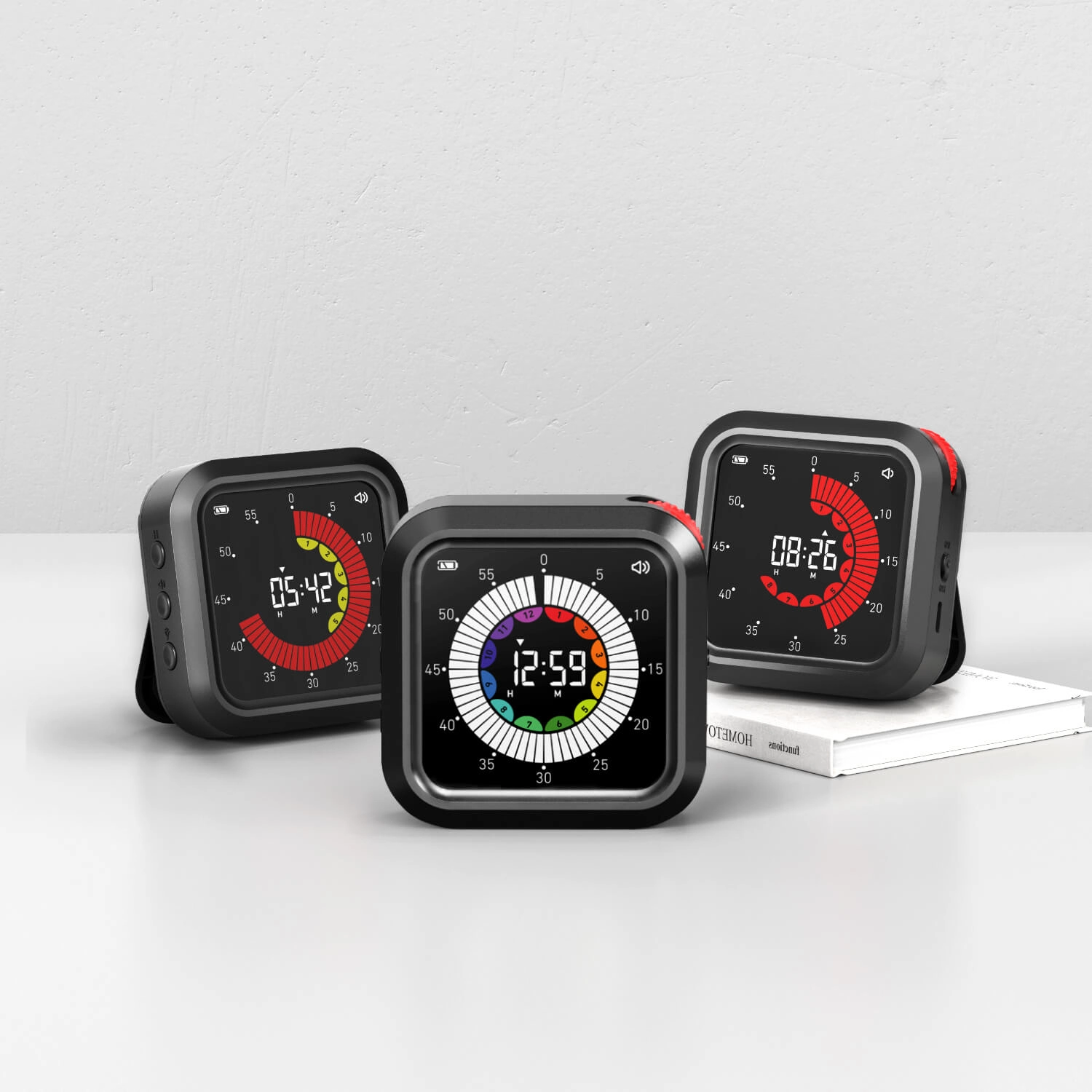
Ask the supplier to document the intended users, viewing distance, ambient light range, mounting method, operating temperature, expected daily cycles, cleaning chemicals, and required alarm behavior. This application profile determines whether a circular colored disk, segmented LED ring, numeric display, LCD panel, or hybrid interface is appropriate. It also prevents a common procurement error: selecting an attractive demonstration unit that cannot withstand the actual duty cycle.
Which display technology and visibility specifications are available?
Visual communication depends on measurable optical performance. Buyers should request information about display brightness, contrast, color consistency, viewing angle, refresh behavior, segment resolution, and readability at the maximum specified distance. For products used in classrooms or shared workspaces, the display should remain clear without creating distracting glare. For industrial or commercial environments, the supplier should explain how the product performs under direct sunlight, fluorescent lighting, and low-light conditions.
Color selection also requires care. Red, amber, green, and blue indicators can communicate stages, but color alone may not be sufficient for every user. Numeric time, segment position, icons, or audible and tactile confirmation can improve accessibility and reduce interpretation errors. Where color accessibility matters, buyers can consult the W3C contrast guidance and request contrast validation rather than relying on visual claims.
How accurate and stable is the timing system?
A countdown product does not necessarily require laboratory-grade timekeeping, but its performance must match the use case. Ask whether timing is generated by a crystal oscillator, microcontroller timer, real-time clock, or another architecture. Request the stated accuracy range across the operating temperature range and battery-voltage range, as well as the supplier's method for verifying it.
Additional questions should cover pause and resume behavior, power interruption, automatic reset, long-duration countdowns, overtime indication, and whether the device drifts after repeated cycles. A supplier should explain how firmware handles boundary conditions such as one-second transitions, zero-time display, rapid button presses, and memory retention. For regulated or safety-sensitive applications, the project owner may require documented calibration or traceability procedures instead of a general accuracy statement.
Technical and Manufacturing Questions Before Approval
Can the electronics and firmware be customized?
Customization may involve more than adding a logo. Buyers should clarify whether the supplier can modify countdown ranges, preset durations, button layouts, lockout functions, alarm volume, brightness levels, language prompts, startup behavior, and communication interfaces. If the product must connect to a larger system, ask whether USB, Bluetooth Low Energy, Wi-Fi, GPIO, serial communication, or other interfaces are available and whether the relevant software development kit or protocol documentation will be provided.
Firmware ownership and change control should be discussed before tooling begins. The contract should identify who owns source code, who approves firmware revisions, how bugs are recorded, and whether a revision can affect existing inventory. A robust engineering process includes version identification, documented test cases, regression testing, and a defined procedure for approving changes after design validation.
What materials, enclosure methods, and durability tests are used?
The housing influences safety, service life, perceived quality, and total cost. Ask whether the enclosure uses ABS, polycarbonate, acrylic, aluminum, silicone, or a composite structure, and request the relevant flame rating, impact performance, UV resistance, and surface-finish information. For products exposed to cleaning agents, oils, moisture, or food environments, chemical compatibility should be evaluated with representative substances rather than assumed from the resin name.
Mechanical questions should include drop testing, button-cycle testing, connector retention, battery-compartment security, mounting strength, ingress protection, and thermal performance. If the device contains a rechargeable battery, ask about charging protection, cell sourcing, transport documentation, and end-of-life replacement. Applicable requirements may vary by destination market, and electrical or electronic equipment projects should be reviewed against relevant frameworks such as the European Union RoHS Directive and applicable product-safety rules.
How are quality control and production consistency managed?
A supplier's quality system should be visible in its records and process controls. Ask whether the facility operates an audited quality management system and how incoming components, work-in-process assemblies, firmware, finished units, and packaging are inspected. The ISO 9001 quality management standard provides a useful reference for process discipline, corrective action, customer focus, and continual improvement, although certification alone does not replace product-specific verification.
Request a control plan that identifies critical-to-quality characteristics such as timing accuracy, display uniformity, button response, battery current, alarm output, enclosure fit, and cosmetic limits. Buyers should also ask about automated testing, sampling levels, traceability by lot or serial number, nonconforming-product segregation, and corrective-action reporting. These details are more valuable than a generic statement that every unit is checked.
| Evaluation area | Basic supplier response | Stronger procurement evidence | Why it matters |
|---|---|---|---|
| Timing accuracy | General accuracy claim | Test method, tolerance, temperature conditions, and records | Confirms repeatable countdown performance |
| Display visibility | Product photos or brightness description | Brightness, contrast, viewing angle, and distance validation | Reduces misreading in real environments |
| Durability | Material name only | Drop, button-cycle, thermal, chemical, or ingress test evidence | Links design choices to service life |
| Compliance | Unspecified certificate references | Market-specific reports, declarations, and component records | Supports legal and retailer requirements |
| Production quality | Final inspection statement | Control plan, sampling criteria, traceability, and corrective action | Improves batch-to-batch consistency |
Commercial, Compliance, and Launch Considerations
Which certifications and market documents are required?
Compliance depends on product architecture, destination, power source, wireless functions, and intended use. A low-voltage battery timer may have a different documentation path from a mains-powered device with wireless connectivity. Ask the supplier to map requirements by market and to identify which party is responsible for testing, declarations, labeling, user instructions, packaging marks, and technical files.
For electronic products, buyers may need to consider electromagnetic compatibility, radio requirements, battery transport rules, chemical restrictions, recycling obligations, and electrical safety. The IEC 62368-1 standard is relevant to many audio, video, information, and communication technology products, but applicability must be confirmed by a qualified compliance professional. Suppliers should never present one certificate as universal coverage for every market or product variant.
What are the tooling, MOQ, cost, and lead-time conditions?
Custom projects should separate non-recurring engineering costs from unit pricing. Ask for a transparent quotation covering industrial design, PCB changes, firmware, tooling, prototypes, certification samples, packaging, testing, and production. Clarify whether tooling belongs to the buyer, how it is stored and maintained, and what happens if the relationship ends.
Minimum order quantity should be evaluated against forecast accuracy, shelf life, warranty exposure, and cash flow. A lower unit price can be economically weak if it creates excess inventory or requires a large upfront tooling commitment. Request a staged development plan with concept review, engineering prototype, design-validation sample, pilot run, production approval, and mass-production lead time. Include buffer time for component shortages, compliance retesting, artwork changes, and freight.
How will packaging, documentation, and after-sales support be handled?
Packaging is part of the product experience and the logistics cost. Ask whether the supplier can provide retail packaging, bulk cartons, molded inserts, multilingual manuals, barcode labels, warranty cards, and installation guides. Packaging should protect the display and controls while meeting the distribution channel's dimensional and labeling requirements.
After-sales questions should cover warranty duration, replacement policy, spare parts, repairability, software updates, failure analysis, response time, and return-material authorization. A strong partner will define escalation contacts and provide periodic quality reviews for recurring programs. For distributors, the ability to obtain replacement components and consistent technical documentation can be as important as the original purchase price.
Why a Structured Customization Partner Improves Project ROI
Connecting the digital timer portfolio to real operating needs
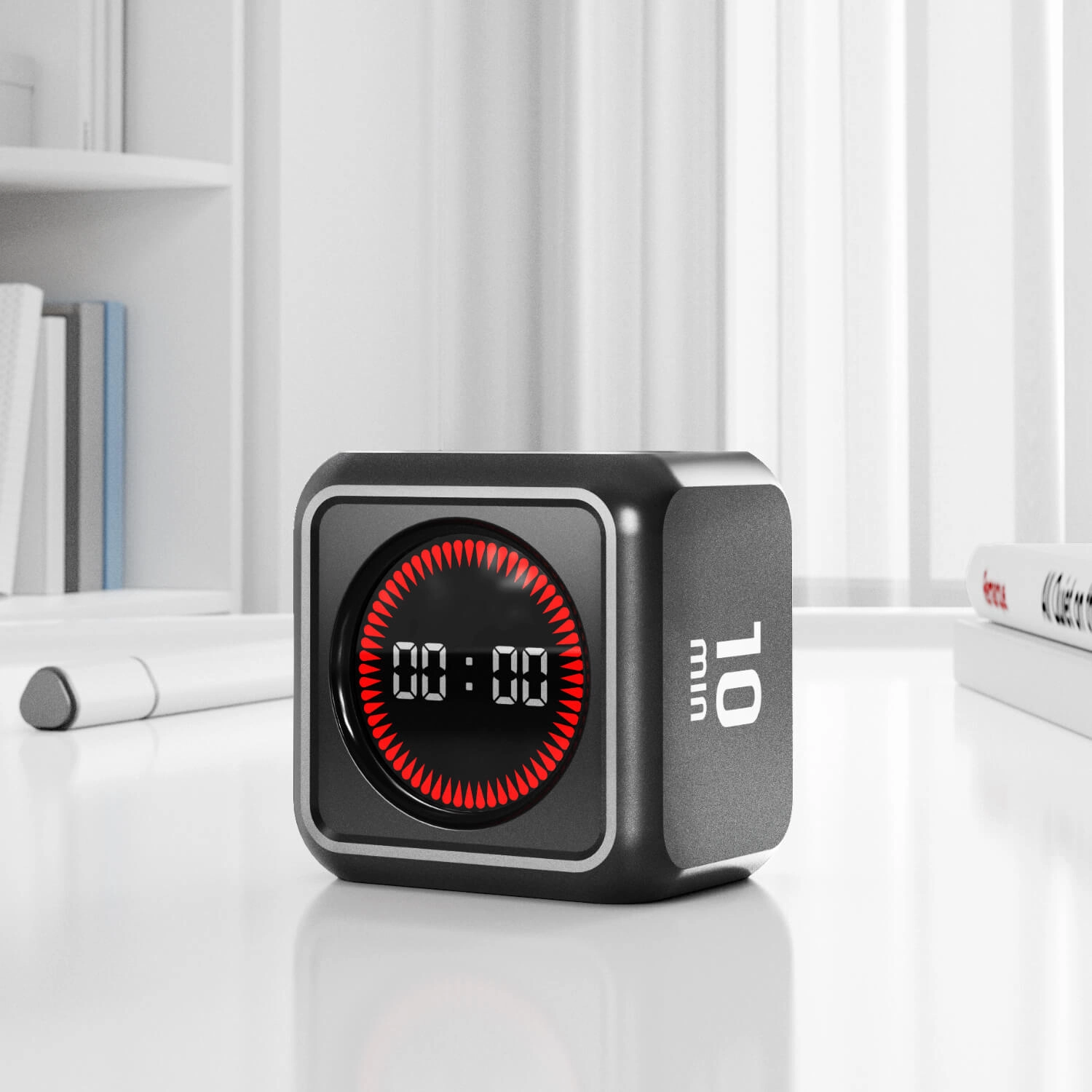
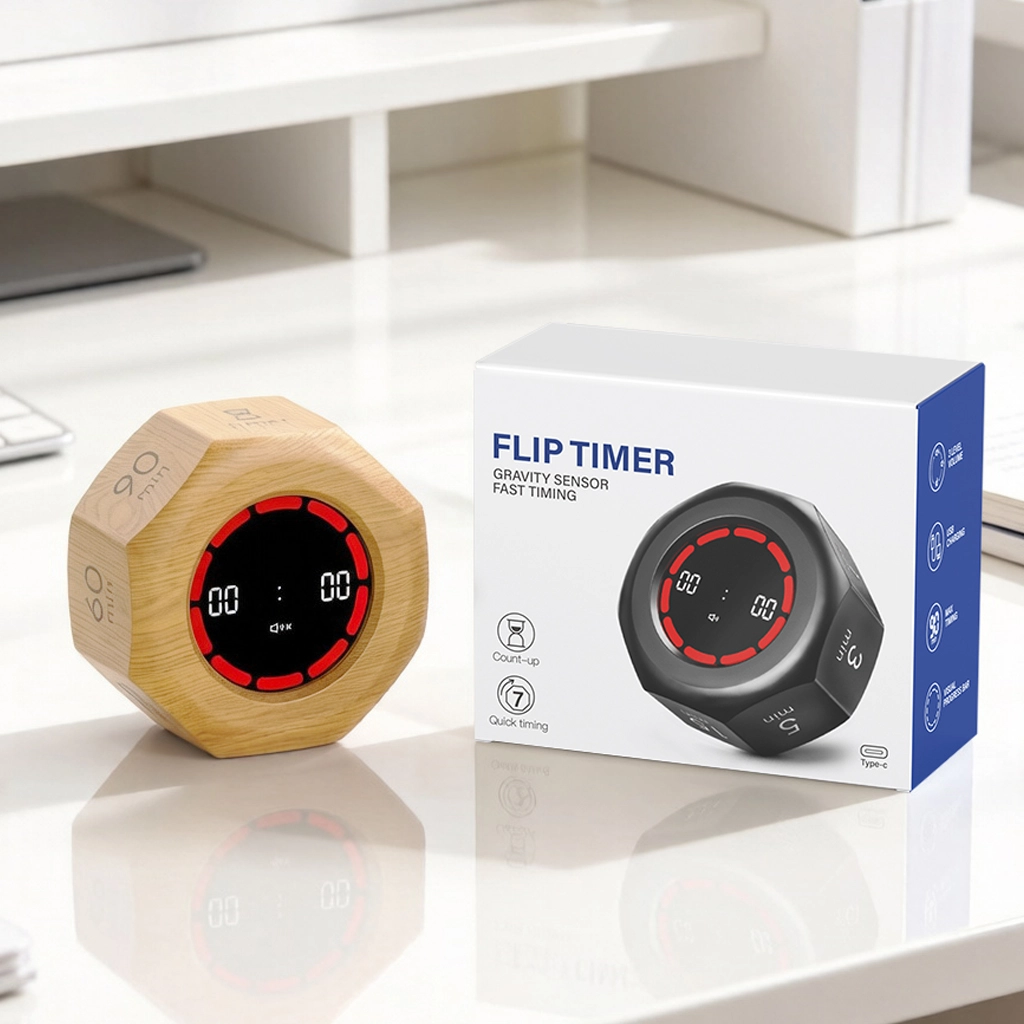
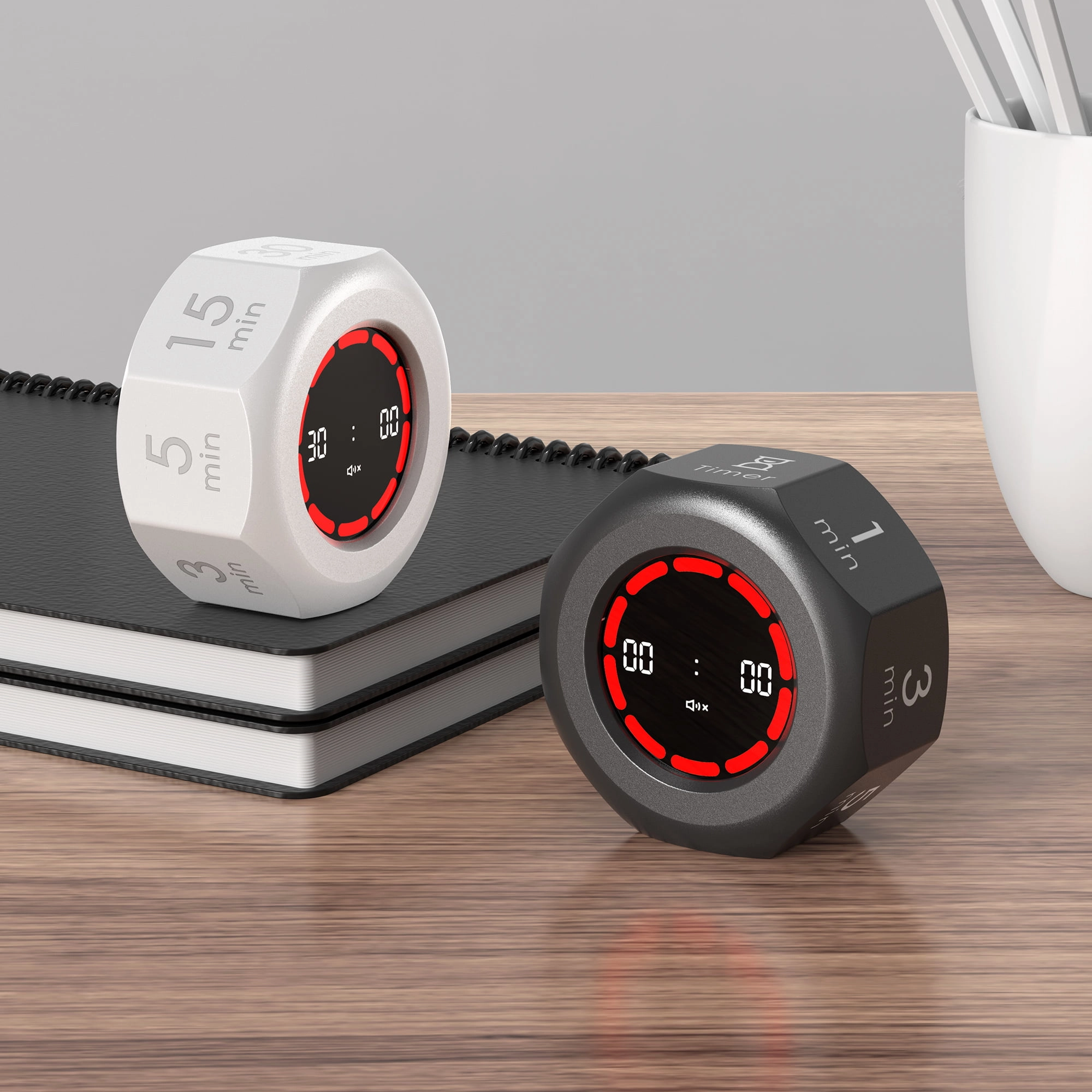
Our team approaches custom timing products as an application and manufacturing program rather than as a one-size-fits-all catalog purchase. The development discussion can begin with a standard digital timer, then progress toward revised dimensions, display treatment, control logic, mounting, branding, packaging, and firmware where the project justifies those changes. This approach helps buyers control development risk while preserving a practical path to scalable production.
For focused work and study applications, our pomodoro timer solutions can be configured around repeatable work intervals, rest periods, clear status indication, and intuitive controls. For education, wellness, and workplace programs, the same design principles can support silent operation, visual progress tracking, and simple reset behavior. The commercial objective is to make the device easy to adopt, easy to explain, and reliable enough for repeated daily use.
Expanding environmental measurement capabilities
Some projects require timing together with environmental awareness. Our thermo hygrometer and temperature humidity monitor products can support applications where temperature and relative humidity affect comfort, storage, laboratories, offices, retail displays, or facility operations. Buyers can evaluate whether a combined product, coordinated product family, or separate device architecture provides the best balance of display size, sensor placement, battery life, accuracy, and cost.
Sensor projects require their own verification questions. Ask about sensor tolerance, response time, calibration references, hysteresis, condensation effects, placement inside the enclosure, and how readings are affected by heat from the display or electronics. A professional supplier should distinguish sensor accuracy from overall system accuracy and explain the conditions under which specifications are valid. This level of detail supports credible product claims and reduces warranty disputes.
Building a dependable path from prototype to recurring supply
Our manufacturing process is structured around requirement review, design feasibility, sample evaluation, engineering verification, production preparation, and ongoing quality control. Buyers can use a written specification to align the display, electronics, housing, firmware, packaging, and compliance documentation before approving mass production. This reduces late-stage changes that typically increase tooling costs and delay launch schedules.
Supplier selection should ultimately be based on evidence: representative samples, clear test reports, controlled revisions, realistic capacity statements, and responsive engineering communication. A partner that can explain both technical limitations and workable alternatives is more valuable than a supplier that promises every feature without defining validation conditions. For international procurement, communication quality, documentation accuracy, and repeatable export processes also influence total project cost.
For organizations comparing custom electronic timing and environmental-monitoring programs, the most efficient next step is a structured request for quotation. Include target markets, operating conditions, display requirements, timing behavior, dimensions, power source, forecast, packaging, certifications, and acceptance criteria. The resulting proposals can then be compared on verified capability rather than on unit price alone.
Frequently Asked Questions
What should buyers ask before ordering a custom visual timer?
Buyers should ask about the application environment, viewing distance, display technology, timing accuracy, firmware behavior, materials, durability testing, compliance documents, tooling ownership, MOQ, lead time, quality controls, packaging, warranty, and after-sales support.
How can buyers verify timing accuracy?
Buyers should request the stated accuracy range, operating conditions, test method, and verification records, while also asking how firmware handles pause, reset, power interruption, zero-time display, and repeated countdown cycles.
Which display specifications matter most for a visual timer?
Important specifications include brightness, contrast, viewing angle, color consistency, segment resolution, glare performance, readability at the maximum distance, and whether numeric, color, icon, or audible indicators are needed for the intended users.
What compliance documents may be required for electronic timers?
Requirements depend on the destination market, power source, wireless functions, and product architecture. Buyers may need documentation related to electromagnetic compatibility, electrical safety, batteries, chemical restrictions, recycling, radio functions, and applicable market declarations.
How should buyers compare custom timer suppliers on quality?
Buyers should compare control plans, incoming and final inspection, automated testing, timing and display verification, traceability, sampling criteria, nonconforming-product handling, corrective-action processes, and evidence of consistent pilot and mass-production performance.
Can a supplier customize a pomodoro timer or environmental monitor?
Customization may include dimensions, display treatment, controls, timing presets, firmware, mounting, packaging, branding, and connectivity. Environmental monitors also require review of sensor accuracy, response time, calibration, placement, condensation effects, and operating conditions.
Best classroom reading timer manufacturers and supplier brands
Best silent reading timer manufacturers and supplier brands
How to Evaluate Digital Visual Countdown Timer Quality, Reliability, and Safety
How to Choose an Indoor Room Thermometer Supplier: Buyer’s Guide
Interested in this article?
Let’s talk.
Need specifications, pricing, or customization options? We’ll provide everything you need.

Youben life
Youben life