
Custom Pomodoro Timer Quality Control Checklist for Buyers
- Core Quality Criteria for a Focus Timer Product
- Timing accuracy and operating logic
- Display visibility and interface usability
- Enclosure, materials, and physical durability
- Production Inspection and Compliance Evidence
- Electronic components and firmware verification
- Regulatory and management-system documentation
- Sampling plans and acceptance thresholds
- Supplier Evaluation for Scalable Private-Label Programs
- Design-for-manufacturing and customization control
- Traceability, corrective action, and after-sales support
- Why Youben life Fits a Digital Timer Quality Program
- Integrated engineering and manufacturing capability
- Compliance, product range, and brand differentiation
- Procurement decisions that support long-term ROI
- Frequently Asked Questions
A custom Pomodoro timer should be evaluated as a complete hardware product rather than a simple countdown device. Buyers need to verify timing accuracy, mode logic, display readability, control durability, battery performance, firmware behavior, regulatory documentation, production consistency, and packaging protection before approving a supplier. A structured inspection process based on measurable acceptance criteria helps brand owners reduce returns, prevent field failures, protect retail ratings, and select an OEM partner capable of stable mass production.
Core Quality Criteria for a Focus Timer Product
Timing accuracy and operating logic
The primary function of a digital productivity timer is dependable time measurement. A buyer should define an acceptable deviation for each operating mode and confirm that the specification applies across the complete countdown period, not only during a short laboratory test. The inspection should cover work intervals, short breaks, long breaks, repeated cycles, pause and resume behavior, reset functions, overtime counting, and automatic mode transitions.
Testing should be performed with calibrated reference equipment under normal operating conditions. Samples should be evaluated at different battery charge levels and, where relevant, across the supplier’s declared operating temperature range. The result should be recorded in a first article inspection report, with the test method, sample number, starting time, ending time, and measured deviation clearly documented.
The product logic should also be reviewed from a user perspective. A countdown should not unexpectedly restart after a power interruption, button press, or mode change. If the device includes memory, the buyer should establish whether it retains the last setting, returns to a default interval, or requires manual reprogramming. These decisions influence customer expectations and must be reflected in the instruction manual and packaging copy.
Display visibility and interface usability
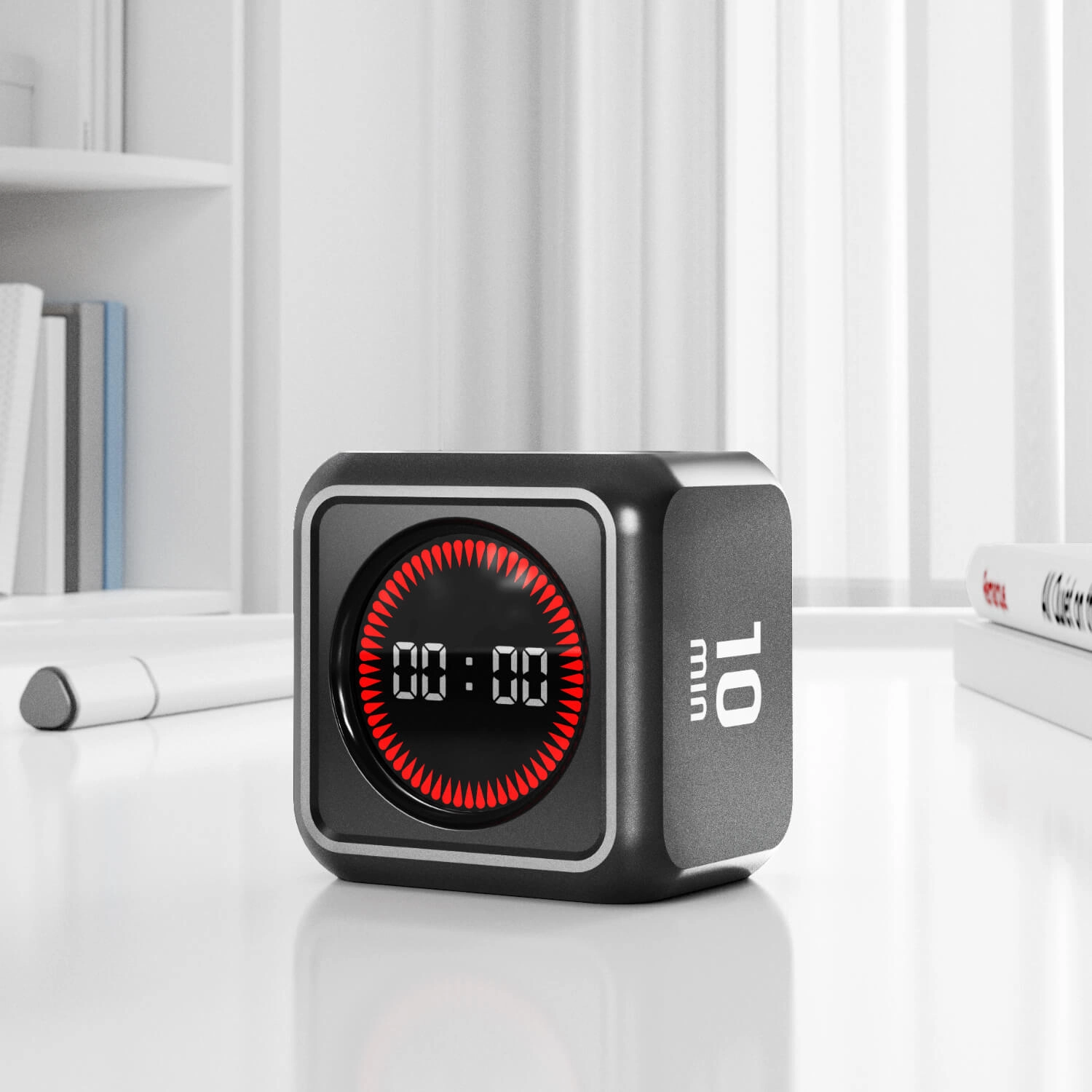
Display performance directly affects perceived product quality. Buyers should assess digit contrast, viewing angle, segment uniformity, refresh behavior, and readability in bright offices, classrooms, kitchens, studios, and low-light environments. If the device uses an LED display, the inspection should address brightness consistency and whether light leakage appears around the enclosure. If it uses an LCD, the evaluation should include contrast at different viewing angles and the possibility of ghosting or incomplete segments.
Controls should be tested for tactile consistency, accidental activation resistance, labeling clarity, and long-term endurance. A button that feels firm on the first sample but becomes loose during production can create customer complaints. Buyers should request a button life target, test evidence, and a clear definition of acceptable switch force. Touch controls require additional checks for false activation, wet-finger behavior, responsiveness, and lock-screen functionality.
Acoustic alerts also require a measurable specification. The buyer should approve the tone, volume range, duration, and mute behavior, especially when the product is intended for schools, offices, libraries, clinics, or shared workspaces. A visual countdown clock used in a quiet environment may need a silent mode, while a kitchen or fitness application may require a stronger alert.
Enclosure, materials, and physical durability
The housing should be inspected for dimensional accuracy, parting lines, sink marks, warpage, sharp edges, loose components, inconsistent texture, and color variation. These details affect both safety and retail perception. For private-label products, the approved golden sample should define the exact surface finish, logo position, color reference, button geometry, display window, and mounting features.
Drop and impact testing should reflect the intended use environment and be agreed before production. The test plan may include drops from a defined height onto specified surfaces, repeated button operation, stand opening and closing, cable insertion, and battery-cover removal. The purpose is not to claim an unverified protection rating but to establish whether ordinary handling causes cracking, loss of calibration, display failure, or enclosure separation.
Material documentation is equally important. Buyers should request declarations for plastics, coatings, adhesives, batteries, and electronic components where applicable. For products sold in regulated markets, compliance evidence should be matched to the final model number and not merely to a similar product in the supplier’s catalog.
Production Inspection and Compliance Evidence
Electronic components and firmware verification
Quality control should extend beyond visible appearance. The supplier should maintain an approved bill of materials and a change-control procedure covering the microcontroller, display, buzzer, switches, battery contacts, charging components, and power-management circuit. Unauthorized substitutions can change timing stability, standby consumption, acoustic output, or electromagnetic performance.
Firmware validation should include every user-facing function. Inspectors should verify default settings, custom interval storage, cycle counting, pause behavior, reset behavior, low-battery warnings, startup screens, sleep mode, factory reset, and any mobile or wireless features. Firmware version control is essential for private-label programs because a late software change can create inconsistent behavior between production lots.
Where the device includes rechargeable power, testing should cover charging time, overcharge protection, operating duration, abnormal charging conditions, connector durability, and battery swelling risk. If the design uses replaceable cells, the battery compartment should prevent incorrect insertion where feasible and provide clear polarity markings. Safety instructions should correspond to the actual battery type supplied.
Regulatory and management-system documentation
Buyers should distinguish between a supplier’s general certificate and product-specific evidence. A factory certificate may demonstrate a management framework, but it does not automatically prove that a particular timer complies with every destination-market requirement. The ISO 9001 quality management standard is useful when assessing documented processes, corrective actions, traceability, and continual improvement, but it should be reviewed alongside technical test reports.
For European sales, the buyer should confirm the applicable directives and maintain a technical file supporting the product’s conformity assessment. The European Commission CE marking guidance explains that CE marking indicates conformity with applicable EU requirements and is not simply a general-purpose quality logo. For electronic equipment, electromagnetic compatibility, electrical safety, radio functions, battery requirements, and substance restrictions may all be relevant depending on the product design.
RoHS evidence should identify the product scope, test basis, and material coverage. The European Commission RoHS Directive information provides the regulatory context for restricting certain hazardous substances in electrical and electronic equipment. For products entering the United States, the applicable FCC pathway depends on whether the device generates or uses radio frequency energy. Buyers should ask for reports tied to the final hardware configuration rather than relying on an unrelated model.
Sampling plans and acceptance thresholds
A practical inspection plan separates critical, major, and minor defects. Critical defects may include exposed electrical hazards, overheating, battery damage, or a failure that prevents the device from operating safely. Major defects can include inaccurate timing, nonfunctional controls, missing compliance labels, display failure, or incorrect firmware. Minor defects may include small cosmetic marks that do not affect use but exceed the approved sample standard.
Sampling should be agreed before the purchase order is released. The buyer and supplier should define the inspection level, acceptable quality limit, sample quantity, test duration, rework rules, and responsibility for reinspection costs. The ISO 2859-1 sampling standard is a recognized reference for attribute-based inspection using acceptance quality limits, although the final plan should reflect product risk, order volume, and customer requirements.
| Control area | Recommended evidence | Buyer acceptance focus |
|---|---|---|
| Timer performance | Calibration or functional test record | Measured deviation remains within the approved specification in every operating mode |
| Display and controls | Golden sample, endurance results, visual inspection report | No missing segments, unstable buttons, poor contrast, or unintended activation |
| Battery and power | Battery specification, charging test, runtime record | No abnormal heat, swelling, unsafe charging behavior, or unacceptable standby drain |
| Regulatory compliance | Product-specific declarations and laboratory reports | Model number, hardware version, and destination-market requirements are aligned |
| Shipment quality | Pre-shipment inspection and carton-drop evidence | Correct quantity, accessories, labels, packaging, and transport protection |
Supplier Evaluation for Scalable Private-Label Programs
Design-for-manufacturing and customization control
A reliable supplier should involve engineering before tooling begins. Design-for-manufacturing review can identify weak snap fits, difficult assembly steps, inconsistent wall thickness, poor battery access, display alignment risks, and unnecessary component costs. It can also improve the product’s stability when a brand requires a distinctive enclosure, custom color, oversized digits, magnetic mounting, wall mounting, or a combined timer and environmental display.
Buyers should request a development schedule that separates concept approval, industrial design, engineering validation, mold trial, pilot production, compliance testing, packaging approval, and mass production. Each stage should have documented exit criteria. This approach limits the risk of discovering a structural or firmware problem after a large production deposit has been paid.
Traceability, corrective action, and after-sales support
Production traceability should connect finished goods to a lot number, manufacturing date, firmware version, component batch, inspection record, and packaging configuration. This information allows the brand owner to isolate a problem rather than placing an entire shipment on hold. Suppliers should also explain how nonconforming products are identified, segregated, reworked, and released.
Corrective action should address root cause rather than only replacing defective units. A useful report identifies the failure mode, containment action, root cause, permanent corrective action, verification method, and responsible department. Buyers should also confirm warranty terms, spare-parts availability, replacement procedures, technical response times, and the expected service life of molds and electronic components.
Why Youben life Fits a Digital Timer Quality Program
Integrated engineering and manufacturing capability
Youben life was established in 2010 as a premier OEM/ODM manufacturer focused exclusively on Digital Timers, Pomodoro timers, Visual Countdown Clocks, temperature and humidity monitors, and thermo-hygrometers. This product specialization enables our team to address the details that often determine field performance, including timing logic, display architecture, power management, enclosure ergonomics, sensor integration, and user-interface behavior.
Headquartered in Guangzhou, China, our 20,000m² vertically integrated facility supports turnkey private-label development for global brands and Amazon bestsellers. Our manufacturing process extends beyond basic assembly. It includes ID/MD industrial design, custom IC programming, precision mold tooling, engineering validation, production inspection, and retail-ready packaging. This integrated structure helps reduce communication gaps between design, tooling, firmware, procurement, and final assembly.
Compliance, product range, and brand differentiation
Our quality approach is designed to support buyers that require repeatable production rather than a one-time prototype. Youben life products meet strict CE, FCC, and RoHS standards, subject to the applicable product configuration and destination-market requirements. Compliance planning is incorporated into development so that enclosure changes, electronic revisions, labeling, and packaging information can be reviewed before mass production.
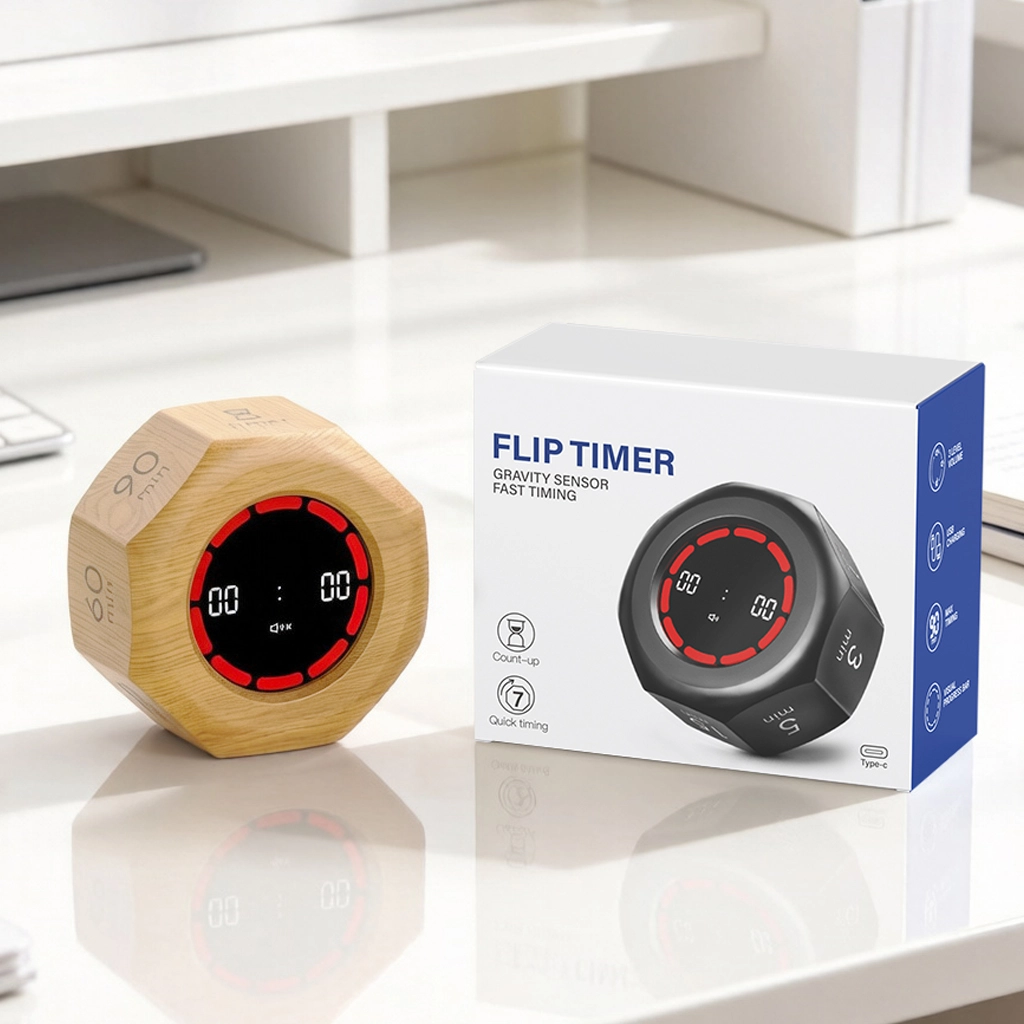
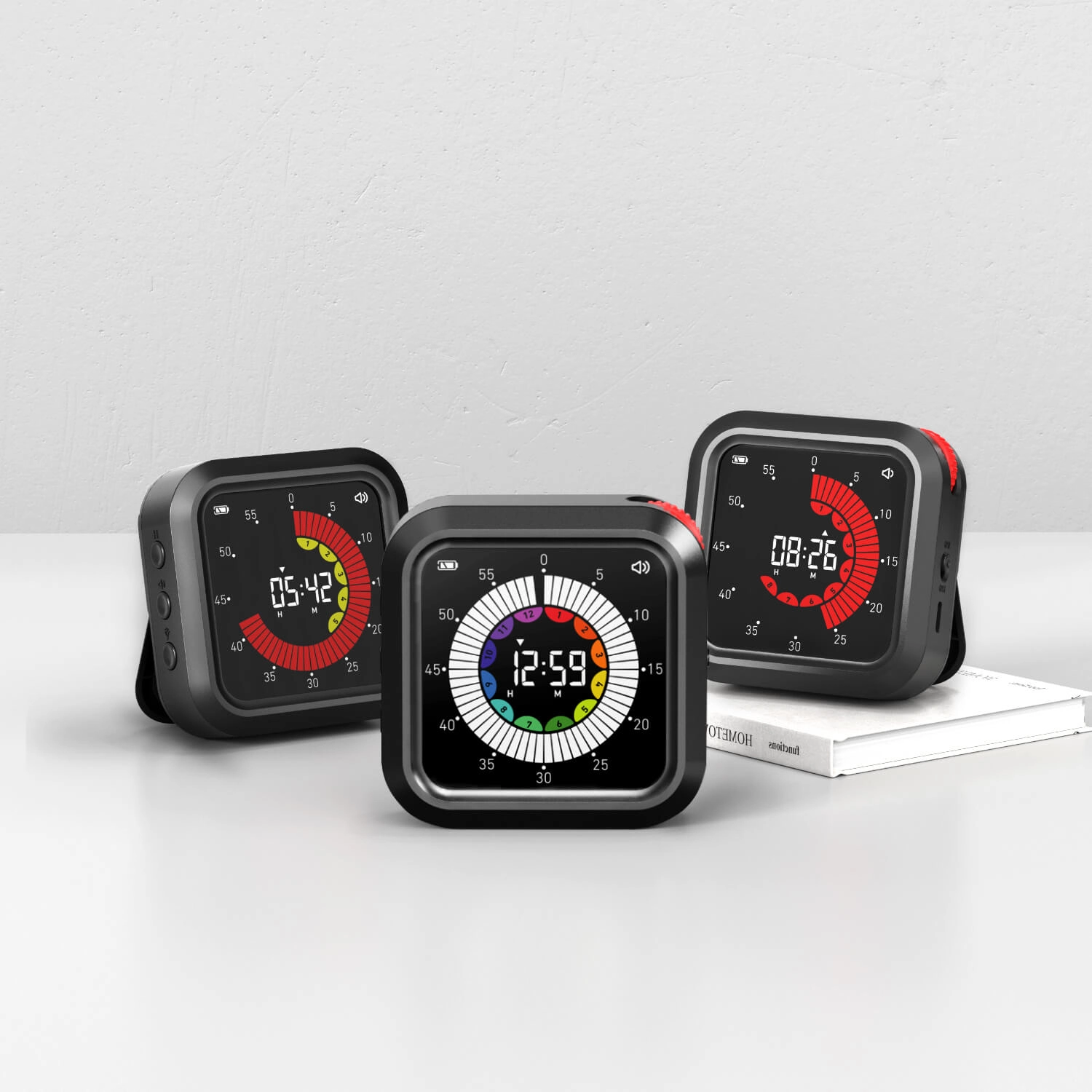
Our product range includes Digital Timer solutions for education, productivity, cooking, fitness, healthcare support, and workplace routines. We also develop Pomodoro timer formats with customized interval logic, visual countdown products for classrooms and commercial environments, and thermo hygrometer and temperature humidity monitor products for homes, offices, storage areas, and retail channels. Combining these categories allows project owners to build a coordinated product family rather than isolated SKUs.
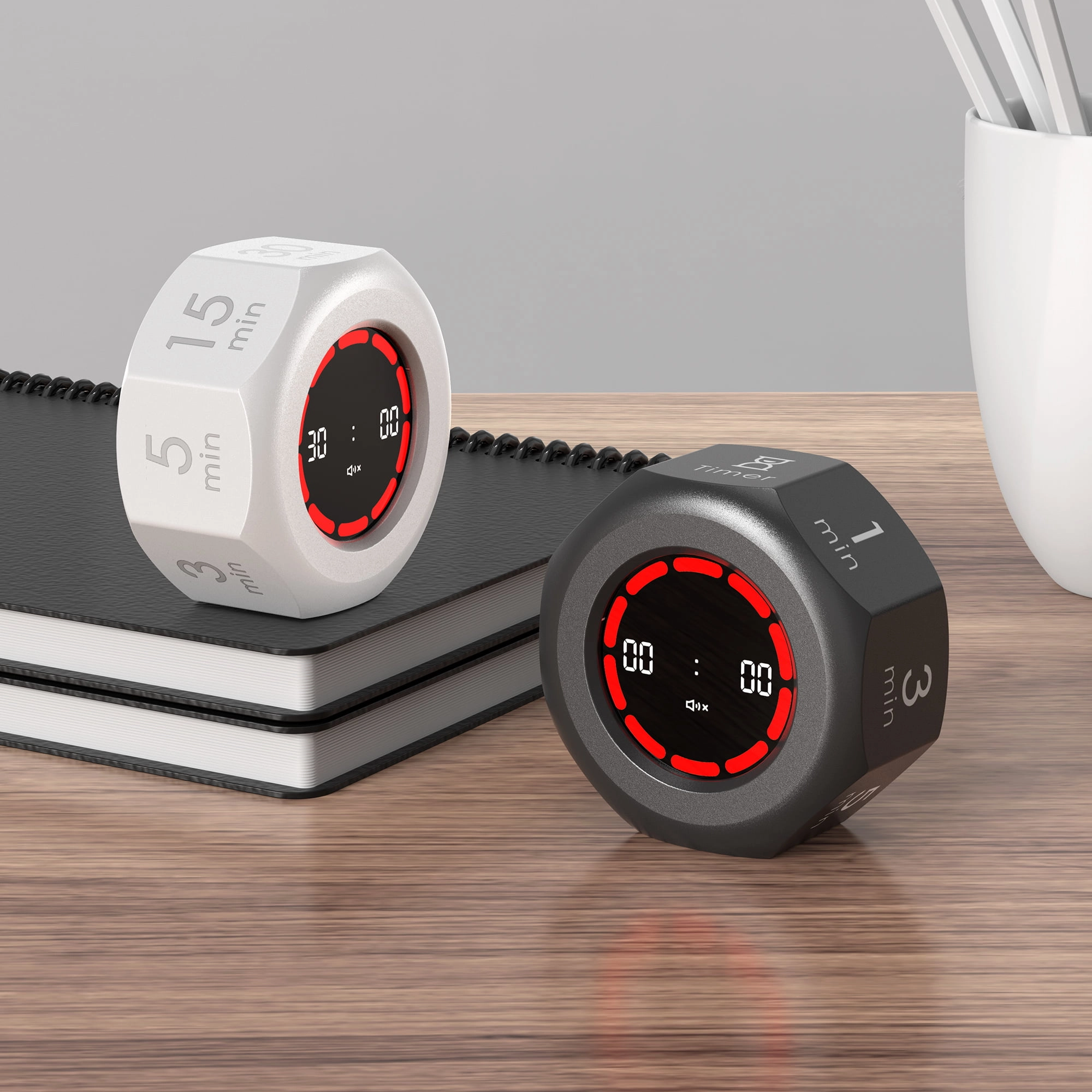
For brand owners, differentiation can be created through industrial design, screen proportions, custom colors, private-label graphics, packaging hierarchy, firmware behavior, mounting options, and accessory selection. Our engineering team can translate a commercial brief into controlled specifications and production documentation, helping protect brand identity while maintaining manufacturability and cost discipline.
Procurement decisions that support long-term ROI
The lowest unit quotation does not necessarily represent the lowest total cost. Buyers should evaluate tooling ownership, engineering revisions, compliance testing, packaging damage, defect rates, warranty claims, replacement logistics, and minimum order quantities together. A supplier with scalable capacity and documented quality controls can reduce hidden costs created by inconsistent lots, delayed corrective actions, and repeated product launches.
Our decade-plus engineering experience and scalable manufacturing capacity support projects from early concept through commercial shipment. By combining product development, mold tooling, custom electronics, assembly, inspection, and packaging coordination, Youben life helps partners shorten supplier chains and improve accountability. Global brands and marketplace sellers can contact our team through Youben life’s official website or email info@youbenlife.com to discuss specifications, sampling, compliance needs, and private-label production planning.
Contact Youben life to review your timing product specifications, request a qualified sample, and develop a reliable private-label Digital Timer program.
Frequently Asked Questions
What should buyers test first when evaluating a private-label Pomodoro timer?
Buyers should first verify timing accuracy, work and break mode logic, pause and reset behavior, automatic transitions, display readability, and control response. These functions define the core user experience and should be tested with documented acceptance criteria.
How can a buyer confirm that a supplier’s compliance documents are relevant?
The buyer should confirm that declarations and laboratory reports identify the final model number, hardware version, firmware configuration where relevant, and destination-market requirements. General factory certificates or reports for similar products should not be treated as complete product compliance evidence.
What quality defects are considered critical in a digital timer inspection?
Critical defects may include exposed electrical hazards, overheating, battery damage, unsafe charging behavior, or failures that prevent the product from operating safely. These defects should trigger immediate containment and should not be accepted under normal commercial inspection.
Why is firmware version control important for a customized timer?
Firmware version control prevents inconsistent behavior between production lots. It helps buyers verify default settings, interval storage, cycle counting, pause and reset functions, low-battery warnings, sleep mode, factory reset, and any other user-facing features.
Which supplier capabilities are important for a private-label timer project?
Important capabilities include industrial design, design-for-manufacturing review, custom IC or firmware programming, precision mold tooling, compliance coordination, documented inspections, traceability, corrective action, packaging development, and scalable production capacity.
How should buyers compare a low quotation with a higher-quality OEM proposal?
The comparison should include tooling, engineering revisions, compliance testing, packaging damage, defect rates, warranty claims, replacement logistics, minimum order quantities, and production consistency. The lowest unit price may create a higher total cost when hidden quality and support risks are included.
Avoiding Costly Errors in Custom Pomodoro Timer Orders
Custom Branding Options for Electronic Kitchen Timers
Best portable sports timer with remote manufacturers and supplier brands
Custom Mini Timers: OEM Options, Lead Times, and MOQ
Interested in this article?
Let’s talk.
Need specifications, pricing, or customization options? We’ll provide everything you need.

Youben life
Youben life