
Custom Pomodoro Timer Manufacturer: Branding, Design, Functions, and Packaging Options
- How to Plan a Private-Label Focus Timer Program
- Define the target user and commercial position
- Translate the Pomodoro method into product requirements
- Build a cost and risk model before tooling
- Branding, Industrial Design, and User Experience Decisions
- Make the product recognizable without reducing usability
- Select the display and control architecture carefully
- Use human-factors testing to prevent avoidable returns
- Functional Engineering, Compliance, and Packaging Choices
- Compare practical feature packages
- Manage electronics, firmware, and quality validation
- Choose packaging that protects the product and sells it
- Youben life as an Integrated OEM and ODM Development Partner
- From product concept to scalable production
- A broader product platform for related categories
- Compliance, capacity, and brand protection
- Plan the next step with measurable deliverables
- Frequently Asked Questions
A custom Pomodoro timer is more than a countdown device: it is a branded productivity tool that combines time-management functionality, industrial design, firmware behavior, user experience, packaging, and compliance into one commercial product. For distributors, education suppliers, wellness brands, office-equipment companies, and Amazon operators, the right development partner should support the full path from product concept and identity design to tooling, pilot production, testing, retail packaging, and scalable delivery. The strongest programs balance recognizable branding with reliable digital timer performance, intuitive controls, readable displays, efficient battery use, and a cost structure that protects margin.
How to Plan a Private-Label Focus Timer Program
Define the target user and commercial position
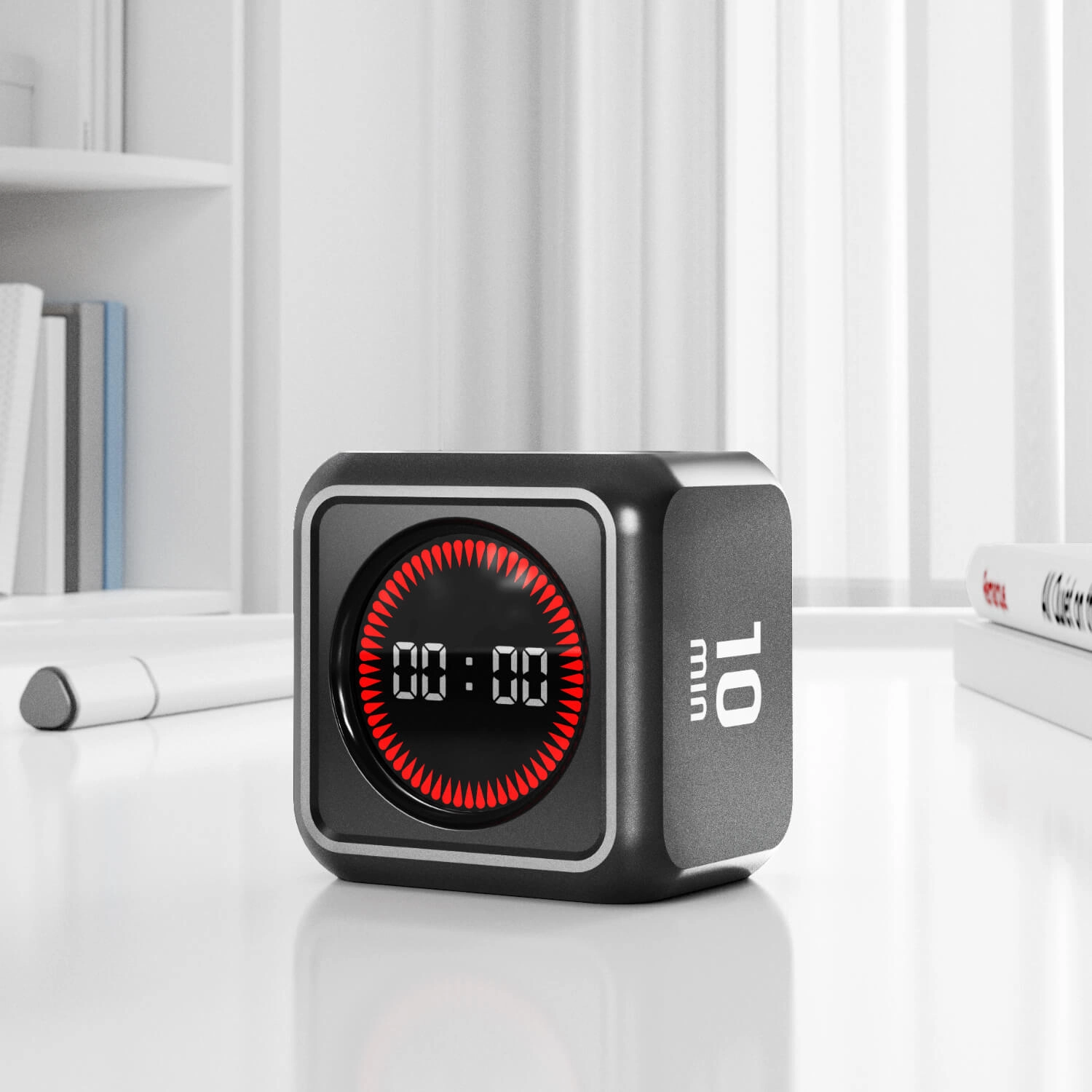
Product planning should begin with the intended use case rather than with a factory catalog. A study-oriented model may require a simple 25-minute work cycle, short break, long break, silent operation, and a compact footprint for desks or backpacks. A corporate productivity model may prioritize High Quality materials, low-distraction alerts, USB-C charging, a larger display, and a restrained color palette. Classroom and therapy applications may need oversized numerals, tactile controls, a loud but adjustable buzzer, and a visual progress indicator that can be understood from across a room.
Brand owners should also identify the purchase channel, expected retail price, target annual volume, geographic markets, and competitive alternatives. These factors influence enclosure materials, display technology, packaging construction, warranty provisions, and certification requirements. A low-cost promotional item follows a different engineering path from a durable consumer-electronics product sold through specialty retail. A written product requirements document prevents late changes from increasing tooling expense or delaying launch.
Translate the Pomodoro method into product requirements
The original Pomodoro technique is commonly associated with alternating focused work sessions and breaks; its background is described in Wikipedia’s overview of the Pomodoro Technique. A hardware product does not need to reproduce one rigid routine. It can offer configurable work periods, short and long breaks, repeat cycles, pause and resume, memory retention, and a count-up or count-down mode. The correct configuration depends on the audience and should be validated through user testing.
Core requirements should be written as measurable behaviors. Examples include a timing range from one second to 99 minutes, a visible operating-state indicator, a maximum acceptable display error, a specified alarm duration, and a defined behavior after power interruption. If the product includes a clock, memory, or sensor, the requirements should separately define accuracy, refresh rate, and battery-life expectations. Clear acceptance criteria help the engineering team distinguish a genuine design improvement from a cosmetic feature that adds cost without increasing customer value.
Build a cost and risk model before tooling
Unit price is only one part of the investment. The commercial model should include industrial design, electronic development, custom integrated-circuit programming, molds, sample iterations, certification testing, packaging artwork, inspection, freight, tariffs, warranty reserves, and inventory financing. Buyers should request a costed bill of materials and clarify which expenses are one-time engineering charges and which recur in every production order.
Risk is reduced when the specification identifies critical-to-quality characteristics. These may include button force, rotary-dial life, display uniformity, enclosure gaps, battery-door security, alarm volume, adhesive strength, and resistance to normal desk impacts. A production control plan can then connect each characteristic to incoming inspection, in-process checks, final testing, or reliability validation.
Branding, Industrial Design, and User Experience Decisions
Make the product recognizable without reducing usability
Branding should work at three levels: the physical product, the digital interface, and the retail presentation. Logo placement, surface finish, accent colors, typography, and iconography should form one coherent visual system. A logo that is too small disappears on a crowded retail shelf, while an oversized mark can make the device look promotional rather than High Quality. Buyers should evaluate the product from normal working distance, in online product photography, and inside its package.
Industrial design must serve interaction. High-contrast numerals, a stable base, readable viewing angles, and controls that can be identified without searching are often more valuable than decorative geometry. A magnetic back, wall-mount slot, non-slip feet, or integrated stand can expand use cases without significantly complicating the electronics. Material choices should also reflect the environment: ABS or PC blends may suit general consumer applications, while soft-touch coatings and silicone elements can improve grip but may introduce aging, cleaning, or color-consistency considerations.
Select the display and control architecture carefully
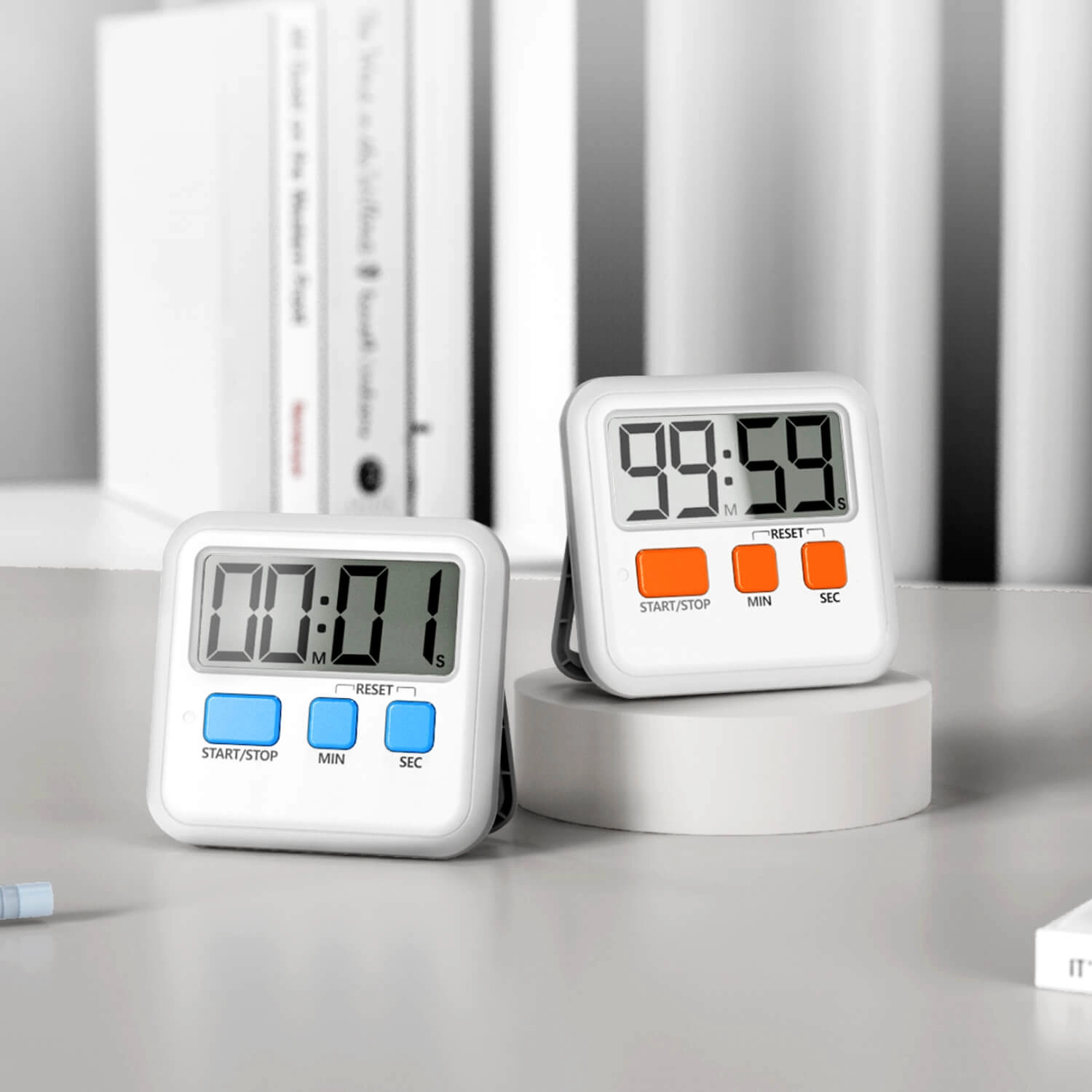
LED, LCD, and segmented displays each create different trade-offs. LED modules provide strong visibility and can support large numerals, but they may consume more power. LCD technology can extend battery life and support a thin profile, although viewing angle and backlight decisions require attention. A segmented display is economical for basic time values, while a graphical display provides more flexibility for cycle status, icons, and instructions.
Controls may include physical buttons, a rotary encoder, a touch interface, or a hybrid arrangement. Physical controls generally provide reliable tactile feedback and are easier to operate during focused work. Rotary controls can make time adjustment fast, but they need debouncing, detent design, and durability testing. Touch controls support a clean appearance but may be less dependable with wet hands, gloves, or accidental contact. The best choice is determined by user context, not by trend alone.
Use human-factors testing to prevent avoidable returns
Prototype evaluation should measure how quickly a first-time user can set a session, recognize the active mode, pause the countdown, and silence an alert. Test participants should include the actual audience, including students, teachers, office workers, parents, or wellness professionals where relevant. Common failure points include ambiguous icons, hidden settings, confusing long-press actions, overly bright night displays, and alarms that cannot be adjusted.
Accessibility should be considered during the design stage. Large high-contrast digits, distinguishable sound patterns, tactile feedback, and simple mode changes can support users with different visual, auditory, or cognitive needs. A reliable user interface reduces customer-service contacts and improves product reviews, which directly affects the economics of online retail.
Functional Engineering, Compliance, and Packaging Choices
Compare practical feature packages
| Feature area | Entry configuration | Enhanced configuration | Procurement consideration |
|---|---|---|---|
| Timing modes | Countdown and pause | Work, short break, long break, repeat cycles, count-up | Additional modes increase firmware scope and testing requirements |
| Power | Replaceable coin or AAA batteries | Rechargeable battery with USB-C | Compare user convenience, shipping rules, charging design, and lifecycle cost |
| Display | Basic segmented LCD | Large LCD, LED, or graphical interface | Balance visibility, power consumption, tooling, and retail price |
| Alerts | Single buzzer tone | Adjustable volume, sound patterns, visual and vibration alerts | Useful for different environments but requires broader validation |
| Customization | Logo and color | Custom housing, firmware, icons, molds, and packaging | Greater differentiation requires earlier engineering commitment |
Feature selection should follow a value-versus-complexity review. Bluetooth connectivity, mobile applications, data logging, and cloud synchronization can create new commercial opportunities, but they also introduce software maintenance, cybersecurity, privacy, battery, and regulatory considerations. For many private-label programs, a dependable standalone device delivers a clearer proposition and lower support burden than an over-engineered connected product.
Manage electronics, firmware, and quality validation
Firmware determines how the physical product behaves in daily use. Engineers should validate timer accuracy, button response, low-battery behavior, power-on defaults, alarm repeat logic, memory retention, and recovery after an interrupted session. If custom IC programming is used, version control and production traceability are important so that every batch contains the approved firmware.
Electrical and material compliance should be planned for the destination market. Buyers can review the European Commission guidance on CE marking, the United States FCC Part 15 requirements, and the EU RoHS Directive when defining the compliance plan. The exact obligations depend on product construction, electrical architecture, market, and importer responsibilities; supplier declarations alone should not replace appropriate test documentation.
Quality validation should include appearance inspection, functional testing, battery-life checks, button-cycle testing, drop or impact evaluation where appropriate, temperature and humidity exposure, packaging compression, and transit simulation. The test plan should identify sample sizes, pass-fail limits, corrective-action procedures, and release authority. This evidence gives buyers greater confidence when negotiating warranties, launching in multiple markets, or scaling from a pilot order to mass production.
Choose packaging that protects the product and sells it
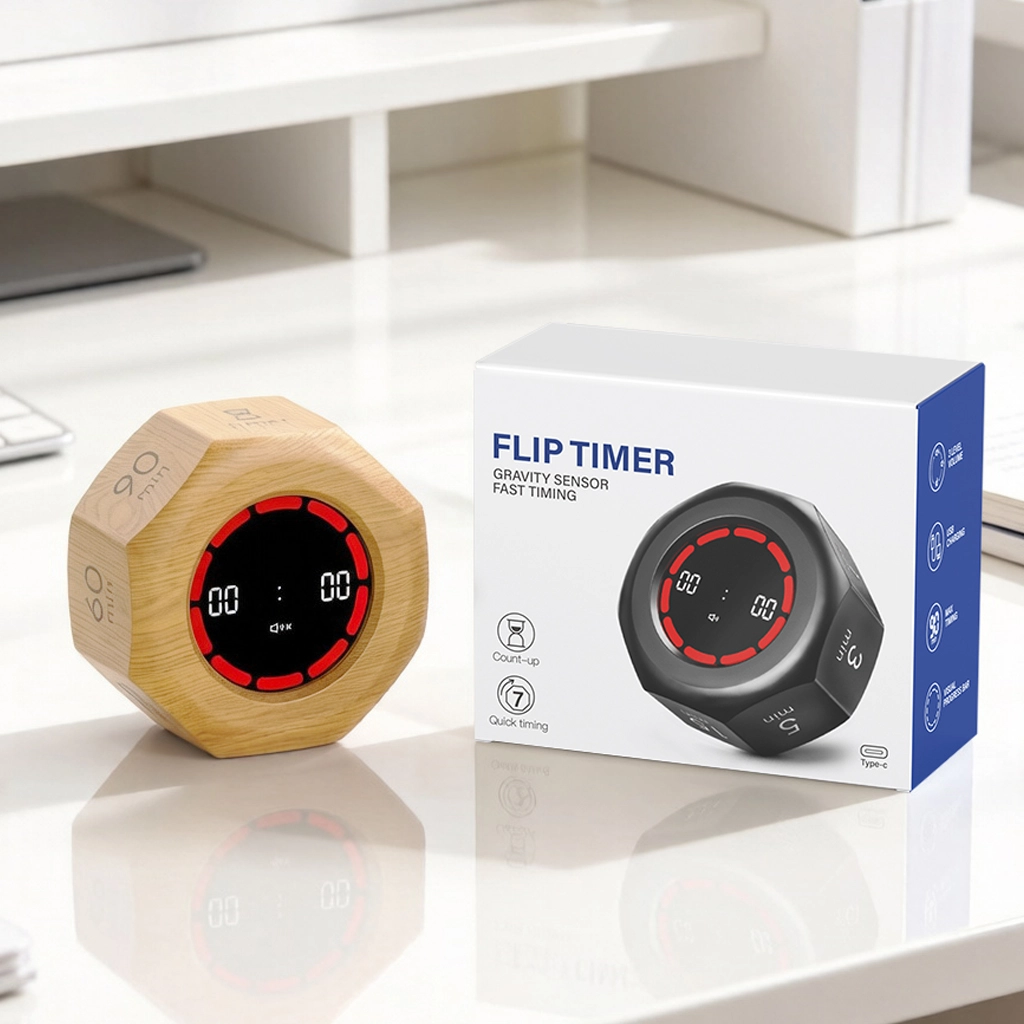
Packaging has two jobs: protect the device through transportation and communicate its value at the point of purchase. A retail-ready solution may include a folding carton, molded pulp tray, insert card, multilingual instructions, barcode labels, warning statements, and a quick-start guide. E-commerce packaging should minimize empty space and movement because oversized boxes increase dimensional freight costs and raise the risk of internal impact.
Packaging artwork should explain the primary benefit in seconds. Front-panel messaging can show the timing concept, display format, and key use case, while side panels can present specifications, operating instructions, battery information, and compliance marks. Buyers should confirm whether the package requires FSC-certified board, recycled content, plastic reduction, or local recycling symbols. Structural samples should be tested with the final product, accessories, and instruction materials before mass printing.
Youben life as an Integrated OEM and ODM Development Partner
From product concept to scalable production
Youben life was established in 2010 and focuses exclusively on digital timers, Pomodoro timers, visual countdown clocks, temperature and humidity monitors, and thermo-hygrometers. Our 20,000m² vertically integrated facility in Guangzhou, China, supports turnkey private-label programs for global brands and Amazon bestsellers. This focused product scope allows our engineering and manufacturing process to address the practical details that determine everyday performance, including display visibility, enclosure fit, alarm behavior, battery access, firmware logic, and packaging efficiency.
Our capabilities extend beyond simple assembly. We support ID and MD industrial design, custom IC programming, precision mold tooling, electronic development, sample refinement, and retail-ready packaging. For a brand owner, this integrated structure can reduce handoffs between separate vendors and make design changes easier to control. It also creates a clearer path from an initial concept to a production-approved digital timer with documented specifications and repeatable quality standards.
A broader product platform for related categories
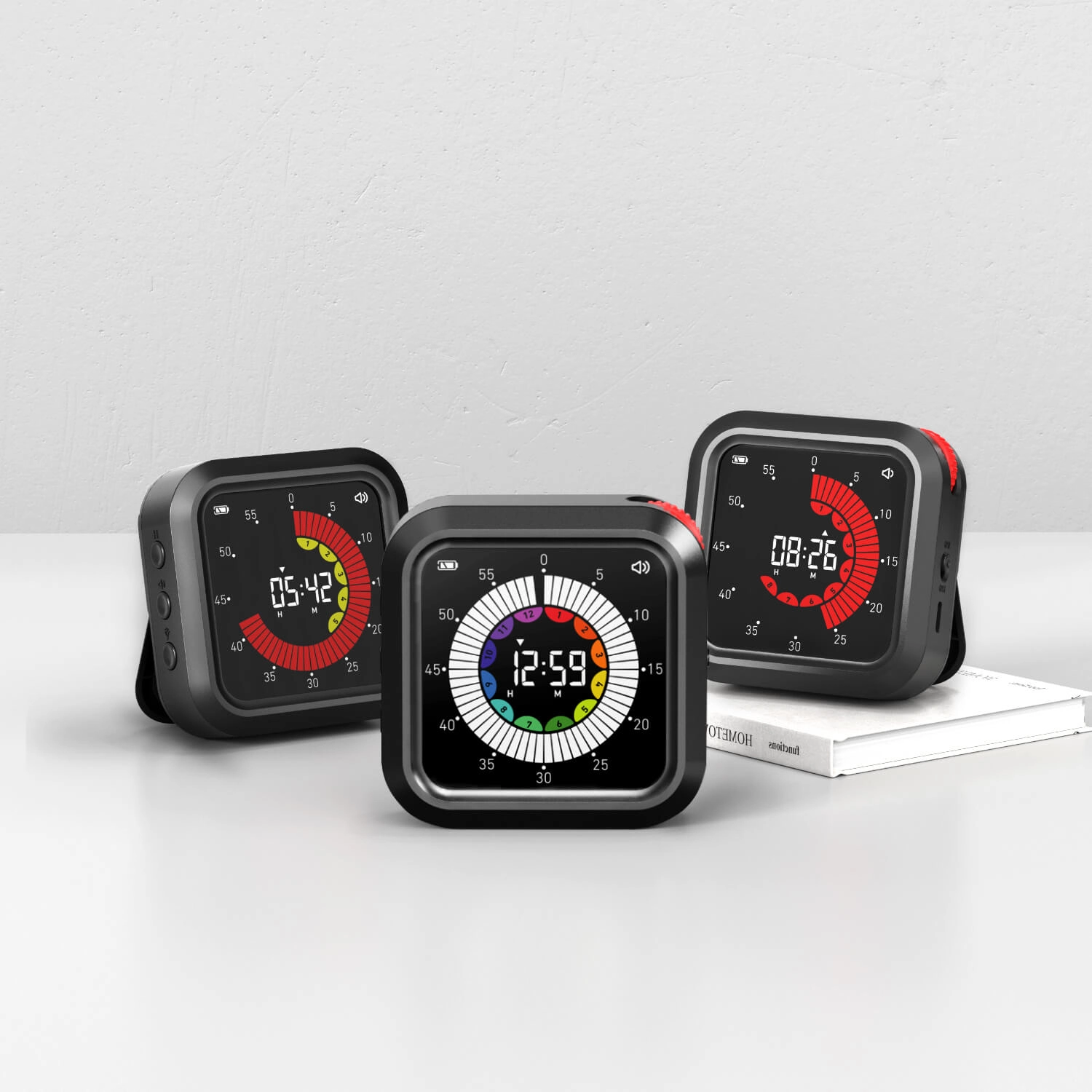
Brands that sell productivity products may benefit from a coordinated portfolio rather than a single item. A Pomodoro timer can be positioned alongside a visual countdown clock for classrooms, a compact digital timer for kitchens or laboratories, and a thermo hygrometer or temperature humidity monitor for homes, offices, storage areas, and indoor-environment applications. Shared design language across these categories can improve shelf recognition, online merchandising, and cross-selling while allowing each product to solve a distinct customer problem.
Our team can help project owners determine whether the best route is an existing platform with cosmetic customization, a modified standard design, or a fully developed private-label product. That decision is influenced by target price, forecast volume, launch schedule, required differentiation, and compliance scope. Early technical review helps avoid selecting a design that looks attractive but cannot meet the required cost, battery life, packaging dimensions, or production capacity.
Compliance, capacity, and brand protection
All Youben life products are developed to meet strict CE, FCC, and RoHS requirements, subject to the applicable product configuration and market. Our decade-plus engineering background supports structured development, while scalable manufacturing capacity helps accommodate both initial validation orders and larger replenishment programs. Buyers should still define the required destination markets, importer records, labeling rules, and test reports in the purchase specification so the compliance file matches the actual commercial version.
Brand protection also depends on disciplined artwork, mold ownership terms, firmware control, packaging approval, and confidential handling of product information. A strong supplier relationship should document revision history, approved golden samples, inspection standards, and change-notification procedures. These controls help preserve consistency when the product moves from prototype to recurring production.
Plan the next step with measurable deliverables
A productive sourcing discussion should include the intended users, target price, estimated quantity, preferred dimensions, display type, timing modes, alarm requirements, power source, branding scope, packaging format, sales markets, and desired launch date. The supplier can then respond with a realistic development route, sample schedule, tooling requirements, testing plan, and commercial quotation.
For buyers comparing manufacturers, the most useful evaluation is not a catalog price alone. Review engineering responsiveness, sample accuracy, production controls, compliance support, packaging competence, communication discipline, and the supplier’s ability to maintain the approved specification over time. This broader assessment is more likely to produce a dependable product, a stronger brand experience, and a healthier return on development investment.
Frequently Asked Questions
What should buyers provide before requesting a custom Pomodoro timer quotation?
Buyers should provide the intended users, target price, estimated quantity, preferred dimensions, display type, timing modes, alarm requirements, power source, branding scope, packaging format, sales markets, and desired launch date.
Which customization options are usually available for a private-label focus timer?
Common options include logo placement, housing color, surface finish, display format, button layout, timing modes, alarm behavior, custom icons, firmware, enclosure tooling, instruction materials, and retail packaging.
Should a custom timer use batteries or USB-C charging?
The choice depends on user convenience, target price, shipping requirements, charging expectations, battery life, and product positioning. Replaceable batteries may simplify entry-level products, while rechargeable USB-C designs can provide a more premium experience but require additional charging and safety validation.
What compliance requirements may apply to a digital timer sold internationally?
Requirements depend on the electrical design and destination market. Buyers may need to address CE-related obligations in the European market, FCC requirements in the United States, RoHS material restrictions, labeling, importer responsibilities, and supporting test documentation.
How can packaging reduce logistics and return risks?
Packaging should prevent movement and impact, minimize unnecessary empty space, fit the final product and accessories securely, and undergo compression or transit testing. E-commerce packaging should also control dimensional weight and clearly communicate the product’s main benefits.
Can one supplier develop both timers and indoor-environment products?
Yes. Youben life supports digital timers, Pomodoro timers, visual countdown clocks, thermo-hygrometers, temperature and humidity monitors, and related private-label products, enabling brands to build a coordinated product portfolio with shared design and packaging language.
Best Digital Smart Timers for Smart Homes and Commercial Use
Wholesale digital kitchen timer battery operated manufacturer and supplier
What Is a Visual Timer Manufacturer? A B2B Buyer’s Guide to Digital Timing Solutions
Top waterproof outdoor countdown timer Manufacturers and Suppliers
Interested in this article?
Let’s talk.
Need specifications, pricing, or customization options? We’ll provide everything you need.

Youben life
Youben life