
Custom Pomodoro Timer Logo and Firmware Customization
- Designing a Branded Focus Timer as a Complete Product System
- Logo placement, enclosure design, and retail recognition
- Display hierarchy and user interaction
- Packaging and channel-specific requirements
- Firmware Features That Differentiate a Branded Digital Timer
- Programmable work-rest cycles and operating modes
- Alert logic, power management, and fault handling
- Firmware validation and change control
- Why Youben life Supports Scalable OEM and ODM Timer Programs
- Integrated engineering from concept to production
- Custom firmware and hardware options for market differentiation
- Compliance, quality, and production readiness
- Procurement Checklist for a Private-Label Focus Timer
- Questions to resolve before quotation
- Cost, MOQ, lead time, and total ownership
- Commercial ROI and product-line expansion
- Frequently Asked Questions
Customizing a branded focus timer requires more than printing a logo on an existing enclosure. A successful program aligns the visual identity, industrial design, display layout, control logic, firmware, acoustic behavior, battery strategy, compliance documentation, packaging, and production testing with the intended market. Buyers evaluating a private-label digital timer should therefore assess both the visible brand elements and the embedded software architecture. Logo placement establishes recognition, while firmware customization determines how users start a session, pause a countdown, select work and rest intervals, receive alerts, recover from power interruption, and interact with the product over time.
Designing a Branded Focus Timer as a Complete Product System
Logo placement, enclosure design, and retail recognition
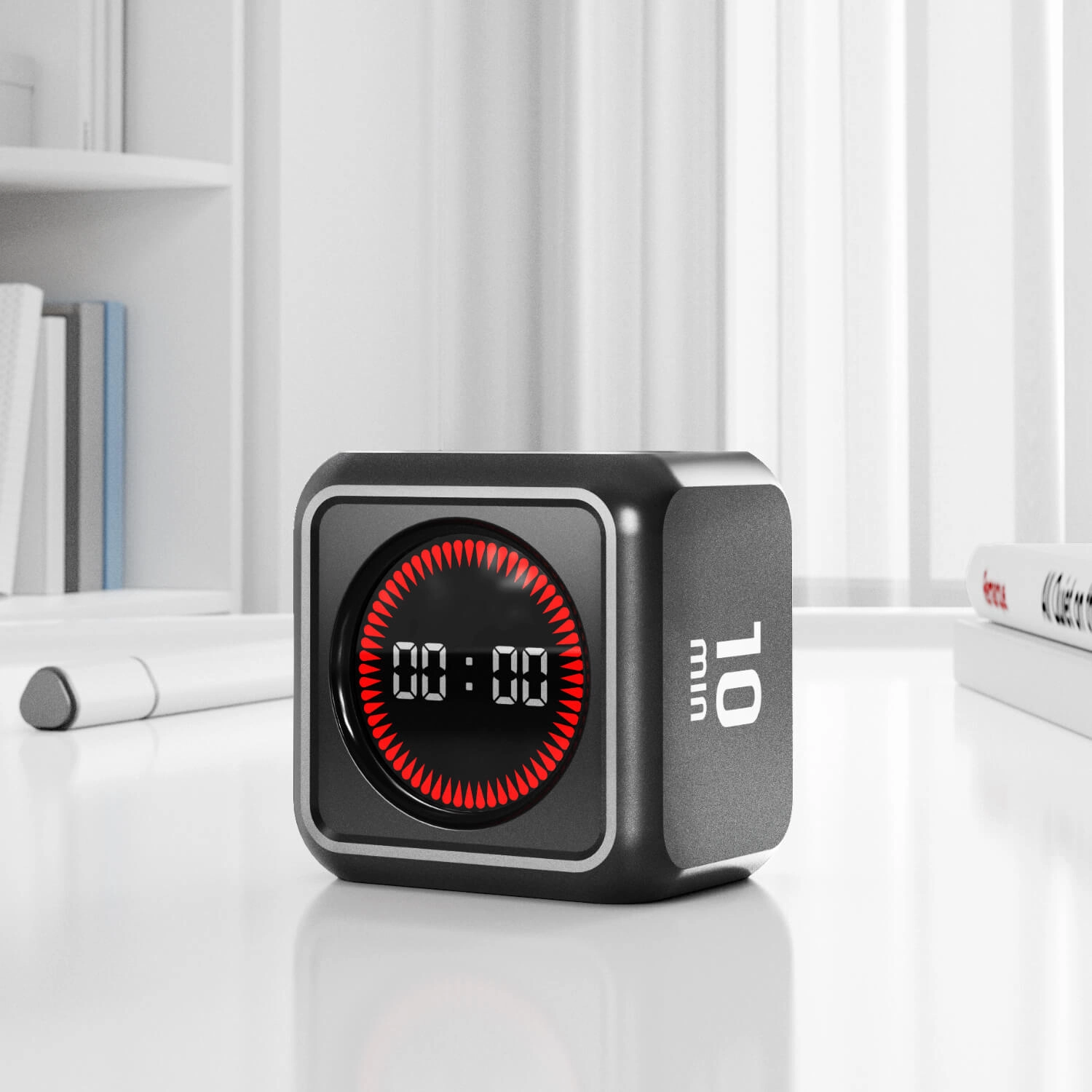
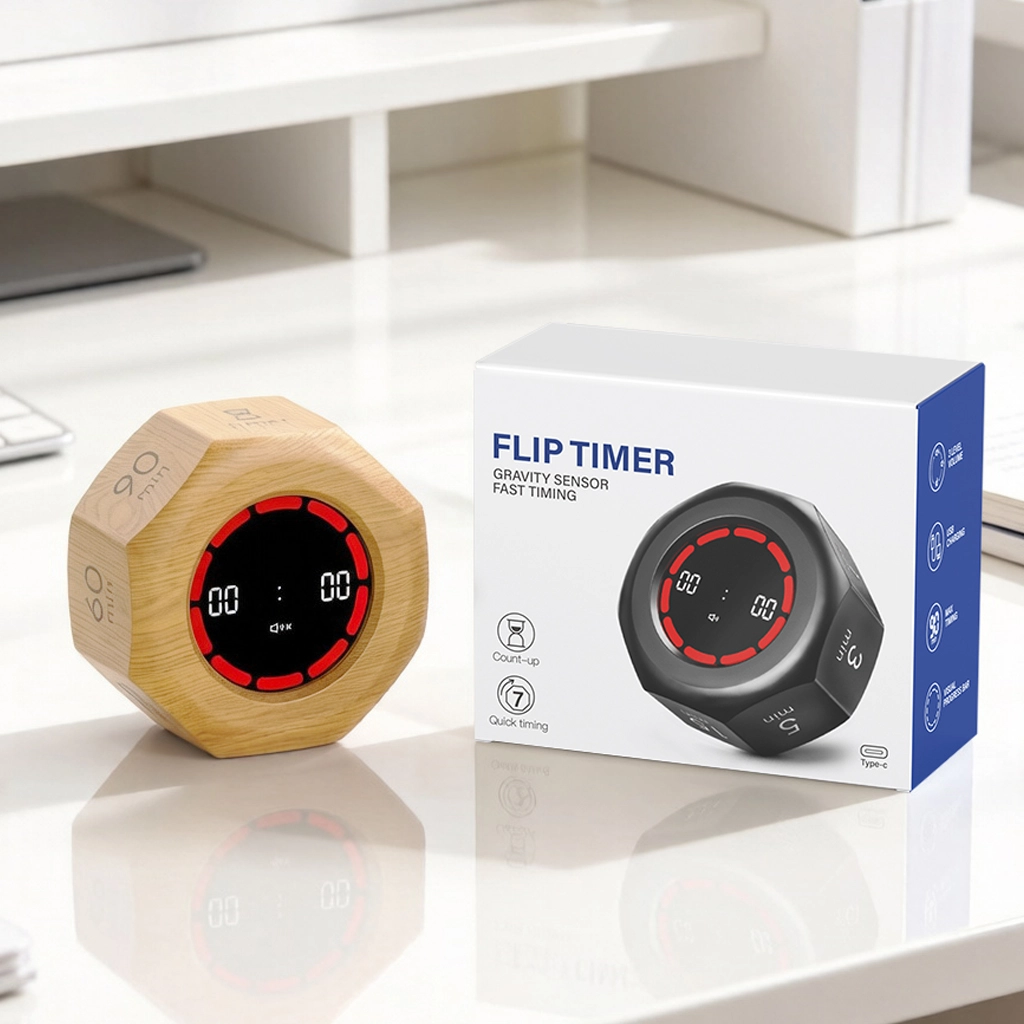
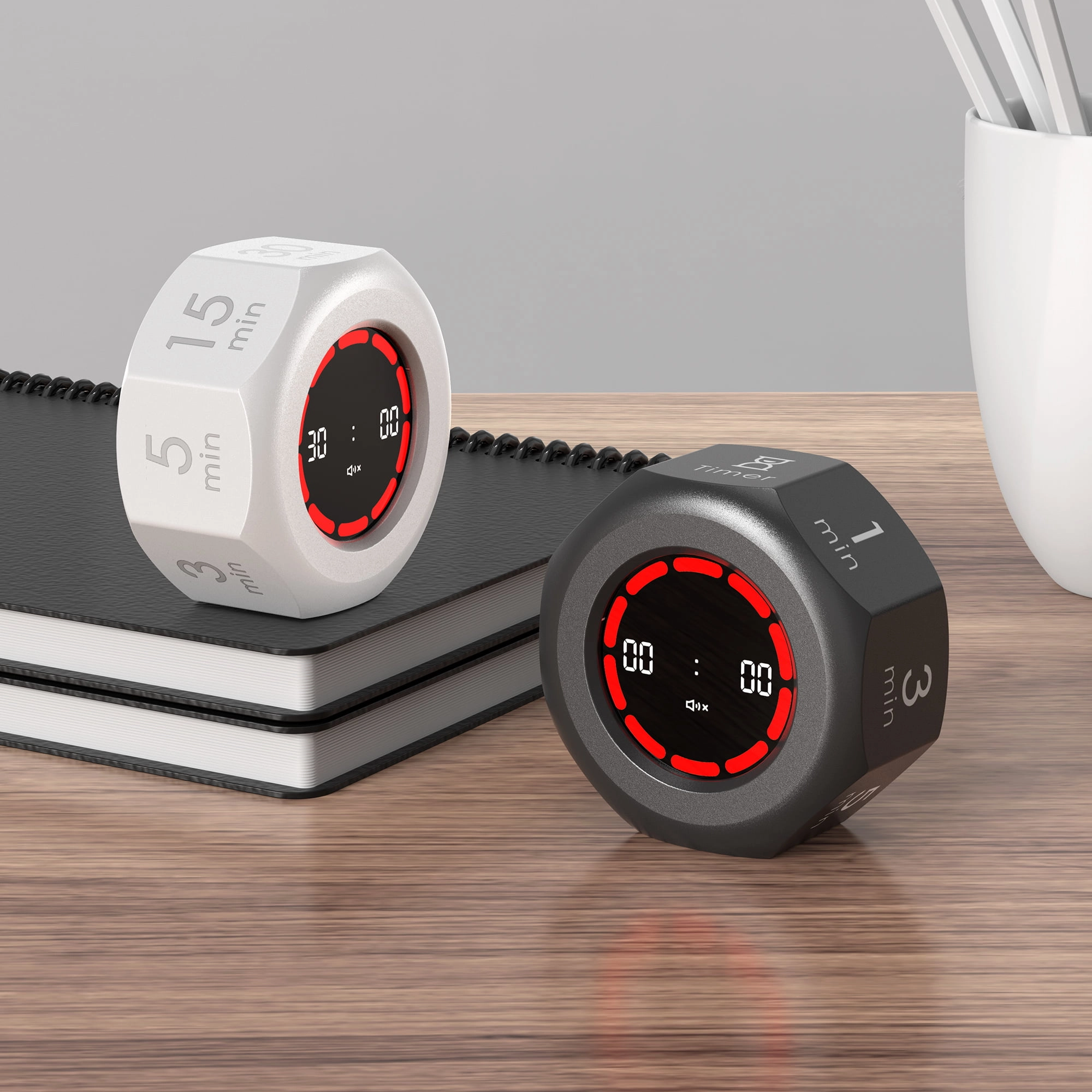
A logo is most effective when it is integrated into the industrial design rather than added as an afterthought. Project owners should define the logo position, minimum readable size, surface curvature, contrast, finish, and durability requirement before mold tooling begins. Common methods include pad printing, silk screening, laser etching, in-mold decoration, molded logos, and adhesive labels. Each method affects unit cost, visual consistency, abrasion resistance, and minimum order quantity.
The enclosure should also support the brand’s intended market position. A productivity accessory for professional offices may require a restrained matte finish, low-noise buttons, and a neutral color palette. A children’s learning product may prioritize rounded edges, high-contrast icons, larger controls, and a more resilient housing. Buyers should request color samples, logo adhesion tests, surface-finish approvals, and a golden design sample before authorizing mass production.
Display hierarchy and user interaction
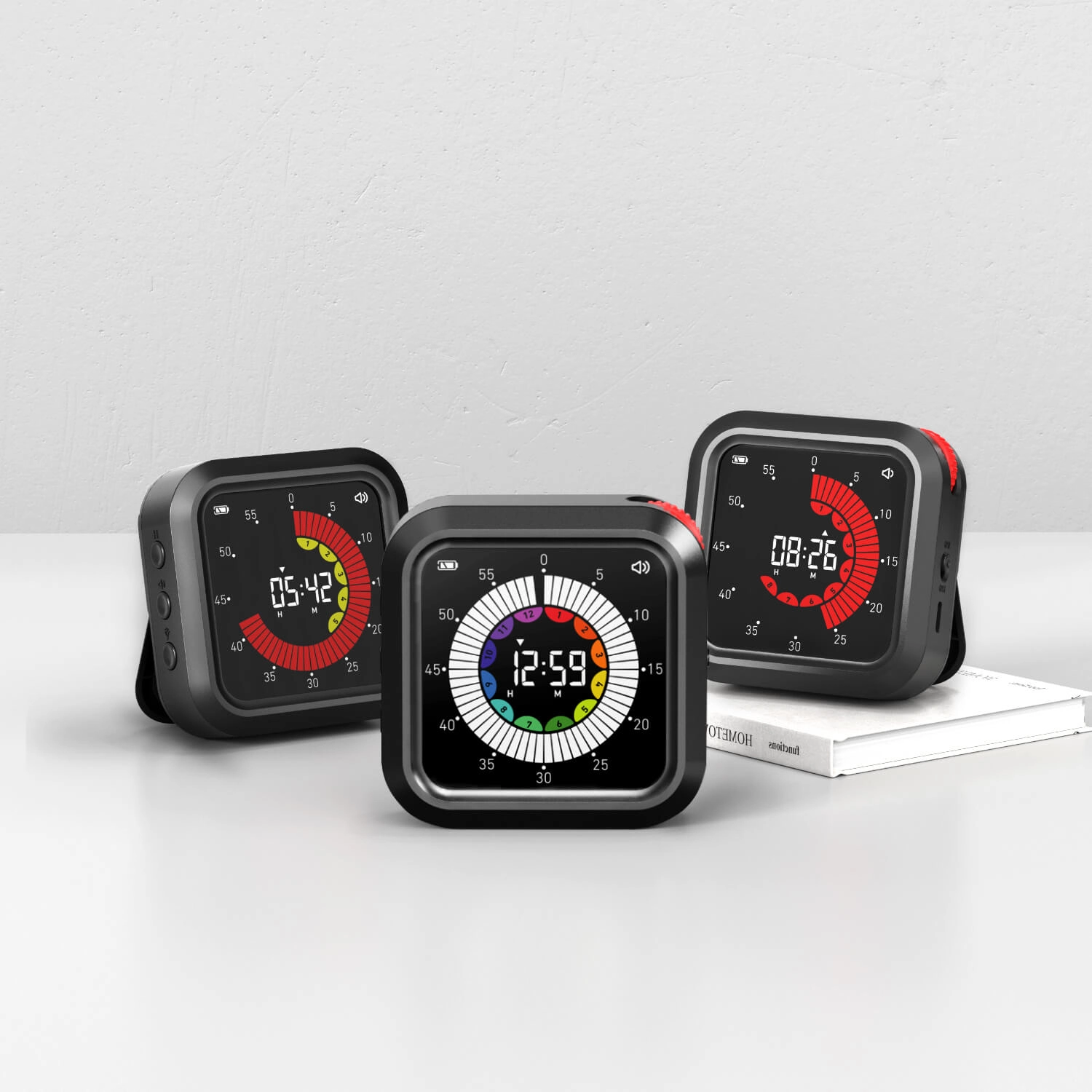
The display is the primary communication surface of a visual countdown device. Important information should be prioritized through digit size, remaining-time visibility, progress indicators, mode labels, and alert symbols. A buyer should decide whether the product needs a seven-segment display, segmented LCD, dot-matrix display, or a small graphical screen. The selection influences readability, power consumption, tooling, component availability, and firmware complexity.
Usability should be evaluated in realistic operating conditions rather than only through technical specifications. The ISO 9241-11 usability framework emphasizes effectiveness, efficiency, and satisfaction in a specified context of use. For a branded productivity timer, this means testing whether users can begin a session quickly, understand the current state from a distance, adjust a duration without confusion, and recover from an accidental button press.
Packaging and channel-specific requirements
Retail packaging must communicate the product’s use case within seconds. The front panel can present the primary benefit, while the rear panel should explain operating modes, power source, dimensions, included accessories, compliance marks, and warranty information. E-commerce packaging also needs strong product photography, scannable feature descriptions, barcode accuracy, and protection against compression and vibration during parcel shipment.
Brand owners should define packaging requirements at the beginning of development because insert dimensions, accessory compartments, printed manuals, and carton drop-test performance can affect the housing and production schedule. Packaging artwork should not be finalized until the product dimensions, regulatory marks, model number, and included components have been confirmed.
Firmware Features That Differentiate a Branded Digital Timer
Programmable work-rest cycles and operating modes
Firmware determines whether a timer behaves like a basic countdown product or a differentiated productivity platform. Standard functions may include countdown, count-up, interval training, stopwatch, and clock modes. More advanced programs can support configurable focus sessions, short breaks, long breaks, automatic cycle progression, daily repetition, memory presets, and one-touch access to frequently used durations.
The original Pomodoro technique is commonly associated with alternating focused work periods and short breaks, but commercial hardware does not need to copy one rigid interval structure. Buyers should specify whether users can select durations in one-minute increments, whether the device remembers the last setting, and whether the product should display the current cycle number. Flexible settings are valuable for education, studying, therapy, meetings, kitchen operations, and workplace concentration programs.
Alert logic, power management, and fault handling
Alert behavior has a direct effect on perceived quality. Firmware specifications should cover volume levels, mute mode, tone duration, vibration options, visual flashing, and whether the alert can be dismissed early. A supplier should also document what happens when the battery is low, a button is held down, the timer reaches zero, or power is interrupted during a session.
Power management is equally important for portable products. Automatic sleep mode, low-battery indication, display refresh control, and efficient standby behavior can extend battery life. If the product uses USB power, the design should define charging indicators, overcharge protection, connector durability, and safe recovery after cable removal. These decisions should be tested across multiple battery lots and operating temperatures rather than validated only on one engineering sample.
Firmware validation and change control
Firmware customization should follow a controlled process. The buyer and manufacturer need a written feature specification, interface flow, button map, error-state definition, version numbering method, and acceptance criteria. Every change should be traceable to a requirement or test result. This prevents late-stage modifications from creating unintended effects in unrelated functions.
A practical validation plan includes normal-use tests, boundary-value tests, repeated button operations, long-duration countdown tests, low-voltage tests, reset behavior, display readability checks, acoustic measurements, and recovery after power interruption. Where a connected product is planned, wireless behavior and cybersecurity requirements must be added to the specification. For non-connected products, a simpler architecture can reduce cost, software risk, and regulatory complexity.
| Customization area | Standard off-the-shelf approach | Engineered private-label approach | Buyer validation focus |
|---|---|---|---|
| Logo and enclosure | Generic housing with label | Integrated logo, colors, finishes, and tooling | Adhesion, abrasion, color, dimensional approval |
| Timer modes | One countdown preset | Configurable focus, break, cycle, and count-up modes | Use-case fit and operating simplicity |
| Alerts | Single fixed buzzer tone | Selectable volume, tones, mute, flash, or vibration | Sound level, user preference, and accessibility |
| Firmware | Factory-locked behavior | Custom IC programming and controlled revisions | Regression tests, version control, and recovery states |
| Packaging | Supplier’s standard carton | Retail-ready artwork, inserts, manuals, and barcode setup | Drop protection, labeling, and channel compliance |
The table illustrates why branding and firmware should be evaluated together. A visually distinctive enclosure cannot compensate for confusing controls, while sophisticated software cannot create a strong retail identity when the housing and packaging appear generic. The commercial objective is a coherent product experience that users can understand quickly and recommend confidently.
Why Youben life Supports Scalable OEM and ODM Timer Programs
Integrated engineering from concept to production
Youben life was established in 2010 as a specialized OEM and ODM manufacturer dedicated to digital timers, Pomodoro timers, visual countdown clocks, temperature and humidity monitors, and thermo hygrometers. Our Guangzhou, China headquarters includes a 20,000m² vertically integrated facility. This structure allows our team to coordinate industrial design, mechanical development, electronics, firmware, tooling, assembly, quality control, and packaging within one managed supply chain.
Our capability extends beyond applying a customer logo to an existing product. We support ID and MD industrial design, product differentiation, custom IC programming, precision mold tooling, display and control integration, and retail-ready packaging. For project owners, this reduces handoff risk between unrelated design houses, electronics suppliers, mold factories, and final assemblers. A single technical program can maintain consistency between the approved appearance and the manufactured product.
Custom firmware and hardware options for market differentiation
Our engineering team can help define operating modes, key assignments, display behavior, alert patterns, memory functions, power-saving logic, and production test procedures. These options allow a brand owner to create a product suited to a particular audience instead of competing only on price with a generic countdown device.
Depending on the application, our portfolio can include a compact desk timer, a large visual countdown clock, a classroom interval device, a kitchen timer, a productivity accessory, or a temperature humidity monitor paired with time-based alerts. The same development discipline applies across digital timer and thermo hygrometer programs: define the user need, select reliable components, validate the firmware, control the tooling, and verify the final product against documented requirements.
Compliance, quality, and production readiness
Compliance planning should begin before the first production order. Youben life products meet strict CE, FCC, and RoHS requirements according to the applicable product configuration and market needs. The European Commission RoHS Directive information explains restrictions on hazardous substances in electrical and electronic equipment, while the U.S. FCC Part 15 rules provide the regulatory framework for many unintentional radiators and other radio-frequency devices sold in the United States.
Our quality process should be reviewed according to the buyer’s channel, market, and risk profile. Typical controls include incoming component inspection, first-article approval, assembly checks, firmware loading verification, appearance inspection, functional testing, aging tests, packaging inspection, and pre-shipment sampling. Buyers should also clarify the applicable declaration, test reports, labeling, traceability, and technical-file responsibilities before launch.
Procurement Checklist for a Private-Label Focus Timer
Questions to resolve before quotation
A precise request for quotation should include target application, sales region, expected annual volume, initial order quantity, preferred dimensions, logo method, color references, display type, power source, required modes, alert preferences, packaging format, certification expectations, and target launch date. It should also identify whether the product must be compatible with an existing brand architecture or retail assortment.
Buyers should ask which components are standard, which parts are exclusive, how firmware ownership is managed, whether the supplier can provide source-code escrow or binary version control where appropriate, and how engineering changes are approved. These questions are particularly important when the product is intended for multiple regions or future line extensions.
Cost, MOQ, lead time, and total ownership
The lowest unit quotation is not always the lowest total project cost. Tooling, engineering charges, firmware development, testing, packaging plates, certification, spare parts, warranty replacements, and inventory carrying costs can materially affect the business case. A buyer should request a cost breakdown that distinguishes non-recurring engineering expenses from recurring production costs.
Minimum order quantity should be considered alongside demand uncertainty and component lifecycle. A smaller pilot run can validate consumer response before a larger commitment, while a forecast-backed production plan may improve component pricing and capacity allocation. Lead time should include design approval, prototype iteration, mold fabrication, certification, pilot production, packaging approval, and final inspection rather than only factory assembly time.
Commercial ROI and product-line expansion
A well-designed branded timer can support higher perceived value through distinctive interaction, better readability, dependable alerts, and stronger packaging presentation. It can also create a platform for adjacent products, such as classroom timers, desk accessories, visual countdown clocks, temperature humidity monitors, and thermo hygrometers. Shared design language, packaging architecture, and firmware conventions can reduce future development effort while strengthening recognition across the range.
For a reliable launch, procurement teams should treat the supplier as a development partner with measurable responsibilities. The final evaluation should combine engineering competence, manufacturing capacity, compliance support, communication discipline, quality systems, and after-sales responsiveness. This approach is more dependable than selecting a factory solely on sample appearance or initial price.
Contact Youben life at info@youbenlife.com or visit our product and OEM/ODM capabilities to develop a differentiated branded timer or environmental monitoring product.
Frequently Asked Questions
What can be customized on a branded focus timer?
Buyers can customize the logo method, enclosure colors and finishes, display layout, timer modes, work-rest intervals, alert patterns, power behavior, packaging, manuals, and firmware interaction logic.
Can firmware support configurable focus and break intervals?
Yes. A product can support configurable focus sessions, short and long breaks, automatic cycle progression, memory presets, count-up operation, and one-touch access to frequently used durations when these functions are included in the firmware specification.
What should buyers test before mass production?
Buyers should validate logo adhesion, color and dimensional approval, display readability, button behavior, alert volume, low-battery operation, power-interruption recovery, long-duration countdowns, firmware revisions, packaging protection, and final product functionality.
Which compliance requirements may apply to a private-label digital timer?
Requirements depend on the destination market and product configuration. Common considerations include CE, FCC, and RoHS requirements, along with applicable labeling, technical documentation, declarations, and test reports.
What information should be included in an RFQ for a customized timer?
An RFQ should identify the application, sales region, forecast volume, initial order quantity, dimensions, logo method, display type, power source, required operating modes, alert preferences, packaging, certification expectations, target cost, and launch schedule.
Why is firmware version control important?
Version control makes each software revision traceable to a requirement or test result and helps prevent an update for one feature from creating unintended behavior in another function.
Top waterproof outdoor countdown timer Manufacturers and Suppliers
Packaging & Logistics Strategies for Pomodoro Timers
Smart Focus Timers for Remote Teams: Best Practices
Waterproof Digital Smart Timers for Outdoor and Pool Use
Interested in this article?
Let’s talk.
Need specifications, pricing, or customization options? We’ll provide everything you need.

Youben life
Youben life