
How to Choose the Right Visual Timer Manufacturer for Education, Healthcare, and Workplace Applications
- How to Evaluate a Supplier of Visual Countdown Devices
- Start with the application rather than the product catalog
- Assess display visibility and human factors
- Verify timing accuracy, controls, and operating logic
- Compare Manufacturing Quality, Compliance, and Project Reliability
- Review the quality-management system
- Separate product safety from marketing claims
- Evaluate durability and environmental suitability
- Build a Procurement Model Based on Total Cost and Scale
- Compare more than the unit quotation
- Use samples and pilot deployments intelligently
- Plan logistics, support, and continuity
- Why a Broader Measurement-Device Portfolio Can Improve Project Value
- Combine timing with environmental awareness
- Assess our engineering and manufacturing capabilities
- Measure supplier performance after launch
- Frequently Asked Questions
Selecting the right visual timer manufacturer requires more than comparing countdown displays or unit prices. Education providers, healthcare operators, employers, distributors, and facility managers must evaluate visual clarity, timing accuracy, accessibility, safety, durability, power options, customization, quality control, and after-sales support against the intended environment. A suitable supplier should be able to translate use-case requirements into a reliable digital timer platform for classrooms, therapy rooms, patient areas, production zones, meeting spaces, and focused-work programs while maintaining consistent performance across volume orders.
How to Evaluate a Supplier of Visual Countdown Devices
Start with the application rather than the product catalog
The correct selection begins with a documented use case. A classroom may need a large, glance-readable countdown that supports transitions, independent work, examinations, or behavior-management routines. A healthcare setting may prioritize quiet operation, easy cleaning, simple controls, and clear visibility for patients with limited attention or communication abilities. A workplace may require a compact desk device, a wall-mounted unit, or a shared timer that supports meetings, production intervals, training sessions, or the Pomodoro method.
Procurement teams should define the viewing distance, ambient lighting, expected operating hours, user age or ability, mounting position, cleaning process, sound requirements, and risk of accidental changes. These details affect screen size, contrast, control design, enclosure materials, battery capacity, and alarm configuration. A supplier that asks detailed questions before quoting is more likely to deliver a product aligned with operational reality instead of offering a generic timer with avoidable limitations.
Assess display visibility and human factors
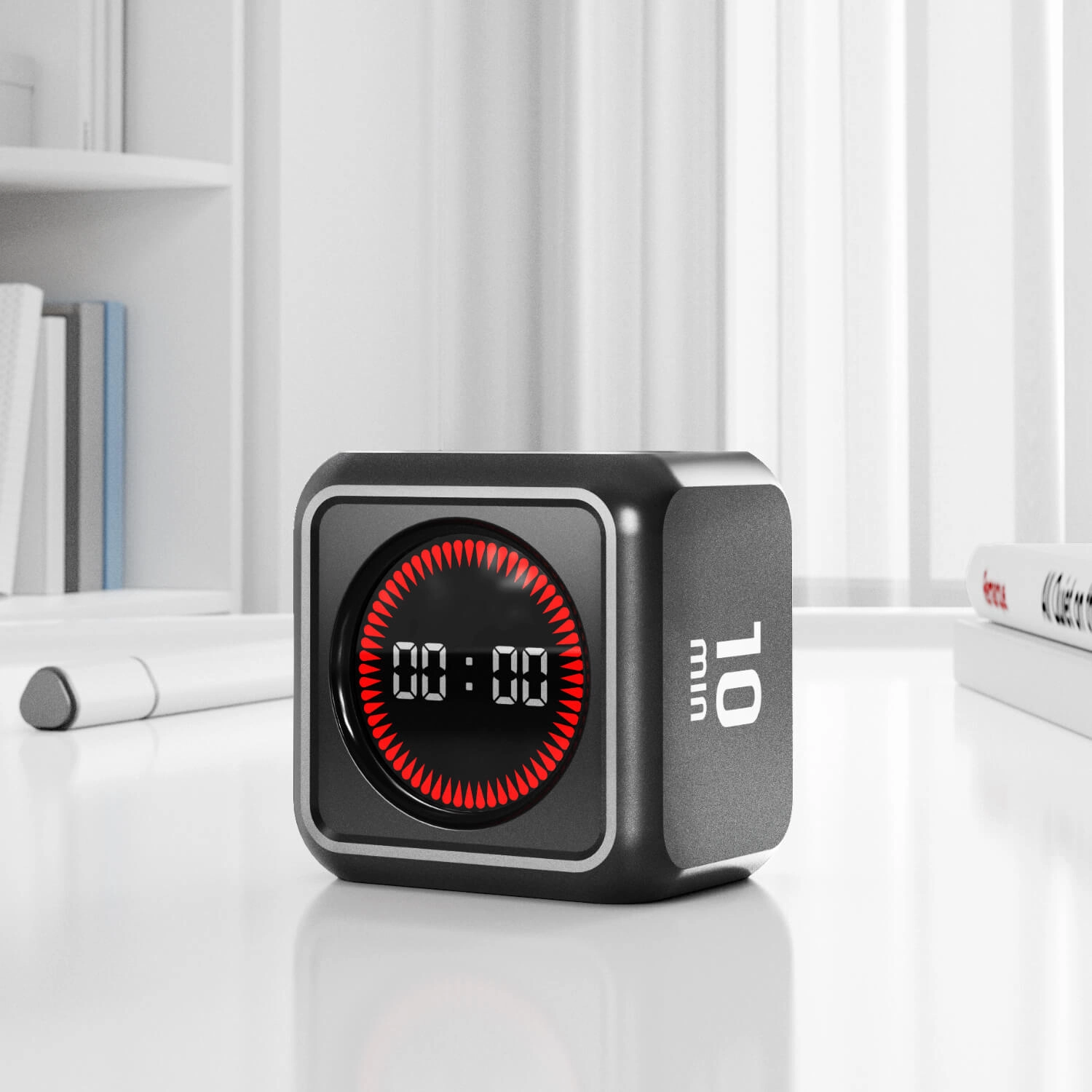
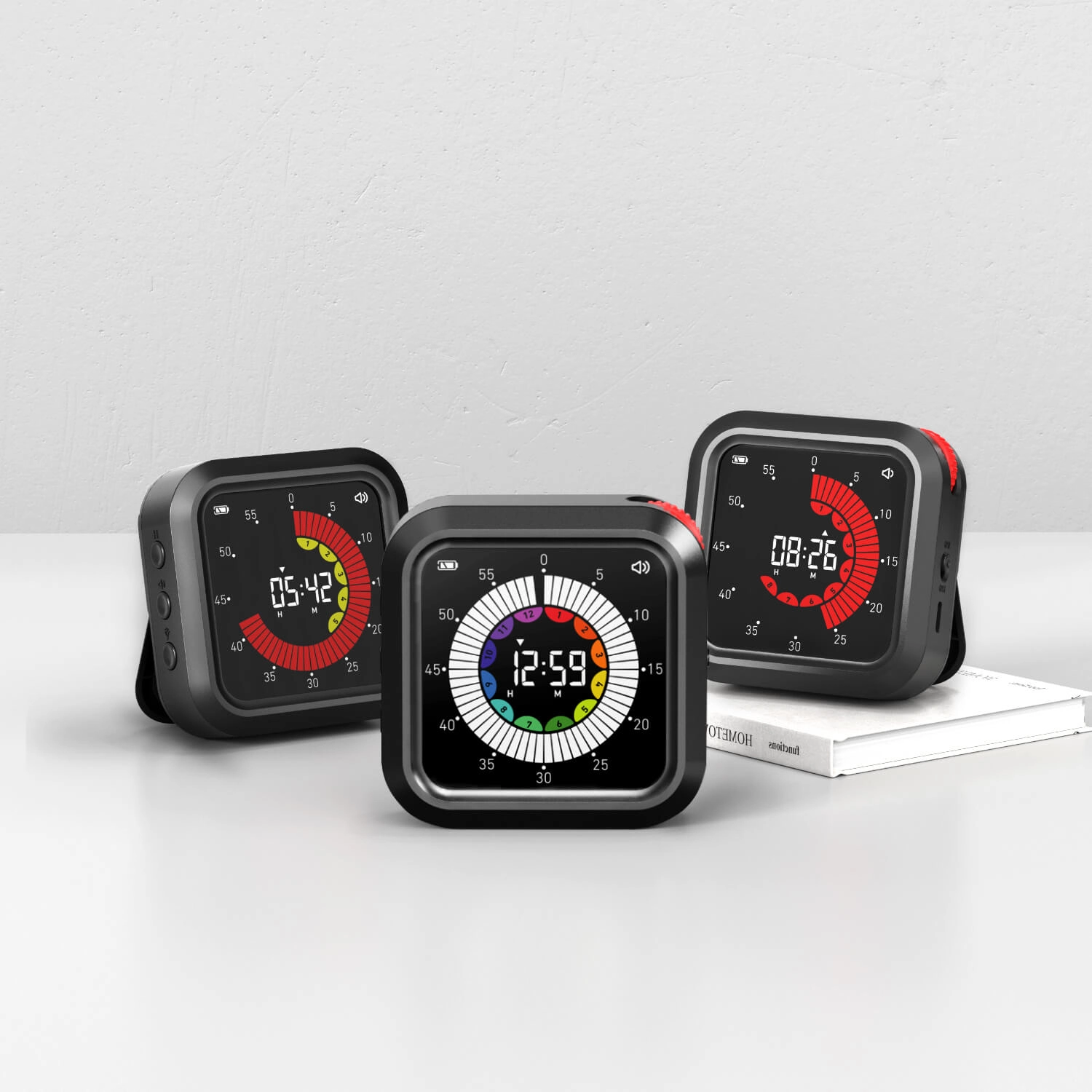
Visual timing works only when users can understand the remaining duration quickly. Buyers should examine digit height, color contrast, viewing angle, brightness control, remaining-time indicators, and whether the display remains legible in daylight or low-light conditions. A shrinking color field, progress ring, segmented bar, or changing visual zone can communicate urgency more intuitively than small numerical digits, particularly for young learners, people with cognitive differences, and patients who may not respond well to audible alerts.
Accessibility should be considered as a functional requirement rather than an optional feature. A dependable device may combine visual and optional audible signals, tactile buttons, high-contrast color choices, and straightforward reset behavior. Buyers should also confirm that color is not the only method of communicating status, because users with color-vision deficiencies may need numerical or shape-based cues. For workplace deployment, the interface should reduce distraction and avoid excessive brightness or unnecessary sounds.
Verify timing accuracy, controls, and operating logic
Most basic countdown applications do not require laboratory-grade timekeeping, but consistent operation remains essential. The evaluation should cover maximum and minimum countdown duration, start-pause-reset behavior, repeat cycles, memory settings, clock drift, power-loss recovery, and the ability to prevent unauthorized changes. If a timer is used for examinations, treatment routines, or regulated workflows, the project owner should define the required tolerance and validation procedure before purchase.
Clear documentation is equally important. A supplier should provide operating instructions, product specifications, battery information, testing records where applicable, and a defined process for firmware or design changes. Devices that appear similar externally may differ substantially in button life, timing logic, display stability, and power management.
Compare Manufacturing Quality, Compliance, and Project Reliability
Review the quality-management system
Manufacturing credibility is demonstrated through repeatable processes, not only through attractive samples. Buyers should ask whether the factory operates a documented quality-management system, maintains incoming-material inspection, uses controlled assembly procedures, and performs final functional testing. ISO 9001 describes internationally recognized requirements for a quality-management system; certification does not guarantee that every product is suitable, but it can indicate a structured approach to process control and continual improvement.
Useful evidence includes inspection plans, sampling methods, calibration records, production traceability, nonconformance procedures, corrective-action reports, and batch-level identification. For private-label programs, the supplier should explain how design revisions, component substitutions, and packaging changes are approved. These controls reduce the risk of receiving a pilot sample that performs well while later production varies in appearance or function.
Separate product safety from marketing claims
Electronic timers may be sold as consumer, educational, office, or professional-use products. The applicable requirements depend on the destination market, power source, radio functions, materials, and intended use. Buyers should request relevant declarations, test reports, and regional documentation rather than accepting broad statements such as compliant or certified without supporting records.
For electronic equipment, the IEC 62368-1 safety standard provides a recognized framework for audio, video, information, and communication technology equipment. It may be relevant to certain powered electronic products, but applicability must be confirmed for the specific design and market. Products used near patients should not be described as medical devices unless the manufacturer has established the necessary regulatory pathway and intended-use documentation. Healthcare purchasers should involve their compliance or biomedical engineering teams before deployment.
Evaluate durability and environmental suitability
Education and healthcare products are frequently handled by multiple users, while workplace devices may remain powered for long periods. A meaningful durability review should cover enclosure strength, button-cycle testing, screen protection, battery compartment security, connector design, heat generation, and resistance to routine cleaning agents. If a product will be installed in a humid environment, warehouse, laboratory, or food-related area, the supplier should state environmental limits instead of implying unrestricted use.
Ingress protection ratings, when applicable, should be interpreted according to the defined test standard and actual product construction. The ISO 20653 road-vehicle protection standard is one example of a framework for ingress protection classifications, but it should not automatically be applied to every consumer electronic device. Procurement documents should specify the required rating and test evidence for the intended installation.
| Evaluation area | Education priority | Healthcare priority | Workplace priority | Evidence to request |
|---|---|---|---|---|
| Visibility | Large, intuitive display for group viewing | High contrast and low-distraction operation | Readable from desk, wall, or meeting position | Viewing-distance specification and sample review |
| Controls | Simple start, pause, and reset functions | Low-error operation and easy cleaning | Fast presets and repeat-cycle capability | User manual, interface demonstration, control testing |
| Sound | Optional alert for transitions | Adjustable or silent mode where required | Configurable notification for shared spaces | Alarm volume range and mute function |
| Durability | Resistance to frequent handling | Enclosure compatible with approved cleaning practices | Long operating hours and stable power supply | Material details, test records, warranty terms |
| Deployment | Portable or wall-mounted formats | Placement suited to rooms and patient routines | Desk, wall, or multi-site installation | Mounting method, battery life, packaging plan |
Build a Procurement Model Based on Total Cost and ScaleCompare more than the unit quotation
The lowest initial price may create a higher total cost when batteries, failures, returns, retraining, replacement parts, and inconsistent batches are included. A stronger comparison considers landed cost, minimum order quantity, tooling, packaging, software or firmware support, warranty duration, spare-unit recommendations, shipping constraints, and expected service life. For a school district or healthcare network, replacement compatibility across multiple sites can be more valuable than a small discount on the first order.
Buyers should request a complete quotation that identifies model numbers, included accessories, battery status, branding charges, packaging specifications, delivery terms, payment milestones, inspection costs, and any recurring fees. For custom projects, ownership of tooling, artwork, firmware, and test documentation should be addressed in writing. This reduces ambiguity when the program expands or a second production run is needed.
Use samples and pilot deployments intelligently
A pre-production sample should be tested by representative users in the actual environment. Teachers can assess whether students understand the remaining-time signal without repeated explanation. Nurses, therapists, or administrators can evaluate cleaning, alarm behavior, and placement. Office teams can check visibility during meetings and whether the device creates distraction. The pilot should record measurable observations such as setup time, error frequency, battery endurance, readability at defined distances, and user acceptance.
For larger programs, buyers should approve a golden sample and retain a documented specification sheet. The approved reference should include display behavior, color values, logo placement, enclosure finish, packaging, accessories, and firmware version. Production inspection can then compare finished goods against objective criteria rather than relying on memory or informal approval.
Plan logistics, support, and continuity
Reliable supply includes more than on-time shipment. The supplier should explain component availability, forecast requirements, production lead time, peak-season capacity, quality escalation, replacement procedures, and end-of-life notification. Distributors should also confirm whether cartons, manuals, labels, and certifications support the destination market.
After-sales support is particularly important when devices are deployed across many classrooms, clinics, or offices. A practical service arrangement may include troubleshooting guides, spare units, replacement batteries, repair or replacement rules, response-time commitments, and a named project contact. These provisions protect the buyer's operational continuity and reduce the burden on local staff.
Why a Broader Measurement-Device Portfolio Can Improve Project Value
Combine timing with environmental awareness
A supplier with a broader measurement portfolio can help project owners standardize related devices instead of managing separate vendors for every small electronic instrument. In addition to a digital timer, a program may require a Pomodoro timer for focused work, a thermo hygrometer for room-condition awareness, or a temperature humidity monitor for classrooms, storage areas, clinics, offices, and laboratories. These products serve different measurement purposes, but a coordinated sourcing strategy can simplify packaging, documentation, branding, and replenishment.
Environmental readings should not be confused with clinical diagnosis or building certification. A temperature humidity monitor can support routine observation and facility management, while decisions involving infection control, pharmaceutical storage, or regulated processes may require calibrated instruments and formally validated procedures. A responsible supplier makes this distinction clear and helps buyers select the appropriate accuracy class and intended-use statement.
Assess our engineering and manufacturing capabilities
Our team supports buyers by translating application requirements into practical product configurations, including display format, timing range, control layout, power architecture, enclosure design, branding, packaging, and accessory selection. Our manufacturing process is organized around sample confirmation, controlled specifications, production inspection, and shipment verification so that repeat orders can remain aligned with the approved reference.
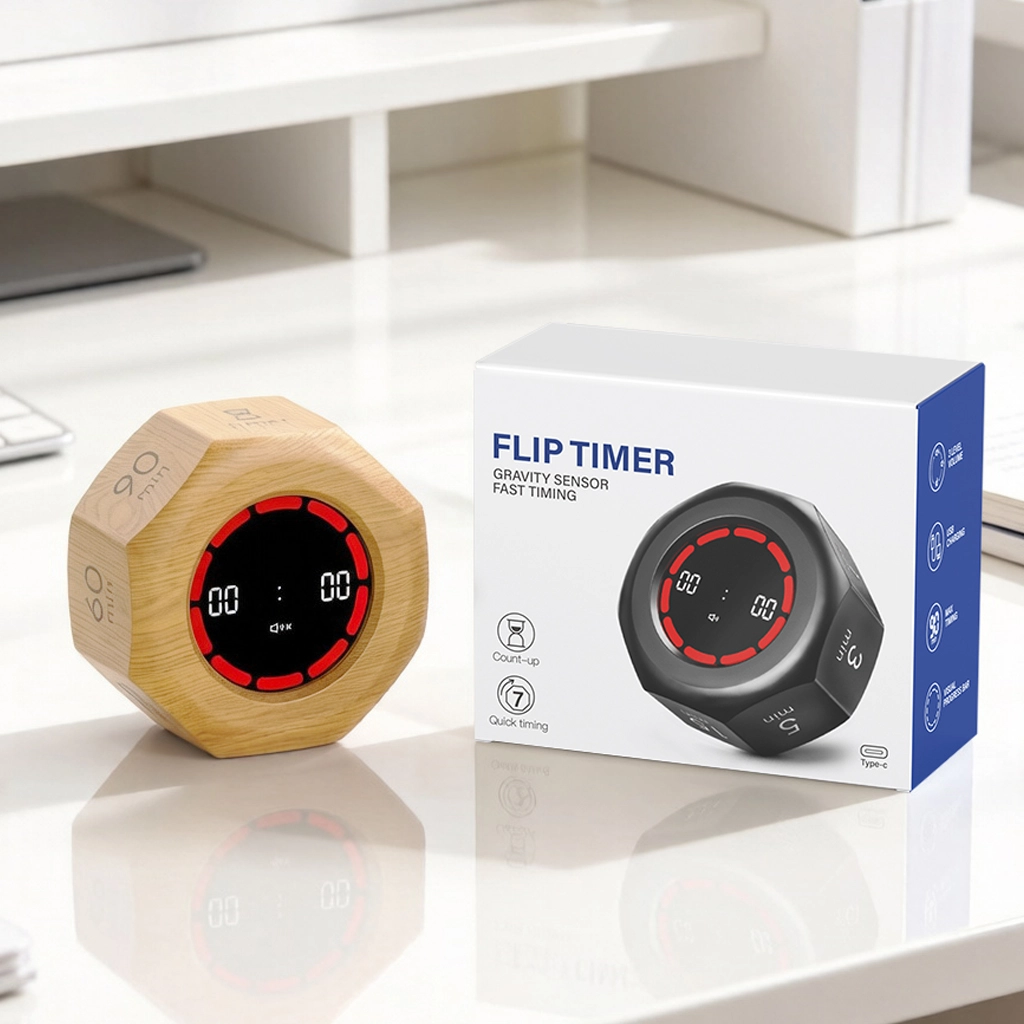
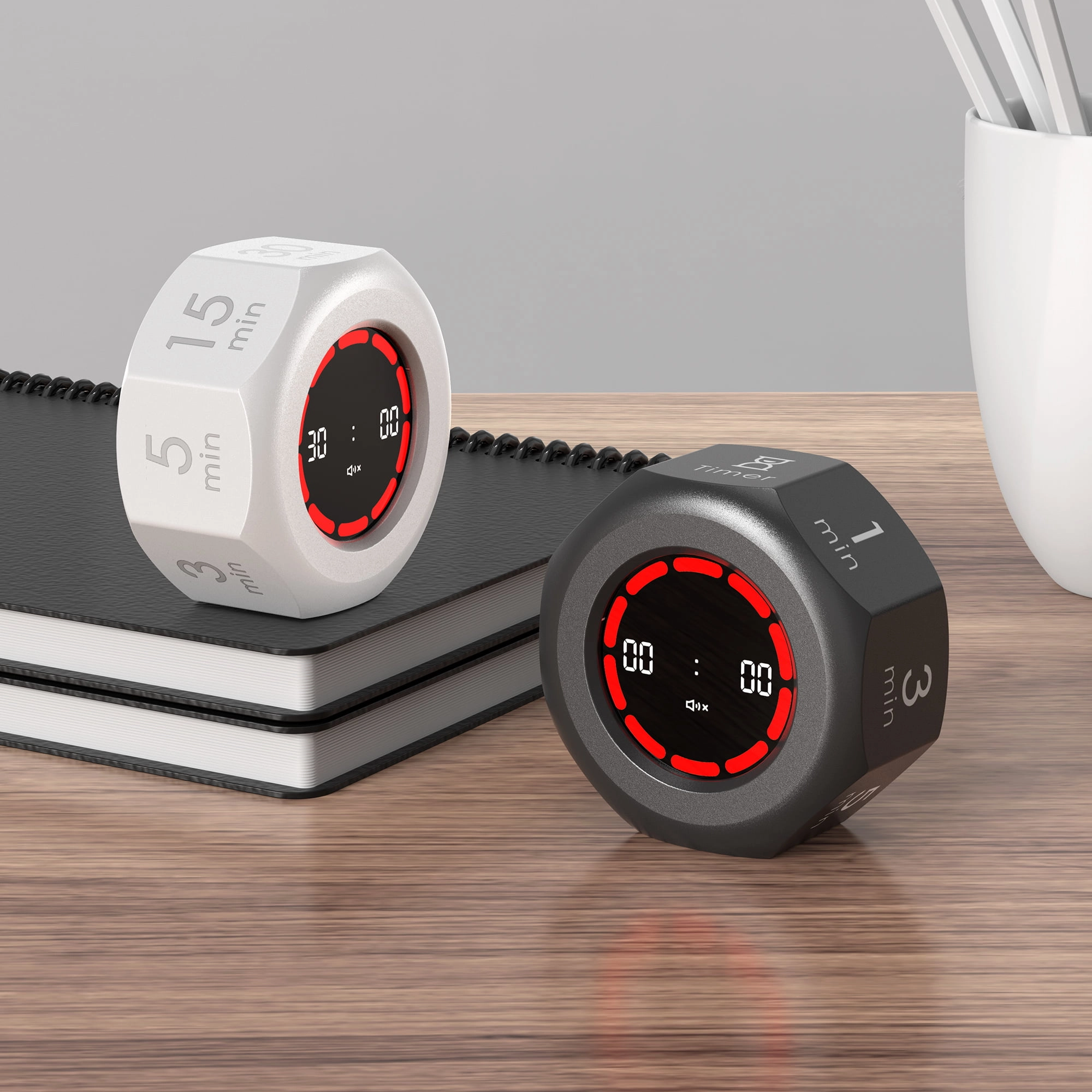
Our portfolio includes Digital Timer products for general countdown applications, Pomodoro Timer products for structured work and study intervals, Thermo Hygrometer products for combined temperature and humidity observation, and Temperature Humidity Monitor products for routine environmental awareness. This range enables distributors, education groups, healthcare operators, and workplace procurement teams to evaluate complementary devices through one coordinated sourcing relationship.
Measure supplier performance after launch
Once products are deployed, buyers should track return rates, support requests, battery replacement frequency, user complaints, display failures, delivery performance, and repeat-order consistency. These metrics help determine whether a supplier is generating operational value rather than merely meeting the initial purchase order. Our team can use structured feedback from pilot sites and production batches to support product refinement, packaging improvements, and future project planning.
The most dependable sourcing decision balances usability, safety documentation, production control, service support, and commercial scalability. A supplier that communicates limitations honestly, validates samples carefully, and maintains consistent manufacturing discipline is better positioned to support education, healthcare, and workplace applications over the full product life cycle.
Frequently Asked Questions
What should buyers check before selecting a supplier of visual timers?
Buyers should review the intended use, viewing distance, display contrast, timing accuracy, controls, sound options, power supply, durability, cleaning requirements, documentation, quality system, warranty, lead time, and after-sales support.
Are visual countdown products suitable for healthcare environments?
They can be suitable for routine timing, therapy, patient activities, and staff workflows when the design supports easy cleaning, quiet operation, clear visibility, reliable controls, and the intended environmental conditions. Healthcare buyers should confirm regulatory and clinical requirements before deployment.
Which certifications should a buyer request for an electronic timer?
The applicable documentation depends on the product design and destination market. Buyers should request relevant declarations, test reports, quality-system information, and safety documentation rather than relying on general certification claims. IEC 62368-1 may be relevant to certain electronic products, but applicability must be confirmed for the specific design.
How can a buyer compare the total cost of different timer suppliers?
The comparison should include unit price, landed cost, minimum order quantity, tooling, packaging, accessories, batteries, inspection, warranty, failure rates, replacement parts, support, delivery terms, and expected service life instead of focusing only on the initial quotation.
Why should buyers approve a golden sample?
A golden sample provides a documented reference for display behavior, enclosure finish, branding, packaging, accessories, and firmware version. Production inspection can compare finished goods against this approved reference, reducing variation between pilot units and later batches.
Can one supplier provide both timing and environmental monitoring products?
Some suppliers offer a broader portfolio that includes digital timers, Pomodoro timers, thermo hygrometers, and temperature humidity monitors. Consolidating related products may simplify branding, documentation, packaging, and replenishment, provided each product meets its specific application and accuracy requirements.
Compliance: Certifications for Pomodoro Timers (CE RoHS FCC)
Digital Visual Countdown Timer Pricing: What Factors Affect the Total Cost?
Top digital timer clock Manufacturers and Suppliers
Case Studies: Smart Focus Timers in Education and Offices
Interested in this article?
Let’s talk.
Need specifications, pricing, or customization options? We’ll provide everything you need.

Youben life
Youben life