
What Certifications Should You Look for When Selecting a Visual Timer Manufacturer?
- How to Evaluate Compliance Credentials for Electronic Timing Products
- Start with the quality management system
- Separate factory certifications from product certifications
- Verify the issuing organization and certificate scope
- Which Product-Level Approvals Matter by Sales Region?
- European Union: CE, RoHS, and REACH documentation
- United States: FCC and electrical safety considerations
- International and specialized applications
- How Certification Evidence Should Influence Supplier Selection
- Use a model-specific document review
- Assess calibration, accuracy, and functional performance
- Consider environmental and social management capability
- Building a Lower-Risk Sourcing Decision
- Score compliance alongside commercial performance
- Confirm pre-shipment and post-launch controls
- Our product and manufacturing approach
- Frequently Asked Questions
When selecting a visual timer manufacturer, buyers should evaluate the complete compliance system behind the product rather than relying on a single certification mark. The most relevant evidence may include ISO 9001 quality management certification, CE conformity for applicable European requirements, FCC authorization or testing for products sold in the United States, RoHS and REACH documentation, electrical safety reports, battery transportation records, and product traceability. Certifications should be matched to the timer’s power source, display technology, wireless functions, target market, packaging, and intended use. A qualified supplier can provide current certificates, declarations, laboratory reports, controlled drawings, material records, and corrective-action evidence that connect factory processes to the exact model being purchased.
How to Evaluate Compliance Credentials for Electronic Timing Products
Start with the quality management system
ISO 9001 is often the most useful foundation for supplier evaluation because it addresses the management system used to control design, purchasing, production, inspection, customer feedback, and corrective action. It does not certify that every digital timer is safe or that every batch will be defect-free. Instead, it indicates that the organization has a documented framework for managing repeatable quality processes. Buyers should confirm the certificate number, issuing body, scope, factory address, validity period, and whether the scope covers electronics assembly or the relevant product category.
A credible quality system should be visible in operational records. Procurement teams can request an example of a production inspection plan, incoming component inspection criteria, final functional testing, calibration controls for measurement equipment, and nonconforming-product procedures. These records help determine whether the certificate reflects daily manufacturing discipline or merely serves as a marketing attachment.
Separate factory certifications from product certifications
Factory-level credentials and product-level approvals answer different questions. ISO 9001 concerns how the organization manages quality. CE, FCC, UL, and similar marks concern whether a product meets defined regulatory or technical requirements in a particular market. A supplier may hold a valid quality certificate while a newly developed timer still requires electrical safety, electromagnetic compatibility, radio, battery, or materials testing.
Buyers should ask whether the supplied report identifies the exact model number, hardware revision, rated input, battery type, adapter, enclosure, and test configuration. A report for a visually similar product may not apply if the circuit board, power supply, display module, firmware, or casing has changed. This distinction is especially important for private-label programs in which a customer’s logo, battery configuration, or enclosure modification creates a new compliance obligation.
Verify the issuing organization and certificate scope
Certification evidence should be independently verifiable. The document should show an accreditation or authorization reference, certificate status, covered locations, and expiration date. A scanned logo without a certificate number, scope statement, or issuing-body details is not sufficient for a formal supplier audit.
For quality and environmental systems, buyers can compare the certificate information with the certification body’s public database where available. For product testing, the laboratory should identify applicable standards, test methods, sample details, deviations, and results. The International Organization for Standardization’s ISO 9001 information explains the purpose of quality management systems and provides useful context for evaluating supplier controls.
Which Product-Level Approvals Matter by Sales Region?
European Union: CE, RoHS, and REACH documentation
For products placed on applicable European markets, CE marking indicates that the manufacturer has completed the required conformity assessment for relevant Union legislation. It is not a universal quality seal and does not mean that an independent laboratory has approved every aspect of the product. The responsible economic operator must identify applicable directives or regulations, maintain technical documentation, issue an EU Declaration of Conformity where required, and apply the mark correctly. The European Commission’s CE marking guidance is a primary reference for this process.
Small electronic timers may fall within requirements relating to electromagnetic compatibility, electrical equipment safety, radio equipment when wireless connectivity is included, and restriction of hazardous substances. RoHS evidence should cover restricted materials in electrical and electronic equipment, while REACH documentation may be necessary for substances of very high concern in articles, components, packaging, or accessories. Buyers should request a declaration, supporting supplier statements, and risk-based test reports rather than accepting an unsupported RoHS or REACH icon.
United States: FCC and electrical safety considerations
Digital timing devices can generate or unintentionally emit radio frequency energy, making electromagnetic compatibility a relevant consideration in the United States. The required FCC pathway depends on the product’s design, operating frequencies, and whether it contains intentional radio transmitters. A basic non-wireless device may require the appropriate unintentional radiator authorization, while Bluetooth, Wi-Fi, or other radio-enabled products may need additional certification and labeling.
The Federal Communications Commission guidance on radio-frequency emissions helps buyers understand why wireless and non-wireless products may follow different compliance routes. Electrical safety certification from a recognized testing organization, such as an applicable UL or ETL pathway, may also be requested by retailers, insurers, commercial facilities, or institutional customers. The exact standard depends on the product architecture, power supply, enclosure, battery, and intended environment.
International and specialized applications
IEC-based test reports can support global procurement, but buyers should confirm whether a report is accepted in the destination country and whether national deviations apply. For products containing lithium batteries, transport documentation such as UN 38.3 test summaries may be necessary for air or sea shipment. A rechargeable product may also require charger, battery, thermal, overcharge, and abuse testing based on its construction.
Medical, laboratory, food-service, education, and industrial buyers should define intended use before requesting certificates. A timer used as a general productivity aid is different from a device marketed as part of a medical procedure or safety control. FDA-related obligations are generally driven by intended use and medical claims, not by the presence of a countdown display alone. Similarly, a thermo hygrometer used for general room monitoring should not be presented as a calibrated medical or pharmaceutical instrument unless the supplier can support the required accuracy, calibration, and regulatory claims.
| Credential or document | What it demonstrates | What buyers should verify | Typical procurement value |
|---|---|---|---|
| ISO 9001 certificate | Documented quality management framework | Scope, factory address, validity, certification body | Improves process consistency and audit confidence |
| CE Declaration of Conformity | Manufacturer’s declared conformity with applicable EU requirements | Exact model, legislation, standards, responsible entity | Supports European market access |
| EMC or FCC test report | Evidence of electromagnetic compliance testing | Model, configuration, test limits, laboratory details | Reduces interference and import risks |
| RoHS and REACH evidence | Material and substance compliance information | Revision date, component coverage, supplier declarations | Supports retailer and environmental requirements |
| Electrical safety report | Assessment of shock, fire, insulation, and construction risks | Applicable standard, adapter, battery, enclosure, test sample | Useful for institutional and retail acceptance |
| UN 38.3 documentation | Required battery transport test evidence where applicable | Battery model, test summary, shipment configuration | Reduces logistics delays for lithium-powered products |
How Certification Evidence Should Influence Supplier Selection
Use a model-specific document review
A disciplined review links every document to the product being purchased. The technical file should ideally include the bill of materials, schematic or controlled design information where commercially appropriate, user manual, label artwork, rated input, adapter information, battery specification, packaging details, and test reports. Buyers should compare model numbers across the certificate, packaging, product label, purchase order, and inspection sample.
Changes after testing deserve special attention. Substituting an LED supplier, rechargeable cell, power adapter, plastic material, display module, or microcontroller can affect electromagnetic behavior, heat generation, chemical compliance, and durability. A reliable supplier should operate an engineering change process that identifies when partial or full retesting is required and preserves revision history for each shipment.
Assess calibration, accuracy, and functional performance
Certifications do not automatically prove timing accuracy, alarm volume, display readability, battery life, button durability, or temperature and humidity measurement performance. Buyers should establish acceptance criteria before mass production. For a countdown product, this may include time deviation over a defined operating period, display visibility at a specified distance, memory retention after power interruption, alarm duration, standby consumption, and performance at low and high ambient temperatures.
For a thermo hygrometer or temperature humidity monitor, procurement specifications should distinguish resolution from accuracy. A display showing one decimal place does not prove that the sensor is accurate to one decimal degree. Request calibration methods, reference instruments, environmental test conditions, tolerance limits, and sample records. If the product is intended for sensitive storage, the project may require traceable calibration certificates rather than a general factory inspection report.
Consider environmental and social management capability
ISO 14001 can provide additional insight into environmental management, waste controls, energy use, and legal compliance, although it is not always mandatory for a small electronic timer. ISO 45001 may be relevant when buyers evaluate occupational health and safety management at a manufacturing site. These credentials can support corporate procurement policies, ESG reporting, retailer onboarding, and long-term supply continuity.
Environmental claims should remain specific and documented. Terms such as recyclable, low-energy, eco-friendly, or sustainable require evidence covering materials, packaging, energy consumption, and disposal assumptions. Buyers should avoid accepting broad claims that are not supported by product specifications or controlled supplier records. The ISO 14001 environmental management overview provides a useful benchmark for understanding what an environmental management system is designed to control.
Building a Lower-Risk Sourcing Decision
Score compliance alongside commercial performance
Certification review should be part of a weighted supplier scorecard rather than a pass-or-fail exercise based on logos. Useful categories include regulatory readiness, engineering response time, sample quality, production capacity, minimum order quantity, lead time, warranty handling, spare-parts availability, packaging capability, intellectual property protection, and total landed cost. A low unit price can become expensive when missing documents delay customs clearance, retailer approval, or product launch.
Buyers should also evaluate whether the supplier can support multiple product families. A partner that understands digital timers, Pomodoro timers, thermo hygrometers, and temperature humidity monitors may provide better consistency in firmware management, display sourcing, battery selection, user-interface design, and quality inspection. However, product breadth should be supported by evidence of engineering resources and controlled production, not only by a broad catalog.
Confirm pre-shipment and post-launch controls
Before approving mass production, project owners should define golden samples, inspection levels, defect classifications, carton requirements, barcode rules, and documentation deliverables. Pre-shipment inspection should verify appearance, functionality, accessories, labels, manuals, charging behavior, timing performance, and random sample operation. For recurring orders, lot-level traceability enables faster investigation if a retailer, distributor, or end user reports a field issue.
After launch, the supplier should communicate material substitutions, firmware revisions, factory transfers, and certification renewals before implementation. A controlled change-notification process protects product listings and prevents a compliant sample from being followed by a materially different production version. This is a practical indicator of supplier maturity and often has greater long-term value than a large collection of generic certificates.
Our product and manufacturing approach
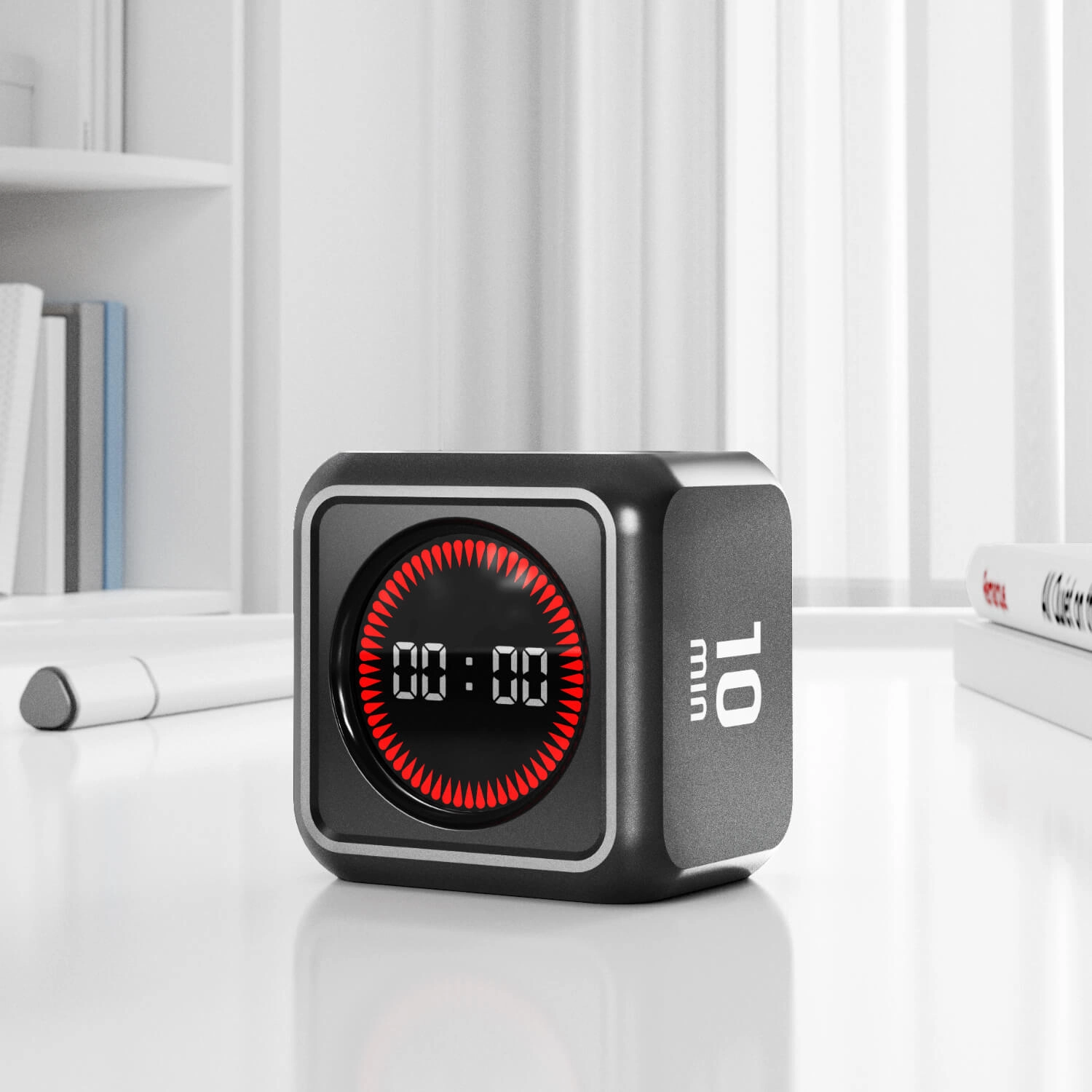
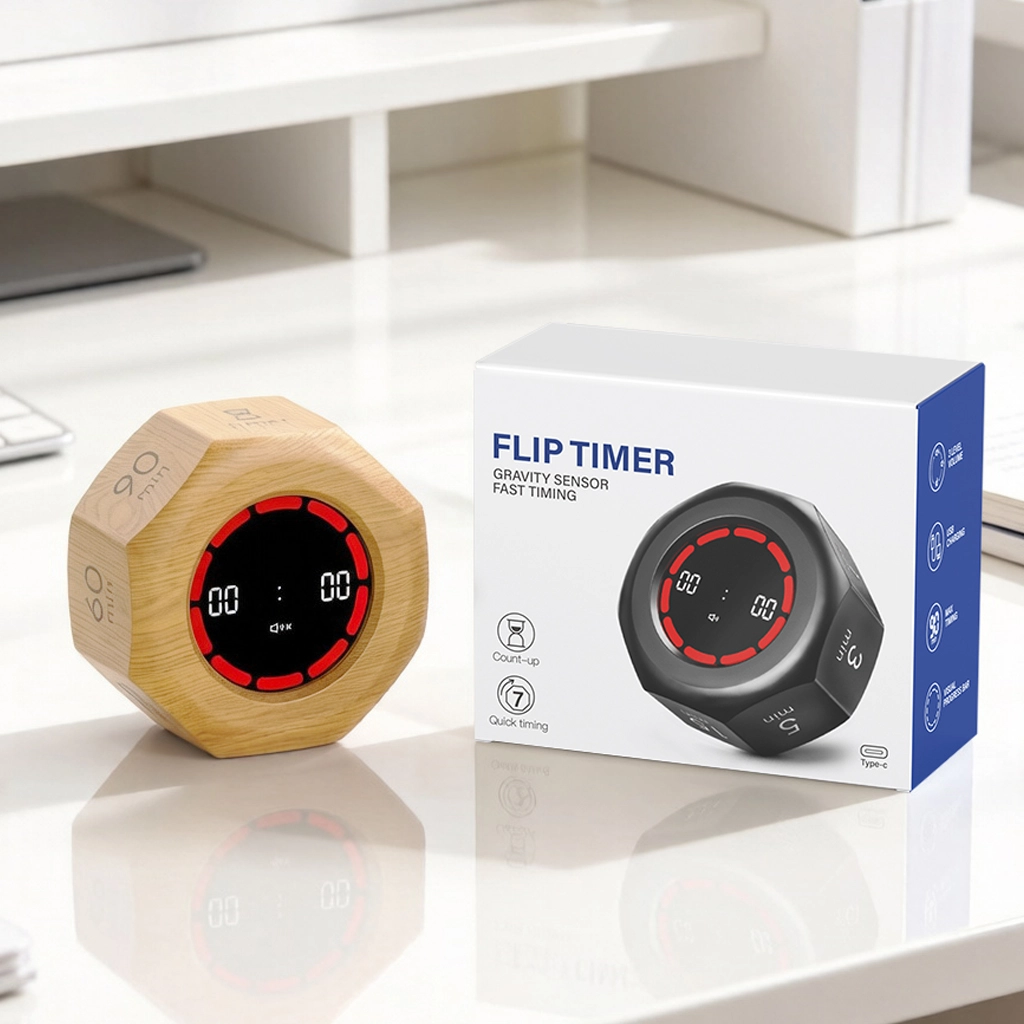
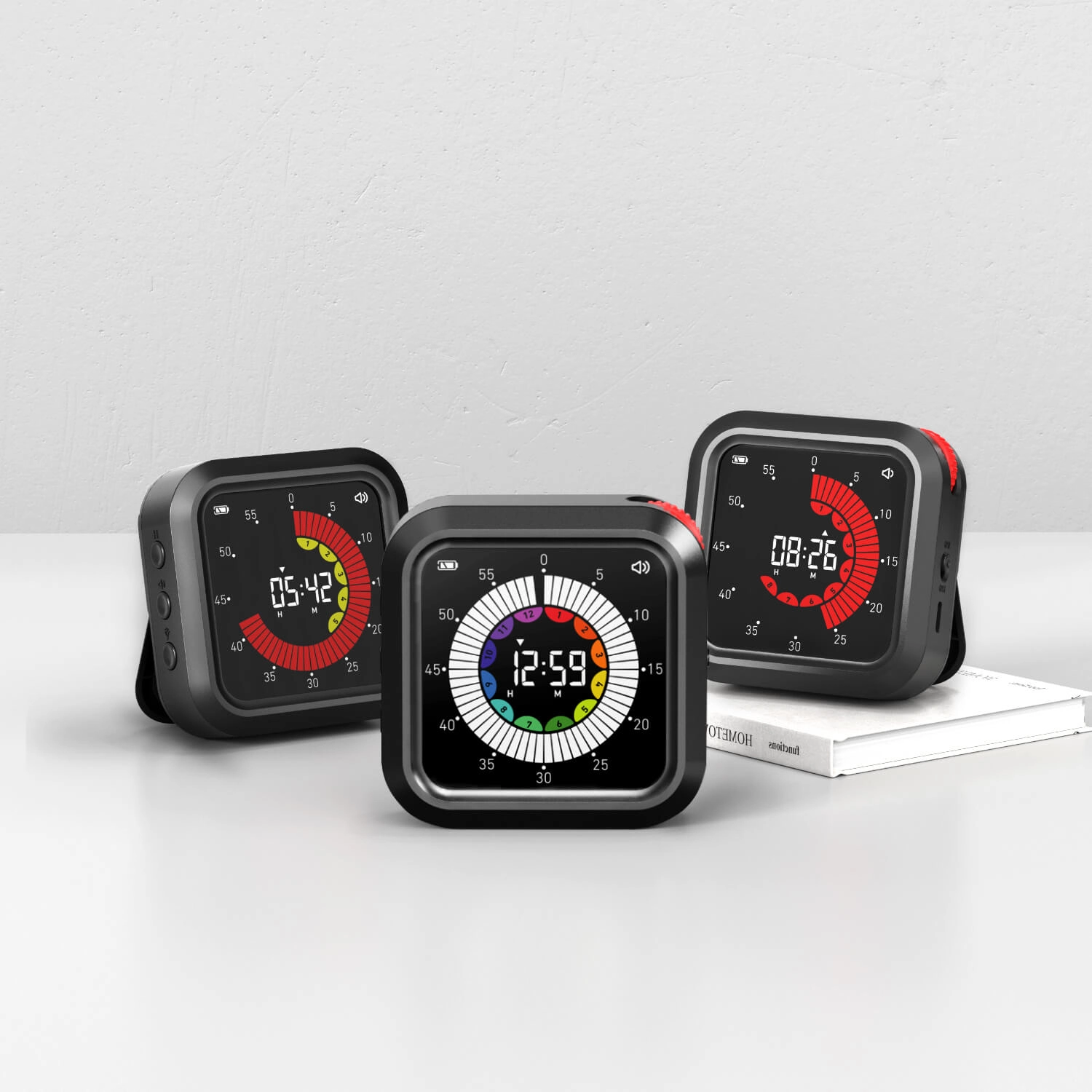
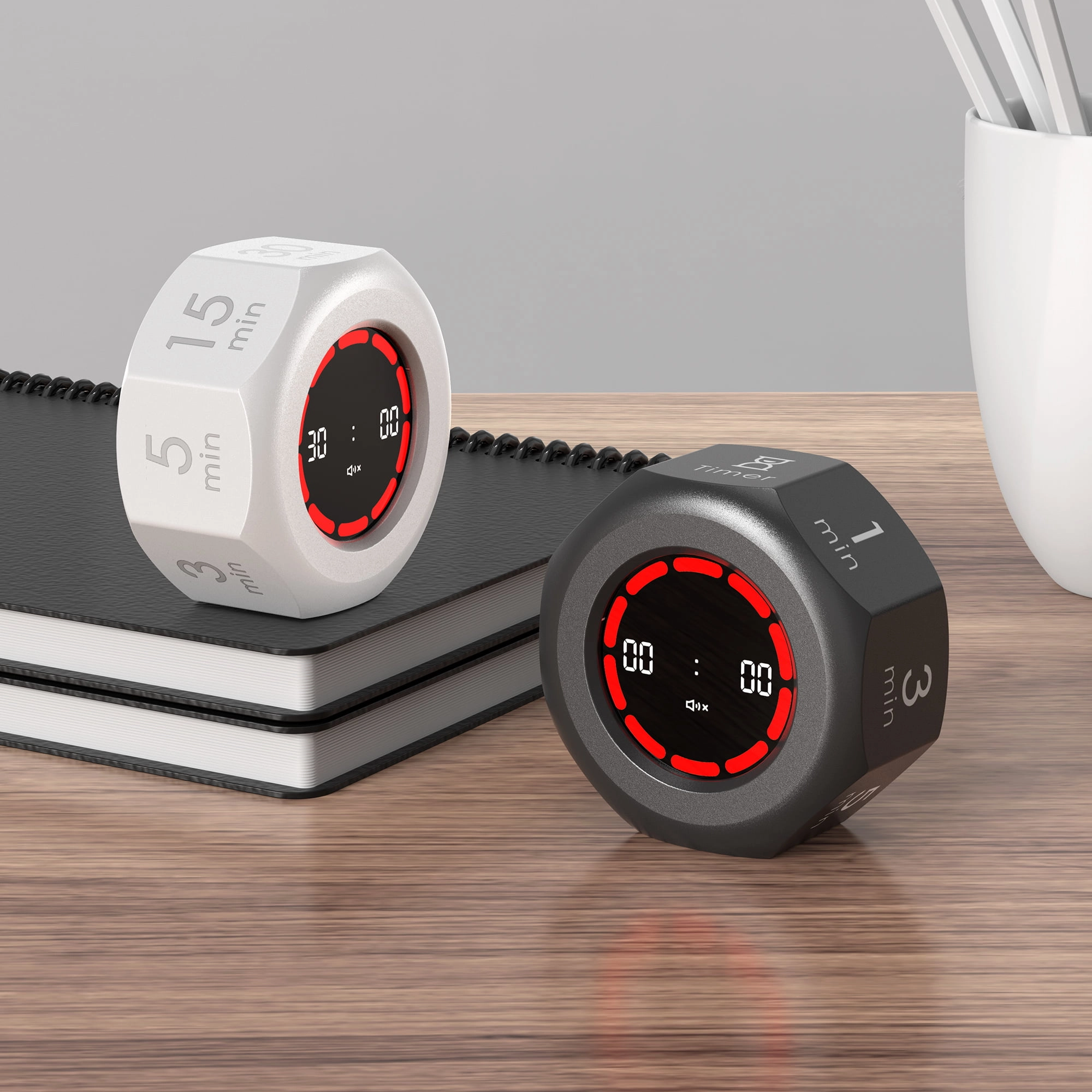
Our product portfolio is designed around practical timing, monitoring, and user-interface requirements. Our digital timer solutions can be configured for clear visual countdowns, intuitive controls, audible alerts, compact housings, and application-specific branding. For focused work and structured routines, our Pomodoro timer offerings can support repeatable work and rest intervals while preserving straightforward operation for homes, offices, classrooms, and commercial programs.
Our thermo hygrometer and temperature humidity monitor products address applications where users need accessible environmental information in a compact format. Product development can consider sensor selection, display readability, battery efficiency, enclosure design, calibration requirements, and packaging compliance. These factors are reviewed according to the target market and intended application rather than treated as interchangeable features.
Our engineering and manufacturing process emphasizes model-specific documentation, functional verification, incoming component control, production inspection, and communication of design changes. For distributors, brand owners, and project buyers, this approach helps connect certification evidence with the actual shipped product. It also supports private-label development, packaging customization, product-family consistency, and more predictable quality decisions across repeat orders.
Certification remains only one part of supplier qualification. The strongest sourcing decision combines valid compliance documents with transparent technical communication, stable production capability, measurable acceptance criteria, responsive corrective action, and a clear understanding of the destination market. Buyers that apply this framework can reduce regulatory exposure while improving launch readiness, customer satisfaction, and total return on procurement investment. Additional guidance on electrical and electronic product standards can be reviewed through the International Electrotechnical Commission and substance requirements through the European Chemicals Agency’s REACH resources.
Frequently Asked Questions
Is ISO 9001 enough when selecting a supplier of digital timers?
No. ISO 9001 demonstrates a documented quality management framework, but it does not certify that every digital timer is safe or compliant for a specific market. Buyers should also review model-specific electrical safety, electromagnetic compatibility, materials, battery, and market conformity documents.
Does a CE mark prove that an electronic timer has been independently approved?
Not necessarily. CE marking indicates that the responsible economic operator has completed the applicable conformity assessment and made the required declaration. Buyers should request the EU Declaration of Conformity, technical documentation details, exact model information, and supporting test reports where appropriate.
What should buyers verify in an FCC report?
The report should identify the exact model, hardware configuration, test limits, test methods, laboratory information, and applicable authorization pathway. Wireless products may require a different FCC process from non-wireless devices.
Why do RoHS and REACH documents matter for timers?
RoHS and REACH evidence supports material and substance compliance for products sold through markets or channels that impose environmental and chemical requirements. Buyers should verify document dates, product or component coverage, supplier declarations, and whether the evidence applies to the actual production configuration.
Do lithium battery timers need additional documentation?
They may. Products containing lithium batteries can require UN 38.3 test evidence and shipment-specific documentation for air or sea transport. Buyers should confirm the battery model, test summary, packaging configuration, and destination logistics requirements.
How can a buyer confirm that certificates apply to the purchased model?
The model number, hardware revision, rated input, battery, adapter, enclosure, and test configuration should match across certificates, laboratory reports, labels, manuals, purchase orders, and inspection samples. Any major component or design change should trigger a review of whether retesting is needed.
Are certifications sufficient to prove timer accuracy or humidity sensor accuracy?
No. Certifications do not automatically prove timing accuracy, display readability, battery life, or sensor accuracy. Buyers should define acceptance criteria and request functional test records, calibration methods, reference instruments, environmental conditions, and tolerance limits appropriate to the application.
Bulk Sourcing Pomodoro Digital Timers: Cost, MOQ & Tips
Battery vs Wired Indoor Thermometers: Pros and Cons
Smart Focus Timer Features Buyers Need: Connectivity & Battery
Private Label Pomodoro Timer Supplier Comparison: Factory Capability, Communication, and Service
Interested in this article?
Let’s talk.
Need specifications, pricing, or customization options? We’ll provide everything you need.

Youben life
Youben life