
Best Custom Pomodoro Timer Features for Retail Programs
- Retail-Ready Requirements for Focus and Productivity Timers
- Configurable interval logic instead of a fixed 25-minute preset
- Clear visual feedback for home, classroom, and office environments
- Sound, silence, and accessibility options
- Hardware, Interface, and Merchandising Features That Improve Conversion
- Controls designed for fast first-time setup
- Power architecture, durability, and repair-risk reduction
- Packaging, private-label identity, and point-of-sale clarity
- Compliance, Validation, and Supplier Selection for Global Distribution
- Regulatory planning before engineering freeze
- Validation protocols for timer accuracy and user experience
- Supplier capability, MOQ, and total program economics
- Youben life as an OEM/ODM Partner for Differentiated Timer Programs
- Integrated development from industrial design to custom electronics
- Vertically integrated manufacturing for scalable private-label supply
- Quality, compliance, and brand differentiation
- Frequently Asked Questions
A successful retail timer program should balance consumer usability, shelf appeal, engineering reliability, compliance, and commercial flexibility. The best custom pomodoro timer designs typically include configurable work and rest intervals, a high-contrast display, silent and audible notification modes, simple physical controls, dependable battery performance, durable enclosure materials, and packaging that communicates the product benefit within seconds. For buyers, the objective is not to add every possible function; it is to select a focused feature set that supports a clear use case, differentiates the product from commodity digital timers, and remains practical at the intended retail price. The Pomodoro Technique is commonly associated with timed work intervals and short breaks, although interval lengths can be adapted to different audiences and workflows. Retail owners should therefore treat the timing logic, industrial design, user interface, and private-label execution as one integrated product strategy.
Retail-Ready Requirements for Focus and Productivity Timers
Configurable interval logic instead of a fixed 25-minute preset
The traditional Pomodoro format is often presented as 25 minutes of focused work followed by a five-minute break, but a retail product should not be restricted to one cycle. Students may prefer shorter sessions, professional users may need longer deep-work blocks, and children may benefit from highly visible periods that are easy to understand. A programmable countdown should allow buyers to set work time, short break time, long break time, and the number of completed cycles before a longer rest. The product interface should make these settings accessible without forcing users to navigate a complex menu.
Manufacturers should define the timer resolution before tooling begins. One-second adjustment is useful for precise productivity routines, while one-minute adjustment can make operation faster for younger users or general household applications. Memory retention after power loss is also commercially relevant. If the device returns to a default state after every battery change, users may perceive the product as unreliable. A low-power microcontroller with stable parameter storage can preserve the selected routine while keeping the interaction straightforward.
Clear visual feedback for home, classroom, and office environments
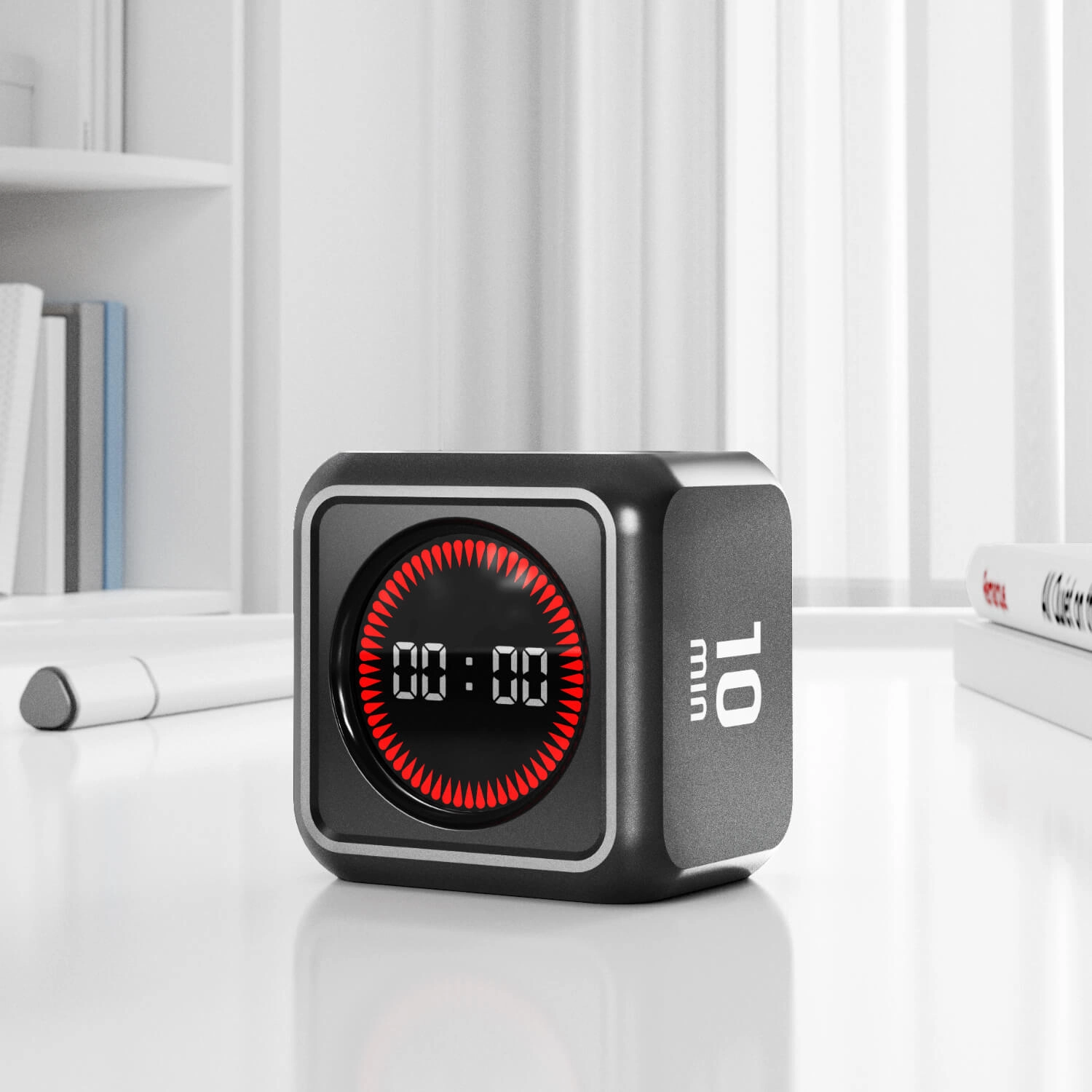
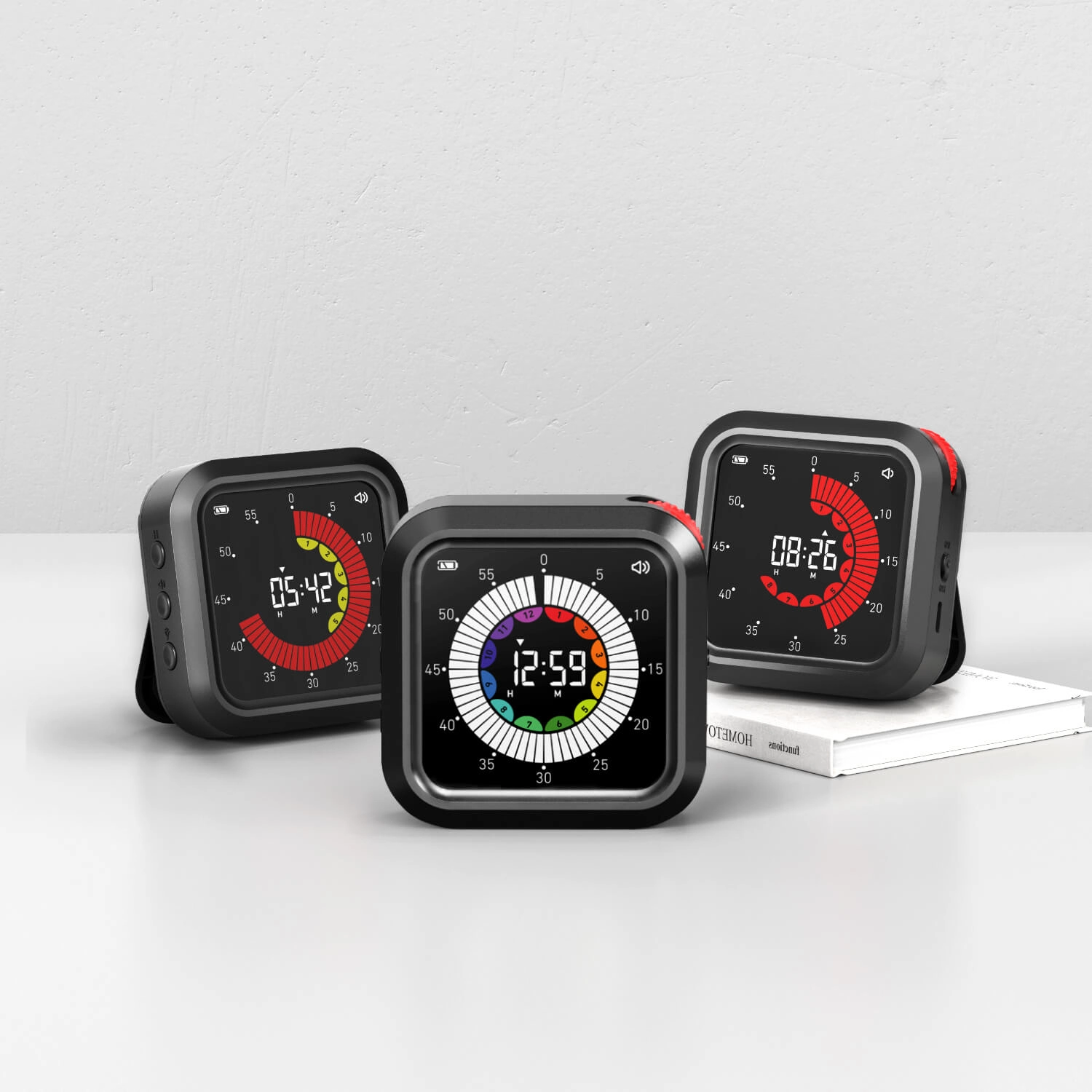
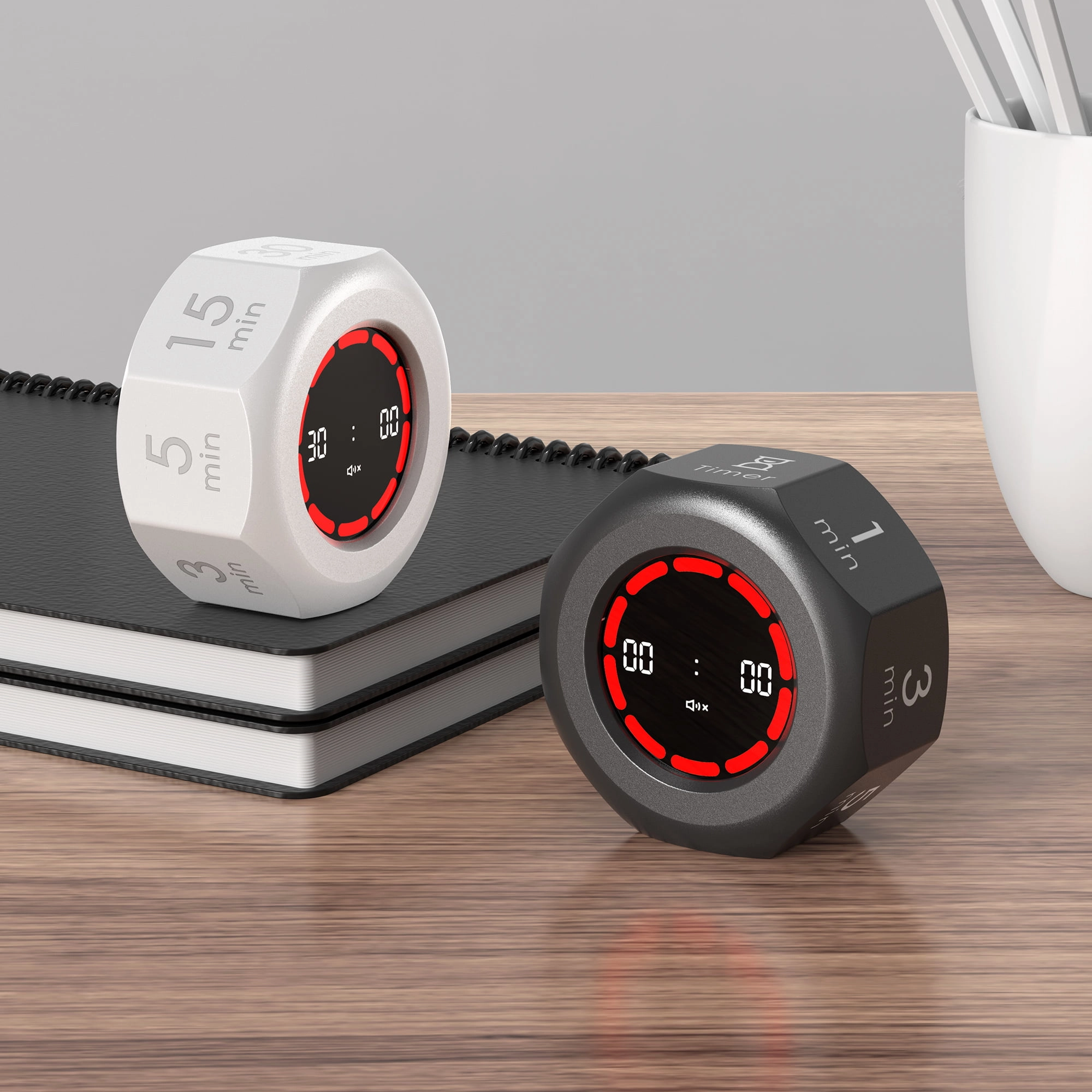
Visual communication is a major differentiator in a crowded digital timer category. Large numerals, strong contrast, and a clear indication of the current phase help users understand whether the device is counting down work time, a short break, or a long break. A progress bar, colored status ring, or changing screen accent can make the remaining time understandable from a distance. However, decorative graphics should never reduce digit size or create confusion between a timer that is running and one that is paused.
Screen selection should reflect the intended channel. An LCD can support long battery life and a familiar consumer appearance, while an LED display may provide stronger visibility in dim rooms or from across a desk. Buyers should evaluate viewing angle, glare, brightness control, contrast consistency, and performance under different lighting conditions. If the product is positioned for study spaces, kitchens, therapy rooms, or shared offices, an automatic dimming mode may improve comfort and reduce unnecessary energy consumption.
Sound, silence, and accessibility options
Retail buyers should request multiple alert modes rather than a single fixed buzzer. Audible alerts can be useful in a home office or classroom, but they may be disruptive in libraries, open-plan workplaces, clinics, or shared study areas. A silent visual alert, vibration option, adjustable volume, or gradual notification pattern gives the same hardware a wider addressable market. The control layout should also support users who have limited dexterity or who need to operate the device without looking closely at the screen.
Alert duration deserves engineering attention. A notification that is too brief can be missed, while one that continues too long can create frustration. A configurable alert duration, clear stop button, and repeat-alert option can support different environments without increasing operational complexity. These details are particularly important when a brand sells through multiple regions, because user expectations around audible consumer electronics vary across homes, schools, and workplaces.
Hardware, Interface, and Merchandising Features That Improve Conversion
Controls designed for fast first-time setup
Retail products lose value when buyers need a manual to complete the first cycle. A practical interface usually separates start or pause, reset, mode selection, and adjustment functions. Distinct tactile buttons reduce accidental activation, while a rotary dial can speed up time selection for users who frequently change durations. Touch controls may create a High Quality appearance, but they require careful validation for wet fingers, gloves, accidental touches, and long-term surface wear.
Product owners should test the entire user journey: opening the package, inserting batteries or charging the device, selecting a routine, starting the countdown, pausing it, resetting it, and switching alert modes. Usability testing should include people unfamiliar with the brand. A product that looks sophisticated but creates hesitation at the shelf or during unboxing may generate returns and negative reviews. The strongest interface is usually the one that makes the main action obvious while keeping advanced settings available but secondary.
Power architecture, durability, and repair-risk reduction
Battery choice influences both the customer experience and the packaging claim. Replaceable AAA or coin-cell batteries can simplify long-term ownership and international distribution, while rechargeable lithium-ion power can support High Quality positioning and reduce disposable battery use. Rechargeable designs require appropriate charging protection, connector durability, battery documentation, and transport considerations. Buyers should confirm standby current, active-display consumption, alert energy usage, and expected operating time under realistic test conditions.
Enclosure design should match the retail environment. ABS or other impact-resistant plastics can support a lightweight desktop device, while rubber feet, a weighted base, or a magnetic rear surface can improve stability. A kitchen-oriented model may need better resistance to splashes and cleaning agents than a study-desk product. Tooling decisions should account for button fatigue, screen protection, seam quality, surface scratches, and color consistency across production batches. These factors affect warranty cost and online review performance even when they are not visible in a basic product specification.
Packaging, private-label identity, and point-of-sale clarity
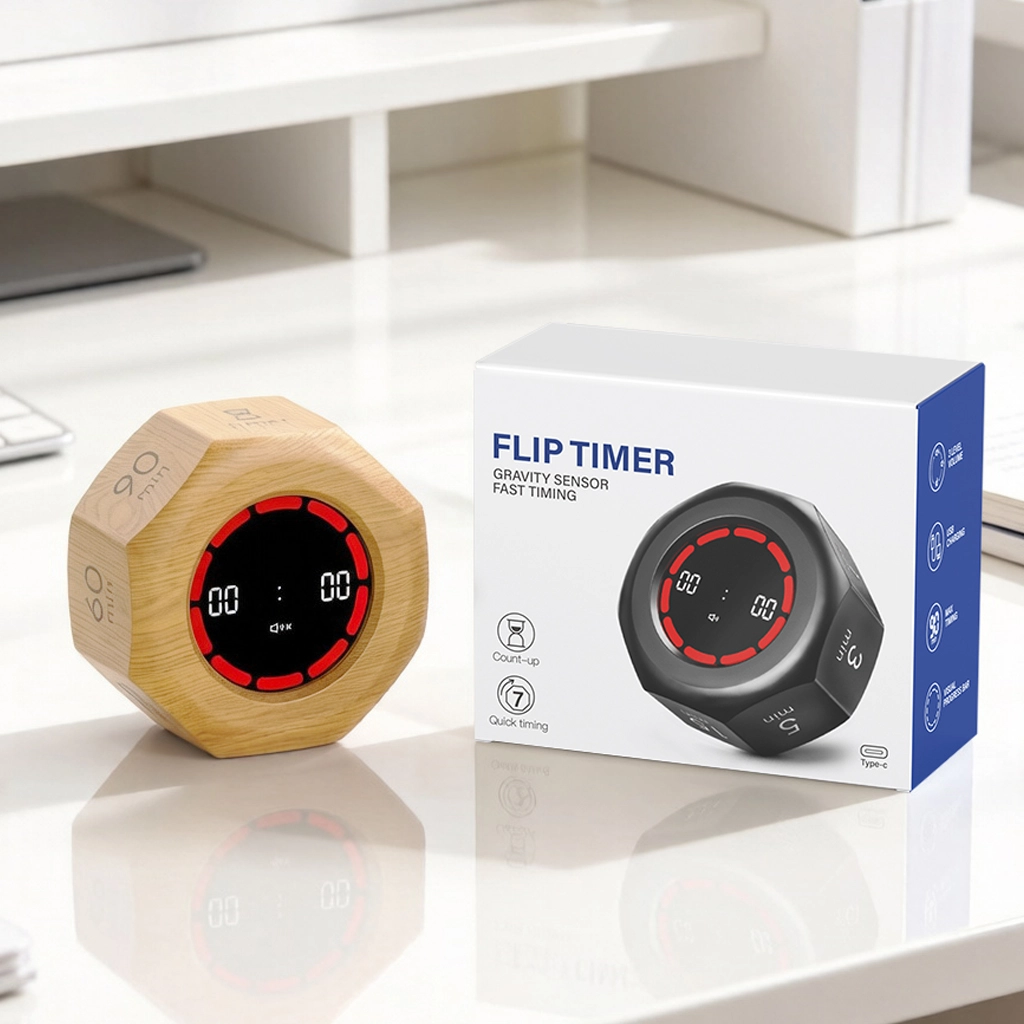
Packaging must explain the commercial proposition quickly. Front-panel communication can highlight focus sessions, customizable cycles, silent mode, large display, or rechargeable operation, but claims should match validated product performance. Side panels can show the control sequence, recommended use cases, dimensions, included accessories, and compliance marks. Retail owners should also consider packaging volume, pallet efficiency, barcode placement, multilingual instructions, and the cost of inserts or protective structures.
Customization extends beyond printing a logo. Industrial design, color palette, button geometry, screen graphics, startup animation, packaging architecture, instruction style, and accessory selection can create a recognizable product family. A coherent family may include a desktop productivity timer, a visual countdown clock for classrooms, and a temperature humidity monitor for home or workplace environments. This approach can improve cross-selling while allowing each product to address a distinct need.
| Program requirement | Entry-level approach | Retail-differentiated approach | Buyer evaluation point |
|---|---|---|---|
| Timing modes | One preset countdown | Separate work, short-break, and long-break settings | Confirm adjustment range, resolution, and memory behavior |
| Notifications | Fixed audible beep | Adjustable sound plus silent visual indication | Test volume, alert duration, and shared-space suitability |
| Display | Small standard LCD | High-contrast digits with status and progress feedback | Assess viewing distance, angle, glare, and brightness |
| Power | Basic replaceable battery system | Optimized battery life or protected rechargeable architecture | Review runtime, standby drain, charging, and transport requirements |
| Branding | Logo on generic housing | Custom ID/MD, firmware, colors, packaging, and accessories | Confirm tooling ownership, MOQ, lead time, and change control |
| Quality and compliance | Supplier declaration only | Documented testing and production controls | Request applicable reports, samples, and traceability records |
The table illustrates a strategic distinction: low purchase price is only one part of program economics. A retailer should compare landed cost, expected return rate, packaging efficiency, sales conversion, replacement demand, and the ability to extend the platform into future models. A reliable supplier should provide product samples that represent mass-production materials rather than cosmetic prototypes. Quality planning should cover incoming components, assembly inspection, firmware verification, display performance, button life, battery behavior, and final audit procedures.
Compliance, Validation, and Supplier Selection for Global Distribution
Regulatory planning before engineering freeze
Compliance should be built into the product definition rather than treated as a final paperwork exercise. For products sold in the European market, buyers can review the European Commission’s guidance on CE marking and identify the directives or regulations that apply to the finished device. Electronics sold in the United States may require evaluation under applicable Federal Communications Commission requirements, particularly when the design includes digital circuitry or wireless functions. Material restrictions should also be reviewed against the relevant EU RoHS Directive.
Compliance marks alone do not replace technical documentation. Project owners should request declarations, test reports, risk assessments where relevant, component information, labeling files, and production records. The exact requirements depend on the markets, electrical architecture, radio capability, power source, and intended use. A supplier that identifies these variables during quotation reduces the likelihood of late redesign, relabeling, or shipment delays.
Validation protocols for timer accuracy and user experience
Timer accuracy should be verified across battery conditions, temperature ranges, firmware states, and extended operating periods. The product does not necessarily need laboratory-grade timekeeping, but its behavior should be consistent with the consumer promise. Testing should include start, pause, resume, reset, cycle transition, alert activation, low-battery behavior, and recovery after power interruption. If the product supports custom programs, every editable field should be tested for boundary values and invalid combinations.
For the underlying productivity concept, retailers can use the Pomodoro Technique overview as general context, while making clear that the device supports flexible routines rather than prescribing one universal method. Human factors should be reviewed alongside electrical tests. A timer may pass functional inspection yet still perform poorly if its display is difficult to read, its buttons feel indistinct, or its alarm cannot be silenced quickly.
Supplier capability, MOQ, and total program economics
Supplier selection should cover more than factory price. Buyers should assess engineering ownership, firmware revision control, mold management, component sourcing, pilot-run discipline, inspection standards, packaging capability, export experience, and after-sales support. Minimum order quantity should be evaluated against forecast confidence and channel strategy. A modular platform can allow a brand to begin with one core model and later introduce different colors, displays, or accessories without developing an entirely new electronics architecture.
Project schedules should include design review, engineering samples, tooling, pilot production, compliance testing, packaging approval, production ramp-up, and shipping buffer. Clear acceptance criteria prevent disagreement after mass production begins. The commercial agreement should also define defect classification, corrective-action timing, spare-part policy, firmware ownership, confidentiality, and procedures for engineering changes.
Youben life as an OEM/ODM Partner for Differentiated Timer Programs
Integrated development from industrial design to custom electronics
Youben life has operated since 2010 as an OEM/ODM manufacturer focused exclusively on Digital Timers, pomodoro timers, Visual Countdown Clocks, temperature and humidity monitors, and thermo-hygrometers. Our engineering scope goes beyond basic assembly. We support ID and MD industrial design, custom IC programming, precision mold tooling, firmware-related development, product refinement, and retail-ready packaging. This integrated model helps brand owners align the external appearance, operating logic, component selection, and commercial positioning before production begins.
Our team can help translate a retail brief into a practical specification: target user, timing modes, display type, alert behavior, power architecture, housing materials, color system, packaging claims, and channel requirements. This reduces handoff risk between separate design houses, electronics vendors, mold suppliers, and packagers. It also supports faster decisions when a product needs a revised control layout, a different display treatment, or a new private-label variant.
Vertically integrated manufacturing for scalable private-label supply
Headquartered in Guangzhou, China, Youben life operates a 20,000m² vertically integrated facility serving global brands and Amazon bestsellers. Our turnkey private-label approach is designed for projects that require consistent quality, repeatable output, and coordinated delivery across product and packaging. Manufacturing scale is valuable when a retail program moves from market testing to broader distribution, because the supplier must preserve appearance, firmware behavior, and component specifications across larger production volumes.
Our product portfolio can support a broader home, education, office, and wellness ecosystem. A productivity-focused Digital Timer or pomodoro timer can be positioned alongside a Visual Countdown Clock, while a thermo hygrometer or temperature humidity monitor can serve adjacent needs in bedrooms, nurseries, offices, storage areas, and indoor-comfort programs. This portfolio logic gives distributors opportunities for category expansion without abandoning a consistent quality and design standard.
Quality, compliance, and brand differentiation
Youben life products are developed to meet strict CE, FCC, and RoHS standards where applicable to the product and destination market. Compliance planning is supported by engineering documentation, product testing, and controlled manufacturing processes. Buyers should still confirm the exact certification scope required for their destination countries and final configuration, especially when specifications include rechargeable batteries, wireless features, or market-specific accessories.
Our decade-plus engineering background and scalable capacity help partners create time-management hardware that is more distinctive than a generic catalog item. Brand differentiation can be expressed through housing geometry, colors, interface behavior, custom startup screens, packaging language, accessory bundles, and a product family strategy. The commercial result is a stronger basis for retail placement, online conversion, distributor confidence, and repeat purchasing.
For procurement teams, the most effective next step is a structured specification review covering forecast volume, target cost, intended markets, core timing functions, display requirements, alert modes, power system, branding scope, packaging, compliance, and launch schedule. This information enables a manufacturer to recommend a realistic architecture and identify cost or risk drivers before tooling is approved. More information about Youben life and its product capabilities is available at the Youben life website.
Contact Youben life at info@youbenlife.com to develop a compliant, retail-ready timer program tailored to Youben life, channel, and forecast.
Frequently Asked Questions
What timing functions should a retail productivity timer include?
A retail productivity timer should ideally support configurable work time, short-break time, long-break time, cycle count, pause, reset, and clear phase indication. Flexible settings allow the same device to serve students, professionals, children, and different productivity routines.
Why are silent and adjustable alert modes important?
Audible alerts are useful in homes and classrooms but can be disruptive in libraries, open-plan offices, clinics, and shared study areas. Adjustable volume, silent visual alerts, vibration, or configurable alert duration allow one product to serve multiple environments.
What should buyers test before approving a timer for mass production?
Buyers should test timer accuracy, start, pause, resume, reset, cycle transitions, alerts, low-battery behavior, power recovery, display readability, button durability, viewing angle, battery runtime, and all programmable boundary values. Samples should use materials and components representative of mass production.
Which compliance issues should be reviewed for global distribution?
Project owners should identify the requirements for each destination market, including applicable CE obligations in Europe, FCC requirements for relevant products in the United States, and material restrictions such as the EU RoHS Directive. Technical documentation, declarations, test reports, labeling, and the exact product configuration should be reviewed before launch.
Can an OEM supplier customize more than the logo and packaging?
Yes. A capable OEM/ODM partner can customize industrial design, mold tooling, colors, button layout, display graphics, firmware behavior, custom IC programming, accessories, packaging, and product-family architecture. Buyers should confirm tooling ownership, MOQ, lead time, engineering-change control, and firmware responsibilities.
What related products can complement a retail timer program?
A brand can extend a productivity range with Visual Countdown Clocks, Digital Timers, thermo hygrometers, and temperature humidity monitors. These products can address adjacent needs in education, home organization, office productivity, indoor comfort, and wellness while maintaining a consistent private-label identity.
Top 10 infrared household thermometer for baby manufacturers and suppliers
How to Source Components for Pomodoro Timers (PCB, IC, LEDs)
Mini Timer Supplier Comparison: OEM vs. ODM Manufacturers
OEM Mini Timer Solutions: Customization and MOQ Explained
Interested in this article?
Let’s talk.
Need specifications, pricing, or customization options? We’ll provide everything you need.

Youben life
Youben life